
No products in the cart.
AI SEO Topical Depth: The Complete Guide to Dominating Search Rankings
10
Aug
Aug
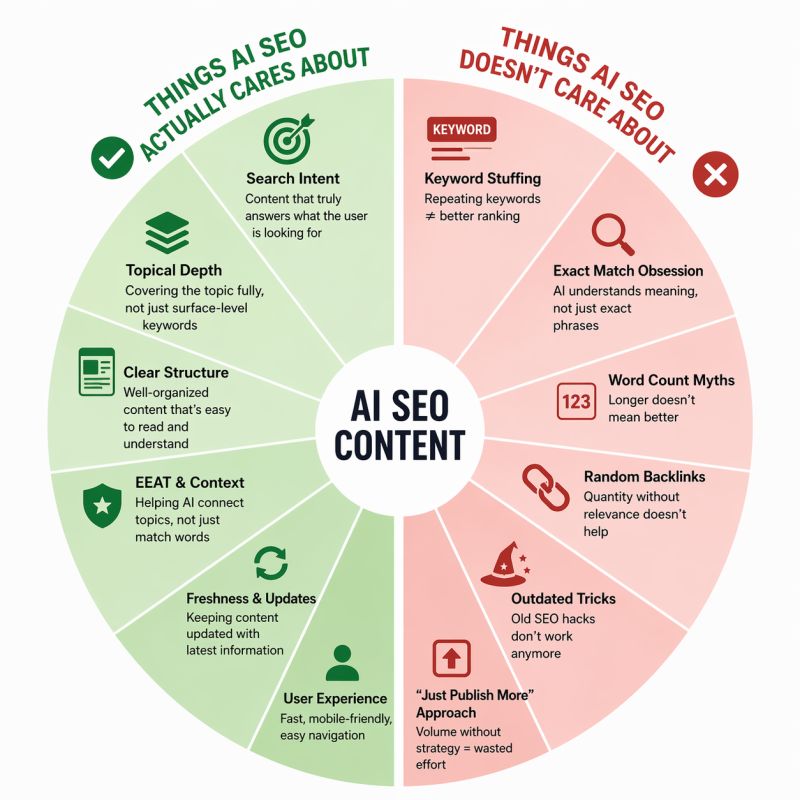
Search engines have evolved far beyond simple keyword matching. The modern ranking landscape demands a sophisticated understanding of how topics connect, relate, and build upon one another. This is where AI SEO Topical Depth becomes the defining factor between content that ranks and content that gets buried on page five. By leveraging artificial intelligence to map, analyze, and expand your content’s coverage of a subject, you create the kind of authoritative resources that Google’s algorithms prioritize above all else.
What Exactly Is AI SEO Topical Depth?

AI SEO Topical Depth refers to the practice of using artificial intelligence tools to analyze and enhance how comprehensively your content covers a specific subject area. It moves beyond the outdated practice of targeting individual keywords and instead focuses on building a complete semantic profile around a topic. The AI examines search engine results pages, analyzes user intent patterns, and identifies the subtopics, questions, and related concepts that your content needs to address to be considered truly authoritative.
This approach recognizes that search engines like Google use sophisticated natural language processing and entity-based ranking systems. These systems evaluate whether your content demonstrates genuine expertise by covering a topic from multiple angles, answering related questions, and providing context that a true expert would naturally include. AI tools accelerate this process by processing vast amounts of data in seconds, revealing gaps in your content that would take hours or days to identify manually.
Why Topical Depth Matters More Than Ever in AI-Driven Search
The shift toward semantic search and machine learning-based ranking algorithms has fundamentally changed what it means to optimize content. Google’s BERT, MUM, and RankBrain updates all point toward one conclusion: the search engine wants to understand concepts, not just match strings of text. When you build genuine AI SEO Topical Depth, you align your content with how these algorithms actually process and evaluate information.
Consider how Google’s helpful content system works. It evaluates whether content provides substantial value, demonstrates first-hand expertise, and comprehensively answers the user’s underlying needs. Thin content that merely touches on a topic without exploring its nuances gets flagged as unhelpful. Conversely, content that demonstrates deep topical coverage signals authority and earns higher visibility across multiple related queries.
The Connection Between Topical Authority and Rankings
Topical authority develops when your website consistently produces comprehensive content across all facets of a particular subject. Search engines recognize this pattern and begin to trust your site as a reliable source for that entire topic cluster. This trust translates into higher rankings not just for your primary keywords, but for hundreds of related long-tail queries that you may not have explicitly targeted.
AI SEO Topical Depth accelerates this process by ensuring every piece of content you publish contributes meaningfully to your overall topical authority. Instead of publishing isolated articles that compete with each other, you build an interconnected web of content that demonstrates your expertise across the entire subject landscape.
Core Components of AI-Driven Topical Depth Analysis
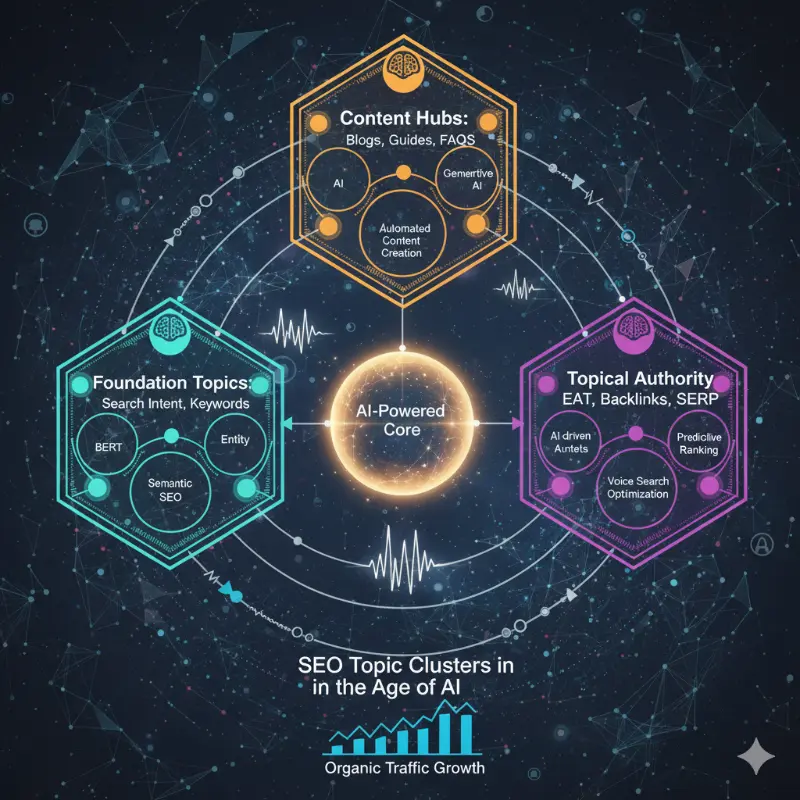
Understanding what goes into a comprehensive topical depth analysis helps you appreciate what AI tools actually do. These components form the foundation of any serious AI SEO Topical Depth strategy.
Semantic Entity Mapping
AI tools break down your target topic into its constituent entities. These include people, places, concepts, products, and organizations related to your subject. For example, if your topic is “digital marketing,” the AI identifies entities like SEO, content marketing, social media algorithms, Google Analytics, and conversion rate optimization. Each entity represents a potential subtopic that your content should address.
Search Intent Classification
Not all searches for the same topic share the same intent. Some users want informational content, others seek commercial comparisons, and some are ready to make a purchase. AI tools analyze the search engine results pages for your target keywords and classify the dominant intent patterns. Your content must match these patterns to rank effectively, and AI SEO Topical Depth ensures you cover all relevant intent variations.
Question and Query Gap Analysis
People search using questions, and AI tools excel at identifying the specific questions your target audience asks about your topic. These questions come from “People Also Ask” boxes, autocomplete suggestions, and related search queries. Comprehensive topical depth means answering these questions naturally within your content, not just in a token FAQ section at the bottom.
Competitor Content Structure Analysis
AI tools analyze the top-ranking pages for your target keywords to understand their structure, length, and subtopic coverage. This analysis reveals what search engines currently consider sufficient for ranking. However, true AI SEO Topical Depth means going beyond what competitors cover, identifying gaps they missed, and creating content that exceeds the current standard.
How to Implement AI SEO Topical Depth in Your Content Strategy
Implementing this approach requires a systematic process that combines AI analysis with human editorial judgment. The following framework provides a practical roadmap for building topical depth into your content creation workflow.
Step 1: Choose Your Core Topic Clusters
Begin by identifying the primary topics that define your niche. These should be broad enough to support multiple subtopics but focused enough to establish genuine authority. For each core topic, create a content cluster that includes a pillar page covering the subject comprehensively and supporting articles that dive deep into specific subtopics.
Step 2: Run AI-Powered Topic Analysis
Use AI SEO tools to analyze your chosen topic. These tools will generate lists of related entities, questions, and subtopics that your content should cover. Popular tools include Clearscope, MarketMuse, Surfer SEO, and Frase. Each provides different insights, so consider using multiple tools to get a complete picture of your topical landscape.
Step 3: Map Content to User Journey Stages
Different users at different stages of their journey need different types of content. Your AI SEO Topical Depth strategy should account for awareness-stage content that introduces concepts, consideration-stage content that compares options, and decision-stage content that helps users take action. Map your identified subtopics to these stages to ensure comprehensive coverage.
Step 4: Create Comprehensive Content Briefs
Transform your AI analysis into detailed content briefs that guide your writers. Each brief should include the primary keyword, related semantic entities, specific questions to answer, competitor insights, and structural recommendations. This ensures your writers produce content that achieves the desired topical depth without missing critical elements.
Step 5: Interlink Related Content Strategically
Internal linking plays a crucial role in demonstrating topical depth to search engines. Link related articles within your content cluster using descriptive anchor text that includes relevant keywords. This creates a semantic network that helps search engines understand the relationships between your content pieces and reinforces your topical authority.
Benefits of Implementing AI SEO Topical Depth
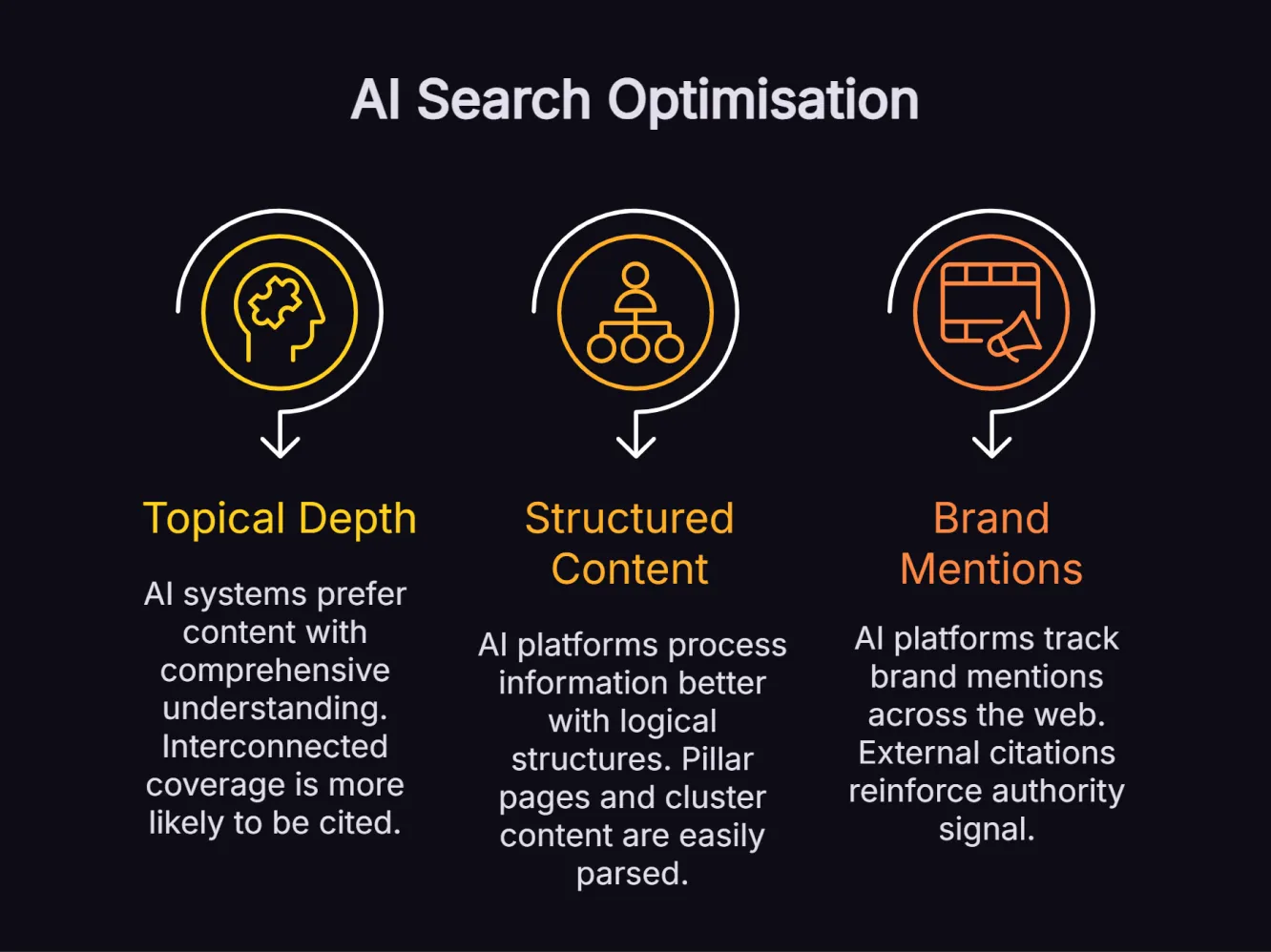
The advantages of this approach extend far beyond simple ranking improvements. Understanding these benefits helps justify the investment in AI tools and the additional effort required to create comprehensive content.
- Higher Search Visibility: Comprehensive content ranks for hundreds of long-tail keywords, not just your primary targets, dramatically increasing your organic traffic potential.
- Improved User Engagement: Content that thoroughly answers questions keeps users on your page longer, reduces bounce rates, and increases the likelihood of conversions.
- Enhanced Brand Authority: Consistently publishing in-depth content positions your brand as a thought leader in your industry, attracting backlinks and media mentions.
- Better Algorithm Resilience: Content with genuine topical depth continues to perform well even as search algorithms update, because it provides the substantive value that all algorithms ultimately reward.
- Efficient Content Production: AI analysis eliminates guesswork, ensuring every piece of content you produce serves a strategic purpose and fills a specific gap in your topical coverage.
Limitations and Challenges to Consider
While AI SEO Topical Depth offers significant advantages, it also presents challenges that content teams must navigate carefully.
Risk of Content Homogenization
When everyone uses the same AI tools to analyze the same topics, the resulting content briefs can look remarkably similar. This leads to a landscape where every article covers the same subtopics in the same order, making it difficult for any single piece to stand out. Differentiate your content by adding unique insights, original research, and perspectives that AI tools cannot generate.
Balancing Depth with Readability
Comprehensive content risks becoming overwhelming if not structured properly. Users scanning for quick answers may feel intimidated by massive walls of text. Break your content into digestible sections, use clear headings, incorporate visual elements, and provide summary boxes that help users navigate efficiently.
Time and Resource Investment
Creating content with genuine topical depth takes significantly more time than producing surface-level articles. Each piece requires extensive research, careful structuring, and multiple rounds of editing. Teams must decide whether the long-term ranking benefits justify the increased production costs.
AI SEO Topical Depth vs. Traditional Keyword Optimization
Understanding the differences between these approaches clarifies why the shift matters for your SEO strategy.
| Aspect | Traditional Keyword Optimization | AI SEO Topical Depth |
|---|---|---|
| Primary Focus | Individual keywords and phrases | Complete topic coverage and semantic relationships |
| Content Structure | Optimize each page for one or two keywords | Build interconnected content clusters covering all subtopics |
| Research Method | Keyword volume and difficulty analysis | Entity mapping, intent analysis, and question gap identification |
| Success Metric | Rankings for targeted keywords | Topical authority and visibility across entire subject area |
| Algorithm Alignment | Designed for older keyword-matching algorithms | Aligned with modern semantic and machine learning systems |
| Content Longevity | Often becomes outdated quickly | Remains relevant as it covers fundamental aspects of the topic |
Practical Applications Across Different Content Types
AI SEO Topical Depth applies to various content formats, each requiring a slightly different implementation approach.
Blog Articles and Guides
Long-form guides benefit most directly from topical depth analysis. Use AI tools to identify all the subtopics your guide should cover, then structure your content to address each one comprehensively. Include internal links to related articles that explore specific subtopics in even greater detail.
Product Pages and Category Descriptions
E-commerce sites can use topical depth to create product descriptions that address all the questions buyers have before making a purchase. Cover specifications, use cases, comparisons with alternatives, and common concerns. This improves both SEO performance and conversion rates simultaneously.
Video Content and Transcripts
Video platforms increasingly rely on semantic understanding to rank content. Create detailed transcripts and show notes that incorporate the full range of subtopics your video covers. This helps search engines understand your video’s relevance to a broader set of queries.
Common Mistakes in AI SEO Topical Depth Implementation
Many content teams make avoidable errors when implementing this strategy. Recognizing these mistakes helps you sidestep them in your own efforts.
Mistake 1: Keyword Stuffing Disguised as Topical Coverage
Some teams interpret topical depth as simply including more keywords in their content. This approach fails because it ignores the semantic relationships that actually matter. Focus on covering concepts and answering questions, not on forcing keywords into every paragraph.
Mistake 2: Ignoring Search Intent Variations
Creating comprehensive content that fails to match the dominant search intent for your target queries will not rank well. Always analyze what type of content currently ranks for your keywords and ensure your content matches that format and intent.
Mistake 3: Neglecting Content Updates
Topical landscapes evolve as new information emerges and user needs change. Content that achieved excellent topical depth at publication may become outdated within months. Establish a regular review schedule to update your content with new information and insights.
Mistake 4: Overlooking Internal Linking Structure
Publishing comprehensive content without proper internal linking fails to build the semantic network that search engines use to understand your topical authority. Every piece of content should link to related pieces using descriptive, keyword-rich anchor text.
Mistake 5: Sacrificing Quality for Quantity
Some teams interpret topical depth as a mandate to produce as much content as possible. This leads to diluted quality and content that covers topics superficially. Focus on producing fewer, genuinely comprehensive pieces rather than many shallow ones.
Important Notes for Long-Term Success
Several considerations deserve special attention as you build your AI SEO Topical Depth strategy.
First, remember that AI tools provide analysis and recommendations, but human judgment remains essential. AI cannot understand your unique audience, your brand voice, or the specific nuances of your industry. Use AI insights to inform your decisions, not to replace editorial judgment.
Second, monitor your results continuously. Track rankings for your primary keywords and for the long-tail queries that your comprehensive content should attract. Use this data to refine your approach and identify new topical gaps to fill.
Third, integrate your topical depth efforts with your broader SEO strategy. Technical optimization, link building, and user experience all contribute to your overall search performance. Topical depth amplifies these efforts but cannot replace them.
Frequently Asked Questions
How long does it take to see results from AI SEO Topical Depth?
Results typically appear within three to six months of consistent implementation. Search engines need time to crawl, index, and evaluate your content’s performance. Building genuine topical authority requires publishing multiple comprehensive pieces over time, so patience is essential.
What AI tools are best for topical depth analysis?
Several tools excel at different aspects of topical analysis. Clearscope and MarketMuse provide comprehensive content briefs with entity recommendations. Surfer SEO offers detailed on-page optimization guidance. Frase excels at question identification and content generation. Many teams use a combination of tools to get complete coverage.
Can small websites benefit from AI SEO Topical Depth?
Smaller websites can benefit significantly from this approach. While they may not have the resources to cover entire topic clusters comprehensively, they can focus on specific subtopics where they can achieve genuine depth. This targeted approach allows smaller sites to compete effectively in their chosen niches.
How does AI SEO Topical Depth affect content length?
Content with strong topical depth tends to be longer, often exceeding 2,000 words. However, length alone does not guarantee depth. A 5,000-word article that repeats the same points adds no value. Focus on covering distinct subtopics and answering different questions, regardless of the final word count.
Is AI SEO Topical Depth the same as topic clustering?
Topic clustering is one implementation of topical depth, but the concepts are not identical. Topic clustering refers specifically to the practice of creating pillar pages and supporting articles. AI SEO Topical Depth encompasses this practice plus the use of AI analysis to determine what content to create and how to structure it for maximum semantic coverage.
Conclusion
AI SEO Topical Depth represents the evolution of search optimization from a keyword-centric discipline to a comprehensive, semantic approach that aligns with how modern search engines actually evaluate content. By leveraging artificial intelligence to map your topical landscape, identify content gaps, and structure your coverage for maximum authority, you position your website to capture visibility across the entire spectrum of user queries related to your subject matter.
The implementation requires investment in AI tools, changes to your content production workflow, and a commitment to creating genuinely comprehensive resources. The payoff comes in the form of sustainable rankings, growing organic traffic, and the kind of topical authority that competitors find difficult to challenge. As search algorithms continue their march toward deeper semantic understanding, the importance of topical depth will only increase. Starting now positions you ahead of competitors who still rely on outdated optimization methods.
Xem thêm:
- AI SEO Image Titles: The Complete Guide to Boosting Your Visual Search Rankings
- The Ultimate Guide to AI Prompt Optimization: Unlocking Precision in Every AI Interaction
- AI SEO Alerts: The Ultimate Guide to Automated Search Monitoring and Real-Time Warnings
- AI SEO Generative Search Traffic: The Complete Playbook for 2025
- AI SEO Topic Mapping: The Complete Guide to Building Content Clusters That Rank
Bài viết cùng chủ đề:

AI SEO SEO Automation with Make: The Complete Workflow Guide

AI SEO SEO Automation with Zapier: The Complete Workflow Guide

AI SEO SEO Automation with n8n: The Complete Workflow Guide
AI SEO SEO Automation with Gemini: The Complete Guide to Scaling Organic Growth

AI SEO SEO Automation with Claude: The Complete Guide to Scaling Content in 2025

AI SEO SEO Automation with ChatGPT: The Complete Playbook for 2025

AI SEO & SEO Automation for Affiliate Sites: The 2025 Playbook for Passive Income Growth
AI SEO & SEO Automation for Bloggers: The Complete Guide to Scaling Your Content

AI SEO & SEO Automation for Agencies: The Complete 2025 Playbook

AI SEO and SEO Automation for Ecommerce: The Complete Playbook for 2025

AI SEO & SEO Automation for WordPress: The Complete Playbook for 2025
AI SEO SEO Automation Strategy: The Complete Playbook for 2025

Mastering the AI SEO SEO Automation Process: A Complete Guide to Scaling Organic Growth
AI SEO SEO Automation System: The Complete Guide to Scaling Organic Growth in 2025
AI SEO SEO Automation Platform: The Complete Guide to Scaling Organic Growth in 2025
AI SEO SEO Automation Software: The Complete Guide to Scaling Organic Growth in 2025















