
No products in the cart.
AI SERP Analysis: Unleashing the Power of Artificial Intelligence to Decode Search Results
29
Jul
Jul
The landscape of search engine optimization has undergone a tectonic shift. Traditional manual audits of search engine results pages—once the gold standard—now struggle to keep pace with the velocity of algorithm updates, the explosion of SERP features, and the sheer volume of keywords modern brands track. AI SERP analysis steps into this gap, combining machine learning, natural language processing, and big data automation to deliver real-time, layered intelligence that no human team can replicate. This comprehensive guide explores how artificial intelligence is reshaping the way marketers understand ranking signals, user intent, and competitive positioning directly from the search results themselves.
What Is AI SERP Analysis?
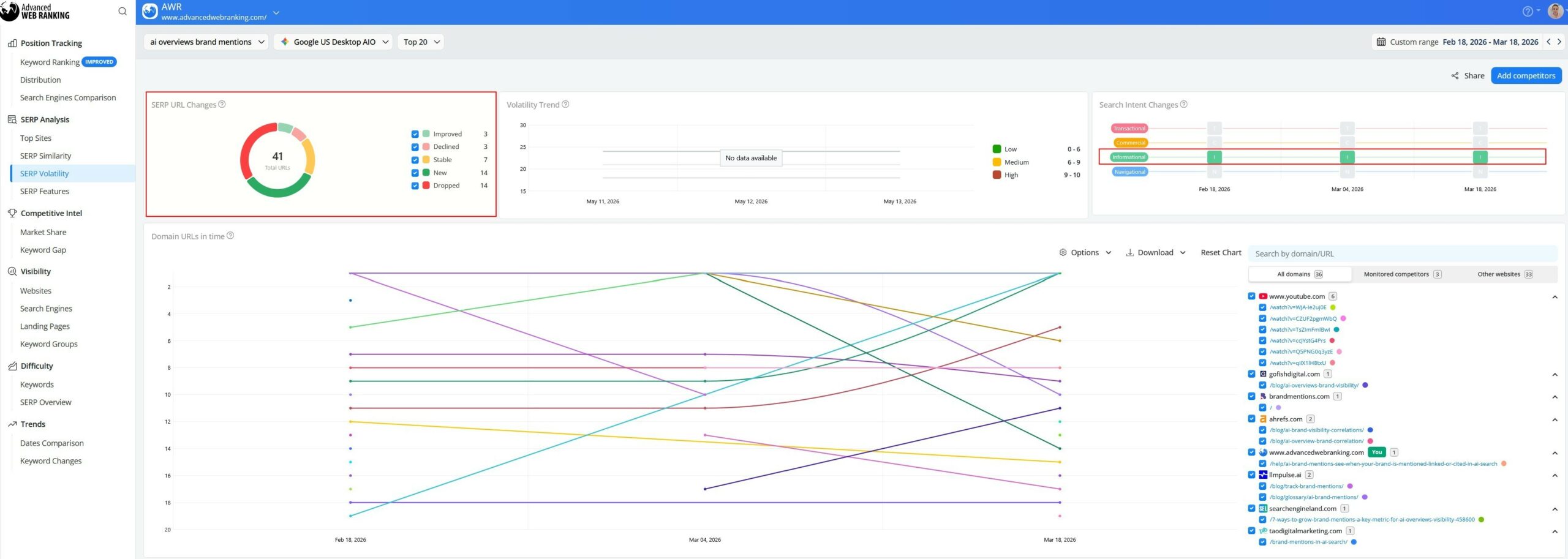
At its core, AI SERP analysis is the application of artificial intelligence techniques to examine, interpret, and extract actionable insights from search engine results pages. Instead of manually opening a browser and scrolling through the top 10 blue links, AI-powered tools crawl hundreds or thousands of SERPs simultaneously, processing structural elements, content patterns, entity relationships, and user engagement signals that traditional tools ignore. The analysis goes far beyond rank tracking—it deciphers the hidden architecture of Google’s algorithms, revealing why certain pages rank and what intent clusters dominate a query space.
The technology relies on several AI pillars: natural language processing to understand page semantics, computer vision for analyzing visual SERP features like image packs and knowledge panels, and predictive modeling to forecast ranking movements. By ingesting massive SERP corpora, these systems can identify statistically significant correlations between on-page factors and ranking positions, all while adapting to the dynamic nature of personalized, localized, and device-specific results.
How AI SERP Analysis Works: Key Components and Process
Understanding the mechanics behind AI SERP analysis demystifies its power. The process typically involves five interconnected stages, each leveraging a different branch of artificial intelligence to turn raw SERP data into strategic gold.
1. Large-Scale SERP Data Collection
AI SERP analysis starts with automated, high-frequency crawling. Bots emulate real user behavior—controlling for location, device type, language, and search history—to fetch accurate SERP renders. Unlike basic rank checkers, these crawlers capture the full DOM structure, including dynamic JavaScript-loaded elements like featured snippets, “People Also Ask” boxes, video carousels, and local packs. This rich dataset forms the foundation for all downstream analysis, often numbering millions of SERP snapshots per month for enterprise-scale campaigns.
2. Intent Classification and Query Semantic Mapping
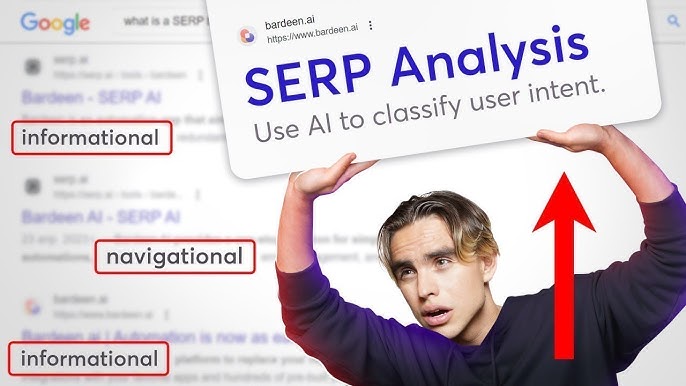
Traditional SERP analysis often lumped queries into crude buckets: informational, transactional, navigational. AI unlocks granular intent mapping. Using deep learning models trained on user clickstream data and session patterns, the system classifies not just the primary intent but also the micro-intents behind long-tail variations. For example, a query like “best running shoes for flat feet” indicates a commercial investigation intent with a condition-specific modifier. AI analyzes the SERP landscape to see which content types Google rewards—buying guides, product reviews, or direct e-commerce pages—and maps these back to the intent hierarchy, enabling a more precise content strategy.
3. Content and Entity Gap Analysis
Natural language processing dissects every piece of content on the first page. AI identifies recurring entities, semantic triples, topical clusters, and the average depth of coverage. This stage reveals precisely what concepts, questions, and related topics the top-ranking pages address that a brand’s content may miss. GPT-based models can then generate content briefs that go beyond simple keyword inclusion to prescribe the exact entity relationships and FAQ structures needed to satisfy modern search algorithms like Google’s BERT and MUM.
4. SERP Feature Decomposition and Ranking Signal Extraction
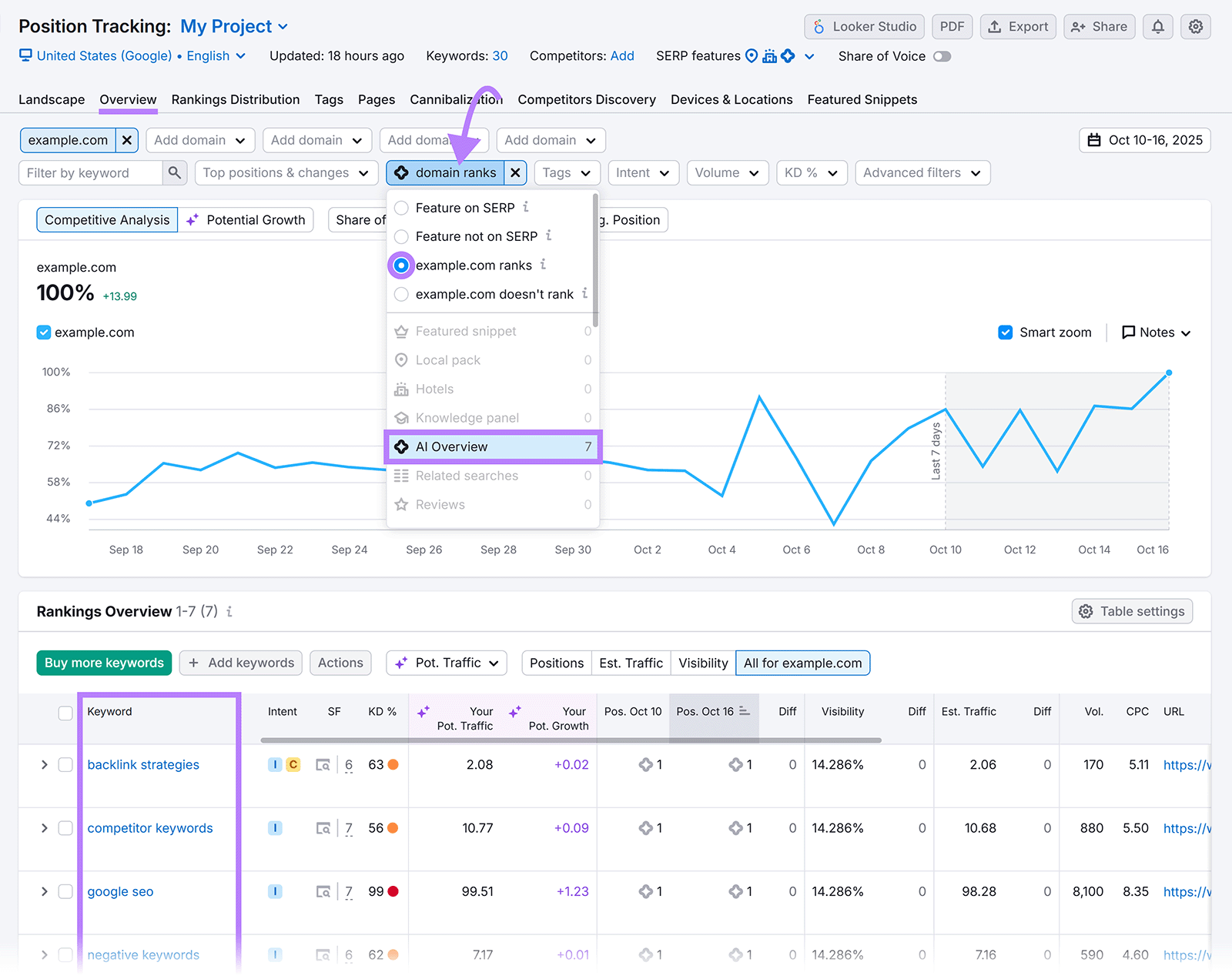
Modern SERPs are a mosaic of blue links, featured snippets, knowledge cards, images, videos, and more. AI SERP analysis deconstructs these elements to quantify their impact. Computer vision algorithms recognize and categorize feature types, while NLP models assess the semantic overlap between a snippet and the user’s query. The system then calculates a feature dominance score, indicating how likely a given feature is to occupy a specific position and how that affects click-through rates. Marketers gain a blueprint for structuring content to win these high-visibility placements.
5. Predictive Ranking and Opportunity Forecasting
The final layer uses machine learning to predict ranking volatility and opportunity windows. By feeding historical SERP landscapes, backlink data, and content freshness signals into a regression or gradient boosting model, the AI forecasts which pages are vulnerable and where a new piece of content could realistically break onto the first page. This turns SERP analysis from a backward-looking audit into a forward-looking strategy engine.
Benefits of AI-Powered SERP Analysis Over Traditional Methods
The shift from manual or semi-automated analysis to full AI integration delivers a step-change in both efficiency and insight depth. The following advantages explain why forward-thinking SEO teams are adopting it.
- Speed and Scale: A single analyst might manually inspect 50 SERPs in a day. An AI engine can process 50,000 in the same timeframe, covering entire product catalog keyword universes across multiple languages and locations simultaneously.
- Granular Intent Mapping: AI detects nuanced intent shifts that humans often miss. It recognizes when a query like “apple watch” shifts from informational (about the product) to transactional (buying accessories) based on subtle SERP composition changes, enabling dynamic content pivots.
- Real-Time SERP Feature Alerts: Traditional tools report rank changes with delay. AI systems can scrape SERPs in near real-time and trigger alerts when a new featured snippet, video result, or “People Also Ask” box appears for a priority keyword, allowing immediate optimization responses.
- Competitive Content Gap Discovery: Rather than manually comparing pages, AI automatically surfaces the entities, topics, and structural elements (like FAQ schema or table of contents) that high-ranking competitors share but the target domain lacks. This turns competitive analysis into a prioritized checklist.
- Unbiased Signal Identification: Humans bring cognitive biases, often overvaluing factors like exact keyword density. AI models strip away assumptions and use statistical correlation to pinpoint the on-page attributes that genuinely move the needle in specific niches, from reading level to image-to-text ratio.
- Data Quality and Crawling Noise: AI models are only as good as the data they consume. If SERP crawlers trigger CAPTCHAs, encounter cloaking, or fail to render dynamic content, the analysis becomes unreliable. Maintaining a robust, adaptive crawling infrastructure is a significant technical hurdle.
- Algorithm Obscurity and Black-Box Predictions: While AI can identify correlations, it cannot reveal direct causation within Google’s proprietary algorithms. A model may learn that pages with a specific word count rank higher, but a core update could overnight nullify that relationship without any explicit warning. Over-reliance on pattern mimicking can lead to optimization for yesterday’s algorithm.
- Context Collapse in Niche Markets: For hyper-niche B2B queries or emerging topics with scant search volume, the SERP landscape may be too thin to train reliable models. AI analysis thrives on data abundance; sparse SERPs can produce erratic, overfitted recommendations.
- Cost and Complexity: Building an in-house AI SERP analysis pipeline demands machine learning expertise, significant compute resources for NLP models, and continuous tuning. Commercial tools abstract much of this, but they still represent a sizable investment, and interpreting their output requires a sophisticated user.
- Interpretability Gap: Advanced deep learning models often act as black boxes themselves. When an AI recommends adding a certain number of images or increasing content length, it can be difficult to explain the underlying reasoning to stakeholders. This lack of transparency can hinder team buy-in and strategic integration.
- Blindly Copying the Average: AI often suggests aligning content length or entity usage with the first-page mean. This can lead to mediocre, “sea of sameness” content that fail to stand out. The goal is to understand the threshold, then exceed it with distinctive value, not merely match statistics.
- Ignoring SERP Intent Mismatches: An AI might report that a query triggers mostly video results, but if the brand’s video production capability is limited, chasing that format too aggressively can drain resources. Always overlay feasibility and brand fit on the AI’s recommendations.
- Over-Optimizing for One Snapshot in Time: SERPs evolve. An analysis locked to a single weekly crawl can miss weekend trends or rapid shuffling after an algorithm tremor. Use continuous monitoring rather than static audits to capture the full dynamic range.
- Treating AI Scores as Absolute Truth: Confidence intervals and uncertainty matter. A model may claim a content gap with high certainty, but if the underlying SERP data is noisy due to personalization artifacts, the recommendation may be spurious. Always validate critical findings with a quick manual spot check.
- Neglecting User Experience Signals: AI SERP analysis excels at on-page content metrics but often underrepresents Core Web Vitals, mobile usability, and intrusive interstitials, which are significant ranking factors. A technically poor page won’t hold a top position just because its entity profile matches the ideal.
Limitations and Challenges of AI SERP Analysis
Despite its transformative potential, AI SERP analysis is not a silver bullet. Several limitations require careful navigation to avoid strategic missteps.
AI SERP Analysis vs. Manual SERP Analysis: A Detailed Comparison
Understanding the precise trade-offs between human-led and AI-driven approaches helps teams allocate resources intelligently. The following table breaks down key dimensions.
| Dimension | AI SERP Analysis | Manual SERP Analysis |
|---|---|---|
| Scale | Handles thousands of keywords simultaneously across geographies and devices. | Limited to a few dozen keywords per audit; cross-location analysis is extremely time-consuming. |
| Depth of Insight | Identifies complex patterns: semantic gaps, feature dominance, predictive ranking opportunities. | Relies on human judgment for creative intuition, brand voice, and subjective page quality assessment. |
| Speed | Near-real-time or scheduled automated analysis; instant anomaly detection. | Slow, manual review cycles; can take days to compile a full competitive report. |
| Adaptability | Learns and adjusts to new SERP features and algorithm shifts once training data updates. | Analyst knowledge must be continuously updated; adapting to new features requires dedicated learning. |
| Cost | High initial investment (tool subscription or development); low marginal cost per analysis. | Low tool cost but high labor cost; does not scale well with keyword growth. |
| Qualitative Judgment | Struggles with nuance like brand tone, emotional resonance, and visual design quality. | Excels at evaluating what constitutes truly helpful, engaging content that matches brand identity. |
The most effective strategies blend both: AI handles data processing and pattern detection at scale, while human experts interpret those insights within the broader marketing context, apply creative direction, and verify that recommendations align with the brand’s unique audience needs.
Practical Applications: How Marketers and SEOs Use AI SERP Analysis
The true value of AI SERP analysis reveals itself in tactical execution. Across industries, teams are deploying these systems to solve specific business challenges.
Content Strategy and Gap Filling
A major e-commerce brand used AI SERP analysis on 15,000 non-branded product queries. The system identified that for 40% of their highest-value keywords, Google’s top results included a dedicated FAQ section with structured data. The brand’s category pages lacked this feature entirely. After implementing NLP-generated FAQ schemas based on the “People Also Ask” data extracted by the AI, organic traffic to those pages increased by 23% within three months. The AI closed a gap that a traditional rank-tracking tool would never have surfaced.
Winning Featured Snippets at Scale
For a SaaS company targeting thousands of long-tail “how-to” queries, manual snippet analysis was impossible. They deployed an AI engine that automatically parsed the existing featured snippet format (paragraph, list, table) and extracted the typical word count and semantic structure. The model then rewrote their existing blog sections to mirror those patterns while maintaining originality. This programmatic optimization lifted their snippet ownership rate from 12% to 31% across the monitored query set in six months, generating a 58% increase in organic clicks.
Competitive Defense and Vulnerability Spotting
An online publisher used predictive AI SERP analysis to forecast competitor movements. The model tracked freshness signals, backlink velocity, and content update frequency for pages ranking just below their own. When it detected a surge in a rival’s content refresh rate coupled with an uptick in incoming links, it flagged those keywords as high-risk. The editorial team preemptively updated the corresponding articles, adding new data, improving page speed, and enhancing the multimedia. This proactive defense prevented an estimated 15% traffic loss that would have occurred if the competitor had overtaken them unnoticed.
International SEO and Localization Validation
Global brands often struggle to understand why a page ranks well in the US but flounders in Germany. AI SERP analysis can run simultaneous cross-market comparisons. One manufacturer discovered that for their key German-language industrial terms, Google heavily favored PDF datasheets and technical spec pages from.de domains, while US SERPs preferred editorial listicles. The AI’s localized content recommendations led to the creation of German-specific technical resources that boosted local organic traffic by 67% year-over-year.
Common Mistakes to Avoid in AI SERP Analysis
Even with powerful AI tools, execution pitfalls abound. Awareness of these errors keeps the output strategically sound.
Important Notes for Implementing AI SERP Analysis Successfully
To extract maximum value from AI SERP analysis, organizations must embed it within a broader strategic framework rather than treating it as a standalone fix. Start by defining clear objectives—are you focused on featured snippet conquest, content gap closure, or international expansion? The goal dictates which AI features to activate first. Invest in data hygiene: clean, consistent keyword tagging and accurate location/language parameters prevent the “garbage in, garbage out” problem that plagues many deployments. Finally, foster a collaborative loop where human SEO editors and content strategists regularly review and refine AI-generated insights. The best-performing teams use the technology to augment—not replace—their domain expertise, turning raw SERP intelligence into content that genuinely serves the searcher.
Another critical consideration is model transparency. When adopting third-party AI SERP analysis tools, inquire about their data sources, crawling frequency, and how they handle personalized results. A tool that crawls without proper browser emulation may miss JavaScript-rendered features entirely, skewing the analysis. If building in-house, allocate resources for ongoing model maintenance; search engines change, and models must be re-trained periodically to avoid decay. Finally, integrate AI SERP insights into your content management workflow. An excellent recommendation that never leaves a dashboard delivers zero value. Connect the output directly to content briefs, editorial calendars, and developer tasks to close the execution loop.
Frequently Asked Questions About AI SERP Analysis
What exactly is AI SERP analysis?
AI SERP analysis is the use of artificial intelligence—including machine learning, natural language processing, and computer vision—to automatically crawl, interpret, and extract strategic insights from search engine results pages. It goes beyond simple rank tracking by identifying intent patterns, content gaps, SERP feature dominance, and competitive vulnerabilities across thousands of queries, helping marketers make data-driven content and SEO decisions.
How does AI improve traditional SERP analysis?
AI brings scale, speed, and pattern recognition that manual methods cannot match. It processes vast keyword sets in real time, detects subtle semantic relationships between top-ranking pages, classifies complex user intents, and predicts ranking shifts. Where a human might see a list of URLs, AI reveals the underlying architecture of why Google ranks those pages, enabling proactive optimization rather than reactive adjustments.
Which AI tools are best for SERP analysis?
The market offers a spectrum from all-in-one SEO platforms with integrated AI to specialized research tools. Enterprise suites like BrightEdge and Conductor embed AI-driven SERP analysis within their recommendations. Tools such as Surfer SEO, Clearscope, and MarketMuse use NLP to compare your content against SERP top performers and suggest entity enhancements. Advanced users combine these with custom solutions built on large language models and SERP API data to create hyper-tailored analysis pipelines.
Can AI predict future SERP changes or algorithm updates?
Predictive AI SERP analysis can forecast ranking volatility and opportunity windows based on historical patterns, backlink trends, and content freshness signals. However, it cannot predict a specific algorithm update before it rolls out because Google’s core changes are not publicly signaled. The models are valuable for identifying at-risk pages and emerging competitor strength, allowing teams to fortify their positions before tangible ranking shifts occur.
Does AI SERP analysis work for local and international SEO?
Absolutely. Advanced AI systems can emulate searches from different geographic coordinates, languages, and device types to capture localized SERP variations. This capability reveals how a query’s results differ between cities or countries, informing localized content and technical SEO strategies. The same intent mapping and content gap workflows apply, with the added dimension of regional SERP feature preferences and competitor sets.
How accurate is AI SERP analysis, and can it replace human SEOs?
Accuracy depends on data quality, model training, and the specific use case. For content gap detection and competitive pattern recognition, modern AI achieves high reliability. For nuanced judgment calls about brand voice, user experience satisfaction, or creative editorial direction, human expertise remains essential. AI SERP analysis is a force multiplier, not a replacement. The most successful teams combine machine-driven data analysis with human strategic oversight.
Conclusion
AI SERP analysis has evolved from an experimental concept into a foundational component of competitive search strategy. By harnessing machine learning to decode the rich, layered signals embedded in every search results page, organizations can move beyond static rank tracking and into a realm of predictive, intent-driven optimization. The journey requires thoughtful tool selection, a commitment to data quality, and a culture that blends algorithmic precision with human creativity. Those who master this integration will not just observe the search landscape—they will help shape it, one insightful SERP analysis at a time.
Xem thêm:
- AI Rich Snippets: What They Are, Why They’re Taking Over Search, and How to Win Them
- AI SEO Content Repository: The Ultimate Guide to Building a Smarter Content Engine in 2025
- The Ultimate Guide to AI SEO Chrome Extensions: Work Smarter, Rank Higher
- AI SEO Alt Text Generator: The Complete Guide to Automated Image Optimization
- AI SEO Pagination: The Complete Guide to Smarter Site Architecture in 2025
Bài viết cùng chủ đề:

AI SEO SEO Automation with Make: The Complete Workflow Guide

AI SEO SEO Automation with Zapier: The Complete Workflow Guide

AI SEO SEO Automation with n8n: The Complete Workflow Guide
AI SEO SEO Automation with Gemini: The Complete Guide to Scaling Organic Growth

AI SEO SEO Automation with Claude: The Complete Guide to Scaling Content in 2025

AI SEO SEO Automation with ChatGPT: The Complete Playbook for 2025

AI SEO & SEO Automation for Affiliate Sites: The 2025 Playbook for Passive Income Growth
AI SEO & SEO Automation for Bloggers: The Complete Guide to Scaling Your Content

AI SEO & SEO Automation for Agencies: The Complete 2025 Playbook

AI SEO and SEO Automation for Ecommerce: The Complete Playbook for 2025

AI SEO & SEO Automation for WordPress: The Complete Playbook for 2025
AI SEO SEO Automation Strategy: The Complete Playbook for 2025

Mastering the AI SEO SEO Automation Process: A Complete Guide to Scaling Organic Growth
AI SEO SEO Automation System: The Complete Guide to Scaling Organic Growth in 2025
AI SEO SEO Automation Platform: The Complete Guide to Scaling Organic Growth in 2025
AI SEO SEO Automation Software: The Complete Guide to Scaling Organic Growth in 2025















