
No products in the cart.
Claude SEO: The Complete Guide to Using Anthropic’s AI for Search Engine Optimization
29
Jul
Jul
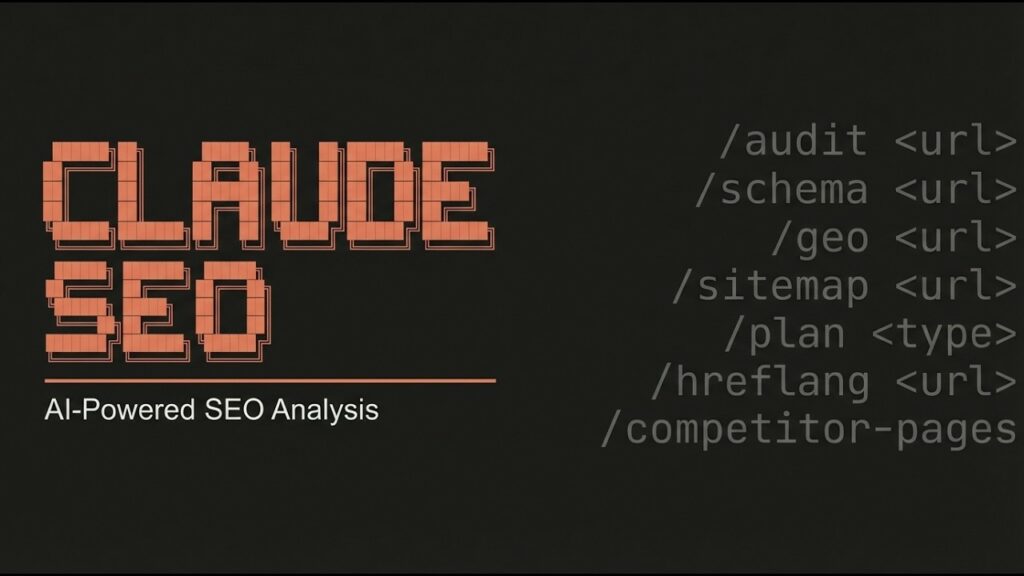
Search engine optimization has always demanded a mix of analytical thinking, creative writing, and time-consuming manual work. The arrival of advanced language models like Claude has created a new discipline many professionals are calling Claude SEO – the strategic use of Anthropic’s AI assistant to streamline, enhance, and scale your organic search efforts. Whether you are a solo blogger, an in-house content marketer, or an agency SEO specialist, understanding how to extract value from Claude without falling into spammy shortcuts is becoming essential. This guide covers everything from keyword research and content creation to technical audits and future-proofing your strategy.
What Is Claude SEO and Why It Matters Now
Claude SEO refers to the practice of leveraging Claude, Anthropic’s constitutional AI assistant, for tasks related to search engine optimization. It is not a standalone tool or a specific feature inside the Claude interface. Instead, it is a methodology – a way of prompting, steering, and refining Claude’s outputs to produce keyword-rich briefs, meta descriptions, content outlines, schema markup suggestions, and even technical SEO recommendations. Because Claude has been fine-tuned for nuanced reasoning and long-context understanding, SEO practitioners can build entire workflows around it.
The shift matters because the SEO industry is ballooning with AI-generated content. Search engines like Google have made it clear that AI-generated text is not inherently against their guidelines, provided it is helpful, original, and demonstrates expertise. The risk lies in mass-produced, unedited AI spam. Claude SEO, done right, elevates human expertise rather than replacing it. It lets you work faster, spot opportunities, and maintain editorial quality without burning out your team.
How Claude Can Power Your Core SEO Workflows
Claude is not a Swiss Army knife that magically fixes rankings, but it excels at numerous fundamental SEO tasks when guided correctly. Below are the main areas where SEO professionals have found the most impact.
1. Finding and Clustering Keywords with Claude
Claude cannot access live search data or keyword volumes unless you feed it external data, but it can act as a powerful semantic brainstorming engine. You can paste a list of seed keywords and ask it to expand them into long-tail variations, group them by search intent, or map them to buyer journey stages. For example, a prompt like “Take this list of 10 seed terms related to project management software and generate 30 long-tail keyword ideas, then cluster them by navigational, informational, commercial, and transactional intent” often yields well-categorized suggestions that mirror what expensive tools produce.
By combining Claude’s language understanding with actual search volumes from tools like Ahrefs or Semrush, you get a smarter filtering layer. Many SEOs maintain a spreadsheet where Claude’s output is the first column and the tool data fills in the rest, saving hours of manual brainstorming.
2. Building Detailed Content Briefs and Outlines
A content brief is the bridge between keyword research and a publish-ready article. Claude can take a primary keyword, target audience, and content goal and return a structured outline complete with H2s, H3s, suggested word count per section, and even the type of media to include. When you ask Claude for an SEO-optimized outline, specify the angle and competitors you want to differentiate from. A well-crafted prompt might be: “You are an SEO strategist. Create a detailed blog outline for the keyword ‘cloud cost optimization’ targeting FinOps professionals. Include 8–10 headings, 2–3 key points under each, and note where a data chart or case study would add value. Make the structure more comprehensive than the top three ranking articles.”
This approach builds topical depth from the start. You can also feed Claude the URLs of competitors (by pasting text if you don’t have browsing) and ask for gaps. The AI identifies subtopics missing from the SERP, giving you a genuinely unique angle instead of a rehash.
3. Drafting and Optimizing Meta Titles and Descriptions
Crafting clickable meta tags at scale is tedious. Claude can generate dozens of title tag and meta description variations for a set of pages, ensuring primary keywords appear naturally and character counts stay within limits. Because Claude respects conversational prompts, you can ask it to inject power words, emotional triggers, or specific numbers. Example prompt: “Generate 5 SEO title tags under 60 characters and 5 meta descriptions under 155 characters for a page about ‘organic cotton baby clothes’. Titles should include a number or statistic. Descriptions should address a parent’s concern and include a soft call to action.”
Always review the output manually. Claude sometimes inserts unnatural phrasing when forced to hit an exact character cap. A/B testing the generated tags via Google Search Console can reveal which emotional hooks actually lift click-through rates.
Content Creation: The Heart of Claude SEO
The most common use case is using Claude to produce full articles, listicles, or product descriptions. However, the real power is not in pressing a button and publishing whatever comes out. Successful Claude SEO relies on a hybrid process.
Step-by-Step: Writing an SEO-Optimized Article with Claude
- Start with a human-verified outline. Use Claude to generate the outline as described above. Then review it, merge redundant headings, and insert proprietary data or internal links you plan to include.
- Write section by section. Instead of asking for the whole article in one go, write one H2 at a time. This gives you more control. A prompt for a single section can be: “Expand the following outline bullet into a full section for a blog post about ‘retirement planning for freelancers’. Use a friendly expert tone. Include one real-world example, keep paragraphs short, and naturally incorporate the keyword ‘SEP IRA’ once or twice.”
- Inject facts and unique data. Claude’s knowledge cut-off can be a limitation. Add your own statistics, recent survey results, or original quotes. This signals originality to search engines.
- Polish for readability. After assembling the draft, run it through a readability check (like Hemingway or the Flesch-Kincaid score). Claude can also simplify dense paragraphs if you ask it to rewrite a passage for a 9th-grade reading level.
- Add internal and external links manually. Claude can suggest where links might go, but it’s safer and more natural to choose the exact pages yourself.
Claude’s Unique Advantage: Handling Long-Form Content
Claude’s large context window (especially in recent versions) allows it to remember an entire conversation history, which is enormously beneficial for long-form SEO content. You can feed it a complete competitor article, your own draft, and a set of guidelines, and ask it to rewrite sections without losing the overall flow. Unlike some tools that lose context after 3,000 words, Claude maintains coherence across 10,000-word guides, minimizing fragmentation and repetitive phrasing.
Technical SEO and Structured Data Generation
While Claude is not a crawler, it understands the syntax of schema.org, JSON-LD, and even regex patterns for server-side redirects. You can ask it to generate FAQ, Article, Product, or LocalBusiness structured data markup based on plain descriptions. For instance, “Create JSON-LD schema for a local bakery’s website: name ‘Sweet Rise’, address 123 Maple St, phone (555) 123-4567, open Mon-Fri 7am-3pm, serves croissants and sourdough” will return valid code snippet you can paste directly.
Claude is also helpful for drafting robots.txt rules, htaccess redirects, or hreflang annotations for multilingual sites. It reduces the time spent looking up tag syntax. Always validate the output with Google’s Rich Results Test or a schema validator before deployment.
Comparing Claude SEO with ChatGPT and Other AI Tools
SEO professionals often wonder which large language model delivers the best results. The table below highlights key differences for SEO-focused tasks.
| Feature/Capability | Claude | ChatGPT (GPT-4o) | Specialized SEO Tools (e.g., Jasper, SurferSEO) |
|---|---|---|---|
| Long-form content coherence | Excellent – large context window, logical flow | Very good, but may drift in 5,000+ word pieces | Built-in structure but often formulaic |
| Nuanced instruction following | Strong; adheres to multi-step prompts well | Comparable after recent updates | Limited to preset templates |
| Live search data access | Not directly; needs user-supplied data | Available with browsing (Plus/Pro) | Often integrate keyword volumes, SERP analysis |
| SEO-specific features | None built-in; requires prompting | Plugins for on-page analysis | Dedicated score, NLP optimization, etc. |
| Safety and bias constraints | High; may refuse borderline requests | Generally permissive with some flags | N/A |
| Cost for high-volume use | API pricing competitive; free tier limited | Plus/Team subscriptions; API pay-per-token | Often subscription-based, can be pricey |
In practice, many SEO teams use Claude as the idea engine and content drafter, then push drafts into a specialized tool for final optimization scoring. The combination often yields better results than either approach alone.
Benefits and Limitations of Claude SEO
Clear Benefits
- Speed and efficiency: A well-prompted Claude can produce a 2,000-word draft in under a minute, cutting writing time by 60-70%.
- Consistent brand voice: By providing a style guide as part of the prompt, you can maintain tone across hundreds of pages.
- Overcoming writer’s block: It generates multiple angles or introductions, giving human writers a starting point.
- Scalable content production: Large e-commerce sites use Claude to create unique category descriptions and meta tags at scale.
- Multilingual SEO support: Claude can translate and localize content while preserving SEO intent, a huge plus for global sites.
Significant Limitations
- Lack of real-time data: It cannot check trending topics or update itself on Google algorithm changes unless you feed it that information.
- Risk of generic content: Without strong, specific prompts, outputs may sound bland and similar to AI-generated text from other tools.
- Factual inaccuracies: It can confidently present wrong numbers or outdated statistics. Human fact-checking is mandatory.
- No built-in SEO scoring: It does not tell you if a keyword is used enough or if readability is optimal; external analysis is required.
- Ethical and compliance concerns: Strict industries (medical, legal, finance) must ensure AI-assisted content still meets YMYL quality standards and regulatory oversight.
Common Mistakes When Using Claude for SEO (And How to Avoid Them)
Pitfall #1: Trusting Claude’s outputs without verification. Even when it sounds authoritative, Claude may invent case studies or company names. Cross-check any claim with a primary source. Build a habit of highlighting every factual assertion in the draft and verifying it.
Pitfall #2: Generic prompts yielding thin content. Prompts like “write an SEO article about yoga” produce shallow, unoriginal text. Instead, include specifics about audience pain points, unique data, competitor gaps, and semantic keywords. The more context you give, the deeper the output.
Pitfall #3: Neglecting the human layer. Publishing raw AI content without editing leads to awkward phrasing, redundancy, and a lack of personal experience signals. Edit for voice, insert anecdotes, and add original images or screenshots. Search engines are getting better at identifying purely synthetic, unedited content.
Pitfall #4: Over-optimizing for keywords. Because Claude can be prompted to include a keyword exactly X times, some users overstuff. Always prioritize natural language. If a sentence feels forced, rewrite it. Google’s helpful content system penalizes content that reads like it was written for search engines first.
Pitfall #5: Ignoring internal linking strategy. Claude can suggest relevant pages but cannot know your site’s structure. Neglecting a solid internal link plan weakens topical authority. Always add contextually relevant internal links manually after the draft is complete.
Google’s Perspective on AI-Generated Content and Claude SEO
Google’s official guidance on AI-generated content is unambiguous: it rewards high-quality, original content regardless of how it was produced. The key qualifier is that the content must demonstrate E-E-A-T (Experience, Expertise, Authoritativeness, Trustworthiness). A blog post written with Claude assistance can rank well if it offers genuine value, includes real-world expertise, and is factually sound. Conversely, AI content created solely to manipulate rankings without adding value is considered spam and can be penalized.
For Claude SEO practitioners, this means the human element is not optional. Add author bios, cite credible sources, include original research or case studies, and ensure a subject matter expert reviews each piece. Content that is simply paraphrased from top-ranking pages, even if grammatically flawless, may trigger classifier demotions.
Practical Advanced Tips for Claude SEO Power Users
- Chain-of-thought prompting for content gaps: Paste the text of a competitor’s article and ask Claude, “List the top 5 subtopics this article fails to address. Then elaborate on each one.” This surfaces high-value additions you can turn into a better resource.
- Iterative refinement: Instead of accepting the first draft, run a follow-up prompt like “Now rewrite the entire article from a contrarian perspective, keeping the same structure but using a more provocative tone.” This creates variations you can blend.
- Content pruning recommendations: Feed Claude your sitemap or a list of pages with thin content metrics and ask it to suggest which pages to merge, update, or delete. It can draft 301 redirect maps.
- Multimodal integration: If you use Claude’s vision capabilities (in supported interfaces), you can upload a screenshot of a SERP and ask for insights on the types of featured snippets, People Also Ask boxes, and rich results dominating the page. This informs your format strategy.
Frequently Asked Questions About Claude SEO
Can Claude do keyword research like traditional SEO tools?
Claude cannot access live search volume databases, but it can generate hundreds of semantic keyword ideas, long-tail variations, and intent-based clusters when given seed terms. Pair it with Google Keyword Planner or Ahrefs for volume and difficulty data, and you have a powerful research loop.
Does content written with Claude rank on Google?
Yes, countless websites use AI-assisted content that ranks well. The ranking depends on the content’s usefulness, originality, and adherence to E-E-A-T principles, not on the tool used to create it. Many successful blogs publish Claude-drafted posts that have been heavily edited, fact-checked, and enhanced with unique insights.
How do I prompt Claude to write SEO-friendly content?
Effective prompts include the target keyword, audience persona, desired tone, article length, headings to cover, and any specific do’s and don’ts. Advanced prompts also include the URL of a competing article (pasted as text) and ask Claude to write a more comprehensive version while avoiding certain clichés. Iterative prompting yields the best results.
Is Claude SEO better than using ChatGPT for SEO?
It depends on the task. Claude often excels at long-form coherence and following complex instructions, while ChatGPT with browsing can fetch live data. Many SEOs use both, choosing Claude for deep content drafting and ChatGPT for live research or plugin-assisted on-page audits. The best choice is the one you are more comfortable prompting effectively.
Will Google penalize my site for using Claude to write content?
No, as long as the content is original, helpful, and not generated at scale solely to manipulate rankings. Google penalizes low-quality, mass-produced AI spam. If you add human expertise, fact-checking, and real value, using Claude is no different than using a human writer as a starting point.
How can I avoid AI detection tools flagging my Claude-written text?
AI detectors are unreliable and often produce false positives. Instead of obsessing over detection scores, focus on adding personal stories, original data, expert commentary, and varied sentence structures. Heavily edited, enriched content rarely triggers false flags. Some Claude users intentionally vary prompt styles and merge sections to bypass simplistic detection patterns, but quality is the best defense.
Conclusion: Building a Sustainable Claude SEO Strategy
Claude SEO isn’t a license to automate your way to the top of search results. It’s a sophisticated lever that amplifies human creativity and strategic thinking. The most successful adopters are those who treat Claude as a talented junior copywriter under close editorial supervision—capable of producing enormous volume, but still needing guidance, correction, and a final polish.
To build a sustainable strategy, start by auditing your current SEO bottlenecks. Are you slow at creating briefs? Use Claude there first. Struggling with meta descriptions at scale? Let it draft them. Then gradually integrate it into long-form content creation, always keeping a human reviewer in the loop. Measure success not by the number of words published, but by organic traffic growth, engagement metrics, and conversion rates on AI-assisted pages.
As search algorithms evolve to better understand content depth and user satisfaction, the gap between thoughtful Claude SEO and careless AI spam will only widen. Those who master the blend of machine efficiency and human insight will own the future of search.
Xem thêm:
- The Rise of AI SEO Experts: Redefining Search Engine Strategy in the Age of Artificial Intelligence
- AI Local SEO: The Smart Way to Dominate Neighborhood Search Results
- AI SEO Link Prospecting: The Complete Guide to Automating High-Quality Backlink Discovery
- AI SEO AI Overview Visibility: The Complete Playbook for 2025
- AI SEO User Experience: The Complete Guide to Merging Search Optimization with Human-Centered Design
Bài viết cùng chủ đề:

AI SEO SEO Automation with Make: The Complete Workflow Guide

AI SEO SEO Automation with Zapier: The Complete Workflow Guide

AI SEO SEO Automation with n8n: The Complete Workflow Guide
AI SEO SEO Automation with Gemini: The Complete Guide to Scaling Organic Growth

AI SEO SEO Automation with Claude: The Complete Guide to Scaling Content in 2025

AI SEO SEO Automation with ChatGPT: The Complete Playbook for 2025

AI SEO & SEO Automation for Affiliate Sites: The 2025 Playbook for Passive Income Growth
AI SEO & SEO Automation for Bloggers: The Complete Guide to Scaling Your Content

AI SEO & SEO Automation for Agencies: The Complete 2025 Playbook

AI SEO and SEO Automation for Ecommerce: The Complete Playbook for 2025

AI SEO & SEO Automation for WordPress: The Complete Playbook for 2025
AI SEO SEO Automation Strategy: The Complete Playbook for 2025

Mastering the AI SEO SEO Automation Process: A Complete Guide to Scaling Organic Growth
AI SEO SEO Automation System: The Complete Guide to Scaling Organic Growth in 2025
AI SEO SEO Automation Platform: The Complete Guide to Scaling Organic Growth in 2025
AI SEO SEO Automation Software: The Complete Guide to Scaling Organic Growth in 2025















