
No products in the cart.
AI SEO AI Search Optimization Audit: The Complete 2025 Guide to Future-Proofing Your Rankings
10
Aug
Aug
The digital landscape has shifted beneath the feet of traditional search engine optimization. With the rise of generative engine optimization and machine learning algorithms, the standard backlink and keyword audit no longer suffices. A comprehensive AI SEO AI Search Optimization Audit is now the definitive method for diagnosing why your content appears in ChatGPT responses, Google AI Overviews, or Perplexity citations. This guide breaks down the exact process, tools, and metrics required to conduct a technical and semantic audit that aligns your digital assets with how artificial intelligence indexes and ranks information.
Understanding the Core of AI Search Optimization
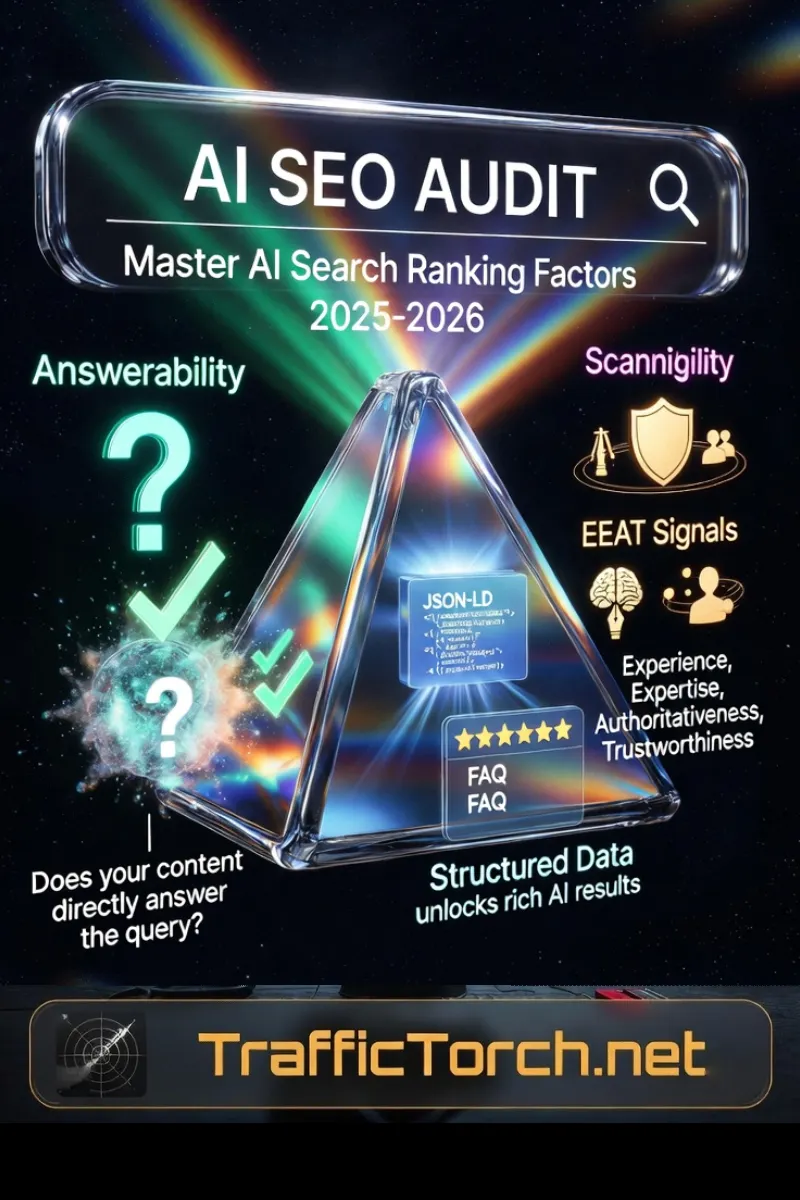
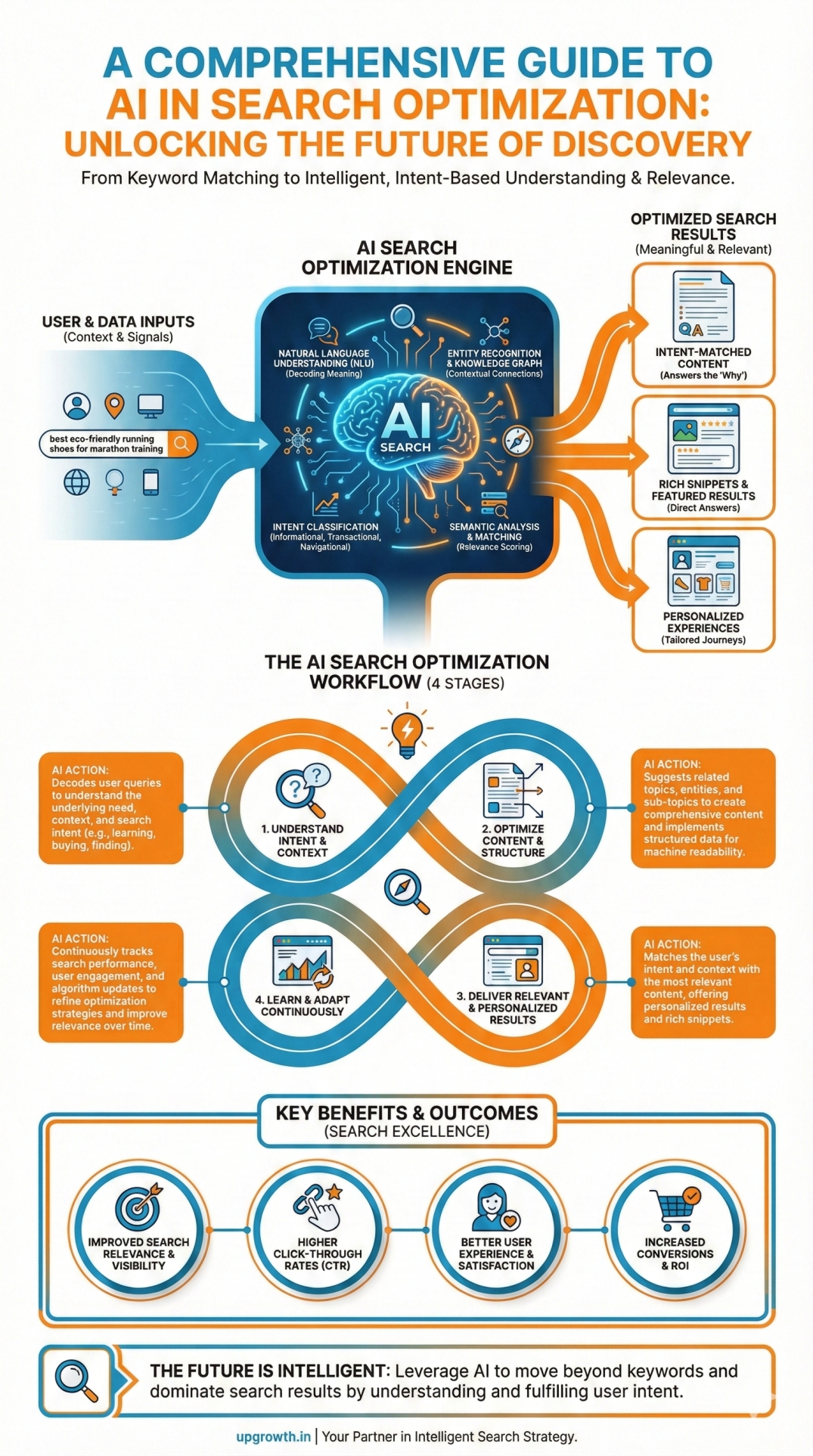
AI search optimization differs fundamentally from classic SEO. Traditional search engines rely on crawling, indexing, and ranking based on backlinks and keyword density. AI search models, however, utilize natural language processing (NLP), entity recognition, and semantic vector embeddings to understand the intent and context behind a query. When a user asks a conversational question, the AI model does not merely look for a page with the right words; it synthesizes information from multiple sources to generate a single, coherent answer.
An AI SEO AI Search Optimization Audit evaluates how well your content is structured for this synthesis process. It checks whether your website is a recognized entity, whether your data is structured for machine readability, and whether your content provides the definitive answer that an AI model would choose to cite. Without this audit, you are essentially flying blind in a landscape where visibility is determined by algorithmic trust rather than just page rank.
The Shift from PageRank to Entity Rank
Google’s original PageRank system measured the quantity and quality of links pointing to a page. Modern AI systems, including Google’s MUM and BERT, prioritize the relationships between entities. An entity is a distinct object, concept, or person. For instance, if you run a bakery, your brand is an entity, and your sourdough bread is another entity. The AI needs to understand the relationship between these two entities to answer a query like “best sourdough in Austin.”
During the audit, you must map out your entity graph. This involves checking your Knowledge Graph panel, verifying your Schema.org markup (specifically Organization, Product, and FAQPage), and ensuring that your internal linking structure clearly defines the hierarchy of your entities. If the AI cannot identify what you are and what you offer, it will not recommend you, regardless of your domain authority.
Why a Standard SEO Audit Fails in the AI Era
Standard audits focus on crawlability, meta tags, and 404 errors. While these are still important, they do not address the unique requirements of AI models. A standard audit will tell you that your page loads fast, but it will not tell you whether your content is structured in a way that allows an AI to extract a direct answer without reading the entire page.
Furthermore, standard audits often ignore the concept of “answer engineering.” In AI search, the goal is to own the answer box. This requires a specific content format: direct definitions in the first paragraph, clear use of lists and tables, and the inclusion of “People Also Ask” variations. The AI SEO AI Search Optimization Audit bridges this gap by analyzing the semantic depth of your content, not just its technical health.
Key Components of an AI Search Optimization Audit
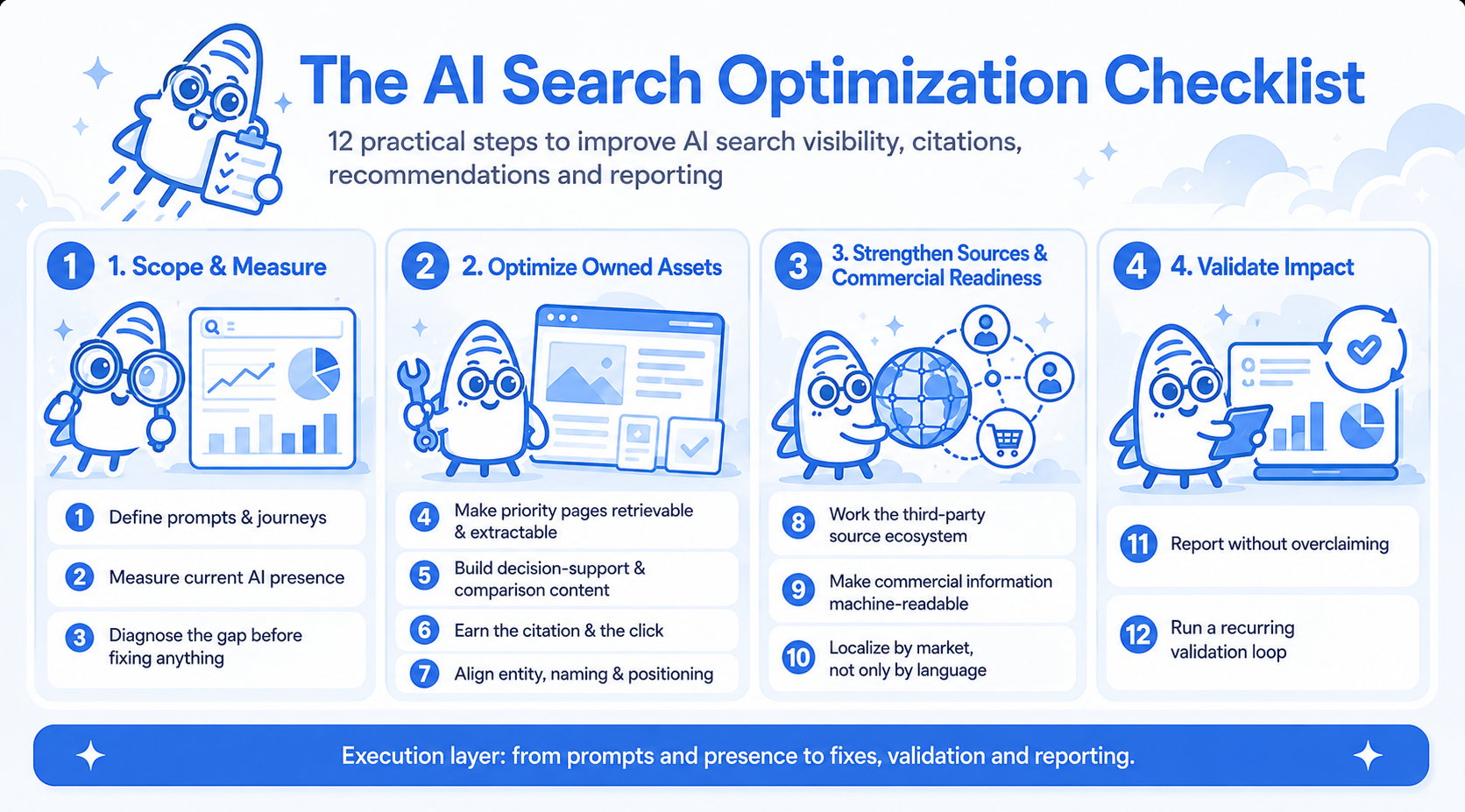
Conducting a thorough audit requires a multi-layered approach. You cannot rely on a single tool or a simple checklist. The process involves analyzing your technical infrastructure, your content’s semantic relevance, and your brand’s digital footprint across the AI ecosystem. Below are the critical components that must be evaluated.
1. Technical Infrastructure and Crawlability for AI Bots
AI models use specific crawlers, such as GPTBot, Google-Extended, and CCBot, to gather training data and real-time information. Your first step is to check your robots.txt file and server logs to see if these bots are being blocked. Many websites inadvertently block these crawlers due to outdated security rules, effectively making themselves invisible to AI search engines.
Additionally, you must assess your site’s JavaScript rendering. AI crawlers are improving, but they still struggle with heavy JavaScript frameworks. If your content is loaded dynamically, the AI might only see an empty shell. The audit should include a test using a tool like Screaming Frog or a custom script to render your pages as an AI bot would, ensuring that the core content is present in the raw HTML response.
2. Semantic Content Analysis and Entity Coverage
This is the heart of the audit. You need to analyze your top-performing pages and compare them against the “entity space” of your target keywords. For example, if your keyword is “AI SEO AI Search Optimization Audit,” the related entities include “large language models,” “retrieval-augmented generation,” “semantic search,” and “structured data.” Your content must naturally cover these related concepts to establish topical authority.
Use tools like Google’s Natural Language API or TextRazor to extract the entities from your content. Then, compare this list against the entities that appear in the top AI-generated answers for your target query. If the AI answer mentions a specific statistic or a particular methodology that you have not covered, that is a gap. The audit should produce a list of missing entities that need to be addressed in your content refresh.
3. Structured Data and Schema Markup Validation
Schema markup is the language that helps machines understand your content. While standard SEO audits check for the presence of Schema, an AI audit checks for its accuracy and completeness. For AI search, the most critical schemas are:
- Article and NewsArticle for editorial content.
- FAQPage for question-and-answer blocks.
- HowTo for instructional content.
- Product and Offer for e-commerce.
- Organization and Person for brand identity.
- Content injected via JavaScript that is not present in the initial HTML.
- Images that lack descriptive alt text (AI cannot “see” images, only read the text).
- Navigation menus that obscure the main content in the DOM order.
- Paywalls or login gates that block the bot entirely.
Validate your markup using the Rich Results Test. However, do not stop there. Check whether your Schema is using the correct “mainEntity” properties. A common mistake is marking up a FAQ page without linking the questions to the main entity of the page, which confuses the AI about the context of the answers.
4. Brand Mentions and Digital Footprint Analysis
AI models do not just look at your website; they look at the entire web to determine your reputation. This is where E-E-A-T (Experience, Expertise, Authoritativeness, Trustworthiness) becomes quantifiable. The audit must include a search for unlinked brand mentions across forums, social media, and news sites. AI models use these mentions to validate that you are a real, recognized authority.
Tools like Brand24 or Mention can help track these. However, the analysis should go deeper. You need to assess the sentiment of these mentions. If your brand is mentioned in a negative context on a high-authority forum, the AI might associate your entity with that negativity. The audit should flag these instances and recommend a digital PR strategy to counterbalance them.
How to Perform the Audit: A Step-by-Step Guide
Now that you understand the components, This process is designed to be repeatable, allowing you to track improvements over time.
Step 1: Inventory Your AI Visibility Baseline
Before changing anything, you need to know where you stand. Start by querying the major AI platforms—ChatGPT, Perplexity, Google’s AI Overviews, and Bing Chat—with your primary keywords. Record the answers. Note whether your brand appears as a citation, a reference, or not at all. This baseline will serve as your control group for measuring the success of your optimization efforts.
Create a spreadsheet to log these results. Include the exact query, the AI platform used, the date, and the response text. This data is gold, as it shows you exactly what the AI considers the “best” answer, which you can then reverse-engineer.
Step 2: Run a Technical Crawl with AI Bot Simulation
Use a tool like Sitebulb or a custom Python script to crawl your site. The key is to simulate the user agent of GPTBot or Google-Extended. This will show you the exact HTML that the AI sees. Look for the following red flags:
Fix any issues found. The goal is to make your content as accessible as a plain text file, while still maintaining a rich user experience for human visitors.
Step 3: Conduct a SERP and AI Answer Gap Analysis
Take the baseline answers you collected in Step 1 and analyze their structure. Most AI answers follow a specific pattern: a direct definition, a list of key points, and a conclusion. Compare this structure to your own content. Does your introduction provide a direct, 50-word definition of the topic? Do you use bullet points to break down complex processes?
Use a tool like AlsoAsked to find the “People Also Ask” questions related to your keyword. AI models love to answer these long-tail questions. Your audit should identify which of these questions you have not answered on your page. Create a content brief for each missing question, ensuring that the answer is concise (40-60 words) and placed in a clearly marked section.
Step 4: Evaluate Your Off-Site Entity Signals
Your website is only one piece of the puzzle. The AI needs to see consistent information about your brand across the web. Check your Wikipedia presence (if applicable), your Crunchbase profile, your LinkedIn company page, and your Google Business Profile. Ensure that the “Name, Address, Phone Number” (NAP) and the description of your business are identical across all platforms.
Next, analyze your backlink profile, but with a twist. Instead of looking at Domain Authority, look at the topical relevance of the linking pages. A link from a tech blog about AI is worth ten times more than a link from a general directory. The audit should categorize your backlinks by topic and identify gaps in your topical link coverage.
Benefits and Limitations of the AI Search Optimization Audit
Understanding the pros and cons of this audit helps set realistic expectations for your team and stakeholders.
The Benefits: Future-Proofing and Visibility
The primary benefit is resilience. As Google and other platforms continue to integrate AI into their core algorithms, sites that are optimized for A The audit also improves the user experience. By forcing you to write clearer, more structured content, you are also improving readability for humans, which can reduce bounce rates and increase time on page.
Furthermore, this audit helps you diversify your traffic sources. Instead of relying solely on Google organic clicks, you can become the cited source in ChatGPT responses, which can drive significant referral traffic and brand awareness. This is particularly valuable for B2B companies where decision-makers are increasingly using AI tools for research.
The Limitations: Volatility and Lack of Standardization
The biggest limitation is the volatility of AI algorithms. What works today might not work tomorrow. AI models are updated frequently, and their citation behavior can change without notice. This means the audit is not a one-time fix but a continuous process. You must re-run the baseline tests monthly to stay ahead of the curve.
Another limitation is the lack of a unified analytics dashboard. While Google Search Console shows you standard search performance, t This makes it difficult to quantify the ROI of your efforts. You will need to rely on custom tracking, such as using UTM parameters on links you share in AI-optimized directories, to measure the impact.
Common Mistakes and How to Avoid Them
Many businesses rush into AI optimization and make critical errors that harm their visibility. Here are the most common pitfalls found during an AI SEO AI Search Optimization Audit.
Mistake 1: Keyword Stuffing in AI Prompts
Some marketers try to “hack” AI by stuffing keywords into hidden text or meta tags. This is futile. AI models are trained to ignore spammy signals. Instead of trying to trick the machine, focus on providing genuine value. Write for the user, and the A
Mistake 2: Ignoring the “Zero-Click” Answer
Many site owners panic when they see their click-through rates drop. They fail to realize that appearing in the AI answer is a win, even if the user does not click. The audit should track “brand impression” in AI responses as a separate KPI from clicks. This builds top-of-mind awareness.
Mistake 3: Blocking AI Crawlers Out of Fear
Some publishers block GPTBot because they fear their content will be used to train models without compensation. While this is a valid concern, blocking the bot also prevents real-time citations. If you want to be referenced in ChatGPT’s live browsing feature, you must allow the bot. A better strategy is to use the “GPTBot” directive to allow crawling but disallow training, if your CMS supports it.
Important Notes for Maintaining AI Search Health
After completing the audit and implementing fixes, you must establish a maintenance schedule. AI search optimization is not a “set and forget” strategy. The following notes are critical for long-term success.
First, monitor the official documentation from OpenAI, Google, and Perplexity. They frequently update their crawler policies and rendering guidelines. Subscribing to their developer blogs ensures you are aware of changes before they impact your traffic. Second, keep your content fresh. AI models prioritize recent information, especially for news and statistics. A page that is two years old will be considered stale, even if it is well-written. Update your key pages quarterly with new data and examples.
Finally, do not neglect traditional SEO. The technical foundation of your site (site speed, mobile responsiveness, secure HTTPS) still matters. The AI audit is an addition to your standard SEO practices, not a replacement. A site that is technically broken will fail both human and AI users.
Frequently Asked Questions
What is the difference between traditional SEO and AI Search Optimization?
Traditional SEO focuses on ranking in a list of blue links by optimizing for keywords and backlinks. AI Search Optimization focuses on being cited as a source within a generated answer. It requires structured data, entity clarity, and content that directly answers conversational queries, rather than just matching search terms.
How often should I run an AI Search Optimization Audit?
You should run a full audit quarterly. However, you should perform a baseline check of your AI visibility (querying ChatGPT and Perplexity) on a weekly basis. The algorithms change rapidly, and a weekly check helps you catch sudden drops in visibility that might be caused by an algorithm update or a technical error.
Can small websites compete in AI search results?
Yes, but they must focus on niche authority. AI models look for the most relevant and clear answer, not necessarily the biggest brand. A small site with a highly specific, well-structured guide on a niche topic can easily outrank a large generalist site. The key is to build deep topical authority and earn citations from other reputable sources in that niche.
Does appearing in AI Overviews reduce website traffic?
It can reduce traditional clicks, but it increases brand impressions. The data shows that users often trust the AI answer without clicking. However, if your brand is the cited source, users are more likely to search for you directly later. The audit should measure “assisted traffic” and brand searches, not just direct clicks, to get the full picture.
What is the best tool for an AI Search Optimization Audit?
T A combination is required. Use Screaming Frog for technical crawling, Google’s Natural Language API for entity extraction, and manual querying of AI platforms for baseline data. Emerging tools like Profound and Otterly.ai are starting to offer AI-specific analytics, but manual verification is still essential for accuracy.
Conclusion
The AI SEO AI Search Optimization Audit is no longer a luxury; it is a necessity for any brand that wants to remain visible in the evolving search ecosystem. By moving beyond traditional metrics and embracing the principles of entity-based indexing, semantic clarity, and machine-readable structure, you position your content to be the definitive source for AI models. The process requires diligence, a willingness to adapt, and a commitment to producing genuinely authoritative content. Start with the baseline assessment, fix the technical gaps, and continuously refine your entity coverage. The brands that master this audit today will be the ones that own the answers of tomorrow. The time to act is now, as the algorithms are already learning which sources to trust.
Xem thêm:
- AI Structured Data: The Complete Guide to Automating Schema Markup for Smarter Search
- AI SEO Google Search Console: The Complete Guide to Smarter Search Performance
- AI SEO for Enterprises: The Complete Guide to Scaling Organic Growth in 2025
- AI SEO AI SEO Audit Tool: The Complete Guide to Automated Site Optimization
- AI SEO Smart Search: The Complete Guide to Future-Proofing Your Organic Traffic
Bài viết cùng chủ đề:

AI SEO SEO Automation with Make: The Complete Workflow Guide

AI SEO SEO Automation with Zapier: The Complete Workflow Guide

AI SEO SEO Automation with n8n: The Complete Workflow Guide
AI SEO SEO Automation with Gemini: The Complete Guide to Scaling Organic Growth

AI SEO SEO Automation with Claude: The Complete Guide to Scaling Content in 2025

AI SEO SEO Automation with ChatGPT: The Complete Playbook for 2025

AI SEO & SEO Automation for Affiliate Sites: The 2025 Playbook for Passive Income Growth
AI SEO & SEO Automation for Bloggers: The Complete Guide to Scaling Your Content

AI SEO & SEO Automation for Agencies: The Complete 2025 Playbook

AI SEO and SEO Automation for Ecommerce: The Complete Playbook for 2025

AI SEO & SEO Automation for WordPress: The Complete Playbook for 2025
AI SEO SEO Automation Strategy: The Complete Playbook for 2025

Mastering the AI SEO SEO Automation Process: A Complete Guide to Scaling Organic Growth
AI SEO SEO Automation System: The Complete Guide to Scaling Organic Growth in 2025
AI SEO SEO Automation Platform: The Complete Guide to Scaling Organic Growth in 2025
AI SEO SEO Automation Software: The Complete Guide to Scaling Organic Growth in 2025















