
No products in the cart.
How to Generate Meta Tags with AI: Streamline SEO and Boost Click-Through Rates
29
Jul
Jul
Mastering how to generate meta tags with AI has become a critical skill for modern digital marketers. Meta tags – those snippets of HTML that tell search engines and users what a page is about – directly influence rankings and click-through rates. Yet writing unique, compelling meta titles and descriptions for hundreds of pages is a monumental task. Artificial intelligence now automates this process, turning hours of manual work into minutes. This guide explores the technology behind AI-powered meta tag generation, provides a step-by-step implementation process, and reveals best practices to ensure your automated tags outperform human-written versions.
Understanding Meta Tags and Their Core SEO Value
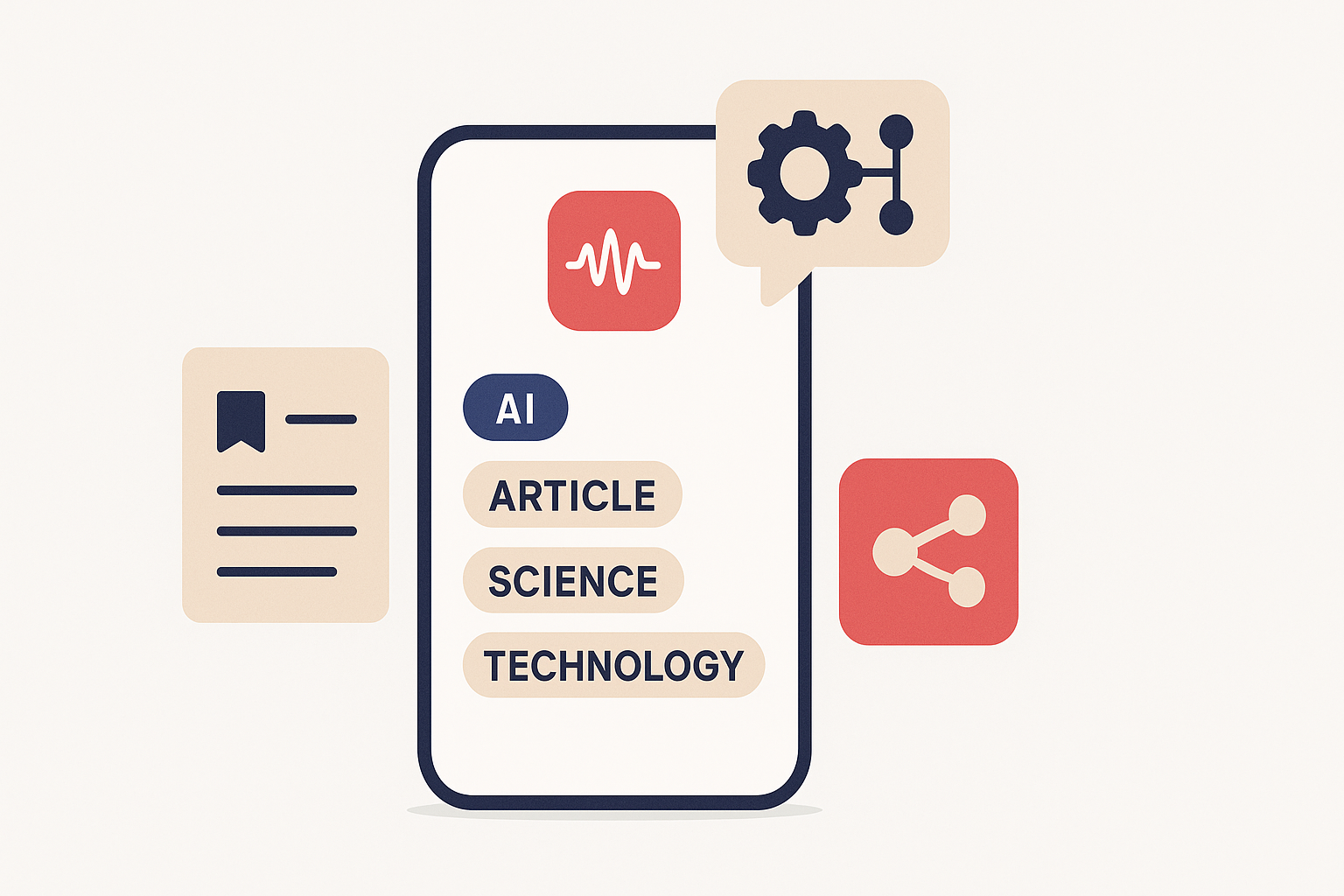
Meta tags are elements in the page’s head section that provide metadata to browsers and search engines. While many don’t affect rankings directly, two tags heavily influence organic performance: the title tag and the meta description. The title tag appears as the clickable headline in search results and is a confirmed ranking factor. The meta description, though not a direct ranking signal, shapes the snippet text beneath the title and strongly impacts click-through rate (CTR).
A well-crafted title tag typically stays under 60 characters to avoid truncation, includes the primary keyword near the beginning, and communicates value with urgency or clarity. The meta description, ideally under 160 characters, expands on the title by highlighting benefits, solving a problem, or presenting a unique selling point. Other meta tags like robots, viewport, and canonical are technical, but AI today can assist with those too.
For years, SEO professionals wrote these tags manually, often using spreadsheets and rigid templates. This approach doesn’t scale for large e-commerce sites, news portals, or blogs with thousands of URLs. Duplicate or missing meta tags remain one of the most common technical SEO errors. AI changes the game by analyzing page content and generating contextually relevant, human-readable tags at scale.
The Technology Behind AI Meta Tag Generation
Modern AI-powered meta tag generation relies on large language models (LLMs) such as GPT‑4, Claude, or specialized variants fine-tuned on SEO copy. These models use deep neural networks trained on vast corpora of web pages, articles, and marketing copy. When given a page’s content, the AI predicts the most relevant and engaging phrasing for a title and description.
The process typically involves three key stages: content ingestion, semantic analysis, and controlled generation. First, the AI reads the main textual content, heading structure, and any provided target keywords. Then it identifies the core topic, intent, and unique value propositions. Finally, using prompt engineering and context length constraints, it outputs a title and description that fit character limits while incorporating primary and secondary keywords naturally.
Some tools also leverage SERP analysis – they study what already ranks for the target query and generate meta tags that match user expectations but stand out from competitors. Advanced systems integrate readability scores and emotional triggers to boost CTR. By applying fine-tuning on high-CTR meta tags, AI can produce copy that feels both human and data-driven.
Step-by-Step Guide: How to Generate Meta Tags with AI

Generating meta tags with AI isn’t simply pressing a button. A structured approach ensures the output aligns with SEO strategy and brand voice. Follow these six steps to integrate AI seamlessly into your workflow.
Step 1: Select the Right AI Tool or Platform
Multiple options exist, from standalone language models to integrated SEO platforms. ChatGPT and the OpenAI API offer raw generation power; specialized tools like Jasper, Writesonic, and Copy.ai provide templates for meta descriptions. SEO suites such as SurferSEO, Frase, and NeuronWriter combine content analysis with AI writing. For large-scale automation, consider tools like Alli AI, Rank Math’s AI module, or custom scripts using the OpenAI API. The best choice depends on volume, budget, and technical capability.
Step 2: Prepare High-Quality Input Data
AI output is only as good as the input. For each page, gather the full body text, the H1 headline, primary keyword, and secondary keywords. If the page targets a specific search intent (informational, transactional, navigational), note that as well. Clean text that removes boilerplate, navigation, and footer clutter improves relevance. For product pages, include product name, key features, and a unique benefit. The more context the AI receives, the more accurate the tag.
Step 3: Design a Detailed Prompt
A well-engineered prompt guides the model to deliver SEO-optimized meta tags. Avoid vague instructions like “write meta tags.” Instead, provide explicit constraints:
Example prompt: “Act as an SEO expert. Generate an SEO title (max 60 chars) and a meta description (max 155 chars) for a page about [topic]. The primary keyword is [keyword]. Include [keyword] naturally. The title must be compelling, include a benefit, and encourage clicks. The description must summarize the content and include a call to action. Do not use clickbait. Output only the title and description separated by a line break.”
Many AI models struggle with precise character counts, so it’s wise to generate multiple variations and manually trim later.
Step 4: Bulk Generate and Review
For hundreds of pages, use CSV uploads or API integrations to feed content row by row. Most SEO tools allow bulk input of URLs or content snippets. The AI returns suggested title and description pairs. Always batch review the output for accuracy, brand consistency, and uniqueness. Check for hallucinated facts – AI might invent numbers or product claims not present on the page. Ensure every tag directly reflects the page’s actual content to avoid misleading users.
Step 5: Implement Tags in Your CMS
Once approved, deploy the meta tags. In WordPress, plugins like Yoast SEO and Rank Math let you paste AI-generated titles and descriptions into dedicated fields. For Shopify or custom builds, you can update meta fields via API. Some enterprise SEO platforms sync directly. If you generated tags via a spreadsheet, import them using a CSV meta tag updater plugin or a developer script. After implementation, verify with a tool like Screaming Frog that all tags are rendered correctly and within length limits.
Step 6: Monitor Performance and Iterate
Track changes in Google Search Console. Look for improvements in impressions, CTR, and average position for the modified pages. If a tag underperforms after two to three weeks, tweak it. AI can assist in variant generation for A/B testing – some platforms allow you to rotate meta descriptions dynamically. Use click data to refine your prompts, adding words that drive engagement for your niche. Remember, meta tag generation is not a set-it-and-forget-it task; continuous optimization yields compounding gains.
Key Benefits of AI-Powered Meta Tag Generation
- Unmatched speed and scalability: AI can generate thousands of unique meta tags in minutes, eliminating the bottleneck of manual writing and ensuring no page goes live without optimized metadata.
- Consistency in brand voice: With a properly tuned prompt, the AI maintains a uniform tone across all pages, whether formal, playful, or authoritative, reinforcing brand identity.
- Data-driven optimization: AI tools that analyze SERP competitors can craft meta descriptions that mirror high-CTR patterns, integrating emotional hooks and power words proven to attract clicks.
- Multilingual support: Advanced models generate meta tags in dozens of languages, enabling global SEO strategies without hiring native copywriters for every locale.
- Reduced human error: AI automatically includes target keywords and avoids common mistakes like truncation or duplicate tags when clear rules are provided.
- Cost efficiency: While human copywriters may charge per tag, AI reduces the cost per page dramatically, making thorough meta optimization affordable for startups and large enterprises alike.
- Blind trust without editing: Publishing AI output as‑is often results in tags that are factually wrong or poorly phrased. Always allocate time for a quick review.
- Using a one-size-fits-all prompt: An e‑commerce product page needs a different angle than a how-to guide. Tailor prompts to the page’s intent and user journey stage.
- Ignoring SERP features: AI might generate a generic description missed the chance to earn rich snippets. Incorporate question-answering formats or list previews where relevant.
- Neglecting mobile truncation: Google uses a pixel‑width cutoff, not a strict character count. Titles and descriptions that seem perfect on desktop may be clipped on smartphones. Test using an emulator.
- Forgetting brand differentiators: AI can mimic competitors. Inject your unique value proposition into the prompt to avoid sounding like every other result.
- Not updating tags when content changes: An AI tag generated six months ago may no longer reflect updated page content. Schedule periodic audits, and re‑generate tags for refreshed pages.
- Combine AI generation with editorial refinement: Let the AI produce 5–10 variations per page. A human picks the best one and tweaks it for tone, accuracy, and length.
- Include intent signals in your prompt: Tell the AI if the page is transactional (“Buy now,” “Free shipping”) or informational (“Learn how,” “Complete guide”). Intent drives CTR.
- Leverage structured data: Feed product schema markup details into the prompt – price, rating, availability – so the AI can craft meta descriptions that align with rich result expectations.
- A/B test meta tags at scale: Use tools like Google Optimize (server-side) or specialized SEO A/B platforms to serve different descriptions to equal traffic segments and measure CTR differences.
- Always respect length guidelines: Build a simple post‑processing rule: if title.length > 60, truncate at nearest word boundary; if description.length > 155, cut to last complete sentence.
- Build a negative prompt list: Ban certain phrases that sound robotic (e.g., “In this article we will,” “Click here to read more”). Instruct the AI to avoid them to keep the copy natural.
- Use AI to audit existing tags: Reverse the process. Have AI analyze your current meta tags and suggest improvements based on top-ranking competitors. This reveals blind spots.
Limitations to Consider When Using AI for Meta Tags
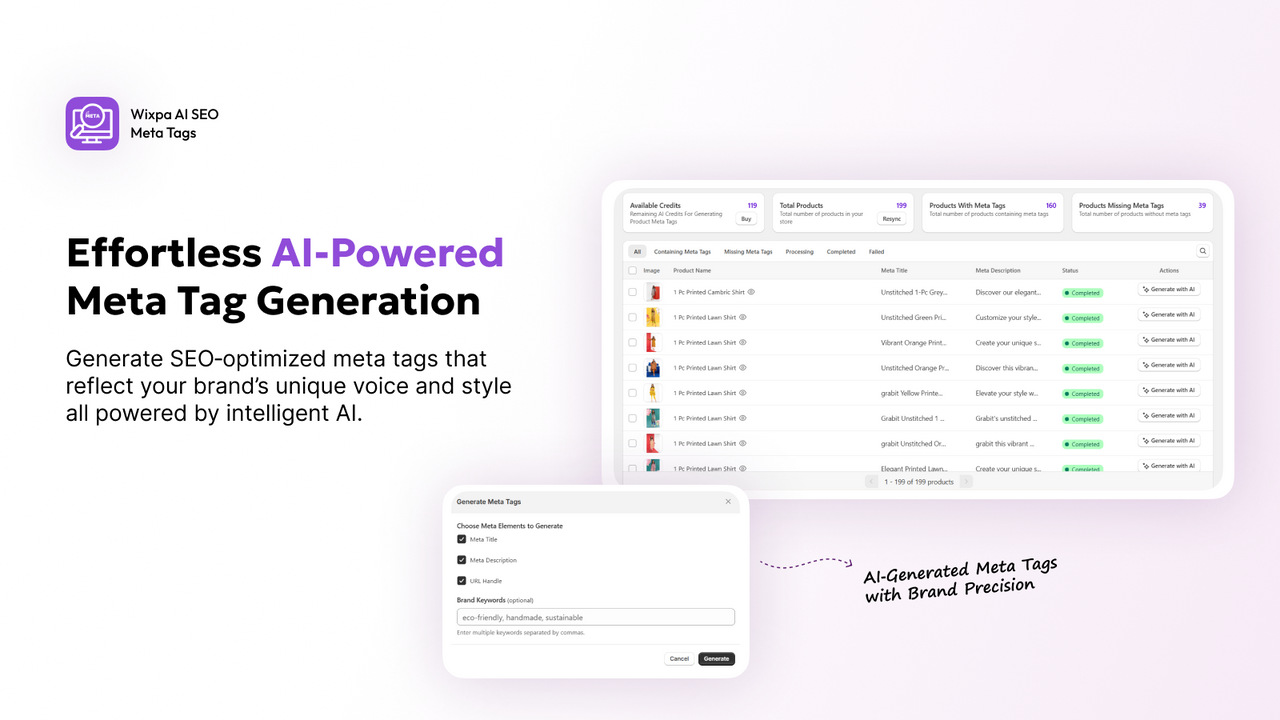
Despite its power, AI is not a complete replacement for human judgment. One major limitation is hallucination – the model may invent product features, statistics, or offers that don’t exist on the page. This misleads users and can damage trust. Always fact-check AI output against the actual content.
Character count precision remains inconsistent. Models can output a title 10-15 characters too long even when told to stay under 60. Automated post-processing scripts or manual trimming are still necessary. Additionally, AI-generated tags sometimes sound generic or formulaic, lacking the nuance of a seasoned copywriter who understands subtle brand differentiation.
Over‑reliance on AI without human review can lead to meta descriptions that are factually correct but emotionally flat. They may miss local cultural references or fail to address seasonality. Finally, AI models may inadvertently replicate biases from training data, producing tags that don’t resonate with diverse audiences. A hybrid approach – AI for the heavy lifting, humans for strategic refinement – consistently delivers the best results.
AI-Generated vs. Manually Written Meta Tags: A Detailed Comparison
| Factor | AI-Generated Meta Tags | Manually Written Meta Tags |
|---|---|---|
| Speed | Thousands per hour | 5–15 per hour per writer |
| Scalability | Virtually unlimited | Limited by team size |
| Keyword Integration | Consistent, error-free if prompted correctly | Depends on writer’s skill and checklist discipline |
| Creativity & Brand Voice | Can be tuned via prompts; may feel templated | High; nuanced, emotionally resonant |
| Originality | Generally unique but may produce similar patterns across niches | Fully original when crafted by different writers |
| CTR Optimization | Superior when fed SERP data; evidence-based patterns | Relying on writer intuition and testing |
| Cost per tag | Fraction of a cent (API) to a few dollars per month (platform) | $2–$15+ per tag for professional copy |
| Best Use Case | E‑commerce, large blogs, programmatic pages | High-value landing pages, cornerstone content |
The table makes it clear: AI excels at volume and data-backed optimization, while humans shine where deep storytelling and brand personality are essential. The most effective SEO strategies blend both, using AI to create a solid baseline and human editors to polish key pages.
Common Mistakes When Generating Meta Tags with AI
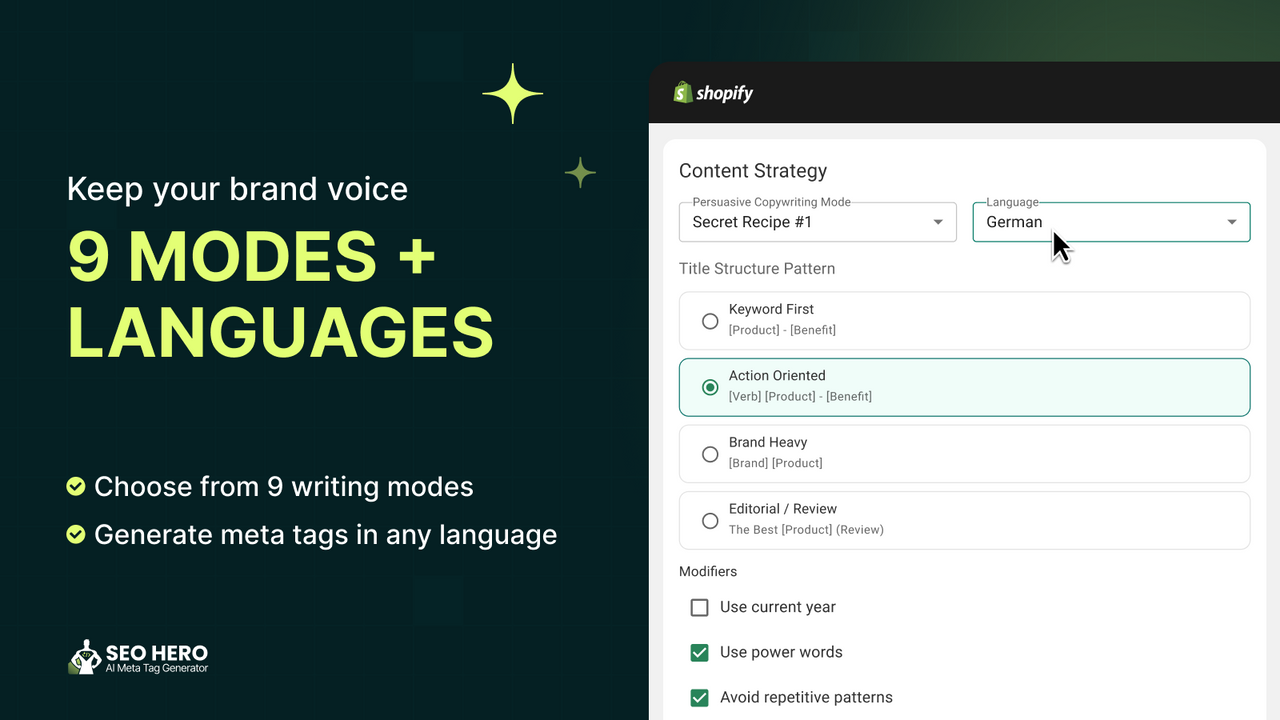
Even seasoned marketers stumble when first adopting AI for meta tags. Recognizing these pitfalls saves time and protects rankings.
Best Practices for High-Performing AI Meta Tags
To extract maximum SEO value from AI-generated meta tags, blend automation with human insight using these expert practices.
Frequently Asked Questions About AI Meta Tag Generation
Can AI write SEO-friendly meta tags that help pages rank?
Yes. AI models trained on vast datasets can generate keyword‑optimized, engaging meta tags. While the tags themselves aren’t a direct ranking factor, their ability to improve click-through rate can indirectly boost rankings over time, and they satisfy Google’s relevance guidelines.
What is the best AI tool for generating meta descriptions at scale?
For large sites, using the OpenAI API or Google’s Gemini API with a custom script provides the most control. Among ready‑made SEO platforms, SurferSEO, NeuronWriter, and the AI features in Rank Math SEO score highly for mass meta tag generation.
How do I ensure AI-generated meta descriptions remain unique?
Feed the AI unique page content and explicitly instruct it to avoid generic phrasing. Include a line like “Create a description that could only apply to this product/service.” Then validate uniqueness using a bulk plagiarism checker or by scanning for duplicate snippets in Screaming Frog.
Will Google penalize pages using AI-written meta tags?
Google does not penalize AI content or meta tags as long as they are helpful and accurate. The search engine’s focus is on quality and relevance. Misleading tags that don’t reflect page content can lead to manual action, but this applies regardless of how the tag was generated.
Can AI meta tags instantly improve click-through rate?
Not instantly, but often quickly. When AI-generated tags better match search intent and include compelling hooks, CTR can rise within days of indexation. Consistent monitoring for 2–4 weeks reveals the true impact, and continued refinement can sustain improvement.
How many meta tags can AI generate at once?
T With API access, you can generate thousands of title and description pairs per hour. The constraint is your review capacity. A practical approach is to batch process 100–200 pages at a time, verify quality, and deploy in waves.
Conclusion
Learning how to generate meta tags with AI unlocks a level of efficiency and SEO precision that manual processes simply cannot match. AI tools – from ChatGPT to integrated SEO platforms – can analyze page content, incorporate keywords, and produce readable, enticing titles and descriptions in seconds. Yet the true power lies in a hybrid strategy: let AI handle volume and data‑driven drafting, then apply human expertise to refine, personalize, and fact‑check. By following the step-by-step framework, avoiding common mistakes, and continuously iterating based on performance data, any site can transform its meta tags into a competitive advantage. Start with a small batch, measure the CTR lift, and scale confidently knowing that every page now carries a sharp, AI‑informed meta tag designed to stand out in the search results.
Xem thêm:
- AI SEO Fundamentals: The Complete Guide to Mastering Search in the Age of Artificial Intelligence
- AI SEO Research Workflow: The Complete Guide to Scaling Organic Growth
- AI SEO GEO Strategy: The Complete Guide to Generative Engine Optimization in 2025
- AI SEO Website Architecture: The Complete Blueprint for 2025
- AI SEO for Portfolio Websites: The Complete Guide to Getting Found in 2025
Bài viết cùng chủ đề:

AI SEO SEO Automation with Make: The Complete Workflow Guide

AI SEO SEO Automation with Zapier: The Complete Workflow Guide

AI SEO SEO Automation with n8n: The Complete Workflow Guide
AI SEO SEO Automation with Gemini: The Complete Guide to Scaling Organic Growth

AI SEO SEO Automation with Claude: The Complete Guide to Scaling Content in 2025

AI SEO SEO Automation with ChatGPT: The Complete Playbook for 2025

AI SEO & SEO Automation for Affiliate Sites: The 2025 Playbook for Passive Income Growth
AI SEO & SEO Automation for Bloggers: The Complete Guide to Scaling Your Content

AI SEO & SEO Automation for Agencies: The Complete 2025 Playbook

AI SEO and SEO Automation for Ecommerce: The Complete Playbook for 2025

AI SEO & SEO Automation for WordPress: The Complete Playbook for 2025
AI SEO SEO Automation Strategy: The Complete Playbook for 2025

Mastering the AI SEO SEO Automation Process: A Complete Guide to Scaling Organic Growth
AI SEO SEO Automation System: The Complete Guide to Scaling Organic Growth in 2025
AI SEO SEO Automation Platform: The Complete Guide to Scaling Organic Growth in 2025
AI SEO SEO Automation Software: The Complete Guide to Scaling Organic Growth in 2025















