
No products in the cart.
AI SEO GEO Strategy: The Complete Guide to Generative Engine Optimization in 2025
10
Aug
Aug
The digital marketing landscape has shifted dramatically. Traditional search engine optimization focused on ranking in blue links. Today, an AI SEO GEO Strategy is essential for brands that want visibility in AI-generated answers, ChatGPT responses, and Google’s AI Overviews. Generative Engine Optimization (GEO) is the practice of making your content easily discoverable, quotable, and citable by artificial intelligence systems. This comprehensive guide explains how to build a winning strategy that combines classic SEO principles with new tactics designed for large language models.
Understanding the Core Concepts: SEO, GEO, and AI Search
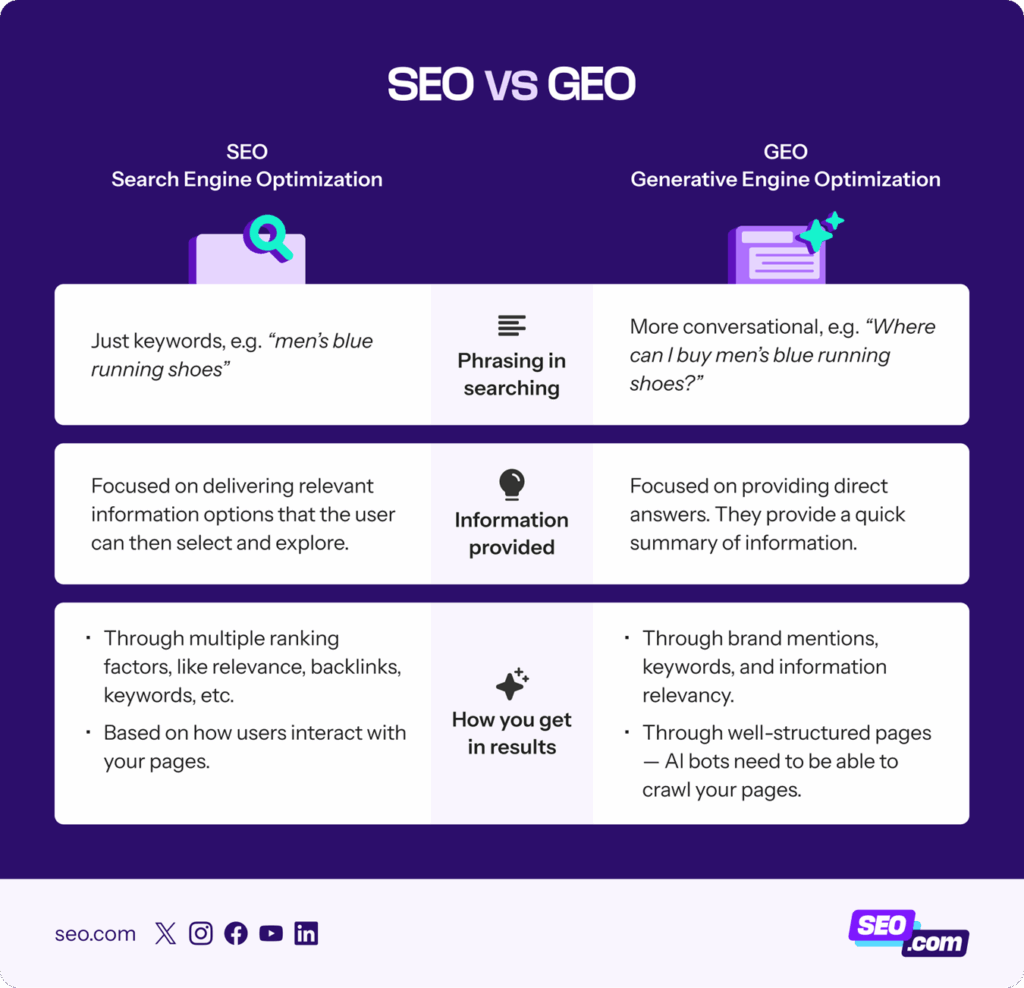
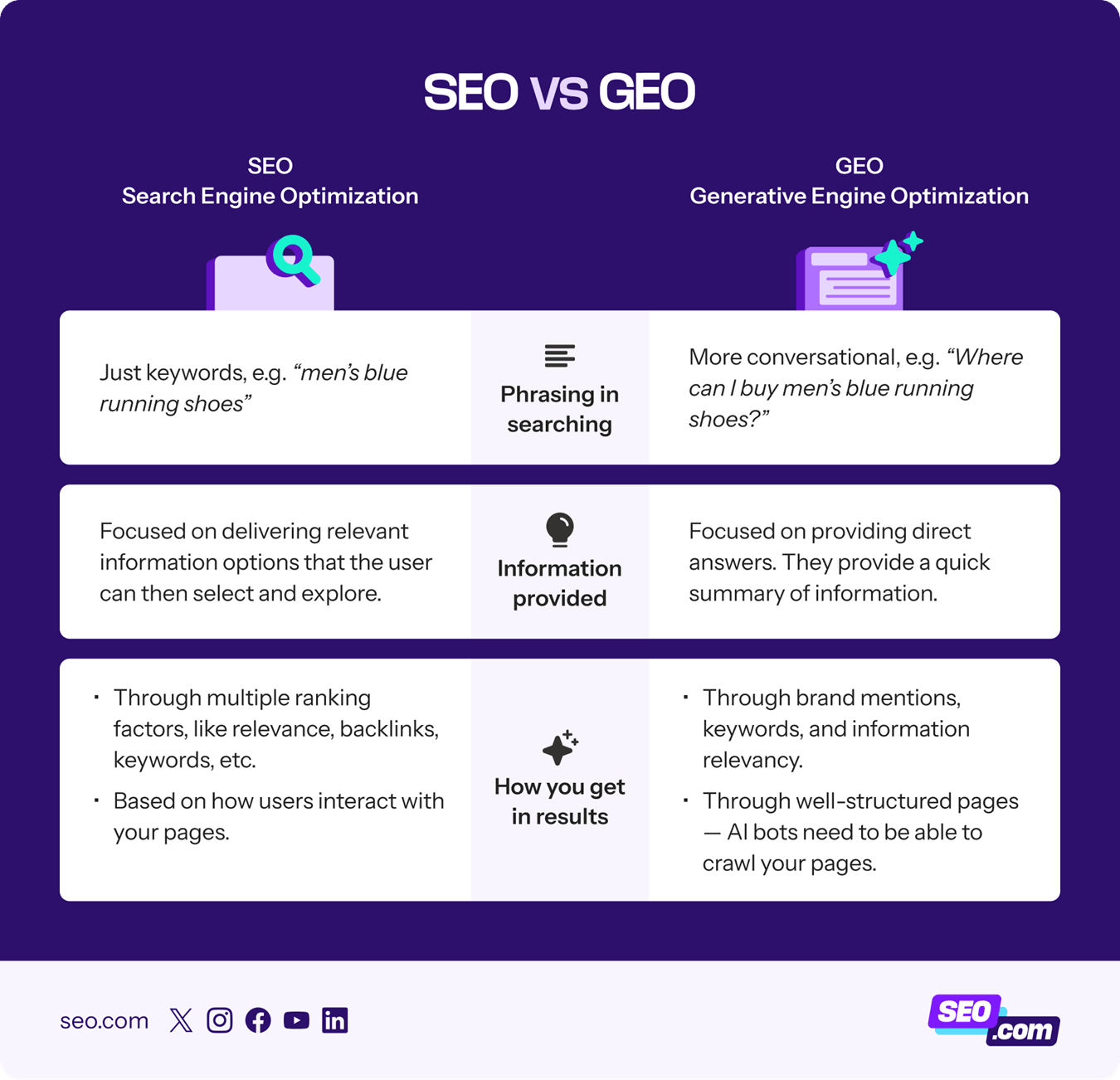
To build an effective AI SEO GEO Strategy, you must first understand the difference between how traditional search engines and generative engines process information. Traditional SEO targets crawlers that index web pages based on keywords and backlinks. Generative engines, however, use natural language processing to synthesize answers from multiple sources. They do not just rank pages; they generate unique responses based on patterns learned from vast datasets.
GEO focuses on optimizing content so that AI models recognize your brand as a trusted authority. This involves structuring data clearly, providing direct answers, and building a reputation that algorithms deem reliable. The goal is to become one of the primary sources an AI uses to formulate its response to a user query.
Why Traditional SEO Alone Is No Longer Sufficient
Traditional SEO metrics like domain authority and exact-match keywords still matter, but they are not the only factors. AI models prioritize clarity, factual accuracy, and source diversity. A page that ranks number one on Google might not be cited by ChatGPT if the content is buried in jargon or lacks a clear, direct answer to the query. An AI SEO GEO Strategy bridges this gap by aligning your content with the way AI models extract and synthesize information.
The Core Components of a Successful AI SEO GEO Strategy
Implementing a robust strategy requires a multi-faceted approach. You cannot simply rewrite existing content. You must create a framework that serves both traditional crawlers and generative engines simultaneously. The following components form the foundation of any successful GEO plan.
1. Entity Optimization and Semantic Clarity
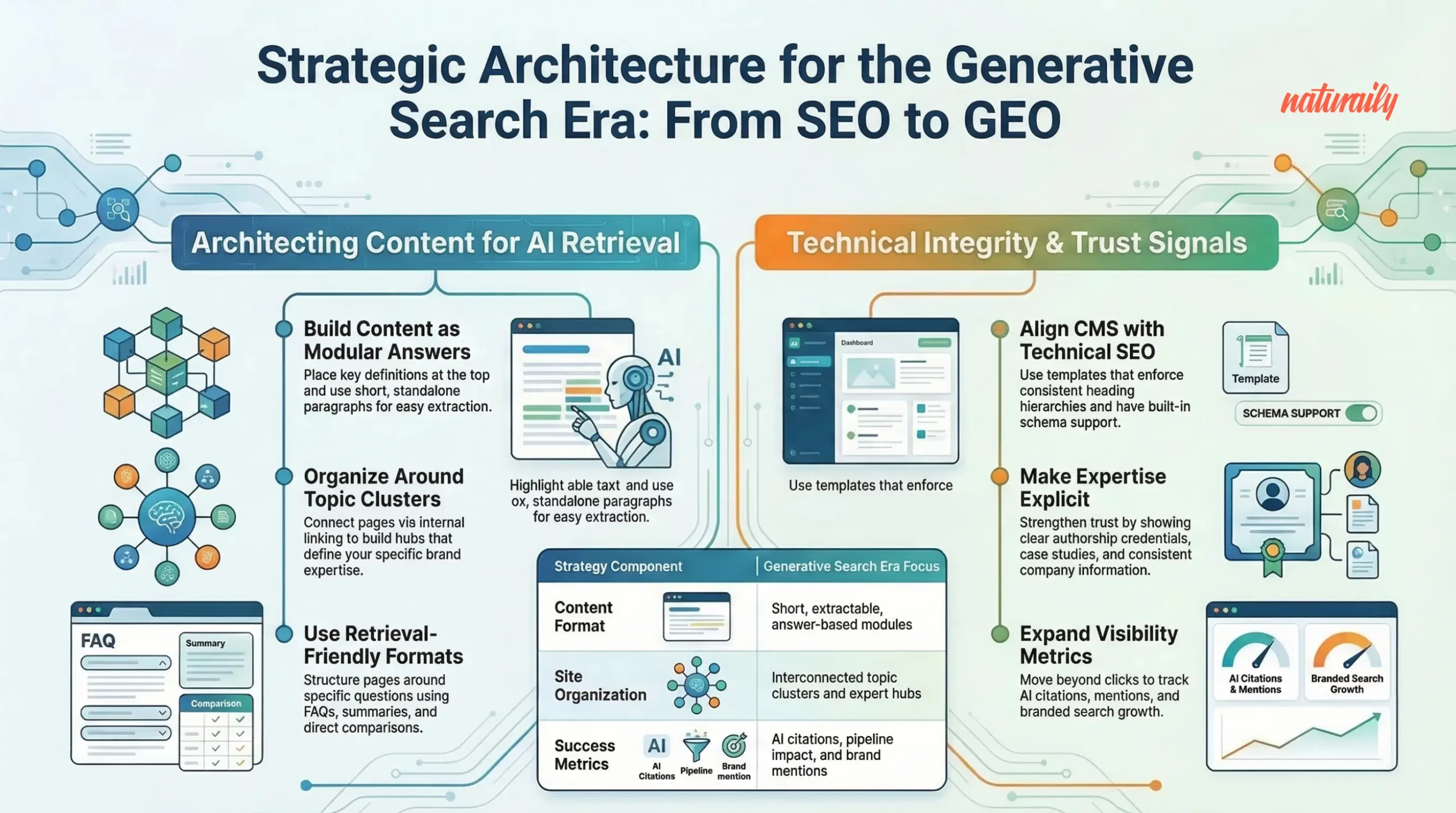
AI models understand the world through entities—people, places, concepts, and things—and the relationships between them. Your content must clearly define these entities. Use consistent naming conventions throughout your site. If you write about “artificial intelligence,” do not switch to “AI” without first establishing the connection. Provide context for every term you use. This helps the AI model map your content to its internal knowledge graph.
Practical steps include adding an “About” page that clearly states who you are, what you do, and who you serve. Use structured data markup like Schema.org to define your business type, products, and reviews. This gives AI models explicit signals about your identity and expertise.
2. Direct Answer Formatting for Featured Snippets and AI Citations
Generative engines love concise, direct answers. When a user asks “What is GEO?”, the AI wants to pull a clear definition from a trusted source. Structure your content to provide these answers immediately. Use the “question-answer” format within your paragraphs. Place the most critical information at the top of the page, followed by supporting details.
For example, if your target keyword is “AI SEO GEO Strategy,” start a section with a direct definition: “An AI SEO GEO Strategy is a systematic approach to optimizing digital content so that it is recognized, cited, and recommended by generative AI engines like ChatGPT, Perplexity, and Google’s Gemini.” This style increases the likelihood of being quoted verbatim.
3. Authoritative Content with Verifiable Data
AI models are trained to avoid hallucination by relying on sources that demonstrate high E-E-A-T (Experience, Expertise, Authoritativeness, Trustworthiness). Your content must include verifiable statistics, case studies, and references to reputable studies. When you cite a statistic, mention the source organization and the year. For instance, “According to a 2024 Gartner report, traffic from traditional search engines is projected to drop by 25% by 2026.” This provides the AI with a concrete data point it can use.
Avoid vague claims. Instead of saying “AI is growing fast,” say “The global AI market size was valued at $196.63 billion in 2023 and is projected to grow at a compound annual growth rate of 37.3% from 2024 to 2030.” Specificity builds trust with both human readers and AI algorithms.
Practical Implementation: How to Execute Your GEO Strategy
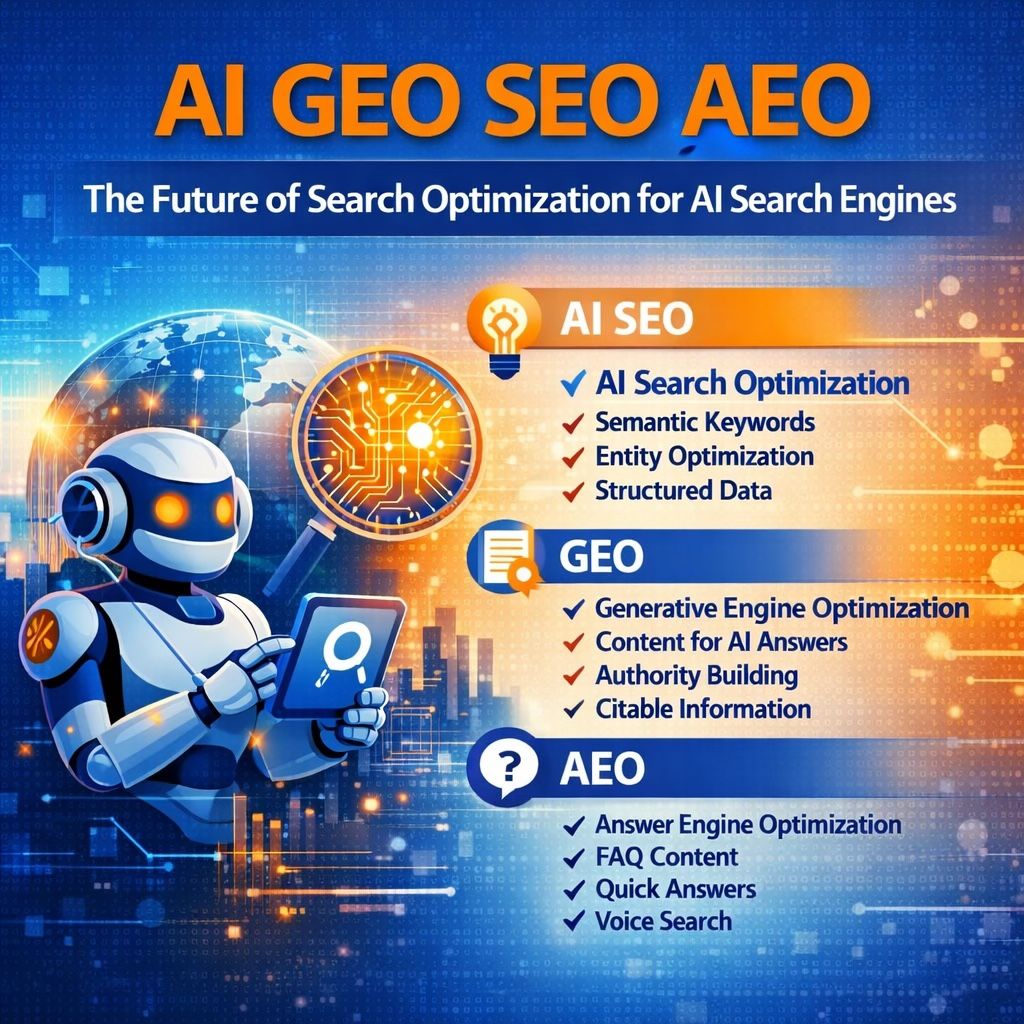
Knowing the theory is not enough. You need a step-by-step action plan. The following workflow outlines how to integrate GEO into your existing marketing operations.
Step 1: Conduct AI Query Research
Start by identifying the questions your target audience asks. Use tools like “AnswerThePublic” and “AlsoAsked” to find long-tail queries. Then, test these queries in ChatGPT or Google’s AI Overviews. Observe the format of the answers. Are they lists? Are they paragraphs? What sources are cited? This research reveals the gaps in your current content.
Create a spreadsheet of these queries and map them to your existing pages. Identify which pages need updates and which new pages you need to create. This is the research phase of your AI SEO GEO Strategy.
Step 2: Restructure Your Content Architecture
Generative engines prefer content that is logically organized. Use clear heading hierarchies (H1, H2, H3) to break down complex topics. Each H2 section should answer a specific sub-question related to the main topic. Use bullet points and tables to present data in a scannable format. This helps the AI parse your content into discrete chunks of information.
Ensure your URLs are descriptive and short. A URL like “/ai-seo-geo-strategy” is much clearer to an AI model than “/post?id=12345”. Internal linking is also crucial. Link to your own related content using descriptive anchor text. This helps AI models understand the relationship between different pages on your site.
Step 3: Optimize for Citation and Quotability
You want AI models to quote you. To do this, you must write quotable sentences. Use strong, declarative statements. For example, “Generative Engine Optimization is the most critical investment for digital marketers in 2025.” This is a bold statement that an AI might use to support a point.
Include a “Key Takeaways” box at the end of each article. Summarize the main points in 3-5 bullet points. This provides a ready-made summary that AI models can easily extract. Also, include a “Sources” section linking to your primary research or data. This reinforces your authority.
Benefits and Limitations of an AI SEO GEO Strategy
Like any marketing approach, GEO has its advantages and challenges. Understanding these helps you set realistic expectations and allocate resources effectively.
Key Benefits of Implementing GEO
- Increased Brand Visibility: Being cited by AI tools puts your brand in front of users who never click on traditional search results.
- Future-Proofing: As AI search becomes the default, you are already positioned to capture that traffic.
- Higher Trust: Being referenced by an AI model acts as a third-party endorsement, boosting your credibility.
- Improved Content Quality: The process of optimizing for AI forces you to write clearer, more factual, and better-structured content, which also improves traditional SEO.
- Lack of Direct Metrics: It is difficult to measure exactly how often your content is cited in AI responses. You need to use indirect metrics like referral traffic from AI platforms.
- Algorithm Volatility: AI models are updated frequently. A strategy that works today might not work next month.
- Resource Intensive: Creating the depth of content required for GEO takes time and expertise.
- Attribution Issues: AI models often synthesize information from multiple sources, making it hard to track the exact ROI of your efforts.
Limitations and Challenges to Consider
Comparison: Traditional SEO vs. GEO vs. AEO
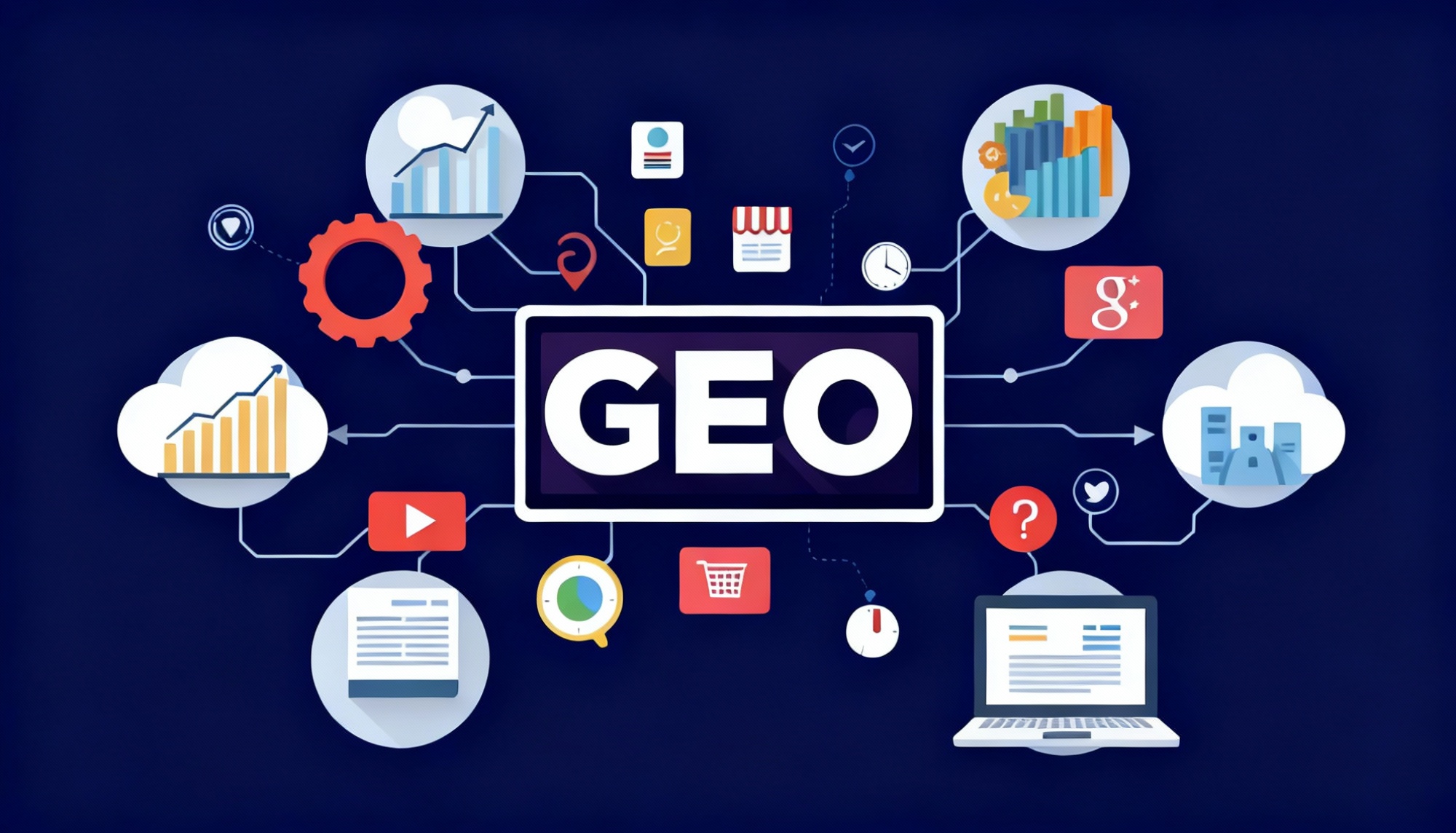
To fully grasp the AI SEO GEO Strategy, it helps to compare it with related disciplines. The table below breaks down the key differences.
| Feature | Traditional SEO | GEO (Generative Engine Optimization) | AEO (Answer Engine Optimization) |
|---|---|---|---|
| Primary Goal | Rank #1 in organic search results | Be cited as a source in AI-generated answers | Win the featured snippet (Position 0) |
| Target Engine | Google, Bing (crawlers) | ChatGPT, Perplexity, Gemini, Copilot | Google (featured snippets) |
| Content Style | Keyword-rich, comprehensive | Concise, factual, quotable, data-driven | Direct Q&A format, 40-60 words |
| Key Metric | Click-Through Rate (CTR), Rankings | Citation frequency, Brand mentions in AI | Featured snippet ownership |
| Technical Focus | Backlinks, site speed, meta tags | Structured data, entity clarity, source authority | Schema markup (FAQ, HowTo) |
While AEO is a subset of traditional SEO, GEO is a broader discipline that encompasses elements of both. A successful AI SEO GEO Strategy will often result in winning featured snippets as a byproduct, but the primary focus remains on AI model citations.
Common Mistakes and How to Avoid Them
Many marketers fail in their GEO efforts because they make avoidable errors. Here are the most common pitfalls and the solutions to overcome them.
Mistake 1: Keyword Stuffing in AI-Focused Content
Some marketers try to force the target keyword into every sentence. This creates unnatural, low-quality content that AI models will reject. The solution is to focus on semantic relevance. Use synonyms and related terms naturally. Write for humans first, and the A
Mistake 2: Ignoring the “Why” Behind the Query
AI models are excellent at understanding user intent. If your content only provides a surface-level definition but fails to explain the “why” or “how,” it will be considered low-value. Ensure your content answers the question thoroughly and provides actionable advice.
Mistake 3: Failing to Update Old Content
AI models prioritize fresh, up-to-date information. A blog post from 2021 about AI trends is likely to be ignored. Regularly audit your existing content and update statistics, examples, and strategies. Add a “Last Updated” date to signal freshness to the algorithms.
Mistake 4: Not Building a Brand Entity
If your brand is not recognized as an entity, AI models will struggle to associate your content with your business. Build your brand presence across the web. Get listed in reputable directories, earn mentions in industry publications, and maintain consistent NAP (Name, Address, Phone) data. This helps AI models connect the dots.
Important Notes for Long-Term Success
Implementing an AI SEO GEO Strategy is not a one-time project. It is an ongoing process that requires constant monitoring and adaptation. Here are some critical notes to keep in mind.
First, monitor your brand mentions in AI tools. Use a tool like “Brand24” or manually check ChatGPT responses for your brand name. Set up alerts for when your content is referenced. Second, analyze the referral traffic from AI platforms. In Google Analytics, look at traffic sources labeled “chat.openai.com” or “perplexity.ai”. This data shows you which content pieces are resonating with AI models.
Third, focus on building digital PR. High-quality backlinks from authoritative sites remain a strong signal for AI models. Guest posting on reputable industry blogs and earning mentions in roundup articles will boost your domain authority and your chances of being cited. Finally, remember that user experience is paramount. If users bounce from your page quickly, AI models will interpret that as a sign of low quality. Ensure your pages load fast, are mobile-friendly, and provide a seamless reading experience.
Frequently Asked Questions (FAQ)
What is the difference between SEO and GEO?
SEO (Search Engine Optimization) focuses on ranking pages in traditional search engine results pages (SERPs) like Google. GEO (Generative Engine Optimization) focuses on making your content visible and citable within AI-generated answers. SEO targets crawlers, while GEO targets large language models that synthesize information from multiple sources.
How does an AI SEO GEO Strategy improve brand visibility?
When an AI model cites your content in its response, it exposes your brand to users who are actively seeking information. This is a form of passive endorsement. Users are more likely to trust a brand that is referenced by a sophisticated AI tool, leading to increased brand recognition and direct traffic to your website.
Is GEO more important than traditional SEO?
No, GEO is not a replacement for traditional SEO. It is an extension. Traditional SEO helps you get discovered in the first place, while GEO helps you get cited in AI answers. A comprehensive digital marketing strategy should integrate both. You still need a well-optimized website to support your GEO efforts.
What are the best tools for measuring GEO performance?
T However, you can use a combination of tools. Google Analytics helps you track referral traffic from AI platforms. Brand monitoring tools like Mention or Brand24 help you track where your brand is mentioned online, including in AI responses. You can also manually test your target queries in ChatGPT and Perplexity to see if your content appears.
How long does it take to see results from a GEO strategy?
Results vary depending on your niche and the authority of your domain. For a new website, it can take 6-12 months to build enough trust and authority to be cited by AI models. For established brands with strong domain authority, results can be seen within 2-3 months of implementing the strategy. Consistency is key.
Conclusion: The Future of Search is Generative
The era of the “ten blue links” is fading. Users are increasingly turning to AI chatbots and generative search experiences to find answers. An AI SEO GEO Strategy is no longer a luxury; it is a necessity for any brand that wants to remain relevant in the digital space. By focusing on entity clarity, direct answers, verifiable data, and a strong brand presence, you can position your content to be the primary source that AI models rely on.
The transition requires effort, but the rewards are substantial. You will not only future-proof your marketing efforts but also improve the overall quality and trustworthiness of your content. Start by auditing your current content, conducting AI query research, and restructuring your pages for maximum clarity. The algorithms will continue to evolve, but the principles of providing clear, accurate, and authoritative information will always remain the cornerstone of digital success.
Xem thêm:
- AI SEO Competitor Content Analysis: The Complete Playbook for 2025
- AI SEO Keyword Cluster Generator: The Complete Guide to Smarter Content Planning
- AI SEO Experiments: Future-Proof Your Search Strategy with Data-Driven Insights
- AI SEO AI Referral Traffic: The Complete Guide to Winning Algorithmic Referrals in 2025
- AI Robots.txt: The Complete Guide to Controlling AI Crawlers on Your Website
Bài viết cùng chủ đề:

AI SEO SEO Automation with Make: The Complete Workflow Guide

AI SEO SEO Automation with Zapier: The Complete Workflow Guide

AI SEO SEO Automation with n8n: The Complete Workflow Guide
AI SEO SEO Automation with Gemini: The Complete Guide to Scaling Organic Growth

AI SEO SEO Automation with Claude: The Complete Guide to Scaling Content in 2025

AI SEO SEO Automation with ChatGPT: The Complete Playbook for 2025

AI SEO & SEO Automation for Affiliate Sites: The 2025 Playbook for Passive Income Growth
AI SEO & SEO Automation for Bloggers: The Complete Guide to Scaling Your Content

AI SEO & SEO Automation for Agencies: The Complete 2025 Playbook

AI SEO and SEO Automation for Ecommerce: The Complete Playbook for 2025

AI SEO & SEO Automation for WordPress: The Complete Playbook for 2025
AI SEO SEO Automation Strategy: The Complete Playbook for 2025

Mastering the AI SEO SEO Automation Process: A Complete Guide to Scaling Organic Growth
AI SEO SEO Automation System: The Complete Guide to Scaling Organic Growth in 2025
AI SEO SEO Automation Platform: The Complete Guide to Scaling Organic Growth in 2025
AI SEO SEO Automation Software: The Complete Guide to Scaling Organic Growth in 2025















