
No products in the cart.
How to Optimize Internal Links with AI: Transform Your Site Architecture and Rankings
29
Jul
Jul
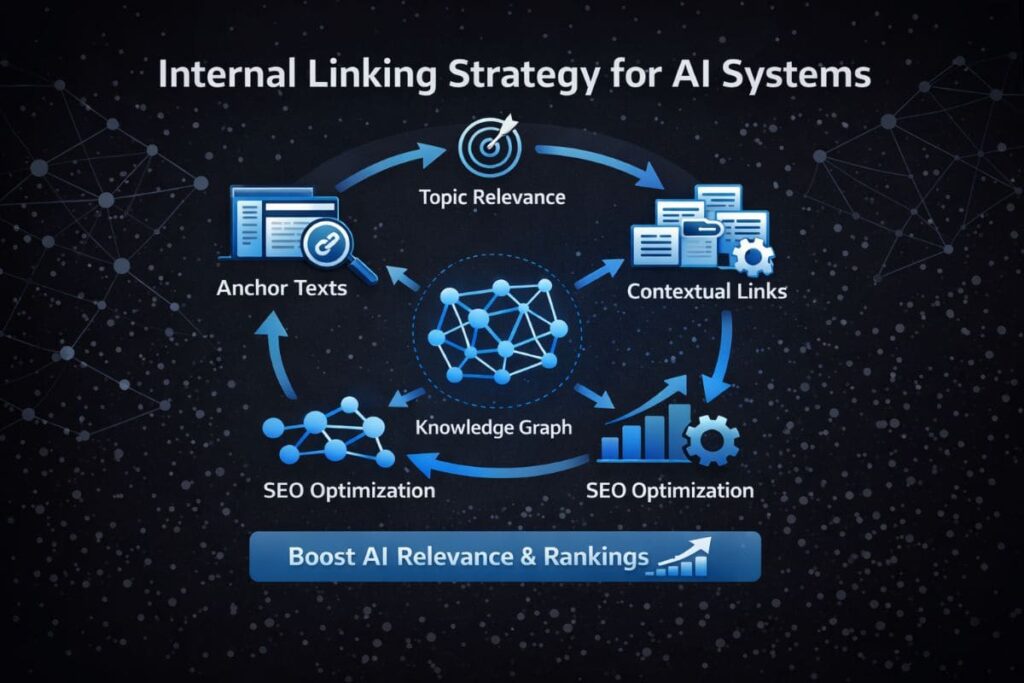
Mastering how to optimize internal links with AI is no longer a futuristic concept—it is a competitive necessity. Internal linking distributes PageRank, guides users through your content, and tells search engines which pages matter most. Yet most websites rely on manual guesswork or outdated rules of thumb. Artificial intelligence now analyzes massive datasets to suggest precise anchor text, identify orphan pages, and build topical clusters that boost rankings on autopilot. This guide walks you through every step, from the core principles to advanced AI-driven implementation tactics.
Why Internal Linking Still Defines SEO Success
Google’s crawlers discover new pages primarily through links. An internal link from a high-authority blog post to a deeper service page acts like a vote of confidence, passing equity and relevance signals. Without strategic internal links, even the best content can remain invisible—orphaned pages that search engines rarely revisit. A well-planned structure also reduces crawl depth, ensuring that important pages are only a click or two from the homepage.
User experience improves in parallel. Visitors who land on a pillar page find intuitively placed links to related guides, keeping them engaged and reducing bounce rate. This behavioral data feeds back into rankings. When AI models this interplay at scale, it uncovers patterns that humans miss—like weak clusters, over-linked URLs, or anchor text dilution.
How AI Changes the Game for Internal Link Optimization
Traditional internal linking audits require crawling the site, exporting URLs, and manually scanning for opportunities. For a 10,000-page e-commerce store, this could take weeks. AI shortens that cycle to hours by ingesting the entire site graph, log files, and ranking data. It then learns which linking patterns correlate with higher click-through rates and positions.
Machine learning models classify content by entity and intent, not just keywords. They understand that a page about “organic coffee beans” should link to “pour-over brewing guide” with anchor text like “freshly ground beans” rather than an exact-match phrase. This semantic linking reinforces topical authority without triggering over-optimization penalties.
The Core Components AI Evaluates for Internal Links
- Crawl depth and click distance: AI maps how many clicks it takes to reach any URL from the homepage, flagging pages buried beyond the third level.
- PageRank flow (internal PageRank): Simulates the flow of link equity through the site, highlighting pages that hoard authority without distributing it downstream.
- Anchor text distribution: Calculates the ratio of exact-match, partial-match, branded, and generic anchors, alerting you to over-optimization risks.
- Orphan pages: Identifies live URLs with zero internal inbound links, often forgotten after site migrations or content campaigns.
- Contextual relevance score: Using NLP embeddings, AI compares the semantic distance between two pages to determine if a link belongs naturally.
- User engagement signals: Incorporates click data and scroll depth to predict which link placements will actually be used by visitors.
- Increase organic sessions to money pages by 20% within 90 days.
- Reduce the number of orphan URLs to zero.
- Balance internal PageRank so that top-tier category pages link to deeper subcategories.
- Improve average time on site through contextual content recommendations.
- Missing links: “Your pillar page on ‘home loan process’ should link to the new ‘mortgage pre-approval checklist’ from the section discussing documentation.”
- Anchor text optimizations: “Change the anchor ‘click here’ on the three highest-traffic blogs to semantic variations of the target keyword.”
- Redundant link removal: “Remove the fourth internal link from the homepage to the same contact page; it dilutes link value.”
- Silo strengthening: “Add reciprocal links between these five service pages to form a tightly knit topic cluster.”
- Generate a labeled dataset. Manually review 2,000 internal link suggestions and mark them as “ideal,” “acceptable,” or “reject.” Include the context snippets, source page topic, target page topic, and anchor text.
- Extract features. Convert text to embeddings using a model like sentence-transformers. Calculate cosine similarity, TF-IDF overlap, and PageRank difference between source and target.
- Train a classifier. Use a gradient boosting model (XGBoost) or a small transformer fine-tuned on your labeled data to predict link quality.
- Deploy as a cron job. Every time new content is published, the model scans existing pages and pushes the top three link suggestions to a dashboard for editor approval.
- Blindly accepting all suggestions. AI may propose linking from a high-converting landing page to a blog post, which could distract users from the purchase path. Always overlay conversion data before implementing.
- Ignoring page velocity limits. Adding 50 new internal links in one day can trigger Google’s quality filters. Roll out changes gradually, mimicking natural editorial behavior.
- Over-consolidating anchor text. If the AI suggests identical anchors for 30 different pages pointing to the same target, it risks looking manipulative. Vary the phrases.
- Forgetting link removal. Internal link optimization isn’t just about adding links—pruning low-value or outdated links clears the equity path for priority pages.
- Neglecting mobile navigation. Desktop crawls may suggest header menu links, but if the mobile menu collapses, those links carry far less weight. Use mobile-first rendering data.
- Index coverage: In Google Search Console, the number of “submitted and indexed” URLs should rise as orphan pages are linked.
- Pages per session: A 10-15% increase indicates users are following contextual links deeper into the site.
- Revenue from organic pages previously orphaned: Tag those URLs in analytics and measure direct conversions.
- Crawl budget efficiency: In log files, the percentage of server responses that are 200 (instead of 301, 404, or low-value URLs) should climb.
Step-by-Step: How to Optimize Internal Links with AI
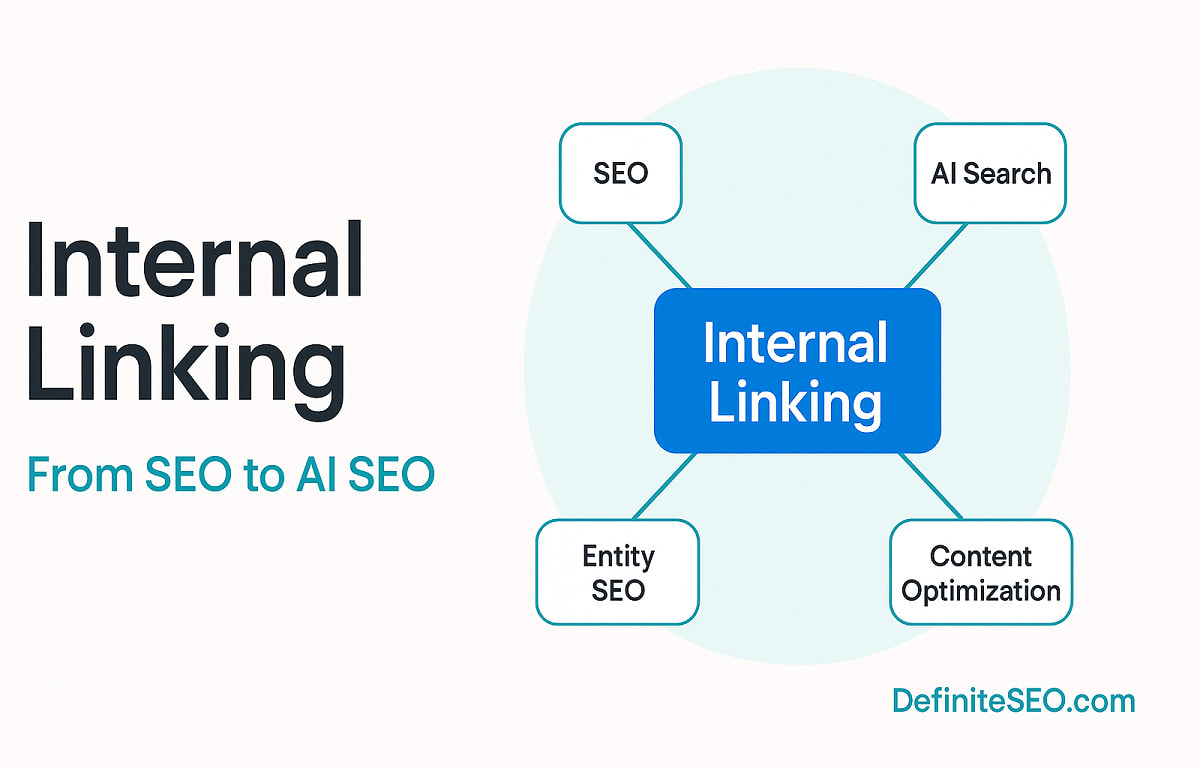
The process moves from data collection to automated suggestions and finally human validation. Below is a battle-tested workflow used by enterprise SEO teams.
1. Consolidate Your Site Structure Data
Start by running a full crawl with a tool like Screaming Frog or Sitebulb. Export all URLs, status codes, internal outlinks, and inbound links. If you have access to server log files, include them—they reveal which pages Googlebot actually visits, often very different from the pages you think are important. Feed this dataset into an AI platform or custom script that can normalize the data.
For sites running on WordPress, plugins like Link Whisper already collect this information and prepare it for AI analysis. On custom CMS setups, you may need to build an API integration that pushes crawl data to a machine learning environment.
2. Define Your Linking Goals and KPIs
AI needs a target to optimize toward. Common objectives include:
Set these goals clearly. AI algorithms will then weight their suggestions based on which links most directly impact the chosen metric.
3. Run the AI Analysis and Generate Link Suggestions
Modern AI internal linking tools process your crawl data alongside Google Search Console queries and competitive content. They might recommend:
The output is typically a prioritized list, often with a confidence score. High-confidence recommendations get implemented first.
4. Validate and Implement the Changes
AI is not infallible. A suggestion to link from a sensitive legal page to a light-hearted blog post could damage credibility. Have a subject matter expert review the top 100 suggestions. For e-commerce, ensure that category pages don’t suddenly link to competitor comparison pages if you sell multi-brand products. Once validated, implement via bulk edits if your CMS supports it, or use a tool like Link Whisper’s bulk update feature.
Best AI Tools for Internal Link Optimization Compared
Not all AI-driven linking solutions are built the same. The table below breaks down the current leaders by functionality and best fit.
| Tool | AI Capability | Data Sources | Best For |
|---|---|---|---|
| Link Whisper | NLP-based suggestion engine; learns from existing links | Post content, existing internal links | WordPress sites needing fast, on-the-fly recommendations |
| InLinks | Entity-based internal linking; uses Knowledge Graph | Schema markup, Wikipedia entities | Sites wanting semantic, entity-optimized silos |
| MarketMuse | Content inventory analysis; identifies link-worthy clusters | Own content, top 20 SERP competitors | Content-heavy sites with pillar-cluster strategies |
| Alli AI | Automated bulk edits; machine learning prioritization | Crawl, GSC, analytics | Agencies managing multiple large sites |
| Custom Python + OpenAI API | Fully tailored GPT models; any linking logic programmable | Any structured dataset | Enterprise with developer resources and unique needs |
Advanced Techniques: Training Your Own AI Model for Linking
For teams that have outgrown off-the-shelf tools, training a custom model yields unmatched accuracy. The general approach:
This approach ensures that the AI aligns perfectly with your brand voice and niche semantics. For example, a medical site can train the model to avoid linking to commercial product pages from purely informational articles, maintaining strict editorial policies.
Common Mistakes When Using AI for Internal Links—and How to Avoid Them
Measuring the ROI of AI-Driven Internal Linking
Hard data separates theory from real value. Track these metrics before and after an AI linking project:
A B2B software company applied AI-based linking across 1,200 feature pages and saw a 31% lift in organic traffic to bottom-of-funnel pages within 100 days, simply because they were now reachable within two clicks of the solution hub.
Important Notes for Enterprise and E-Commerce Sites
Very large sites face unique challenges. Faceted navigation creates near-infinite URL combinations; AI must be instructed to ignore parameterized URLs. Staging environment testing is non-negotiable—implement a single category branch and verify no unexpected canonical issues arise. Also, coordinate with the development team to ensure that AI-generated link placements don’t break responsive layouts or slow page rendering with excessive DOM nodes.
Frequently Asked Questions
What exactly does AI do differently from a manual internal link audit?
AI processes the entire semantic relationship network in seconds, comparing thousands of page embeddings and user engagement signals at once. A manual audit might spot an orphan page, but AI quantifies exactly which source page and anchor text will maximize equity flow and user clicks, continuously learning from site performance.
Can AI over-optimize internal links and cause a penalty?
Over-optimization occurs when anchor text becomes repetitive or links are forced into irrelevant contexts. Modern AI tools prevent this by setting diversity thresholds and relevance scores. Still, a final human review is the safety net. Google penalizes manipulative linking, not the use of AI itself.
How many internal links per page should AI target?
T AI typically respects page length and user attention. A 500-word article might receive two to three highly contextual suggestions, while a 3,000-word guide could hold eight to ten. The algorithm aims for utility, not volume.
Is AI internal linking safe for sites in YMYL niches like health or finance?
Yes, with caution. The key is training or configuring the AI to respect E-E-A-T signals. For example, a health site should only link to pages with clear authorship and cited research. Many tuning parameters let you restrict linking to certain page templates or author types.
What is the minimum site size that benefits from AI internal linking?
Even a 50-page site gains value, but the ROI scales dramatically after 500 pages. At that point, manual tracking of link equity becomes impractical. AI reveals optimization opportunities that would otherwise remain hidden for years.
How often should AI re-analyze a site for internal links?
Run the analysis monthly, or immediately after publishing ten or more new pieces of content. Some platforms automate this, scanning weekly and pushing recommendations straight to editors’ dashboards. Consistency keeps the link graph healthy as the site grows.
Conclusion
Understanding how to optimize internal links with AI moves your site from a static, guess-based structure to a living, self-improving ecosystem. The technology cuts audit time, surfaces high-impact opportunities, and keeps the page graph aligned with both user intent and search engine crawling logic. Start with a crawl, define measurable goals, and let AI map the shortest path from where your authority sits today to where your revenue pages need it most. The result is a site that climbs rankings not by luck, but by precise, data-driven architecture.
Xem thêm:
- AI SEO AI Citation Monitoring: The Complete Guide to Protecting Your Digital Authority
- AI SEO Answer Generator: The Complete Guide to Automated Content Intelligence
- AI SEO LLM Search Optimization: The Complete Guide to Ranking in Generative Search
- AI SEO Topic Clustering: The Complete Guide to Building Topical Authority in 2025
- AI SEO Funnel Optimization: The Complete Guide to Converting Search Traffic
Bài viết cùng chủ đề:

AI SEO SEO Automation with Make: The Complete Workflow Guide

AI SEO SEO Automation with Zapier: The Complete Workflow Guide

AI SEO SEO Automation with n8n: The Complete Workflow Guide
AI SEO SEO Automation with Gemini: The Complete Guide to Scaling Organic Growth

AI SEO SEO Automation with Claude: The Complete Guide to Scaling Content in 2025

AI SEO SEO Automation with ChatGPT: The Complete Playbook for 2025

AI SEO & SEO Automation for Affiliate Sites: The 2025 Playbook for Passive Income Growth
AI SEO & SEO Automation for Bloggers: The Complete Guide to Scaling Your Content

AI SEO & SEO Automation for Agencies: The Complete 2025 Playbook

AI SEO and SEO Automation for Ecommerce: The Complete Playbook for 2025

AI SEO & SEO Automation for WordPress: The Complete Playbook for 2025
AI SEO SEO Automation Strategy: The Complete Playbook for 2025

Mastering the AI SEO SEO Automation Process: A Complete Guide to Scaling Organic Growth
AI SEO SEO Automation System: The Complete Guide to Scaling Organic Growth in 2025
AI SEO SEO Automation Platform: The Complete Guide to Scaling Organic Growth in 2025
AI SEO SEO Automation Software: The Complete Guide to Scaling Organic Growth in 2025















