
No products in the cart.
How to Use DeepSeek for SEO: The Complete Guide to AI-Powered Optimization
29
Jul
Jul
Search engine optimization demands constant content creation, keyword research, and technical refinement. DeepSeek, a next-generation large language model, has rapidly become a serious competitor in the AI space. For SEO professionals and website owners, learning exactly how to use DeepSeek for SEO unlocks faster workflows, deeper insights, and more creative output without the recurring costs of other platforms. This guide explains every practical application, from basic keyword clustering to advanced schema generation, while keeping your content human and helpful.
What Is DeepSeek and Why It Matters for SEO
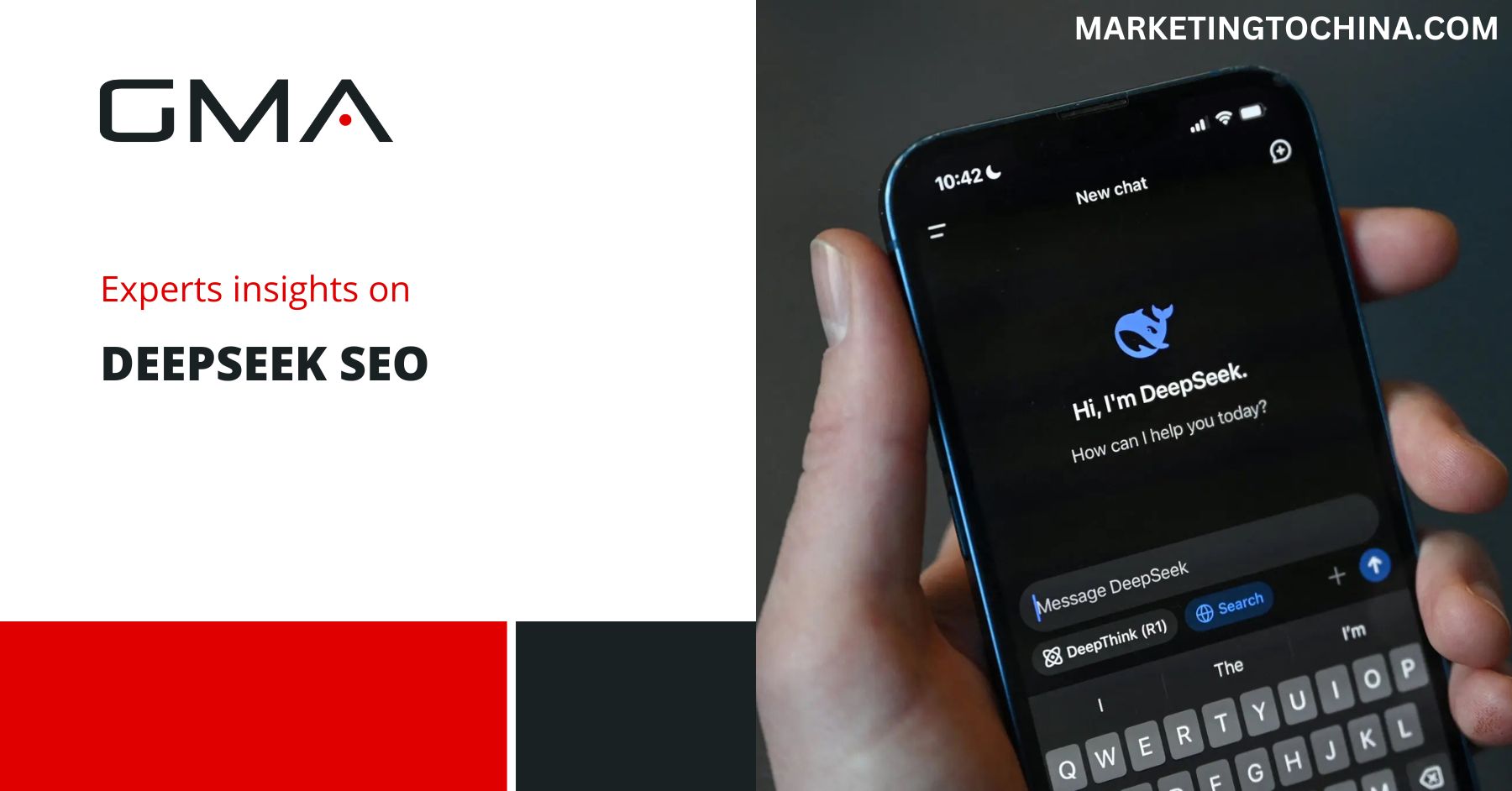
DeepSeek is a family of AI models developed by DeepSeek AI, known for their strong reasoning abilities and cost-efficient architecture. The most accessible entry point is the chat interface at chat.deepseek.com, which offers a generous free tier. Unlike many closed-source models, DeepSeek was trained with a focus on Chinese and English bilingual performance, but its SEO utility extends well beyond language boundaries. The model excels at understanding intent, structuring information, and following complex instructions—three pillars of effective AI-assisted SEO.
Why DeepSeek matters for SEO boils down to three factors. First, its context window supports extensive prompts, letting you feed an entire article draft or a long list of keywords in one go. Second, the reasoning transparency in models like DeepSeek‑R1 gives you a window into how it arrives at suggestions, which is invaluable for trust and quality control. Third, the tool remains free or extremely low-cost, making it accessible for solo creators and large teams alike. That accessibility means you can experiment with prompt engineering until you perfect the output, something that cost-prohibitive tools discourage.
Setting Up DeepSeek for SEO Tasks
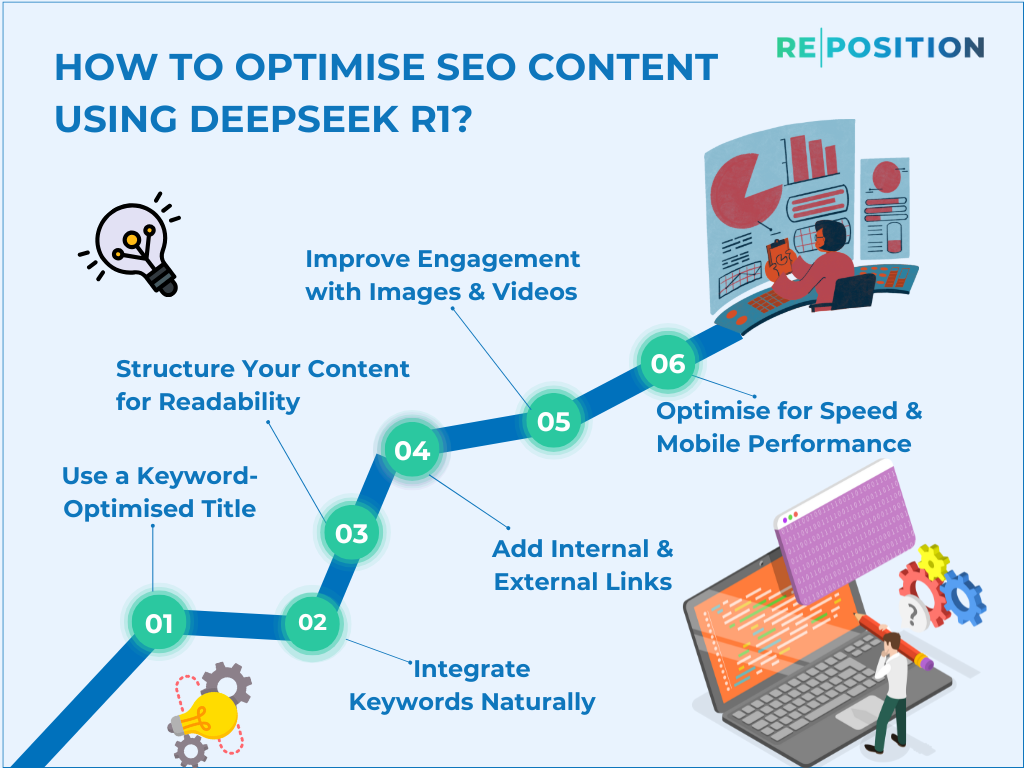
You do not need a technical background to start. Navigate to chat.deepseek.com and create an account. The web interface delivers a clean chat environment similar to other AI assistants. For SEO workflows, activate the web search toggle only when you need real-time data, like checking current SERP features. In most cases, the standalone model is sufficient for tasks that rely on its internal training data and reasoning capabilities.
Developers and advanced users can access the DeepSeek API through the official platform. The API is compatible with the OpenAI SDK, meaning you can plug it into existing SEO tools, content pipelines, or custom scripts. To use the API, generate a key from the DeepSeek developer dashboard and set the base URL to the DeepSeek endpoint. This opens the door to automated keyword clustering, bulk meta title generation, and content scoring. Regardless of the interface you choose, always treat DeepSeek as a skilled assistant, not an autonomous writer. Your expertise remains the filter that ensures accuracy, originality, and brand alignment.
7 Powerful Ways to Use DeepSeek for SEO
1. AI-Driven Keyword Research and Clustering
Rather than spending hours inside traditional keyword tools, you can use DeepSeek to brainstorm seed keywords, expand them into long‑tail variants, and group them by intent. Start with a simple prompt describing your niche, target audience, and desired outcome. For example, ask it to generate a list of 50 informational keywords for a site about sustainable home renovation. The model will return terms such as “best low-VOC paints for interiors,” “how to insulate an old house naturally,” and “energy-efficient window replacement guide.”
Take the output further by instructing DeepSeevski to cluster these keywords into topic silos. You can paste a list of 100 keywords and ask it to organize them by user intent: transactional, commercial investigation, and informational. The model will label each cluster and even suggest pillar page topics that map to those clusters. This replaces manual spreadsheet work with a conversational, iterative process. You can refine the clusters by adding your own constraints, like minimum search volume estimates or relevance to a specific product line.
2. Full-Length SEO Content Creation
DeepSeek can draft comprehensive blog posts, guides, and landing pages that match search intent. The key is feeding it a detailed outline with clear section goals. Describe the target keyword, the audience’s pain points, and the desired tone. Then ask for a draft of each section sequentially. Because the model understands semantic relationships, it naturally includes related terms and entities that strengthen topical authority.
A practical workflow involves three stages. First, ask DeepSeek to create an outline optimized for a specific keyword, including H2 and H3 headings. Review and refine the structure. Second, request the introduction and conclusion, ensuring they address the user’s query within the first 100 words and end with a clear next step. Third, expand each body section, prompting for statistics where applicable and for practical examples that add experience-based depth. The result is a draft that feels composed by a knowledgeable human, not a generic AI.
Always remember that AI-generated content requires a final human polish. Add original data, personal stories, and expert quotes that only you can provide. Search engines value unique perspectives, and no language model can replicate your real-world experience.
3. On-Page Content Optimization
Existing articles often need a refresh to maintain rankings. DeepSeek serves as an editorial partner that identifies gaps and suggests improvements. Copy a section of your underperforming page and ask the model to rewrite it with better keyword placement, more compelling language, and improved readability. You can specify a readability score target, such as an 8th-grade reading level, and the model will adjust sentence length and vocabulary accordingly.
For a full content gap analysis, provide DeepSeek with your article and the top three competing URLs’ main points (sourced manually or via a SERP analysis tool). Prompt it to list subtopics your content is missing and propose new paragraphs to cover those angles. This keeps your article comprehensive without becoming bloated. The model can also flag thin content areas—sections that are too short to satisfy user intent—and suggest expansions.
4. Generating SEO Meta Tags at Scale
Title tags and meta descriptions directly impact click-through rates. DeepSeek can produce dozens of compelling variations in seconds. For a single page, provide the primary keyword, secondary keyword, and a one-sentence summary of the content. Ask for five title tag options under 60 characters that include the primary keyword near the beginning and convey a clear benefit. The output will include action-oriented titles like “Healthy Air Fryer Recipes – 15 Quick Meals Under 30 Minutes.”
For large sites, you can use the API to generate meta tags in bulk. Feed the model a CSV file containing page URLs, target keywords, and brief descriptions. It will return a structured table with optimized title tags and meta descriptions for each URL. This automation saves hours while ensuring every page has a unique, search-engine-friendly snippet. Just review the generated tags to avoid unnatural phrasing, and adjust any over-promising language that could mislead searchers.
5. Crafting Schema Markup and Structured Data
Implementing structured data helps search engines understand your content, which can result in rich snippets. While DeepSeek cannot write executable code directly into your pages, it can generate the JSON-LD markup you need. Prompt the model with the type of structured data—Article, FAQ, Product, LocalBusiness—and the specific details like headline, author, date published, and price.
For an FAQ section on your page, you can ask DeepSeek to generate the full FAQPage schema. Provide the questions and answers, and it will format them as a valid JSON‑LD block. Paste that block into your page’s head section, and test it with Google’s Rich Results Test. This technical task becomes accessible to non‑developers, and the model can also explain each property’s purpose if you need to customize the code.
6. Competitor Content Analysis and SERP Reversal
DeepSeek acts as a reasoning engine that can deconstruct why competitor pages rank well. Give it the outline or main headings of a top-ranking article in your niche. Ask it to analyze the content structure, identify the core angles, and list the semantic keywords used. The model will break down the article’s coverage of the topic and highlight the subtopics that likely signal expertise to search engines.
You can then reverse-engineer a superior piece. Prompt DeepSeek to take that competitor’s structure as a baseline and improve upon it by adding missing user questions, more current data, and a unique take that only your brand can offer. This approach moves you from mere imitation to true differentiation. The model can also compare the readability scores and media usage of multiple competitors, giving you concrete benchmarks to exceed.
7. Internal Linking and Content Architecture Suggestions
A strong internal linking structure distributes authority and guides users. Feed DeepSeek a list of your existing URLs and their main topics. Ask it to suggest 10 internal link placements from one page to another, with recommended anchor text. For example, if you have a pillar page about “email marketing” and cluster pages on “email automation” and “A/B testing subject lines,” the model will identify natural linking opportunities between them.
More strategically, you can use DeepSeek to audit an existing content hub. Provide the sitemap, and ask it to flag orphan pages that lack internal links and propose where they should be linked from. This helps prevent thin, isolated content that search engines may ignore. The suggestions act as a blueprint you can hand off to your content team or implement directly in your CMS.
Advanced DeepSeek Prompts for SEO
The true power of DeepSeek emerges with carefully engineered prompts. Basic requests yield basic results. Advanced prompts that incorporate role-playing, constraints, and multi-step logic unlock professional-grade output. Below are some battle-tested prompts refined over hundreds of SEO tasks.
- Expert Persona: “You are an SEO strategist with 10 years of experience in the health and wellness niche. Analyze the following keyword list and group them by the stages of the buyer’s journey. Provide a content topic for each group and suggest a primary keyword for each topic.”
- Structured Table Output: “ For each title, generate a compelling meta description under 155 characters and a target keyword. Display the results in a table with columns: Title, Meta Description, Target Keyword.”
- Content Refresh Brief: “ Based on current best practices for instructional content, list three new sections I should add to improve topical depth. For each section, provide a title and three bullet points to cover.”
- Tone and Style Control: “Rewrite the following product description using a friendly yet authoritative tone. Use short sentences, active voice, and include the primary keyword exactly twice. Make it appeal to eco-conscious parents.”
- Gap Analysis: “Compare the following two article outlines. Outline A is from my site, Outline B is from a competitor ranking above me. List the subtopics in B that are missing from A, and propose how to integrate them naturally without keyword stuffing.”
Prompt chaining elevates this further. Start by asking DeepSeek to generate an outline. Then feed that outline back and ask for a full draft. Then ask for a critique of the draft against E‑E‑A‑T guidelines. Finally, prompt for specific improvements. This sequential approach mimics a real editorial process and produces content that passes both human and algorithmic scrutiny.
Limitations and Common Mistakes When Using DeepSeek for SEO
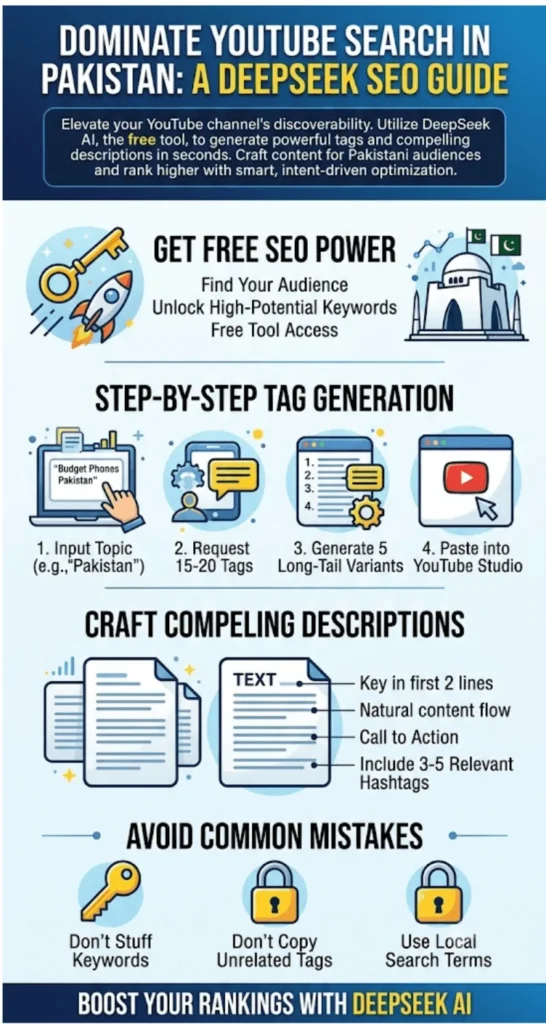
DeepSeek is powerful, but misunderstanding its limitations leads to generic content, wasted time, or even ranking penalties. The model does not have real-time access to search volume data, current news, or live SERP rankings unless you explicitly enable web search. It cannot verify the truth of the factual statements it generates; the statistical numbers it supplies are often synthesized examples, not hard data. View any percentage or “according to a 2023 study” claim as plausible-sounding placeholder that you must fact-check and replace with real citations.
The most common mistake is delegating final publishing authority to the AI. Raw DeepSeek output, no matter how well-prompted, still carries a recognizable pattern that can hurt your site’s credibility if not refined. Another error is ignoring brand voice. The model defaults to a neutral, informative tone. You must consistently feed it examples of your brand’s style guide, preferred vocabulary, and unique point of view. Without that context, every piece sounds like it could belong to any competitor.
Keyword stuffing can sneak into AI‑generated text because the model tries to satisfy explicit instruction “use the keyword X times.” Force it to prioritize natural readability over mechanical insertion. Finally, over-reliance on a single model stifles creativity. DeepSeek is best used alongside human ideation, not as a replacement. The strongest SEO results come from the combination of human insight and AI efficiency, not from handing the reins entirely to a language model.
DeepSeek vs Other AI Tools for SEO (Comparison)
| Feature | DeepSeek (Chat/API) | ChatGPT (Free) | Claude 3 | Jasper AI |
|---|---|---|---|---|
| Cost | Free chat, low-cost API | Free tier, $20/mo Plus | Free tier, $20/mo Pro | $49/mo and up |
| Context Window | 128K tokens (R1) | 32K (free), 128K (Plus) | 200K tokens | Custom, varies |
| SEO-Specific Templates | None built-in (prompt-based) | None built-in | None built-in | Pre-built SEO workflows |
| Reasoning Transparency | Yes (DeepSeek‑R1) | Limited | Limited | No |
| API Compatibility | OpenAI SDK compatible | N/A (OpenAI) | Anthropic API | Proprietary |
| Real-Time Search Integration | Toggle in web chat | GPT-4o with browsing | Not native | Browser extension |
DeepSeek’s standout advantage for SEO practitioners is the combination of zero cost and high reasoning ability. The DeepSeek‑R1 model, accessible from the web interface by selecting the appropriate model, works through problems step by step, which improves the quality of technical SEO suggestions like diagnosis of canonicalization issues or hreflang tag logic. While Jasper offers dedicated SEO workflows, their recurring subscription is a barrier for many. DeepSeek’s flexibility means you can replicate almost any SEO template with the right prompt, gaining comparable output without the monthly fee.
Frequently Asked Questions
Can DeepSeek replace my SEO team?
No. DeepSeek is an augmentation tool, not a replacement. It accelerates research, drafting, and data organization, but human oversight is essential for accuracy, brand voice, and strategic decisions. SEO teams that adopt DeepSeek become more efficient; those that rely on it blindly risk publishing thin or incorrect content.
How do I avoid AI detection penalties when using DeepSeek content?
Search engines like Google focus on content usefulness, not the tool used to create it. To avoid quality flags, always add original data, personal insights, and expert quotes. Edit the output to your brand’s tone. Run the draft through a readability checker and a fact-checking process. The goal is to make every piece distinctly yours.
What is the best DeepSeek model for SEO tasks?
DeepSeek‑R1 provides the best reasoning for complex tasks like keyword clustering, competitor analysis, and schema generation. For faster, straightforward content drafting, the standard DeepSeek‑V3 model works well. You can switch models in the chat interface. Test both with the same prompt to see which output fits your workflow.
Is it safe to share sensitive client data with DeepSeek?
Review DeepSeek’s privacy policy thoroughly. The web interface may use prompts for training unless explicitly opted out. For client work, using the API with a business-use agreement and ensuring data handling compliance is safer. When in doubt, remove or fictionalize sensitive information before inputting it into any public AI tool.
Can DeepSeek write local SEO content for multiple cities?
Yes, it can generate location-specific pages quickly. Provide the city name, target services, and unique local details. Prompt it to create unique content for each location, avoiding thin duplicate pages. Always validate the output with real local knowledge and avoid generating dozens of boilerplate location pages that could trigger spam filters.
Conclusion
Mastering how to use DeepSeek for SEO transforms your daily workflow from repetitive manual grind into an efficient, creative process. The model handles keyword discovery, content drafting, on-page optimization, and technical markup with a level of nuance that rivals paid alternatives. Its real value emerges when you treat it as a thinking partner—supplying well-structured prompts, refining the output with your experience, and always keeping the end user’s need for trustworthy information at the center. Start with small experiments: a meta description batch, a single article outline, a clustering exercise. As your confidence grows, weave DeepSeek into every stage of your SEO strategy, and watch your organic performance climb while your workload finally becomes manageable.
Xem thêm:
- AI SEO Ecommerce Schema: The Complete Guide to Structured Data That Drives Sales
- AI SEO Frase: The Complete Guide to AI-Powered Content Optimization in 2025
- AI SEO Scaling Strategy: The Complete Playbook for 2025 and Beyond
- AI SEO Knowledge Panel Optimization: The Complete Guide to Dominating Search in 2025
- AI SEO Topic Discovery: The Complete Guide to Finding Content That Ranks
Bài viết cùng chủ đề:

AI SEO SEO Automation with Make: The Complete Workflow Guide

AI SEO SEO Automation with Zapier: The Complete Workflow Guide

AI SEO SEO Automation with n8n: The Complete Workflow Guide
AI SEO SEO Automation with Gemini: The Complete Guide to Scaling Organic Growth

AI SEO SEO Automation with Claude: The Complete Guide to Scaling Content in 2025

AI SEO SEO Automation with ChatGPT: The Complete Playbook for 2025

AI SEO & SEO Automation for Affiliate Sites: The 2025 Playbook for Passive Income Growth
AI SEO & SEO Automation for Bloggers: The Complete Guide to Scaling Your Content

AI SEO & SEO Automation for Agencies: The Complete 2025 Playbook

AI SEO and SEO Automation for Ecommerce: The Complete Playbook for 2025

AI SEO & SEO Automation for WordPress: The Complete Playbook for 2025
AI SEO SEO Automation Strategy: The Complete Playbook for 2025

Mastering the AI SEO SEO Automation Process: A Complete Guide to Scaling Organic Growth
AI SEO SEO Automation System: The Complete Guide to Scaling Organic Growth in 2025
AI SEO SEO Automation Platform: The Complete Guide to Scaling Organic Growth in 2025
AI SEO SEO Automation Software: The Complete Guide to Scaling Organic Growth in 2025















