
No products in the cart.
AI Citation SEO: The Complete Guide to Earning and Optimizing AI-Generated Citations in Search

29
Jul
Jul
The way search engines present information is changing faster than most marketers realize. Instead of ten blue links, users now see AI-generated summaries that directly answer questions, often pulling key facts from a handful of cited sources. This shift has given rise to AI Citation SEO — the practice of optimizing content so that it gets surfaced, referenced, and linked inside AI-driven search results. Getting cited by an AI overview or a conversational assistant is quickly becoming the new page-one ranking. This guide unpacks exactly how AI citation works, why it matters for your visibility, and which concrete steps you can take to build a strong citation presence without relying on guesswork.
What Is AI Citation SEO?
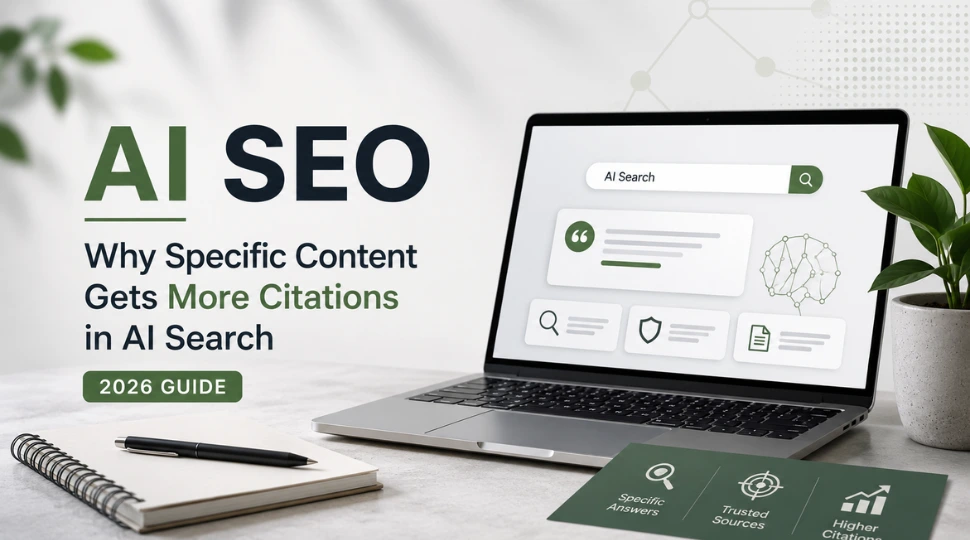
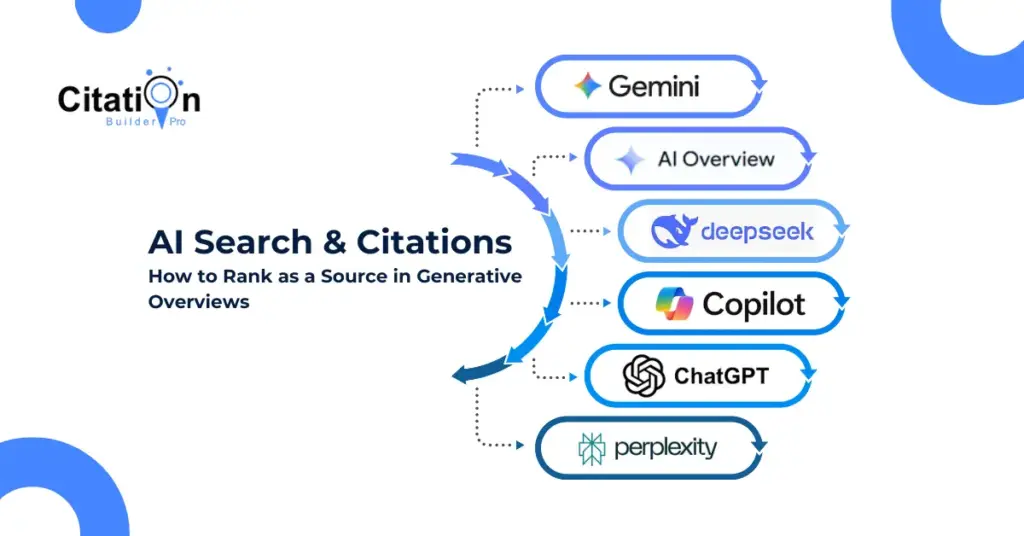
AI Citation SEO refers to the process of structuring, authoring, and promoting digital content so that large language models and AI-powered search features choose to cite it as a trusted source. In platforms like Google’s AI Overviews, Bing Copilot, and Perplexity, the system synthesizes an answer from multiple web pages and displays clickable citation links. Those citations are not random; they are algorithmically selected based on authority, relevance, factual alignment, and a growing set of entity-recognition signals.
Traditional SEO aims to rank web pages in organic results. AI Citation SEO goes a step further — it targets the source layer underneath those AI answers. When your content is consistently cited, you gain brand exposure inside zero-click environments and attract high-intent traffic from users who click through to verify the AI’s claims. It is the logical evolution of featured snippets, but powered by generative models that combine multiple pieces of information.
Why AI Citations Are Reshaping Organic Visibility
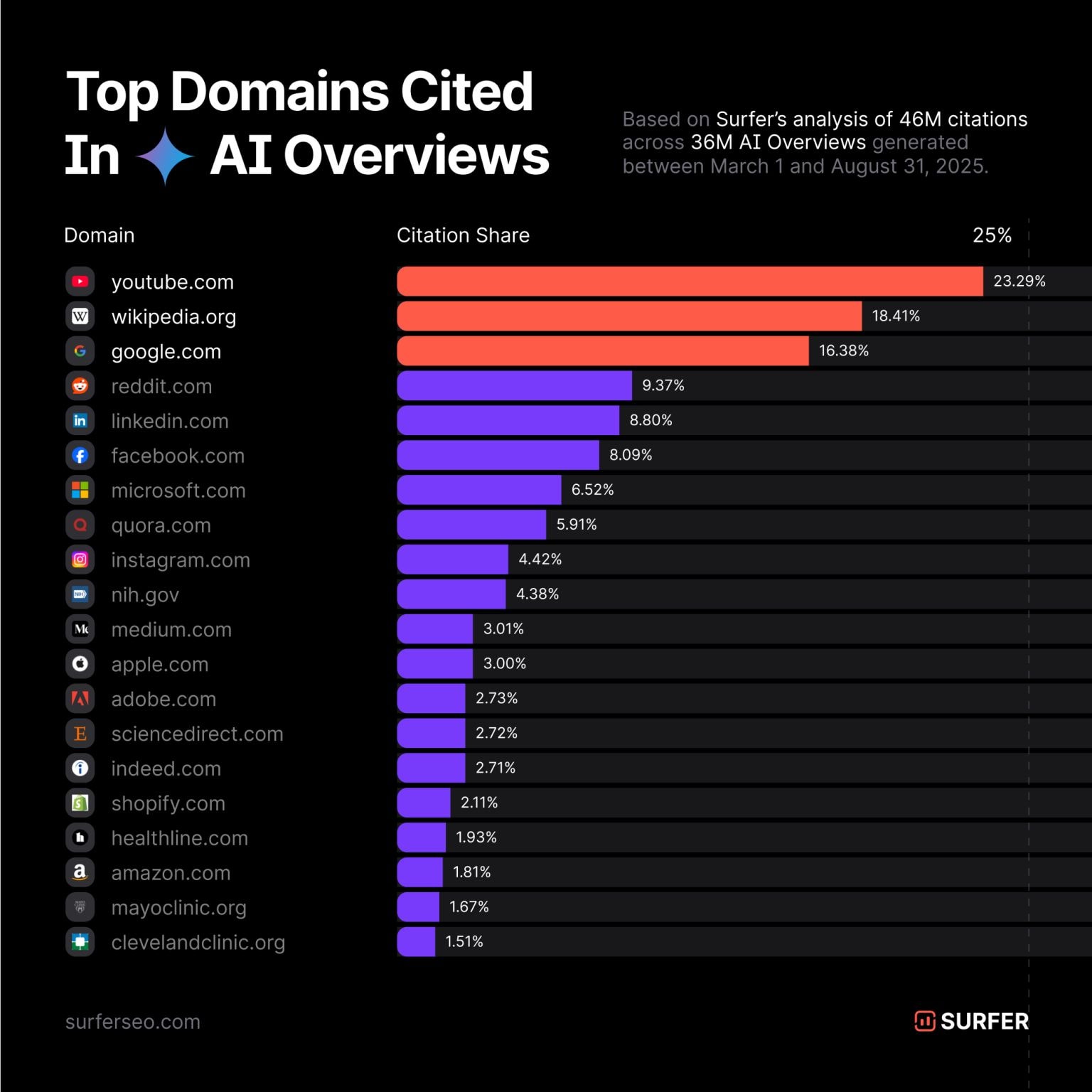
Search engines are no longer just information retrieval systems. They have become answer engines that assemble responses from an ecosystem of content providers. Google’s AI Overviews appear above traditional results for many informational queries, while Bing’s deep search and Copilot integrations reference web sources inline. If your site is not among the cited sources, your organic click-through rate can drop significantly even if you rank in position one. A prominent citation, on the other hand, can send qualified visitors who are already engaged with your core message.
AI citations also carry a strong trust signal. Users perceive referenced sources as more authoritative, especially when the AI highlights data points, statistics, or definitions alongside the source name. Over time, consistent citation builds brand credibility with both users and the underlying models, creating a reinforcing cycle of visibility.
How AI Models Select and Display Citations
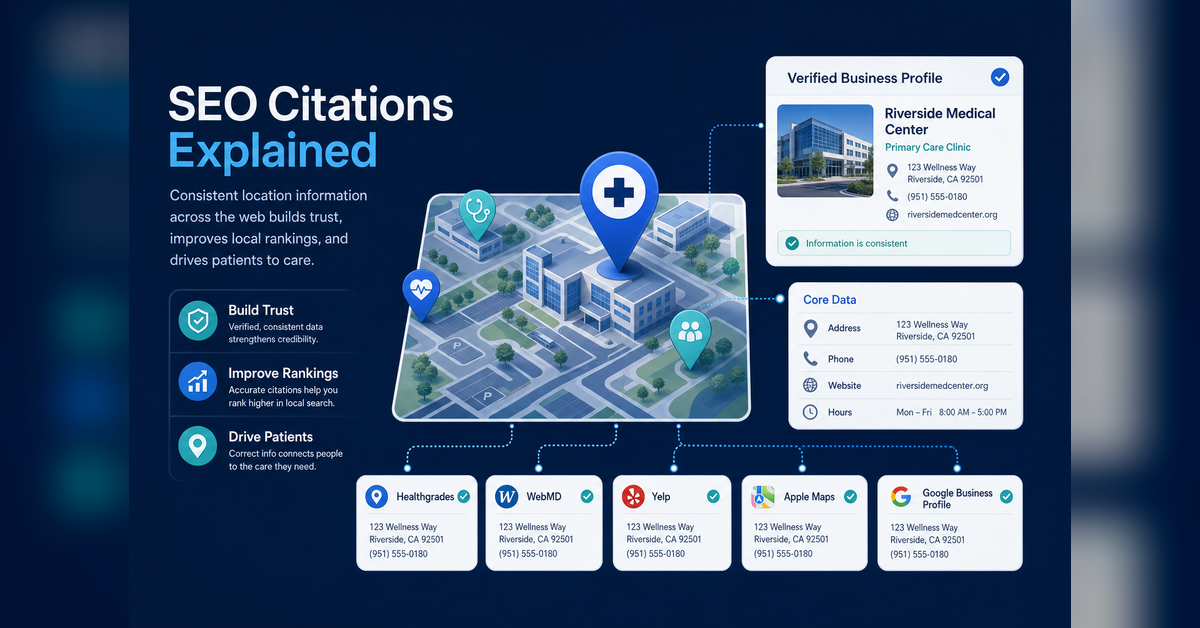
Understanding the selection logic is fundamental to any AI Citation SEO effort. While exact algorithms are proprietary, several patterns have emerged from testing and official documentation. AI systems typically prioritize pages that:
- Contain clear, concise answers closely matching the query intent.
- Use structured data to define entities, facts, and relationships.
- Come from domains with high overall authority and topical focus.
- Demonstrate strong E-E-A-T signals, particularly for YMYL topics.
- Agree with information found across multiple reputable sources (consensus modeling).
- Are referenced or linked by other trusted pages within the same knowledge graph.
- Presence in zero-click AI answers: Even when users do not click, your brand appears as a cited source, building mental availability.
- Higher-quality referral traffic: Visitors who click an AI citation already trust the recommendation and arrive with deeper intent.
- Reinforced topical authority: Being repeatedly cited signals to both users and algorithms that you are a field expert.
- Resilience against algorithm changes: AI citation signals align with semantic relevance and entity strength, making your traffic less vulnerable to keyword-level fluctuations.
- Citation visibility varies: AI-generated answers do not always display citations, and the layout can push source links below the fold.
- Attribution can be inaccurate: Models sometimes hallucinate sources or misattribute information, which means earning a citation does not guarantee accurate representation.
- No direct control: Unlike paid search or even traditional organic rankings where you can react to drops, citation frequency depends on the model’s own judgment and is harder to manually influence.
- Frequent model updates: A content piece that dominates citations today may be replaced tomorrow as search generations change or fresh consensus emerges.
- Over-optimizing for exact-match keywords: AI models interpret language semantically. Forcing repeated phrases makes content sound unnatural and reduces extractability.
- Publishing content with no named author or credentials: Anonymous content lacks Experience signals. Always attribute articles to real, qualified individuals.
- Leaving claims uncited: If your page states a statistic without linking to the original study, the model cannot verify it and will favor a competitor that does provide the trail.
- Using complex paragraph structures: Long, meandering sentences confuse extraction algorithms. Keep sentences direct and place the main fact early.
- Ignoring structured data errors: Invalid schema can cause parsers to skip your content entirely. Regular validation is essential.
Once a candidate set is identified, the model synthesizes a summary and inserts in-line citation markers. Google’s AI Overviews, for instance, often show a carousel of source links at the bottom of the snippet. Bing’s Copilot cites sources within the chat conversation. The selection process rewards factual precision and semantic relevance more than traditional ranking factors like exact-match keyword density or domain age alone.
Core Components of AI Citation SEO
To earn citations, you need to align your content with how AI systems consume, interpret, and validate information. This goes far beyond basic on-page optimization. The most important components include:
Entity-Centric Content Optimization
AI models do not simply match strings of text. They map topics to entities — people, places, concepts, events — within a knowledge graph. Optimizing for AI citations means clearly establishing the entities your content discusses and linking them to known identifiers. Use schema markup like Organization, Person, Event, HowTo, and FAQ to structure this information. Within the text, define terms the first time they appear and connect them to related concepts using natural language.
Factual Precision and Verifiability
AI models cross-reference claims across multiple sources. Content that presents data with transparent methodology, cites original research, and avoids overstatement is more likely to be chosen. Include links to primary sources, government databases, or peer-reviewed studies. When a model can trace a claim back to its origin, it assigns higher confidence to that source.
Semantic and Topical Depth
Shallow pages that only scratch the surface of a topic rarely get cited. Instead, create comprehensive resources that answer related subtopics in a logically organized structure. Topic clusters with pillar pages and supporting articles help AI understand the breadth of your expertise. Use descriptive subheadings, summary boxes, and clearly separated sections so models can extract precise nuggets of information.
E-E-A-T Reinforcement
Experience, Expertise, Authoritativeness, and Trustworthiness are critical for AI citation, just as they are for traditional rankings. Cite author credentials, include original data, maintain an accurate “About” page, and earn mentions from recognized institutions. User-generated review signals and trusted external links further reinforce authority. For YMYL categories, this layer becomes non-negotiable.
Benefits of a Strong AI Citation Strategy
Investing in AI Citation SEO delivers commercial and brand-building returns that go beyond clicks. The key benefits include:
Limitations and Challenges to Be Aware of
AI Citation SEO is not a silver bullet. There are real constraints that require a balanced perspective:
AI Citation SEO vs Traditional SEO: A Side-by-Side Comparison
| Factor | Traditional SEO | AI Citation SEO |
|---|---|---|
| Primary goal | Higher organic ranking for target keywords | Content selected as cited source inside AI summaries |
| Key metrics | Impressions, clicks, average position | Citation frequency, citation-driven traffic, brand mentions in AI outputs |
| Content focus | Keywords, backlinks, meta tags | Entity clarity, factual grounding, semantic structure, E-E-A-T |
| Technical requirements | Crawlability, site speed, mobile-friendliness | Structured data implementation, clean HTML for parsing, accessible data tables |
| Ranking signals | Domain authority, page authority, backlink profile | Topical authority, source consensus, knowledge graph alignment |
| Traffic nature | Direct organic visits | Mixed zero-click brand exposure and high-intent click-throughs from citations |
How to Optimize Your Content for AI Citations: A Step-by-Step Guide
1. Identify High-Citation-Opportunity Queries
Not every query triggers an AI-generated answer. Start by manually searching your target topics in Google, Bing, and Perplexity to see if AI summaries appear. Look for queries where the AI references multiple sources or pulls statistics and definitions. Tools like SEMrush and Ahrefs do not yet report “AI citation share,” but you can infer opportunities by tracking keywords that already generate featured snippets and People Also Ask boxes, as these often overlap with AI answer triggers.
2. Create Machine-Readable Structured Data
Without schema markup, AI parsers may misinterpret your content. Apply FAQ schema on Q&A pages, HowTo for steps, Article with author and date information, and specific entity types when relevant. Use JSON-LD format and test with Google’s Rich Results Validator. For statistical claims, consider using the ClaimReview schema to mark fact-checked statements, as this can boost trust signals.
3. Format for Extractable Answers
AI models extract answers more reliably when content is structured in digestible chunks. Write a concise 40-60 word definition at the top of each section before expanding. Use bullet lists for key facts, and create summary tables when comparing data. A “Key Takeaways” box with three to five bullet points increases the likelihood that the model will pull a clean snippet.
4. Strengthen Your Topical Authority
Build content clusters around core topics. If your target is “supply chain sustainability,” publish guides on sub-topics like carbon accounting, supplier audits, and regulatory frameworks, all internally linked. AI models view interconnected, comprehensive coverage as a signal of expertise. External mentions from industry associations, academic papers, and mainstream media further solidify this authority.
5. Promote and Earn Trustworthy Backlinks
While AI does not rely purely on link graphs, backlinks remain the web’s underlying authority signal. Secure editorial links from.edu,.gov, and respected news sources. Publish original research that journalists and analysts will naturally reference. When your data points are cited by other reputable pages, the model sees a web of trust around your content.
6. Monitor Your Citation Health
Search for your brand name alongside core topic phrases in AI-enabled search interfaces. Keep a log of which pages get cited and in what context. When citations drop, revisit freshness, factual accuracy, and whether competitors have published newer, more comprehensive coverage. Tools like BrandMentions and NewsDashboard can help surface new brand references that might feed into citation signals.
Common Mistakes That Sabotage AI Citation Potential

Important Notes for Long-Term AI Citation SEO Success
AI search engines are evolving quickly, so treat citation optimization as an iterative discipline. What works for Google’s AI Overviews today may be different for Bing’s next model update. Build your strategy on durable principles: create highly original content, respect factual accuracy, and reinforce entity associations. Avoid trying to game the system with fabricated statistics or keyword stuffing; AI models are exceptionally good at detecting inconsistency. Also, remember that AI Citation SEO does not replace traditional organic search work. The two reinforce each other. Pages that rank well organically tend to be stronger citation candidates, and vice versa.
Frequently Asked Questions About AI Citation SEO
What exactly is AI Citation SEO?
AI Citation SEO is the practice of optimizing web content to be selected as a cited source in AI-generated search answers, such as Google’s AI Overviews or Bing Copilot. It focuses on entity clarity, factual precision, and structured data so that language models trust and reference your content.
How can I check if my content is being cited in AI search results?
Manually perform searches on Google, Bing, and Perplexity using key phrases from your content. Note whether your domain appears in the source links or inline citation markers. Because t
Does AI citation affect my regular organic rankings?
Indirectly, yes. The same trust and authority signals that earn AI citations — such as clear structure, backlinks, and E-E-A-T — also support traditional ranking. Being frequently cited can also lead to brand search growth, which is a positive user signal for overall SEO.
Can small websites compete for AI citations against large publishers?
Absolutely. AI models often cite niche specialist sites when the content provides unique, granular expertise that broad publishers lack. A small site with deep, original research on a specific topic can outrank a generic news article if the facts are clearly presented and well sourced.
How important is schema markup for AI Citation SEO?
Schema markup is one of the most important technical elements. It helps AI parsers understand the type of content, the entities involved, and the relationship between pieces of information. Without it, your content may be technically eligible but structurally invisible to certain extraction processes.
Are AI citations permanent?
No, they are highly dynamic. Search engines continuously refresh their models and relearn which sources to prefer. A citation today may be replaced by a more recent or better-verified source tomorrow. Consistency in content quality and freshness is the best defense.
Conclusion
AI Citation SEO represents the next frontier in search visibility. As answer engines replace the traditional SERP for many query types, the ability to earn and keep a spot in those cited source lists will define organic success. By focusing on entity clarity, machine-readable content, unshakeable factual accuracy, and deep topical authority, you position your site not just to rank but to become a trusted reference that AI itself relies upon. The principles are not radically different from what good SEO has always demanded, but the execution demands more precision, more transparency, and a genuine commitment to being a definitive source. Start auditing your content through the lens of citability, and you will build a presence that outlasts any single algorithm shift.
Xem thêm:
- AI SEO AI Search Analytics Tools: The Complete Guide to Modern Search Intelligence
- AI Site Audit: The Complete Guide to Smarter, Faster Website Analysis for 2025
- AI SEO Product Schema: The Complete Guide to Structured Data That Ranks
- The Ultimate AI SEO Roadmap: How to Rank in the Age of Intelligent Search
- AI SEO AI Overview Visibility: The Complete Playbook for 2025
Bài viết cùng chủ đề:

AI SEO SEO Automation with Make: The Complete Workflow Guide

AI SEO SEO Automation with Zapier: The Complete Workflow Guide

AI SEO SEO Automation with n8n: The Complete Workflow Guide
AI SEO SEO Automation with Gemini: The Complete Guide to Scaling Organic Growth

AI SEO SEO Automation with Claude: The Complete Guide to Scaling Content in 2025

AI SEO SEO Automation with ChatGPT: The Complete Playbook for 2025

AI SEO & SEO Automation for Affiliate Sites: The 2025 Playbook for Passive Income Growth
AI SEO & SEO Automation for Bloggers: The Complete Guide to Scaling Your Content

AI SEO & SEO Automation for Agencies: The Complete 2025 Playbook

AI SEO and SEO Automation for Ecommerce: The Complete Playbook for 2025

AI SEO & SEO Automation for WordPress: The Complete Playbook for 2025
AI SEO SEO Automation Strategy: The Complete Playbook for 2025

Mastering the AI SEO SEO Automation Process: A Complete Guide to Scaling Organic Growth
AI SEO SEO Automation System: The Complete Guide to Scaling Organic Growth in 2025
AI SEO SEO Automation Platform: The Complete Guide to Scaling Organic Growth in 2025
AI SEO SEO Automation Software: The Complete Guide to Scaling Organic Growth in 2025















