
No products in the cart.
The Ultimate Guide to AI Comparison Articles That Actually Help Readers Decide
29
Jul
Jul
Every day, thousands of people search for AI comparison articles to cut through the noise of an industry that launches a new tool every week. These pieces are not just blog posts—they are decision-making frameworks that help founders, marketers, developers, and creators choose the right artificial intelligence solution without wasting hours on trial and error. A well-crafted AI comparison article goes beyond listing features; it maps user intent, clarifies hidden trade-offs, and builds the kind of authority that keeps readers coming back. In this comprehensive guide, you will learn what separates a high-converting AI comparison article from a shallow listicle, how to structure one for both humans and search engines, and the exact methodology used by top-tier publishers to produce comparison content that ranks on page one.
What Is an AI Comparison Article?
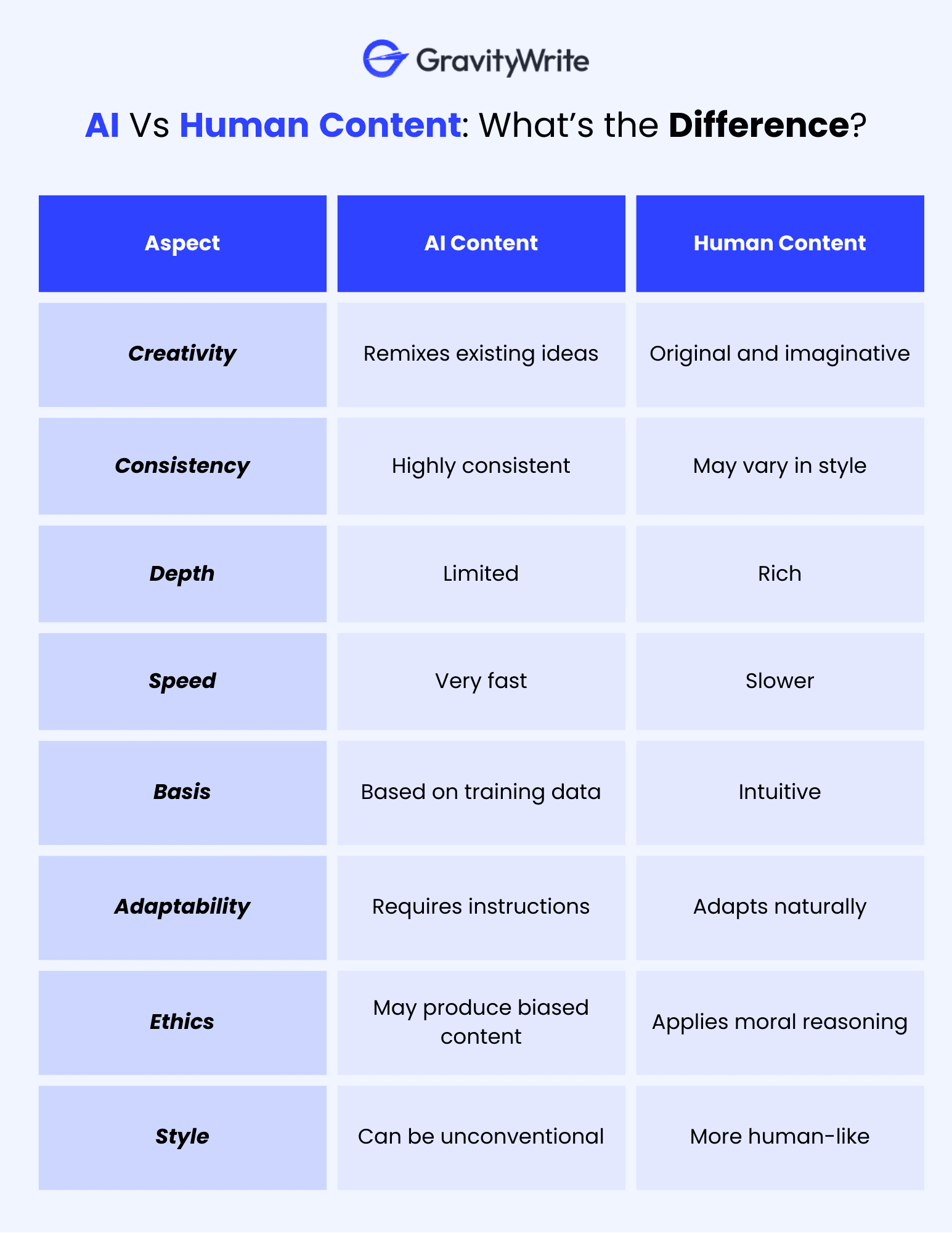
An AI comparison article is a piece of content that evaluates two or more artificial intelligence tools, models, platforms, or services side by side. The goal is to highlight differences in features, pricing, performance, use cases, ease of use, integration capabilities, and output quality. Unlike single-product reviews, these articles put competing solutions into direct contrast so readers can understand what they gain—and what they sacrifice—by choosing one option over another.
For example, a piece comparing ChatGPT, Claude, and Gemin It will show exactly where Claude’s long-context window outperforms Gemini for document analysis, or how ChatGPT’s plugin ecosystem gives it an edge in real-time data retrieval. The best AI comparison articles are rooted in hands-on testing, documented prompts, and measurable outcomes. They answer the painful question every buyer faces: “Which A OpenAI, Anthropic, Google, Meta, Cohere, Mistral, and dozens of open-source projects release updates that fundamentally alter the competitive landscape every month. Readers are exhausted by hype. They want clarity, not more marketing speak. This is the gap that authoritative AI comparison articles fill. When executed correctly, they become evergreen assets that capture consistent organic traffic because the core decision criteria—accuracy, speed, cost, privacy—remain stable even as version numbers change.
Beyond traffic, these articles build trust. A reader who used your comparison to save $300 a month on an API bill will subscribe, share, and return. Google’s Helpful Content System also rewards comparative content that demonstrates first-hand experience. By documenting your testing methodology, showing real outputs, and updating comparisons after major releases, you signal the expertise and freshness that search engines prioritize for YMYL-adjacent topics like AI tool selection.
The Anatomy of a High-Performing AI Comparison Article
Selection Criteria That Mirror Real Buyer Psychology
Most readers land on an AI comparison article with a specific job to be done. Ignoring that intent destroys relevance. The selection criteria you highlight must align with the actual trade-offs users care about. For a business-oriented AI writing assistant comparison, the pillars might be output accuracy, data privacy, team collaboration features, and integration with existing workflows. For an AI image generator comparison, criteria shift to photorealism, prompt adherence, ethical training data, and commercial licensing terms.
Effective comparison content explicitly names the target persona at the top. A comparison of AI video generators written for social media managers will emphasize aspect ratios, text overlays, and direct publishing integrations. The same tools compared for indie filmmakers would foreground resolution, frame consistency, and color grading flexibility. This explicit framing transforms a generic article into a precision decision tool.
Structured Side-by-Side Evaluation That Google Can Parse
Search engines reward structured data, but even without Schema markup, a clearly formatted comparison table dramatically improves user experience and dwell time. For AI comparison articles, the table should appear early—often after the introduction—so readers can absorb the core differences at a glance. The most useful tables go beyond checking feature boxes. They include qualitative severity ratings, like “steep learning curve” or “excellent for non-technical users,” that reflect real usage friction.
| Criteria | ChatGPT (GPT-4o) | Claude 3 Opus | Gemini 1.5 Pro |
|---|---|---|---|
| Context Window | 128K tokens | 200K tokens | 1 million tokens |
| Best for | Creative writing, code | Long document analysis | Multimodal reasoning |
| Pricing (per million tokens) | $5 input / $15 output | $15 input / $75 output | $3.50 input / $10.50 output |
| Safety Filtering | Moderate, configurable | Strict, Constitutional AI | Adjustable via API |
| Data Privacy (non-API) | Chat history can be used for training (opt-out available) | Default no training on user data | No training on enterprise data |
Tables like this satisfy the user’s need for rapid scanning while giving Google clear semantic signals about the article’s comparative nature. Ensure the table is built with standard HTML table, tr, td tags so it stays accessible and indexable.
Hands-On Testing Methodology That Builds EEAT
The single biggest trust signal in any AI comparison article is evidence of direct, reproducible testing. Declare your test prompts, the exact versions you used, the date of evaluation, and any configuration settings. If you compare AI image generators, show the same prompt fed into Midjourney, DALL·E 3, and Stable Diffusion XL. Don’t just embed the prettiest output; embed failures, weird artifacts, and prompt misunderstandings. This vulnerability is what separates a genuine expert resource from an affiliate revenue trap.
For text-based AI comparisons, include side-by-side outputs for tasks like summarizing a dense PDF, generating SQL queries from natural language, or writing a persuasive email. Annotate strengths and weaknesses directly beneath each output. This granularity proves you didn’t just read API docs—you sweated through edge cases.
Common Types of AI Comparison Articles and When to Use Them
- Head-to-head tool comparisons: Two specific AI tools matched on a well-defined use case, such as “Jasper vs. Copy.ai for long-form blog posts.” Readers here are late in the buying cycle and close to a decision. Depth matters more than breadth.
- Category roundups with comparative analysis: “Best AI code assistants in 2025” that puts GitHub Copilot, Cursor, and Codeium through identical programming challenges. These attract top-of-funnel traffic but can convert well if you include clear “best for” verdicts.
- Model versus model comparisons: Evaluating LLMs from different providers on reasoning benchmarks, latency, and cost-per-task. These are highly technical and prized by developers. Accuracy and standardized testing are non-negotiable.
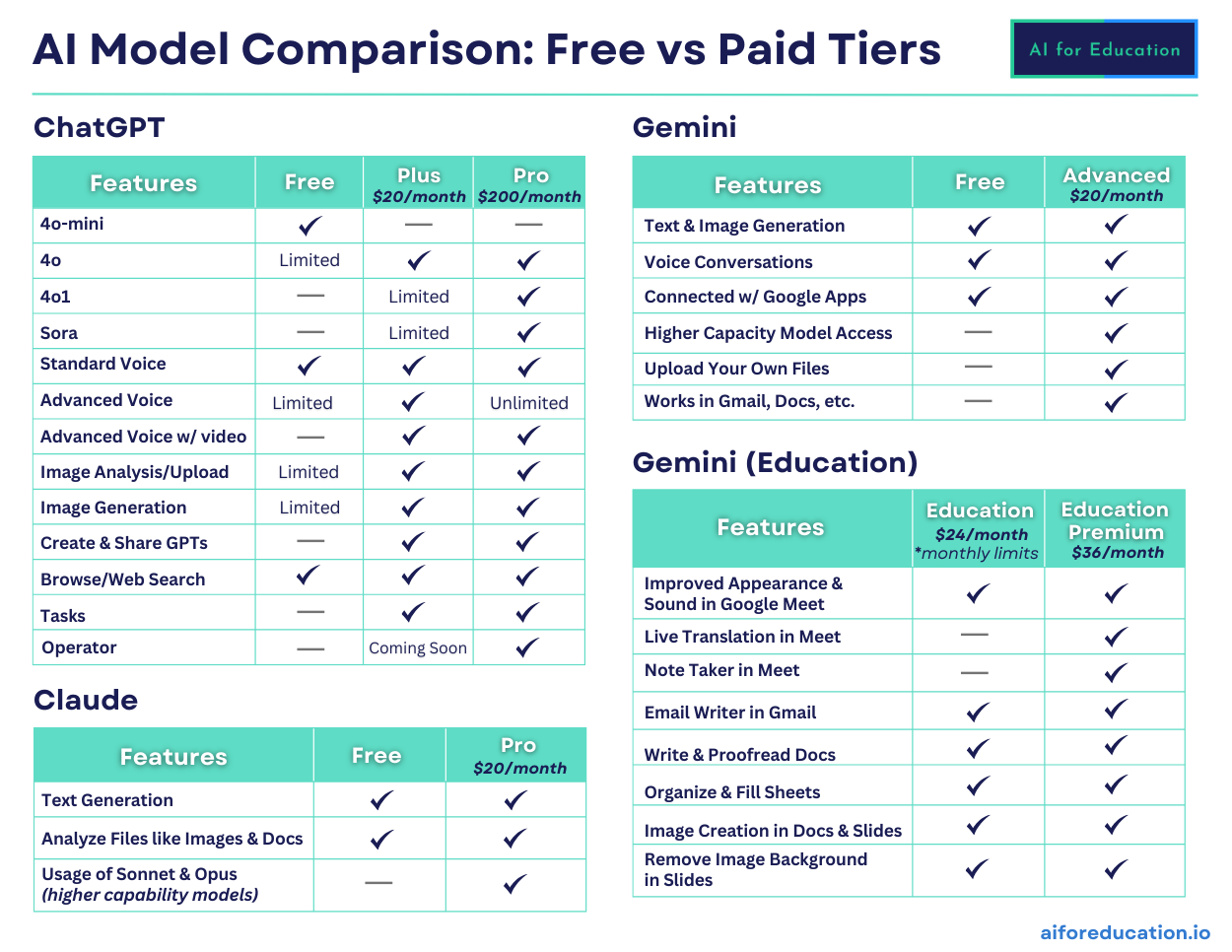
- Free versus paid tier breakdowns: Many AI tools gate critical features. Articles that compare free plans against paid tiers help users avoid hitting ceilings mid-project. This format works exceptionally well for freelance communities and small business owners.
- Open-source versus proprietary AI comparisons: Covering models like Llama 3 versus GPT-4 on criteria such as data control, customization, cost at scale, and performance parity. The audience often values sovereignty over convenience.
- Standardized test prompts: Save a library of prompts for different task categories—summarization, translation, code debugging, creative storytelling, data extraction. Reuse these to generate comparable outputs across new tools.
- Scoring rubric: Define a 1-5 scale for criteria like ease of setup, response speed, factual accuracy, and formatting cleanliness. Apply this rubric uniformly. When you later convert scores into a comparison table, the data has integrity.
- Update cadence checklist: AI tools change monthly. Note every release that could alter your conclusions—model upgrades, pricing shifts, privacy policy changes. Flag these in your editorial calendar so your AI comparison articles stay accurate and maintain their rankings.
- Comparing features without context: Listing that Tool A has 50 integrations and Tool B has 15 means nothing unless you highlight the three integrations your reader’s workflow actually needs. Always tie feature counts to user scenarios.
- Ignoring pricing complexity: AI pricing models are often convoluted—per-character, per-image, subscription credits, API metering. Break down the cost for a realistic monthly usage volume. Calculate the bill for 100,000 words generated, not just the sticker price.
- Overlooking output consistency: One impressive demo screenshot does not equal reliability. Run the same task five times and report variance. Tools that produce erratic formatting or hallucinate under slight input changes deserve a prominent caveat.
- Skipping the mobile and slow-connection experience: A growing portion of AI tool interaction happens on phones. Test each tool’s mobile web interface or app. Note performance on a throttled connection. This detail alone can differentiate your article because few competitors bother.
- Using non-descriptive headings: “Features” is a wasted H2. Use “Feature Showdown: Content Quality and Brand Voice Control” instead. This injects long-tail keywords and gives readers immediate context.
How to Write an AI Comparison Article That Ranks and Converts
Research That Goes Beyond Vendor Claim Sheets
Start by gathering every official document: pricing pages, documentation, changelogs, and security whitepapers. Then move to the signals vendors don’t publish. Reddit threads, Hacker News discussions, and developer forums reveal real-world pain points—unexpected rate limits, misleading context windows, prompt injection vulnerabilities. This ancillary research is the raw material for insight that cannot be replicated by AI content mills.
Record your own stress tests. If you compare AI transcription services, feed them the same 45-minute podcast with background chatter and heavy accents. Measure word error rate manually. Screenshot the output differences. This original data is your article’s moat. It also provides natural opportunities to include secondary keywords like “AI transcription accuracy test” or “comparing speech-to-text models” in image alt text and captions.
Structuring the Article for Maximum Readability and SEO
Open with the specific pain point that led you to create this comparison. If you compared AI scheduling assistants, your hook might be the hours wasted per week coordinating meetings across time zones. Establish experiential authority immediately. Then deliver the comparison table as a quick-reference anchor, followed by deep-dive sections for each solution. In the deep dives, use H3 headings to break down each criterion—pricing, user interface, output quality, integrations, support—so skimmers can jump to what matters.
Throughout the body, weave in semantic variations like “AI software match-up,” “LLM feature comparison,” “artificial intelligence tool showdown,” and “best AI for [specific task]” naturally. Do not force exact-match phrases in every paragraph. Google’s BERT and MUM understand topic clusters, so a paragraph about evaluating AI writing assistants for SEO can safely use “content generation tool comparison” without losing topical relevance.
Adding Verdicts and Decision Frameworks
An AI comparison article without clear winner scenarios leaves readers frustrated. Provide a verdict for each distinct user profile. For example, “Choose Claude for document-heavy legal research because its 200K context window and citation habits reduce hallucination risk. Pick Gemini if you frequently analyze video and audio inputs, as its native multimodality bypasses the need for external plugins.” Avoid declaring a universal winner; it erodes credibility. Instead, offer a decision matrix or a simple flowchart in text form that guides readers based on their primary constraint—budget, technical skill, or data sensitivity.
Practical Application: Creating Your Own AI Comparison Content Framework
Build a repeatable template before you start writing. A robust framework saves hours on future comparisons and ensures consistency across your site. The template should include:
Benefits and Limitations of AI Comparison Articles
Benefits for Content Creators and Businesses
A well-researched comparison piece serves multiple strategic goals. It attracts high-intent traffic from users actively seeking purchase guidance, often with strong commercial intent keywords like “best,” “vs,” and “alternatives.” It positions the publisher as a trusted advisor, increasing newsletter sign-ups and return visits. For affiliate-driven sites, comparative content typically converts better than solo reviews because readers feel they arrived at a decision themselves after seeing the evidence laid out. On the SEO front, comparison articles earn backlinks naturally when startups, forums, or resource pages cite your work as a definitive reference.
Limitations and How to Mitigate Them
The biggest risk is staleness. Last month’s winner can become this month’s security liability after a data breach. Without regular updates, your article misleads readers and Google’s ranking systems. Mitigate this by adding a visible “Last updated” date and a changelog footnote. Another limitation is the complexity of true apples-to-apples testing. APIs with different default parameters can produce wildly different outputs. Disclose your exact settings—temperature, top_p, system prompt—so readers can reproduce results. Finally, bias toward tools with affiliate programs can undermine trust. Disclose affiliate relationships prominently and never let revenue potential influence your verdict.
Common Mistakes in AI Comparison Articles and How to Avoid Them
Important Notes for Maintaining Topical Authority
Consistency across your comparison content builds a recognizable brand. Use the same table styles, the same rating icons, and the same summary format. When readers encounter your second or third AI comparison article, they should feel an immediate sense of familiarity. This reduces cognitive load and increases time on page. Adding author bios with verifiable credentials—such as a link to the writer’s GitHub showing AI projects or a LinkedIn profile with machine learning experience—reinforces EEAT signals. Never publish an AI comparison under a generic “Staff Writer” byline if you want to compete in this YMYL-adjacent space.
For SEO, use internal linking strategically. Link from your comparison article to related single-tool reviews, use-case guides, and glossaries. A comparison of AI code assistants should link to your dedicated GitHub Copilot review and your article on prompt engineering for developers. This topic cluster architecture signals comprehensive coverage to search engines.
Frequently Asked Questions About AI Comparison Articles
How often should I update an AI comparison article?
Major model launches, pricing restructures, and security incidents require immediate updates. Even without breaking news, review the article every 60 to 90 days. Re-run your test prompts to verify outputs haven’t degraded or improved. Google’s freshness algorithm treats stale AI content harshly because outdated recommendations can lead to poor user decisions.
What makes a comparison table SEO-friendly?
Use standard HTML table markup with clear table headers. Keep the table concise—five to seven rows focus attention on key differentiators. Add a caption element describing the table’s purpose, and ensure the first column contains scannable criteria labels. Do not stuff keywords into every cell; natural language descriptions perform better. Where possible, include qualitative strength indicators like “Excellent,” “Limited,” or “Requires workaround” because they convey judgment that pure feature checkmarks miss.
Can I use AI to write my AI comparison articles?
Using AI for research synthesis is acceptable, but fully AI-generated comparisons consistently fail EEAT checks. They lack the hands-on testing evidence that distinguishes signal from noise. If you use a language model to draft, you must manually inject your original test data, screenshots, and nuanced observations. Readers and search engines can detect the smooth-but- hollow tone of a piece that never actually ran the tools it critiques.
How do I choose which AI tools to compare?
Start with search intent analysis. Use keyword tools to find “Tool A vs Tool B” queries with decent monthly volume and manageable competition. Combine that with trending community discussions—Discord servers, LinkedIn groups, niche subreddits—where users lament a specific limitation of a dominant tool. That limitation becomes the entry point for comparing a rising alternative. Prioritize comparisons where you have genuine domain expertise; trying to compare AI protein folding models without a biology background will produce shallow content.
Do AI comparison articles still work in the era of AI Overviews?
Yes, but the format must evolve. Google’s AI Overviews often pull comparative snippets from high-authority tables and clearly labelled verdict sections. Structured data and unambiguous “best for” language get surfaced more often. The traffic pattern may shift—more zero-click summarizations—but the downstream clicks that do happen go to the source that demonstrated original testing. In fact, AI Overviews are pulling from comparison articles that show evidence of actual usage, because Google’s systems are trained to reward content exhibiting experience signals.
Conclusion
AI comparison articles are not just another blog format. They are a high-stakes bridge between confusion and clarity in a market drowning in options. Producing them with integrity, thoroughness, and an unwavering focus on user needs is the most sustainable SEO strategy available today. The technical side—keyword placement, table formatting, internal linking—works only when it rests on a foundation of verifiable experience. Run the tests, document the failures as honestly as the wins, and keep your content alive with regular updates. In doing so, you serve readers who are making decisions that affect their careers, their businesses, and their creative output. That level of responsibility, when embraced, is precisely what turns a simple AI comparison into a trusted reference that ranks for years.
Xem thêm:
- AI SEO AI Overview Traffic: The Complete Guide to Winning Google’s AI Search Results
- AI SEO Silo Structure: The Complete Guide to Building Topically Authoritative Websites
- AI SEO for Beginners: A Practical Guide to Boosting Your Rankings with Artificial Intelligence
- AI SEO GEO Citations: The Complete Guide to Future-Proofing Your Local Search Strategy
- Mastering AI Search Ranking: How Artificial Intelligence is Redefining SEO Success
Bài viết cùng chủ đề:

AI SEO SEO Automation with Make: The Complete Workflow Guide

AI SEO SEO Automation with Zapier: The Complete Workflow Guide

AI SEO SEO Automation with n8n: The Complete Workflow Guide
AI SEO SEO Automation with Gemini: The Complete Guide to Scaling Organic Growth

AI SEO SEO Automation with Claude: The Complete Guide to Scaling Content in 2025

AI SEO SEO Automation with ChatGPT: The Complete Playbook for 2025

AI SEO & SEO Automation for Affiliate Sites: The 2025 Playbook for Passive Income Growth
AI SEO & SEO Automation for Bloggers: The Complete Guide to Scaling Your Content

AI SEO & SEO Automation for Agencies: The Complete 2025 Playbook

AI SEO and SEO Automation for Ecommerce: The Complete Playbook for 2025

AI SEO & SEO Automation for WordPress: The Complete Playbook for 2025
AI SEO SEO Automation Strategy: The Complete Playbook for 2025

Mastering the AI SEO SEO Automation Process: A Complete Guide to Scaling Organic Growth
AI SEO SEO Automation System: The Complete Guide to Scaling Organic Growth in 2025
AI SEO SEO Automation Platform: The Complete Guide to Scaling Organic Growth in 2025
AI SEO SEO Automation Software: The Complete Guide to Scaling Organic Growth in 2025















