
No products in the cart.
AI SEO Keyword Relevance: The Complete Guide to Smarter Search Rankings
10
Aug
Aug
AI SEO keyword relevance has transformed how websites achieve visibility in search results. Traditional keyword matching relied on exact phrases and density, but modern search engines use artificial intelligence to understand context, user intent, and semantic relationships. This shift means marketers must rethink their entire approach to content optimization. The days of stuffing pages with repetitive terms are long gone. Today, relevance is determined by how well your content answers the questions users actually ask, even when they use different words than you predicted.
Understanding AI SEO Keyword Relevance
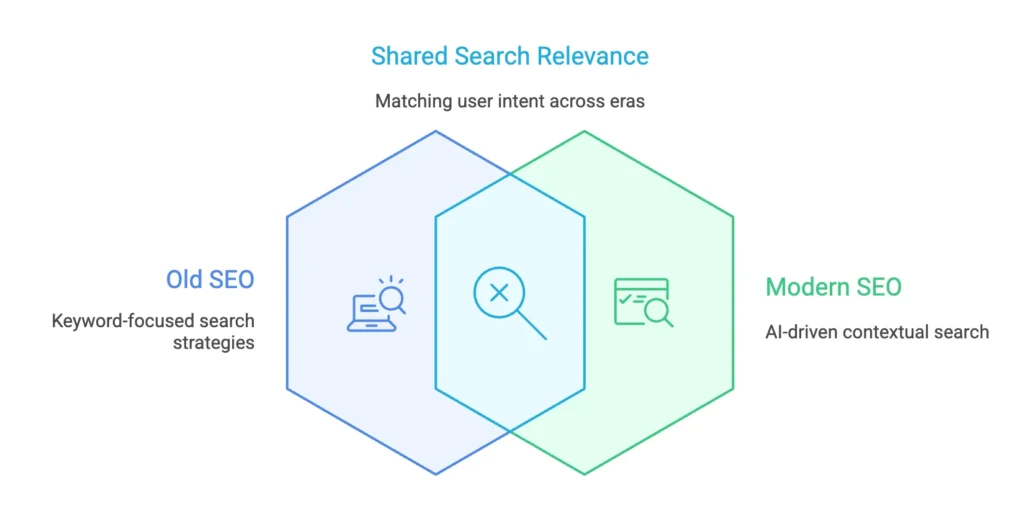
AI SEO keyword relevance refers to the degree to which a piece of content aligns with the search intent behind a query, as interpreted by machine learning algorithms. Search engines like Google use neural networks, natural language processing (NLP), and entity recognition to evaluate whether your page genuinely addresses what a searcher needs. This goes far beyond checking if a keyword appears on the page.
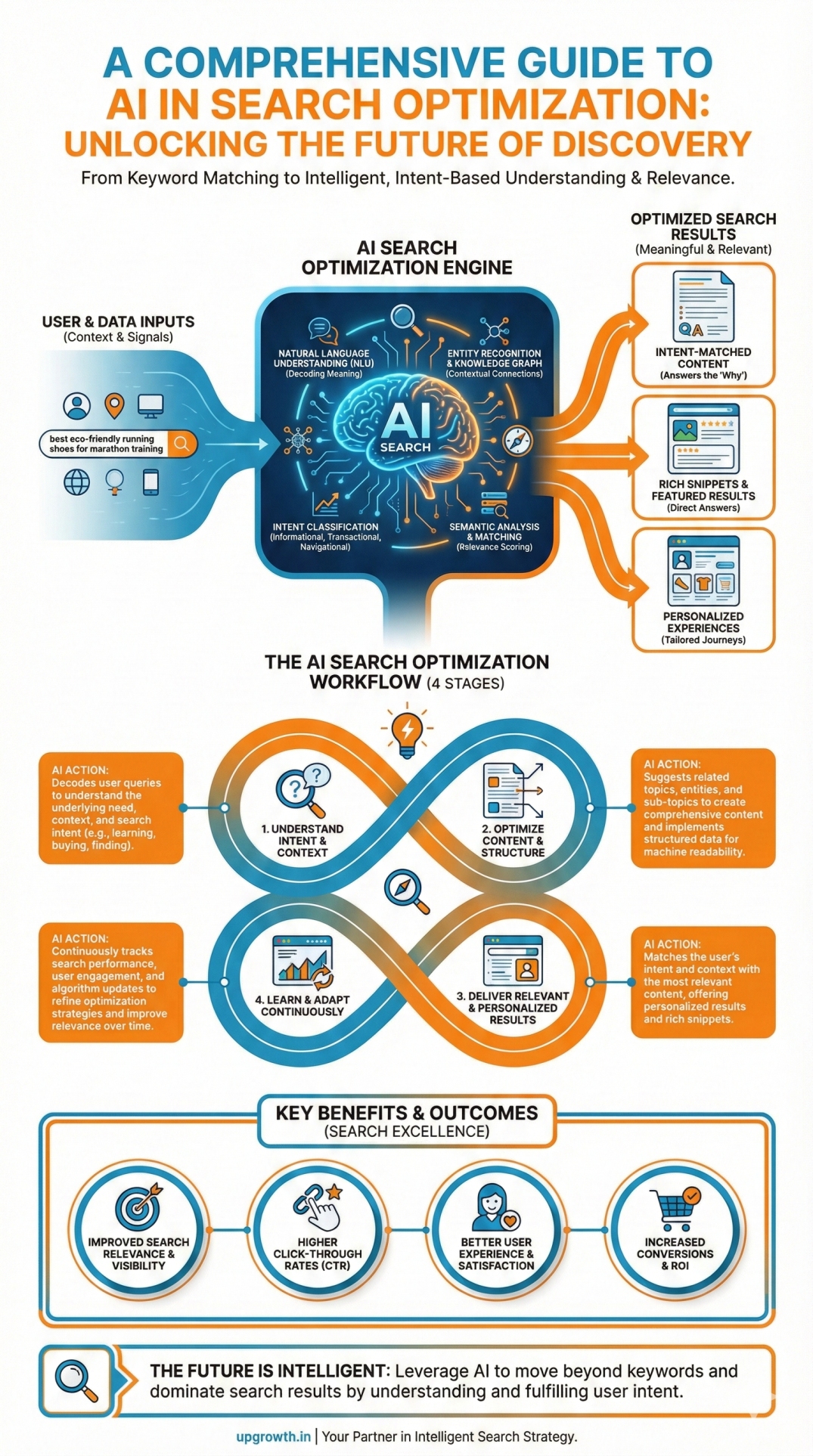
The core components of AI-driven relevance include semantic proximity, topical authority, entity matching, and contextual signals. When you search for “best running shoes,” the AI understands you likely want comparisons, prices, and reviews. It does not simply look for pages containing those three words. It evaluates whether the content covers related concepts like cushioning, arch support, durability, and terrain suitability.
How Search Engines Evaluate Relevance
Modern search algorithms process queries through several layers of understanding. First, they parse the query to identify the core entities and their relationships. Second, they analyze the searcher’s location, device, and search history to refine intent. Third, they match this understanding against a massive index of content, scoring each page for topical completeness and authority.
BERT and MUM are two prominent examples of AI models that power this evaluation. BERT helps the algorithm understand prepositions and context, so “book a table for two” is treated differently from “table of contents.” MUM is multimodal, meaning it can understand text, images, and video simultaneously, allowing it to connect information across formats and languages.
Why Traditional Keyword Matching Fails
For years, SEO professionals focused on exact-match domains, keyword density percentages, and meta tag optimization. These tactics worked when search engines were simpler. However, they created poor user experiences. Pages ranked for terms they barely covered, and users bounced back to search results within seconds.
Google’s spam updates and core algorithm changes have systematically devalued these practices. The helpful content update, rolled out in 2022 and refined since, explicitly targets content created primarily for search engines rather than humans. This update uses machine learning to identify sites with low-value pages that lack original insight or first-hand experience.
Consider a page optimized for “best coffee maker.” If it repeats that phrase fifty times but never discusses water temperature, brew time, or maintenance, the AI recognizes the shallow coverage. A competitor page that uses varied language, includes video demonstrations, and answers follow-up questions will rank higher despite using the exact keyword less frequently.
Core Elements of AI SEO Keyword Relevance
To succeed with AI-driven search, you need to understand the specific factors that contribute to relevance scoring. These elements work together to signal to the algorithm that your content is the best possible answer.
Semantic Search and Entity Recognition
Semantic search is the process of understanding the meaning behind words. When you write about “apple,” the AI determines whether you mean the fruit, the technology company, or the record label based on surrounding terms. Entity recognition identifies people, places, organizations, and concepts within your content and connects them to a knowledge graph.
To optimize for entities, mention related brands, products, and concepts naturally. If you write about digital marketing, reference Google Analytics, conversion rates, and customer journey mapping. This helps the AI place your content within a broader context of knowledge.
Topical Depth and Coverage
Search engines reward comprehensive content that covers a topic from multiple angles. A single 500-word article rarely satisfies the AI’s understanding of a broad subject. Instead, you need to address sub-topics, answer related questions, and provide actionable details.
For example, an article about “home solar panels” should cover installation costs, energy savings, government incentives, maintenance requirements, and common misconceptions. Each of these sub-topics reinforces the main keyword’s relevance by demonstrating expertise.
User Engagement Signals
AI algorithms incorporate user behavior data into relevance scoring. Click-through rate, dwell time, bounce rate, and pages per session all provide feedback on whether searchers find your content useful. If users consistently return to search results after visiting your page, the AI interprets this as a relevance failure.
Improving engagement requires clear formatting, fast loading times, and content that immediately addresses the query. Use short paragraphs, descriptive subheadings, and visual elements to keep readers on the page longer.
Practical Guide to Optimizing for AI SEO Keyword Relevance
Optimizing for AI-driven search requires a systematic approach that combines traditional SEO fundamentals with new techniques designed for machine learning algorithms. Follow these steps to improve your content’s relevance scores.
Step 1: Conduct Intent-Based Keyword Research
Move beyond simple keyword volume tools. Use AI-powered platforms like Clearscope, Surfer SEO, or MarketMuse to analyze the top-ranking pages for your target terms. These tools identify the semantic terms, related questions, and content structure that the AI expects to see.
Create a list of primary keywords, secondary keywords, and long-tail variations. For each keyword, define the search intent: informational, navigational, commercial, or transactional. This classification determines the type of content you should create.
Step 2: Structure Content Around Topic Clusters
Instead of creating isolated blog posts, build topic clusters that demonstrate authority. A pillar page covers the broad subject, while cluster pages dive into specific sub-topics. Link these pages together using descriptive anchor text that includes relevant keywords.
This structure helps the AI understand the relationship between your pages. It also provides users with a logical path to explore related information, increasing engagement signals.
Step 3: Write for Humans First, Algorithms Second
Your primary audience is the person searching for information. Write in a clear, conversational tone that directly addresses their needs. Use natural language that includes synonyms and related terms without forcing them into the text.
Read your content aloud to identify awkward phrasing. If a sentence sounds unnatural because you tried to include a keyword, rewrite it. The AI is sophisticated enough to recognize the concept even when you use different words.
Step 4: Leverage Structured Data
Schema markup helps search engines understand the specific elements of your content. Use FAQ schema for question-and-answer sections, HowTo schema for instructional content, and Article schema for standard blog posts. This structured data provides explicit signals about your content’s purpose.
Implementing schema also makes your content eligible for rich results, which can increase click-through rates and provide additional context to the AI.
Step 5: Monitor and Adapt Based on Performance
AI algorithms are constantly updating. What works today may not work next quarter. Use Google Search Console to monitor your keyword rankings, click-through rates, and average positions. Pay attention to queries where you appear but do not receive clicks, as these indicate relevance gaps.
Analyze the search results for your target keywords regularly. If new competitors appear with different content structures, study what they do differently. Adapt your content to maintain relevance.
Benefits of AI-Driven Keyword Relevance
Embracing AI SEO keyword relevance offers significant advantages over traditional optimization methods. These benefits extend beyond rankings to impact overall business performance.
- Higher Quality Traffic: When your content matches intent, visitors are more likely to convert. They found exactly what they were looking for, reducing friction in the customer journey.
- Long-Term Sustainability: Content optimized for AI relevance is less vulnerable to algorithm updates. Since it genuinely serves users, it maintains performance even as ranking factors evolve.
- Brand Authority: Comprehensive, accurate content positions your brand as a trusted source. This authority extends to other channels, including voice search and AI assistants.
- Cost Efficiency: Instead of creating dozens of thin pages targeting variations of the same keyword, you create fewer, higher-quality pages that rank for many related terms.
Limitations and Challenges
While AI SEO keyword relevance is powerful, it presents several challenges that marketers must navigate carefully.
First, the complexity of AI algorithms makes it difficult to predict exactly why a page ranks. You may follow all best practices and still see poor performance due to factors outside your control, such as domain authority or backlink profile.
Second, creating comprehensive content requires significant time and resources. A single pillar page might take weeks to research, write, and optimize. Smaller teams may struggle to maintain this level of output.
Third, the focus on user intent can sometimes conflict with business goals. A page that perfectly answers a question might not include a strong call-to-action, reducing conversion rates. Balancing informational value with commercial objectives requires careful planning.
Comparison: Traditional SEO vs. AI SEO Keyword Relevance
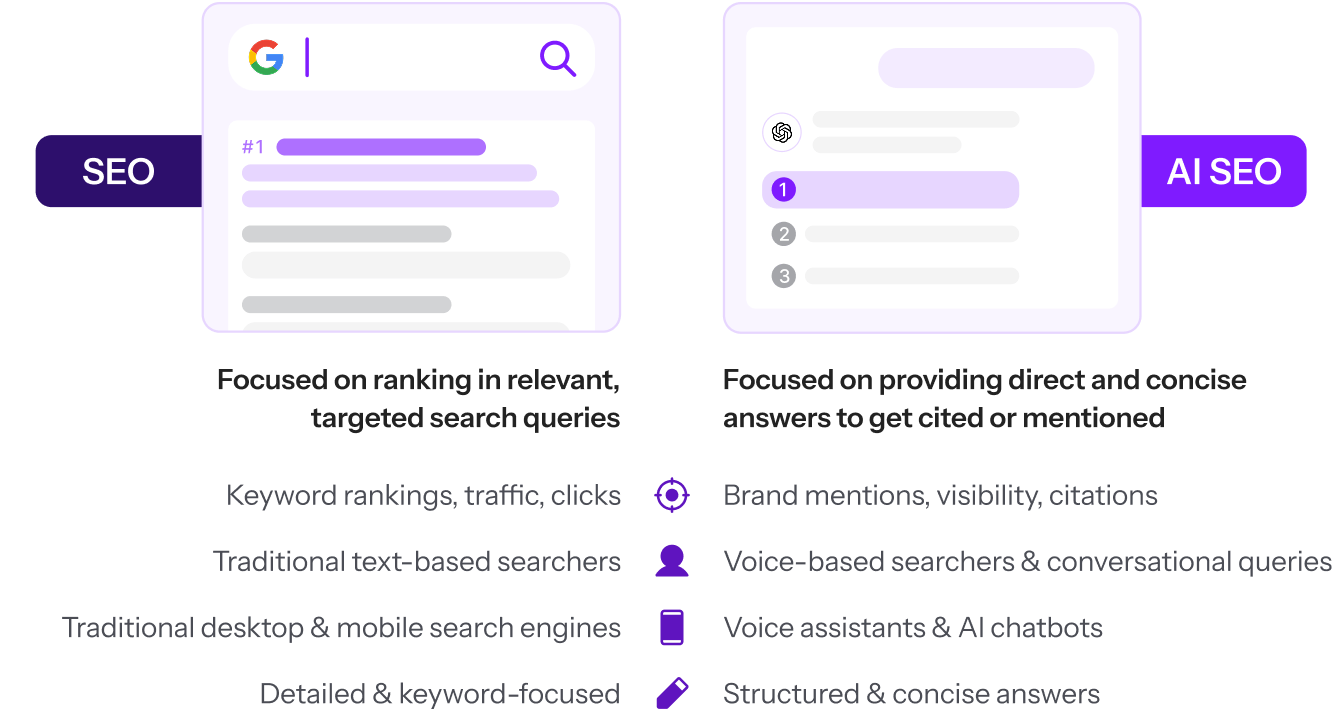
| Aspect | Traditional SEO | AI SEO Keyword Relevance |
|---|---|---|
| Keyword Usage | Exact match, density-based | Semantic, contextual, varied |
| Content Length | Often short, 300-500 words | Comprehensive, 1500+ words |
| Intent Focus | Keyword-based assumptions | User behavior and context |
| Algorithm Understanding | Lexical matching | NLP, entity recognition, neural networks |
| Content Updates | Rarely updated | Continuously refreshed |
| Measurement | Rankings and traffic | Engagement, conversions, brand lift |
The table above illustrates the fundamental shift in how optimization works. Traditional methods focused on manipulating signals, while AI-driven approaches focus on delivering genuine value.
Common Mistakes and How to Avoid Them
Many marketers still make critical errors when trying to optimize for AI SEO keyword relevance. Recognizing these mistakes is the first step toward correcting them.
Mistake 1: Keyword Cannibalization
Creating multiple pages that target the same keyword confuses the AI. It cannot determine which page is most relevant, so it may rank neither. Instead, consolidate similar content into a single authoritative page or differentiate pages by targeting distinct sub-intents.
Mistake 2: Ignoring Search Intent Variations
Not all searches for the same keyword have the same intent. Someone searching “best laptop” might want a listicle, while another person wants a detailed review of a specific model. Analyze the current top results to understand what format the AI considers most relevant.
Mistake 3: Over-Optimizing Anchor Text
Using exact-match anchor text for every internal link looks manipulative to the AI. Vary your anchor text using natural phrases, brand names, and generic terms like “click here” or “learn more.” This creates a more organic link profile.
Mistake 4: Neglecting Content Freshness
AI algorithms favor recent, updated information. A page that was accurate two years ago may now be outdated. Regularly review your top-performing pages and update statistics, examples, and product recommendations.
Mistake 5: Focusing Only on Text
Modern AI models like MUM understand images and video. Pages that include relevant visuals, infographics, or embedded videos provide richer signals than text-only content. Add multimedia elements to enhance relevance.
Important Notes for Long-Term Success
AI SEO keyword relevance is not a one-time optimization task. It requires ongoing attention and adaptation. Keep these notes in mind as you develop your strategy.
First, prioritize user experience above all else. The AI is designed to mimic human judgment. If real users find your content valuable, the algorithm will eventually recognize that value.
Second, diversify your traffic sources. Relying solely on organic search makes you vulnerable to algorithm changes. Build an email list, develop a social media presence, and explore partnerships to create a resilient marketing ecosystem.
Third, invest in technical SEO. Page speed, mobile responsiveness, and secure connections are baseline requirements. Even the most relevant content will fail if users cannot access it easily.
Fourth, track your competitors but do not copy them. Analyze their strengths and weaknesses, then create content that fills gaps they have missed. This differentiation helps you stand out in the AI’s evaluation.
Frequently Asked Questions
What is the difference between keyword relevance and keyword density?
Keyword density measures how often a keyword appears relative to total word count. Keyword relevance evaluates how well the content matches the searcher’s intent and covers the topic comprehensively. AI algorithms prioritize relevance over density, meaning you can rank well without repeating a keyword frequently.
How does Google’s BERT algorithm affect keyword optimization?
BERT helps Google understand the context and nuance of words in a query. It allows the algorithm to grasp prepositions, conjunctions, and word order. This means you should write naturally, using conversational language, rather than forcing keywords into awkward positions.
Can AI SEO keyword relevance work for local businesses?
Yes, local businesses benefit significantly from AI-driven relevance. The algorithm considers location signals, local entities, and user reviews. Creating content that mentions your city, neighborhood, and local landmarks helps the AI connect your business to relevant local searches.
How often should I update my content for AI relevance?
T Check for outdated statistics, broken links, and new information that should be added. Pages that consistently receive traffic deserve more frequent updates than those with low engagement.
What tools can help with AI SEO keyword relevance?
Several tools use AI to analyze content relevance. Clearscope and MarketMuse provide content briefs based on top-ranking pages. Surfer SEO offers real-time optimization suggestions. Google’s own Search Console and Natural Language API provide free insights into how your content is understood.
Conclusion
AI SEO keyword relevance represents the current and future state of search optimization. The algorithms that determine rankings have evolved from simple pattern matching to sophisticated understanding of human language and intent. Marketers who adapt to this reality will thrive, while those who cling to outdated tactics will see their visibility decline.
The path forward is clear: create comprehensive, genuinely useful content that answers real questions. Use keywords as guides, not constraints. Structure your site to demonstrate authority and expertise. Monitor performance and adapt continuously. By aligning your content with how AI actually evaluates relevance, you build a sustainable foundation for organic search success that withstands algorithm updates and changing user behaviors.
Xem thêm:
- AI SEO Semantic Keywords: The Complete Guide to Smarter Content Optimization
- AI SEO Product Category SEO: The Complete Guide to Scaling Category Pages
- The Ultimate AI Content Brief: How to Write Smarter, Rank Faster, and Outperform Every Competitor
- AI SEO Topic Cluster Generator: The Complete Guide to Building Authority Pages That Rank
- AI Affiliate Content: How to Automate Reviews, Comparisons, and Earn Commissions Faster
Bài viết cùng chủ đề:

AI SEO SEO Automation with Make: The Complete Workflow Guide

AI SEO SEO Automation with Zapier: The Complete Workflow Guide

AI SEO SEO Automation with n8n: The Complete Workflow Guide
AI SEO SEO Automation with Gemini: The Complete Guide to Scaling Organic Growth

AI SEO SEO Automation with Claude: The Complete Guide to Scaling Content in 2025

AI SEO SEO Automation with ChatGPT: The Complete Playbook for 2025

AI SEO & SEO Automation for Affiliate Sites: The 2025 Playbook for Passive Income Growth
AI SEO & SEO Automation for Bloggers: The Complete Guide to Scaling Your Content

AI SEO & SEO Automation for Agencies: The Complete 2025 Playbook

AI SEO and SEO Automation for Ecommerce: The Complete Playbook for 2025

AI SEO & SEO Automation for WordPress: The Complete Playbook for 2025
AI SEO SEO Automation Strategy: The Complete Playbook for 2025

Mastering the AI SEO SEO Automation Process: A Complete Guide to Scaling Organic Growth
AI SEO SEO Automation System: The Complete Guide to Scaling Organic Growth in 2025
AI SEO SEO Automation Platform: The Complete Guide to Scaling Organic Growth in 2025
AI SEO SEO Automation Software: The Complete Guide to Scaling Organic Growth in 2025















