
No products in the cart.
AI SEO Generative Search Ranking: The Complete Playbook for 2025
10
Aug
Aug
The digital landscape has shifted beneath our feet. Traditional search engine optimization focused on ranking in a list of blue links. Today, the rise of AI-powered search engines like Google AI Overviews, Perplexity, and Bing Copilot has introduced a new paradigm: AI SEO Generative Search Ranking. This concept determines whether your brand gets cited as the authoritative source within an AI-generated answer, or whether you are left invisible in the digital dust. Understanding this shift is no longer optional; it is the cornerstone of modern organic visibility.
What is AI SEO Generative Search Ranking?
AI SEO Generative Search Ranking refers to the process and methodology of optimizing digital content to be selected, cited, and ranked by generative AI models when they produce synthesized answers to user queries. Unlike traditional ranking, which relies on backlinks and domain authority to surface a URL, generative ranking focuses on how well an AI system can extract, understand, and trust your content to formulate a direct response.
When a user asks a complex question, the AI does not simply list websites. It reads hundreds of sources, cross-references data, and writes a unique paragraph summarizing the answer. Your goal is to be one of the primary sources that the AI uses to write that paragraph. This requires a fundamental shift from writing for crawlers to writing for machine comprehension and semantic relevance.
The Core Difference: Retrieval vs. Generation
To grasp this concept, you must understand the difference between retrieval and generation. Traditional SEO is retrieval-based. Google retrieves a list of URLs that match keywords. Generative search is synthesis-based. The AI retrieves information, but then generates a new, unique text output. This means your content must be structured so that the AI can easily parse it, extract key facts, and attribute them to your brand.
This process involves two critical stages: indexing and grounding. The AI must first index your content (making it accessible) and then ground its answer in your facts (trusting your data). If your content is buried in unstructured paragraphs or lacks clear factual statements, the A
Why Generative Search Ranking Matters for Your Business
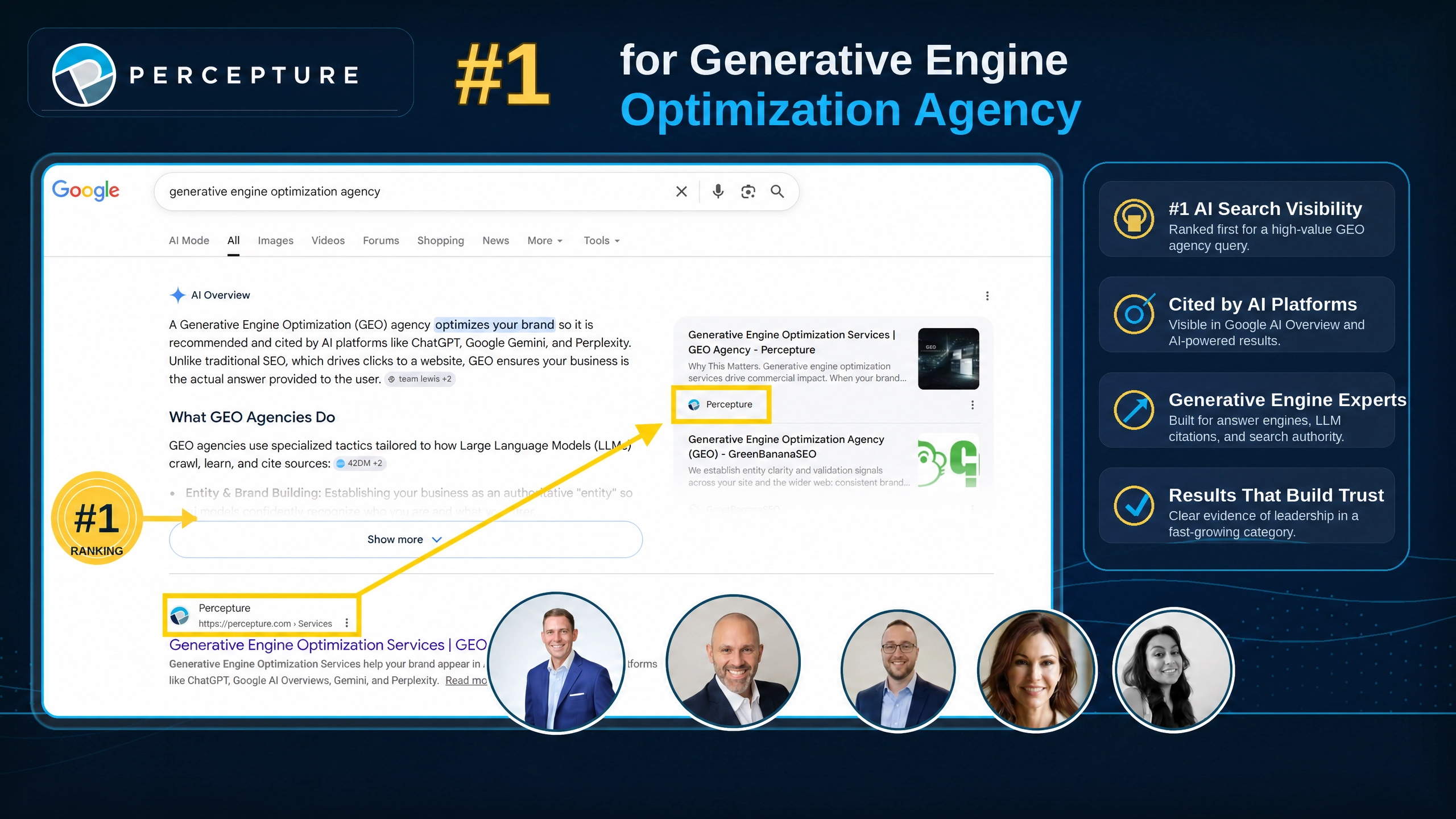
The implications of generative search are profound. Click-through rates to traditional organic listings are declining. When a user gets a complete answer in an AI Overview, they rarely click through to the source. However, if your brand is cited as the source, you gain massive brand exposure and authority, even without the click.
Furthermore, this ranking system dictates the future of voice search and digital assistants. When a user asks Siri or Alexa a question, the assistant uses generative AI to formulate the spoken answer. If your content is not optimized for generative ranking, you are excluded from the fastest-growing segment of search: zero-click queries.
How AI Engines Rank Content: The Mechanics
Generative engines do not use PageRank in the traditional sense. They use a combination of retrieval augmented generation (RAG) and natural language processing (NLP). The process generally follows these steps:
- Query Understanding: The AI breaks down the user’s prompt into intent and entities.
- Retrieval: The system searches its index for documents that match the semantic meaning, not just keywords.
- Scoring: The AI scores these documents based on relevance, authority, and freshness.
- Synthesis: The AI extracts specific sentences and facts to generate a coherent answer.
- Citation: The AI attributes the answer to the top-scoring sources.
Your ranking depends on how well your content performs in the Retrieval and Scoring stages. The AI looks for clarity, factual density, and alignment with the query’s intent. Content that is ambiguous or lacks specific data points will score poorly.
The Role of Entity Salience
Entity salience is a key factor. The AI must recognize your brand, your products, and your authors as distinct entities. If your content clearly defines who you are, what you do, and how you relate to other entities (e.g., “We are a software company founded in 2010”), the AI can easily map your content to relevant queries. If your content is generic, the AI cannot establish your authority.
Key Ranking Factors for Generative Search
While the algorithms are complex, several concrete factors determine your success in AI SEO Generative Search Ranking. These are not guesses; they are based on how LLMs process and prioritize information.
1. Content Clarity and Structure
Generative AI loves structure. It struggles with walls of text. You must use clear headings, bullet points, and short paragraphs. The AI looks for direct answers to specific questions. If you have a section titled “What is X?” the AI knows exactly where to look for the definition. This is called “answer optimization.”
2. Factual Density and Data
AI models are trained to avoid hallucination. They prefer sources that provide verifiable data. Include statistics, dates, and specific numbers. Instead of saying “our product is fast,” say “our product processes 10,000 requests per second.” This specificity gives the AI confidence to cite you.
3. Author Authority (E-E-A-T)
Experience, Expertise, Authoritativeness, and Trustworthiness (E-E-A-T) are critical. The AI checks if the content has a named author with credentials. It looks for links to authoritative external sources and links from authoritative sites. You must display clear authorship and provide a way for the AI to verify your expertise.
4. Semantic Relevance (LSI Keywords)
Keyword stuffing is dead. The AI uses semantic analysis to understand context. You must naturally include related terms and synonyms. If you are writing about “AI SEO,” you should also discuss “machine learning,” “natural language processing,” and “algorithm updates.” This helps the AI understand the depth of your content.
5. Freshness and Updates
Generative models prioritize current information, especially for news and technology. You must regularly update your content to reflect the latest trends. The AI checks the “last modified” date and the consistency of the information. Outdated content is quickly discarded.
Optimizing Your Content for Generative Ranking
Now that we understand the factors, let’s look at the practical application. This is a step-by-step guide to restructuring your content strategy for AI visibility.
Step 1: Target Question-Based Queries
Focus on long-tail keywords that are phrased as questions. “How to optimize for AI search” is better than “AI search optimization.” Create dedicated FAQ sections that answer these questions directly. The AI pulls from these sections frequently.
Step 2: Implement Schema Markup
Structured data is the language of machines. Use FAQPage, HowTo, and Article schema to explicitly tell the AI what your content means. This removes ambiguity and increases the chances of being selected for rich results and AI citations.
Step 3: Write “Answer-First” Paragraphs
Do not bury the lead. If your H2 asks a question, the very first sentence of that section must provide the answer. This is known as the “inverted pyramid” style. The AI extracts these first sentences to build its summaries. If the answer is on line 10, the AI may miss it.
Step 4: Build a Knowledge Graph
Create a network of interconnected content. Link between your articles using descriptive anchor text. This helps the AI understand the relationship between your pages. A strong internal linking structure creates a “hub” of authority that the AI trusts.
Step 5: Optimize for Voice Search
Voice search queries are conversational and longer. They are the primary input method for generative AI assistants. Write in a conversational tone that matches how people speak. Use natural language and avoid jargon that the AI might misinterpret.
Comparison: Traditional SEO vs. AI SEO
To fully understand the shift, it is helpful to compare the two methodologies side-by-side. They are not mutually exclusive, but they require different tactics.
| Feature | Traditional SEO | AI SEO Generative Search |
|---|---|---|
| Primary Goal | Rank URL in SERP listings | Be cited as a source in AI answers |
| Content Style | Keyword-dense, optimized for crawlers | Semantic, structured, answer-focused |
| Key Metric | Click-Through Rate (CTR) | Brand Mentions in AI Output |
| Data Focus | Backlinks and Domain Authority | Entity Salience and Factual Accuracy |
| User Intent | Match keyword to page | Match entity to query context |
| Formatting | Meta tags and alt text | Schema markup and bullet points |
Traditional SEO drives traffic to your site. AI SEO drives brand authority within the AI ecosystem. You need both, but the balance is shifting. In 2025, a brand with high AI visibility but low traditional rankings can still dominate its niche because it owns the “answer space.”
Benefits of Optimizing for Generative Search
The benefits extend beyond visibility. Investing in this strategy yields long-term compound returns.
- Brand Authority: Being cited by AI positions you as the industry expert.
- Zero-Click Dominance: You win the answer even when the user does not click.
- Future-Proofing: As AI becomes the default search interface, you are already ahead.
- Higher Conversion Trust: Users trust AI recommendations; being the source builds instant credibility.
- Competitive Moat: Most competitors are still using outdated SEO tactics, leaving the AI space open.
Limitations and Challenges
This new frontier is not without its hurdles. Understanding the limitations helps you set realistic expectations.
- Lack of Transparency: AI engines do not provide a “search console” to see exactly why you were cited.
- Hallucination Risk: The AI may cite you incorrectly or misattribute data, requiring constant monitoring.
- Content Cannibalization: The AI might summarize your content so well that users never visit your site.
- Rapid Algorithm Shifts: The rules change frequently as models are updated.
Common Mistakes and How to Avoid Them
Many brands are failing at AI SEO because they are making critical errors.
Mistake 1: Relying on Old Keyword Data
Using tools that only measure keyword volume for traditional search is a mistake. These tools do not reflect how AI interprets queries. Instead, focus on topic clusters and user intent mapping.
Mistake 2: Ignoring the “Answer Box” Format
If you do not have a clear, concise answer at the top of your page, the A Always put the conclusion first, then elaborate. This is the opposite of academic writing.
Mistake 3: Neglecting Technical Crawlability
If the AI bot cannot crawl your JavaScript-heavy site, you are invisible. Ensure your site is server-side rendered or has proper prerendering for bots like GPTBot and Google-Extended.
Mistake 4: Writing for “Average” Readers
Generative AI prefers content that demonstrates deep expertise. Generic “beginner” content is often ignored. Write for a semi-expert audience, providing advanced insights that the AI can use to differentiate your answer.
Important Notes for Implementation
Before you start rewriting your entire site, consider these crucial notes. They will save you time and resources.
Monitor Your Citations: Use tools to track when your brand is mentioned in AI outputs. Set up alerts for your brand name plus “according to” or “source.” This tells you what is working.
Focus on Original Research: AI loves unique data. If you publish proprietary statistics or surveys, you become the only source for that data, guaranteeing a citation.
Optimize for Perplexity and ChatGPT: Do not just optimize for Google. These standalone AI platforms have their own crawlers and ranking logic. Ensure your robots.txt allows them access.
Frequently Asked Questions (FAQ)
What is the difference between AI SEO and traditional SEO?
Traditional SEO optimizes for search engine result pages (SERPs) to get clicks. AI SEO optimizes for generative engines to get citations and brand mentions within AI-generated answers. The former focuses on links and keywords; the latter focuses on entity clarity and factual density.
How do I check my AI SEO Generative Search Ranking?
T You must manually query AI platforms like ChatGPT, Perplexity, and Google AI Overviews with your target keywords. Analyze which sources are cited and whether your brand appears. Third-party tools are emerging, but manual checks remain the most accurate method.
Does schema markup help with generative search?
Yes, significantly. Schema markup (structured data) helps AI engines understand the context of your content. FAQPage and Article schema explicitly define the questions and answers, making it easier for the AI to extract and cite your information accurately.
Is backlinking still important for AI ranking?
Yes, but the context has changed. Backlinks are used to establish the authority of the entity. The AI checks if other reputable sites link to you. However, the quality and relevance of the linking site matter more than the sheer quantity of links.
How long does it take to see results from AI SEO?
It depends on the frequency of your content updates and the crawl rate of the AI bots. Generally, you can see initial citations within 2-4 weeks if you update existing high-authority pages. New domains may take longer to establish the trust required for citation.
Conclusion
AI SEO Generative Search Ranking is not a passing trend; it is the evolution of discovery. The way users find information has changed from browsing links to consuming synthesized answers. To remain relevant, you must adapt your content strategy to serve both human readers and the AI models that represent them. By focusing on structured data, factual clarity, and entity authority, you position your brand not just as a website, but as the definitive source of truth in your industry. The brands that master this transition now will define the digital landscape of the next decade.
Xem thêm:
- AI SEO Content Gap Analysis: The Complete Guide to Outranking Your Competitors in 2025
- AI SEO Claude Projects: The Complete Guide to Automating Search Rankings in 2025
- AI SEO Plugins: Automate Your Search Rankings Without Losing the Human Touch
- Google AI Search: The Complete Guide to the Future of Finding Information
- AI SEO Link Prospecting: The Complete Guide to Automating High-Quality Backlink Discovery
Bài viết cùng chủ đề:

AI SEO SEO Automation with Make: The Complete Workflow Guide

AI SEO SEO Automation with Zapier: The Complete Workflow Guide

AI SEO SEO Automation with n8n: The Complete Workflow Guide
AI SEO SEO Automation with Gemini: The Complete Guide to Scaling Organic Growth

AI SEO SEO Automation with Claude: The Complete Guide to Scaling Content in 2025

AI SEO SEO Automation with ChatGPT: The Complete Playbook for 2025

AI SEO & SEO Automation for Affiliate Sites: The 2025 Playbook for Passive Income Growth
AI SEO & SEO Automation for Bloggers: The Complete Guide to Scaling Your Content

AI SEO & SEO Automation for Agencies: The Complete 2025 Playbook

AI SEO and SEO Automation for Ecommerce: The Complete Playbook for 2025

AI SEO & SEO Automation for WordPress: The Complete Playbook for 2025
AI SEO SEO Automation Strategy: The Complete Playbook for 2025

Mastering the AI SEO SEO Automation Process: A Complete Guide to Scaling Organic Growth
AI SEO SEO Automation System: The Complete Guide to Scaling Organic Growth in 2025
AI SEO SEO Automation Platform: The Complete Guide to Scaling Organic Growth in 2025
AI SEO SEO Automation Software: The Complete Guide to Scaling Organic Growth in 2025















