
No products in the cart.
AI Ecommerce SEO: How to Outrank Competitors with Smart Automation and Data-Driven Strategies
29
Jul
Jul
In the high‑stakes world of online retail, organic search remains the lifeblood of customer acquisition. Yet the scale and complexity of ecommerce sites—thousands of products, ever‑changing inventory, seasonal trends, and fierce competition—make traditional SEO a grueling manual task. AI ecommerce SEO is rapidly changing this landscape by injecting machine learning, natural language processing, and predictive analytics into every phase of search optimization. From generating unique product descriptions at scale to forecasting the keywords that will actually convert, artificial intelligence equips online stores to move faster, think smarter, and dominate the search results with precision that human teams alone cannot match. This comprehensive guide unpacks what AI ecommerce SEO truly means, how it transforms each pillar of your organic strategy, and the exact steps needed to implement it in a way that builds lasting traffic and revenue.
What Is AI Ecommerce SEO?
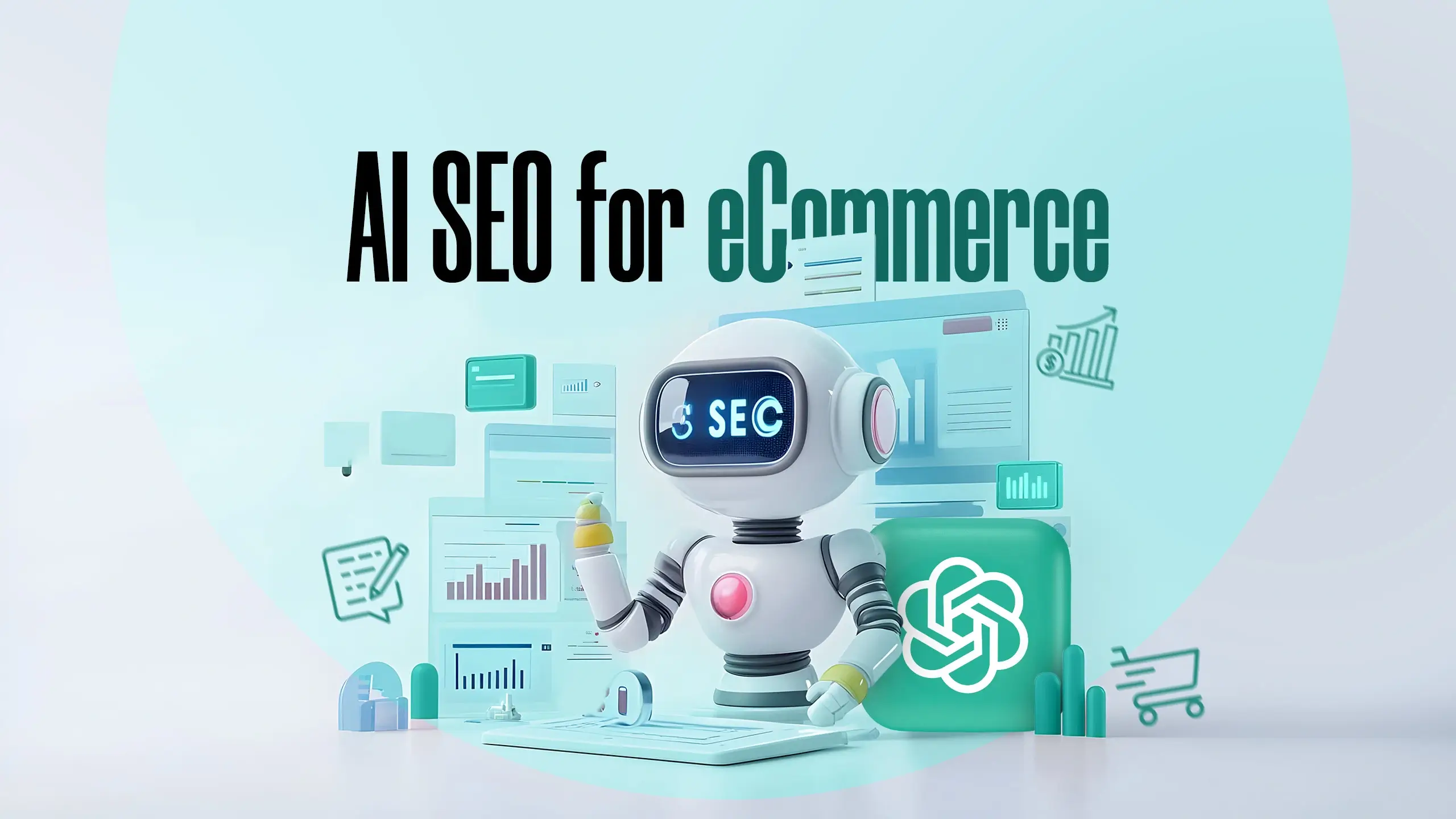
AI ecommerce SEO refers to the integration of artificial intelligence technologies across the entire search engine optimization workflow specifically designed for online stores. It goes beyond simple automation scripts that might generate meta tags or spin content. True AI‑powered ecommerce SEO uses machine learning algorithms that learn from massive datasets—user behavior, competitor positioning, algorithm updates, and conversion data—to make real‑time, high‑confidence decisions. The system can analyze the semantic meaning behind user queries, uncover hidden long‑tail opportunities, and even predict which product pages are likely to rank for emerging trends before your competitors notice them. By applying AI, ecommerce businesses turn SEO from a reactive, resource‑intensive chore into a proactive, data‑driven growth engine.
How AI Is Reshaping Ecommerce SEO
The transformation touches every stage of the customer journey, from initial search to checkout. Below are the core areas where AI leaves manual methods behind.
Smarter Keyword Discovery and Intent Mapping
Traditional keyword research often relies on seed lists, spreadsheets, and search volume estimates. AI ecommerce SEO tools use natural language understanding to group thousands of keywords by true search intent—transactional, commercial, informational—within minutes. They analyze competitor gap analyses not just for missing terms, but for the intent patterns that drive conversions. For example, an AI system might spot that a sneaker store’s competitors are capturing traffic from “best waterproof trail shoes under $100” not by accident but because the site offers buying guides. The AI can then recommend creating a similar category page and assign a content brief automatically. Predictive trend detection further allows a store to prepare for seasonal spikes weeks in advance, crafting content around “back‑to‑school sneakers” before the term peaks.
Automated Content Generation at Scale
An ecommerce catalog may contain 10,000 SKUs. Writing unique, compelling product descriptions for each one by hand is simply impossible. AI writing assistants trained on your brand voice can generate high‑quality, keyword‑rich product titles, meta descriptions, bullet point features, and full descriptions that avoid duplicate content penalties. More advanced systems even create persuasive landing pages for category clusters by pulling together top‑selling attributes from subordinate products. The result is a consistent, user‑centric narrative across the entire store that pleases both shoppers and search engine crawlers. Crucially, human editors still review and refine these outputs, ensuring they align with brand guidelines and E‑E‑A‑T signals.
Predictive Technical SEO Audits
Site health in a large ecommerce website deteriorates quickly—broken links, slow loading times, missing canonical tags, improper hreflang attributes. AI‑powered audit tools go further than spotting current errors; they predict future technical issues by analyzing crawl behavior and server response trends. They can prioritize fixes based on their projected SEO impact, saving your development team hours of guesswork. For instance, an AI auditor might alert you that a specific product filter URL pattern is generating thousands of thin pages and automatically suggest a noindex rule before Google flags it.
User Experience and Personalization
Search engines increasingly reward sites that deliver a great user experience (UX). AI ties UX directly to SEO by analyzing click‑stream data, scroll depth, and session recordings to identify friction points on product pages. It then suggests internal linking structures, rearranges content blocks, or even dynamically personalizes meta descriptions for different audience segments. An AI system might notice that mobile users in a certain location bounce from a generic category page but engage deeply when the headline mentions “free shipping in California.” It can then serve tailored title tags to that demographic, improving click‑through rates and dwell time—strong relevance signals to Google.
Voice and Visual Search Optimization
Voice commerce is surging, and visual search tools like Google Lens create new discovery paths. AI converts your product catalog into formats these channels understand. It generates natural language question-and-answer content (“What is the best running shoe for flat feet?”) that matches voice query patterns. For visual search, AI analyzes product images to auto‑generate descriptive alt text, captions, and structured data that enable your products to appear in image search results. This cross‑channel thinking expands an ecommerce site’s organic footprint far beyond the classic text box.
Traditional SEO vs. AI‑Powered Ecommerce SEO: A Side‑by‑Side Comparison
| Aspect | Traditional SEO | AI Ecommerce SEO |
|---|---|---|
| Keyword Research | Manual list building, basic volume tools | Intent clustering, predictive trend analysis, competitor gap AI scanning |
| Content Creation | One‑by‑one writing, often duplicates across SKUs | Mass generation of unique descriptions, automatically tailored to intent |
| Technical Audits | Periodic crawls, reactive fixes | Continuous monitoring, predictive issue detection, impact‑based prioritization |
| Personalization | Static meta tags for all users | Dynamic titles, descriptions, and recommendations based on user signals |
| Speed of Execution | Weeks for sitewide changes | Real‑time updates across thousands of pages |
| Data Analysis | Spreadsheets and manual correlation | Machine learning models connecting rankings, conversions, and user behavior |
Benefits and Limitations of AI Ecommerce SEO
Key Advantages
- Unmatched Scalability: Optimize hundreds of thousands of URLs without linearly increasing headcount. AI handles the long tail effortlessly.
- Data‑Driven Precision: Decisions are grounded in vast datasets, removing guesswork. Conversion‑oriented metrics, not just rankings, guide strategy.
- Rapid Adaptation: AI monitors algorithm shifts and competitor movements 24/7, enabling near‑instant tactical adjustments.
- Personalization at Scale: Serve unique search snippets and landing page experiences to different user segments, boosting click‑through rates and time on site.
- Actionable Insights: Instead of raw data, AI delivers clear action items: “Add FAQ section to product X” or “Redirect discontinued item to new collection.”
- Consistent Brand Voice: Trained language models maintain tone of voice across thousands of product pages, strengthening brand identity.
- High Initial Investment: Advanced AI SEO platforms and integrations demand a respectable budget, although entry‑level tools are emerging.
- Over‑Reliance Risk: Depending entirely on AI can strip away the human nuance that makes content truly connective and differentiating.
- Content Quality Pitfalls: Without careful editing, AI can produce generic, factually incorrect, or repetitive text that harms E‑E‑A‑T signals.
- Data Privacy Concerns: Collecting behavioral data for personalization must comply with GDPR, CCPA, and other regulations. Mishandling can lead to penalties.
- Need for Human Oversight: Strategic thinking, creative campaign ideation, and brand storytelling still require experienced SEO professionals to guide the AI.
- Rapid Technology Evolution: The AI tool that is cutting‑edge today may become obsolete quickly. Continuous learning and tool evaluation are mandatory.
- Human‑in‑the‑Loop is Non‑Negotiable. AI accelerates and enhances; humans provide creativity, ethical oversight, and strategic direction that directly build E‑E‑A‑T signals.
- Quality Trumps Quantity Every Time. A thousand mediocre AI pages will often be outranked by fifty meticulously edited, expert‑led pages. Focus AI efforts on your highest‑margin product lines first.
- Respect Data Privacy Laws. Personalization requires data. Ensure your AI‑driven personalization engine complies with GDPR, CCPA, and cookie consent regulations. Transparency builds trust with both users and search engines.
- Stay Updated with Google’s AI. Google uses RankBrain, BERT, and MUM to understand content. Align your AI content strategy with these frameworks by answering user questions comprehensively and naturally, not just scattering keywords.
- Test Incrementally with A/B Experiments. Before deploying an AI‑generated meta description across 10,000 pages, test variations on a subset of low‑traffic pages. Let data confirm the improvement before full rollout.
- Blend AI Insights with Brand Storytelling. Data reveals what customers search for; your brand story tells them why they should buy from you. The combination is what sets you apart in competitive search results.
Limitations and Challenges
How to Implement AI Ecommerce SEO: A Step‑by‑Step Approach

Transitioning to an AI‑driven strategy does not require ripping out your existing SEO foundation. Instead, layer AI capabilities one step at a time.
Step 1: Audit Your Current SEO with AI Tools
Begin by running a comprehensive AI‑powered site audit. Tools like Deepcrawl, ContentKing, or Semrush’s Site Audit can crawl your ecommerce store in real time, but AI-enhanced versions prioritize fixes by projected traffic and revenue impact. The A Use this audit to build a technical roadmap that aligns development resources with the highest ROI tasks.
Step 2: AI‑Powered Keyword Research and Topic Clustering
Move beyond basic keyword tools. Platforms like MarketMuse or Clearscope let you upload your product taxonomy and receive a full content strategy blueprint. The AI analyzes top‑ranking pages for each category, identifies semantic gaps, and recommends the exact topics, questions, and secondary keywords your pages must cover. For an apparel store, the system might reveal that the term “sustainable denim jeans” is underserved and that Google rewards pages that mention “organic cotton certifications” and “carbon‑neutral shipping policies.” Implement these topic clusters across category and product pages to build topical authority.
Step 3: Automate Product Page Optimization
Connect your product information management (PIM) system to an AI writing assistant. For each new SKU added to your inventory, the AI can instantly generate a unique title tag, meta description, H1, and a structured product description that incorporates high‑intent keywords. Many tools allow you to set tone, length, and formatting rules. For variation products (different colors or sizes), the AI can create variable descriptions that avoid duplicate content while highlighting the specific attributes of each variant. Human editors should spot‑check batches for quality before publishing.
Step 4: Enhance Category and Landing Pages
Category pages often suffer from a lack of unique text above or below the product grid. AI can synthesize content from subcategory pages and top‑selling items to craft an engaging introduction that targets broad head terms. It can dynamically insert popular filter options as anchor text, improving internal linking. For seasonal landing pages—Black Friday, Christmas gift guides—the AI can generate fresh copy in minutes, saving precious hours during high‑pressure promotional periods.
Step 5: Streamline Technical SEO
Use AI to maintain a healthy site architecture. Automated schema markup generators ensure every product page carries proper structured data (Product, Offer, Review, BreadcrumbList) without manual coding. AI‑driven crawlers can detect orphan pages—products not connected to any category—and suggest internal links to reintegrate them. They also monitor Core Web Vitals in real time, alerting you if a new product image pushes page loading beyond acceptable thresholds. This proactive posture prevents ranking drops before they happen.
Step 6: Monitor, Test, and Refine with AI Analytics
AI analytics platforms like Nozzle or Segmetrics tie search rankings directly to conversions, not just traffic. They use machine learning to attribute a sale to the exact organic click and the non‑branded keyword that drove it. With this feedback, AI can continuously optimize meta tags and content variations, running A/B tests on a small percentage of traffic to validate improvements before rolling them out sitewide. Over time, the system learns which phrasing, CTAs, and layout elements produce the highest conversion rate for each product category.
Common Mistakes to Avoid When Using AI for Ecommerce SEO
Generating Thin Content Without Human Review
AI can produce text that is grammatically correct but factually hollow. Releasing thousands of auto‑generated product descriptions without editorial oversight leads to bland pages that fail to differentiate your brand. Search engines value originality and helpful content; a string of AI‑spun attributes may trigger a quality downgrade. Always iterate with a human touch that injects unique selling points, expert commentary, and real customer language.
Ignoring User Intent in Favor of Keywords
When an AI tool suggests that “buy cheap sneakers” has massive volume, it might tempt you to stuff that phrase everywhere. But if your store sells premium, hand‑crafted shoes, this intent mismatch will result in high bounce rates and low conversions. Train your AI on your brand’s ideal customer profile and let the algorithms prioritize keywords aligned with commercial intent that matches your product value proposition.
Over‑Automating Without Human Oversight
Automation accelerates execution, but strategic thinking must stay human. AI misses cultural nuances, emerging memes, and the emotional triggers of storytelling. An ecommerce brand’s blog, company mission pages, and unique buying guides require authentic narrative that AI cannot fully capture. Reserve automation for scalable tactical tasks, but keep human strategists in charge of overall direction and brand voice.
Neglecting Data Freshness and Model Updates
AI models trained on old data will recommend outdated strategies. Search algorithms change frequently, and consumer behavior shifted dramatically. Regularly update your AI tools with fresh crawl data, conversion logs, and competitor intelligence. A static model will simply scale yesterday’s mistakes across your entire catalog.
Choosing the Wrong Tool for Your Scale
Not every AI SEO solution fits every business. A small boutique shop does not need the same enterprise‑grade platform that a multi‑million‑SKU retailer uses. Start with modular tools—combine a keyword intelligence platform with an affordable AI writing assistant—and scale as your organic traction grows. Avoid locking into expensive annual contracts before proving the concept.
Important Notes for Sustainable AI Ecommerce SEO Success
Frequently Asked Questions
How does AI improve ecommerce SEO?
AI improves ecommerce SEO by automating keyword research, generating unique product content at scale, predicting technical issues, personalizing search snippets, and continuously analyzing user behavior. This accelerates optimization cycles and uncovers opportunities that manual analysis could miss, driving more organic traffic and conversion.
Can AI completely replace human SEO specialists?
No. AI is a powerful assistant that handles repetitive and data‑heavy tasks, but human strategists remain essential for creative direction, brand voice, nuanced storytelling, and high‑level decision‑making. The most successful ecommerce teams use AI to augment their expertise, not replace it.
What are the best AI tools for ecommerce SEO?
Popular tools include SurferSEO and Clearscope for content optimization, MarketMuse for topic clustering, Jasper and Writer for AI copywriting, Semrush and Ahrefs for AI‑enhanced competitive research, and Deepcrawl or Sitebulb for technical audits. The ideal stack depends on your store’s size and specific goals.
Is AI SEO safe from Google penalties?
When used responsibly, AI SEO is safe. Google’s guidelines focus on producing helpful, original content regardless of how it is created. The risk of penalty arises if AI is used to generate spammy, low‑value pages at scale without human oversight. Always review and enrich AI output to maintain quality and trustworthiness.
How much does AI SEO cost for an ecommerce store?
Costs vary widely. Basic AI writing assistants start around $30 per month, while enterprise platforms that include deep analytics, automated internal linking, and personalization can run into thousands of dollars monthly. A mid‑sized ecommerce site can often achieve meaningful results with a budget of $300‑$800 per month spent on a combination of tools.
What types of ecommerce SEO tasks can be fully automated?
Tasks like sitewide metadata generation, basic product descriptions, schema markup implementation, broken link monitoring, and internal linking suggestions can be largely automated. However, any content that defines your brand story or tackles sensitive YMYL (Your Money Your Life) topics should retain a strong human editorial presence.
How long does it take to see results from AI‑driven SEO?
Initial technical gains, such as improved crawl efficiency, can be seen within days. SEO traffic impact typically takes two to six months, depending on the site’s authority and the competitiveness of the targeted keywords. AI accelerates the process by enabling rapid content deployment, but search engines still require time to reassess and rank new or improved pages.
Conclusion
AI ecommerce SEO is no longer a futuristic concept—it is a practical, proven methodology that separates the top‑tier online retailers from the rest. By infusing artificial intelligence into keyword strategy, content production, technical maintenance, and user experience personalization, ecommerce businesses can operate at a scale and speed that manual workflows simply cannot match. The key is to view AI as a force multiplier, not a replacement for human talent. When data‑driven insights blend with genuine brand storytelling and rigorous quality control, the result is an organic search presence that attracts, engages, and converts. Start small, choose tools that fit your catalog’s complexity, and build an AI‑augmented SEO framework that evolves alongside search engines. The future of ecommerce growth is intelligent, automated, and fiercely customer‑focused—and it starts with embracing AI ecommerce SEO today.
Xem thêm:
- AI SEO Topical Architecture: The Complete Guide to Building Authority in 2025
- AI SEO Review Content: The Complete Guide to Automated Reviews That Rank
- AI SEO AlsoAsked: The Complete Guide to Smarter Content Research in 2025
- AI SEO Keyword Relationships: The Complete Guide to Semantic Search Optimization
- AI SEO Alerts: The Ultimate Guide to Automated Search Monitoring and Real-Time Warnings
Bài viết cùng chủ đề:

AI SEO SEO Automation with Make: The Complete Workflow Guide

AI SEO SEO Automation with Zapier: The Complete Workflow Guide

AI SEO SEO Automation with n8n: The Complete Workflow Guide
AI SEO SEO Automation with Gemini: The Complete Guide to Scaling Organic Growth

AI SEO SEO Automation with Claude: The Complete Guide to Scaling Content in 2025

AI SEO SEO Automation with ChatGPT: The Complete Playbook for 2025

AI SEO & SEO Automation for Affiliate Sites: The 2025 Playbook for Passive Income Growth
AI SEO & SEO Automation for Bloggers: The Complete Guide to Scaling Your Content

AI SEO & SEO Automation for Agencies: The Complete 2025 Playbook

AI SEO and SEO Automation for Ecommerce: The Complete Playbook for 2025

AI SEO & SEO Automation for WordPress: The Complete Playbook for 2025
AI SEO SEO Automation Strategy: The Complete Playbook for 2025

Mastering the AI SEO SEO Automation Process: A Complete Guide to Scaling Organic Growth
AI SEO SEO Automation System: The Complete Guide to Scaling Organic Growth in 2025
AI SEO SEO Automation Platform: The Complete Guide to Scaling Organic Growth in 2025
AI SEO SEO Automation Software: The Complete Guide to Scaling Organic Growth in 2025















