
No products in the cart.
AI SEO Python Automation: The Complete Playbook for Modern Search Optimization
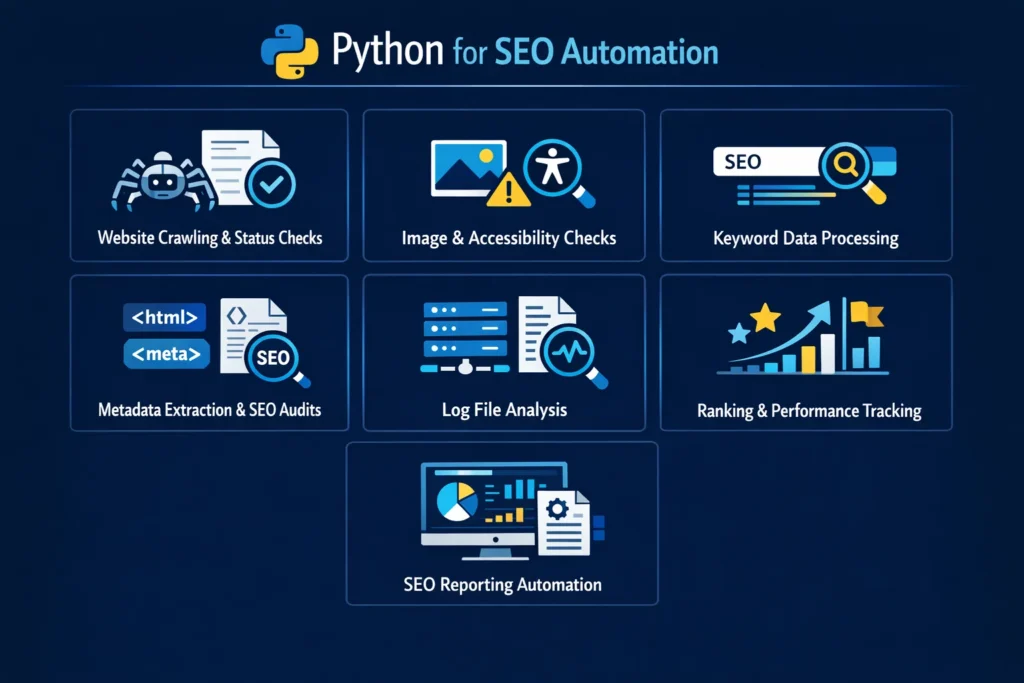
31
Jul
Jul
The digital marketing landscape has shifted dramatically. Manual keyword research, spreadsheet tracking, and repetitive reporting no longer cut it. Enter AI SEO Python automation, a powerful convergence of artificial intelligence, search engine optimization, and scripting that allows marketers to scale their efforts exponentially. This approach combines the predictive power of machine learning with the flexibility of Python to handle data-heavy SEO tasks in seconds, freeing up hours of human time for strategy and creativity. This guide explores how to leverage this trifecta to dominate search rankings, streamline workflows, and gain a competitive edge in 2024 and beyond.
Understanding the Core of AI SEO Python Automation
At its heart, AI SEO Python automation is about using Python scripts to interact with SEO tools and AI models, creating a seamless pipeline for data collection, analysis, and implementation. It moves beyond simple scraping. It involves building intelligent systems that can identify patterns, predict outcomes, and execute changes without constant human intervention. The goal is to replace tedious, rule-based tasks with adaptive, learning-based processes.
This methodology is not about replacing SEO professionals. Instead, it augments their capabilities. By automating the heavy lifting, practitioners can focus on high-level tasks like content strategy, brand authority, and user experience. The synergy between AI’s analytical power and Python’s versatility creates a workflow that is both efficient and deeply insightful, allowing for real-time adjustments based on algorithmic changes.
The Role of Python in SEO Workflows
Python serves as the central nervous system for this automation. Its extensive library ecosystem makes it the undisputed king of data manipulation and web interaction. Libraries like Requests and BeautifulSoup handle web scraping, while Pandas and NumPy manage massive datasets for analysis. For API interactions, Python’s requests library connects seamlessly with Google Search Console, Google Analytics, and third-party SEO platforms like Ahrefs or SEMrush.
Python’s true power lies in its ability to glue different services together. A single script can pull search volume data from an API, analyze the keyword difficulty using a machine learning model, and then push the results to a Google Sheet. This eliminates the manual export/import cycle that plagues traditional SEO reporting, ensuring that data is always fresh and actionable.
How AI Enhances the Automation Process
AI, particularly Large Language Models (LLMs) and machine learning algorithms, adds a layer of intelligence that Python alone cannot provide. While Python can collect data, AI can interpret it. For instance, AI can analyze search intent behind keywords, classify the sentiment of backlinks, or generate content briefs that align with top-ranking pages. This cognitive layer transforms raw data into strategic insights.
In the context of automation, AI models can be used to create “smart” workflows. Instead of a script that simply checks if a title tag is too long, an AI-powered script can suggest a new, optimized title tag based on the content of the page and the search query. This moves from diagnostic automation to generative automation, where the system not only identifies problems but also proposes and implements solutions.
Key Components of an AI-Driven SEO System
Building a robust automation system requires understanding its core components. These elements work in concert to create a self-sustaining loop of optimization. A successful setup typically involves data ingestion, processing, and action. Each stage relies on specific tools and techniques to ensure accuracy and efficiency.
Data Collection and Web Scraping
The foundation of any SEO automation project is data. Python scripts can be configured to crawl websites, extract metadata, and monitor competitor pages. This goes beyond simple site crawling. It involves tracking changes in SERP features, monitoring price changes on e-commerce sites, and scraping review data from third-party platforms. The key is to build robust scrapers that can handle JavaScript-rendered content using tools like Selenium or Playwright.
However, scraping is only the beginning. The data must be cleaned and structured. This is where Pandas excels, allowing you to filter out noise, handle missing values, and merge datasets from different sources. A well-structured dataset is critical for the AI models to learn effectively and for the automation to make accurate decisions.
Natural Language Processing (NLP) for Content Optimization
NLP is a subset of AI that focuses on understanding human language. In SEO, NLP is used to analyze the semantic relevance of content. Python libraries like spaCy and NLTK can break down top-ranking pages to identify key entities, topics, and word frequencies. This analysis helps in creating content that is not just keyword-stuffed but semantically rich and contextually relevant.
AI models like GPT-4 can take this a step further. They can generate meta descriptions, rewrite title tags, and even draft entire content outlines based on the NLP analysis of competitors. This ensures that the content created is aligned with what search engines consider authoritative and comprehensive, significantly improving the chances of ranking for target queries.
Practical Applications: Where Automation Shines

The theoretical benefits are clear, but the real value lies in practical application. There are several areas within SEO where AI Python automation delivers immediate, measurable results. These are the “quick wins” that save the most time and provide the highest return on investment.
Automated Keyword Clustering and Mapping
Gone are the days of manually sorting thousands of keywords into thematic groups. Python scripts can use algorithms like K-means clustering to group keywords based on search intent and SERP similarity. This process, enhanced by AI, can identify which keywords should be targeted on the same page versus which require separate pages. This prevents keyword cannibalization and ensures a logical site architecture.
This automation also extends to mapping keywords to existing pages. The script can crawl the site, extract the main topic of each page, and then automatically assign relevant keywords to the correct URLs. This is a massive time-saver for large e-commerce sites or news portals with thousands of pages, ensuring that every page has a clear optimization target.
Real-Time Rank Tracking and Reporting
Traditional rank tracking involves checking positions for a set of keywords daily. With Python, this process can be automated to run multiple times a day, capturing fluctuations that might be missed by daily checks. The data can be pulled from Google Search Console API directly, providing accurate click and impression data rather than just position estimates.
AI enhances this by adding predictive analytics. The system can forecast traffic based on current trends and alert you to anomalies. For example, if a page is losing impressions despite stable rankings, the AI might flag a potential algorithm update or a change in user behavior. This allows for proactive adjustments rather than reactive damage control.
Benefits and Limitations of This Approach
Adopting AI SEO Python automation is not without its challenges. It requires a certain level of technical skill and a willingness to embrace a data-driven culture. However, the advantages far outweigh the hurdles for most organizations. Understanding both sides of the coin is essential for successful implementation.
Key Advantages for SEO Teams
- Scalability: Automate tasks across thousands of pages without additional headcount.
- Accuracy: Eliminate human error in data collection and reporting.
- Speed: Get insights in minutes that would take days to compile manually.
- Competitive Intelligence: Monitor competitor changes continuously and adapt instantly.
- Cost Efficiency: Reduce the hours spent on repetitive tasks, lowering operational costs.
- Learning Curve: Requires proficiency in Python and basic understanding of machine learning concepts.
- Maintenance: Scripts can break when websites change their structure or APIs update.
- Data Quality: Garbage in, garbage out. Poor data leads to poor AI predictions.
- Over-Reliance: Automation cannot replace human judgment for creative strategy and relationship building.
- Cost of AI Models: High-volume usage of premium AI APIs can become expensive.
Challenges and Technical Hurdles
Comparison: Traditional SEO vs. AI Python Automation
To fully appreciate the value of automation, it helps to compare it directly with traditional methods. The difference is not just in speed, but in the depth and scope of what is possible. The table below highlights the key contrasts in a typical SEO workflow.
| Aspect | Traditional SEO | AI SEO Python Automation |
|---|---|---|
| Keyword Research | Manual export from tools, manual grouping | Automated clustering using ML algorithms |
| Content Audits | Spot-checking pages for issues | Full-site crawl with automated issue detection |
| Reporting | Weekly manual data pulls and chart creation | Real-time dashboards with automated insights |
| Competitor Analysis | Monthly manual review of competitor sites | Continuous monitoring with alert systems |
| Implementation | Manual updates to title tags and meta data | Bulk updates via API or CMS integration |
| Scalability | Limited by team size and hours | Limited only by server capacity and API limits |
This comparison clearly shows that automation is not just a “nice-to-have” but a necessity for teams managing large websites or multiple client portfolios. The ability to process data at scale and generate actionable insights instantly is a game-changer.
Step-by-Step Guide to Building Your First Automation Script
Getting started can seem daunting, but a simple project can demonstrate the power of this approach. This is a foundational task that every SEO professional performs.
Setting Up Your Environment and API Connections
First, ensure you have Python installed. Next, install the necessary libraries using pip: requests, pandas, and beautifulsoup4. You will also need to set up access to the Google Search Console API. This involves creating a project in the Google Cloud Console, enabling the API, and downloading the credentials file. This setup is crucial for pulling real performance data.
Once your environment is ready, the script will connect to the Search Console API to fetch a list of URLs and their associated queries. This data serves as the input for your analysis. The script will then crawl each URL to extract the current title tag and meta description, storing all this information in a Pandas DataFrame for easy manipulation.
Writing the Analysis and Reporting Logic
The core logic of the script involves checking each title and description against predefined rules. For example, the script checks if the title length is between 50 and 60 characters, if it contains the target keyword, and if it has a compelling call-to-action. For meta descriptions, it checks length (150-160 characters) and the presence of a value proposition.
After the analysis, the script generates a report. This report can be a CSV file or a Google Sheet, highlighting pages that need attention. The script can even use an AI model to generate new title tag suggestions for the pages that fail the checks. This turns the script from a simple auditor into a proactive optimization tool, providing a clear action plan for the SEO team.
Common Mistakes and How to Avoid Them

Even with the best intentions, many SEO professionals make critical errors when implementing automation. These mistakes can lead to wasted time, inaccurate data, or even penalties from search engines. Being aware of these pitfalls is the first step to avoiding them.
Ignoring the “Human-in-the-Loop” Principle
The most common mistake is assuming that AI and automation can run on autopilot without oversight. AI models can generate content that is factually incorrect or off-brand. Python scripts can make changes that break a website’s layout. It is essential to have a human review process for any automated action that affects the live site. Automation should handle the “what” and “how,” but humans must always decide the “why” and “when.”
Another frequent error is neglecting to monitor the performance of the automation itself. If a script is pulling data from an API that has changed its schema, the script will fail silently. Regular checks and logging are necessary to ensure the system is working correctly. This includes monitoring API usage limits to avoid unexpected costs or service interruptions.
Overlooking Data Privacy and Crawl Budget
Aggressive scraping can lead to IP blocks or legal issues. It is vital to respect robots.txt files and to implement polite crawling delays. Similarly, making too many API calls to Google Search Console can result in rate limiting. Proper error handling and backoff strategies are essential to maintain access to these critical data sources.
Furthermore, automation should not be used to spam search engines. Using AI to generate thousands of low-quality pages is a violation of Google’s spam policies and can lead to severe penalties. The goal of automation should be to improve quality and relevance, not to game the system with volume.
Important Notes for Long-Term Success
To ensure that your AI SEO Python automation efforts remain effective, certain principles should guide your strategy. These are not just technical tips but philosophical approaches to how automation fits into your overall marketing ecosystem. Adopting these will help you build a sustainable competitive advantage.
First, focus on data integration. Your automation should not exist in a silo. Connect your SEO data with customer service data, sales data, and product information. This holistic view allows the AI to make more informed decisions. For example, understanding which keywords lead to conversions, not just traffic, will refine your content strategy significantly.
Second, invest in continuous learning. The field of AI is evolving rapidly. New models and libraries are released frequently. Dedicate time to upskilling your team. This could involve taking online courses, attending conferences, or simply experimenting with new libraries. The more your team understands the capabilities of AI, the more innovative your automation will become.
Third, prioritize the user experience. All the automation in the world is useless if it does not lead to a better experience for the user. Use automation to improve site speed, enhance internal linking, and deliver more relevant content. If your automated processes make the site faster and easier to navigate, you will see long-term gains in both rankings and user satisfaction.
Frequently Asked Questions (FAQ)
What is the best Python library for SEO automation?
T For web scraping, BeautifulSoup and Scrapy are excellent. For data manipulation and analysis, Pandas is essential. For interacting with APIs, the requests library is the standard. For machine learning, scikit-learn is a great starting point. Most workflows combine several of these libraries.
Do I need to be a programmer to use AI for SEO?
While a deep programming background is helpful, it is not strictly necessary. Many tools offer no-code or low-code interfaces for automation. However, learning the basics of Python will unlock far more flexibility and power. It allows you to customize solutions to your specific needs rather than being limited by the features of a commercial tool.
Can AI SEO automation replace human SEO experts?
No. AI and automation are tools that augment human capabilities, not replace them. They handle repetitive tasks and data analysis, but they cannot replicate human creativity, strategic thinking, or relationship building. The most successful SEO teams are those that combine the analytical power of AI with the emotional intelligence and experience of human experts.
How much does it cost to implement AI SEO Python automation?
The cost varies widely. If you have in-house developers, the primary cost is time. If you use third-party APIs for AI (like OpenAI) and data (like Ahrefs), the cost scales with usage. A basic setup might cost a few hundred dollars per month in API fees, while a sophisticated enterprise system could cost thousands. However, the return on investment is usually substantial due to the time saved and the improvements in organic traffic.
Is web scraping for SEO legal?
Web scraping is generally legal if it is done on publicly available data and respects the website’s terms of service and robots.txt file. However, scraping personal data or copyrighted content can lead to legal issues. It is always best to use official APIs when available, as they are the sanctioned way to access data.
Conclusion: The Future of SEO is Intelligent Automation
AI SEO Python automation is not a passing trend; it is the new standard for professional search optimization. The ability to process vast amounts of data, generate actionable insights, and implement changes at scale is no longer a luxury but a requirement for staying competitive. By embracing this technology, you are not just optimizing for search engines; you are building a more efficient, data-driven, and agile marketing operation.
The journey begins with a single script. Start small, automate one tedious task, and measure the results. As you become more comfortable, you can expand your automation to cover more complex workflows. The key is to remain curious, keep learning, and always keep the user at the center of your efforts. The future of SEO belongs to those who can harness the power of AI and Python to work smarter, not harder.
Xem thêm:
- AI SEO Templates: Build a Smarter, Faster Search Strategy With Automated Workflows
- AI SEO LLM Citations: The Complete Guide to Getting Referenced by Generative Engines
- AI SEO Content Accuracy: The Complete Guide to Verifying Machine-Generated Copy
- AI SEO Templates: Streamline Your Search Strategy with Intelligent Frameworks
- AI SEO for Coaches: The Complete Guide to Ranking in 2025
Bài viết cùng chủ đề:

AI SEO SEO Automation with Make: The Complete Workflow Guide

AI SEO SEO Automation with Zapier: The Complete Workflow Guide

AI SEO SEO Automation with n8n: The Complete Workflow Guide
AI SEO SEO Automation with Gemini: The Complete Guide to Scaling Organic Growth

AI SEO SEO Automation with Claude: The Complete Guide to Scaling Content in 2025

AI SEO SEO Automation with ChatGPT: The Complete Playbook for 2025

AI SEO & SEO Automation for Affiliate Sites: The 2025 Playbook for Passive Income Growth
AI SEO & SEO Automation for Bloggers: The Complete Guide to Scaling Your Content

AI SEO & SEO Automation for Agencies: The Complete 2025 Playbook

AI SEO and SEO Automation for Ecommerce: The Complete Playbook for 2025

AI SEO & SEO Automation for WordPress: The Complete Playbook for 2025
AI SEO SEO Automation Strategy: The Complete Playbook for 2025

Mastering the AI SEO SEO Automation Process: A Complete Guide to Scaling Organic Growth
AI SEO SEO Automation System: The Complete Guide to Scaling Organic Growth in 2025
AI SEO SEO Automation Platform: The Complete Guide to Scaling Organic Growth in 2025
AI SEO SEO Automation Software: The Complete Guide to Scaling Organic Growth in 2025















