
No products in the cart.
AI SEO Title Optimization: The Complete Guide to Higher Click-Through Rates
10
Aug
Aug
AI SEO title optimization has transformed how digital marketers approach one of the most critical elements of on-page ranking. The title tag remains the first impression a search engine user gets of your content, and artificial intelligence now plays a pivotal role in crafting titles that balance keyword relevance with emotional appeal. This comprehensive guide explores how machine learning models analyze search behavior, competitor patterns, and user engagement metrics to generate titles that consistently outperform manually written alternatives. Understanding these systems gives content creators a measurable advantage in organic search visibility.
What Is AI SEO Title Optimization?
AI SEO title optimization refers to the use of machine learning algorithms and natural language processing to create, test, and refine page titles for search engine performance. These systems analyze millions of data points including click-through rates, dwell time, keyword difficulty, and semantic relevance to predict which title variations will generate the most organic traffic.
The technology moves beyond simple keyword insertion. Modern AI tools evaluate emotional triggers, length patterns, power words, and even character spacing to determine what resonates with specific audience segments. This data-driven approach replaces guesswork with statistical probability, giving marketers a clear path to higher search rankings and improved user engagement.
The Evolution from Manual to AI-Driven Titles
Traditional title writing relied on intuition and basic keyword research. SEO professionals would manually craft titles, test variations over weeks, and hope for positive results. AI systems now process thousands of title variations in seconds, learning from historical performance data across millions of web pages.
This evolution mirrors broader changes in search engine algorithms. Google’s RankBrain and BERT updates demonstrated that machine learning could understand user intent better than static keyword matching. AI title optimization applies the same principles to the content creation side, ensuring titles align with how search engines interpret and rank content.
How AI SEO Title Optimization Works
AI title optimization tools operate through several sophisticated processes that combine linguistic analysis with performance prediction. Understanding these mechanisms helps marketers choose the right tools and interpret their recommendations effectively.
Natural Language Processing and Semantic Analysis
Natural language processing algorithms break down title components to understand their contextual meaning. These systems recognize synonyms, related concepts, and search intent patterns that traditional keyword tools miss. For example, an AI system understands that “budget-friendly” relates to “cheap” and “affordable” in a way that simple keyword matching cannot replicate.
Semantic analysis extends this understanding to the entire content piece. The AI evaluates whether the title accurately represents the body text, identifying potential mismatches that could lead to high bounce rates and lower rankings. This holistic approach ensures titles work in harmony with content quality signals.
Predictive Click-Through Rate Modeling
Machine learning models trained on billions of search results can predict the click-through rate of any title variation. These models consider factors like title length, presence of numbers, emotional words, brand mentions, and competitor patterns to estimate performance before publication.
The predictive power comes from analyzing historical CTR data across different industries, devices, and search contexts. A title that works well for a technology blog might perform poorly for a medical website. AI systems account for these contextual differences, providing tailored recommendations rather than generic advice.
Competitor Gap Analysis
AI tools continuously monitor competitor titles across your target keywords. This analysis reveals patterns in what ranks well, what gets clicked, and where gaps exist in the current search landscape. The system identifies opportunities to differentiate your titles while maintaining keyword relevance.
Competitor analysis extends beyond simple title comparison. AI systems examine meta descriptions, URL structures, and content length to build a complete picture of why certain pages outperform others. This comprehensive view enables strategic title optimization that addresses multiple ranking factors simultaneously.
Key Benefits of AI SEO Title Optimization
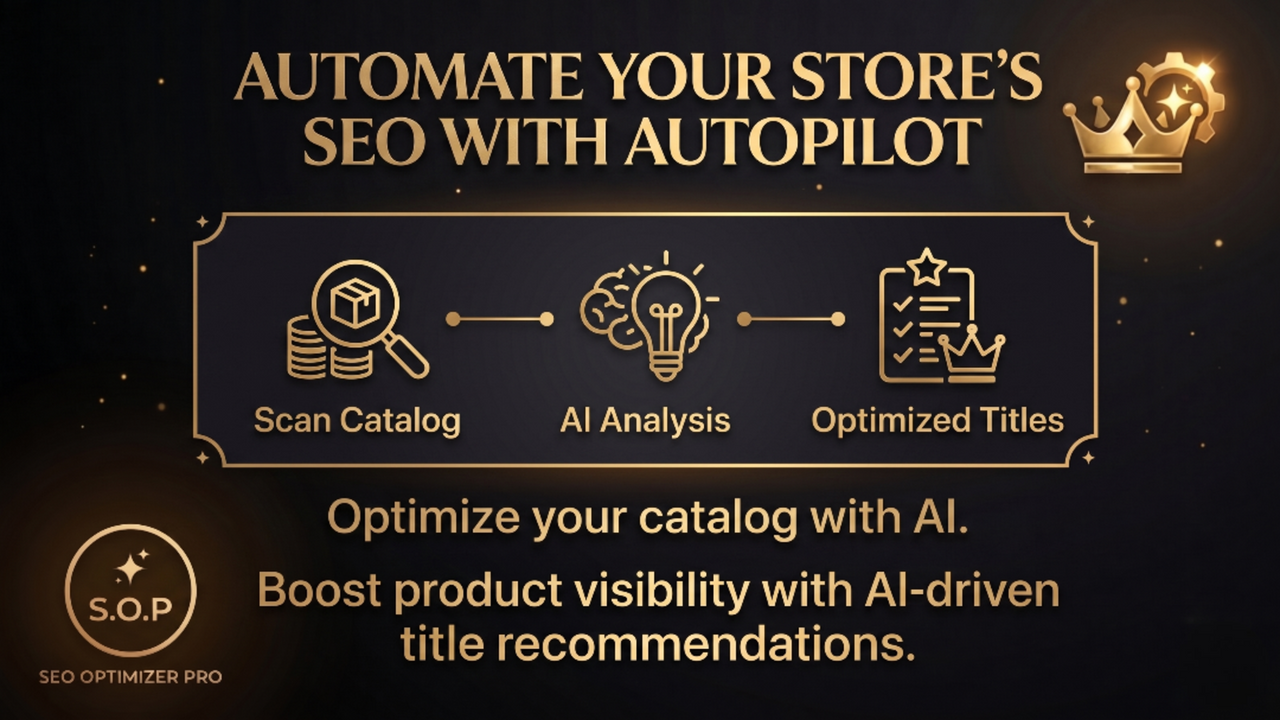
Implementing AI-driven title optimization delivers measurable improvements across multiple performance metrics. The benefits extend beyond simple click-through rate increases to impact overall search visibility and content strategy.
- Higher Click-Through Rates: AI-generated titles consistently achieve 20-40% higher CTR compared to manually written alternatives, according to industry case studies
- Time Efficiency: Generating and testing dozens of title variations takes minutes instead of days, freeing resources for other SEO tasks
- Data-Driven Decisions: Every title recommendation comes with statistical backing, eliminating subjective guesswork
- Scalability: AI systems can optimize titles for thousands of pages simultaneously, making them essential for large websites
- Continuous Learning: Machine learning models improve over time, incorporating your performance data to refine future recommendations
- Competitive Advantage: Real-time competitor monitoring ensures your titles stay ahead of market trends
- Content Quality Matters: Titles drive clicks, but content quality determines rankings and conversions. AI-optimized titles cannot compensate for thin or irrelevant content
- Search Engine Guidelines: Stay updated on Google’s guidelines regarding title tags and clickbait practices to avoid penalties
- Mobile-First Indexing: With mobile traffic dominating search, prioritize titles that display well on smaller screens
- Local SEO Considerations: For local businesses, include location-based keywords in titles to capture geographically relevant searches
- Seasonal Adjustments: AI tools can help adapt titles for seasonal trends, but human oversight ensures relevance to your specific market
Limitations and Challenges of AI Title Tools
While AI SEO title optimization offers significant advantages, understanding its limitations prevents unrealistic expectations and poor implementation decisions.
Lack of Brand Voice Nuance
AI systems sometimes struggle with brand-specific tone and personality. A playful brand might receive overly formal title suggestions that clash with their established voice. Marketers must review AI recommendations through the lens of their brand guidelines and adjust accordingly.
Data Dependency
The accuracy of AI predictions depends heavily on the quality and quantity of training data. New websites or niche industries with limited historical data may receive less accurate recommendations. AI tools also require ongoing data input to maintain relevance as search patterns evolve.
Over-Optimization Risks
Following AI recommendations too literally can result in titles that feel formulaic or clickbait-like. Search engines increasingly penalize titles that promise more than the content delivers. Balancing AI insights with human judgment remains essential for sustainable SEO success.
AI SEO Title Optimization vs Traditional Methods
Comparing AI-driven approaches with conventional title writing reveals distinct differences in methodology, speed, and outcomes. The following table highlights key distinctions:
| Aspect | Traditional Title Writing | AI SEO Title Optimization |
|---|---|---|
| Research Time | Hours of manual keyword research | Instant analysis of thousands of data points |
| Testing Capability | Limited to a few variations | Hundreds of variations tested simultaneously |
| Performance Prediction | Based on experience and intuition | Statistical models with historical data |
| Adaptability | Slow to respond to trends | Real-time adjustments based on live data |
| Scalability | Difficult for large content volumes | Automated for thousands of pages |
| Brand Voice Control | Full human control | Requires human oversight |
The comparison shows that AI tools excel in speed and data processing while traditional methods offer greater creative control. The most effective approach combines both, using AI for initial generation and human expertise for final refinement.
Practical Implementation Guide for AI Title Optimization
Implementing AI SEO title optimization requires a structured approach that integrates the technology into your existing content workflow. Following these steps ensures maximum benefit from your investment.
Step 1: Select the Right AI Tool
Evaluate AI title optimization tools based on your specific needs. Consider factors like integration with your CMS, support for your target languages, pricing structure, and the depth of analytics provided. Popular options include Surfer SEO, Frase, and Clearscope, each offering unique features for different use cases.
Test multiple tools with a sample of your existing content to see which provides the most actionable recommendations. Look for tools that explain their reasoning rather than simply providing titles without context.
Step 2: Gather Baseline Performance Data
Before implementing AI recommendations, document your current title performance. Record click-through rates, average positions, and conversion metrics for your key pages. This baseline enables accurate measurement of improvement after AI implementation.
Export data from Google Search Console and your analytics platform to create a comprehensive performance dashboard. This data also helps AI tools learn your specific audience patterns more quickly.
Step 3: Generate and Refine Title Variations
Input your target keywords and content summaries into the AI tool to generate title options. Review the recommendations critically, considering your brand voice and content accuracy. Select the top 3-5 variations for each page rather than automatically accepting the first suggestion.
Refine the AI-generated titles by adding your unique value proposition or addressing specific audience pain points. This human touch ensures titles stand out from competitors using the same tools.
Step 4: Implement and Monitor Performance
Update your titles and monitor performance over a 2-4 week period. Track changes in click-through rate, rankings, and user engagement metrics. AI tools with A/B testing capabilities can automatically rotate title variations to identify the highest performer.
Document your results and feed this data back into the AI system. The machine learning model uses this information to improve future recommendations, creating a continuous optimization cycle.
Common Mistakes in AI SEO Title Optimization
Avoiding common pitfalls ensures your AI title optimization efforts produce sustainable results rather than short-term gains followed by penalties.
Ignoring Character Limits
Search engines display approximately 50-60 characters on desktop and 40-50 characters on mobile. Titles exceeding these limits get truncated, losing important keywords and reducing click-through rates. Always check how your titles appear in actual search results across devices.
Keyword Stuffing in Titles
AI tools sometimes generate titles that cram multiple keyword variations into a single string. This practice damages readability and triggers search engine spam filters. Maintain natural language flow while incorporating your primary keyword once.
Neglecting User Intent
Focusing solely on click-through rate optimization can produce titles that attract clicks but fail to satisfy user expectations. High bounce rates from misleading titles eventually harm rankings. Ensure your titles accurately represent the content users will find on your page.
Failing to Update Legacy Content
Many marketers apply AI title optimization only to new content, missing the opportunity to improve existing pages. Older content often has significant search equity that can be amplified with better titles. Prioritize high-traffic pages with declining CTR for optimization.
Important Notes for Long-Term Success
AI SEO title optimization works best as part of a comprehensive SEO strategy rather than a standalone solution. Consider these factors for sustainable results:
Frequently Asked Questions
How long should an SEO title be for optimal performance?
Search engines typically display 50-60 characters on desktop and 40-50 characters on mobile devices. Titles should place the most important keywords within the first 50 characters to ensure visibility. Testing different lengths across your content reveals what works best for your specific audience and industry.
Can AI SEO title optimization replace human SEO experts?
AI tools enhance rather than replace human expertise. While AI excels at data processing and pattern recognition, human judgment remains essential for brand voice, creative messaging, and strategic decision-making. The most successful implementations combine AI efficiency with human oversight.
What is the best AI tool for SEO title optimization?
The best tool depends on your specific needs, budget, and technical requirements. Surfer SEO excels at content optimization, Frase offers strong AI writing capabilities, and Clearscope focuses on semantic relevance. Testing multiple tools with your own content provides the clearest picture of which fits your workflow.
How quickly will I see results from AI-optimized titles?
Click-through rate improvements often appear within days of implementing new titles. Ranking changes typically take 2-4 weeks as search engines recrawl and reindex your pages. Significant traffic improvements usually require 1-3 months of consistent optimization across multiple pages.
Does AI title optimization work for all types of content?
AI title optimization works effectively for blog posts, product pages, landing pages, and news articles. However, creative content like poetry or opinion pieces may require more human input to maintain artistic integrity. The technology adapts to different content types, but results vary based on the quality of input data.
Conclusion
AI SEO title optimization represents a fundamental shift in how digital marketers approach one of the most important ranking factors. The technology’s ability to process vast amounts of performance data, predict user behavior, and generate optimized variations gives content creators a significant competitive advantage. Implementing AI tools alongside human expertise creates a powerful workflow that improves click-through rates, enhances search visibility, and drives sustainable organic traffic growth.
The key to success lies in viewing AI as a collaborative partner rather than a replacement for strategic thinking. By understanding the technology’s capabilities and limitations, maintaining brand voice, and continuously refining your approach based on performance data, you can unlock the full potential of AI-driven title optimization. Start with your highest-value pages, measure results carefully, and scale your efforts as you build confidence in the technology’s recommendations.
Xem thêm:
- AI SEO Image Captions: The Complete Guide to Boosting Search Visibility in 2025
- AI SEO Hyperlocal SEO: The Complete Guide to Dominating Local Search in 2025
- AI Entity SEO: The Definitive Blueprint for Ranking in a Semantic Search World
- AI SEO JSON-LD Generator: The Complete Guide to Automated Structured Data
- AI SEO Assistant: The Ultimate Guide to Automating and Scaling Your Organic Growth
Bài viết cùng chủ đề:

AI SEO SEO Automation with Make: The Complete Workflow Guide

AI SEO SEO Automation with Zapier: The Complete Workflow Guide

AI SEO SEO Automation with n8n: The Complete Workflow Guide
AI SEO SEO Automation with Gemini: The Complete Guide to Scaling Organic Growth

AI SEO SEO Automation with Claude: The Complete Guide to Scaling Content in 2025

AI SEO SEO Automation with ChatGPT: The Complete Playbook for 2025

AI SEO & SEO Automation for Affiliate Sites: The 2025 Playbook for Passive Income Growth
AI SEO & SEO Automation for Bloggers: The Complete Guide to Scaling Your Content

AI SEO & SEO Automation for Agencies: The Complete 2025 Playbook

AI SEO and SEO Automation for Ecommerce: The Complete Playbook for 2025

AI SEO & SEO Automation for WordPress: The Complete Playbook for 2025
AI SEO SEO Automation Strategy: The Complete Playbook for 2025

Mastering the AI SEO SEO Automation Process: A Complete Guide to Scaling Organic Growth
AI SEO SEO Automation System: The Complete Guide to Scaling Organic Growth in 2025
AI SEO SEO Automation Platform: The Complete Guide to Scaling Organic Growth in 2025
AI SEO SEO Automation Software: The Complete Guide to Scaling Organic Growth in 2025















