
No products in the cart.
AI Internal Linking: Mastering Automated Site Architecture for Better Rankings
29
Jul
Jul
AI internal linking is rapidly transforming how SEO professionals build and optimize website structures. Instead of spending hours manually placing links across hundreds or thousands of pages, marketers now leverage artificial intelligence to analyze content, understand topical relationships, and automatically suggest or implement internal links at scale. This shift moves internal linking from a tedious, often neglected task to a dynamic, data-driven strategy that directly impacts crawl efficiency, user experience, and keyword rankings. As search engines become more sophisticated, the ability to create a tightly woven semantic web inside your own site is no longer optional — it’s a competitive necessity.
What Exactly is AI Internal Linking?
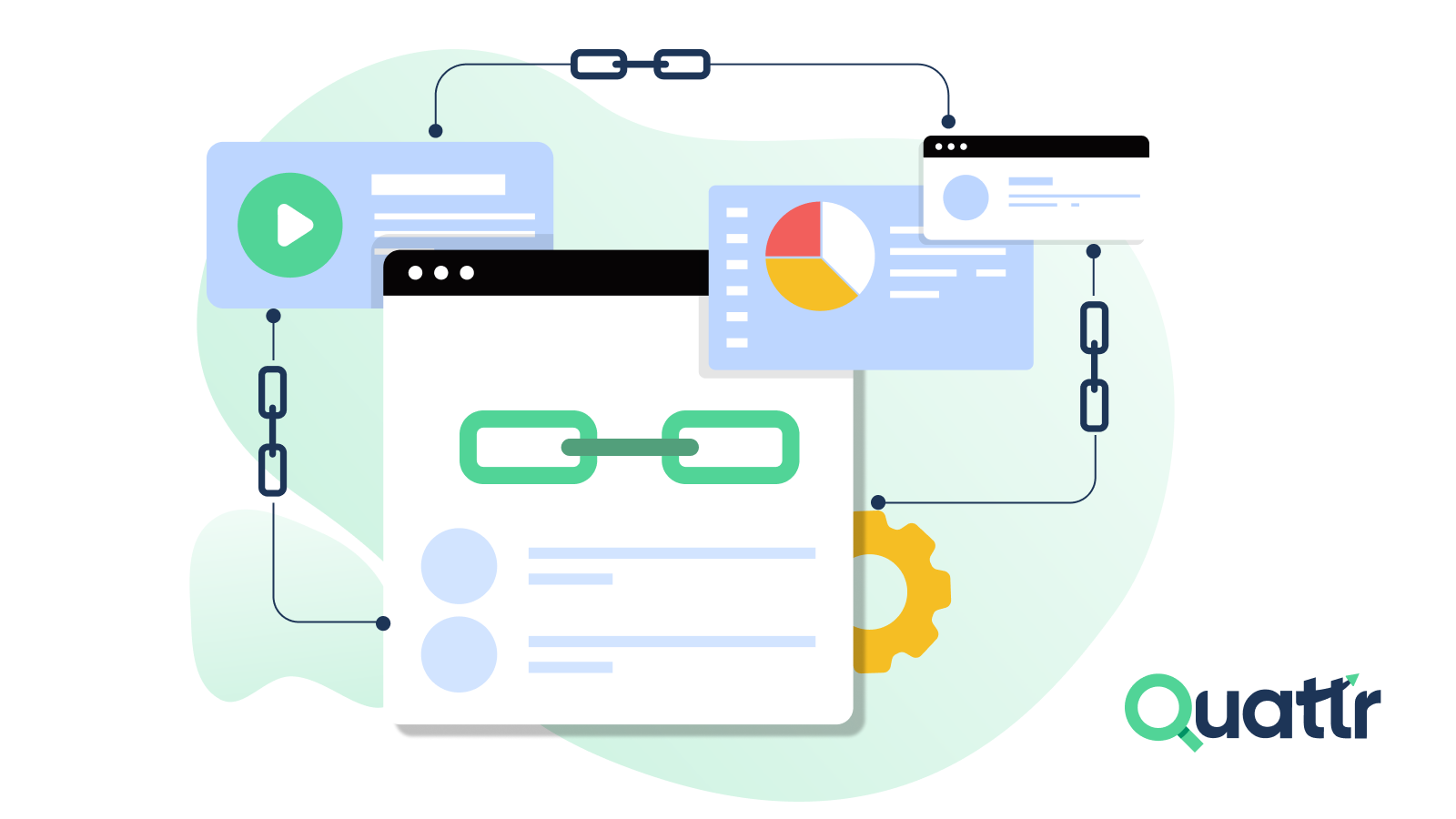
At its core, internal linking is the practice of connecting one page of a website to another page on the same domain. These links serve three primary functions: they help users navigate, they distribute PageRank and authority across the site, and they signal to search engines which pages are most important. AI internal linking takes this concept and supercharges it through machine learning and natural language processing algorithms. Instead of relying on a human to read each page and decide where a link should go, AI systems crawl the entire site, extract meaning from the content, and identify the most contextually relevant and SEO-valuable connections.
The technology goes beyond simple keyword matching. Modern AI linking tools understand topic clusters, user intent, and even predict the likelihood that a link will be clicked. They can evaluate the existing link graph, spot orphan pages that have no links pointing to them, and recommend placements that reinforce your pillar-and-cluster content strategy. This level of automation and intelligence turns internal linking into a continuous optimization process rather than a one-time project.
How AI Internal Linking Works: The Core Mechanisms
To appreciate the value, you need to understand the underlying technology. AI internal linking systems typically rely on several interconnected mechanisms:
Natural Language Processing (NLP) for Semantic Analysis
NLP enables the AI to read and comprehend the actual meaning of your content. It doesn’t just look for exact-match keywords. It identifies entities, concepts, and the overall topic of a page. For example, an AI can distinguish between a page about “apple” the fruit and “Apple” the technology company based on the surrounding context. This deep understanding allows it to match a blog post about healthy eating with a product page for organic apples, even if the two pages use different vocabulary.
Internal Link Graph Analysis
An AI can map your entire website as a graph, where pages are nodes and links are edges. It analyzes the current link distribution to find imbalances. It identifies pages with too few inbound internal links (orphans) or those that are heavily linked but not necessarily the most strategic targets. It calculates authority flow and can simulate how adding a new link might redistribute PageRank. This prevents the common mistake of linking repeatedly to the same few pages while neglecting new, high-quality content.
Reinforcement Learning for Click Probability
Advanced systems incorporate user behavior data. By feeding click-through rates and heatmap analytics into a reinforcement learning model, the AI can predict which link placements are likely to engage users. If a link in the body text consistently gets more clicks than one in the sidebar, the AI learns to prioritize in-content links. Over time, it optimizes not just for search engines but for real human engagement, which is a crucial ranking signal in Google’s algorithm.
Topic Clustering and Content Hubs
AI automatically groups pages into topic clusters with a central pillar page and supporting cluster content. It then ensures that each cluster page links back to the pillar and that pillar pages interlink where semantically appropriate. This siloing technique helps search engines understand the breadth and depth of your expertise on a subject, a key component of E-E-A-T.
Key Components of an AI Internal Linking System
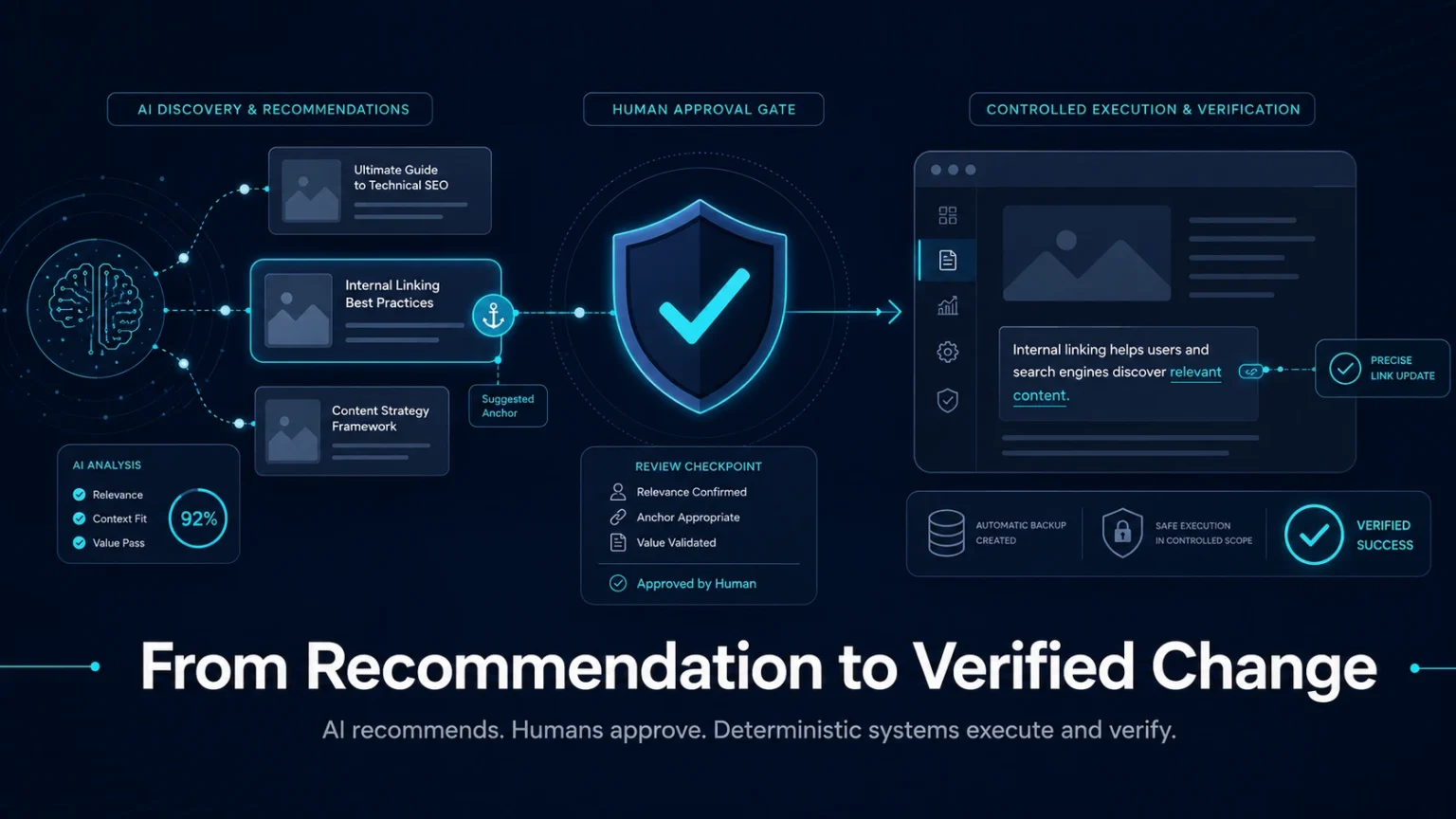
Whether you use a standalone tool or a feature within a larger SEO platform, an effective AI linking system is built from these components:
- Content Crawl and Extraction Engine: Collects all crawlable pages, extracts clean text, headings, and existing link structure.
- Semantic Indexing Module: Converts text into mathematical vectors that represent meaning. This allows similarity comparisons between any two pages.
- Link Opportunity Detector: Identifies anchor text in a source page that could naturally support a link, and matches it with target pages that are relevant to that anchor phrase.
- Authority and Value Scoring: Assigns a priority score to each potential link based on target page importance, current link count, source page authority, and predicted user value.
- Deployment Recommendations: Generates a list of suggested links with exact anchor text and placement. Some tools can even implement links automatically via a JavaScript snippet or CMS plugin, though manual review is strongly advised.
- Monitoring and Feedback Loop: Tracks the impact of implemented links on rankings, crawl frequency, and user behavior, then feeds that data back to refine future recommendations.
- Scale and Speed: A website with 10,000 pages cannot be linked manually in any reasonable timeframe. AI can process this volume in minutes, uncovering opportunities a human team would need months to find.
- Unparalleled Precision: AI reduces the guesswork. It uses data, not hunches, to decide where a link should go. This leads to more thematically relevant connections, which search engines reward with higher rankings.
- Eliminates Orphan Pages: One of the most common SEO issues is publishing great content that never gets linked from anywhere else. AI systematically identifies these orphan pages and suggests connections, ensuring every page contributes to the site’s authority.
- Optimized Crawl Budget: For large enterprise sites, crawl budget is a real concern. AI internal linking creates clear paths for search engine bots, directing them to the most important pages first and preventing wasted crawl time on low-value or query parameter-heavy URLs.
- Consistent Content Hubs: Maintaining a logical pillar-cluster structure manually over years of content production is nearly impossible. AI enforces the topology automatically, strengthening your topic authority signals.
- Improved User Experience and Dwell Time: When links are genuinely helpful, users stay longer. AI can surface related content a reader may not have found, reducing bounce rate and increasing pages per session — both positive behavioral signals.
- Dynamic Adaptation to Content Changes: As you update old content or publish new articles, an AI system can reconfigure links across the site to reflect the latest information, something static manual links cannot do.
- Data Dependency: The AI is only as good as the content you feed it. Poorly written, thin, or duplicate content will confuse the algorithm and produce irrelevant link suggestions. A solid content foundation is a prerequisite.
- Black Box Decisions: Some tools do not fully explain why a particular link is recommended. This can make it difficult to override bad suggestions or learn from mistakes.
- Over-Optimization Risk: An AI that blindly maximizes internal links without constraint can create a spammy mess. Too many links on a page dilutes value and harms user experience. You must set limits.
- Lack of Strategic Nuance: AI understands semantics, but it doesn’t understand business goals. It may not know that a certain product page is your highest-margin offering and deserves more link equity than a more “relevant” blog post. Human oversight is essential for aligning linking strategy with revenue objectives.
- Technical Integration Hurdles: Automatically inserting links requires CMS integration, which can be complex and risky. A misconfiguration can break layouts or cause indexing issues.
- Oversimplification of Anchor Text: While AI can generate anchor text, it may still over-prioritize exact-match anchors. You need to review suggestions to maintain a healthy, natural distribution of branded, generic, partial-match, and long-tail anchors.
- Select the Right AI Internal Linking Tool: Evaluate tools like Link Whisper (for WordPress), InLinks, MarketMuse, or the internal linking features in enterprise suites like seoClarity, Botify, or Ryte. Choose one that offers semantic analysis, not just keyword matching, and preferably has a manual review stage before deployment.
- Crawl and Configure Your URL Structure: Let the tool crawl your site. Configure it to ignore low-value pages like tags, category pagination, admin pages, and thank-you pages. Define your strategic pillars — the 5–20 most important pages you want to rank for high-value terms — so the AI can prioritize linking to them.
- Run the AI Analysis and Generate Opportunities: The tool will produce a list of suggested internal links. Each suggestion typically includes the source page, target page, suggested anchor text, and the specific location in the source text where the link should be placed. Expect thousands of opportunities for a large site.
- Critically Review Every Suggestion (or Establish Strict Rules): Never blindly implement everything. Check that the anchor text reads naturally, the target page is genuinely useful, and the number of links per source page stays reasonable (commonly under 100–150 for directory-style pages and far fewer for articles). Remove any suggestions that feel forced or could create keyword cannibalization.
- Implement in Phases and Monitor Impact: Roll out changes in small batches, perhaps 50–100 links at a time. Use Google Search Console to monitor clicks, impressions, and average position for affected pages. Also track crawl stats to confirm that Googlebot is discovering new paths. Wait at least two weeks before judging results, as indexing takes time.
- Establish a Continuous Cycle: Set a recurring schedule — monthly or quarterly — to re-run the AI analysis. New content needs links, old content may need re-optimization, and your site authority distribution shifts over time. AI internal linking is not a set-it-and-forget-it tactic; it’s a living process.
- Trusting AI Without Verification: AI can hallucinate relationships or suggest links to irrelevant pages. Always spot-check. If an AI suggests linking “best running shoes” to a post about printer ink, your content signals are too weak, or the tool is flawed.
- Creating Link Overload: An AI may suggest three links in every paragraph because it finds matches. Set a maximum number of links per page and per section. For a 2000-word article, 5–8 contextual internal links is often sufficient; 20 is excessive.
- Ignoring the Click Value Hierarchy: Not all links on a page are equal. A link in the first paragraph carries more weight than one in the footer. Ensure your AI tool prioritizes in-content, editorial-style links placed early in the body.
- Using Generic or Repetitive Anchor Text: If ten pages link to your “SEO guide” with the exact anchor “SEO guide,” it looks manipulative. Work with your AI tool to diversify anchors using synonyms and natural language variations, or manually edit the anchors during review.
- Forgetting the Nofollow Attribute: When linking to user-generated content, login pages, or untrusted sources, AI might not automatically add rel=”nofollow”. You must configure rules to apply this where necessary to maintain clean link equity flow.
- Not Aligning with the Overall Link Strategy: Internal links should support your external backlink strategy. If you’re building external links to a specific page, increase internal links to that same page from relevant content to amplify its authority. AI should be directed toward these target pages.
- E-E-A-T Can’t Be Automated: AI can suggest a link from a product review to a medical disclaimer page, but it cannot ensure that the review demonstrates real experience or expertise. High-quality internal linking supports E-E-A-T but doesn’t replace it. Your content must still be written by or reviewed by subject matter experts.
- A/B Test Small Changes: Before applying AI suggestions sitewide, run an A/B test on a section of your site. Compare organic traffic and engagement metrics between pages with manual links and those enhanced by AI. Use statistical significance to validate the lift.
- Preserve the Human Editorial Voice: A well-placed internal link should feel like a helpful recommendation from a knowledgeable friend. If every link feels algorithmic, users will distrust the content. Blend AI efficiency with human curation. The best outcomes often come from AI suggesting opportunities and a human editor approving the final choice.
- Stay Vigilant Through Algorithm Updates: Google’s helpful content system and core updates increasingly reward user-first sites. Monitor whether your AI-driven links are actually driving engagement via analytics events (scroll depth, click tracking). If users are ignoring the links, the strategy is failing regardless of any rank change.
- Don’t Replace, Augment: AI is an extraordinary assistant, not a replacement for a skilled SEO strategist. The strategist still defines the site architecture, chooses pillar pages, identifies revenue-critical pages, and ensures the linking strategy reinforces the overall marketing funnel. AI executes the tactical work at scale.
Benefits of Using AI for Internal Linking
The shift to automation brings measurable advantages that directly affect your bottom line. Here are the most significant benefits:
| Manual Internal Linking | AI Internal Linking |
|---|---|
| Time–intensive, scales poorly | Instantaneous, works on any site size |
| Relies on human memory and keyword lists | Uses semantic understanding and NLP |
| Prone to inconsistency and orphan pages | Systematically maps every page |
| Anchor text often repetitive or exact-match | Generates diverse, natural anchor text variants |
| Static; rarely updated after publishing | Can re-optimize links as new content emerges |
Limitations and Challenges You Must Acknowledge
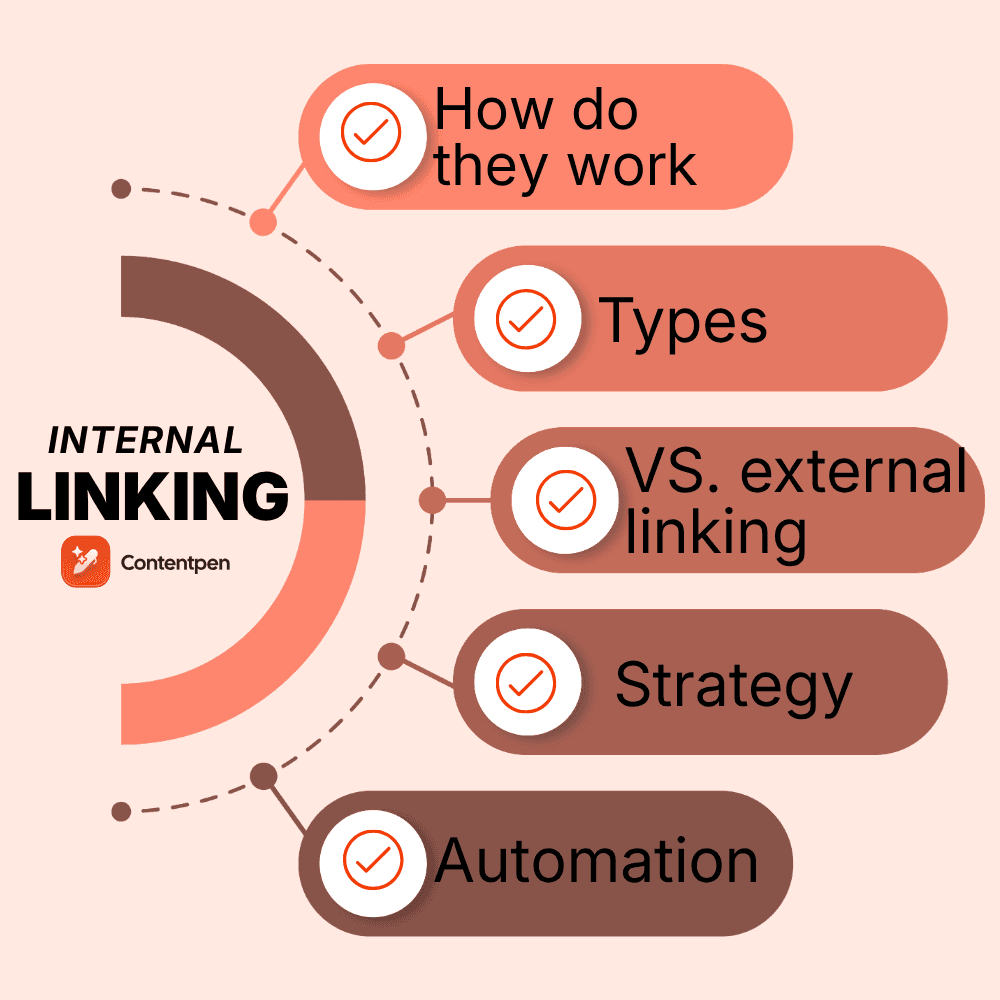
Despite its power, AI internal linking is not a license to press a button and walk away. Every SEO professional should be aware of these challenges:
AI Internal Linking vs. Traditional Rule-Based Automation
It’s important to distinguish true AI internal linking from older, rule-based automation that SEOs have used for years. Rule-based systems might link every occurrence of the phrase “content marketing” to a specific pillar page. AI, on the other hand, can decide whether a given mention of “content marketing” is in a context that warrants a link, or if a different page would be more suitable. It can also understand that “digital content strategy” refers to the same concept and suggest a link with varied anchor text. The difference is between a sledgehammer and a scalpel.
Step-by-Step Guide to Implementing AI Internal Linking
Remove or improve thin, outdated, or duplicate pages. AI needs clean, high-quality input. Ensure all important pages are indexable and crawlable.
Common Mistakes and How to Avoid Them
Even with AI, SEOs often fall into predictable traps. Avoid these to preserve your site’s integrity:
Important Notes for SEO Professionals
To get the most from AI internal linking while staying in Google’s good graces, keep these principles front of mind:
Frequently Asked Questions About AI Internal Linking
What is AI internal linking and why is it important?
AI internal linking uses machine learning algorithms to automatically identify and suggest contextually relevant internal links between pages on a website. It is important because it reduces manual workload, finds opportunities a human would miss, helps distribute link equity more evenly, and strengthens topic clusters — all of which can lead to higher rankings and better crawl efficiency.
Can AI internal linking hurt my SEO?
Yes, if implemented without oversight. Excessive linking, irrelevant anchor text, or linking to low-quality pages can create a poor user experience and appear manipulative. It’s crucial to review AI suggestions, set limits, and maintain a natural linking profile that prioritizes user value. Never automate 100% of your internal links without a human review gate.
How is AI internal linking different from automatic linking plugins?
Automatic linking plugins typically match exact keywords and link every occurrence to a predefined URL. AI internal linking goes much further by understanding the meaning of the content, analyzing the overall link graph, and suggesting links based on semantic relationships, user intent, and authority flow. AI is dynamic and context-aware, while basic automation is rigid.
Do I need a large website to benefit from AI internal linking?
While AI is most transformative for sites with thousands of pages, even a 200-page blog can benefit. AI ensures no related article is accidentally left unlinked, helps you build perfect topic clusters, and saves hours of manual work. The ROI simply increases with site size.
Which AI internal linking tools are best for SEO?
T For WordPress users, Link Whisper is popular for its ease and one-click implementation. InLinks and MarketMuse offer deeper semantic analysis and are CMS-agnostic. Enterprise platforms like seoClarity and Botify provide robust internal linking modules integrated with site auditing and rank tracking. Evaluate based on semantic capability, manual review features, and the ability to define custom linking rules.
Can AI internal linking help recover from a Google core update?
While no linking strategy is a guaranteed fix, improving internal links can be part of a recovery plan. Better internal linking helps Google rediscover high-quality content that may have been under-linked, improves topical signals, and enhances user engagement. If a core update demoted pages due to thin content or poor E-E-A-T, linking alone won’t suffice — content quality must be addressed first. Use AI to reinforce the improved content with smart, relevant connections across your site.
Conclusion
AI internal linking represents a fundamental shift from artisanal, one-link-at-a-time work to intelligent, strategic automation. When applied correctly, it doesn’t replace the SEO mind but amplifies it, turning a messy web of pages into a perfectly interconnected knowledge base that both users and search engines reward. The key lies in balancing the speed and scale of AI with the judgment, nuance, and ethical oversight of an experienced human strategist. Embrace the technology, but never surrender the editorial compass. The sites that will dominate the next era of search are those that build links not just for algorithms, but for people — and AI, wielded wisely, makes that achievable at any scale.
Xem thêm:
- AI SEO Internal Link Suggestions: The Complete Guide to Smarter Site Architecture
- AI SEO Google Analytics 4: The Complete Guide to Smarter Data-Driven Rankings
- AI SEO SERP Research: The Complete Guide to Dominating Search Results in 2025
- AI SEO Editorial Workflow: The Complete Guide to Scaling Content Production
- AI SEO Review Content: The Complete Guide to Automated Reviews That Rank
Bài viết cùng chủ đề:

AI SEO SEO Automation with Make: The Complete Workflow Guide

AI SEO SEO Automation with Zapier: The Complete Workflow Guide

AI SEO SEO Automation with n8n: The Complete Workflow Guide
AI SEO SEO Automation with Gemini: The Complete Guide to Scaling Organic Growth

AI SEO SEO Automation with Claude: The Complete Guide to Scaling Content in 2025

AI SEO SEO Automation with ChatGPT: The Complete Playbook for 2025

AI SEO & SEO Automation for Affiliate Sites: The 2025 Playbook for Passive Income Growth
AI SEO & SEO Automation for Bloggers: The Complete Guide to Scaling Your Content

AI SEO & SEO Automation for Agencies: The Complete 2025 Playbook

AI SEO and SEO Automation for Ecommerce: The Complete Playbook for 2025

AI SEO & SEO Automation for WordPress: The Complete Playbook for 2025
AI SEO SEO Automation Strategy: The Complete Playbook for 2025

Mastering the AI SEO SEO Automation Process: A Complete Guide to Scaling Organic Growth
AI SEO SEO Automation System: The Complete Guide to Scaling Organic Growth in 2025
AI SEO SEO Automation Platform: The Complete Guide to Scaling Organic Growth in 2025
AI SEO SEO Automation Software: The Complete Guide to Scaling Organic Growth in 2025















