
No products in the cart.
AI SEO AI Overview Citations: The Complete Guide to Winning Google’s AI Search
10
Aug
Aug
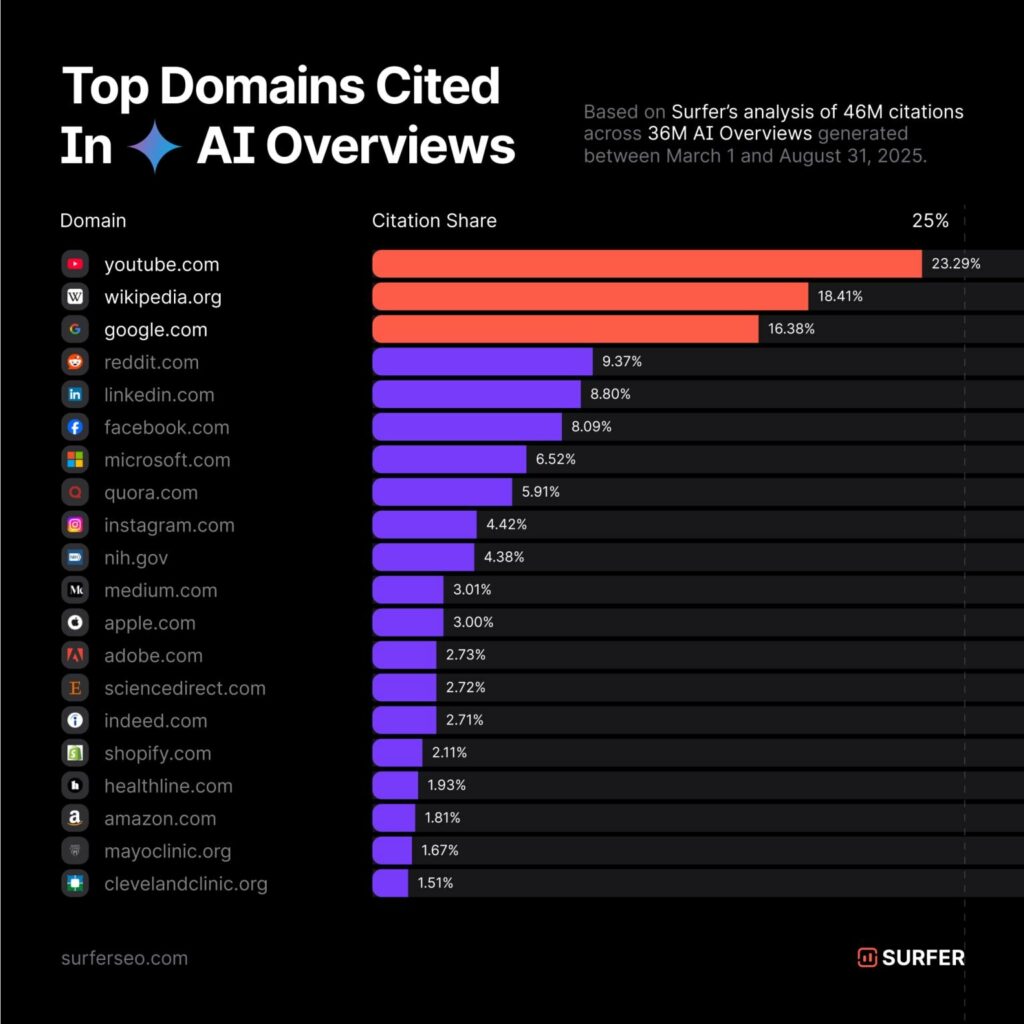
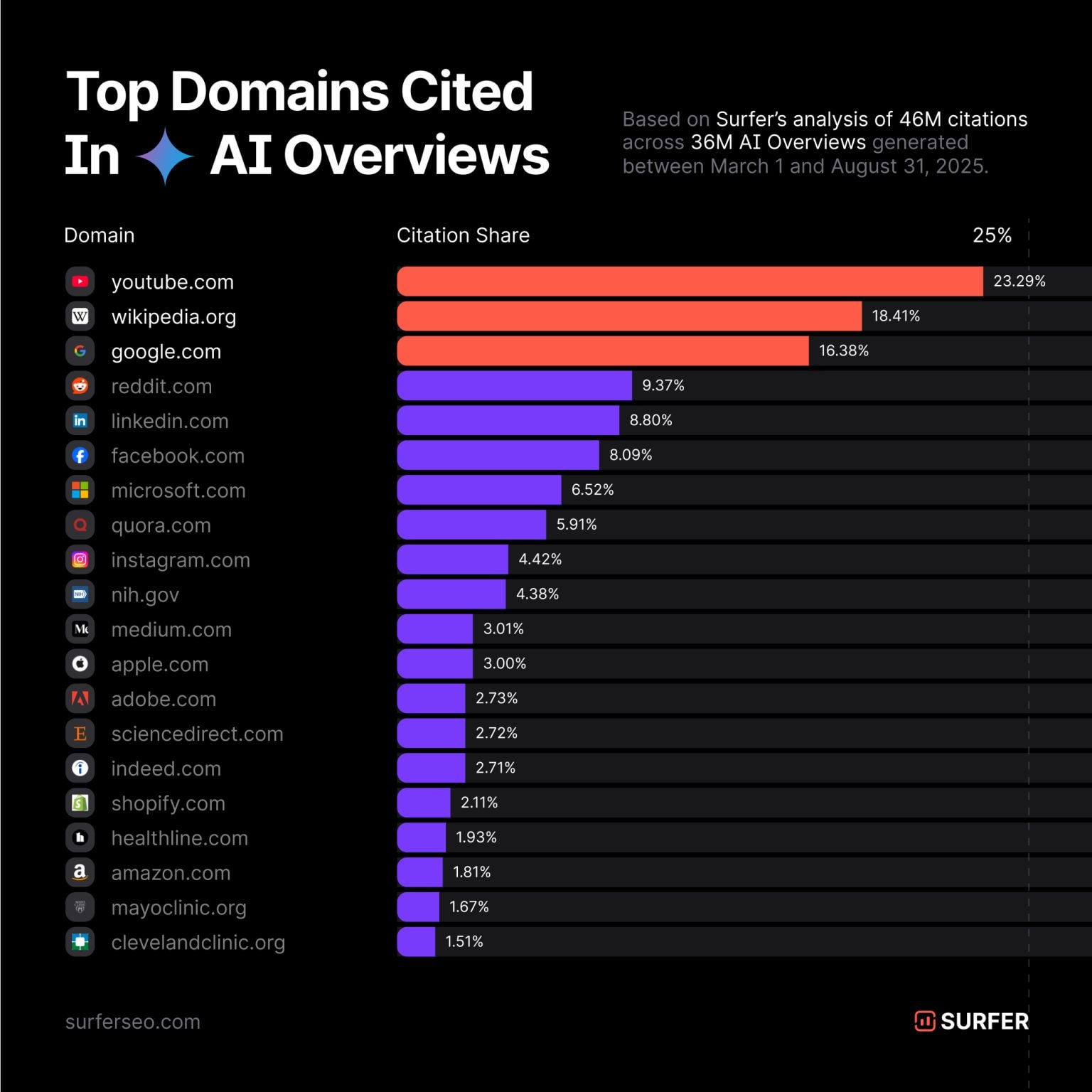
The digital marketing landscape has shifted dramatically with the introduction of Google’s AI Overviews. For SEO professionals, the emergence of AI-generated search summaries has created a new battleground. The key to visibility in this new era lies in understanding how AI SEO AI Overview Citations work. These citations are the digital footprints that signal to Google’s algorithms which sources are authoritative enough to be featured in the AI-generated answers at the top of the search results. This guide provides a deep dive into the mechanics of AI citations, offering a clear roadmap for optimizing your content to secure these coveted placements.
Understanding AI Overviews and the Role of Citations
Google’s AI Overviews are generated responses that appear directly beneath the search query bar, synthesizing information from multiple web sources to provide a comprehensive answer. Unlike traditional blue links, these overviews are conversational and designed to answer complex questions instantly. The sources used to generate these answers are displayed as citation chips or inline links within the text. These are the AI Overview Citations.
Securing a citation in an AI Overview is the new pinnacle of SEO success. It places your brand at the very top of the search engine results page (SERP), often pushing traditional organic results far down the page. This visibility translates into massive brand awareness and, potentially, significant referral traffic. The goal of modern SEO is no longer just to rank on page one; it is to be the source that Google’s AI trusts to answer the user’s question.
How Google Selects Sources for AI Overview Citations
Google’s AI models, including the Gemini-powered systems behind AI Overviews, do not randomly select sources. They rely on a complex algorithmic process that evaluates a combination of factors. Understanding these factors is the first step in optimizing for AI SEO AI Overview Citations.
Authority and Trust Signals
The AI prioritizes content from domains that have established a high level of topical authority and trust. This goes beyond simple Domain Authority (DA) scores. The system evaluates the consistency of your content, the quality of your backlink profile, and your brand’s reputation across the web. A site that is consistently cited by other authoritative sources for a specific topic is more likely to be trusted by the AI.
Content Structure and Clarity
AI models are trained to understand and extract information from well-structured content. This means using clear headings (H2, H3), concise paragraphs, and bullet points. The AI looks for content that directly answers the user’s query in a clear, unambiguous manner. Content that is buried under fluff or lacks a clear structure is less likely to be selected for a citation.
Freshness and Relevance
For many queries, especially those related to news, technology, or current events, the freshness of the content is a critical factor. Google’s AI prefers to cite sources that are up-to-date and reflect the latest information. For evergreen topics, the consistency and historical accuracy of the content are more important than the publication date.
Diversity of Sources
Google’s AI aims to provide a balanced answer by drawing from a diverse range of sources. This means it is less likely to cite the same website for every point in an AI Overview. It looks for different perspectives and complementary information from various domains. This is why a multi-faceted approach to content creation is essential.
Key Differences Between Traditional SEO and AI Overview SEO
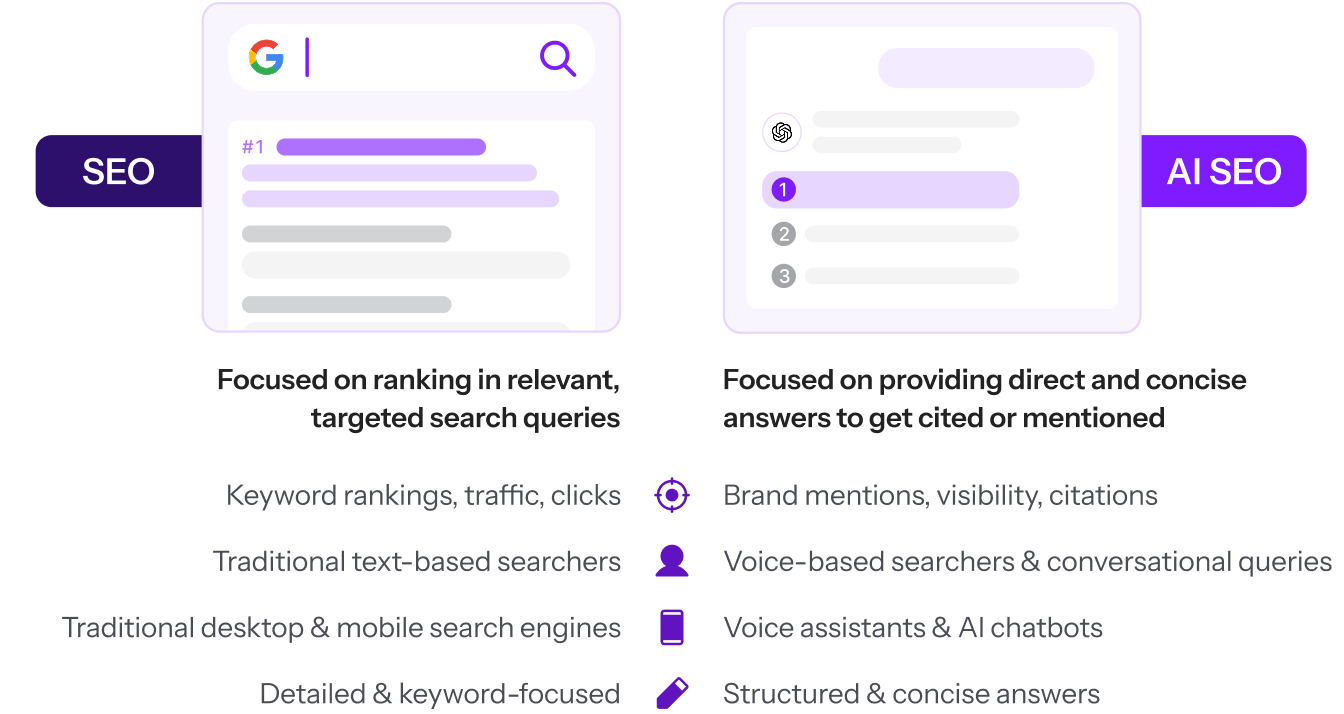
While the fundamental principles of good SEO remain, the optimization strategy for AI Overviews requires a distinct approach. The table below highlights the key differences.
| Aspect | Traditional SEO | AI Overview SEO |
|---|---|---|
| Primary Goal | Rank for a specific keyword in the blue links. | Become a cited source within the AI-generated summary. |
| Content Focus | Keyword density, backlinks, and on-page optimization. | Entity clarity, direct answers, and comprehensive topic coverage. |
| User Intent | Matching search intent with a specific page. | Providing a complete, multi-faceted answer that the AI can synthesize. |
| Measurement | Impressions, clicks, and keyword rankings. | Presence in AI Overviews, brand mentions, and referral traffic from the overview. |
| Content Format | Blog posts, product pages, and landing pages. | Comprehensive guides, FAQ sections, and data-rich articles. |
The shift is from optimizing for a search engine to optimizing for an AI that reads and understands content like a human expert. This requires a higher level of content quality and depth.
Strategies to Optimize for AI SEO AI Overview Citations
To win AI Overview Citations, you must adapt your content strategy. The following are actionable strategies that have proven effective in this new landscape.
1. Target Conversational and Long-Tail Keywords
AI Overviews are triggered by conversational queries and complex questions. Instead of targeting short, generic keywords like “best coffee,” focus on long-tail phrases like “what is the best sustainable coffee brand for home espresso machines in 2025?” These queries are more likely to trigger an AI Overview, and your content can be structured to directly answer them.
2. Create Definitive, Comprehensive Guides
The AI looks for the most complete and authoritative source on a topic. Create “pillar” content that covers every aspect of a subject in exhaustive detail. This includes defining key terms, explaining processes, providing examples, and answering common questions. A 2,000-word article that covers a topic superficially will lose to a 5,000-word guide that leaves no stone unturned.
3. Implement Structured Data and Schema Markup
Schema markup helps search engines understand the context and meaning of your content. Implementing FAQPage, HowTo, and Article schema can help the AI parse your content more effectively. This structured data provides explicit signals about the entities and relationships within your text, making it easier for the AI to extract and cite.
4. Prioritize Clear, Direct Answers
At the beginning of your article or section, provide a direct, concise answer to the question posed in the heading. Do not bury the lede. The AI is more likely to cite a source that provides an immediate, clear answer rather than one that makes the reader wade through paragraphs of introduction. Use the “inverted pyramid” style of writing.
5. Build Topical Authority with a Content Cluster
Do not rely on a single article. Build a network of interlinked content around a core topic. Create a main “pillar” page and link it to multiple “cluster” articles that cover subtopics in detail. This demonstrates to Google that you have deep expertise in the entire subject area, increasing your domain’s overall authority.
6. Optimize for Entities, Not Just Keywords
Google’s AI understands the relationships between entities (people, places, things, concepts). Your content should clearly define these entities and their relationships. For example, if you are writing about “renewable energy,” you should clearly connect it to entities like “solar power,” “wind turbines,” and “carbon emissions.” This helps the AI build a knowledge graph around your content.
Common Mistakes That Prevent AI Overview Citations
Many websites are failing to secure AI citations due to common, avoidable errors. Recognizing these pitfalls is crucial for adjusting your strategy.
- Ignoring User Intent: Creating content that is optimized for keywords but does not actually answer the user’s question. The A
- Thin or Duplicate Content: Publishing short, low-value articles that offer no unique insight. The AI is trained to identify and filter out this type of content.
- Over-Optimization: Keyword stuffing and using unnatural language. The AI prefers content that reads naturally and is written for humans, not bots.
- Lack of E-E-A-T Signals: Not demonstrating Experience, Expertise, Authoritativeness, and Trustworthiness. This includes lacking author bios, credible sources, and a clear “About Us” page.
- Poor Technical SEO: Slow page speed, broken links, and poor mobile responsiveness can prevent the AI from crawling and indexing your content effectively.
- Failing to Update Content: The AI prioritizes fresh information. Content that is outdated and not regularly updated will lose its competitive edge.
Measuring the Success of Your AI Citation Strategy
Tracking your performance in AI Overviews requires a new set of metrics. Traditional ranking tools may not fully capture this data. Here are some ways to measure your success.
Manual SERP Analysis
Regularly perform manual searches for your target keywords to see if an AI Overview appears and if your site is cited. This is the most direct method, though it is not scalable.
Referral Traffic Analysis
In Google Analytics, monitor your traffic sources. Look for traffic coming from “Google” with a specific landing page path that you do not recognize from traditional organic results. This could be traffic from an AI Overview citation.
Brand Mention Monitoring
Use tools like Google Alerts or Mention to track when your brand or domain is mentioned in AI Overviews. This can help you identify which queries are generating citations.
Specialized SEO Tools
Several SEO platforms are developing features to track AI Overview visibility. These tools can provide data on which keywords trigger AI Overviews and which domains are being cited, allowing for a more comprehensive analysis.
Important Notes on AI Overviews and Content Strategy
There are several critical nuances to keep in mind when developing your strategy for AI SEO AI Overview Citations.
First, the landscape is constantly evolving. Google updates its algorithms frequently, and the behavior of AI Overviews changes. A strategy that works today may not work tomorrow. Continuous monitoring and adaptation are essential. Second, the goal is not to replace your traditional SEO efforts but to augment them. A strong foundation in traditional SEO is still necessary to build the authority required for AI citations. Third, focus on providing genuine value. The AI is getting better at detecting and penalizing content created solely for manipulation. The most sustainable strategy is to create the best, most informative content on the web.
Frequently Asked Questions (FAQ)
What exactly is an AI Overview Citation?
An AI Overview Citation is a link or reference to a web source that Google’s AI has used to generate the text in an AI Overview. These citations appear as small icons or links within the AI-generated summary, providing credit to the original source.
How do I get my website cited in Google AI Overviews?
To get cited, you need to create high-quality, authoritative content that directly answers user queries. Focus on comprehensive topic coverage, clear structure, and strong E-E-A-T signals. Optimize for conversational keywords and ensure your site has a solid technical SEO foundation.
Are AI Overview Citations the same as backlinks?
No, they are different. A backlink is a link from another website to yours. An AI Overview Citation is a reference within Google’s own AI-generated content. While both are valuable, they serve different purposes. A citation is a direct signal of trust from Google’s AI, while a backlink is a signal of authority from other web entities.
Will AI Overviews reduce my organic traffic?
It can, if your content is not cited. If a user gets a complete answer in the AI Overview, they may not click through to any website. However, if your content is cited, you have a chance to receive a click. The key is to be one of the cited sources. The impact on traffic is a subject of ongoing debate, but being absent from AI Overviews is a significant risk.
What is the best content format for AI Overviews?
Content that is well-structured with clear headings, bullet points, and direct answers tends to perform best. Comprehensive guides, listicles, and FAQ sections are highly effective. The content should be easy for the AI to parse and extract key information from.
How often does Google update AI Overviews?
Google updates its AI systems continuously. The information in an AI Overview can change based on new content published, algorithm updates, and changes in user search behavior. T
Conclusion
The rise of AI Overviews marks a fundamental shift in the search landscape. The focus has moved from keyword matching to semantic understanding and trust. Winning AI SEO AI Overview Citations is now a critical objective for any serious SEO professional. By focusing on creating comprehensive, authoritative, and well-structured content, and by building a strong foundation of topical authority, you can position your brand to be the trusted source that Google’s AI relies upon. This is not a one-time fix but an ongoing process of adaptation and refinement. The brands that embrace this new paradigm and prioritize the user’s quest for knowledge will be the ones that thrive in the age of AI-driven search. The time to adapt is now, and the rewards for those who do are substantial.
Xem thêm:
- AI SEO AI Search Sources: The Complete Guide to Optimizing for Generative Engines
- AI SEO Link Reclamation: The Complete Guide to Recovering Lost Backlinks in 2025
- AI SEO Topical Relevance: The Complete Guide to Dominating Search in 2025
- AI SEO Influencers: The New Architects of Search Visibility in an Era of Machine Intelligence
- AI SEO Link Building Automation: The Complete 2025 Playbook for Scalable Growth
Bài viết cùng chủ đề:

AI SEO SEO Automation with Make: The Complete Workflow Guide

AI SEO SEO Automation with Zapier: The Complete Workflow Guide

AI SEO SEO Automation with n8n: The Complete Workflow Guide
AI SEO SEO Automation with Gemini: The Complete Guide to Scaling Organic Growth

AI SEO SEO Automation with Claude: The Complete Guide to Scaling Content in 2025

AI SEO SEO Automation with ChatGPT: The Complete Playbook for 2025

AI SEO & SEO Automation for Affiliate Sites: The 2025 Playbook for Passive Income Growth
AI SEO & SEO Automation for Bloggers: The Complete Guide to Scaling Your Content

AI SEO & SEO Automation for Agencies: The Complete 2025 Playbook

AI SEO and SEO Automation for Ecommerce: The Complete Playbook for 2025

AI SEO & SEO Automation for WordPress: The Complete Playbook for 2025
AI SEO SEO Automation Strategy: The Complete Playbook for 2025

Mastering the AI SEO SEO Automation Process: A Complete Guide to Scaling Organic Growth
AI SEO SEO Automation System: The Complete Guide to Scaling Organic Growth in 2025
AI SEO SEO Automation Platform: The Complete Guide to Scaling Organic Growth in 2025
AI SEO SEO Automation Software: The Complete Guide to Scaling Organic Growth in 2025















