
No products in the cart.
AI SEO for Enterprises: The Complete Guide to Scaling Organic Growth in 2025
31
Jul
Jul
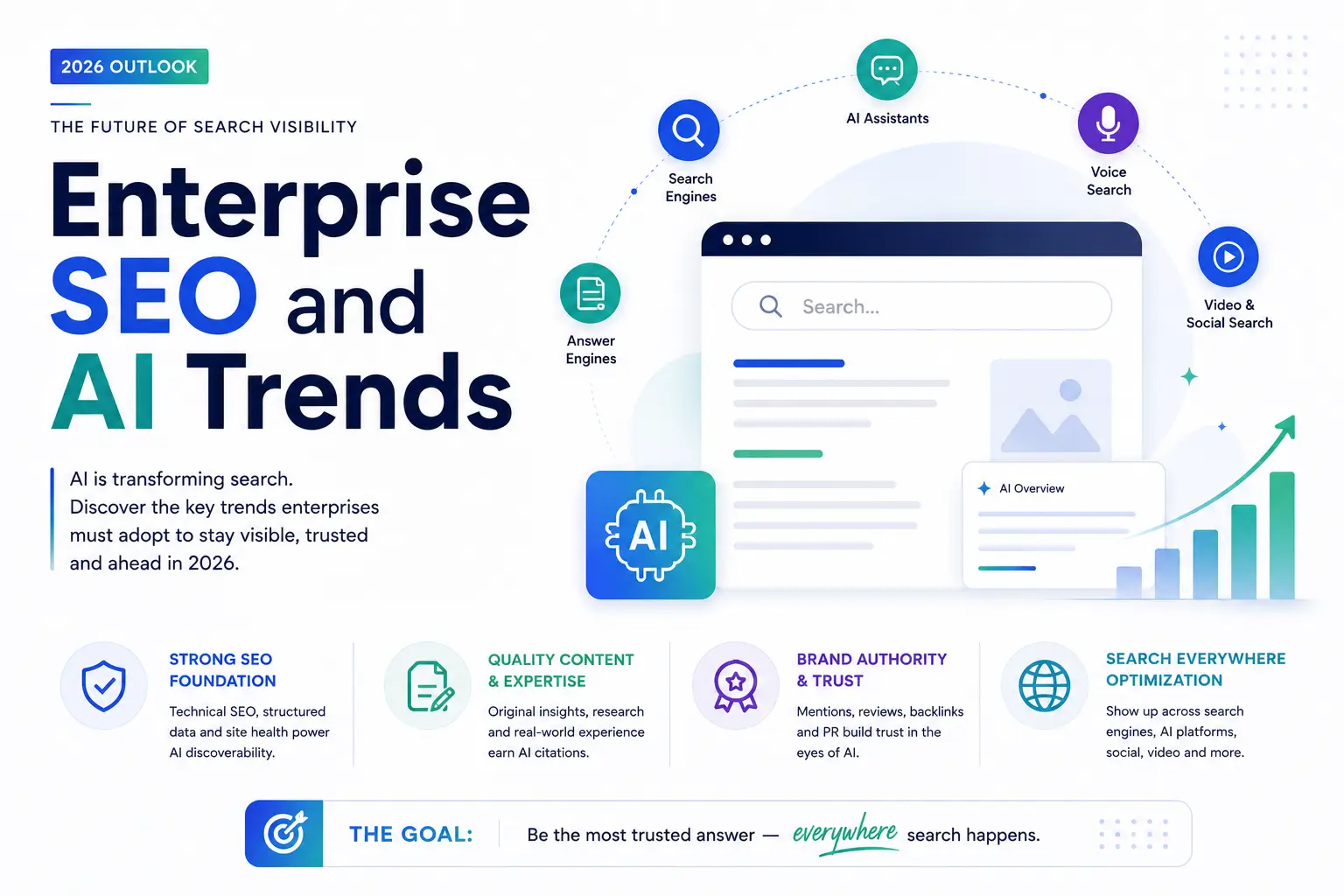
Enterprise SEO has always been a different beast. Managing thousands of pages, coordinating multiple teams, and fighting for visibility across global markets requires a level of precision that manual processes simply cannot sustain. The arrival of artificial intelligence has fundamentally shifted what is possible. AI SEO for enterprises is no longer an experimental add-on; it is the operational backbone for organizations that want to maintain a competitive edge in organic search. This guide breaks down exactly how large organizations can leverage AI to streamline workflows, improve content quality, and achieve measurable ROI. From understanding the core technology to implementing a full-scale strategy, this is the definitive playbook for marketing leaders, SEO directors, and digital transformation teams.
What Is AI SEO for Enterprises?
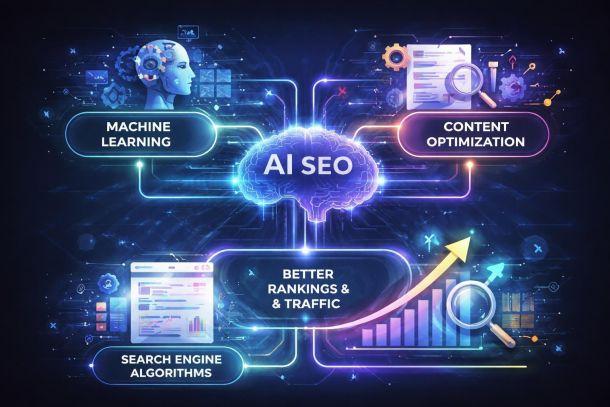
AI SEO for enterprises refers to the strategic application of machine learning, natural language processing, and predictive analytics to optimize a large organization’s organic search presence. Unlike traditional SEO, which relies heavily on manual audits, keyword research, and content updates, AI-driven SEO automates data analysis, identifies patterns across millions of data points, and generates actionable insights at scale. For an enterprise, this means moving beyond simple rank tracking. It involves using AI to understand user intent at a granular level, predict algorithm updates, personalize content experiences, and automate technical fixes across sprawling websites. The goal is not just to rank higher but to build a self-optimizing system that adapts to search engine changes in real time.
The Core Components of an Enterprise AI SEO Stack
A robust enterprise AI SEO strategy typically integrates several distinct technologies. Understanding these components is essential for building a cohesive system. – Natural Language Processing (NLP): This technology helps search engines and marketers understand the semantic meaning behind queries. Tools using NLP can analyze top-ranking content to identify topic clusters, entity relationships, and question-based queries that a brand must address.
- Predictive Analytics: By analyzing historical performance data, AI can forecast which topics will gain traction, which pages are at risk of losing rankings, and where the biggest opportunities for growth lie.
- Automated Content Generation: AI writing assistants can produce drafts for product descriptions, blog posts, and meta tags. For enterprises, this is a force multiplier, allowing teams to create personalized content for different segments without exhausting human resources.
- Technical SEO Bots: These crawlers use machine learning to identify rendering issues, broken internal links, and schema markup errors across millions of URLs, prioritizing fixes based on potential revenue impact.
Why Traditional SEO Fails at the Enterprise Level
Before diving into solutions, it is critical to understand why legacy methods break down. Many enterprise teams still rely on spreadsheets, manual reporting, and siloed workflows. This approach creates several systemic problems. First, data volume is overwhelming. An enterprise site can have hundreds of thousands of URLs. Analyzing this data manually takes weeks, by which time the insights are often outdated. Second, coordination is a nightmare. Marketing, IT, product, and legal teams all have a stake in the website, but they rarely share a unified view of SEO priorities. Third, scalability is impossible. Writing unique, high-quality meta descriptions for 50,000 product pages is not a realistic task for a human team. AI SEO for enterprises solves these issues by centralizing data, automating repetitive tasks, and providing a single source of truth for decision-making. It transforms SEO from a reactive, page-by-page effort into a proactive, system-wide strategy.
Key Benefits of Implementing AI SEO for Enterprises
The shift to AI-driven processes delivers tangible business outcomes. These benefits go beyond simple efficiency gains and directly impact the bottom line.
1. Unprecedented Scalability
AI allows enterprises to scale content production and optimization without proportionally increasing headcount. For example, a global e-commerce brand can use AI to generate localized product descriptions for every market, automatically incorporating local keywords and cultural nuances. This capability turns a logistical impossibility into a routine workflow.
2. Enhanced Search Intent Understanding
Traditional keyword tools group queries by volume, but they often miss the “why” behind the search. AI models analyze the context of a query, the user’s search history, and the format of the results to determine intent. This allows enterprises to create content that matches exactly what the user wants, whether it is a comparison guide, a transactional page, or a technical specification.
3. Real-Time Adaptation to Algorithm Updates
Search engines update their algorithms thousands of times per year. Most are minor, but some can cause massive traffic fluctuations. AI monitoring tools can detect these shifts instantly, analyze which pages are affected, and suggest corrective actions. This agility is a major competitive advantage, as manual detection often takes weeks.
4. Improved Internal Linking and Site Architecture
AI algorithms can map an entire website’s structure and identify orphan pages, weak link equity distribution, and opportunities for new internal links. By automatically suggesting link placements based on semantic relevance, AI helps consolidate authority and improve crawlability across large domains.
5. Data-Driven Content Gap Analysis
AI can scan the entire search landscape for a given industry, identifying topics that competitors cover but the enterprise does not. It can also highlight subtopics that are under-served by all competitors, presenting a “blue ocean” opportunity for the brand to dominate.
Practical Applications: How to Use AI in Enterprise SEO Workflows
Knowing the theory is one thing; implementing it is another.
Automated Keyword Clustering and Topic Modeling
Instead of targeting individual keywords, modern enterprise SEO focuses on topic clusters. AI tools analyze thousands of keywords and group them into semantically related clusters. This helps teams create pillar pages and supporting content that comprehensively covers a subject, signaling authority to search engines. For instance, a B2B software company might use AI to cluster keywords like “CRM integration,” “sales pipeline automation,” and “lead scoring software.” The AI identifies that these all relate to the broader topic of “sales efficiency,” guiding the content team to build a comprehensive hub.
AI-Powered Content Optimization and Briefing
AI briefing tools go beyond simple word counts. They analyze the top 20 ranking pages for a query and extract the entities, questions, and semantic terms that are essential for ranking. The AI then generates a detailed content brief that tells writers exactly what to include, how to structure headings, and where to place key terms. This process ensures that every piece of content is optimized for both users and search engines from the very first draft. It also standardizes quality across a large team of writers, editors, and subject matter experts.
Dynamic Page Title and Meta Description Generation
For enterprises with massive product catalogs, writing unique meta tags is a logistical nightmare. AI can generate these tags at scale, testing different variations to see which ones yield the highest click-through rates. The AI learns from performance data, continuously refining its output to maximize organic CTR.
Predictive Analytics for Content Lifecycle Management
Not all content stays relevant forever. AI can predict when a page is entering a decline phase based on trending search volume and competitor activity. This allows enterprises to refresh content proactively, rather than waiting for a traffic crash. This “predictive maintenance” keeps the entire site healthy and prevents revenue loss.
Comparing AI SEO Tools for Enterprise Use
The market is flooded with AI SEO tools, but they are not all created equal. Enterprises need platforms that offer API access, robust data security, and the ability to handle massive data sets. | Tool Category | Primary Function | Best For | Key Limitation |
- Training and Upskilling: Your existing SEO team needs to learn how to use AI tools effectively. This involves training on prompt engineering, data interpretation, and how to validate AI outputs. Investing in your team’s skills is just as important as investing in software.
- Start with a Pilot Project: Do not try to overhaul your entire SEO strategy overnight. Select a specific segment of your website, such as a product category or a blog section, and run a pilot project. Measure the results, refine your workflow, and then scale to the rest of the organization.
- Monitor for Bias and Hallucinations: AI models can generate factually incorrect information or exhibit bias based on their training data. Always have a human expert verify critical claims, statistics, and product information before publishing.
Frequently Asked Questions
What is the difference between traditional SEO and AI SEO?
|:— |:— |:— |:— |
| All-in-One Platforms (e.g., Semrush, Ahrefs) | Keyword research, rank tracking, site audits, AI content tools | Teams needing a single dashboard for all SEO activities | Can be expensive at the enterprise tier; AI features may be less advanced than specialized tools |
| NLP & Content Optimization (e.g., Surfer, Frase) | Analyzing SERPs, generating content briefs, optimizing on-page text | Content teams focused on ranking for specific high-value queries | Limited technical SEO capabilities; requires integration with other tools |
| Technical SEO Crawlers (e.g., DeepCrawl, Botify) | Crawling millions of URLs, identifying technical errors, log file analysis | Large sites with complex architecture and technical debt | Steep learning curve; requires technical expertise to interpret data |
| Custom ML Models (e.g., OpenAI API, Google Cloud AI) | Building proprietary models for intent prediction, personalization, or content generation | Enterprises with dedicated data science teams and unique use cases | High upfront cost and ongoing maintenance; requires specialized talent |
Common Mistakes and How to Avoid Them
Implementing AI SEO for enterprises is not without its pitfalls. Many organizations fail to see ROI because they make critical errors during the adoption phase.
Mistake 1: Treating AI as a Replacement for Human Expertise
AI is a powerful assistant, but it lacks the strategic judgment and brand awareness of a seasoned SEO professional. Using AI to generate content without human review often results in generic, low-quality output that fails to resonate with the audience. The correct approach is a human-in-the-loop model where AI handles the heavy lifting and humans provide oversight, creativity, and final approval.
Mistake 2: Ignoring Data Quality and Integration
AI models are only as good as the data they are trained on. If an enterprise’s analytics data is fragmented across different platforms or contains tracking errors, the AI’s insights will be flawed. Before implementing AI, organizations must ensure their data infrastructure is clean, unified, and accessible.
Mistake 3: Focusing Only on Content Generation
While AI writing tools are popular, the most significant ROI often comes from technical SEO and data analysis. Fixing site architecture issues, improving page speed, and optimizing for Core Web Vitals can have a more substantial impact on rankings than publishing more blog posts. Enterprises should prioritize a balanced approach.
Mistake 4: Overlooking Governance and Compliance
Enterprises operate in regulated environments. AI-generated content must be reviewed for compliance with legal, privacy, and brand safety standards. Failing to establish a governance framework can lead to reputational damage and legal penalties.
Important Notes for Enterprise Teams
Adopting AI SEO is a change management project, not just a technology implementation. Success requires alignment across multiple departments. – Cross-Functional Buy-In: SEO is no longer just the marketing team’s job. IT must support API integrations and data access. Product teams must prioritize SEO recommendations in their sprints. Leadership must understand that AI SEO is a long-term investment, not a quick fix.
Traditional SEO relies on manual processes for keyword research, content creation, and technical audits. AI SEO uses machine learning algorithms to automate these tasks, analyze data at scale, and predict future trends. The key difference is speed and scale; AI can process millions of data points in seconds, while a human team would take weeks.
Will AI replace enterprise SEO jobs?
A Routine tasks like data collection, basic reporting, and meta tag writing will be automated. The focus will shift to strategic thinking, creative content direction, data analysis, and managing AI systems. SEO professionals who embrace A
How much does enterprise AI SEO software cost?
Pricing varies widely depending on the platform and the scale of usage. All-in-one platforms can range from $200 to over $1,000 per month for basic enterprise tiers, but custom solutions with dedicated support and API access can cost significantly more. Custom machine learning model development can run into the tens of thousands of dollars. It is essential to evaluate the ROI based on the value of the organic traffic you aim to capture.
Can AI SEO help with voice search and featured snippets?
Yes. AI tools are excellent at identifying question-based queries and structuring content to answer them directly. By analyzing the format of existing featured snippets, AI can suggest the optimal structure for your content, such as using bullet points, tables, or short paragraphs, to increase the chances of being selected for position zero.
Is AI-generated content penalized by Google?
Google’s official stance is that it penalizes spammy, low-quality content regardless of how it is produced. AI-generated content that is helpful, original, and provides value to users is not penalized. However, content produced solely to manipulate rankings without adding value will be flagged. The key is to use AI as a tool to enhance human creativity, not replace it.
Conclusion
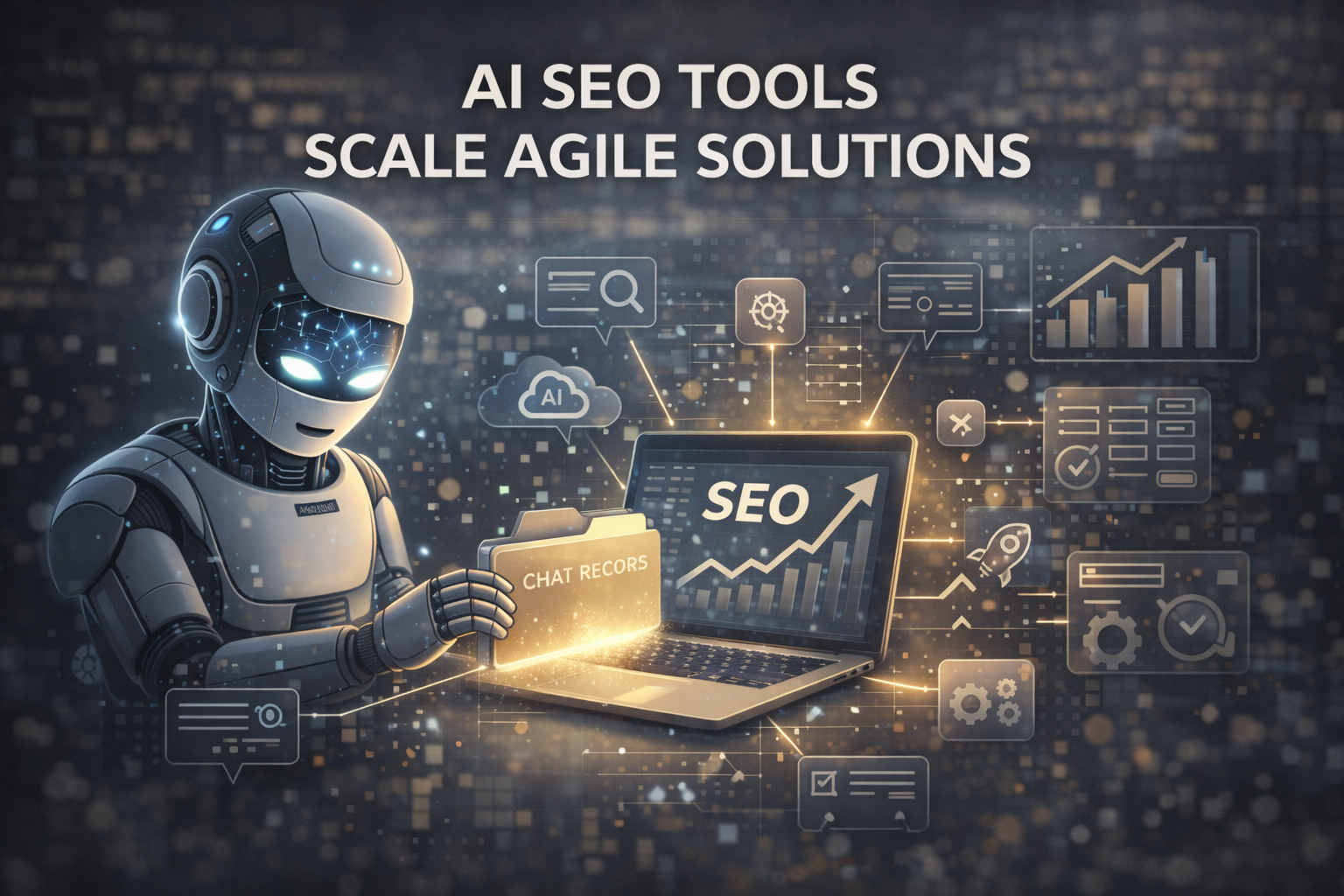
AI SEO for enterprises represents a fundamental shift in how large organizations approach organic growth. It is a powerful solution to the challenges of scale, speed, and complexity that have long plagued enterprise marketing teams. By automating tedious tasks, providing deep analytical insights, and enabling predictive decision-making, AI empowers teams to focus on what truly matters: creating exceptional user experiences and building a dominant brand presence. The path forward is clear. Enterprises that integrate AI into their SEO workflows will gain a significant competitive advantage, adapting to algorithm changes in real-time and capturing market share from slower-moving competitors. The time to start is now. Begin by auditing your current processes, identifying the bottlenecks, and selecting the right AI tools to solve them. The future of enterprise search is intelligent, and it is already here.
Xem thêm:
- AI SEO ROI: How to Measure and Maximize Your Return on Investment
- AI SEO GEO Ranking: The Complete Guide to Winning Generative Engine Optimization
- AI SEO for Automotive: The Complete Guide to Dominating Search in 2025
- AI SEO H3 Optimization: The Complete Guide to Structuring Content for AI Search
- AI SEO Link Prospecting: The Complete Guide to Automating High-Quality Backlink Discovery
Bài viết cùng chủ đề:

AI SEO SEO Automation with Make: The Complete Workflow Guide

AI SEO SEO Automation with Zapier: The Complete Workflow Guide

AI SEO SEO Automation with n8n: The Complete Workflow Guide
AI SEO SEO Automation with Gemini: The Complete Guide to Scaling Organic Growth

AI SEO SEO Automation with Claude: The Complete Guide to Scaling Content in 2025

AI SEO SEO Automation with ChatGPT: The Complete Playbook for 2025

AI SEO & SEO Automation for Affiliate Sites: The 2025 Playbook for Passive Income Growth
AI SEO & SEO Automation for Bloggers: The Complete Guide to Scaling Your Content

AI SEO & SEO Automation for Agencies: The Complete 2025 Playbook

AI SEO and SEO Automation for Ecommerce: The Complete Playbook for 2025

AI SEO & SEO Automation for WordPress: The Complete Playbook for 2025
AI SEO SEO Automation Strategy: The Complete Playbook for 2025

Mastering the AI SEO SEO Automation Process: A Complete Guide to Scaling Organic Growth
AI SEO SEO Automation System: The Complete Guide to Scaling Organic Growth in 2025
AI SEO SEO Automation Platform: The Complete Guide to Scaling Organic Growth in 2025
AI SEO SEO Automation Software: The Complete Guide to Scaling Organic Growth in 2025















