
No products in the cart.
AI SEO Automated Meta Tags: The Complete Guide to Smarter On-Page Optimization
10
Aug
Aug
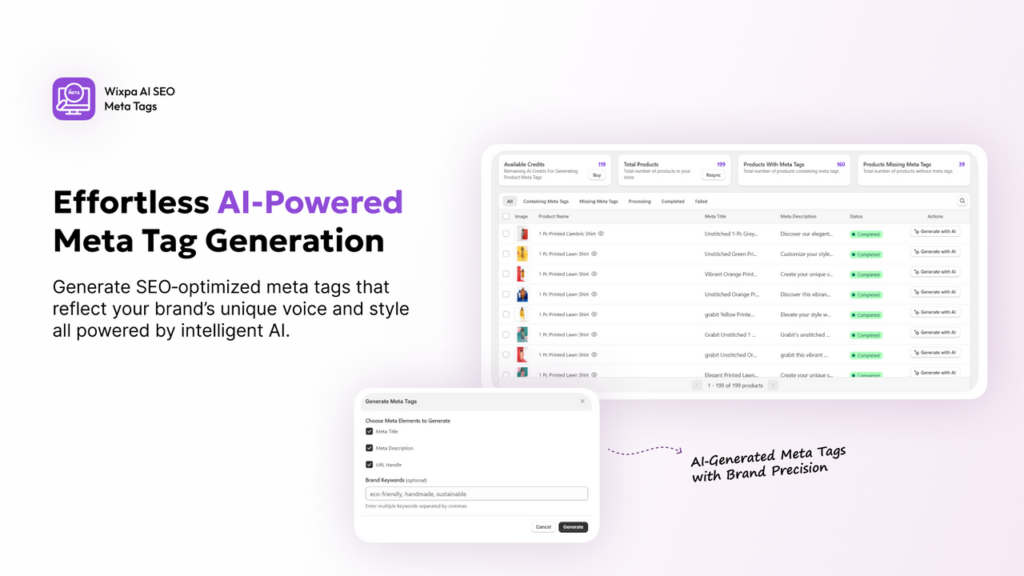
Search engine optimization has entered a new era where artificial intelligence handles the heavy lifting of technical on-page tasks. AI SEO automated meta tags represent one of the most practical applications of machine learning in digital marketing, allowing websites to generate, optimize, and update title tags and meta descriptions at scale. This technology analyzes search intent, competitor data, and user behavior to craft meta tags that improve click-through rates and search visibility. For marketers managing large websites or e-commerce catalogs, automating meta tag creation saves hundreds of hours while delivering data-driven results that consistently outperform manual writing.
What Are AI SEO Automated Meta Tags?

AI SEO automated meta tags refer to the use of artificial intelligence algorithms to generate, rewrite, or optimize HTML meta elements—specifically title tags and meta descriptions—without requiring manual input for every page. These systems leverage natural language processing (NLP) and machine learning models trained on millions of high-ranking pages to understand what makes meta tags effective.
The core function involves analyzing the page content, identifying primary keywords, understanding user search intent, and then generating compelling, keyword-optimized meta tags that align with current search engine ranking factors. Advanced systems also factor in character limits, brand voice, and even emotional triggers that influence click behavior.
How AI Generates Meta Tags
The process begins with content ingestion. The AI crawls the page, extracts the main topic, and identifies semantic relationships between words. It then cross-references this data with search engine results pages (SERPs) to see what competitors are using and what format appears to perform well for similar queries.
Modern AI systems use transformer-based models similar to GPT (Generative Pre-trained Transformer) architectures. These models predict the most effective sequence of words for a title or description based on patterns learned from billions of indexed pages. The output is not random—it is statistically optimized for both search engines and human readers.
Why Automated Meta Tags Matter for SEO Performance
Meta tags remain a critical ranking factor, even with Google’s evolving algorithms. Title tags directly influence search rankings and click-through rates, while meta descriptions, though not direct ranking factors, significantly impact user engagement. Pages with well-crafted meta tags consistently outperform those with missing or poorly written tags.
For large websites, the challenge is scale. A typical e-commerce site might have thousands of product pages, each requiring unique, relevant meta tags. Manual creation is impractical, leading many site owners to duplicate tags or leave them blank—both harmful to SEO. AI automation solves this problem by generating unique, contextually accurate tags for every page in minutes.
Key Benefits of AI-Generated Meta Tags
- Time efficiency: Generate hundreds of meta tags in seconds instead of weeks of manual work
- Consistency: Maintain a uniform brand voice and formatting across all pages
- Data-driven decisions: AI analyzes performance data to refine tag generation continuously
- Scalability: Handle unlimited page counts without additional resources
- Language support: Generate meta tags in multiple languages for international sites
- Real-time updates: Automatically adjust tags when content changes or trends shift
- Include primary keywords near the beginning of title tags for maximum relevance signal
- Write for humans first, search engines second—compelling copy outperforms keyword-heavy tags
- Maintain brand consistency by including your brand name in titles where appropriate
- Use action-oriented language in meta descriptions to encourage clicks
- Differentiate each tag—duplicate tags across pages dilute SEO value
- Match search intent—informational queries need different tag styles than transactional ones
- Test variations using A/B testing to identify what resonates with your audience
Core Components of AI Meta Tag Systems

Understanding how these systems work requires examining their key components. Each element plays a specific role in producing effective meta tags that satisfy both search algorithms and user expectations.
Natural Language Processing Engine
The NLP engine parses page content to understand context, extract key concepts, and identify the primary topic. It recognizes synonyms, related terms, and semantic variations that help the AI craft tags that match search queries even when the exact keyword does not appear verbatim in the content.
Keyword Analysis Module
This component evaluates keyword relevance, search volume, and competition level. It determines which keywords should appear in the title tag versus the meta description, ensuring optimal keyword placement without overstuffing. The module also identifies long-tail keyword opportunities that competitors may have overlooked.
Competitor Analysis Tools
AI systems continuously monitor competitor meta tags across search results. They analyze patterns in top-ranking pages, identifying common structures, length preferences, and persuasive elements that appear to drive higher click-through rates. This competitive intelligence informs the generation algorithm.
Performance Tracking Integration
Advanced systems connect with analytics platforms to track how generated meta tags perform. They monitor click-through rates, impressions, and conversions, then feed this data back into the algorithm. This creates a feedback loop where the AI learns what works for your specific audience and industry.
AI vs. Manual Meta Tag Creation: A Comparison
| Factor | AI Automated | Manual Creation |
|---|---|---|
| Speed | Instant generation for thousands of pages | 5-10 minutes per page |
| Scalability | Unlimited | Limited by team capacity |
| Consistency | High, follows set parameters | Varies by writer skill |
| Creativity | Data-driven, pattern-based | Human intuition and nuance |
| Cost | Software subscription or setup fee | Labor costs per hour |
| Adaptability | Real-time updates based on data | Requires manual review cycles |
| Error Rate | Low, consistent output | Prone to typos and inconsistencies |
Both approaches have merit. Manual creation offers human creativity and brand intuition, while AI provides speed and data-backed decisions. The most effective strategy often combines both—using AI for bulk generation and manual review for high-priority pages.
Practical Implementation: How to Set Up AI Meta Tag Automation
Implementing AI SEO automated meta tags requires a systematic approach. The following steps outline a proven workflow for integrating this technology into your SEO operations.
Step 1: Choose the Right Tool
Several platforms offer AI meta tag generation, including dedicated SEO tools and content marketing suites. Evaluate options based on your website platform, budget, and specific needs. Look for tools that integrate directly with your CMS (Content Management System) for seamless implementation.
Step 2: Define Your Parameters
Set clear guidelines for the AI to follow. This includes character limits (typically 50-60 characters for titles, 150-160 for descriptions), brand name inclusion rules, keyword priorities, and tone preferences. The more specific your parameters, the better the output matches your expectations.
Step 3: Run Initial Generation
Start with a test batch of 50-100 pages to evaluate quality. Review the generated tags for accuracy, relevance, and readability. Make adjustments to your parameters based on this initial review before scaling to your entire site.
Step 4: Integrate with Your CMS
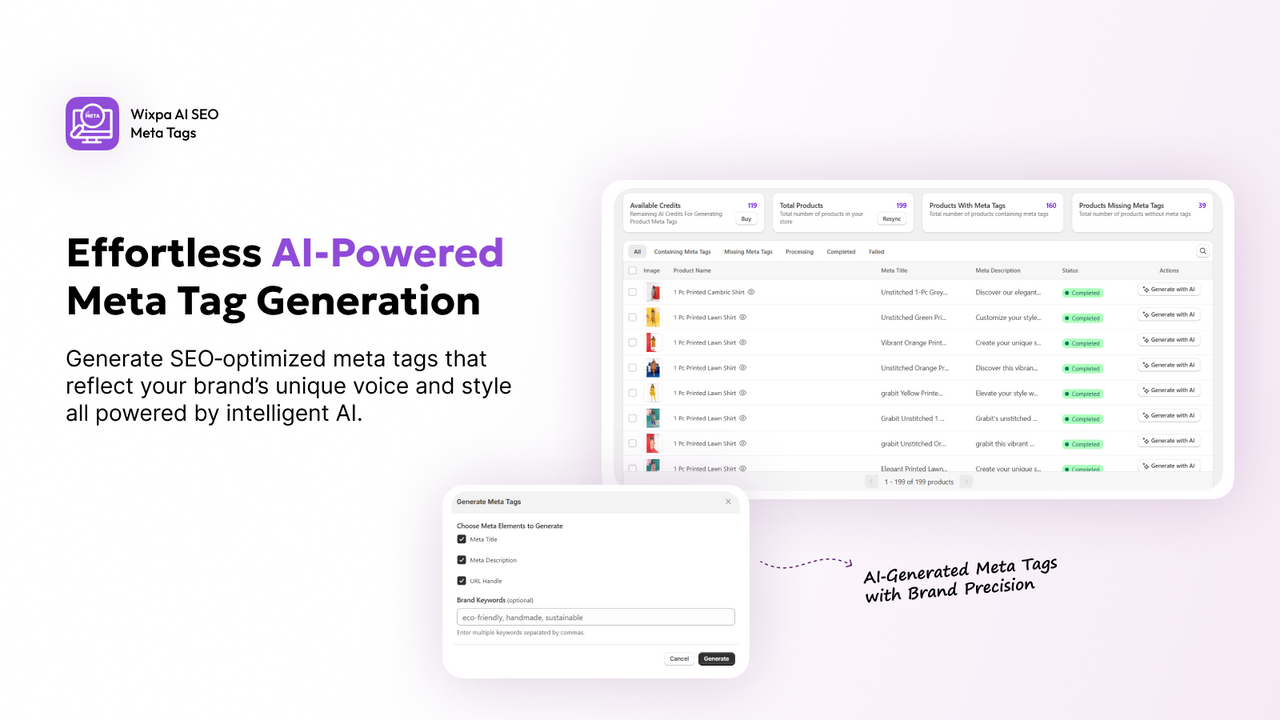
Most AI SEO tools offer plugins or API integrations for popular platforms like WordPress, Shopify, and Magento. Install the integration to enable automatic tag generation for new pages and updates for existing content.
Step 5: Monitor and Refine
Track performance metrics after implementation. Compare click-through rates before and after automation. Use the data to refine your parameters and improve future generation. Regular monitoring ensures the AI continues to produce effective tags as search algorithms evolve.
Common Mistakes When Using AI for Meta Tags
While AI automation offers significant advantages, several pitfalls can undermine effectiveness. Being aware of these mistakes helps you avoid them and maximize results.
Over-Reliance on Automation
AI-generated tags should not replace human oversight entirely. Algorithmic output can miss brand nuances, cultural context, or creative opportunities that a human writer would catch. Always maintain a review process for critical pages.
Ignoring Character Limits
Search engines truncate meta tags that exceed character limits. AI tools typically respect these limits, but custom configurations might produce overly long tags. Verify that your settings enforce proper length constraints.
Keyword Stuffing
Some AI systems generate tags that over-optimize for keywords, resulting in unnatural phrasing that hurts user experience. Review output for readability and ensure keywords appear naturally within the context.
Neglecting Mobile Display
Mobile search results display fewer characters than desktop. Tags that look perfect on desktop may be truncated on mobile devices. Test your generated tags across devices to ensure they display effectively everywhere.
Failing to Update Existing Tags
AI automation works best when applied to both new and existing content. Many users only generate tags for new pages, leaving old pages with outdated or missing meta tags. Run batch updates on existing content to maximize SEO impact.
Best Practices for AI-Generated Meta Tags

Following established best practices ensures your automated meta tags deliver optimal SEO results. These guidelines apply regardless of which AI tool you use.
Important Notes on AI Meta Tag Limitations
AI SEO automated meta tags have limitations that practitioners must acknowledge. Understanding these constraints helps set realistic expectations and prevents disappointment.
AI cannot fully replicate human creativity or emotional intelligence. While algorithms can identify patterns that drive clicks, they may miss the subtle brand voice that distinguishes your content from competitors. Additionally, AI-generated tags may not account for current events or cultural trends that a human writer would naturally incorporate.
Search engines are also becoming more sophisticated at detecting automated content. While AI-generated meta tags are not penalized, low-quality or spammy automated tags can trigger algorithmic filters. Always prioritize quality over quantity, even when using automation.
Frequently Asked Questions
Are AI-generated meta tags considered spam by Google?
No, AI-generated meta tags are not inherently spam. Google evaluates meta tags based on relevance and quality, not how they were created. As long as the tags accurately describe the page content and provide value to users, they will not trigger penalties. The key is ensuring the AI produces unique, relevant tags rather than generic or duplicated content.
How much does AI meta tag automation cost?
Pricing varies widely depending on the tool and scale. Basic AI SEO tools with meta tag features start around $30-50 per month. Enterprise-level solutions with advanced features and API access can cost several hundred dollars monthly. Many platforms offer free trials or limited free tiers, allowing you to test before committing.
Can AI meta tags improve click-through rates?
Yes, AI-generated meta tags can significantly improve click-through rates when configured correctly. AI analyzes patterns from high-performing pages and applies those insights to your tags. Studies show that well-optimized meta tags can increase CTR by 20-30% compared to poorly written or missing tags.
Do AI tools work for non-English websites?
Most modern AI SEO tools support multiple languages. The quality of non-English output depends on the training data available for that language. Major languages like Spanish, German, French, and Chinese have robust support. Less common languages may produce lower-quality results.
How often should I update AI-generated meta tags?
Meta tags should be reviewed and updated whenever your content changes significantly, when search trends shift, or at least quarterly. AI automation makes frequent updates easy, so take advantage of this capability to keep your tags fresh and relevant.
Conclusion
AI SEO automated meta tags represent a significant advancement in on-page optimization, offering unprecedented speed, scalability, and data-driven precision. By leveraging natural language processing and machine learning, these systems generate meta tags that align with search engine requirements while appealing to human readers. The technology eliminates the bottleneck of manual tag creation, enabling websites of any size to maintain optimized meta tags across all pages.
Success with AI meta tag automation requires thoughtful implementation—choosing the right tools, setting clear parameters, and maintaining human oversight. The most effective strategies combine AI efficiency with human creativity, using automation for bulk tasks while reserving manual attention for high-priority pages. As search algorithms continue to evolve, AI-powered meta tag generation will become increasingly sophisticated, making it an essential component of any comprehensive SEO strategy. Start implementing AI automation for your meta tags today to gain a competitive edge in search rankings and user engagement.
Xem thêm:
- AI SEO Article Generator: The Complete Guide to Automated Content That Ranks
- AI SEO Link Prospecting: The Complete Guide to Automating High-Quality Backlink Discovery
- AI SEO Blueprint: The Complete Guide to Ranking in the Age of Machine Learning
- AI SEO AI Citation Tracking: The Complete Guide to Mastering Digital Visibility in 2025
- AI SEO GEO Strategy: The Complete Guide to Generative Engine Optimization in 2025
Bài viết cùng chủ đề:

AI SEO SEO Automation with Make: The Complete Workflow Guide

AI SEO SEO Automation with Zapier: The Complete Workflow Guide

AI SEO SEO Automation with n8n: The Complete Workflow Guide
AI SEO SEO Automation with Gemini: The Complete Guide to Scaling Organic Growth

AI SEO SEO Automation with Claude: The Complete Guide to Scaling Content in 2025

AI SEO SEO Automation with ChatGPT: The Complete Playbook for 2025

AI SEO & SEO Automation for Affiliate Sites: The 2025 Playbook for Passive Income Growth
AI SEO & SEO Automation for Bloggers: The Complete Guide to Scaling Your Content

AI SEO & SEO Automation for Agencies: The Complete 2025 Playbook

AI SEO and SEO Automation for Ecommerce: The Complete Playbook for 2025

AI SEO & SEO Automation for WordPress: The Complete Playbook for 2025
AI SEO SEO Automation Strategy: The Complete Playbook for 2025

Mastering the AI SEO SEO Automation Process: A Complete Guide to Scaling Organic Growth
AI SEO SEO Automation System: The Complete Guide to Scaling Organic Growth in 2025
AI SEO SEO Automation Platform: The Complete Guide to Scaling Organic Growth in 2025
AI SEO SEO Automation Software: The Complete Guide to Scaling Organic Growth in 2025















