
No products in the cart.
AI SEO Blueprint: The Complete Guide to Ranking in the Age of Machine Learning
31
Jul
Jul
The digital marketing landscape has shifted beneath our feet. Traditional SEO relied on keyword stuffing and backlink volume, but the modern search ecosystem is governed by neural networks and natural language processing. This AI SEO Blueprint is your tactical roadmap for navigating this new reality. It moves beyond guesswork, offering a structured approach to optimizing content for both human readers and the algorithms that now decide visibility. This guide breaks down the exact processes, from understanding how AI crawls your site to building an authority framework that withstands algorithm updates.
What is an AI SEO Blueprint?
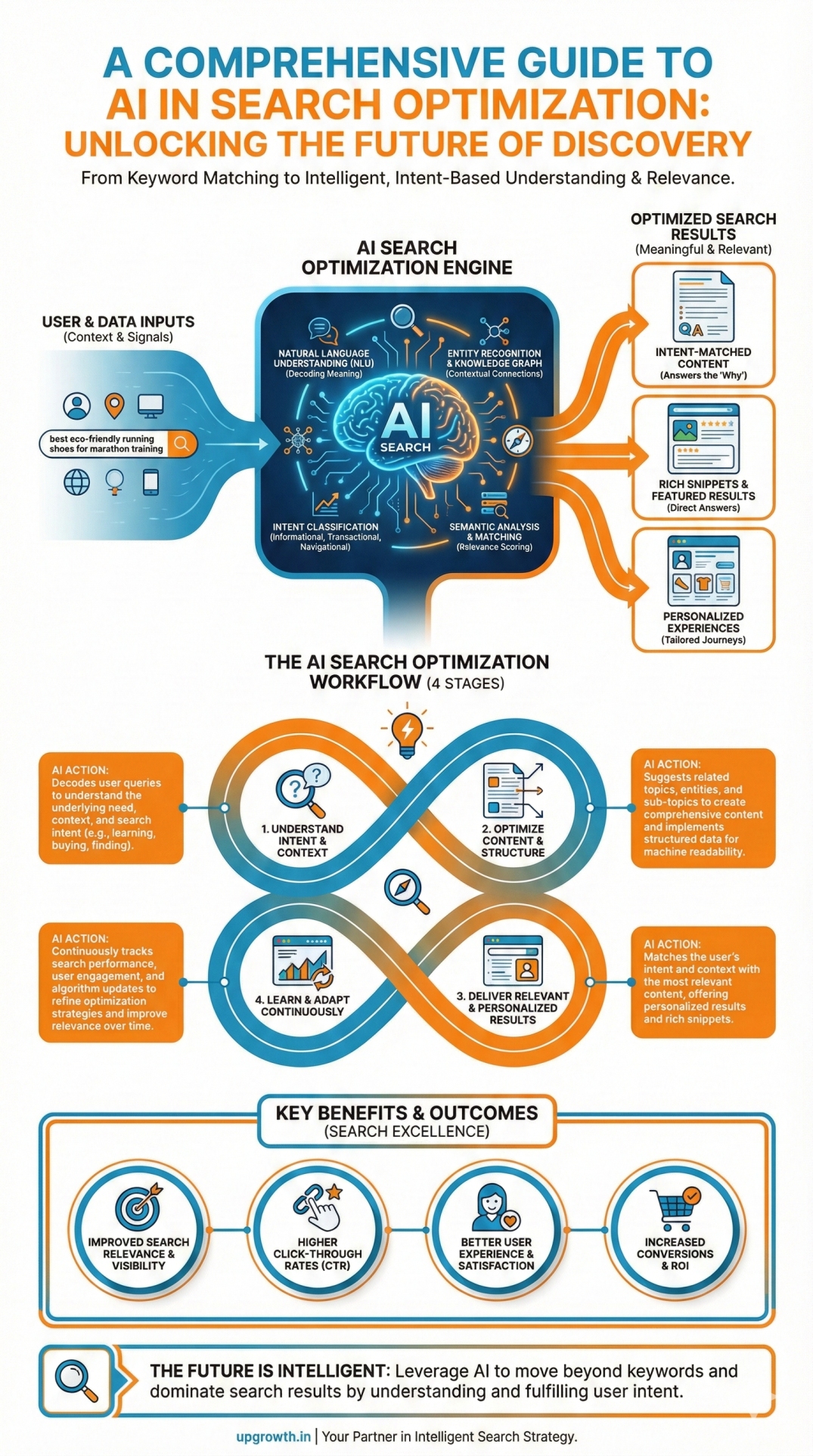
An AI SEO Blueprint is a strategic framework that integrates artificial intelligence tools and machine learning principles into every stage of the search optimization process. It is not simply about using ChatGPT to write articles. Instead, it is a systematic method for aligning your content strategy with the way AI models like Google’s RankBrain, BERT, and MUM process and rank information. This blueprint covers technical audits, semantic keyword research, content structuring, and performance analysis, all powered by data-driven insights that traditional methods often miss.
The core premise is that search engines no longer just match keywords; they understand concepts, user intent, and contextual relevance. A successful blueprint leverages AI to decode these complex signals. It helps you identify topical gaps, predict content performance, and automate repetitive tasks like meta tag generation and internal linking suggestions. The result is a more efficient, scalable, and resilient SEO strategy that focuses on entity optimization and topical authority rather than just individual page rankings.
Why Traditional SEO Fails Without an AI-Driven Approach
Traditional SEO tactics are becoming less effective because they were designed for a simpler web. The old model of targeting exact-match keywords and building hundreds of low-quality backlinks is now a liability. Search engines have become sophisticated enough to detect and penalize these manipulative patterns. Moreover, the rise of generative AI in search results (like Google’s AI Overviews) means that users often get answers directly on the SERP, reducing the click-through rate for traditional organic listings.
Without an AI SEO Blueprint, you are essentially flying blind. You might rank for a keyword, but if the content does not satisfy the underlying user intent, the engagement metrics will suffer, leading to a drop in rankings. AI helps you analyze search intent at scale, categorizing queries into informational, navigational, transactional, or commercial investigation. This allows you to tailor content specifically for what the user wants to accomplish, which is the primary ranking factor in the current algorithm landscape.
Core Components of the AI SEO Blueprint

Implementing this blueprint requires a multi-layered approach. It is not a single tool or a one-time fix; it is a continuous cycle of analysis, creation, and optimization. Below are the critical components that form the foundation of any successful AI-driven SEO strategy.
1. AI-Powered Keyword and Topic Clustering
Gone are the days of targeting a single keyword per page. The blueprint uses AI to build topic clusters. This involves identifying a pillar page and creating multiple supporting articles that cover related subtopics. AI tools can analyze search engine result pages (SERPs) to identify the entities and subtopics that Google associates with your main topic. This helps you create a web of interlinked content that demonstrates topical authority to search engines.
For example, if your main topic is “project management software,” AI clustering will reveal related keywords like “agile methodology,” “resource allocation,” “Gantt charts,” and “team collaboration tools.” Instead of creating one massive page, you create a pillar page on the main topic and link out to specific articles on each subtopic. This structure helps search engines understand the depth of your knowledge, which is a strong E-E-A-T signal.
2. Semantic Search and Entity Optimization
Semantic search is about understanding the searcher’s intent and the contextual meaning of terms. An AI SEO Blueprint focuses on entities—people, places, things, and concepts—rather than just strings of text. You need to clearly define the entities in your content and how they relate to each other. Using structured data (Schema.org markup) is crucial here. It helps search engines parse your content and display rich snippets, such as FAQs, reviews, and product information.
To optimize for entities, you must ensure your content answers the “who, what, when, where, and why” related to your topic. AI tools can help you generate a list of related entities and questions that your content should address. This moves your optimization from a keyword-centric view to a knowledge-graph-centric view, which is how modern search engines store and retrieve information.
3. Predictive Analytics for Content Gap Analysis
One of the most powerful applications of AI in SEO is predictive analysis. By feeding historical data on your top-performing pages into a machine learning model, you can predict which new content topics are likely to succeed. This goes beyond simple keyword volume. It analyzes factors like content length, readability scores, number of images, and internal link structure to forecast performance.
This component of the blueprint helps you prioritize your content calendar. Instead of guessing which topics to write about, you use data to identify gaps in your current coverage that competitors are exploiting. AI can also predict the potential traffic and revenue for a specific piece of content, allowing you to focus your resources on high-impact projects that align with your business goals.
Step-by-Step Guide to Implementing Your AI SEO Blueprint
Knowing the components is one thing, but execution is where most strategies fail. This practical guide outlines the specific steps you need to take to put this blueprint into action. It is designed to be iterative, meaning you will repeat these steps as you gather more data and refine your approach.
Step 1: Conduct an AI-Driven Technical Audit
Before creating new content, you must fix the foundation. Use AI-powered crawlers to simulate how Googlebot interacts with your site. These tools can identify JavaScript rendering issues, page speed bottlenecks, and crawl budget waste. The audit should focus on Core Web Vitals, mobile-friendliness, and indexation issues. AI can prioritize these issues based on their potential impact on rankings, saving you hours of manual analysis.
Pay special attention to your site architecture. A flat architecture, where every page is reachable within a few clicks from the homepage, is ideal. AI tools can suggest a logical hierarchy for your content silos, ensuring that link equity flows properly from your pillar pages to your cluster posts. This technical foundation is non-negotiable for AI algorithms to effectively crawl and understand your site.
Step 2: Build a Semantic Knowledge Graph
Create a visual map of your niche. List all the core entities and their relationships. For instance, if you are in the fitness niche, entities might include “muscle hypertrophy,” “caloric deficit,” “macronutrients,” and “recovery.” Your content should explicitly define these terms and link them contextually. Use AI to generate a list of “People Also Ask” questions and ensure your content provides clear, concise answers to these queries.
This step involves moving away from writing for keywords and writing for topics. Each piece of content should cover a single entity or a closely related group of entities in depth. This depth signals expertise to Google, which is a critical component of the E-E-A-T framework. The goal is to become the definitive resource for that specific entity.
Step 3: Generate Content Briefs with AI
Do not let AI write your final draft, but use it to create comprehensive content briefs. Input your target keyword and entities into an AI tool to generate an outline. The outline should include suggested H2s and H3s, questions to answer, and data points to include. This ensures your writers cover all the necessary subtopics without missing critical information that competitors might have.
These AI-generated briefs should also include semantic keyword variations. For example, if your target keyword is “best running shoes,” the brief should include terms like “cushioning,” “heel drop,” “pronation support,” and “trail running.” This helps the writer naturally incorporate these terms, improving the content’s relevance without resorting to unnatural keyword stuffing.
Step 4: Optimize for Natural Language Processing (NLP)
Google’s NLP algorithms analyze the syntax and semantics of your content. Your writing needs to be clear, grammatically correct, and logically structured. Use short sentences and paragraphs. Break up complex ideas into digestible chunks. AI tools can score your content for readability and NLP friendliness, highlighting sentences that are too long or ambiguous.
Focus on writing in a natural, conversational tone. Imagine you are explaining the topic to a colleague. This style aligns with how voice search queries are phrased and how users expect to consume information. The blueprint emphasizes clarity over complexity. If a human reader struggles to understand your content, the A
Step 5: Automate Internal Linking
Internal links are the highways of your website, distributing authority and guiding users. AI can automate the process of finding relevant internal link opportunities. Instead of manually checking every article, AI tools scan your content and suggest anchor text that is contextually relevant. This not only saves time but also ensures that your link profile is optimized for the target keywords of the destination pages.
This step is crucial for the topic cluster model. Every cluster post should link up to the pillar page, and the pillar page should link down to all cluster posts. AI ensures that this linking structure is maintained as you publish new content, preventing orphan pages and maximizing the crawlability of your site.
Benefits and Limitations of the AI SEO Blueprint
Adopting this framework offers significant advantages, but it is not without its challenges. Understanding both sides of the coin is essential for setting realistic expectations and avoiding common pitfalls.
| Benefits | Limitations |
|---|---|
| Scalability: AI can analyze thousands of keywords and pages in minutes, allowing for rapid strategy expansion. | Data Dependency: The accuracy of AI insights depends on the quality of the input data. Bad data leads to bad predictions. |
| Efficiency: Automates repetitive tasks like meta tag generation, reporting, and rank tracking. | Lack of Human Nuance: AI may miss cultural trends or emotional triggers that a human expert would catch. |
| Predictive Insights: Helps forecast content performance and identify emerging trends before they become mainstream. | Implementation Cost: Advanced AI SEO tools often come with a high subscription price, which may not be feasible for small businesses. |
| Improved Accuracy: Reduces human error in technical audits and keyword research. | Over-Reliance Risk: Blindly following AI suggestions can lead to generic, unoriginal content that lacks a unique voice. |
The key is to use AI as an assistant, not a replacement for human judgment. The blueprint works best when you combine the analytical power of AI with the creative and strategic thinking of experienced SEO professionals. This hybrid approach ensures that your content is both data-driven and genuinely engaging.
Common Mistakes to Avoid in Your AI SEO Blueprint
Many businesses fail to see results from AI SEO because they make critical errors during implementation. Being aware of these mistakes can save you months of wasted effort and resources.
Mistake 1: Publishing Unedited AI Content
The most common mistake is using AI to generate entire articles and publishing them without human review. This results in content that is often factually incorrect, lacks depth, and reads as robotic. Search engines are getting better at detecting AI-generated spam, and Google has explicitly stated that it considers this a violation of its spam policies. Always use AI for drafting and research, but ensure a human expert edits, fact-checks, and adds unique insights before publishing.
Mistake 2: Ignoring Search Intent
Focusing solely on keywords without understanding why the user is searching is a fatal flaw. If you write a product review page for a keyword that has transactional intent, you will fail to convert. The blueprint requires you to classify intent for every keyword. Use AI to analyze the top-ranking pages for your target keyword to see what format they use (listicle, guide, video, product page) and match that format.
Mistake 3: Neglecting Entity Optimization
Simply using the right keywords is not enough. You must clearly define the entities within your content. If you write about “Apple,” the AI needs to know if you mean the fruit or the technology company. Use context clues and structured data to disambiguate. Failing to do this confuses search engines and prevents you from ranking for the specific niche you are targeting.
Mistake 4: Focusing on Quantity Over Quality
AI makes it easy to produce hundreds of low-value pages. This dilutes your site’s authority and wastes crawl budget. The blueprint emphasizes creating fewer, more comprehensive, and authoritative pieces. A single 3,000-word definitive guide is worth more than ten 300-word blog posts that skim the surface. Focus on creating content that is the best resource on the web for that specific topic.
Important Notes on E-E-A-T and AI
Google’s Quality Rater Guidelines heavily emphasize Experience, Expertise, Authoritativeness, and Trustworthiness (E-E-A-T). AI can help you optimize for these factors, but it cannot create them from scratch. You need to demonstrate first-hand experience. Include original data, case studies, and personal anecdotes. Show the author’s credentials and link to their professional profiles.
Trustworthiness is built through transparency. Clearly cite your sources, link to reputable websites, and avoid making unsubstantiated claims. AI can help you fact-check and find authoritative sources, but the final responsibility for accuracy lies with you. The blueprint should include a strict editorial process that verifies all claims before publication.
Furthermore, keep in mind that AI models are trained on existing data. They do not know what is happening in your industry right now. You must supplement AI insights with real-world knowledge and current events. This is where your experience as a professional becomes invaluable. The AI provides the map, but you are the guide who knows the terrain.
Frequently Asked Questions
What is the difference between AI SEO and traditional SEO?
Traditional SEO focuses on keyword matching and link building, while AI SEO focuses on understanding user intent and semantic relevance. AI SEO uses machine learning to analyze search patterns, predict content performance, and automate technical optimizations. It is a more holistic approach that aligns with how modern search engines like Google process information using neural networks.
Will AI replace SEO professionals?
No, A AI automates repetitive tasks like data analysis and reporting, allowing professionals to focus on strategy, creative content, and user experience. The human element is still required for nuanced judgment, ethical considerations, and building genuine relationships with audiences. The AI SEO Blueprint is a tool for professionals, not a replacement for them.
How long does it take to see results with an AI SEO Blueprint?
Results vary depending on the competitiveness of your niche and the current state of your website. Generally, you can expect to see initial improvements in technical health and crawlability within a few weeks. However, significant ranking improvements for competitive keywords typically take 3 to 6 months. The predictive analytics component helps you identify quick wins, but building topical authority is a long-term investment.
Is AI-generated content penalized by Google?
Google does not penalize content simply for being generated by AI. However, it penalizes content that is created primarily to manipulate search rankings, regardless of how it is produced. If AI content is low-quality, spammy, or lacks originality, it will be penalized. The AI SEO Blueprint emphasizes using AI to assist human creators, ensuring the final output is high-quality, accurate, and valuable to users.
What are the best AI tools for SEO?
The best tools depend on your specific needs. For keyword research and content optimization, tools like Surfer SEO, Clearscope, and MarketMuse are popular. For technical audits, tools like Screaming Frog and Sitebulb are essential. For content generation and ideation, ChatGPT and Jasper are useful. The key is to integrate these tools into a cohesive workflow, which is the core of the AI SEO Blueprint.
Conclusion
The AI SEO Blueprint is not a futuristic concept; it is a present-day necessity. The algorithms that determine your search visibility are powered by artificial intelligence, and your optimization strategy must evolve to match. This guide has provided the framework, from understanding semantic search to executing a technical audit and building a content ecosystem that demonstrates authority. The shift from keyword-centric to entity-centric optimization is the single most important change you can make to future-proof your digital presence.
Success lies in the integration of human creativity and machine efficiency. Use AI to handle the heavy lifting of data analysis and pattern recognition, but rely on your expertise to craft compelling narratives and build trust with your audience. By following this blueprint, you are not just chasing rankings; you are building a sustainable, resilient online asset that thrives regardless of algorithm updates. The future of search is intelligent, and your SEO strategy must be too.
Xem thêm:
- The Best AI SEO Tools for 2025: A Comprehensive Guide to Smarter Content & Rankings
- AI SEO Tools Comparison: Finding the Platform That Actually Moves the Needle
- AI Keyword Difficulty: The Smarter Way to Gauge Search Competition in the Age of Machine Learning
- The Ultimate AI SEO Checklist for WordPress: Boost Your Rankings with Smart Automation
- The Ultimate AI SEO Workflow for Freelancers: Boost Efficiency and Rankings
Bài viết cùng chủ đề:

AI SEO SEO Automation with Make: The Complete Workflow Guide

AI SEO SEO Automation with Zapier: The Complete Workflow Guide

AI SEO SEO Automation with n8n: The Complete Workflow Guide
AI SEO SEO Automation with Gemini: The Complete Guide to Scaling Organic Growth

AI SEO SEO Automation with Claude: The Complete Guide to Scaling Content in 2025

AI SEO SEO Automation with ChatGPT: The Complete Playbook for 2025

AI SEO & SEO Automation for Affiliate Sites: The 2025 Playbook for Passive Income Growth
AI SEO & SEO Automation for Bloggers: The Complete Guide to Scaling Your Content

AI SEO & SEO Automation for Agencies: The Complete 2025 Playbook

AI SEO and SEO Automation for Ecommerce: The Complete Playbook for 2025

AI SEO & SEO Automation for WordPress: The Complete Playbook for 2025
AI SEO SEO Automation Strategy: The Complete Playbook for 2025

Mastering the AI SEO SEO Automation Process: A Complete Guide to Scaling Organic Growth
AI SEO SEO Automation System: The Complete Guide to Scaling Organic Growth in 2025
AI SEO SEO Automation Platform: The Complete Guide to Scaling Organic Growth in 2025
AI SEO SEO Automation Software: The Complete Guide to Scaling Organic Growth in 2025















