
No products in the cart.
AI SEO Backlink Opportunities: The Complete Guide to Future-Proof Link Building
10
Aug
Aug
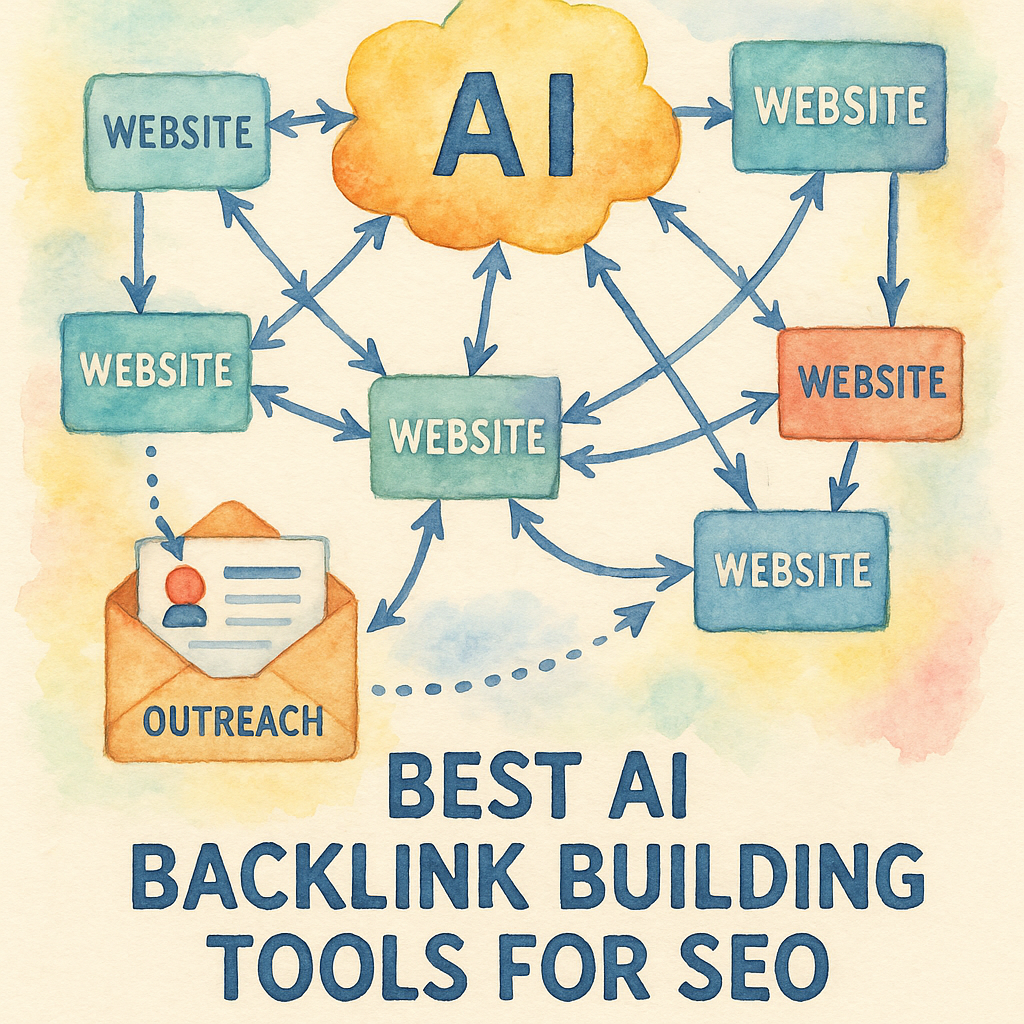
The landscape of search engine optimization is shifting beneath our feet. While traditional link building relied on manual outreach and guesswork, the emergence of artificial intelligence has created a new frontier known as AI SEO backlink opportunities. These opportunities are not about using AI to spam links; they are about leveraging machine learning to identify, acquire, and manage high-quality backlinks that drive authority and rankings. This guide explores how AI transforms link building, offering a practical roadmap for marketers who want to stay ahead of the curve.
Understanding AI SEO Backlink Opportunities
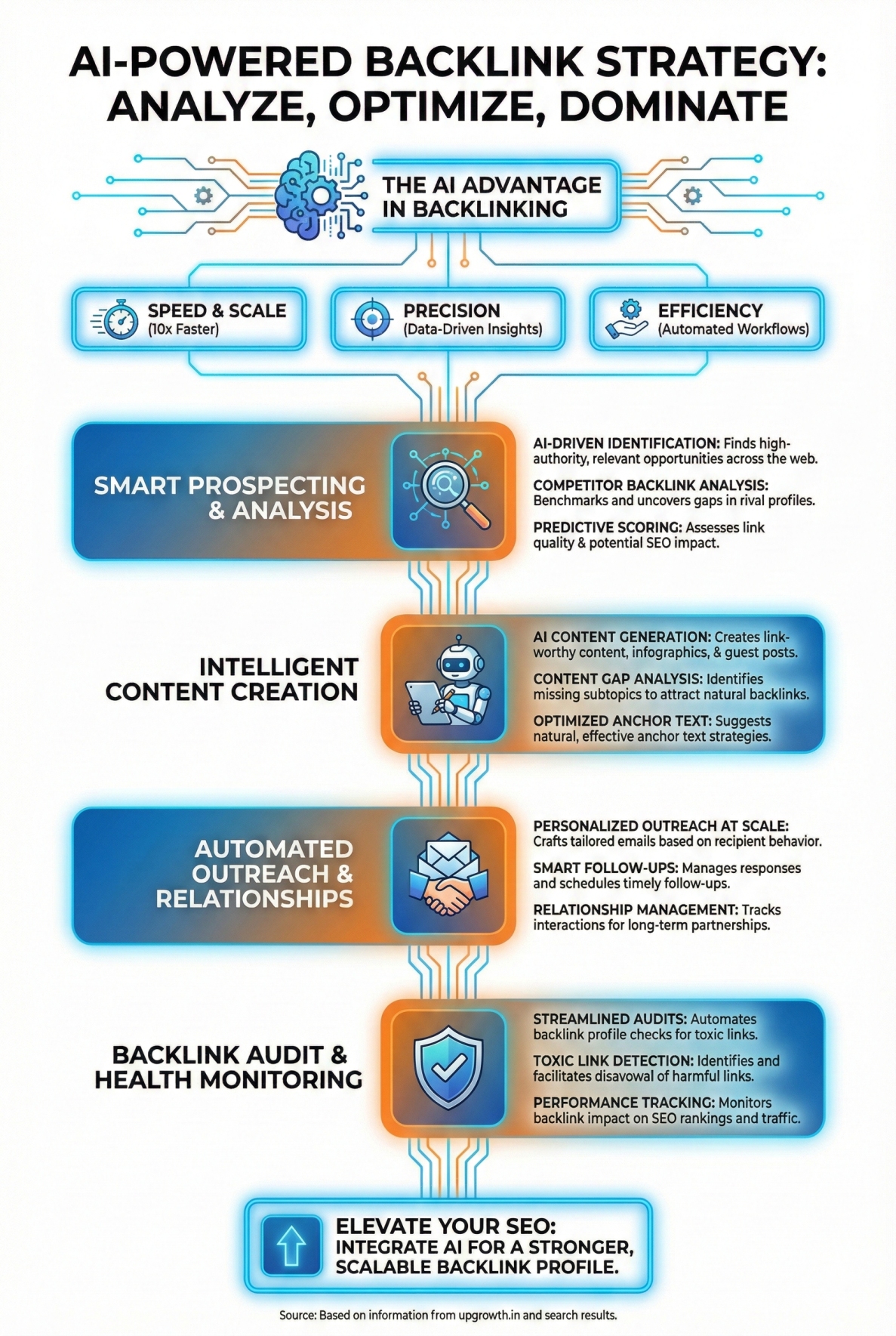
AI SEO backlink opportunities refer to the strategic use of artificial intelligence tools to discover, evaluate, and secure backlinks that would be difficult or impossible to find through manual methods. The core value lies in data processing. AI algorithms can analyze millions of web pages, link profiles, and content gaps in seconds, providing insights that take human teams weeks to uncover.
This approach shifts link building from a reactive, outreach-heavy task to a proactive, data-driven strategy. Instead of guessing which websites might link to you, AI identifies patterns in your competitors’ link profiles, predicts the likelihood of a link from a specific domain, and even drafts personalized outreach emails that resonate with editors.
The Shift from Manual to Machine-Driven Link Building
Traditional link building is labor-intensive. It involves searching for prospects, checking domain authority, writing emails, and following up. AI automates the heavy lifting. Tools like Ahrefs, SEMrush, and specialized AI platforms now offer features that score prospects based on relevance, traffic, and spam score. This allows SEO professionals to focus on relationship building rather than data entry.
Moreover, AI can analyze the context of a page. It understands whether a link would be placed in a resource roundup, a guest post, or a digital PR piece. This contextual understanding is crucial because search engines value links that appear naturally within relevant content.
How AI Identifies High-Quality Link Prospects
The most significant advantage of AI in link building is prospect discovery. AI algorithms crawl the web continuously, indexing new content and tracking link velocity. They can identify websites that are gaining authority quickly, which are often better targets than stagnant, high-authority domains.
AI also filters out toxic links. It checks for signs of link schemes, such as excessive reciprocal linking or links from spammy directories. This protects your site from penalties and ensures that every link you pursue adds value to your profile.
Analyzing Competitor Link Profiles with AI
One of the most effective ways to find AI SEO backlink opportunities is to analyze your competitors. AI tools can reverse-engineer the link building strategies of your top-ranking competitors. You can see exactly where their backlinks come from, the anchor text they use, and the type of content that earns links.
For example, if a competitor has a strong link from a major industry publication, AI can help you identify the author, the publication’s guidelines, and even suggest a unique angle for your pitch. This level of insight turns competitor analysis into a blueprint for your own success.
Content Creation and AI: The Linkable Asset Generator
Backlinks are earned, not given. To earn them, you need content that is worth linking to. AI can assist in creating these linkable assets. Generative AI tools can produce data-driven reports, industry statistics, and comprehensive guides that serve as magnets for backlinks.
The key is to use AI for research and drafting, then apply human expertise to refine the content. A well-researched original study with unique data is the most effective linkable asset. AI can help you analyze large datasets to find trends and insights that journalists and bloggers will want to cite.
Using AI to Predict Content Performance
Before you invest time in creating content, AI can predict its potential to earn links. By analyzing search volume, social signals, and existing content gaps, AI models can estimate the likelihood of a piece going viral or attracting editorial attention. This allows you to prioritize topics that have the highest chance of generating organic backlinks.
Automated Outreach: Personalization at Scale
Outreach is often the bottleneck in link building. AI solves this by automating the personalization process. Natural Language Processing (NLP) algorithms can analyze a prospect’s website, recent articles, and social media activity to generate highly personalized email templates.
These templates are not generic. They reference specific articles, mention the prospect’s recent achievements, and explain why your content is relevant to their audience. This level of personalization increases response rates significantly, turning cold outreach into warm conversations.
The Role of AI in Digital PR
Digital PR is a subset of link building that focuses on earning links from news sites and blogs. AI tools can monitor journalist requests on platforms like HARO (Help a Reporter Out) and match them with your expertise. This automation ensures you never miss a relevant query, giving you a competitive edge in securing high-authority news links.
Benefits of AI-Driven Link Building
The benefits of integrating AI into your link building strategy extend beyond time savings. Here are the key advantages:
- Scalability: AI can process thousands of prospects simultaneously, allowing you to scale your efforts without increasing headcount.
- Accuracy: AI reduces human error in prospect evaluation, ensuring you only target high-quality, relevant domains.
- Speed: Tasks that take days manually, such as data analysis and email drafting, are completed in minutes.
- Predictive Insights: AI can forecast the impact of a link on your rankings, helping you prioritize high-value opportunities.
- Risk Mitigation: AI flags toxic links and disavow opportunities, protecting your site from algorithmic penalties.
- Lack of Human Judgment: AI can identify patterns but cannot replicate the nuanced judgment of an experienced link builder who understands brand voice and editorial relationships.
- Data Dependency: AI models are only as good as the data they are trained on. Outdated or biased data can lead to poor recommendations.
- Over-Automation Risks: Relying too heavily on automation can lead to generic outreach that feels robotic, damaging your brand reputation.
- Cost: Advanced AI tools often come with a high subscription price, which may not be feasible for small businesses.
- Ignoring Relevance: AI might suggest high-authority sites that are irrelevant to your niche. A link from an irrelevant site is less valuable and can look unnatural.
- Over-Reliance on Automation: Sending thousands of automated emails without human review can lead to spam complaints and a damaged sender reputation.
- Neglecting Content Quality: AI can help create content, but if the content is thin or duplicate, it will not earn links. Always prioritize quality.
- Focusing Only on Metrics: Chasing high Domain Rating (DR) scores can lead you to ignore contextual relevance. A link from a smaller, niche blog can be more valuable than a link from a large, generic site.
- Ignoring the Human Element: AI can draft emails, but it cannot build relationships. Follow up with prospects personally, engage with them on social media, and nurture connections over time.
Limitations and Challenges of AI in Link Building
Despite the advantages, AI is not a silver bullet. There are limitations to consider:
AI SEO Backlink Opportunities vs. Traditional Link Building
To understand the value of AI, it helps to compare it directly with traditional methods. The table below highlights the key differences:
| Aspect | Traditional Link Building | AI-Driven Link Building |
|---|---|---|
| Prospect Discovery | Manual search, directories, competitor backlink checks | Automated crawling, predictive scoring, real-time alerts |
| Outreach Personalization | Manual research per prospect, time-consuming | NLP-generated personalized emails at scale |
| Data Analysis | Spreadsheets, manual filtering | Machine learning models, trend prediction |
| Scalability | Limited by team size and hours | Unlimited, processes thousands of prospects |
| Risk Management | Manual review of link quality | Automated toxic link detection and disavowal |
While traditional methods still have a place, especially for building genuine relationships, AI provides a significant competitive advantage in speed and efficiency.
Practical Guide: How to Leverage AI for Backlinks
Implementing AI into your link building strategy requires a structured approach. Identify which links are driving value and which are dragging you down. This baseline helps you understand where to focus your efforts.
Step 2: Define Your Link Building Goals
Set clear objectives. Are you looking to increase domain authority, drive referral traffic, or rank for specific keywords? Your goals will determine the type of links you pursue and the AI tools you use.
Step 3: Use AI for Prospect Discovery
Input your competitors’ URLs into an AI tool. Analyze the backlink profiles to identify websites that link to multiple competitors but not to you. These are your prime prospects. Filter them by domain authority, traffic, and relevance.
Step 4: Create Data-Driven Linkable Assets
Use AI to analyze industry data and create original research, infographics, or comprehensive guides. Ensure the content is unique and provides value that cannot be found elsewhere. This is the foundation of your link earning strategy.
Step 5: Automate Personalized Outreach
Use AI outreach tools to generate personalized emails. Include specific details about the prospect’s site and explain why your content is a valuable resource for their readers. Track open rates and responses to refine your approach.
Step 6: Monitor and Adjust
AI is not a set-and-forget solution. Continuously monitor your link acquisition rates and the quality of new links. Use AI analytics to adjust your strategy, doubling down on what works and eliminating what doesn’t.
Common Mistakes to Avoid with AI Link Building
Many marketers make errors when first integrating AI into their link building. Being aware of these pitfalls can save you time and protect your rankings:
Important Notes on AI and Search Engine Guidelines
Google’s guidelines are clear about link schemes. Using AI to automate the creation of low-quality, spammy links violates these guidelines and can result in a manual action or algorithmic penalty. The goal of AI SEO backlink opportunities is to enhance your ability to earn legitimate, editorial links, not to game the system.
Always ensure that your AI-generated content is reviewed by a human expert before publication. Fact-checking and adding personal experience are essential to maintain E-E-A-T (Experience, Expertise, Authoritativeness, Trustworthiness). Search engines are increasingly sophisticated at detecting purely AI-generated content that lacks genuine insight.
Frequently Asked Questions
What are AI SEO backlink opportunities?
AI SEO backlink opportunities are the chances to acquire high-quality backlinks using artificial intelligence tools. These tools help identify prospects, analyze competitor links, create linkable content, and automate personalized outreach, making the link building process more efficient and effective.
Can AI replace human link builders?
No, AI cannot fully replace human link builders. While AI excels at data analysis, pattern recognition, and automation, it lacks the emotional intelligence and relationship-building skills that are crucial for securing high-quality editorial links. The best results come from a collaboration between AI and human expertise.
Is AI link building safe for SEO?
Yes, AI link building is safe when done correctly. The risk comes from using AI to automate spammy practices. When used to identify relevant prospects, create valuable content, and personalize outreach, AI is a safe and powerful tool that aligns with search engine guidelines.
How much does AI link building software cost?
The cost varies widely. Basic AI-powered SEO tools start around $100 per month, while comprehensive enterprise-level platforms can cost over $1,000 per month. Many tools offer free trials, allowing you to test their features before committing.
What is the best AI tool for backlink analysis?
Several tools excel in this area. Ahrefs and SEMrush are industry standards with robust AI features. Newer tools like Cognitech and Link Whisper offer specialized AI functions for link building. The best tool depends on your specific needs and budget.
How long does it take to see results from AI link building?
Results vary based on your niche, content quality, and outreach effectiveness. Generally, you can expect to see initial results within 4-6 weeks. Significant improvements in domain authority and rankings typically take 3-6 months of consistent effort.
Conclusion
AI SEO backlink opportunities represent a paradigm shift in how we approach link building. By leveraging machine learning for prospect discovery, content creation, and outreach, marketers can achieve scale and precision that was previously impossible. However, the human element remains irreplaceable. The most successful strategies will combine the analytical power of AI with the creativity and relationship-building skills of experienced SEO professionals. As search engines evolve, those who adapt and integrate these intelligent tools will gain a significant competitive edge in the quest for authority and visibility. The future of link building is not about replacing humans with machines; it is about empowering humans with intelligent insights to build a stronger, more resilient web presence.
Xem thêm:
- AI SEO Content Audits: The Complete Guide to Automated Content Optimization
- AI SEO for Beginners: A Practical Guide to Boosting Your Rankings with Artificial Intelligence
- AI SEO Product Descriptions: The Complete Guide to Higher Rankings and More Sales
- AI SEO GEO Checklist: The Complete Guide to Generative Engine Optimization
- Mastering AI SEO Keyword Selection: The Complete Guide to Data-Driven Rankings
Bài viết cùng chủ đề:

AI SEO SEO Automation with Make: The Complete Workflow Guide

AI SEO SEO Automation with Zapier: The Complete Workflow Guide

AI SEO SEO Automation with n8n: The Complete Workflow Guide
AI SEO SEO Automation with Gemini: The Complete Guide to Scaling Organic Growth

AI SEO SEO Automation with Claude: The Complete Guide to Scaling Content in 2025

AI SEO SEO Automation with ChatGPT: The Complete Playbook for 2025

AI SEO & SEO Automation for Affiliate Sites: The 2025 Playbook for Passive Income Growth
AI SEO & SEO Automation for Bloggers: The Complete Guide to Scaling Your Content

AI SEO & SEO Automation for Agencies: The Complete 2025 Playbook

AI SEO and SEO Automation for Ecommerce: The Complete Playbook for 2025

AI SEO & SEO Automation for WordPress: The Complete Playbook for 2025
AI SEO SEO Automation Strategy: The Complete Playbook for 2025

Mastering the AI SEO SEO Automation Process: A Complete Guide to Scaling Organic Growth
AI SEO SEO Automation System: The Complete Guide to Scaling Organic Growth in 2025
AI SEO SEO Automation Platform: The Complete Guide to Scaling Organic Growth in 2025
AI SEO SEO Automation Software: The Complete Guide to Scaling Organic Growth in 2025















