
No products in the cart.
AI SEO Product Descriptions: The Complete Guide to Higher Rankings and More Sales
10
Aug
Aug
In the modern e-commerce landscape, the difference between a product page that converts and one that collects digital dust often comes down to the quality of its copy. AI SEO product descriptions have emerged as the most powerful tool for online retailers looking to scale their content operations without sacrificing quality. This comprehensive guide explores how artificial intelligence is transforming product copywriting, the strategies that work, and the pitfalls to avoid when implementing this technology in your e-commerce workflow.
What Are AI SEO Product Descriptions?
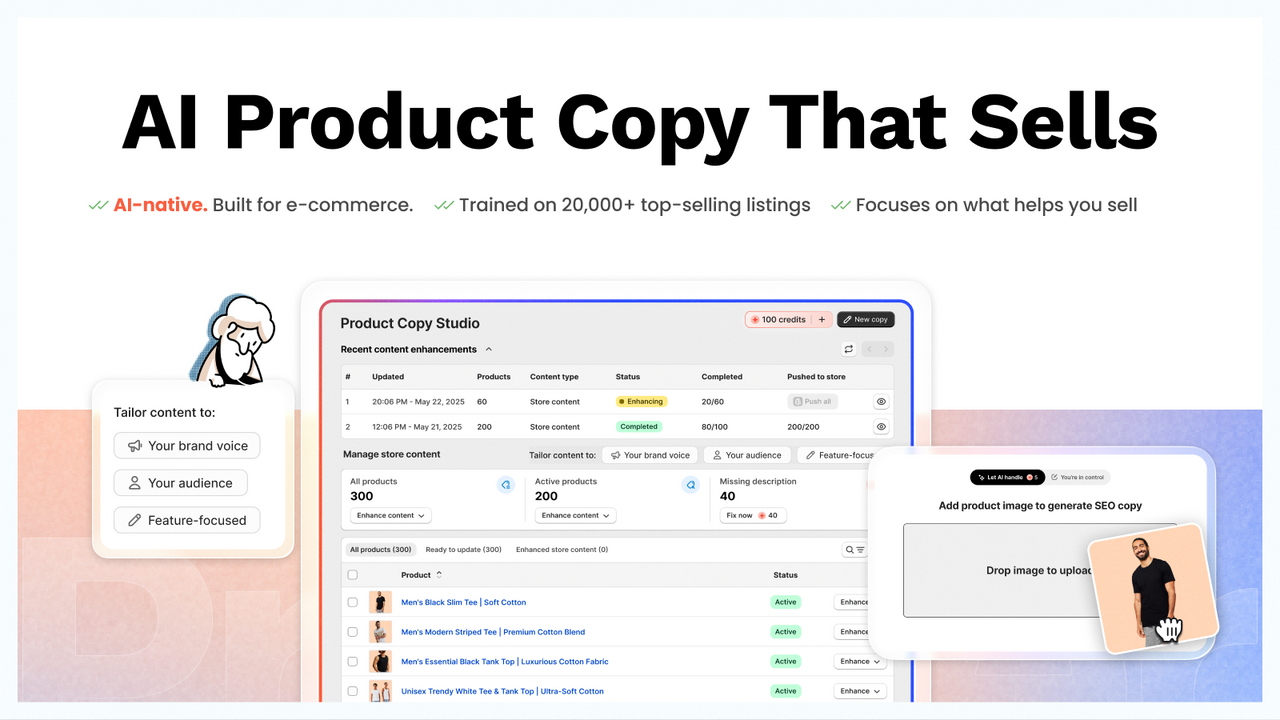
AI SEO product descriptions are product copy elements generated or optimized using artificial intelligence algorithms, specifically designed to rank well in search engine results while persuading customers to make a purchase. These descriptions leverage natural language processing (NLP) and machine learning models to analyze vast amounts of data, including search queries, competitor content, and customer behavior patterns.
The core function of these AI-generated descriptions is twofold. First, they must satisfy search engine algorithms by incorporating relevant keywords, semantic variations, and structured data. Second, they must resonate with human shoppers by highlighting benefits, addressing pain points, and creating an emotional connection with the product. Modern AI tools like ChatGPT, Jasper, and Copy.ai have made this technology accessible to businesses of all sizes.
The Evolution from Manual to AI-Powered Copywriting
Traditional product descriptions were written by human copywriters who would spend hours researching products and crafting unique selling propositions. While this approach produced high-quality content, it was time-consuming and expensive, especially for stores with thousands of SKUs. The evolution toward AI SEO product descriptions began with simple template-based systems and has progressed to sophisticated language models that can generate contextually relevant, emotionally engaging copy in seconds.
Today’s AI systems can analyze your existing top-performing product pages, understand your brand voice, and generate new descriptions that match your style while incorporating SEO best practices. This represents a fundamental shift in how e-commerce businesses approach content creation at scale.
Why AI SEO Product Descriptions Matter for Your Business
The importance of AI-generated product descriptions extends far beyond simple time savings. Search engines have become increasingly sophisticated in their ability to evaluate content quality, relevance, and user engagement. Product descriptions that are thin, duplicated, or poorly written can severely damage your search rankings and conversion rates.
AI SEO product descriptions address these challenges by ensuring every product page receives unique, comprehensive, and optimized content. This is particularly crucial for e-commerce sites with hundreds or thousands of products, where maintaining quality across all pages manually is simply not feasible.
The Impact on Search Engine Rankings
Google’s algorithms reward websites that provide unique, valuable content to users. When you use AI to generate distinct descriptions for each product, you avoid the duplicate content penalties that often plague e-commerce sites. Additionally, AI tools can identify and incorporate long-tail keywords that human writers might overlook, capturing valuable search traffic from highly specific queries.
Structured data and schema markup integration is another advantage. Many AI content tools can automatically generate the necessary markup for rich snippets, helping your product pages display star ratings, prices, and availability directly in search results. This enhanced visibility leads to higher click-through rates and improved organic performance.
Key Benefits of Using AI for Product Descriptions
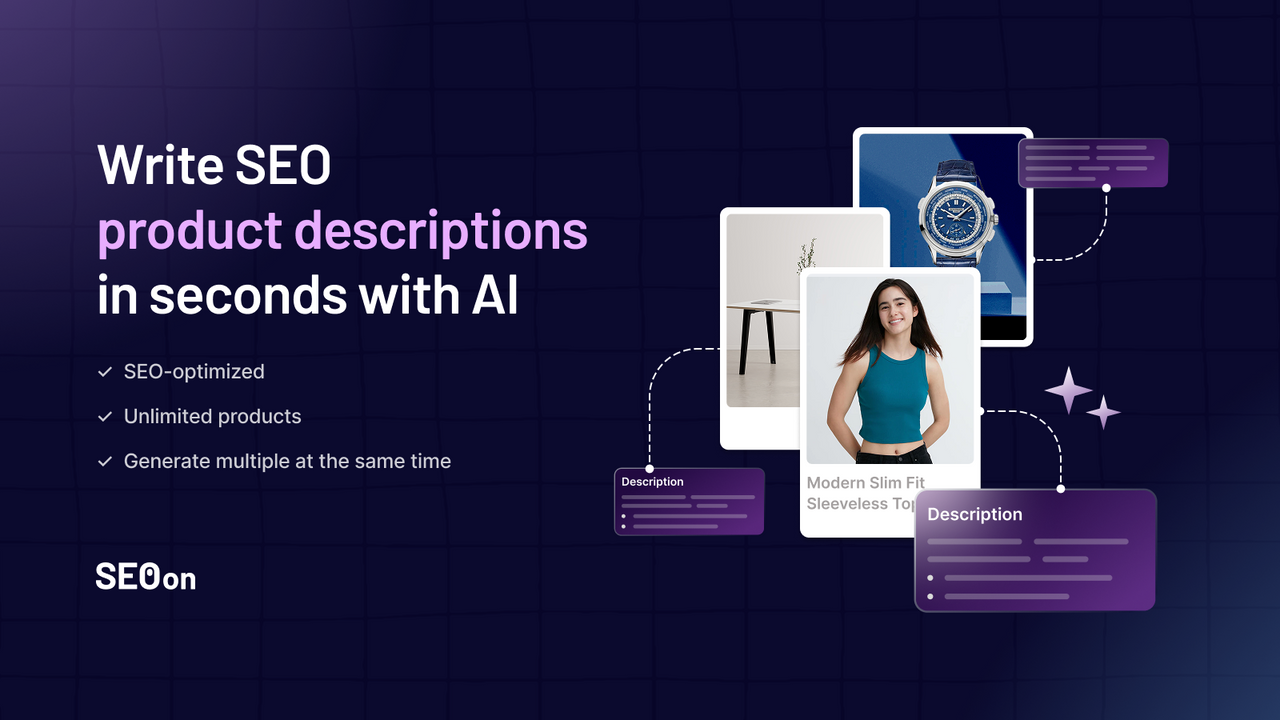
Implementing AI SEO product descriptions offers numerous advantages that directly impact your bottom line. Understanding these benefits helps you make informed decisions about integrating AI into your content strategy.
- Unmatched Scalability: Generate hundreds or thousands of unique product descriptions in minutes, not weeks
- Cost Efficiency: Reduce content production costs by up to 80% compared to traditional copywriting
- Consistent Brand Voice: Maintain a uniform tone and style across all product pages
- SEO Optimization: Automatic keyword integration and semantic relevance
- Multilingual Support: Create descriptions in multiple languages without hiring translators
- Data-Driven Insights: Leverage analytics to refine and improve content performance
- Rapid A/B Testing: Generate multiple variations to test what resonates with your audience
Scalability and Speed Advantages
For e-commerce businesses, speed to market is critical. When you launch a new product line, you need descriptions ready immediately. AI SEO product descriptions enable you to publish new products within hours of receiving inventory, giving you a competitive edge over slower-moving competitors. This speed also allows you to respond quickly to market trends and seasonal demands.
The ability to generate content in bulk also means you can expand your product catalog without proportionally increasing your content budget. This scalability is particularly valuable for marketplaces and dropshipping operations where product turnover is high.
How AI Generates SEO-Optimized Product Descriptions
Understanding the technology behind AI SEO product descriptions helps you use these tools more effectively. The process typically involves several sophisticated steps that combine to produce high-quality, search-optimized content.
Data Collection and Analysis
AI systems begin by analyzing your product data, including specifications, features, pricing, and category information. They also examine search engine data to identify what terms and phrases potential customers use when searching for products like yours. This includes analyzing competitor descriptions to understand what works in your niche.
The AI then processes this information through natural language understanding algorithms that grasp the context and relationships between different product attributes. This deep understanding allows the system to generate descriptions that are not just keyword-stuffed but genuinely informative and persuasive.
Content Generation and Optimization
Once the analysis is complete, the AI generates multiple versions of product descriptions using advanced language models. These models have been trained on billions of web pages, giving them an understanding of what constitutes compelling, persuasive copy. The generated content is then optimized for specific SEO factors such as keyword density, meta descriptions, and heading structure.
Modern AI tools also incorporate sentiment analysis to ensure the tone matches your brand identity. Whether you need professional and technical or casual and friendly, the AI adjusts its output accordingly. Some advanced platforms even allow you to input your brand guidelines and voice characteristics for more precise control.
Best Practices for AI SEO Product Descriptions
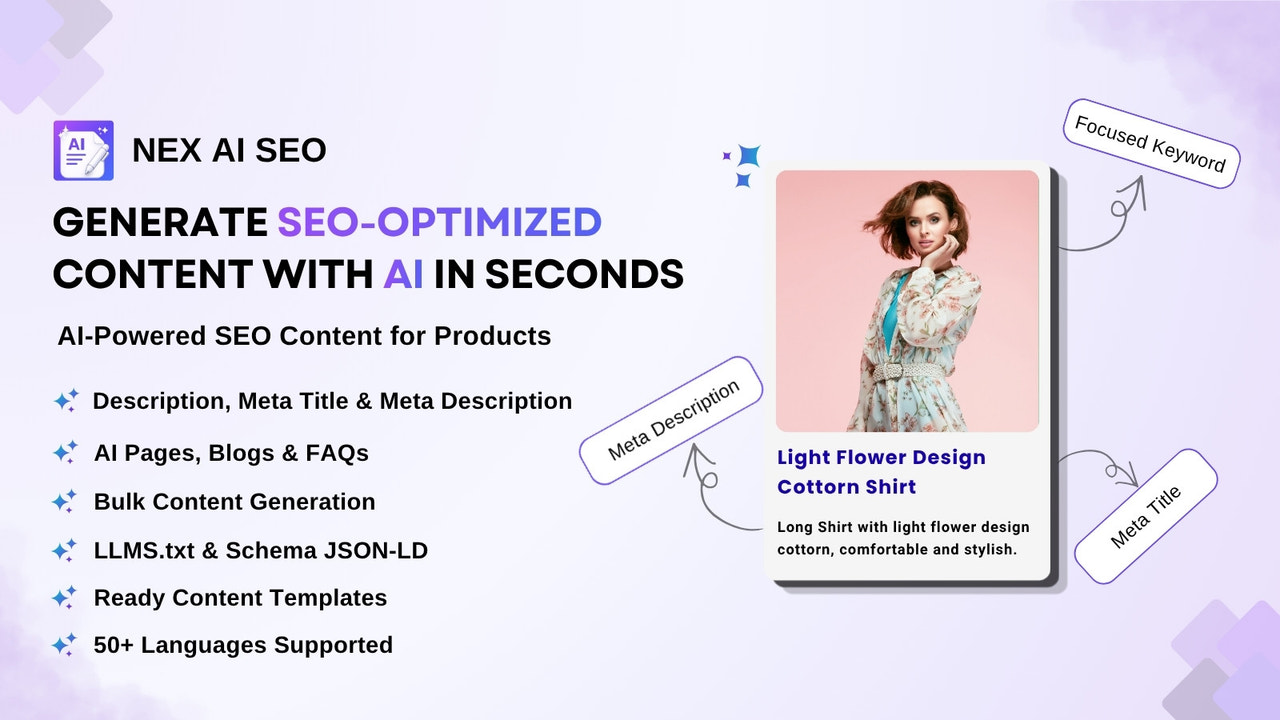
To maximize the effectiveness of your AI-generated content, you need to follow established best practices. These guidelines ensure your descriptions not only rank well but also convert visitors into customers.
Provide Comprehensive Product Information
The most effective AI SEO product descriptions include detailed specifications, dimensions, materials, and usage instructions. Search engines favor comprehensive content that answers user questions thoroughly. When feeding data to your AI tool, include every relevant detail about the product, even if you think it might be too technical or obvious.
Consider including information about product origins, manufacturing processes, certifications, and warranty details. This additional context helps the AI generate richer, more informative descriptions that establish your authority and expertise in the niche.
Incorporate Customer Reviews and Social Proof
AI tools can analyze customer reviews to identify common themes, frequently mentioned benefits, and recurring complaints. This information is invaluable for generating descriptions that address real customer concerns and highlight the features that matter most to your audience. Integrating social proof elements into your descriptions builds trust and credibility.
Many successful e-commerce sites use AI to create “review-informed” descriptions that paraphrase positive customer feedback while addressing common objections. This approach creates a powerful combination of SEO optimization and conversion optimization.
Common Mistakes to Avoid with AI-Generated Content
While AI SEO product descriptions offer tremendous benefits, there are several pitfalls that can undermine your efforts. Being aware of these mistakes helps you implement AI tools more effectively.
Over-Reliance on Generic Templates
One of the most common mistakes is using AI tools without providing sufficient product-specific information. This results in generic, vague descriptions that fail to differentiate your products from competitors. Always provide detailed product data and specifications to ensure the AI generates unique, informative content.
Another related mistake is failing to customize the AI’s output. While AI generates excellent first drafts, the best results come from human refinement. Review and edit the generated content to add your unique brand perspective and ensure accuracy.
Ignoring User Intent and Search Context
AI SEO product descriptions must align with what users actually search for and expect to find. Some businesses make the mistake of focusing solely on keywords without considering whether the content addresses user needs. The best AI tools incorporate search intent analysis, but you should also review the output to ensure it answers the questions your target customers are asking.
Additionally, avoid the temptation to use AI for every product without discrimination. Some products, particularly those with complex features or emotional buying triggers, may benefit from more extensive human involvement in the copywriting process.
Comparing AI-Generated vs. Human-Written Descriptions
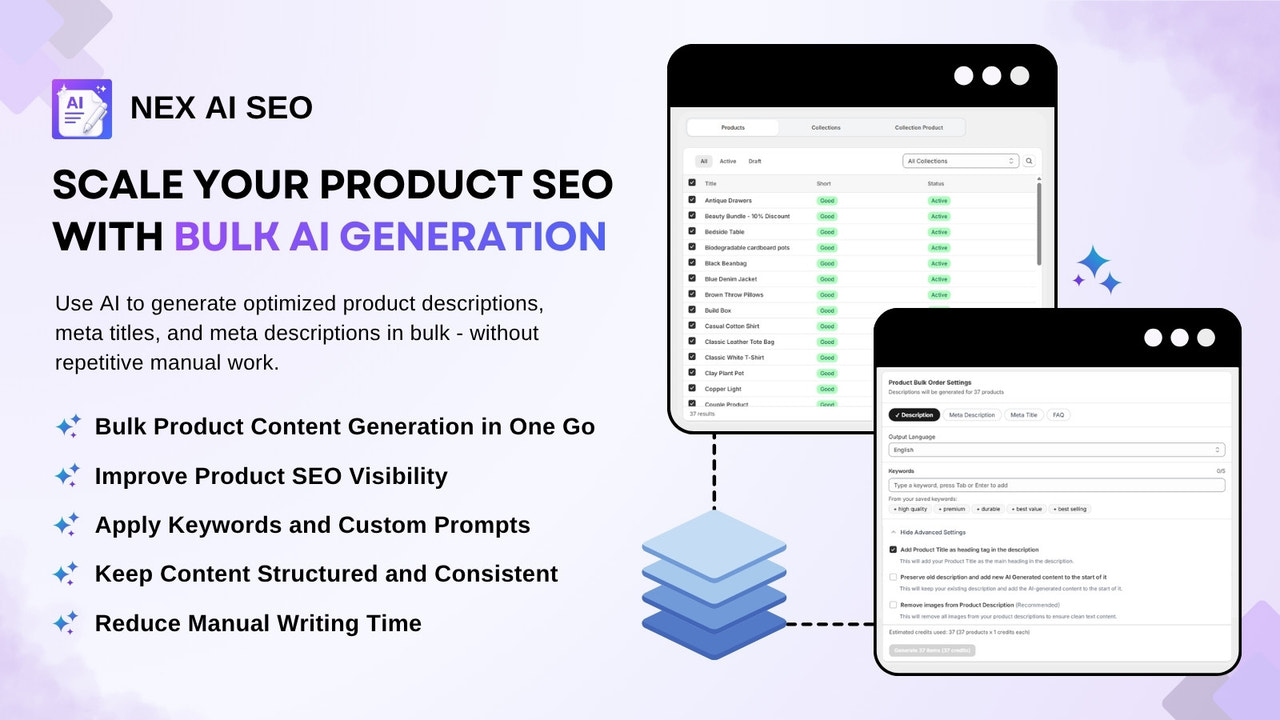
Understanding the strengths and limitations of both approaches helps you determine the right balance for your business. The table below provides a comprehensive comparison of AI-generated and human-written product descriptions.
| Aspect | AI-Generated Descriptions | Human-Written Descriptions |
|---|---|---|
| Speed | Seconds per description | Hours or days per description |
| Cost | Low, subscription-based | High, per-word or per-project pricing |
| Scalability | Unlimited, can generate thousands instantly | Limited by team size and time |
| Creativity | Good, but can lack true originality | Excellent, capable of unique perspectives |
| SEO Optimization | Excellent, data-driven keyword placement | Variable, depends on writer’s expertise |
| Brand Voice | Can be trained, but may sound formulaic | Naturally authentic and consistent |
| Emotional Appeal | Improving, but sometimes misses nuances | Strong, understands human psychology |
| Accuracy | High when fed correct data | High, but prone to human error |
| Consistency | Perfectly consistent across all products | May vary between different writers |
The most effective strategy for most businesses is a hybrid approach. Use AI to generate initial drafts and handle bulk content, then have human editors review and refine the most important product pages. This combines the efficiency of AI with the creativity and emotional intelligence of human writers.
Practical Implementation Guide for AI SEO Product Descriptions
Implementing AI SEO product descriptions in your e-commerce workflow requires careful planning and execution. Follow this step-by-step guide to achieve the best results.
Step 1: Choose the Right AI Tool
Evaluate different AI content generation platforms based on your specific needs. Consider factors such as pricing, integration capabilities with your e-commerce platform, language support, and the quality of output. Popular options include Jasper, Copy.ai, Writesonic, and ChatGPT with custom prompts. Many platforms offer free trials, allowing you to test their capabilities before committing.
Look for tools that offer e-commerce-specific features such as bulk generation, product data integration, and SEO analysis. Some platforms provide templates specifically designed for product descriptions, which can significantly streamline your workflow.
Step 2: Prepare Your Product Data
The quality of your AI-generated descriptions depends entirely on the quality of the data you provide. Create a comprehensive product data spreadsheet that includes product names, features, specifications, materials, dimensions, and any other relevant information. The more detailed your data, the better your AI-generated content will be.
Organize your data in a structured format that your AI tool can easily process. Many platforms allow you to upload CSV files or connect directly to your e-commerce platform through APIs. Take the time to clean and standardize your data to ensure consistent output quality.
Step 3: Develop Your Brand Voice Guidelines
Before generating content, define your brand voice and communication style. Create guidelines that describe your tone, vocabulary preferences, and the emotional response you want to evoke in customers. Provide examples of descriptions you consider excellent to help the AI understand your expectations.
Include information about your target audience, including their demographics, preferences, and pain points. This context helps the AI generate descriptions that resonate with your specific customer base rather than generic copy that appeals to everyone.
Step 4: Generate and Review Content
Start by generating descriptions for a small batch of products to evaluate the quality. Review the output carefully, checking for accuracy, brand voice alignment, and SEO effectiveness. Make adjustments to your prompts or data as needed before scaling up to your full product catalog.
Establish a review process that includes both SEO specialists and product experts. SEO specialists can verify keyword optimization and search intent alignment, while product experts ensure technical accuracy and feature completeness.
Measuring the Success of Your AI Product Descriptions
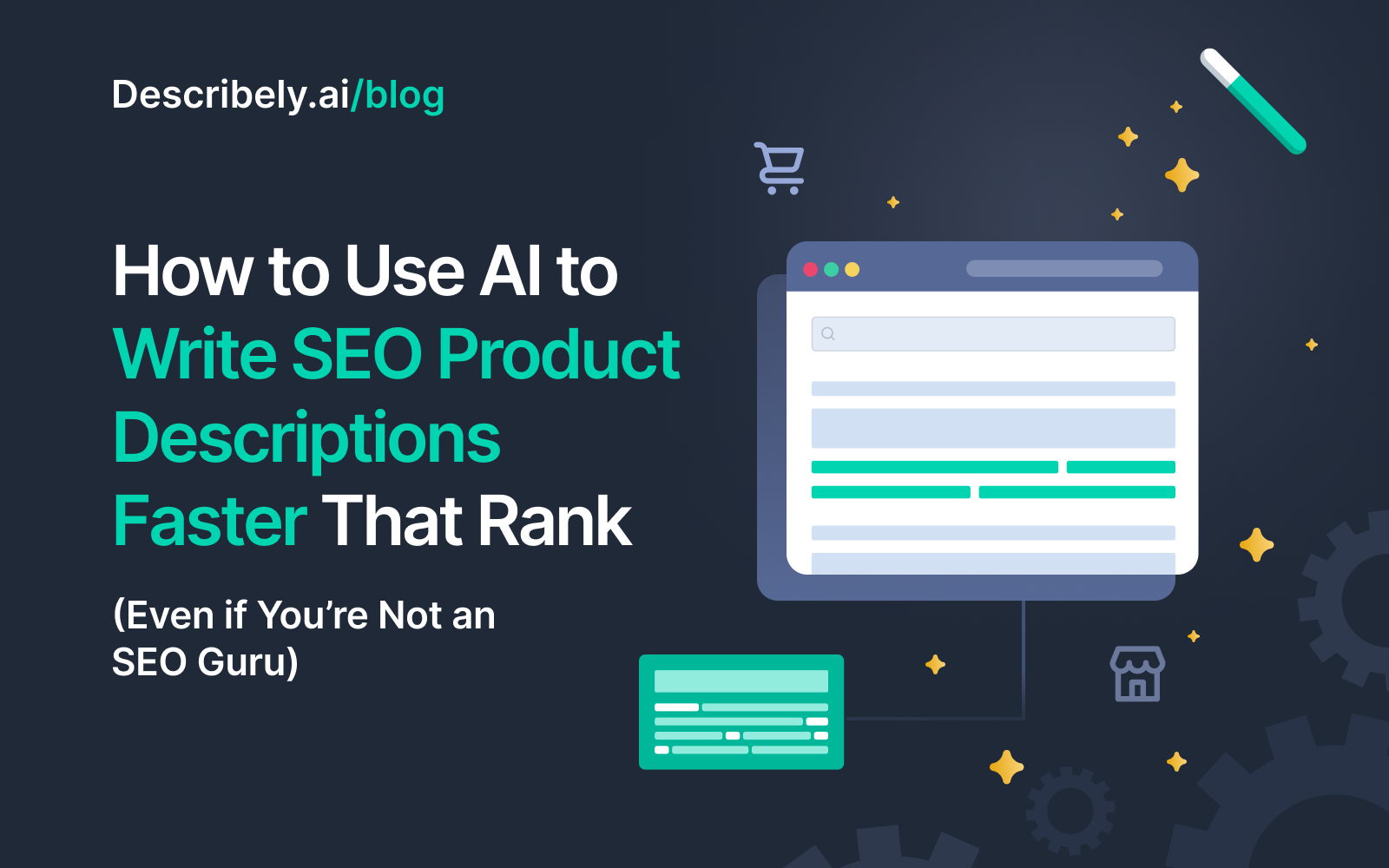
To determine whether your AI SEO product descriptions are delivering results, you need to track specific metrics and analyze performance data. This information guides your optimization efforts and helps you justify the investment in AI technology.
Key Performance Indicators to Monitor
Organic search rankings for target keywords provide the most direct measure of SEO success. Track your product pages’ positions in search results over time, noting improvements or declines. Click-through rates from search results indicate how compelling your titles and meta descriptions are to potential customers.
Conversion rates are the ultimate measure of description effectiveness. Monitor how many visitors to your product pages actually make a purchase. A/B testing different AI-generated descriptions can help you identify which approaches drive the highest conversions.
Other important metrics include time on page, bounce rate, and pages per session. These engagement indicators reveal whether visitors find your descriptions informative and engaging or whether they leave quickly due to poor content quality.
Important Notes and Considerations
While AI SEO product descriptions offer significant advantages, there are important considerations to keep in mind for responsible and effective use.
Always fact-check AI-generated content for accuracy. AI systems can sometimes generate plausible-sounding but incorrect information, particularly for technical products. Verify all specifications, dimensions, and claims before publishing.
Be aware of potential bias in AI-generated content. Language models trained on internet data may perpetuate stereotypes or use language that doesn’t align with your brand values. Review all content through a diversity and inclusion lens.
Stay updated on search engine guidelines regarding AI-generated content. While Google has stated that AI content is acceptable if it provides value to users, they continue to refine their algorithms to detect low-quality automated content. Focus on creating genuinely helpful descriptions rather than trying to game the system.
Frequently Asked Questions
Are AI SEO product descriptions good for SEO?
Yes, AI SEO product descriptions can be excellent for SEO when implemented correctly. They ensure unique content for every product page, incorporate relevant keywords naturally, and can be optimized for featured snippets and rich results. The key is providing the AI with comprehensive product data and reviewing the output for quality.
Can Google detect AI-written content?
Google can detect AI-generated content, but this doesn’t automatically result in penalties. Google’s guidelines state that AI content is acceptable as long as it provides genuine value to users. The focus should be on creating high-quality, informative descriptions rather than trying to hide the use of AI.
How much do AI product description tools cost?
AI content generation tools typically range from $20 to $200 per month for individual users, with enterprise plans costing more. Many platforms offer free tiers with limited features, allowing you to test the tools before committing to a paid plan. The cost is generally much lower than hiring professional copywriters for the same volume of content.
What is the best AI tool for product descriptions?
The best AI tool depends on your specific needs, budget, and technical requirements. Popular options include Jasper for its e-commerce templates, Copy.ai for its user-friendly interface, and ChatGPT for its flexibility and customization options. Evaluate multiple tools to find the one that best fits your workflow.
How do I make AI product descriptions sound more human?
To make AI-generated descriptions sound more human, provide detailed brand voice guidelines, include specific product details and stories, and edit the output to add personality. Incorporate customer feedback and real-world usage scenarios to make the content more relatable. Human review and refinement are essential for achieving a natural, authentic tone.
Conclusion
AI SEO product descriptions represent a transformative opportunity for e-commerce businesses to scale their content operations while improving search visibility and conversion rates. The technology has matured significantly, offering sophisticated solutions that can generate unique, persuasive, and search-optimized copy for thousands of products in minutes.
The key to success lies in understanding that AI is a powerful tool, not a complete replacement for human expertise. The most effective strategies combine AI’s efficiency and data-processing capabilities with human creativity, emotional intelligence, and brand understanding. By following the best practices outlined in this guide, you can harness the full potential of AI SEO product descriptions to drive meaningful business results.
Start small, measure your results, and refine your approach based on performance data. As AI technology continues to evolve, the possibilities for creating compelling, high-converting product content will only expand. Those who embrace this technology now will gain a significant competitive advantage in the increasingly crowded e-commerce landscape.
Xem thêm:
- AI SEO Attribution: The Complete Guide to Measuring What Actually Drives Rankings
- AI SEO HowTo Schema: The Complete Guide to Structured Data for AI Search
- AI SEO Roadmap: The Complete 12-Month Strategy for 2025 and Beyond
- The Best AI SEO Certification for Future-Proofing Your Digital Marketing Career in 2025
- AI SEO Entity Relationships: The Complete Guide to Semantic Search Dominance
Bài viết cùng chủ đề:

AI SEO SEO Automation with Make: The Complete Workflow Guide

AI SEO SEO Automation with Zapier: The Complete Workflow Guide

AI SEO SEO Automation with n8n: The Complete Workflow Guide
AI SEO SEO Automation with Gemini: The Complete Guide to Scaling Organic Growth

AI SEO SEO Automation with Claude: The Complete Guide to Scaling Content in 2025

AI SEO SEO Automation with ChatGPT: The Complete Playbook for 2025

AI SEO & SEO Automation for Affiliate Sites: The 2025 Playbook for Passive Income Growth
AI SEO & SEO Automation for Bloggers: The Complete Guide to Scaling Your Content

AI SEO & SEO Automation for Agencies: The Complete 2025 Playbook

AI SEO and SEO Automation for Ecommerce: The Complete Playbook for 2025

AI SEO & SEO Automation for WordPress: The Complete Playbook for 2025
AI SEO SEO Automation Strategy: The Complete Playbook for 2025

Mastering the AI SEO SEO Automation Process: A Complete Guide to Scaling Organic Growth
AI SEO SEO Automation System: The Complete Guide to Scaling Organic Growth in 2025
AI SEO SEO Automation Platform: The Complete Guide to Scaling Organic Growth in 2025
AI SEO SEO Automation Software: The Complete Guide to Scaling Organic Growth in 2025















