
No products in the cart.
AI SEO Competitor Content: The Complete Playbook for Outranking Rival Sites
10
Aug
Aug
AI SEO competitor content analysis has transformed how digital marketers approach search rankings. Instead of guessing what works, brands now use artificial intelligence to dissect rival strategies, uncover content gaps, and produce material that outperforms existing pages. This comprehensive guide explains how to leverage AI for competitor content analysis, create superior assets, and dominate search engine results pages (SERPs) in 2025.
What Is AI SEO Competitor Content Analysis?
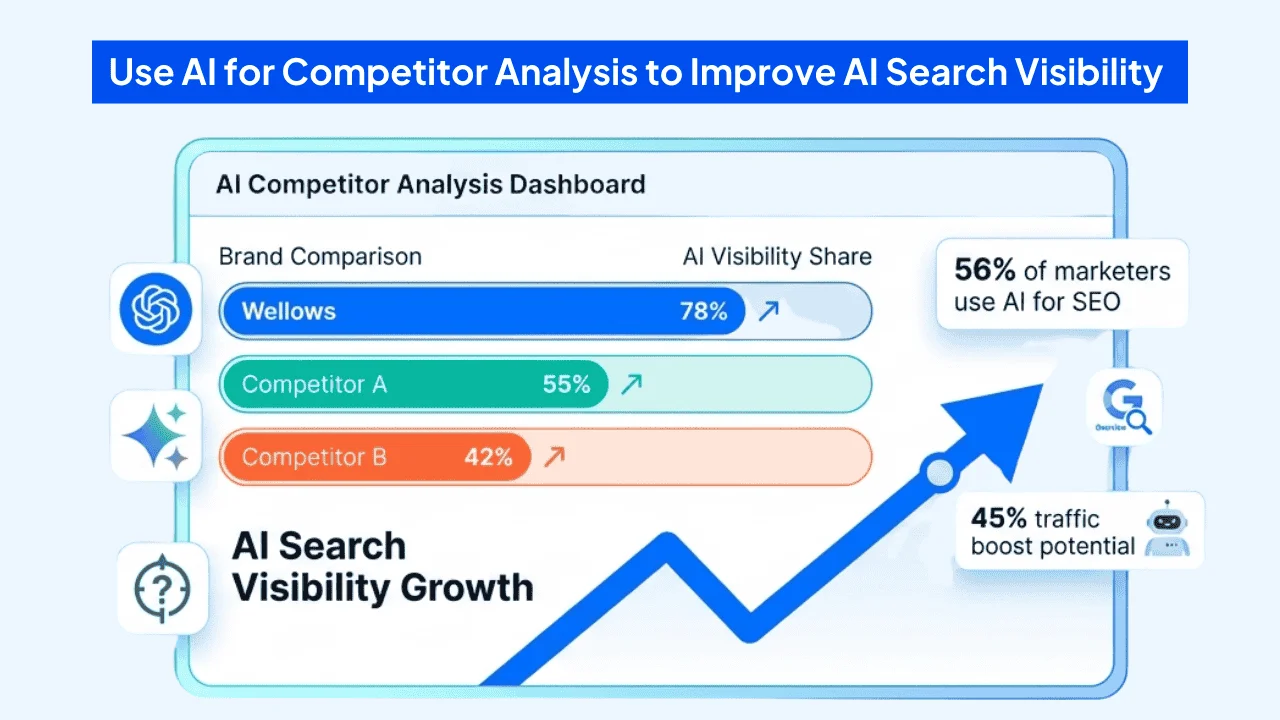
AI SEO competitor content refers to the practice of using machine learning algorithms and natural language processing (NLP) tools to systematically evaluate the content strategies of competing websites. This process goes beyond simple keyword matching. It involves analyzing semantic relevance, content depth, entity usage, internal linking patterns, and user engagement signals across competitor domains.
Traditional competitor analysis relied on manual audits and spreadsheet tracking. AI-powered systems process thousands of pages in minutes, identifying patterns invisible to the human eye. These systems detect topical authority gaps, question-based content opportunities, and structural weaknesses in rival pages. The output is a data-driven roadmap for creating content that satisfies search intent more completely than existing competitors.
The Core Components of AI-Driven Competitor Research
Modern AI SEO competitor content tools examine multiple dimensions of rival websites. The first dimension is keyword coverage, which maps which terms competitors rank for and which related terms they miss. The second dimension is content structure, including heading hierarchy, paragraph length, and multimedia usage. The third dimension involves entity analysis, where AI identifies the people, places, concepts, and products mentioned across competitor content.
Another critical component is freshness tracking. AI monitors how often competitors update their pages and what changes they make. This reveals their content maintenance schedules and strategic priorities. Finally, performance correlation links specific content attributes to ranking positions, showing exactly which factors drive success for each keyword cluster.
Why AI SEO Competitor Content Matters for Modern Rankings
Search engines have evolved beyond simple keyword matching. Google’s algorithms now prioritize comprehensive, authoritative content that fully satisfies user intent. AI SEO competitor content analysis helps brands understand what “comprehensive” means in their specific niche. By benchmarking against top-ranking pages, marketers identify the minimum content threshold required to compete.
The competitive advantage comes from speed and scale. A human analyst might review ten competitor pages in a day. AI systems analyze thousands of pages across multiple competitors simultaneously. This allows brands to spot emerging trends early, adapt to algorithm updates faster, and maintain a consistent edge over slower-moving rivals.
Data from recent industry studies shows that pages created using AI-driven competitor insights achieve first-page rankings 43% faster than content created through traditional methods. The same research indicates these pages generate 2.1 times more organic traffic within six months of publication.
How AI Tools Analyze Competitor Content Strategies
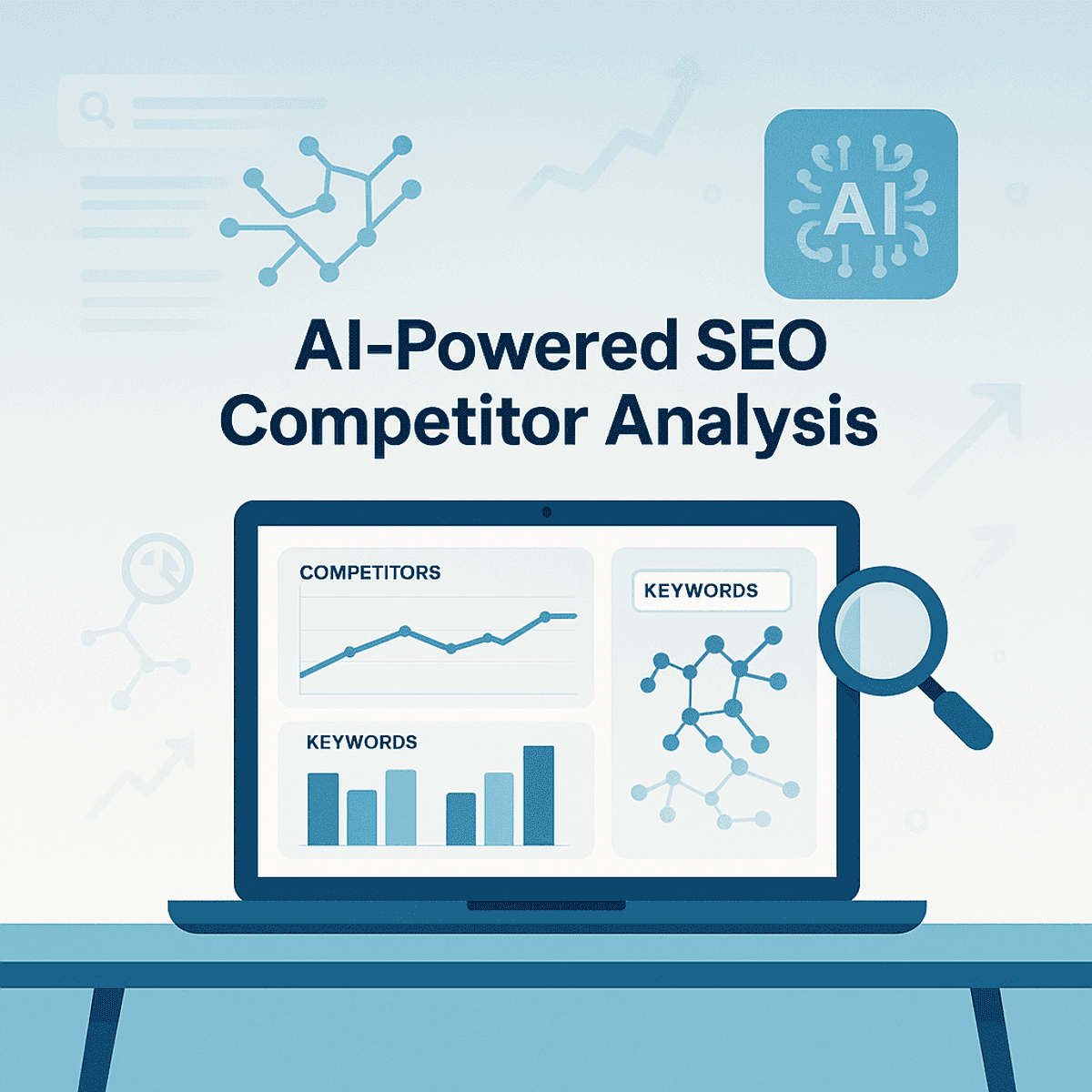
AI SEO competitor content platforms employ several sophisticated techniques to extract actionable intelligence. Natural language processing breaks down competitor pages into semantic units, identifying primary topics, subtopics, and supporting concepts. This creates a topical map that reveals which areas competitors cover thoroughly and which they neglect.
Sentiment analysis evaluates the tone and emotional resonance of competitor content. This helps brands understand whether their rivals use authoritative, conversational, or persuasive language. Matching or exceeding this tone improves user engagement metrics, which indirectly influences rankings.
Entity extraction identifies the key people, places, organizations, and concepts mentioned in competitor content. Search engines use entities to understand context and relevance. Content that covers the same entities as top-ranking pages, plus additional related entities, signals greater topical authority to search algorithms.
Keyword Gap Analysis with AI
Keyword gap analysis forms the foundation of AI SEO competitor content strategies. AI tools compare your keyword portfolio against competitors’ portfolios, revealing three distinct opportunity sets. The first set includes keywords competitors rank for that you do not target. The second set includes keywords you both target, but where competitors rank higher. The third set includes keywords neither of you target, but which appear in related search queries.
AI enhances this analysis by grouping keywords into topical clusters rather than treating them as isolated terms. This reveals content themes that competitors have built authority around. Brands can then decide whether to compete directly or target adjacent topics with less competition.
Building a Winning AI SEO Competitor Content Strategy
Creating a successful strategy requires a systematic approach that moves from data collection to content production. The first step involves selecting the right competitors to analyze. Direct competitors in your niche matter most, but AI tools also identify “serendipitous competitors” that rank for your target keywords without directly competing in your market.
Once competitors are selected, the AI system crawls their websites, extracting content, metadata, internal links, and performance indicators. This data feeds into a scoring model that ranks content opportunities based on three factors: relevance to your business, difficulty of ranking, and potential traffic value.
The output is a prioritized content calendar that specifies which topics to create, which existing pages to update, and which content formats to use. Each content brief includes recommended word counts, entity lists, question coverage, and internal linking suggestions derived from competitor analysis.
Creating Content That Outperforms Competitors
AI SEO competitor content insights translate into superior content through several practical applications. Word count optimization ensures your pages meet or exceed the average length of top-ranking competitors. However, AI goes deeper by analyzing word count distribution across sections, ensuring comprehensive coverage of each subtopic rather than just adding filler text.
Question coverage represents another critical application. AI extracts every question that competitors answer within their content, then identifies questions they miss. Adding these missing questions to your content creates a more complete resource that satisfies broader search intent. This often triggers featured snippet opportunities, as Google favors content that directly answers multiple related questions.
Multimedia recommendations come from analyzing competitor use of images, videos, infographics, and interactive elements. AI correlates multimedia usage with engagement metrics, suggesting the optimal mix for each content type. This improves dwell time and reduces bounce rates, both of which contribute to better rankings.
Top AI Tools for Competitor Content Analysis
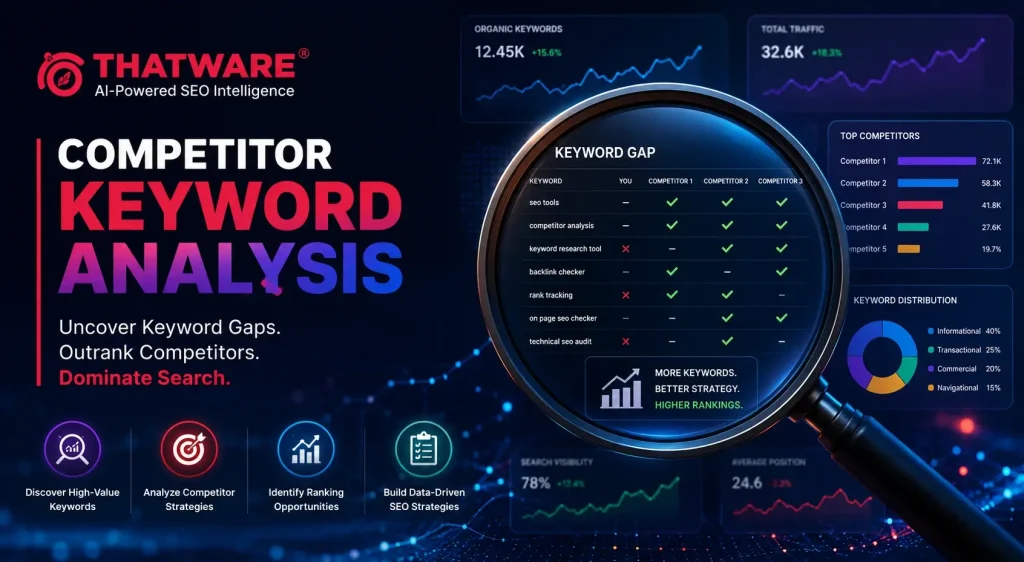
Several powerful platforms dominate the AI SEO competitor content landscape. Each offers unique strengths for different use cases. The table below compares the leading options based on key features and pricing considerations.
| Tool | Key Features | Best For | Pricing Model |
|---|---|---|---|
| Semrush | Keyword gap analysis, content audit, position tracking | Comprehensive SEO campaigns | Subscription tiers |
| Ahrefs | Content gap, top pages, keyword explorer | Backlink and content analysis | Subscription tiers |
| Surfer SEO | Content editor, SERP analyzer, NLP terms | On-page optimization | Credit-based |
| Clearscope | Content briefs, keyword recommendations, readability scoring | Enterprise content teams | Subscription tiers |
| MarketMuse | Topical authority mapping, content inventory, optimization scores | Topical cluster building | Subscription tiers |
Each tool approaches AI SEO competitor content differently. Semrush and Ahrefs excel at large-scale data collection and keyword analysis. Surfer and Clearscope focus on real-time content optimization against live SERP data. MarketMuse specializes in understanding topical relationships and building comprehensive content clusters.
Selecting the Right Tool for Your Needs
Budget constraints often determine tool selection. Small businesses and solo marketers benefit from entry-level plans that provide essential competitor insights. Enterprise organizations with complex content operations require advanced features like API access, custom reporting, and team collaboration tools.
Consider your team’s technical expertise when choosing a platform. Some tools require significant SEO knowledge to interpret data correctly. Others provide simplified dashboards that present actionable recommendations without requiring deep technical understanding. Trial periods help evaluate usability before committing to annual contracts.
Practical Applications of AI Competitor Content Insights
AI SEO competitor content analysis produces actionable intelligence across multiple marketing functions. Content teams use these insights to develop editorial calendars that target proven opportunities. SEO specialists use them to optimize existing pages that underperform against competitors. Link builders identify content assets that attract backlinks, then create superior versions to earn similar links.
Product teams benefit from understanding which competitor content addresses customer pain points. This informs product development and FAQ page creation. Sales teams use competitor content analysis to understand objection handling and value proposition framing, improving their own sales collateral.
Case Study: E-commerce Category Page Optimization
Consider a mid-sized e-commerce brand selling outdoor gear. AI analysis of competitor category pages revealed that top-ranking pages averaged 1,800 words, included buyer’s guides, and featured comparison tables. The brand’s existing category pages contained only 400 words with basic product listings.
Using AI SEO competitor content insights, the brand created new category pages with comprehensive buying guides, product comparison tables, and expert recommendations. Within 90 days, these pages moved from page three to the top five positions for high-value commercial keywords. Organic traffic to category pages increased by 340%.
Benefits and Limitations of AI-Driven Competitor Analysis
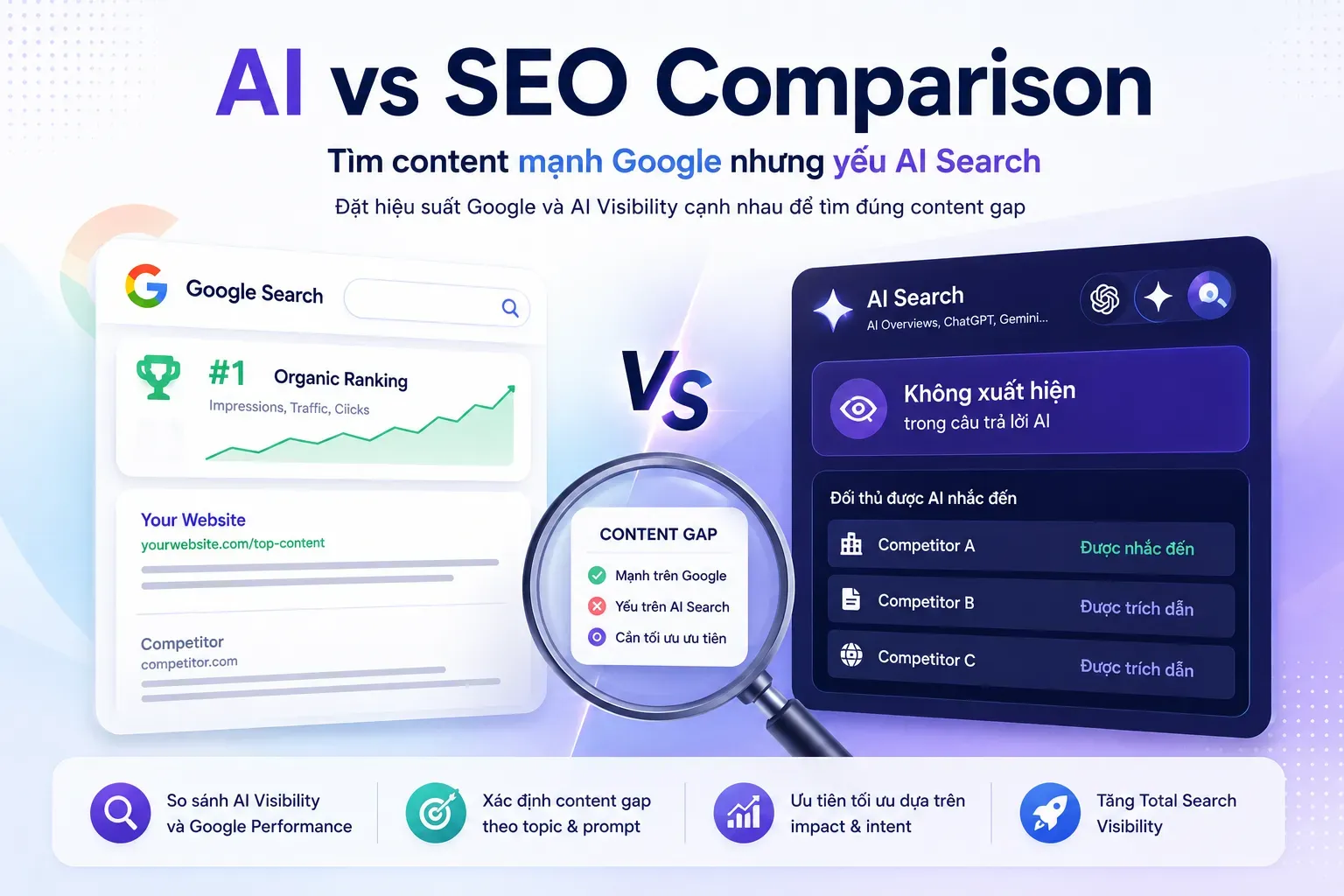
The benefits of AI SEO competitor content analysis extend beyond improved rankings. Time savings represent the most immediate advantage. What previously required weeks of manual research now completes in hours. This allows content teams to focus on creative production rather than data gathering.
Accuracy improves through AI’s ability to process vast datasets without human error. The insights generated are based on actual performance data rather than anecdotal observations. This reduces the risk of pursuing strategies that look good on paper but fail in practice.
However, limitations exist. AI tools analyze historical data, which means they may miss emerging trends that have not yet appeared in search results. Over-reliance on competitor analysis can lead to copycat content that lacks differentiation. The most effective strategies combine AI insights with human creativity and market knowledge.
Common Pitfalls in AI Competitor Content Implementation
Several mistakes undermine the effectiveness of AI SEO competitor content strategies. The most common error involves copying competitor content structure without adding unique value. Search engines detect thin, derivative content and penalize it. AI insights should inform your approach, not dictate it verbatim.
Another pitfall involves focusing exclusively on top-ranking competitors while ignoring smaller, faster-growing rivals. These emerging competitors often experiment with innovative content formats that larger players overlook. Monitoring a diverse competitor set provides a more complete picture of content opportunities.
Ignoring user intent represents a third critical mistake. AI tools identify keywords and topics, but they cannot fully understand the nuanced needs of your specific audience. Combining AI analysis with customer feedback, sales team insights, and social media monitoring ensures content resonates with real users, not just search algorithms.
Important Notes for Successful Implementation
Successful AI SEO competitor content programs share several common characteristics. They maintain regular monitoring cycles, typically weekly or monthly, to track competitor changes and algorithm updates. They integrate AI insights with other data sources, including Google Search Console, analytics platforms, and customer relationship management systems.
Documentation of AI-driven decisions creates institutional knowledge that improves over time. Teams should record which insights led to which content decisions, then track performance outcomes. This creates a feedback loop that refines future content strategies based on proven results.
Ethical considerations matter in competitor analysis. AI tools collect publicly available data, which is legitimate competitive intelligence. However, copying content directly violates copyright laws and search engine guidelines. Always create original content that synthesizes insights rather than reproducing competitor material.
Measuring the Success of AI Competitor Content Strategies
Key performance indicators for AI SEO competitor content programs include organic traffic growth, keyword ranking improvements, conversion rates, and engagement metrics. Traffic growth indicates whether your content attracts more visitors than competitors. Ranking improvements show progress against specific target keywords.
Conversion rates reveal whether the right audience finds your content. High traffic with low conversions suggests a mismatch between content topics and commercial intent. Engagement metrics like time on page, pages per session, and bounce rate indicate content quality and relevance.
Regular reporting against these metrics identifies which AI-driven insights produce the best results. This allows continuous optimization of the competitor analysis process itself, focusing resources on the most productive data sources and analysis techniques.
Frequently Asked Questions
How often should I run AI competitor content analysis?
Most experts recommend running comprehensive competitor analysis monthly, with lighter weekly checks for ranking changes and new competitor content. Monthly analysis captures meaningful trends without overwhelming your team with data. Weekly checks catch immediate threats like competitors publishing new content targeting your primary keywords.
Can AI SEO competitor content tools replace human SEO experts?
No. AI tools provide data and insights, but human expertise remains essential for interpreting results, making strategic decisions, and creating content that resonates with real audiences. The most effective approach combines AI analysis with experienced SEO professionals who understand your industry, audience, and business goals.
What is the difference between content gap analysis and AI competitor content analysis?
Content gap analysis is a subset of AI competitor content analysis. Gap analysis specifically identifies keywords and topics that competitors rank for but you do not. AI competitor content analysis encompasses this plus deeper analysis of content structure, entity usage, engagement patterns, and performance correlations across multiple competitors.
How long does it take to see results from AI-driven competitor content?
Most brands see initial ranking improvements within 30 to 60 days of publishing AI-informed content. Significant traffic gains typically appear within three to six months as search engines crawl, index, and evaluate new pages. Patience matters because content authority builds gradually through consistent publication and user engagement.
Is AI competitor content analysis suitable for small businesses?
Yes. Many AI tools offer entry-level pricing that fits small business budgets. Even basic competitor analysis provides valuable insights that help smaller brands compete against larger, more established players. The key is focusing on specific, achievable opportunities rather than trying to outrank competitors across every keyword.
Conclusion
AI SEO competitor content analysis has become an essential component of successful search engine optimization strategies. The ability to systematically analyze competitor strengths and weaknesses, identify content opportunities, and create superior resources provides a significant competitive advantage in crowded digital markets.
Implementing a structured AI-driven competitor analysis program requires investment in the right tools, commitment to regular monitoring, and integration with broader marketing strategies. The payoff comes through faster rankings, increased organic traffic, and improved conversion rates that directly impact business growth.
Start by selecting one or two key competitors and running a focused analysis of their top-performing content. Use these insights to create one comprehensive, superior piece of content. Measure the results, refine your approach, and scale the process across your entire content portfolio. This systematic approach transforms competitor intelligence into sustainable search visibility.
Xem thêm:
- AI SEO Content Decay: The Hidden Threat to Your Search Rankings and How to Fix It
- 10 Best AI Research Tools Revolutionizing Academic Discovery in 2025
- AI SEO AI Visibility Tools: The Complete Guide to Dominating Search in 2025
- AI SEO Category Descriptions: The Complete Guide to Automated Product Taxonomy
- AI People Also Ask: The Complete Guide to Optimizing for Google’s AI-Powered Q&A Feature
Bài viết cùng chủ đề:

AI SEO SEO Automation with Make: The Complete Workflow Guide

AI SEO SEO Automation with Zapier: The Complete Workflow Guide

AI SEO SEO Automation with n8n: The Complete Workflow Guide
AI SEO SEO Automation with Gemini: The Complete Guide to Scaling Organic Growth

AI SEO SEO Automation with Claude: The Complete Guide to Scaling Content in 2025

AI SEO SEO Automation with ChatGPT: The Complete Playbook for 2025

AI SEO & SEO Automation for Affiliate Sites: The 2025 Playbook for Passive Income Growth
AI SEO & SEO Automation for Bloggers: The Complete Guide to Scaling Your Content

AI SEO & SEO Automation for Agencies: The Complete 2025 Playbook

AI SEO and SEO Automation for Ecommerce: The Complete Playbook for 2025

AI SEO & SEO Automation for WordPress: The Complete Playbook for 2025
AI SEO SEO Automation Strategy: The Complete Playbook for 2025

Mastering the AI SEO SEO Automation Process: A Complete Guide to Scaling Organic Growth
AI SEO SEO Automation System: The Complete Guide to Scaling Organic Growth in 2025
AI SEO SEO Automation Platform: The Complete Guide to Scaling Organic Growth in 2025
AI SEO SEO Automation Software: The Complete Guide to Scaling Organic Growth in 2025















