
No products in the cart.
AI SEO Competitor Research: The Complete Guide to Outranking Your Rivals in 2025
10
Aug
Aug
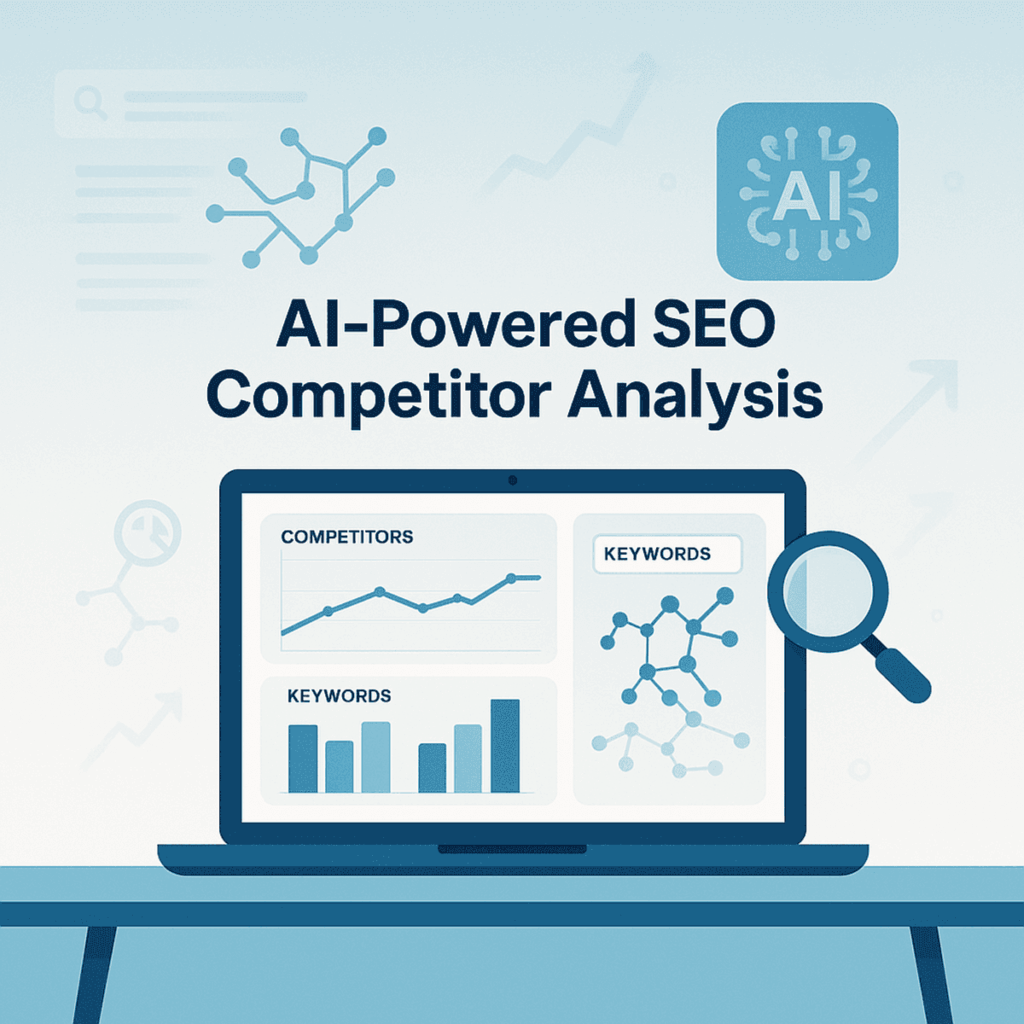
AI SEO competitor research has transformed how digital marketers analyze their competitive landscape. Traditional manual audits that took weeks can now be completed in hours, providing deeper insights into content gaps, keyword opportunities, and technical weaknesses. This comprehensive guide explores how artificial intelligence tools are reshaping competitive analysis, offering practical strategies to identify your rivals’ strengths and exploit their vulnerabilities. You will learn the exact workflows, metrics, and AI-powered techniques used by top SEO agencies to dominate search engine results pages.
Understanding AI SEO Competitor Research
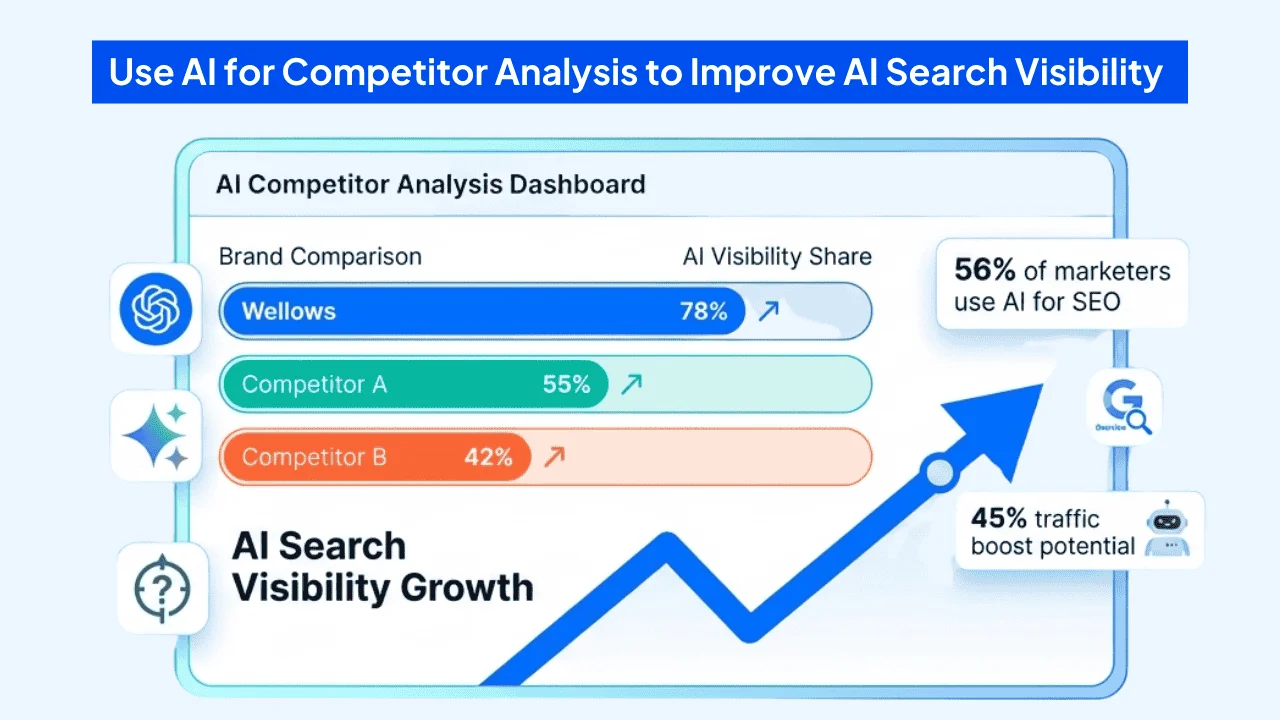
AI SEO competitor research refers to the systematic process of using machine learning algorithms and natural language processing to analyze your competitors’ online presence. Unlike traditional methods that rely on manual data collection, AI systems can process millions of data points simultaneously, identifying patterns that human analysts might miss. These tools examine everything from keyword usage and backlink profiles to content structure and user engagement metrics.
The core advantage lies in predictive analysis. AI algorithms don’t just tell you what your competitors are doing now; they forecast what they might do next. By analyzing historical data, content velocity, and algorithm updates, these systems provide actionable intelligence that informs your SEO strategy. This approach moves beyond simple observation into strategic foresight, enabling proactive rather than reactive decision-making.
The Evolution from Manual to AI-Driven Analysis
Five years ago, competitor research meant manually checking a dozen URLs, noting keyword densities, and guessing at backlink strategies. Today, AI platforms like Semrush, Ahrefs, and Clearscope offer automated competitor tracking that updates in real-time. These systems crawl millions of pages daily, creating dynamic competitive landscapes that change as search algorithms evolve.
Machine learning models now understand semantic relevance, user intent, and topical authority. They can identify which of your competitors’ pages rank for multiple keywords, which content clusters drive the most traffic, and which backlinks provide the highest domain authority. This depth of analysis was impossible with manual methods, making AI SEO competitor research an essential component of modern digital strategy.
Key Components of AI-Powered Competitive Analysis
Effective AI SEO competitor research involves several interconnected components that work together to provide a complete picture of your competitive landscape. Each element offers unique insights that contribute to your overall strategy.
Automated Keyword Gap Analysis
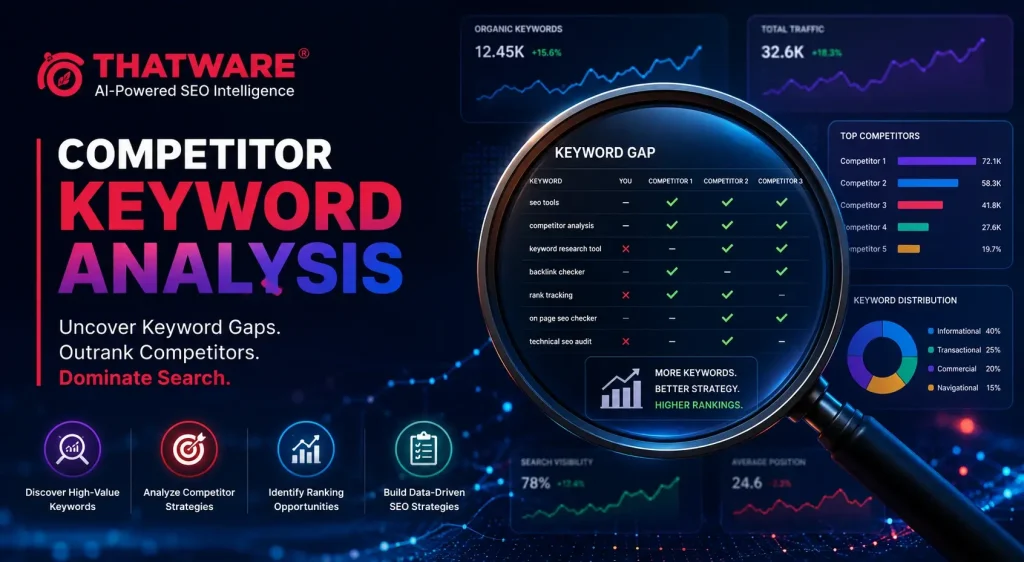
AI tools excel at identifying keyword opportunities that your competitors rank for but you don’t. These systems analyze millions of keyword variations, including long-tail phrases, question-based queries, and semantic variants. The algorithms assess search volume, difficulty scores, and click-through rates to prioritize opportunities based on your site’s authority and topical relevance.
Modern AI platforms go beyond simple keyword lists. They cluster related terms into topical maps, showing you which content themes you should develop to compete effectively. This approach ensures you’re not just targeting individual keywords but building comprehensive content ecosystems that establish topical authority in your niche.
Content Gap Identification
AI algorithms compare your content library against your competitors’ to identify missing topics, underdeveloped subtopics, and content format opportunities. These systems analyze word counts, media usage, internal linking structures, and readability scores to determine why certain pages outperform others.
Natural language processing models evaluate content quality beyond surface metrics. They assess entity usage, semantic coherence, and topical depth to identify why Google ranks certain pages higher. This analysis reveals whether your competitors are winning because of superior content, better technical SEO, or stronger backlink profiles.
Backlink Intelligence and Link Gap Analysis
AI-powered backlink analysis examines your competitors’ link profiles to identify high-authority domains that link to them but not to you. These systems evaluate link quality, anchor text distribution, and link velocity to determine which backlinks contribute most to search rankings.
Machine learning algorithms can predict which prospects are most likely to link to your content based on their linking history and topical relevance. This predictive capability transforms link building from a guessing game into a targeted outreach strategy, significantly improving your success rates.
Essential AI Tools for Competitor Research
The market offers numerous AI-powered tools designed specifically for SEO competitor research. Each platform brings unique capabilities to the analysis process, and understanding their strengths helps you build an effective tech stack.
| Tool | Primary Function | Unique AI Features | Best For |
|---|---|---|---|
| Semrush | Comprehensive SEO suite | AI writing assistant, topic research, position tracking | Enterprise-level competitive analysis |
| Ahrefs | Backlink and keyword analysis | Content gap analysis, rank tracking, site audits | Link building strategies |
| Clearscope | Content optimization | NLP-based content scoring, entity recommendations | On-page SEO improvements |
| Surfer SEO | On-page optimization | Content editor, SERP analyzer, audit tool | Real-time content optimization |
| Frase.io | Content research and writing | AI content briefs, competitor analysis | Content creation workflows |
Selecting the Right AI Tools
Choosing the appropriate AI SEO competitor research tools depends on your specific needs, budget, and technical expertise. Enterprise organizations might require comprehensive platforms like Semrush or Ahrefs that offer API access and custom reporting. Smaller businesses might benefit from more focused tools like Clearscope or Surfer SEO that specialize in content optimization.
Consider your team’s technical capabilities when selecting tools. Some AI platforms require significant training to use effectively, while others offer intuitive interfaces that beginners can master quickly. Start with one or two tools that address your most pressing competitive analysis needs, then expand your toolkit as your team becomes more proficient.
Step-by-Step AI SEO Competitor Research Process
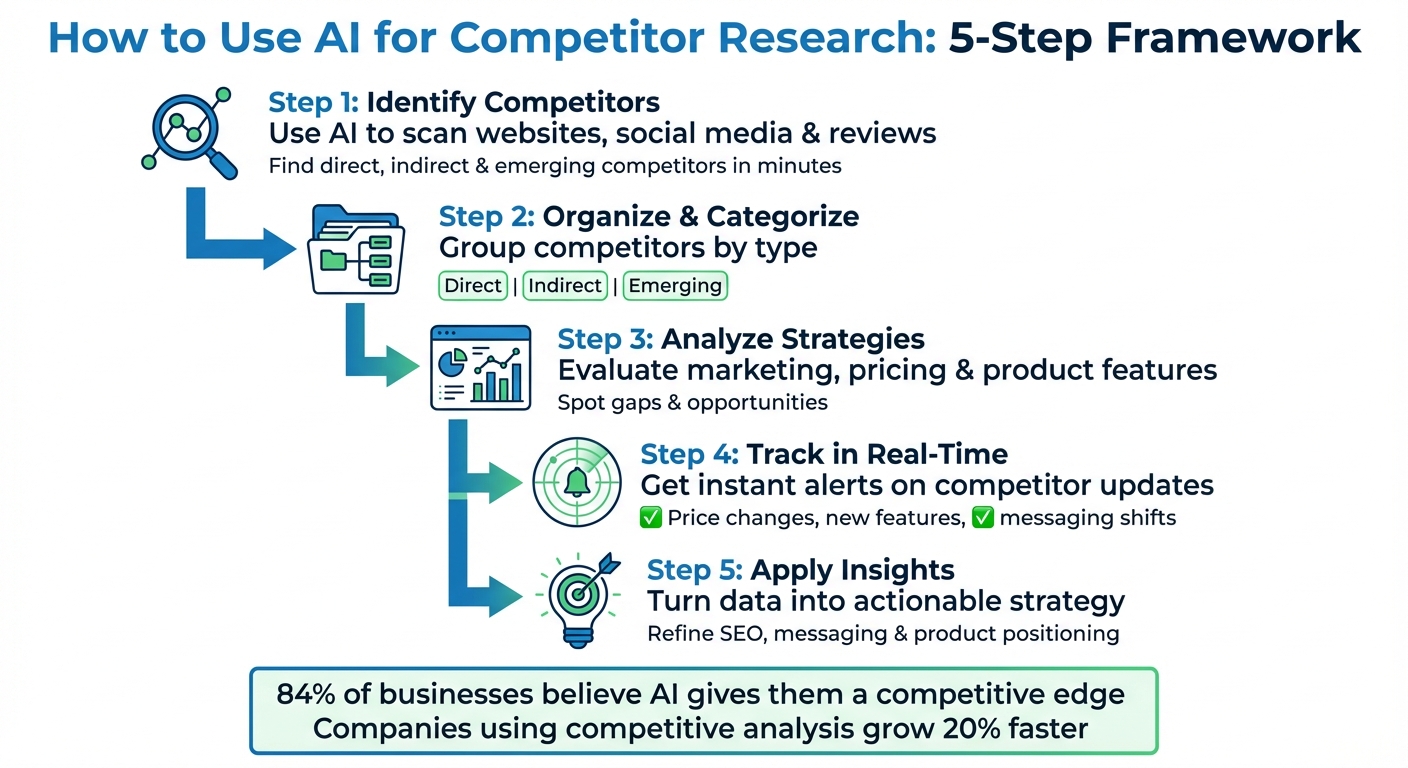
Implementing AI SEO competitor research requires a systematic approach that combines technology with strategic thinking. Follow this proven workflow to maximize your competitive intelligence.
Step 1: Identify Your True Competitors
AI tools can help you identify competitors you might not have considered. Beyond obvious direct competitors, these systems analyze search engine results pages to find websites that consistently rank for your target keywords. This includes content publishers, industry directories, and even social media platforms that compete for the same search visibility.
Use AI-powered competitor discovery tools to analyze your current rankings and identify which domains appear most frequently alongside your content. These tools evaluate overlap in keyword targeting, content topics, and target audiences to create a comprehensive competitive set that reflects your actual search landscape.
Step 2: Conduct Comprehensive Keyword Analysis
Run automated keyword gap analyses to identify opportunities your competitors are exploiting. AI tools will generate lists of keywords where your competitors rank in the top 10 but you’re absent from the top 50. Prioritize these opportunities based on search volume, commercial intent, and difficulty scores.
Analyze the semantic relationships between keywords to identify content clusters that support topical authority. AI algorithms can map out which keywords belong together, helping you structure your content strategy around comprehensive topic coverage rather than isolated keyword targeting.
Step 3: Analyze Content Performance Metrics
Use AI content analysis tools to evaluate why certain competitor pages outperform others. These systems assess content length, readability, media usage, internal linking, and engagement metrics to identify winning formulas. Pay attention to content freshness, update frequency, and the use of structured data.
Machine learning models can predict which content attributes contribute most to search rankings in your specific niche. These insights help you prioritize content improvements that will have the greatest impact on your visibility.
Step 4: Evaluate Technical SEO Factors
AI-powered site audit tools can crawl your competitors’ websites to identify technical advantages they might have. These include page speed, mobile optimization, Core Web Vitals, structured data implementation, and crawl efficiency. Understanding these technical factors helps you identify areas where you need to improve.
Compare your site’s technical health against your competitors’ to identify gaps that might be limiting your rankings. AI tools can prioritize technical issues based on their potential impact on search performance, helping you allocate development resources effectively.
Step 5: Monitor and Adapt Continuously
AI SEO competitor research is not a one-time activity but an ongoing process. Set up automated monitoring that tracks your competitors’ rankings, content updates, and backlink acquisition. These systems alert you to significant changes that might affect your competitive position.
Use AI-powered reporting tools to track your progress against competitors over time. These reports should highlight areas where you’re gaining ground and areas where you’re falling behind, enabling data-driven adjustments to your strategy.
Benefits of AI-Driven Competitive Intelligence
Implementing AI SEO competitor research delivers numerous advantages that directly impact your search performance and business outcomes.
- Time efficiency: AI tools process data in minutes that would take human analysts weeks to compile, freeing your team for strategic work.
- Accuracy improvements: Machine learning algorithms eliminate human error in data collection and analysis, providing more reliable insights.
- Predictive capabilities: AI systems identify trends and patterns that indicate future competitive moves, enabling proactive strategy.
- Scalability: AI tools can monitor unlimited competitors and keywords, making them suitable for organizations of any size.
- Cost effectiveness: Automated analysis reduces the need for expensive manual research, providing better ROI on your SEO investment.
Limitations and Considerations
While AI SEO competitor research offers significant advantages, it’s important to understand its limitations. AI tools provide data and insights, but they cannot replace human judgment in strategy development. The quality of your analysis depends on the quality of your data inputs and your ability to interpret AI recommendations within your specific business context.
Privacy regulations and data protection laws may limit the types of competitor data you can collect and analyze. Ensure your research practices comply with applicable regulations, particularly when analyzing user behavior data or personal information.
Common Mistakes in AI SEO Competitor Research
Many organizations make avoidable errors when implementing AI-powered competitive analysis. Understanding these pitfalls helps you maximize the value of your research efforts.
Focusing on the Wrong Competitors
Many businesses analyze competitors based on industry similarity rather than search visibility. Your true competitors are the websites that rank for your target keywords, regardless of whether they offer similar products or services. A content publisher might be your biggest search competitor even if they don’t sell anything.
Use AI tools to identify your actual search competitors based on keyword overlap and SERP presence. This data-driven approach ensures you’re analyzing the right websites and allocating resources effectively.
Ignoring User Intent Signals
AI tools provide keyword data, but understanding user intent requires human analysis. Two keywords might have similar search volumes but completely different user intents. Targeting the wrong intent can result in high rankings but poor conversion rates.
Analyze the search results for your target keywords to understand what type of content satisfies user intent. AI tools can help by categorizing keywords by intent type, but you should verify these categorizations against actual search results.
Copying Instead of Differentiating
AI SEO competitor research should inform your strategy, not dictate it. Copying your competitors’ content structures and keyword targeting creates redundant content that provides no additional value to users. Instead, use competitive insights to identify gaps and opportunities for differentiation.
Look for areas where your competitors are weak and develop content that addresses those gaps. This approach positions you as a unique authority rather than a follower in your niche.
Practical Applications and Case Studies
Understanding how AI SEO competitor research works in practice helps you apply these techniques effectively. Consider these real-world applications across different industries.
E-commerce Competitive Analysis
An online retailer used AI competitor research to identify that their main competitors were ranking for product comparison keywords that they had completely ignored. By creating detailed comparison content and optimizing product pages for these terms, they increased organic traffic by 45% within three months.
The AI tools also revealed that competitors were winning featured snippets for “best” and “top” keywords. By restructuring their content to target these featured snippet opportunities, they captured additional visibility without significant content investment.
B2B SaaS Competitive Intelligence
A B2B software company used AI-powered analysis to identify content gaps in their competitors’ documentation and tutorial content. They created comprehensive guides that addressed common user questions more thoroughly than their competitors, establishing themselves as the authoritative resource in their niche.
The AI tools also revealed that competitors were acquiring high-quality backlinks from industry publications. By targeting these same publications with data-driven content and expert commentary, they improved their domain authority and search visibility.
Important Notes for Successful Implementation
Maximizing the value of AI SEO competitor research requires attention to several critical factors that influence your success.
Data quality matters: AI tools are only as good as the data they analyze. Ensure your tools have access to accurate, up-to-date data sources and that you’re monitoring the right metrics.
Combine AI with human expertise: AI provides insights, but human judgment is essential for interpreting those insights within your business context. Build a team that combines technical SEO expertise with strategic thinking.
Focus on actionable insights: Don’t get overwhelmed by the volume of data AI tools provide. Focus on insights that lead to specific actions and measurable improvements in your search performance.
Regular strategy reviews: The competitive landscape changes constantly. Review your AI-generated competitive intelligence monthly to ensure your strategy remains relevant and effective.
Frequently Asked Questions
What is AI SEO competitor research?
AI SEO competitor research is the process of using artificial intelligence and machine learning algorithms to analyze competitors’ search engine optimization strategies. This includes examining their keyword targeting, content quality, backlink profiles, technical SEO factors, and user engagement metrics to identify opportunities for improving your own search performance.
How much does AI SEO competitor research cost?
The cost varies significantly depending on the tools and scope of analysis. Basic AI-powered competitor research tools start around $99 per month, while comprehensive enterprise platforms can cost $500 or more per month. Many tools offer free trials or limited free versions that allow you to test their capabilities before committing.
Can AI replace human SEO analysts?
AI cannot fully replace human SEO analysts, but it significantly enhances their capabilities. AI tools handle data collection, pattern recognition, and routine analysis, freeing human experts to focus on strategy, creative content development, and interpretation of insights within business contexts. The most effective approach combines AI efficiency with human expertise.
How often should I conduct AI SEO competitor research?
Continuous monitoring is ideal, but at minimum, you should conduct comprehensive competitive analysis monthly. Set up automated alerts to notify you of significant changes in your competitors’ strategies, such as new content launches, backlink acquisitions, or ranking changes. This ensures you can respond quickly to competitive threats and opportunities.
What metrics matter most in AI competitor analysis?
Key metrics include organic traffic, keyword rankings, domain authority, backlink quality and quantity, content freshness, page speed, mobile usability, and engagement metrics like bounce rate and time on page. The most important metrics depend on your specific goals and industry context.
Conclusion
AI SEO competitor research has fundamentally changed how digital marketers approach competitive analysis. The ability to process vast amounts of data quickly and identify patterns that human analysts might miss provides a significant competitive advantage. By implementing the strategies outlined in this guide, you can gain deeper insights into your competitive landscape, identify opportunities more effectively, and make data-driven decisions that improve your search visibility.
The key to success lies in combining AI-powered tools with human expertise and strategic thinking. Use AI to handle the heavy lifting of data collection and analysis, but apply your judgment to interpret insights within your specific business context. Focus on actionable intelligence that drives measurable improvements rather than getting lost in data volume.
Start implementing AI SEO competitor research today to understand your competitive position better and develop strategies that help you outrank your rivals. The tools and techniques are available; the question is how effectively you apply them to achieve your SEO goals.
Xem thêm:
- AI SEO Link Juice: The Complete Guide to Automating Authority Transfer in 2025
- AI SEO Microsoft Copilot SEO: The Complete Guide to Ranking in the New Search Era
- AI SEO AI Search Traffic: The Complete Guide to Winning Generative Engine Rankings
- AI SEO Quality Score: The Complete Guide to Scoring Higher in 2025
- AI SEO Content Scaling: The Complete Playbook for 2025 and Beyond
Bài viết cùng chủ đề:

AI SEO SEO Automation with Make: The Complete Workflow Guide

AI SEO SEO Automation with Zapier: The Complete Workflow Guide

AI SEO SEO Automation with n8n: The Complete Workflow Guide
AI SEO SEO Automation with Gemini: The Complete Guide to Scaling Organic Growth

AI SEO SEO Automation with Claude: The Complete Guide to Scaling Content in 2025

AI SEO SEO Automation with ChatGPT: The Complete Playbook for 2025

AI SEO & SEO Automation for Affiliate Sites: The 2025 Playbook for Passive Income Growth
AI SEO & SEO Automation for Bloggers: The Complete Guide to Scaling Your Content

AI SEO & SEO Automation for Agencies: The Complete 2025 Playbook

AI SEO and SEO Automation for Ecommerce: The Complete Playbook for 2025

AI SEO & SEO Automation for WordPress: The Complete Playbook for 2025
AI SEO SEO Automation Strategy: The Complete Playbook for 2025

Mastering the AI SEO SEO Automation Process: A Complete Guide to Scaling Organic Growth
AI SEO SEO Automation System: The Complete Guide to Scaling Organic Growth in 2025
AI SEO SEO Automation Platform: The Complete Guide to Scaling Organic Growth in 2025
AI SEO SEO Automation Software: The Complete Guide to Scaling Organic Growth in 2025















