
No products in the cart.
AI SEO Content Architecture: The Complete Blueprint for Scalable Organic Growth
10
Aug
Aug
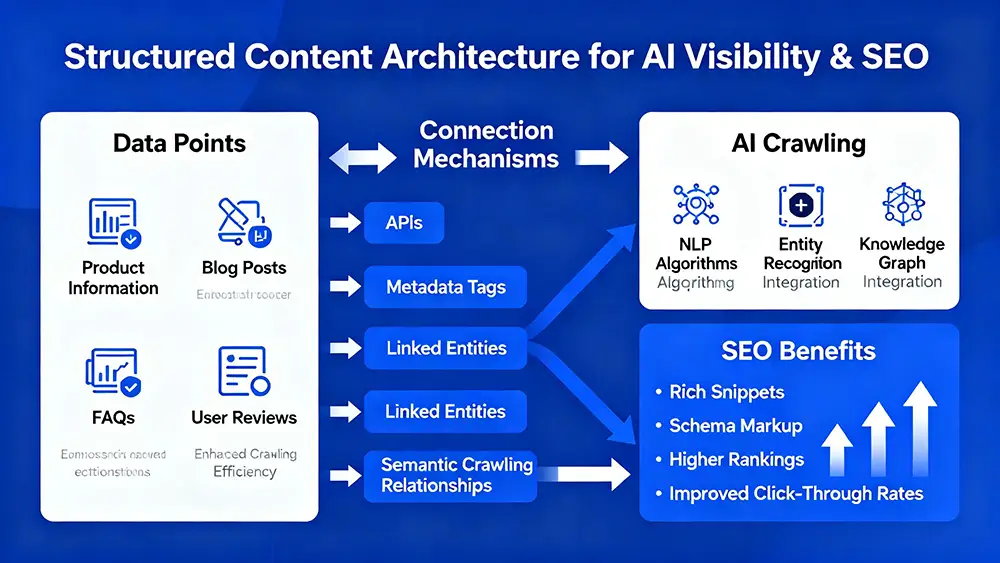
AI SEO Content Architecture is the strategic framework that combines artificial intelligence tools with structured content planning to create search-optimized digital ecosystems. This approach moves beyond simple keyword placement, focusing on how content clusters, internal linking, and semantic relevance work together. Modern search engines prioritize entities and user intent over isolated pages. By implementing a robust AI-driven architecture, businesses can achieve higher rankings, improved crawl efficiency, and a significant competitive advantage in organic search results.
Understanding AI SEO Content Architecture
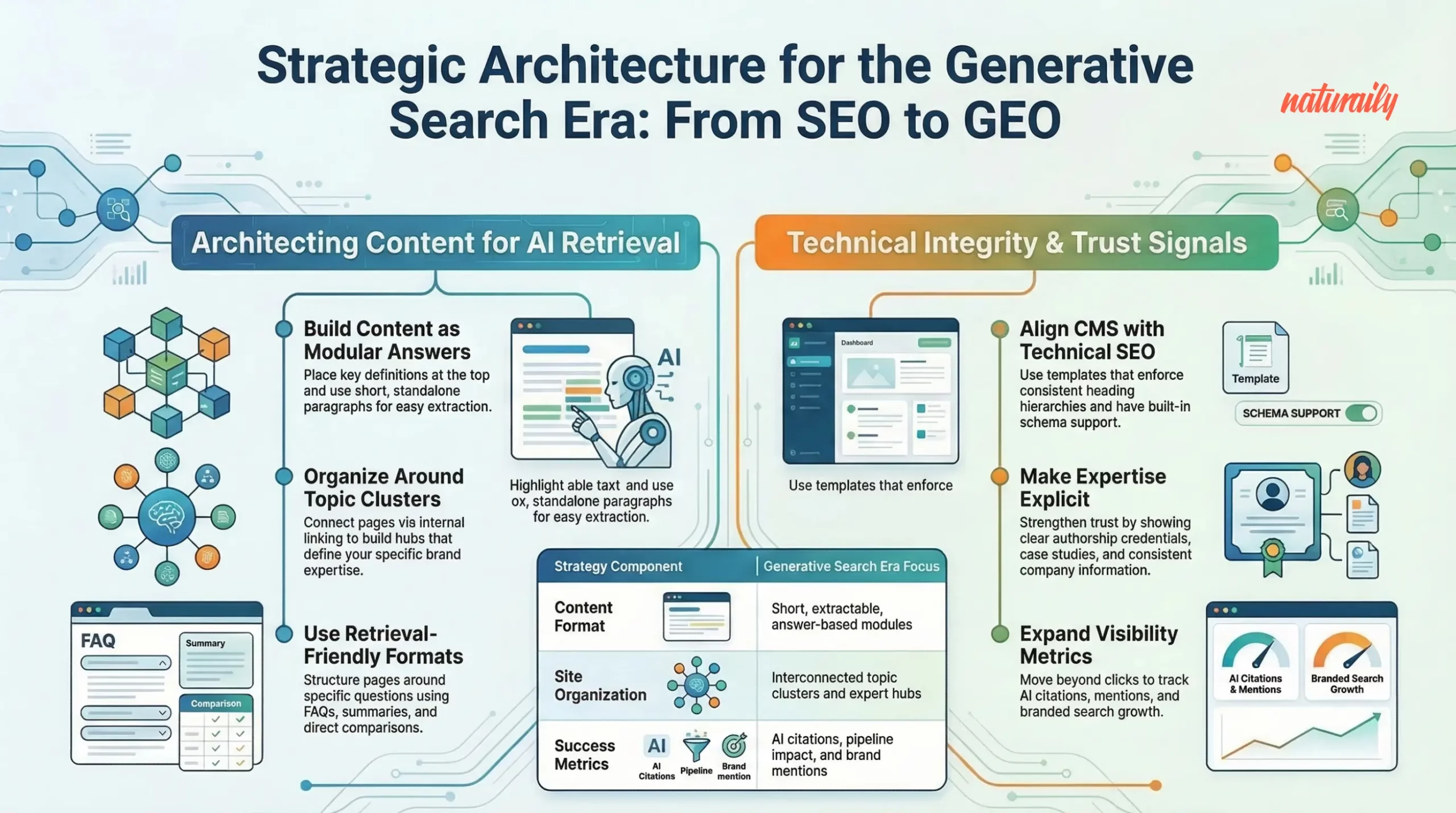
AI SEO Content Architecture refers to the systematic process of using machine learning algorithms to design, organize, and interlink website content. It involves analyzing vast datasets to identify topic clusters, search intent patterns, and content gaps. The architecture dictates how information is structured across your site, from the homepage down to individual blog posts. This ensures that every piece of content serves a specific purpose in the overall SEO strategy.
Traditional SEO often treats pages as standalone entities. AI-driven architecture, however, views them as interconnected nodes within a semantic network. This holistic perspective allows search engines to understand the depth and breadth of your expertise on a given subject. The result is a website that is not only easier for users to navigate but also easier for Google’s crawlers to index and rank.
The Core Components of an AI-Driven Content Framework
To build a successful AI SEO Content Architecture, you need to understand its fundamental building blocks. These components work in tandem to create a cohesive and powerful SEO asset.
- Topic Clusters: A central pillar page that covers a broad topic, supported by multiple cluster pages that dive into specific subtopics. AI helps identify which subtopics are most relevant and valuable.
- Semantic Entity Mapping: AI tools like Natural Language Processing (NLP) identify key entities (people, places, concepts) and their relationships. This helps search engines understand the context of your content.
- Intent-Based Content Silos: Grouping content based on user intent (informational, transactional, navigational) ensures that users find the right type of content at the right stage of their journey.
- Dynamic Internal Linking: Algorithms suggest optimal anchor text and link placements based on relevance and authority flow, ensuring link equity is distributed effectively.
- Predictive Gap Analysis: AI analyzes competitor content and search trends to identify topics you haven’t covered yet, allowing you to fill gaps before your competitors do.
- Improved Search Rankings: By covering topics comprehensively and structuring content logically, you signal authority to search engines, leading to higher rankings for a wider range of keywords.
- Increased Organic Traffic: Ranking for more keywords and capturing more featured snippets directly translates to more clicks and visits from search engines.
- Enhanced User Experience: A logical site structure makes it easier for users to find the information they need, reducing frustration and increasing engagement.
- Scalability: AI allows you to scale your content production without sacrificing quality or coherence. You can quickly identify new topics and generate optimized briefs.
- Better ROI on Content: Instead of creating random blog posts, you create a strategic asset that compounds in value over time. Every piece of content supports the others.
- Faster Indexing: A clear site architecture with strong internal links helps search engine crawlers find and index your new content more quickly.
- Data Quality is Paramount: The insights you get from AI are only as good as the data you feed it. Ensure your analytics and search console data are accurate and properly configured.
- Human Oversight is Non-Negotiable: AI provides recommendations, but a skilled SEO professional must make the final decisions. They need to understand the business context and brand strategy.
- Patience is Key: Building topical authority takes time. You will not see results overnight. It requires consistent effort and continuous optimization over several months.
- Focus on Quality over Quantity: It is better to have 10 excellent, in-depth articles than 50 mediocre ones. The architecture should prioritize depth and value.
- Integrate with Other SEO Efforts: Content architecture does not work in a silo. It must be integrated with technical SEO, link building, and performance monitoring for maximum impact.
Why AI is Essential for Modern Content Architecture
The volume of content published online is staggering. Manually planning a content strategy that covers all relevant subtopics, maintains topical authority, and adapts to algorithm updates is nearly impossible. AI SEO Content Architecture automates and enhances these processes. It processes millions of data points in seconds, revealing patterns that human analysts might miss.
Search engines like Google have evolved to prioritize E-E-A-T (Experience, Expertise, Authoritativeness, Trustworthiness). A well-structured content architecture signals expertise to search engines. When your site has a clear hierarchy and comprehensive coverage of a topic, it demonstrates that you are a credible source. AI helps you build this credibility systematically rather than haphazardly.
How AI Algorithms Analyze Search Intent
AI tools can classify search queries with remarkable accuracy. They analyze the language, the user’s search history, and the context of the query to determine what the user actually wants. This goes beyond simple keyword matching. For example, the query “best running shoes” could be informational or transactional. AI can determine this based on modifiers like “review” or “buy” and adjust the content architecture accordingly.
This analysis allows you to create content that directly answers the user’s question. By mapping content to specific intents, you reduce bounce rates and increase dwell time. These user engagement metrics are critical ranking factors. An AI-driven architecture ensures that your content is not just found, but also consumed and valued.
Building an Effective AI SEO Content Architecture Strategy
Implementing this framework requires a systematic approach. It is not about using a single AI tool but about integrating AI into your entire content lifecycle. The following steps provide a practical guide to building your architecture.
Step 1: Conduct AI-Powered Keyword and Topic Research
Start by using AI-powered SEO platforms like Clearscope, MarketMuse, or Surfer SEO. These tools analyze the top-ranking pages for your target keywords. They provide a list of related terms, questions, and entities that you should include in your content. This data forms the basis of your topic clusters.
Instead of just looking at “AI SEO Content Architecture,” the tool will suggest related concepts like “semantic search,” “content siloing,” “NLP in SEO,” and “programmatic SEO.” These suggestions become your cluster topics. This research phase is crucial for building a comprehensive architecture that covers all facets of the main topic.
Step 2: Structure Your Content Silos and Pillar Pages
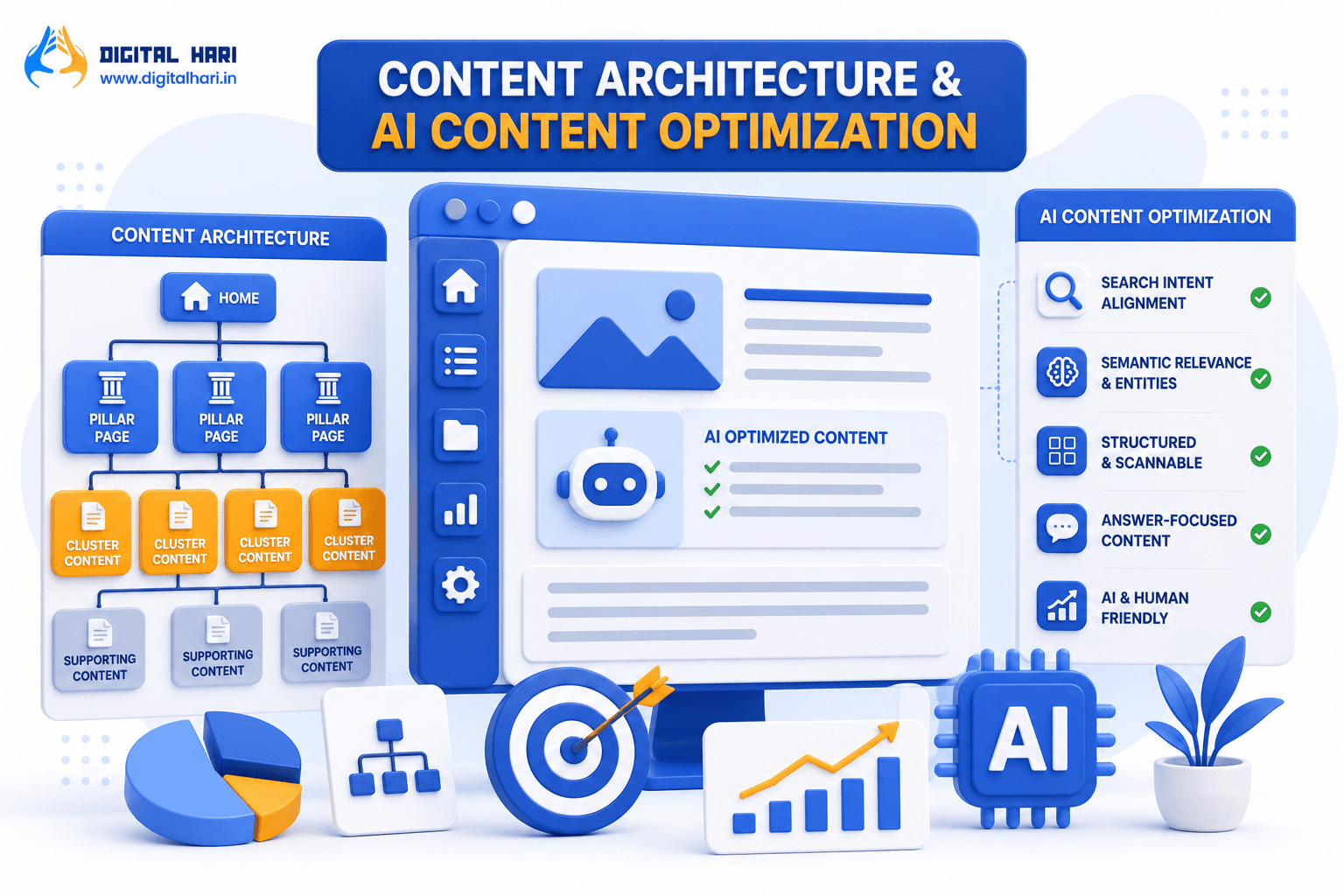
Once you have your topics, organize them into a hierarchy. Your pillar page should be the most comprehensive piece of content on the main topic. It should link out to all the cluster pages. Each cluster page should link back to the pillar page and to other relevant cluster pages. This creates a web of interconnected content.
For example, your pillar page is “AI SEO Content Architecture.” Your cluster pages might be “How to Use NLP for SEO,” “Top AI Content Writing Tools,” and “Internal Linking Strategies for SEO.” Each cluster page addresses a specific subtopic in detail, while the pillar page provides a high-level overview and links to all of them.
Step 3: Generate Content Briefs with AI Assistance
AI tools can generate detailed content briefs for your writers. These briefs include the target keyword, secondary keywords, suggested headings, word count, and even the tone of voice. This ensures that every piece of content aligns with the overall architecture and targets the right search queries. It streamlines the writing process and reduces the need for extensive revisions.
These briefs are not just about keywords. They include semantic terms that help search engines understand the context. They also suggest specific questions to answer, which increases the chances of appearing in featured snippets. This level of detail is essential for building a cohesive and authoritative content library.
Step 4: Implement Intelligent Internal Linking
Internal linking is the glue that holds your content architecture together. AI tools can analyze your site structure and suggest optimal link placements. They consider the anchor text, the relevance of the linked pages, and the flow of PageRank. This ensures that your most important pages receive the most link equity.
Automated linking tools can even add links to your content as you publish it. This saves time and ensures consistency. A well-linked architecture helps search engines discover new pages faster and understand the relationship between them. It also improves user navigation, keeping visitors on your site longer.
Benefits of Implementing AI SEO Content Architecture
The advantages of this approach are substantial and measurable. Companies that adopt AI-driven content strategies often see significant improvements in their organic performance. The benefits extend beyond just rankings to include overall business efficiency.
Limitations and Challenges of AI in Content Architecture
While the benefits are clear, it is important to acknowledge the limitations. AI is a powerful tool, but it is not a magic bullet. Understanding these challenges helps you use AI more effectively and avoid common pitfalls.
One major challenge is the potential for homogenization. If everyone uses the same AI tools and follows the same data, content can start to sound similar. To avoid this, you must inject your unique brand voice, experience, and insights into the content. AI should provide the framework, but human creativity must fill in the details.
Another challenge is the cost. High-quality AI SEO tools can be expensive, especially for small businesses. Additionally, t Simply inputting a keyword and getting a brief is not enough; you need to understand how to interpret the data and apply it strategically.
AI SEO Content Architecture vs. Traditional Content Planning
To fully appreciate the value of AI-driven architecture, it helps to compare it directly with traditional methods. The differences are stark and highlight the evolution of SEO strategy.
| Feature | Traditional Content Planning | AI SEO Content Architecture |
|---|---|---|
| Keyword Research | Manual analysis of search volume and difficulty. | Automated discovery of semantic topics and entity relationships. |
| Content Structure | Often isolated blog posts targeting single keywords. | Interconnected topic clusters with pillar pages and supporting content. |
| Scalability | Difficult to scale without losing coherence. | Highly scalable with automated briefs and gap analysis. |
| Adaptability | Slow to react to algorithm updates. | Quickly adjusts based on real-time search data and trends. |
| User Intent | Often guessed based on keyword type. | Precisely mapped using NLP and machine learning models. |
| Internal Linking | Manual and often inconsistent. | Algorithmically optimized for maximum relevance and equity flow. |
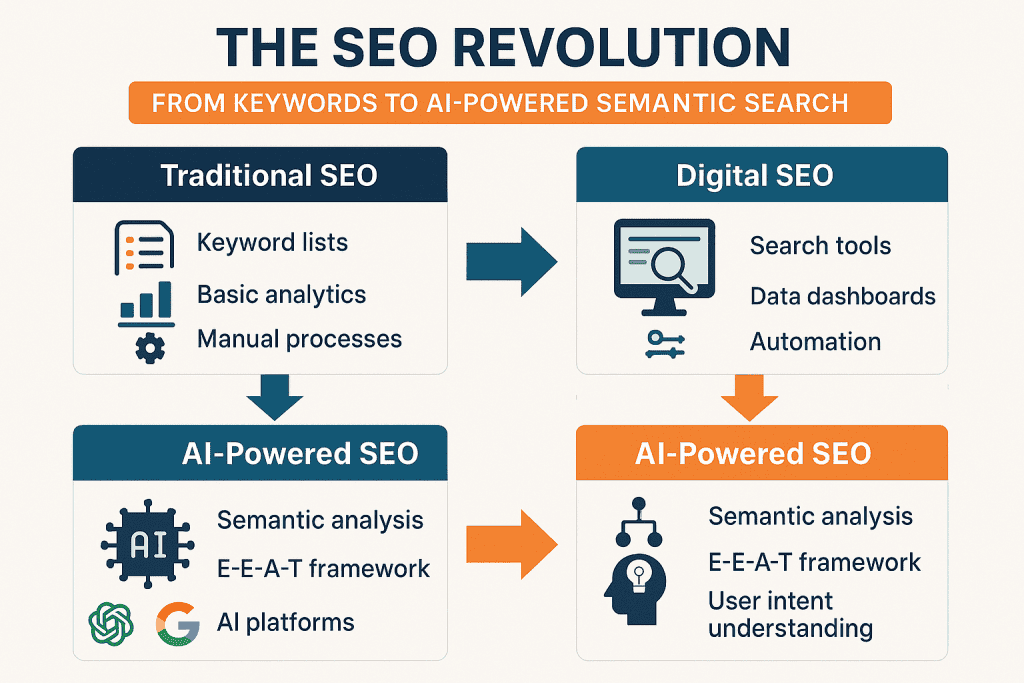
This comparison shows that AI SEO Content Architecture is not just an upgrade; it is a fundamental shift in how we approach content strategy. It moves from a reactive, page-by-page approach to a proactive, holistic, and data-driven methodology.
Practical Applications and Real-World Examples
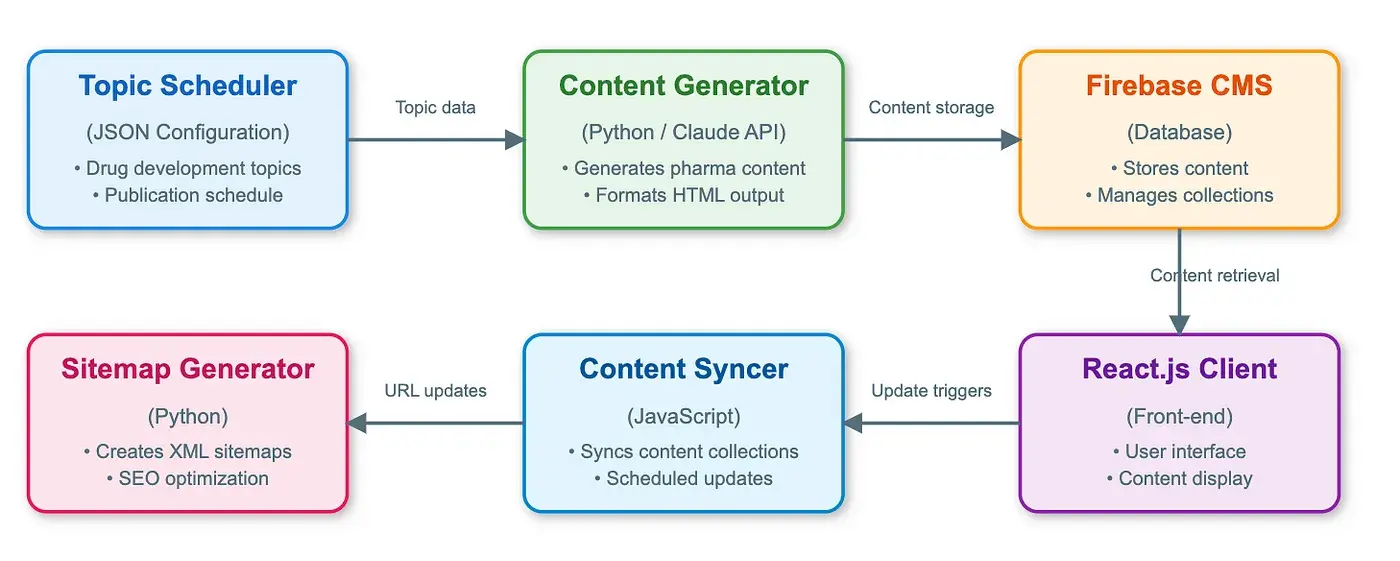
Many leading companies are already using this architecture to dominate their niches. For instance, large media sites like HubSpot and Forbes use AI to plan their massive content calendars. They ensure that every article on a topic links to a central pillar page, creating a powerful authority hub.
In the e-commerce sector, AI architecture is used to create detailed category pages that link to individual product pages. This helps search engines understand the range of products and rank the category pages for high-value commercial keywords. The architecture guides users from broad browsing to specific product purchases.
For B2B SaaS companies, this approach is used to create comprehensive documentation and resource centers. They structure content around the customer journey, from awareness (blog posts) to consideration (case studies) to decision (pricing pages). This ensures that potential customers find the right information at each stage of their buying process.
Common Mistakes and How to Avoid Them
Implementing AI SEO Content Architecture is not without its pitfalls. Being aware of these common mistakes can save you time, money, and frustration.
Mistake 1: Relying Solely on AI for Content Creation
AI-generated content can be generic and lack the nuance of human writing. It often misses the personal experience and unique insights that build trust with readers. The solution is to use AI for research, structure, and optimization, but always have a human editor refine the content for voice and accuracy.
Mistake 2: Ignoring User Experience
An architecture that is perfect for search engines but confusing for users is a failure. Ensure your internal links are contextual and helpful, not just for SEO. The navigation should be intuitive, allowing users to find related content naturally. Prioritize the user journey over algorithmic perfection.
Mistake 3: Creating Thin Cluster Pages
Each cluster page must provide substantial value. If you create dozens of short, low-quality pages just to fill out a cluster, it will hurt your rankings. Google’s helpful content update penalizes thin content. Focus on creating in-depth, authoritative pages for each subtopic.
Mistake 4: Failing to Update the Architecture
Search trends and user behavior change over time. An architecture that worked a year ago may be outdated today. Regularly use AI tools to re-analyze your topic clusters and identify new opportunities or declining topics. Your architecture should be a living, evolving system.
Important Notes for Successful Implementation
Before you start, there are several key considerations to keep in mind. These notes will help you set realistic expectations and achieve the best possible results from your AI SEO Content Architecture efforts.
Frequently Asked Questions (FAQ)
What is the primary goal of AI SEO Content Architecture?
The primary goal is to create a structured, interconnected website that clearly signals topical authority to search engines. This improves rankings, increases organic traffic, and enhances the user experience by making it easier to find relevant information.
How does AI improve keyword research for content architecture?
AI tools go beyond simple keyword volume and difficulty. They analyze the semantic relationships between terms, identify related entities, and group keywords by search intent. This provides a complete picture of a topic landscape, allowing you to build comprehensive content clusters.
Can small businesses benefit from AI SEO Content Architecture?
Yes, absolutely. While enterprise companies were early adopters, many affordable AI tools are now available for small businesses. These tools help smaller sites compete by identifying niche opportunities and creating high-quality content that can outrank larger, less organized competitors.
How often should I update my content architecture?
You should review your architecture at least quarterly. However, you should continuously monitor your search performance and use AI tools to spot new trends. If you see a decline in rankings or a new topic emerging in your niche, it is time to update your structure.
What is the difference between a content silo and a topic cluster?
These terms are often used interchangeably, but t A content silo is a more rigid, hierarchical structure that strictly separates topics. A topic cluster is a more flexible model where a pillar page links to multiple related cluster pages, and those pages can link to each other. The cluster model is generally more aligned with modern SEO best practices.
Conclusion
AI SEO Content Architecture represents the new standard for organic growth. It transforms content creation from a series of isolated tasks into a strategic, data-driven process. By leveraging AI for research, structuring, and optimization, you can build a website that is not only loved by search engines but also genuinely useful to your audience. The shift from manual planning to intelligent architecture is not just a trend; it is a necessity for staying competitive in the evolving digital landscape.
Implementing this framework requires a commitment to continuous learning and adaptation. The tools and algorithms will keep changing, but the core principle remains constant: a well-structured, authoritative website that serves user intent will always win. Start by auditing your current content, identifying your core topics, and using AI to build a better, more connected digital presence. The results will be a stronger brand, a more engaged audience, and sustainable organic traffic for years to come.
Xem thêm:
- AI SEO Ranking Predictions: The Complete Guide to Future-Proofing Your Search Strategy
- How to Get Cited by AI: The Definitive Playbook for Generative Search Visibility
- AI SEO Embeddings: The Complete Guide to Semantic Search Optimization
- AI SEO Social Distribution: The Complete Guide to Automated Content Amplification
- AI SEO Content Brief Generator: The Complete Guide to Streamlining Your Content Workflow
Bài viết cùng chủ đề:

AI SEO SEO Automation with Make: The Complete Workflow Guide

AI SEO SEO Automation with Zapier: The Complete Workflow Guide

AI SEO SEO Automation with n8n: The Complete Workflow Guide
AI SEO SEO Automation with Gemini: The Complete Guide to Scaling Organic Growth

AI SEO SEO Automation with Claude: The Complete Guide to Scaling Content in 2025

AI SEO SEO Automation with ChatGPT: The Complete Playbook for 2025

AI SEO & SEO Automation for Affiliate Sites: The 2025 Playbook for Passive Income Growth
AI SEO & SEO Automation for Bloggers: The Complete Guide to Scaling Your Content

AI SEO & SEO Automation for Agencies: The Complete 2025 Playbook

AI SEO and SEO Automation for Ecommerce: The Complete Playbook for 2025

AI SEO & SEO Automation for WordPress: The Complete Playbook for 2025
AI SEO SEO Automation Strategy: The Complete Playbook for 2025

Mastering the AI SEO SEO Automation Process: A Complete Guide to Scaling Organic Growth
AI SEO SEO Automation System: The Complete Guide to Scaling Organic Growth in 2025
AI SEO SEO Automation Platform: The Complete Guide to Scaling Organic Growth in 2025
AI SEO SEO Automation Software: The Complete Guide to Scaling Organic Growth in 2025















