
No products in the cart.
AI SEO Content Inventory: The Complete Guide to Automating Your Content Asset Management
31
Jul
Jul
Managing a website’s content is no longer about tracking a simple spreadsheet of URLs. As digital estates expand to thousands of pages, the need for a systematic, data-driven approach to content management has become critical. An AI SEO Content Inventory is the modern solution that merges artificial intelligence with your existing content assets, providing a live, intelligent map of every page, its performance, and its potential. This guide explains what this inventory is, why it matters, and how to build one that drives measurable organic growth.
What is an AI SEO Content Inventory?
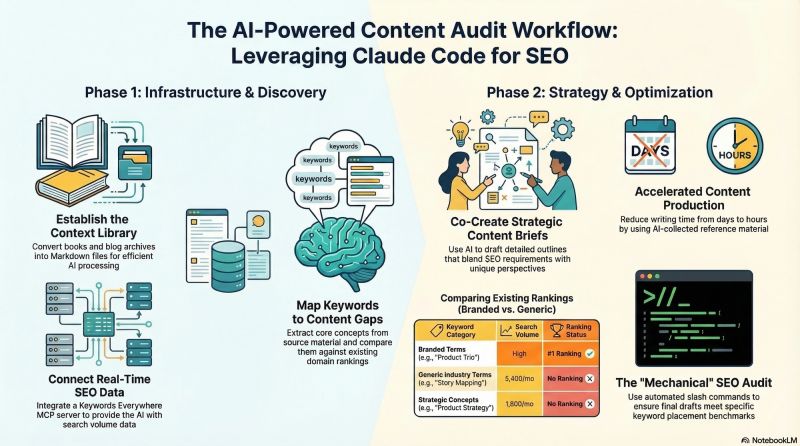
An AI SEO Content Inventory is a centralized, dynamic database of all your website’s content assets, enriched by machine learning algorithms. Unlike a traditional manual inventory that lists URLs and titles, this system uses AI to analyze each piece of content for topical relevance, semantic depth, entity coverage, and performance signals. It automatically categorizes pages, identifies content gaps, and flags decay or cannibalization issues without human intervention.
The core difference lies in automation and intelligence. A standard inventory is a static snapshot. An AI-driven inventory is a living system that continuously crawls your site, reads your content like a search engine, and updates its recommendations based on real-time data. It connects your content library to your SEO strategy, showing you not just what exists, but what should exist next.
Core Components of an AI-Powered Inventory System
To understand how this works, you need to look at the three layers that make up the system. The first layer is data ingestion, where the AI crawls your sitemap, CMS, and analytics. The second layer is semantic analysis, where natural language processing (NLP) determines the topic, entities, and intent of each page. The third layer is the recommendation engine, which scores each asset against your target keywords and user journey stages.
For example, a travel website with 5,000 destination pages can use AI to automatically tag each page by seasonality, user intent (informational vs. transactional), and content freshness. The system then flags pages that have lost ranking velocity, suggests internal linking opportunities, and even drafts briefs for missing subtopics. This transforms content management from a reactive task into a proactive strategy.
Why Traditional Content Inventories Fail
Most marketing teams still rely on spreadsheets or basic CMS exports to manage their content. This approach breaks down at scale for several reasons. First, manual audits are time-consuming and often outdated by the time they are completed. Second, they lack context—a URL and word count tell you nothing about content quality or topical authority. Third, they cannot detect semantic relationships between pages, leading to duplicate coverage and keyword cannibalization.
Consider a B2B SaaS company with 200 blog posts. A manual inventory might show that 50 posts target the keyword “project management software.” Without AI analysis, the team cannot easily see which post has the highest topical authority or which one is outdated. The result is wasted crawl budget and diluted ranking power. An AI inventory solves this by clustering these 50 posts, scoring their entity coverage, and recommending which to merge, update, or redirect.
The Role of Machine Learning in Content Auditing
Machine learning models excel at pattern recognition, which is exactly what content auditing requires. These models can analyze millions of data points, including click-through rates, dwell time, backlink profiles, and SERP features. They learn what a “high-performing” piece of content looks like for your specific niche and then score every existing asset against that benchmark.
This goes beyond simple metrics. The AI can identify that your competitor’s content ranks because it covers specific subtopics like “implementation costs” or “security compliance.” It then checks your inventory for those exact entities. If missing, it generates a content brief with the required sections, questions to answer, and suggested internal links. This level of granularity is impossible to achieve manually across a large site.
How to Build an AI SEO Content Inventory: A Step-by-Step Guide
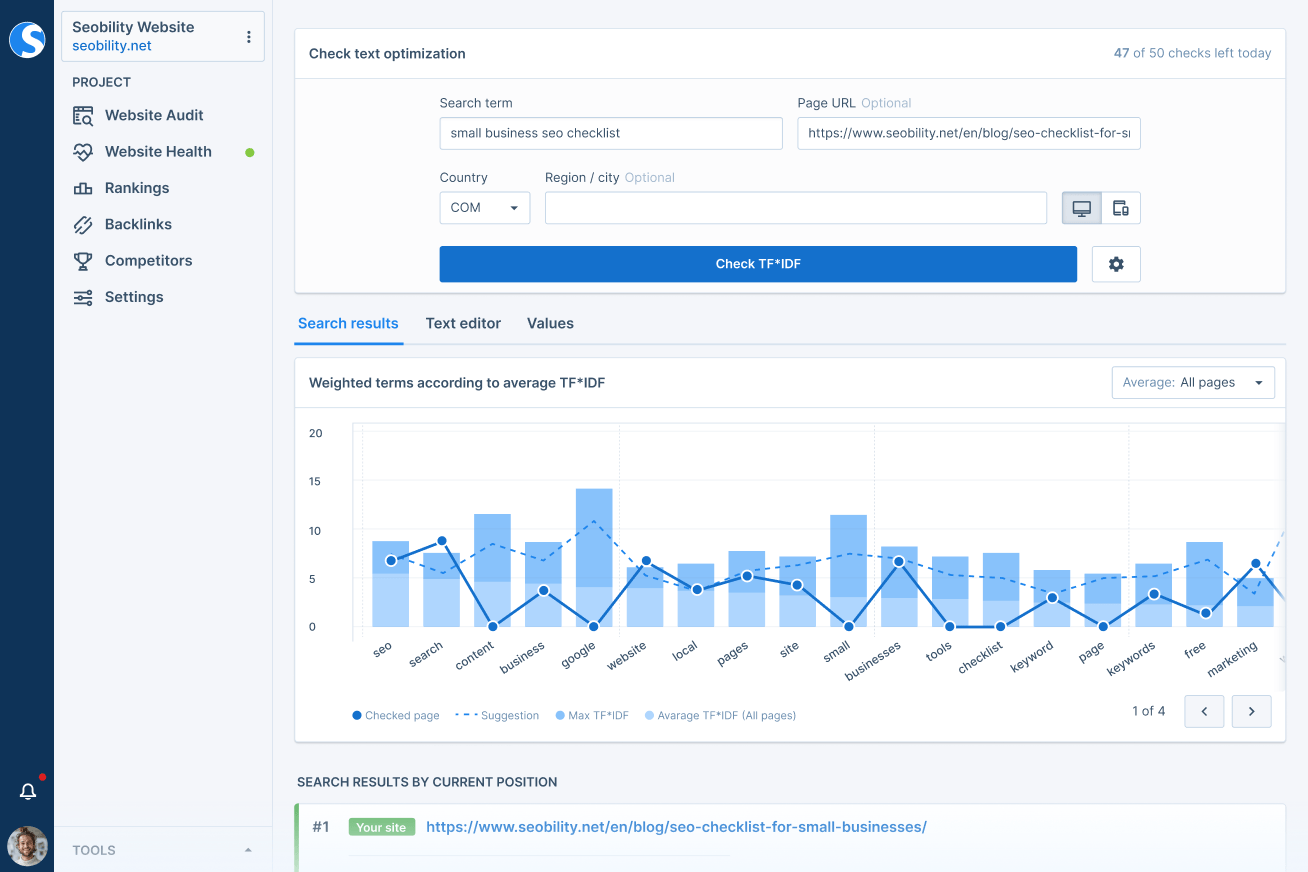
Building this system requires a blend of the right tools and a clear process. You do not need to be a data scientist to implement it, but you do need to understand the workflow. The following steps outline a practical approach that works for most organizations.
Step 1: Centralize Your Content Data Sources
The first step is to connect your content management system, Google Search Console, Google Analytics, and your keyword research tool into a single data warehouse. This is the foundation. Without this integration, the AI has nothing to analyze. Tools like Screaming Frog, Ahrefs, or Semrush can export crawl data, while APIs from GA4 and GSC provide performance metrics.
You should aim to create a unified table where each row represents a URL and each column represents a data point. This includes metadata, word count, internal links, external links, organic clicks, impressions, average position, and conversion data. Once this table is populated, you can feed it into an AI analysis layer.
Step 2: Apply Semantic Analysis and Entity Extraction
Using NLP tools like Google’s Natural Language API or specialized SEO platforms like Clearscope or MarketMuse, you analyze the content of each URL. These tools extract the main entities (people, places, concepts), the sentiment, and the topical relevance. They also compare your content against the top-ranking pages for your target keywords.
This step produces a “content score” for each page. For instance, a page about “best running shoes” might score 85% relevance if it covers cushioning, durability, and price, but only 60% if it misses the “pronation” entity. The AI flags this gap and suggests adding a section on pronation to improve topical authority.
Step 3: Automate the Classification and Tagging
Once the semantic analysis is complete, the AI automatically classifies each piece of content into categories. These categories might include “pillar page,” “supporting blog post,” “product page,” or “outdated news.” It also tags content by funnel stage: top-of-funnel (TOFU), middle-of-funnel (MOFU), and bottom-of-funnel (BOFU).
This classification is dynamic. If a blog post starts ranking for a high-intent keyword, the AI may reclassify it as a MOFU asset and recommend adding a lead magnet or product comparison table. This ensures your inventory always reflects the current reality of your content’s performance, not just its original intent.
Step 4: Generate Actionable Recommendations
The final step is the output. The AI generates a prioritized list of actions for each URL. These actions fall into four categories: Update, Consolidate, Repurpose, or Delete. For example, a page with declining traffic but high backlinks might receive an “Update” recommendation with a list of new subtopics to add. Two pages targeting the same keyword might receive a “Consolidate” recommendation with a 301 redirect suggestion.
This is where the inventory becomes a true asset. Instead of spending weeks manually auditing, you have a daily-updated to-do list that tells you exactly what to do to improve your organic performance. The system also tracks the impact of your changes, closing the loop and learning which recommendations work best for your site.
Key Benefits of Using AI for Content Inventory Management
The advantages of this approach extend far beyond saving time. The most significant benefit is the ability to scale your content operations without scaling your headcount. A team of two can manage a site with 10,000 pages because the AI handles the heavy lifting of analysis and prioritization.
Another major benefit is the elimination of guesswork. Traditional SEO relies on intuition and manual checks. AI provides data-backed evidence for every decision. You know exactly which page to update, what to add, and why. This reduces the risk of wasting resources on content that will not move the needle.
Finally, an AI inventory improves internal alignment. When sales, marketing, and product teams can access a single source of truth about what content exists, they avoid duplication and find assets faster. This is particularly valuable for enterprise organizations with multiple departments creating content.
Limitations and Challenges to Consider
Despite its power, this technology is not a silver bullet. The most common challenge is data quality. If your analytics tracking is broken or your crawl is incomplete, the A You must invest time in cleaning your data sources before implementing the system.
Another limitation is the cost. Enterprise-level AI content platforms can be expensive, and the setup requires technical expertise. Smaller businesses may find it difficult to justify the investment. However, there are lighter-weight options, such as using Python scripts with open-source NLP libraries, for those with technical skills.
Additionally, AI cannot fully replace human judgment. The system can suggest that you delete a page, but it cannot understand the brand value or historical significance of that page. A human editor must always review the AI’s recommendations before executing them.
AI SEO Content Inventory vs. Traditional Content Audit
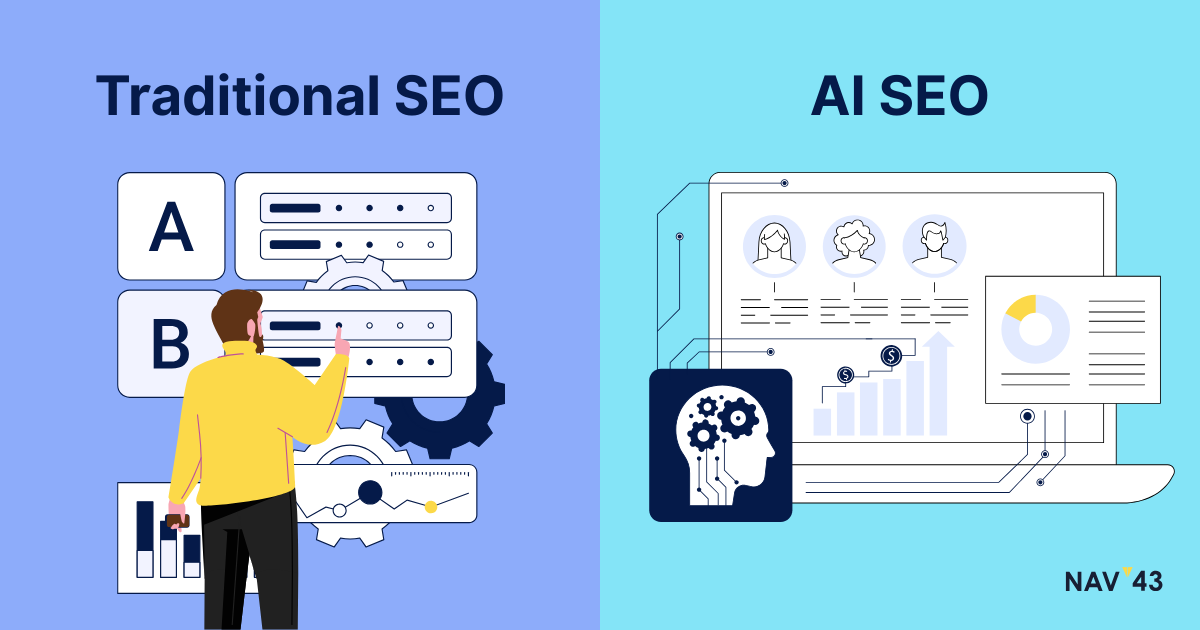
To clarify the value proposition, it helps to compare the two approaches directly. A traditional audit is a point-in-time exercise, often performed quarterly or annually. It involves manually reviewing a sample of pages, which means you might miss issues on the other 90% of your site. The output is a static report that becomes stale quickly.
An AI inventory is continuous. It runs daily, monitoring every page, not just a sample. It detects issues the moment they occur, such as a sudden drop in traffic or a new competitor outranking you. The output is a dynamic dashboard with real-time alerts and prioritized tasks.
| Feature | Traditional Content Audit | AI SEO Content Inventory |
|---|---|---|
| Frequency | Quarterly or annual | Continuous, real-time |
| Coverage | Sample of pages | 100% of pages |
| Analysis Method | Manual review | Machine learning & NLP |
| Output | Static PDF report | Dynamic dashboard with alerts |
| Actionability | Requires manual prioritization | Automated, prioritized tasks |
| Scalability | Fails above 500 pages | Handles 100,000+ pages |
The table above illustrates the fundamental shift. The traditional audit is a rearview mirror, showing you what happened last quarter. The AI inventory is a GPS, showing you where to go next and recalculating the route as conditions change.
Practical Use Cases for Different Business Types
The application of this technology varies by industry. For e-commerce sites, the inventory helps manage product descriptions, category pages, and buying guides. The AI can detect when a product page is missing key specifications that competitors include, and it can automatically generate a list of missing attributes for the content team to add.
For publishers and news sites, the inventory is crucial for managing content decay. News articles lose relevance quickly. The AI can identify which evergreen articles need refreshing and which breaking news pieces should be archived. It also helps with internal linking, automatically suggesting links from old articles to new ones to distribute link equity.
For B2B companies, the inventory supports account-based marketing. The AI can map your content to specific buyer personas and stages of the sales funnel. It can identify gaps in your thought leadership content and suggest topics that your target accounts are actively searching for. This aligns your content strategy directly with revenue goals.
Common Mistakes When Implementing an AI Content Inventory
Many teams fail to see results because they make avoidable errors during implementation. The first mistake is treating the AI as a replacement for strategy. The AI is a tool that executes your strategy, not a strategist itself. You still need to define your target audience, your key topics, and your business goals before the AI can be useful.
The second mistake is ignoring the data quality issue. If you have not set up proper tracking or if your CMS has duplicate URLs, the A You must spend time on technical SEO hygiene before implementing the inventory.
The third mistake is failing to act on the recommendations. An inventory is only valuable if you use it. Teams often get overwhelmed by the volume of suggestions and do nothing. To avoid this, start with a pilot project. Focus on your top 100 pages, implement the AI’s recommendations, and measure the impact. Once you see results, you can scale the process.
How to Avoid These Pitfalls
To ensure success, establish a clear workflow from the start. Assign a content operations manager to own the inventory. This person is responsible for reviewing the AI’s recommendations, assigning tasks to writers, and tracking the outcomes. This creates accountability and ensures the system is actually used.
Also, set realistic expectations. The A It takes time to update content, build links, and see rankings improve. Plan for a 3-6 month horizon to see meaningful changes in organic traffic. Use the inventory to track progress over that period, adjusting your strategy based on what the data shows.
Important Notes on Data Privacy and AI Ethics
When using AI to analyze your content, you must consider data privacy. If you are using a third-party AI tool, you are sending your content data to their servers. Ensure that your content does not contain sensitive customer information or proprietary trade secrets that you do not want to share externally.
Additionally, be aware of the ethical implications of AI-generated content recommendations. The AI might suggest creating content that is purely designed to rank, without adding real value to users. You must maintain a human-centric approach, ensuring that every piece of content serves the reader first and the search engine second.
Finally, keep a human in the loop for all final decisions. AI can make mistakes, especially when it encounters unusual or ambiguous content. A skilled editor can catch these errors and ensure that your brand voice and quality standards are maintained.
Frequently Asked Questions
What is the difference between a content inventory and a content audit?
A content inventory is a complete list of all your content assets, including URLs, metadata, and performance data. A content audit is the process of evaluating that inventory against your goals to identify what to keep, update, or delete. An AI SEO Content Inventory combines both, providing the list and the evaluation in a single automated system.
How often should I update my AI SEO Content Inventory?
An AI-powered inventory updates automatically, typically on a daily or weekly basis. The system continuously crawls your site and pulls fresh performance data from analytics. This is a major advantage over manual inventories, which are often only updated quarterly or annually.
Can small businesses use an AI SEO Content Inventory?
Yes, but the approach may differ. Small businesses with fewer than 100 pages can use lighter-weight tools or even manual processes enhanced by AI writing assistants. For larger sites, investing in a dedicated platform is more cost-effective. The key is to match the tool’s complexity to your actual content volume.
What are the best tools for building an AI content inventory?
Popular tools include MarketMuse, Clearscope, and Frase for semantic analysis. For data aggregation, you can use Screaming Frog, Ahrefs, or Semrush. For the AI layer, you can use Google’s Natural Language API or custom machine learning models. The best choice depends on your budget and technical expertise.
Will AI replace the need for human content strategists?
No. AI excels at data processing and pattern recognition, but it lacks the creativity, empathy, and strategic vision of a human. A strategist is still needed to define goals, interpret insights, and make final decisions. AI is a powerful assistant, not a replacement.
Conclusion: Turning Your Content Library into a Strategic Asset
An AI SEO Content Inventory is no longer a luxury for enterprise companies; it is becoming a necessity for any organization serious about organic growth. The ability to automatically analyze, classify, and prioritize thousands of content assets gives you a significant competitive advantage. You can move faster, make better decisions, and allocate resources more effectively.
The transition from manual spreadsheets to AI-driven systems requires an investment of time and money, but the return is substantial. You will stop guessing about what content to create and start knowing. You will stop wasting effort on underperforming pages and start focusing on high-impact opportunities. The inventory becomes your single source of truth for all content decisions.
Start small, focus on data quality, and keep a human editor in the loop. As the system learns and your team adapts, you will build a content engine that scales with your business. The future of SEO is data-driven, and the AI SEO Content Inventory is the foundation upon which that future is built.
Xem thêm:
- AI SEO Entity Keywords: The Complete Guide to Future-Proof Search Rankings
- AI SEO FAQ Schema: The Complete Guide to Smart Structured Data
- AI SEO for SaaS: The Complete Strategy to Dominate Search in 2025
- AI Topic Clusters: The Smarter Way to Build Authority and Rank Higher With Semantic SEO
- AI SEO Keyword Classification: The Complete Guide to Smarter Search Strategy
Bài viết cùng chủ đề:

AI SEO SEO Automation with Make: The Complete Workflow Guide

AI SEO SEO Automation with Zapier: The Complete Workflow Guide

AI SEO SEO Automation with n8n: The Complete Workflow Guide
AI SEO SEO Automation with Gemini: The Complete Guide to Scaling Organic Growth

AI SEO SEO Automation with Claude: The Complete Guide to Scaling Content in 2025

AI SEO SEO Automation with ChatGPT: The Complete Playbook for 2025

AI SEO & SEO Automation for Affiliate Sites: The 2025 Playbook for Passive Income Growth
AI SEO & SEO Automation for Bloggers: The Complete Guide to Scaling Your Content

AI SEO & SEO Automation for Agencies: The Complete 2025 Playbook

AI SEO and SEO Automation for Ecommerce: The Complete Playbook for 2025

AI SEO & SEO Automation for WordPress: The Complete Playbook for 2025
AI SEO SEO Automation Strategy: The Complete Playbook for 2025

Mastering the AI SEO SEO Automation Process: A Complete Guide to Scaling Organic Growth
AI SEO SEO Automation System: The Complete Guide to Scaling Organic Growth in 2025
AI SEO SEO Automation Platform: The Complete Guide to Scaling Organic Growth in 2025
AI SEO SEO Automation Software: The Complete Guide to Scaling Organic Growth in 2025















