
No products in the cart.
AI SEO Conversion Tracking: The Complete Guide to Smarter Analytics in 2025
31
Jul
Jul
AI SEO conversion tracking has fundamentally changed how businesses measure the return on their organic search efforts. Traditional analytics tools show you what happened, but artificial intelligence reveals why it happened and what to do next. This comprehensive guide explores how AI-powered tracking systems are transforming SEO strategies, helping marketers move beyond simple click counts to understand the full customer journey, predict future behavior, and optimize for revenue generation rather than vanity metrics.
What Is AI SEO Conversion Tracking?

AI SEO conversion tracking refers to the use of machine learning algorithms and artificial intelligence to monitor, attribute, and optimize conversions that originate from organic search traffic. Unlike conventional tracking methods that rely on fixed rules and manual configuration, AI systems continuously learn from data patterns, automatically identify meaningful conversion signals, and adapt to changes in user behavior without human intervention.
The core difference lies in the intelligence layer. Standard tools like Google Analytics require you to define what constitutes a conversion, set up goals manually, and analyze reports yourself. AI-powered platforms ingest massive datasets, detect subtle correlations between search queries, user engagement, and final purchases, then surface actionable insights that would be impossible to uncover manually.
How AI Enhances Traditional Conversion Tracking
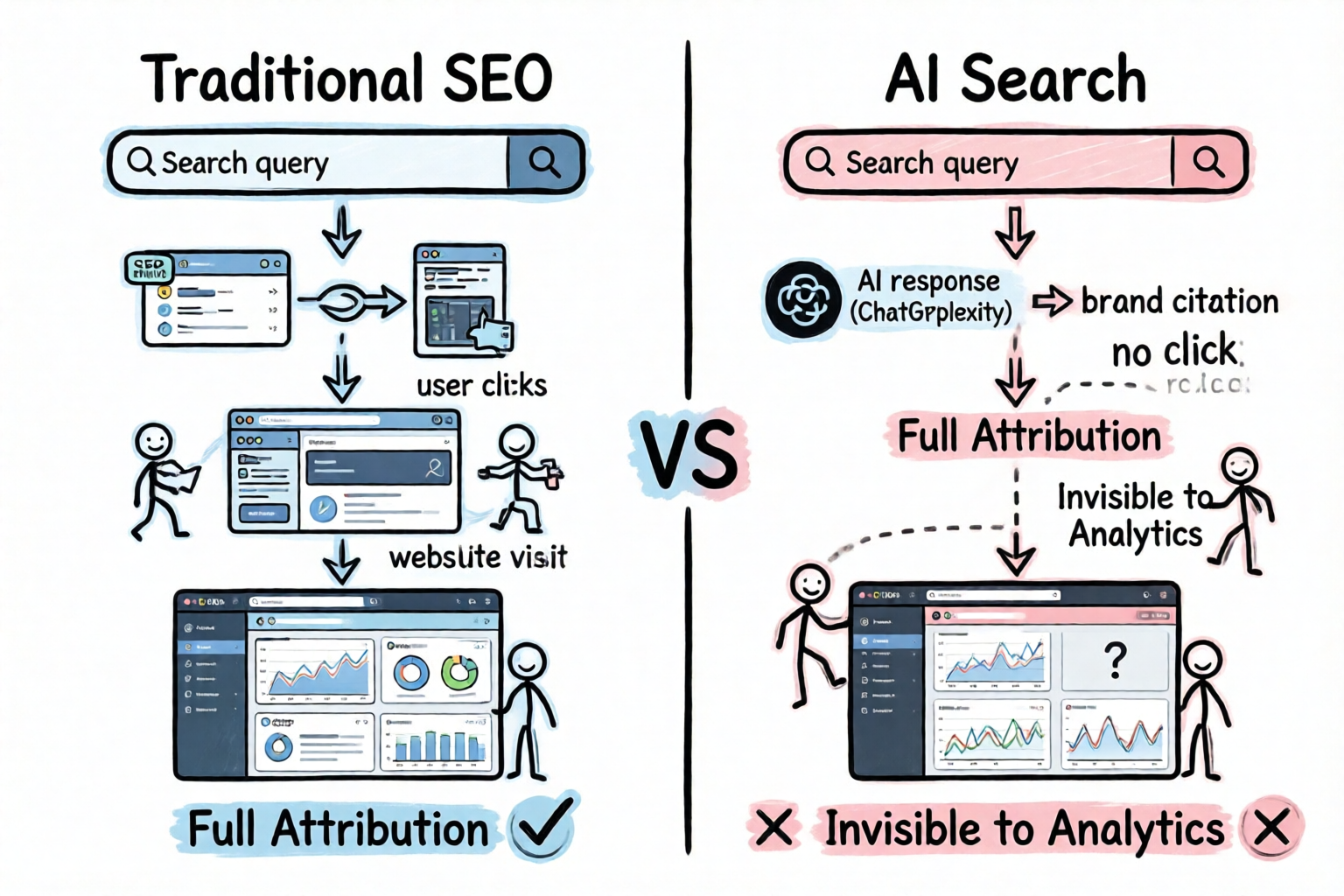
Traditional tracking operates on a cause-and-effect model: a user clicks a search result, visits a page, and either completes a goal or leaves. AI tracking introduces predictive and prescriptive capabilities. It can forecast which users are most likely to convert based on behavioral patterns, automatically adjust attribution models to reflect the true impact of each touchpoint, and even identify conversion opportunities that were previously invisible.
For example, a standard setup might track newsletter signups as conversions. AI systems go further by analyzing which specific blog posts, keywords, and user segments drive the highest-quality signups that later become paying customers. This shift from quantity-focused to quality-focused tracking represents a significant advancement in SEO measurement.
Why AI SEO Conversion Tracking Matters for Modern Marketers
The digital landscape has become increasingly complex, with users interacting with brands across multiple devices and channels before converting. AI SEO conversion tracking addresses several critical challenges that traditional methods struggle with, making it an essential component of any serious SEO strategy.
Solving the Multi-Touch Attribution Problem
Most SEO professionals understand that a conversion rarely happens on the first visit. A user might discover your site through a blog post, return via a branded search, engage with your content on social media, and finally make a purchase after receiving an email. Traditional last-click attribution gives all credit to the final interaction, undervaluing the SEO efforts that initiated the journey.
AI-powered systems use sophisticated algorithms to distribute credit across all touchpoints based on their actual influence. Machine learning models analyze thousands of conversion paths to determine which combinations of interactions most reliably lead to sales. This provides a much more accurate picture of SEO’s true contribution to revenue.
Real-Time Adaptation to User Behavior
Search algorithms and user preferences change constantly. A tracking system that worked perfectly six months ago might miss critical signals today. AI systems continuously learn from new data, automatically adjusting their models to reflect current behavior patterns. This adaptability ensures your conversion data remains accurate and actionable without requiring constant manual updates.
Core Components of AI SEO Conversion Tracking Systems
Understanding the technical architecture of AI tracking platforms helps you evaluate different solutions and implement them effectively. While specific implementations vary, most systems share several core components that work together to deliver intelligent conversion insights.
Data Collection and Integration Layer
This foundation layer gathers data from multiple sources, including website analytics, search console APIs, CRM systems, advertising platforms, and customer databases. AI tracking platforms integrate this information into a unified dataset, breaking down silos that prevent a holistic view of the customer journey. The quality and breadth of data collection directly impact the accuracy of AI predictions.
Machine Learning Models for Conversion Prediction
At the heart of AI tracking are predictive models trained on historical conversion data. These models identify patterns in user behavior, such as pages visited, time spent, device type, and referral source, that correlate with high conversion probability. Once trained, the models can score each new visitor in real-time, indicating their likelihood of converting.
Common algorithms used include logistic regression, random forests, gradient boosting machines, and deep learning neural networks. Each has strengths in different scenarios, and advanced platforms often combine multiple models to improve accuracy.
Automated Attribution Engine
This component replaces manual attribution rules with data-driven models. The AI analyzes all conversion paths to determine the optimal credit distribution across channels and touchpoints. It can identify that certain keywords play a crucial role in early discovery while others are more effective at closing sales, adjusting credit accordingly.
Anomaly Detection and Alerting
AI systems continuously monitor conversion data for unusual patterns. A sudden drop in conversions from a specific landing page, unexpected changes in conversion rates by device type, or shifts in keyword performance trigger automatic alerts. This early warning system allows marketers to respond quickly to issues before they significantly impact revenue.
Key Benefits of Implementing AI SEO Conversion Tracking
Organizations that adopt AI-powered tracking gain substantial advantages over those relying on traditional methods. These benefits extend beyond simple measurement improvements to impact overall business strategy and resource allocation.
Improved ROI Measurement and Budget Allocation
With accurate attribution, you can finally determine which SEO activities genuinely drive revenue. This enables data-driven decisions about content creation, link building, and technical optimization investments. Instead of guessing which keywords to target, you can focus resources on terms that demonstrably contribute to conversions.
Enhanced User Experience Through Personalization
AI tracking reveals how different user segments behave and convert. This information supports personalized content recommendations, tailored landing pages, and customized offers based on predicted user intent. Visitors receive more relevant experiences, increasing the likelihood of conversion while improving overall satisfaction.
Faster Identification of High-Value Opportunities
Machine learning algorithms can identify emerging trends in search behavior and conversion patterns before they become obvious. This early detection allows you to capitalize on new opportunities ahead of competitors, whether that means creating content for rising keywords or optimizing pages for new user segments.
Limitations and Challenges of AI Conversion Tracking
While the benefits are compelling, AI SEO conversion tracking is not without its challenges. Understanding these limitations helps set realistic expectations and guides implementation decisions.
Data Privacy and Compliance Concerns
AI systems require extensive data to function effectively, raising concerns about user privacy and regulatory compliance. The General Data Protection Regulation (GDPR) in Europe and the California Consumer Privacy Act (CCPA) impose strict requirements on data collection and usage. AI tracking platforms must be configured to respect user consent and anonymize personal information appropriately.
Implementation Complexity and Cost
Advanced AI tracking solutions often require significant technical expertise to implement and maintain. The cost of enterprise-grade platforms can be prohibitive for smaller businesses. Additionally, integrating AI tracking with existing marketing technology stacks can be complex, requiring dedicated development resources.
Dependence on Data Quality
AI models are only as good as the data they are trained on. Incomplete, inaccurate, or biased data leads to flawed predictions and misleading insights. Maintaining data quality requires ongoing effort, including regular audits, cleaning processes, and validation procedures.
AI SEO Conversion Tracking vs Traditional Methods: A Comparison
| Aspect | Traditional Tracking | AI-Powered Tracking |
|---|---|---|
| Attribution Model | Fixed rules (last-click, first-click) | Dynamic, data-driven attribution |
| Data Processing | Manual analysis of reports | Automated pattern recognition |
| Adaptability | Requires manual updates | Continuous learning and adjustment |
| Predictive Capabilities | Limited or none | Advanced forecasting and scoring |
| Insight Generation | Descriptive (what happened) | Prescriptive (what to do next) |
| Scalability | Struggles with large datasets | Designed for massive data volumes |
| Setup Complexity | Relatively simple | Requires technical expertise |
| Cost | Generally lower | Higher investment required |
Practical Implementation Guide for AI SEO Conversion Tracking
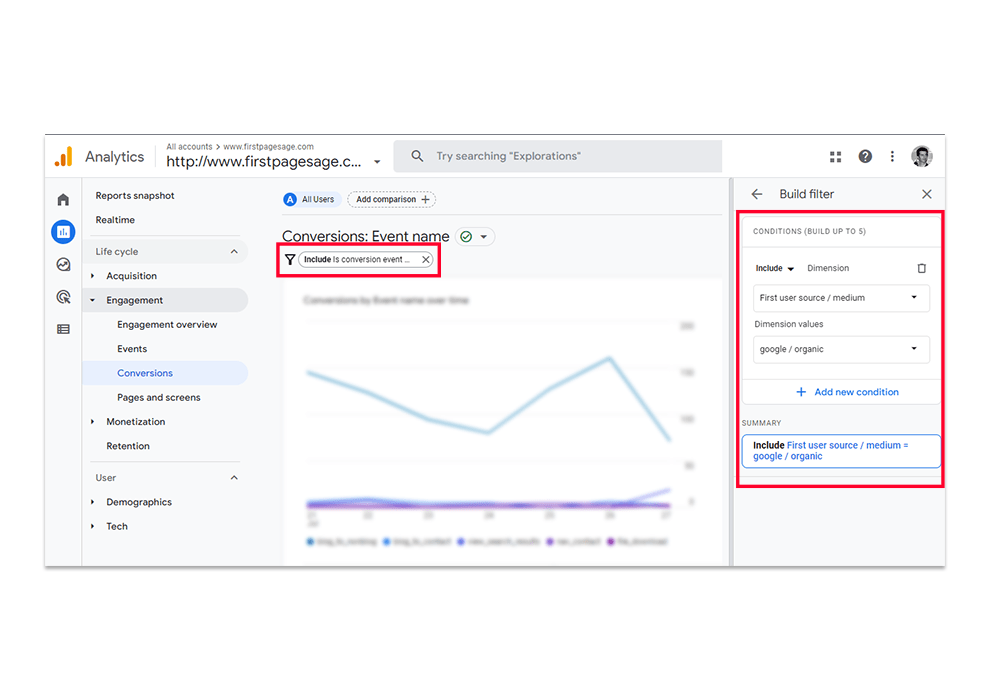
Implementing AI-powered conversion tracking requires a systematic approach. The following steps provide a practical roadmap for organizations looking to enhance their SEO measurement capabilities.
Step 1: Define Clear Conversion Goals
Before implementing any tracking system, you must clearly define what constitutes a conversion for your business. These might include product purchases, form submissions, demo requests, phone calls, or newsletter signups. Each goal should have a specific monetary value assigned to enable accurate ROI calculations. AI systems need well-defined objectives to train their models effectively.
Step 2: Audit Your Current Tracking Infrastructure
Evaluate your existing analytics setup to identify gaps and opportunities. Check whether you have proper event tracking implemented, whether your data is clean and consistent, and whether you have access to all necessary data sources. This audit informs what needs to be built or improved before AI can be applied effectively.
Step 3: Choose the Right AI Tracking Platform
Several platforms offer AI-enhanced conversion tracking capabilities. Options range from specialized SEO tools with AI features to comprehensive marketing analytics suites. Consider factors such as your team’s technical skills, budget, existing technology stack, and specific tracking needs when evaluating solutions.
Popular options include Google Analytics 4 with its machine learning capabilities, Adobe Analytics with its AI-driven insights, and specialized platforms like BrightEdge, Conductor, or Semrush that incorporate AI into their SEO tracking features.
Step 4: Integrate Data Sources
Connect your AI tracking platform to all relevant data sources, including your website, search console, CRM, email marketing platform, and advertising accounts. This integration creates a unified view of the customer journey, enabling the AI to identify cross-channel patterns and relationships.
Step 5: Train and Validate Your Models
AI models require historical data to learn from. If you have sufficient historical conversion data, the system can train on it. For new implementations, you may need to run the system for several weeks to accumulate enough data for meaningful predictions. Validate model accuracy by comparing predictions against actual outcomes and adjust as needed.
Step 6: Establish Actionable Reporting
Configure dashboards and reports that translate AI insights into actionable information. Focus on metrics that directly tie to business outcomes, such as revenue by keyword, conversion probability scores, and attribution-weighted ROI. Ensure reports are accessible to all relevant stakeholders, from SEO specialists to executive leadership.
Common Mistakes in AI SEO Conversion Tracking and How to Avoid Them
Many organizations make avoidable errors when implementing AI tracking systems. Recognizing these pitfalls helps you navigate the implementation process more smoothly and achieve better results.
Mistake 1: Overlooking Data Quality Issues
Feeding AI systems with dirty, incomplete, or inconsistent data produces unreliable insights. Duplicate records, tracking code errors, and missing events corrupt the training data and lead to poor predictions. Implement robust data governance practices, regularly audit your tracking implementation, and clean your data before it enters the AI system.
Mistake 2: Expecting Immediate Results
AI models need time to learn and improve. Expecting accurate predictions and meaningful insights from day one leads to disappointment and premature abandonment of the system. Allow at least several weeks of data collection and model training before evaluating performance.
Mistake 3: Ignoring the Human Element
AI provides powerful insights, but human judgment remains essential. Algorithms can identify patterns and make predictions, but they cannot understand business context, strategic priorities, or creative opportunities. Combine AI insights with human expertise to make the best decisions.
Mistake 4: Focusing Only on Macro Conversions
While final purchases are important, micro-conversions such as email signups, content downloads, and video views provide valuable signals about user intent. AI systems can analyze these intermediate steps to identify users who are likely to convert later. Neglecting micro-conversions limits the system’s predictive power.
Mistake 5: Failing to Act on Insights
Collecting sophisticated AI insights without taking action is a wasted investment. Establish clear processes for translating tracking data into concrete SEO actions, whether that involves content optimization, technical fixes, or strategic shifts in keyword targeting.
Important Notes for Successful AI Conversion Tracking
Several considerations are critical for maximizing the value of your AI SEO conversion tracking efforts. Paying attention to these details ensures your implementation delivers lasting benefits.
Maintain a Test-and-Learn Culture
AI tracking is not a set-and-forget solution. Continuously test different approaches, measure results, and refine your strategies based on what the data reveals. The most successful organizations treat AI tracking as an ongoing learning process rather than a one-time implementation.
Balance Automation with Human Oversight
While AI can automate many aspects of tracking and analysis, human oversight remains crucial. Regularly review AI-generated insights for accuracy and relevance. Question unusual findings and investigate anomalies rather than accepting them at face value.
Keep Privacy and Ethics at the Forefront
As AI tracking becomes more sophisticated, maintaining user trust is paramount. Be transparent about data collection practices, provide clear privacy policies, and ensure compliance with all applicable regulations. Ethical data practices protect your brand reputation and reduce legal risks.
Frequently Asked Questions About AI SEO Conversion Tracking
What is the difference between AI conversion tracking and standard conversion tracking?
Standard conversion tracking uses fixed rules to measure when users complete predefined goals. AI conversion tracking adds machine learning capabilities that automatically identify patterns, predict future conversions, adapt attribution models, and provide prescriptive insights. AI systems continuously learn from data to improve accuracy over time, while traditional systems remain static until manually updated.
How does AI improve conversion attribution in SEO?
AI improves attribution by analyzing all touchpoints in the customer journey and determining the actual influence of each interaction. Machine learning models identify complex patterns that indicate which keywords, pages, and channels contribute most to conversions. This data-driven approach provides a more accurate picture than rule-based models like last-click or first-click attribution.
What data do I need for AI SEO conversion tracking?
Effective AI tracking requires comprehensive data from multiple sources, including website analytics (page views, events, user behavior), search console data (queries, impressions, clicks), CRM information (lead status, deal value), and ideally advertising platform data. The more relevant data you can integrate, the more accurate your AI models will be.
Can small businesses benefit from AI conversion tracking?
Yes, small businesses can benefit significantly. While enterprise platforms may be costly, many affordable tools now incorporate AI features. Even basic AI-enhanced analytics can provide valuable insights about which keywords and content drive conversions, helping small businesses allocate limited resources more effectively.
How long does it take to see results from AI conversion tracking?
The timeline varies based on data volume and complexity. Most systems require at least 4-8 weeks of data collection to train initial models. However, some benefits appear immediately, such as improved data organization and automated anomaly detection. Predictive capabilities typically improve over several months as the system accumulates more data.
What are the best tools for AI SEO conversion tracking?
Google Analytics 4 offers built-in machine learning features at no cost. For more advanced capabilities, consider platforms like Adobe Analytics, BrightEdge, Conductor, Semrush, and specialized AI analytics tools. The best choice depends on your specific needs, budget, and existing technology infrastructure.
Conclusion
AI SEO conversion tracking represents a significant advancement in how businesses measure and optimize their organic search performance. By moving beyond simple click tracking to intelligent, predictive analysis, organizations can gain deeper insights into customer behavior, allocate resources more effectively, and ultimately drive more revenue from their SEO efforts.
The transition from traditional tracking methods to AI-powered systems requires investment in technology, data infrastructure, and skills. However, the competitive advantages gained through accurate attribution, predictive insights, and automated optimization make this investment worthwhile for businesses serious about maximizing their search marketing ROI.
As artificial intelligence continues to evolve, the capabilities of conversion tracking systems will only expand. Organizations that embrace these technologies now will be well-positioned to capitalize on future developments, maintaining a competitive edge in an increasingly data-driven digital landscape. The key is to start with clear goals, implement thoughtfully, and continuously refine your approach based on the insights your AI systems reveal.
Xem thêm:
- AI SEO LLM Optimization: The Complete Guide to Ranking in Generative Search
- AI SEO Click Through Rate: The Complete Guide to Boosting Your Organic CTR in 2025
- AI Grey Hat SEO: The Hidden Mechanics of Blurring Search Engine Guidelines
- AI SEO Intent Detection: The Complete Guide to Understanding Search Intent at Scale
- WP Trove SEO Plugin: The Complete Guide to Smarter WordPress Optimization
Bài viết cùng chủ đề:

AI SEO SEO Automation with Make: The Complete Workflow Guide

AI SEO SEO Automation with Zapier: The Complete Workflow Guide

AI SEO SEO Automation with n8n: The Complete Workflow Guide
AI SEO SEO Automation with Gemini: The Complete Guide to Scaling Organic Growth

AI SEO SEO Automation with Claude: The Complete Guide to Scaling Content in 2025

AI SEO SEO Automation with ChatGPT: The Complete Playbook for 2025

AI SEO & SEO Automation for Affiliate Sites: The 2025 Playbook for Passive Income Growth
AI SEO & SEO Automation for Bloggers: The Complete Guide to Scaling Your Content

AI SEO & SEO Automation for Agencies: The Complete 2025 Playbook

AI SEO and SEO Automation for Ecommerce: The Complete Playbook for 2025

AI SEO & SEO Automation for WordPress: The Complete Playbook for 2025
AI SEO SEO Automation Strategy: The Complete Playbook for 2025

Mastering the AI SEO SEO Automation Process: A Complete Guide to Scaling Organic Growth
AI SEO SEO Automation System: The Complete Guide to Scaling Organic Growth in 2025
AI SEO SEO Automation Platform: The Complete Guide to Scaling Organic Growth in 2025
AI SEO SEO Automation Software: The Complete Guide to Scaling Organic Growth in 2025















