
No products in the cart.
Mastering AI SEO DeepSeek Prompts: The Complete Guide to Higher Rankings in 2025
31
Jul
Jul
Search engine optimization has entered a new era where artificial intelligence tools like DeepSeek are reshaping how content is researched, structured, and optimized. The phrase “AI SEO DeepSeek Prompts” represents a powerful workflow that combines the analytical power of DeepSeek with strategic SEO principles. This guide provides a comprehensive roadmap for using DeepSeek to generate content briefs, analyze competitor gaps, optimize on-page elements, and build topical authority that search engines reward.
What Are AI SEO DeepSeek Prompts?
AI SEO DeepSeek prompts are carefully crafted instructions given to the DeepSeek language model to produce SEO-specific outputs. These prompts go beyond simple content generation. They are designed to extract keyword clusters, generate semantic entities, outline article structures, suggest internal linking opportunities, and even predict user intent based on search query patterns. DeepSeek, as a large language model, processes natural language instructions with remarkable accuracy. When you combine its reasoning capabilities with SEO frameworks, you create a system that can handle repetitive tasks like keyword mapping, meta description drafting, and FAQ generation in seconds. The key lies in how you phrase the prompts to get structured, actionable data rather than generic text.
Why DeepSeek Stands Out for SEO Workflows
DeepSeek offers distinct advantages over other AI tools when used for search optimization. Its ability to handle long context windows means you can paste entire competitor articles or extensive keyword lists for analysis. The model also demonstrates strong logical reasoning, which helps in clustering keywords by search intent rather than just matching strings. Another critical advantage is cost efficiency. For agencies and freelancers managing multiple client accounts, DeepSeek provides high-quality outputs at a fraction of the cost of premium AI services. This makes scaling content production viable without sacrificing depth or accuracy. The model also supports multiple languages, which is essential for international SEO campaigns targeting non-English markets.
Core Components of Effective AI SEO DeepSeek Prompts
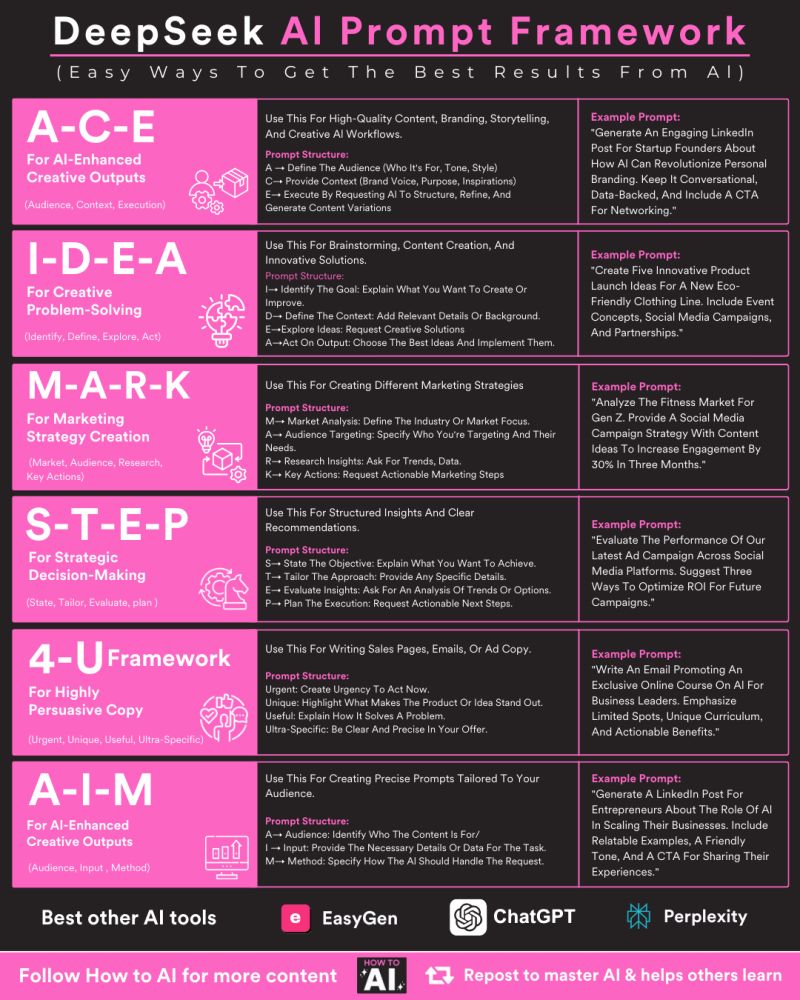
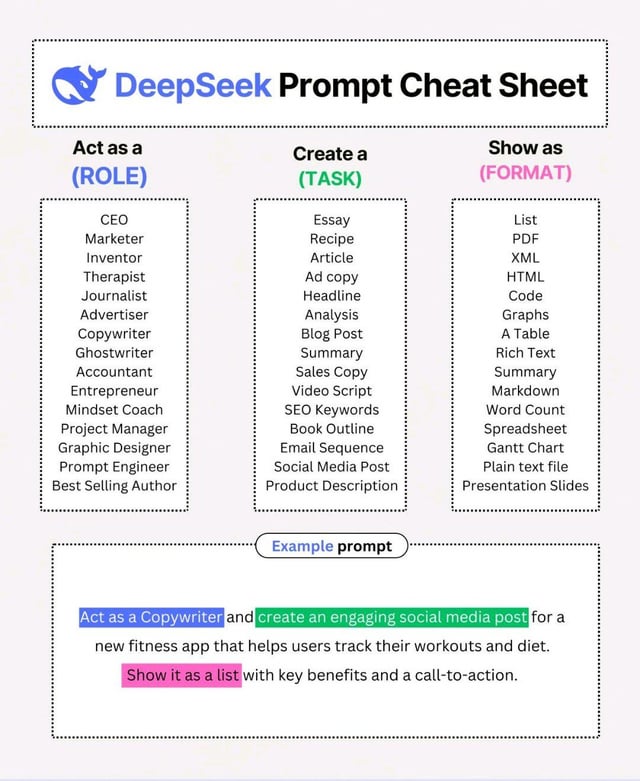
To get the most out of DeepSeek, every prompt should contain several structural elements. First, define the role. Tell DeepSeek to act as an SEO strategist, a content editor, or a technical auditor. Role definition dramatically improves output relevance. Second, provide context. Include the target keyword, the audience, the competitor landscape, and the desired outcome. Third, specify the format. Ask for tables, bullet points, or JSON structures to make the output easy to integrate into your workflow.
Role Prompting for Better SEO Outputs
A generic prompt like “write about SEO” produces generic results. Instead, use role-based prompts. For example: “Act as a senior SEO consultant with 10 years of experience in the health niche. Analyze the following list of keywords and group them into informational, transactional, and navigational intent categories.” This level of specificity forces DeepSeek to apply expert reasoning rather than surface-level pattern matching.
Context Injection for Accuracy
DeepSeek performs best when given concrete data. Include your target URL, the top three competitors, and the specific search volume data if available. The model uses this context to generate recommendations that are grounded in reality. For instance, if you are optimizing a page about “best running shoes,” provide DeepSeek with the current top-ranking pages and ask it to identify content gaps based on the SERP features present.
How to Generate High-Impact AI SEO DeepSeek Prompts
Creating effective prompts is a skill that improves with practice. Start with a clear objective. Are you looking for a content outline, a meta description, a schema markup suggestion, or a link-building outreach email? The objective determines the prompt structure. Next, break down the task into sub-tasks. Instead of asking for a full article, ask for an outline first, then a draft of the introduction, then the FAQ section.
Prompt Template for Keyword Clustering
Use this structure: “Act as an SEO analyst. Cluster these keywords into groups based on search intent and semantic similarity. For each cluster, provide a suggested parent topic and a list of long-tail variations. Present the results in a table with columns for Cluster Name, Primary Keyword, Secondary Keywords, and Target Intent.”
Prompt Template for Content Gap Analysis
“Act as a content strategist. I have analyzed the top 5 ranking pages for the keyword [keyword]. Here are the subtopics they cover: [list]. Identify missing subtopics that would make my content more comprehensive. Also suggest three unique angles or data points I can include to differentiate my article from these competitors.”
Practical Applications of AI SEO DeepSeek Prompts
The applications are vast, but several use cases deliver immediate value. Content briefs are the most common. DeepSeek can generate a detailed brief that includes the target keyword, secondary keywords, suggested headings, word count, and semantic entities to include. This brief serves as a blueprint for writers, ensuring consistency and SEO alignment.
On-Page Optimization with DeepSeek
DeepSeek can rewrite title tags and meta descriptions that are optimized for click-through rate. Provide the current title, the target keyword, and the character limit. Ask DeepSeek to generate five variations that include emotional triggers, numbers, or power words. The model can also suggest image alt text and internal link anchor text based on the page content.
Programmatic SEO and Bulk Content
For e-commerce sites or large publishers, DeepSeek can generate product descriptions, category intros, and city-specific landing pages. The prompts need to include variables like product name, location, and key features. DeepSeek will fill in the blanks with coherent, unique text that avoids duplicate content penalties.
Benefits of Using DeepSeek for SEO Tasks
The primary benefit is speed. Tasks that took hours of manual research now take minutes. DeepSeek can process large datasets and produce structured outputs that are ready for implementation. This speed allows SEO teams to iterate faster, test more hypotheses, and publish more content without increasing headcount. Another benefit is consistency. Human writers may miss keywords or forget to include certain sections. DeepSeek, when given a clear prompt, will follow the instructions precisely every time. This ensures that every piece of content meets the same SEO standards, which is crucial for building topical authority.
Limitations and Challenges to Consider

DeepSeek is not a replacement for human judgment. The model can hallucinate facts, especially when asked about very recent events or niche technical topics. Always verify statistics, quotes, and product claims before publishing. The model also lacks real-time search data, so it cannot tell you current rankings or search volumes. You must feed it that data. Another limitation is the lack of creativity in some outputs. DeepSeek tends to produce safe, conventional phrasing. For highly creative or brand-specific content, human editors are still necessary to inject personality and unique perspectives.
Comparison: DeepSeek vs. Other AI SEO Tools
When comparing DeepSeek to tools like ChatGPT, Claude, or Jasper, several differences emerge. DeepSeek often provides more detailed reasoning in its responses, which helps in understanding why a certain keyword was chosen. It also handles longer inputs, making it ideal for analyzing full competitor articles.
| Feature | DeepSeek | ChatGPT | Jasper |
|---|---|---|---|
| Context Window | Very Large | Large | Medium |
| Cost per Output | Low | Medium | High |
| SEO-Specific Templates | Requires Custom Prompts | Requires Custom Prompts | Built-in |
| Data Analysis Capability | Strong | Moderate | Weak |
| Multilingual Support | Excellent | Good | Good |
Step-by-Step Guide to Building Your First Prompt Library
Start by identifying your most repetitive SEO tasks. Create a document with prompt templates for each task. Test each prompt with different keywords and refine based on the output quality. Keep a log of which prompts produce the best results. Over time, you will build a library of proven prompts that can be reused across projects.
Step 1: Define Your SEO Workflow
Map out your current process from keyword research to content publication. Identify bottlenecks where AI can help. For most teams, the research and outlining phases benefit the most from DeepSeek prompts.
Step 2: Write and Test Initial Prompts
Write a prompt for one task, such as generating a meta description. Run it with a sample keyword. Evaluate the output against your standards. Adjust the prompt to include more specific instructions, such as “include a call to action” or “use active voice.”
Step 3: Iterate and Expand
Once you have a working prompt, create variations for different content types. A prompt for a blog post outline will differ from one for a product page. Expand your library to cover FAQs, schema generation, and internal linking suggestions.
Common Mistakes When Using AI SEO DeepSeek Prompts
One major mistake is using vague prompts. Asking DeepSeek to “write about digital marketing” yields generic content that ranks nowhere. The fix is to provide specific keywords, audience details, and structural requirements. Another mistake is ignoring the output quality. DeepSeek can produce fluent text that is factually wrong. Always run a fact-check on any statistics or claims. Also, avoid copying the output verbatim. Search engines can detect AI-generated content patterns, and while they do not penalize it directly, unedited AI content often lacks the depth needed to rank.
Over-Optimization and Keyword Stuffing
Some users ask DeepSeek to include the target keyword in every paragraph. This leads to unnatural text that hurts readability and user experience. Instead, instruct DeepSeek to use synonyms and related terms naturally.
Neglecting User Intent
DeepSeek can generate content that matches the keyword but misses the user’s actual intent. For example, if the keyword is “best coffee maker,” the user likely wants product comparisons, not a history of coffee brewing. Always specify the intent in your prompt.
Important Notes for Advanced Users
DeepSeek can be integrated with other tools via APIs. This allows for automated content pipelines where keyword data from Ahrefs or SEMrush is fed directly into DeepSeek prompts, and the output is pushed to a CMS. This setup requires some technical skill but offers massive scalability. Also, consider using DeepSeek for multilingual SEO. The model performs well in Spanish, French, German, and many Asian languages. Create prompts in English but ask for output in the target language. This saves time on translation and ensures the content is culturally relevant.
Frequently Asked Questions
What is the best way to structure an AI SEO DeepSeek prompt?
The best structure includes a role definition, specific context, clear instructions, and a desired output format. For example: “Act as an SEO expert. My audience is [audience]. Create a 10-point content outline with H2 and H3 headings, including secondary keywords and a suggested word count for each section.”
Can DeepSeek replace human SEO specialists?
No. DeepSeek excels at data processing, pattern recognition, and content generation, but it lacks strategic thinking, industry experience, and the ability to build relationships. Human specialists are still needed to interpret data, make judgment calls, and adapt to algorithm updates.
How do I avoid AI detection when using DeepSeek for SEO?
The goal should not be to trick detectors but to add value. Edit the output to include personal experiences, unique data, and original insights. Break up long paragraphs, add specific examples, and ensure the content reflects your brand voice. This makes the content genuinely useful and less likely to be flagged as low-quality AI text.
Is DeepSeek suitable for local SEO content?
Yes. DeepSeek can generate city-specific landing pages, local business descriptions, and location-based FAQs. Provide the business name, address, services, and local landmarks in the prompt to get tailored content.
What are the costs associated with using DeepSeek for SEO?
DeepSeek offers a free tier with limited usage and a paid API that is priced per token. For most small to medium SEO projects, the cost is negligible compared to hiring writers or purchasing expensive SEO content tools.
Conclusion
AI SEO DeepSeek prompts represent a practical, cost-effective method for scaling content operations and improving search visibility. By mastering prompt engineering, you can automate research, streamline content creation, and ensure every page is optimized for both search engines and users. The key is to treat DeepSeek as a powerful assistant that handles the heavy lifting while you focus on strategy, quality control, and creative direction. Start building your prompt library today, test it on real projects, and refine it based on performance data. The future of SEO belongs to those who can effectively collaborate with AI, and DeepSeek is an excellent partner for that journey.
Xem thêm:
- AI SEO Search Visibility: The Complete Playbook for Ranking in the Age of Machine Learning
- AI Content Pruning: The Complete Strategy to Remove Weak Pages and Skyrocket SEO Performance
- AI SEO Keyword Strategy: The Complete Guide to Future-Proof Search Rankings
- AI SEO Keyword Cluster Generator: The Complete Guide to Smarter Content Planning
- AI Robots.txt: The Complete Guide to Controlling AI Crawlers on Your Website
Bài viết cùng chủ đề:

AI SEO SEO Automation with Make: The Complete Workflow Guide

AI SEO SEO Automation with Zapier: The Complete Workflow Guide

AI SEO SEO Automation with n8n: The Complete Workflow Guide
AI SEO SEO Automation with Gemini: The Complete Guide to Scaling Organic Growth

AI SEO SEO Automation with Claude: The Complete Guide to Scaling Content in 2025

AI SEO SEO Automation with ChatGPT: The Complete Playbook for 2025

AI SEO & SEO Automation for Affiliate Sites: The 2025 Playbook for Passive Income Growth
AI SEO & SEO Automation for Bloggers: The Complete Guide to Scaling Your Content

AI SEO & SEO Automation for Agencies: The Complete 2025 Playbook

AI SEO and SEO Automation for Ecommerce: The Complete Playbook for 2025

AI SEO & SEO Automation for WordPress: The Complete Playbook for 2025
AI SEO SEO Automation Strategy: The Complete Playbook for 2025

Mastering the AI SEO SEO Automation Process: A Complete Guide to Scaling Organic Growth
AI SEO SEO Automation System: The Complete Guide to Scaling Organic Growth in 2025
AI SEO SEO Automation Platform: The Complete Guide to Scaling Organic Growth in 2025
AI SEO SEO Automation Software: The Complete Guide to Scaling Organic Growth in 2025















