
No products in the cart.
AI SEO SERP Monitoring: The Complete Guide to Automated Rank Tracking in 2025

10
Aug
Aug
AI SEO SERP monitoring has transformed how digital marketers track search engine performance. Traditional rank checking tools provided basic position data, but artificial intelligence now delivers predictive insights, competitor intelligence, and actionable recommendations. This comprehensive guide explores how AI-powered SERP monitoring works, why it matters for modern SEO strategies, and how to implement it effectively for measurable results.
What Is AI SEO SERP Monitoring?

AI SEO SERP monitoring refers to the automated process of tracking search engine results page (SERP) positions using artificial intelligence algorithms. Unlike conventional rank trackers that simply record keyword positions, AI-powered systems analyze patterns, predict ranking fluctuations, and identify the underlying causes of SERP changes.
These intelligent systems process massive datasets including search volume trends, user behavior signals, competitor movements, and algorithm updates. The AI component distinguishes itself by learning from historical data to forecast future ranking performance and recommend optimization actions.
Core Components of AI-Powered SERP Tracking
Modern AI SEO SERP monitoring platforms consist of several integrated components that work together to provide comprehensive visibility into search performance:
- Automated Rank Tracking: Continuous monitoring of keyword positions across multiple search engines and geographic locations
- Pattern Recognition: AI algorithms identify ranking trends, seasonality effects, and anomaly detection
- Competitor Analysis: Automated tracking of competitor rankings, content changes, and backlink acquisition
- Predictive Analytics: Machine learning models forecast future ranking positions based on current trajectories
- Actionable Recommendations: AI generates specific optimization suggestions based on detected patterns
- Data Quality Matters: The accuracy of AI insights depends on the quality of underlying data. Ensure your monitoring platform maintains reliable data collection infrastructure.
- Human Oversight Required: AI provides recommendations, but experienced SEO professionals must validate and prioritize actions based on business context.
- Integration Is Essential: Connect monitoring data with analytics and business intelligence platforms to understand the full impact of search performance.
- Continuous Refinement: Regularly review and update your keyword universe to reflect changing business priorities and market conditions.
- Benchmark Against Competitors: Use AI monitoring to establish competitive benchmarks and track your relative performance over time.
Why Traditional SERP Monitoring Falls Short
Conventional rank tracking tools provide snapshots of keyword positions at specific moments. This approach creates significant blind spots for SEO professionals. Traditional tools cannot explain why rankings changed, predict future movements, or distinguish between temporary fluctuations and permanent shifts.
Standard SERP trackers also struggle with personalization and localization. Search results vary based on user location, device, search history, and browsing context. A traditional tool checking rankings from a single server location provides incomplete data that does not reflect real user experiences.
AI SEO SERP monitoring addresses these limitations by aggregating data from multiple sources, applying statistical models to separate signal from noise, and delivering contextual insights that traditional tools cannot provide.
Key Benefits of AI SEO SERP Monitoring
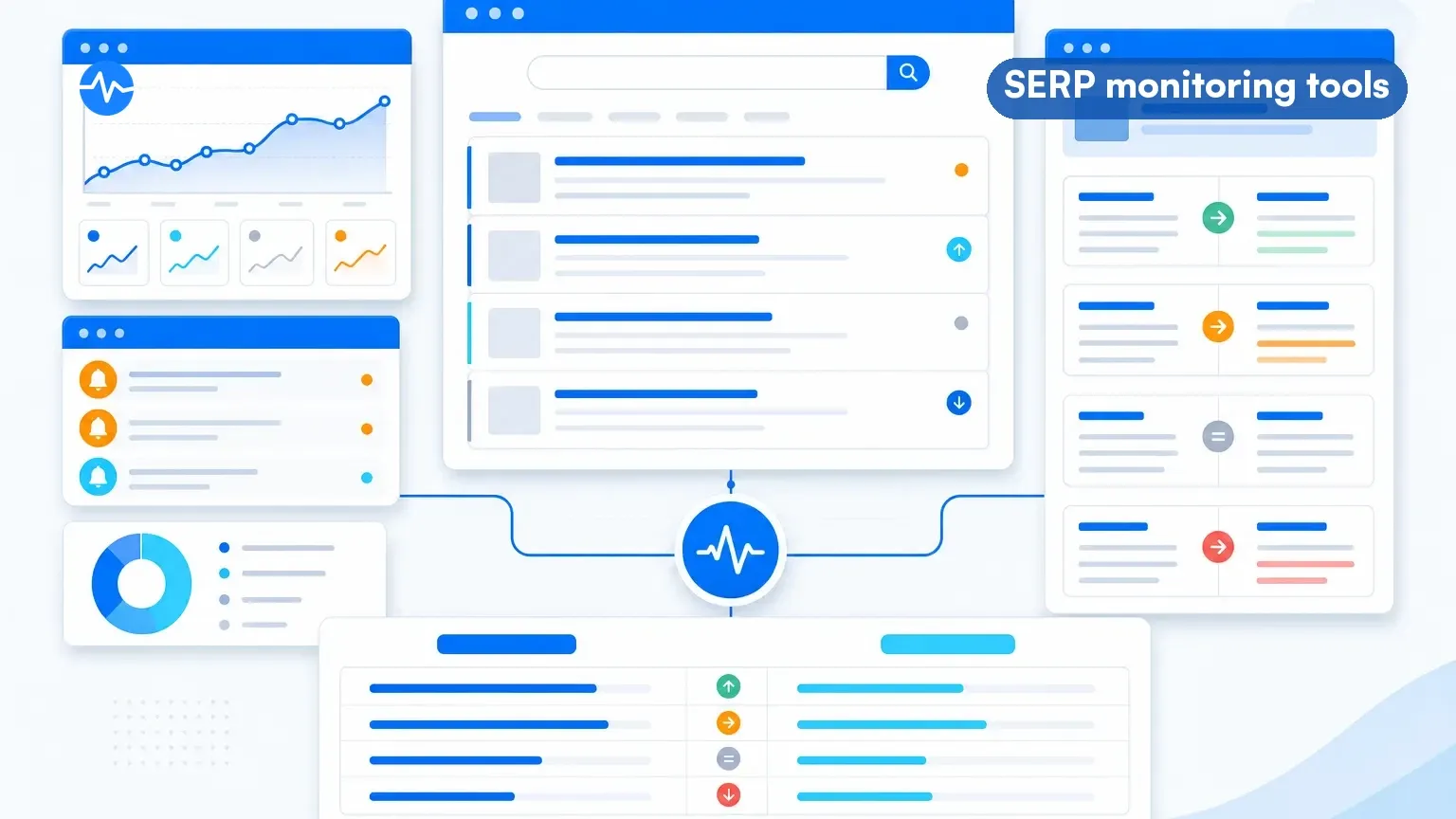
Implementing AI-powered SERP monitoring delivers measurable advantages across multiple dimensions of search engine optimization.
Real-Time Ranking Intelligence
AI systems monitor SERPs continuously rather than at scheduled intervals. This real-time approach captures ranking volatility immediately, allowing SEO teams to respond quickly to algorithm updates or competitor actions. When Google pushes a core update, AI monitoring detects affected keywords within hours rather than days.
Predictive Ranking Insights
Machine learning algorithms analyze historical ranking data alongside external factors such as seasonality, industry trends, and search demand patterns. These models predict likely ranking movements, enabling proactive optimization rather than reactive responses.
Competitor Movement Detection
AI SEO SERP monitoring tracks competitor domains automatically, identifying when they publish new content, acquire backlinks, or optimize existing pages. This intelligence reveals competitor strategies and helps identify content gaps or opportunities.
Search Intent Understanding
Advanced AI systems analyze SERP features such as featured snippets, knowledge panels, and people-also-ask boxes. This analysis reveals the search intent behind each query, helping marketers align content with what users actually want.
Automated Reporting and Alerts
AI platforms generate comprehensive reports automatically and send alerts when significant ranking changes occur. This automation frees SEO professionals to focus on strategy and implementation rather than manual data collection.
How AI SERP Monitoring Works: Technical Overview
Understanding the technical foundation of AI SEO SERP monitoring helps marketers evaluate tools and interpret their outputs effectively.
Data Collection Infrastructure
AI SERP monitoring platforms maintain distributed server networks that query search engines from multiple geographic locations. These servers collect raw SERP data including organic results, paid listings, featured snippets, and other SERP features. The data collection process runs continuously, creating a comprehensive dataset for analysis.
Natural Language Processing
NLP algorithms analyze the content of search results, understanding the semantic relationship between queries and returned pages. This analysis goes beyond simple keyword matching to evaluate topical relevance, content quality signals, and entity relationships.
Machine Learning Models
Supervised and unsupervised learning models process historical ranking data to identify patterns. These models detect correlations between ranking changes and various factors including content updates, backlink acquisition, page speed improvements, and algorithm updates.
Anomaly Detection Systems
AI systems establish baseline ranking patterns for each keyword and flag significant deviations from these baselines. This anomaly detection distinguishes between normal ranking volatility and meaningful changes requiring attention.
Essential Features to Look for in AI SERP Monitoring Tools
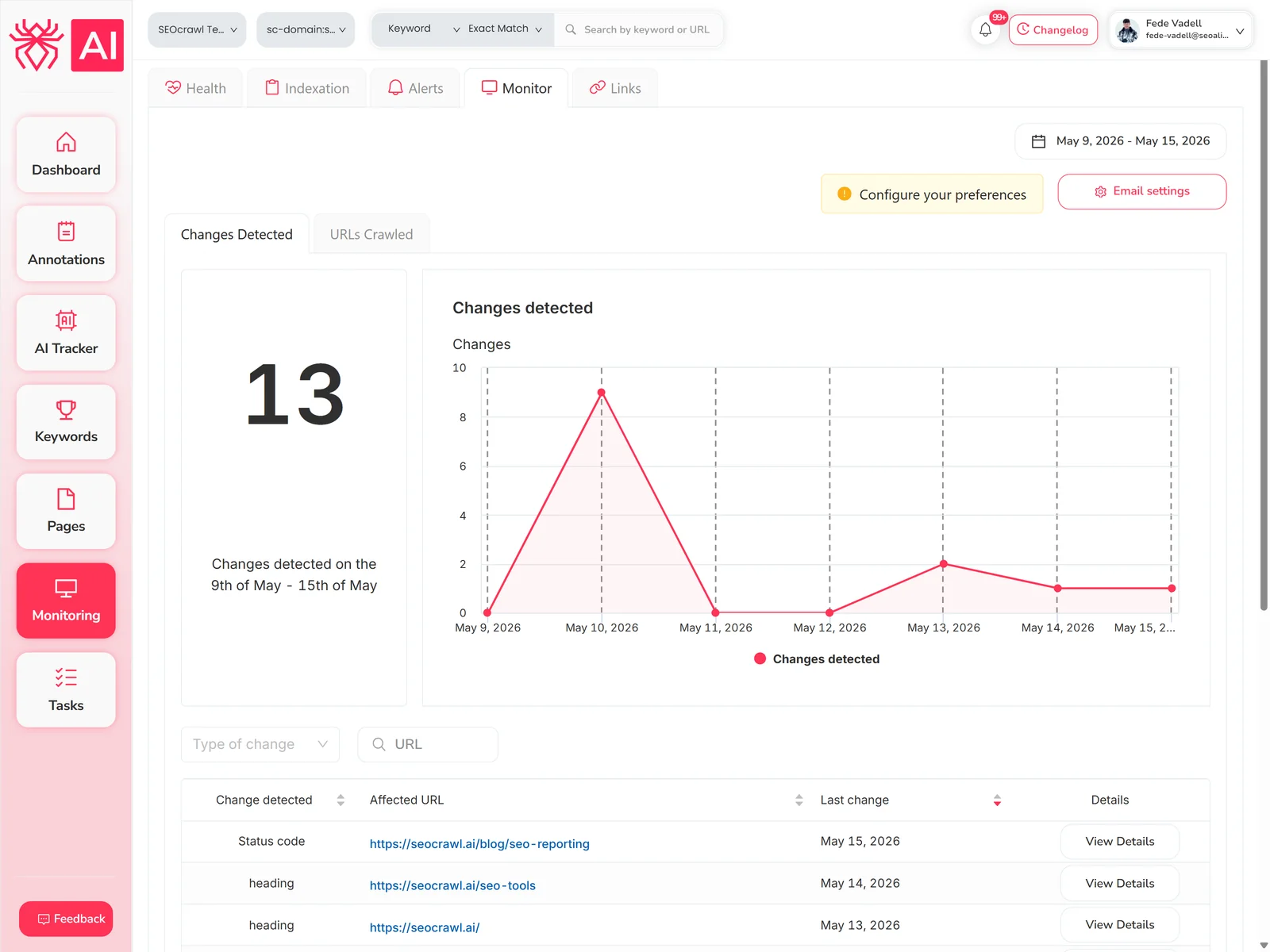
Not all AI-powered SERP monitoring platforms deliver equal value. Evaluating tools against specific criteria ensures you select a solution that meets your needs.
| Feature | Importance | What to Look For |
|---|---|---|
| Rank Tracking Accuracy | Critical | Multiple data centers, mobile and desktop tracking, local search support |
| AI-Powered Insights | High | Predictive analytics, anomaly detection, automated recommendations |
| Competitor Monitoring | High | Automatic competitor tracking, content change alerts, backlink monitoring |
| SERP Feature Tracking | Medium | Featured snippets, people also ask, knowledge panels, video results |
| Integration Capabilities | Medium | Google Search Console, Google Analytics, CRM platforms, API access |
| Reporting and Visualization | Medium | Customizable dashboards, automated reports, shareable links |
Implementing AI SEO SERP Monitoring: Step-by-Step Guide
Successful implementation of AI-powered SERP monitoring requires careful planning and execution. Follow these steps to maximize the value of your monitoring investment.
Step 1: Define Your Keyword Universe
Begin by identifying the complete set of keywords relevant to your business. Include head terms, long-tail variations, question-based queries, and competitor-targeted keywords. Organize keywords into thematic groups that align with your content architecture and business objectives.
Step 2: Select the Right Monitoring Platform
Evaluate AI SERP monitoring tools based on your specific requirements. Consider factors such as keyword volume limits, geographic coverage, integration options, and budget. Request demos and trial periods to assess usability and data quality before committing.
Step 3: Configure Tracking Parameters
Set up location targeting, device preferences, and search engine selections. Configure alert thresholds to receive notifications for meaningful ranking changes without being overwhelmed by noise. Establish baseline reporting periods to generate meaningful comparisons.
Step 4: Connect Your Data Ecosystem
Integrate your SERP monitoring platform with Google Search Console, Google Analytics, and other marketing tools. This integration creates a unified view of search performance, connecting rankings to traffic, conversions, and revenue.
Step 5: Establish Monitoring Cadence
Determine the appropriate frequency for data collection and reporting. High-competition keywords may require daily monitoring, while stable keywords might only need weekly checks. Let AI recommendations guide your monitoring cadence based on observed volatility.
Step 6: Act on AI Insights
Develop workflows for responding to AI-generated recommendations. Assign responsibility for different action types, establish prioritization criteria, and track the impact of implemented changes on ranking performance.
Common Mistakes in AI SERP Monitoring
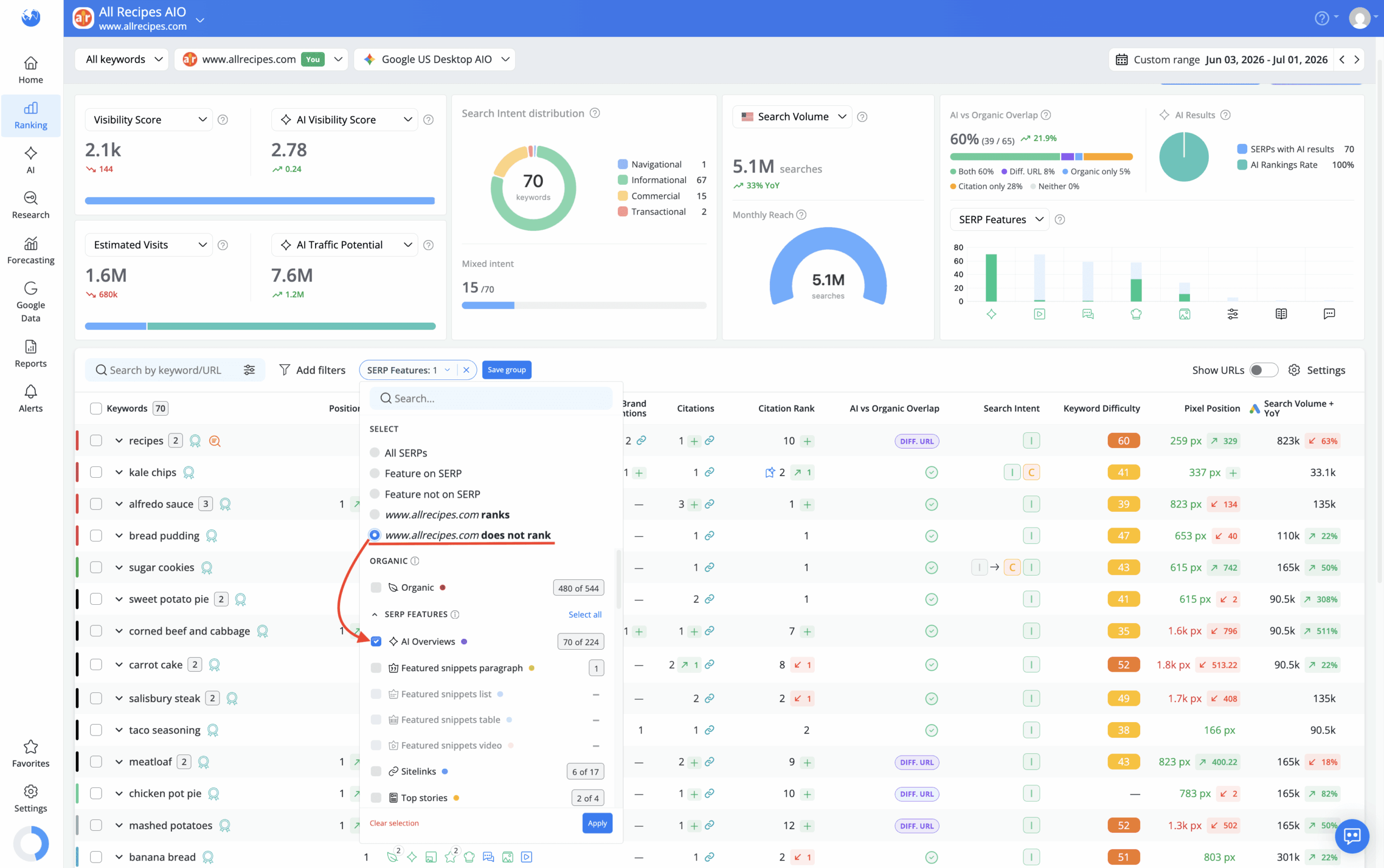
Even with advanced AI tools, SEO professionals make predictable errors that undermine monitoring effectiveness.
Focusing on Rankings Without Context
Ranking position alone does not determine success. A keyword ranking at position five with high click-through rates may outperform a position one ranking with poor visibility. AI monitoring should incorporate engagement metrics and conversion data to provide meaningful performance assessments.
Ignoring SERP Feature Changes
Traditional rankings become less relevant as SERP features occupy more screen space. AI monitoring must track featured snippets, image packs, video carousels, and other features that influence visibility. Failing to monitor these elements provides an incomplete picture of search presence.
Setting Unrealistic Alert Thresholds
Overly sensitive alerts generate notification fatigue, causing teams to ignore important signals. Excessively broad thresholds miss meaningful changes. Let AI systems learn normal volatility patterns and set alerts based on statistically significant deviations.
Neglecting Local Search Variations
Local search results vary dramatically based on searcher location. Monitoring from a single location provides misleading data for businesses serving multiple geographic areas. AI platforms with distributed data collection address this issue effectively.
Treating All Keywords Equally
Keywords have different strategic values based on commercial intent, search volume, and conversion potential. AI monitoring should weight keywords according to business impact, prioritizing insights for high-value terms.
AI SERP Monitoring vs. Traditional Rank Tracking
Understanding the fundamental differences between AI-powered monitoring and conventional rank tracking helps justify investment in advanced solutions.
| Aspect | Traditional Rank Tracking | AI SERP Monitoring |
|---|---|---|
| Data Collection | Scheduled snapshots | Continuous monitoring |
| Analysis | Manual interpretation | Automated pattern recognition |
| Predictions | Not available | Machine learning forecasts |
| Competitor Insights | Limited manual tracking | Automated competitor intelligence |
| Recommendations | None provided | Actionable optimization suggestions |
| Scalability | Limited by manual effort | Handles thousands of keywords |
| Contextual Understanding | Minimal | Search intent and SERP feature analysis |
Practical Applications of AI SERP Monitoring

AI-powered SERP monitoring delivers value across multiple SEO activities and business functions.
Content Strategy Development
Monitoring reveals which content types perform best for target keywords. AI analysis identifies content gaps where competitors rank but your site does not. This intelligence guides content creation priorities and helps allocate resources effectively.
Algorithm Update Response
When search engines roll out updates, AI monitoring detects affected keywords immediately. This rapid detection enables quick diagnosis of ranking drops and implementation of recovery strategies before significant traffic loss occurs.
Local SEO Optimization
AI monitoring tracks local pack appearances, map rankings, and location-based search variations. This data helps local businesses optimize their Google Business Profile and local content strategies.
E-commerce Product Visibility
Online retailers use AI SERP monitoring to track product page rankings, monitor competitor pricing visibility, and identify opportunities for rich results such as product snippets and review stars.
International SEO Management
Businesses operating across multiple countries monitor rankings for each target market separately. AI systems handle the complexity of tracking hreflang implementations, local language variations, and country-specific SERP features.
Measuring the ROI of AI SERP Monitoring
Quantifying the return on investment from AI-powered monitoring requires connecting ranking improvements to business outcomes.
Track the correlation between AI-recommended actions and ranking improvements. Measure the time saved through automated reporting versus manual data collection. Calculate the revenue impact of recovering lost rankings faster through early detection. These metrics demonstrate the tangible value of AI monitoring investments.
Future Trends in AI SEO SERP Monitoring
The evolution of AI technology continues to expand the capabilities of SERP monitoring platforms.
Generative AI integration will provide natural language explanations of ranking changes and recommended actions. Predictive models will become more accurate as they incorporate more data sources and advanced algorithms. Integration with other marketing channels will create unified performance dashboards that connect search visibility to overall business outcomes.
Privacy regulations and search engine policies will shape data collection methods. AI systems will adapt to provide accurate insights while respecting user privacy and platform terms of service.
Important Notes for Maximizing AI SERP Monitoring Value
Several considerations ensure you extract maximum value from your AI monitoring investment.
Frequently Asked Questions
What is the difference between AI SEO SERP monitoring and regular rank tracking?
AI SEO SERP monitoring uses machine learning algorithms to analyze ranking data, detect patterns, predict future movements, and provide actionable recommendations. Regular rank tracking simply records keyword positions at scheduled intervals without analysis or prediction capabilities.
How often should AI SERP monitoring check keyword rankings?
AI-powered systems monitor rankings continuously or at frequent intervals throughout the day. The optimal frequency depends on keyword competition levels, industry volatility, and business priorities. High-stakes keywords may require hourly monitoring while stable terms only need daily checks.
Can AI SERP monitoring predict Google algorithm updates?
AI systems cannot predict algorithm updates before they happen, but they can detect the effects of updates quickly after rollout. Machine learning models identify unusual ranking patterns that indicate algorithm changes, enabling rapid response to minimize negative impacts.
How accurate is AI-based rank tracking compared to manual checking?
AI-based tracking provides more accurate and comprehensive data than manual checking because it collects information from multiple locations, devices, and time points. Manual checking from a single location provides incomplete and potentially misleading data.
What SERP features should AI monitoring track?
Comprehensive AI monitoring should track featured snippets, people-also-ask boxes, knowledge panels, image packs, video carousels, local packs, shopping results, and other SERP features that affect visibility. Each feature represents an opportunity to capture user attention.
How much does AI SEO SERP monitoring cost?
Pricing varies widely based on keyword volume, features, and provider. Entry-level AI monitoring tools start around $50 per month, while enterprise solutions can cost thousands monthly. Most providers offer tiered pricing based on the number of tracked keywords and required features.
Conclusion
AI SEO SERP monitoring represents a fundamental advancement in how businesses track and optimize search engine performance. The shift from passive rank tracking to intelligent, predictive monitoring enables SEO professionals to respond faster to changes, understand the reasons behind ranking movements, and take proactive actions that drive measurable results.
Implementing AI-powered monitoring requires thoughtful tool selection, proper configuration, and integration with existing workflows. The investment delivers returns through improved visibility, faster response to algorithm updates, competitive intelligence, and more efficient use of SEO resources.
As search engines continue to evolve and artificial intelligence capabilities expand, AI SEO SERP monitoring will become increasingly essential for maintaining competitive advantage. Organizations that adopt these advanced monitoring capabilities position themselves to thrive in an increasingly complex search landscape.
Xem thêm:
- AI SEO Articles: How to Rank With Intelligent Content Creation
- AI SEO for Small Business: The Complete Guide to Smarter Rankings on a Budget
- AI SEO Brand Signals: The Complete Guide to Building a Future-Proof Digital Presence
- AI SEO Long Form Content: The Complete Guide to Scaling High-Ranking Articles
- AI SEO Keyword Relationships: The Complete Guide to Semantic Search Optimization
Bài viết cùng chủ đề:

AI SEO SEO Automation with Make: The Complete Workflow Guide

AI SEO SEO Automation with Zapier: The Complete Workflow Guide

AI SEO SEO Automation with n8n: The Complete Workflow Guide
AI SEO SEO Automation with Gemini: The Complete Guide to Scaling Organic Growth

AI SEO SEO Automation with Claude: The Complete Guide to Scaling Content in 2025

AI SEO SEO Automation with ChatGPT: The Complete Playbook for 2025

AI SEO & SEO Automation for Affiliate Sites: The 2025 Playbook for Passive Income Growth
AI SEO & SEO Automation for Bloggers: The Complete Guide to Scaling Your Content

AI SEO & SEO Automation for Agencies: The Complete 2025 Playbook

AI SEO and SEO Automation for Ecommerce: The Complete Playbook for 2025

AI SEO & SEO Automation for WordPress: The Complete Playbook for 2025
AI SEO SEO Automation Strategy: The Complete Playbook for 2025

Mastering the AI SEO SEO Automation Process: A Complete Guide to Scaling Organic Growth
AI SEO SEO Automation System: The Complete Guide to Scaling Organic Growth in 2025
AI SEO SEO Automation Platform: The Complete Guide to Scaling Organic Growth in 2025
AI SEO SEO Automation Software: The Complete Guide to Scaling Organic Growth in 2025















