
No products in the cart.
AI SEO for Automotive: The Complete Guide to Dominating Search in 2025
31
Jul
Jul
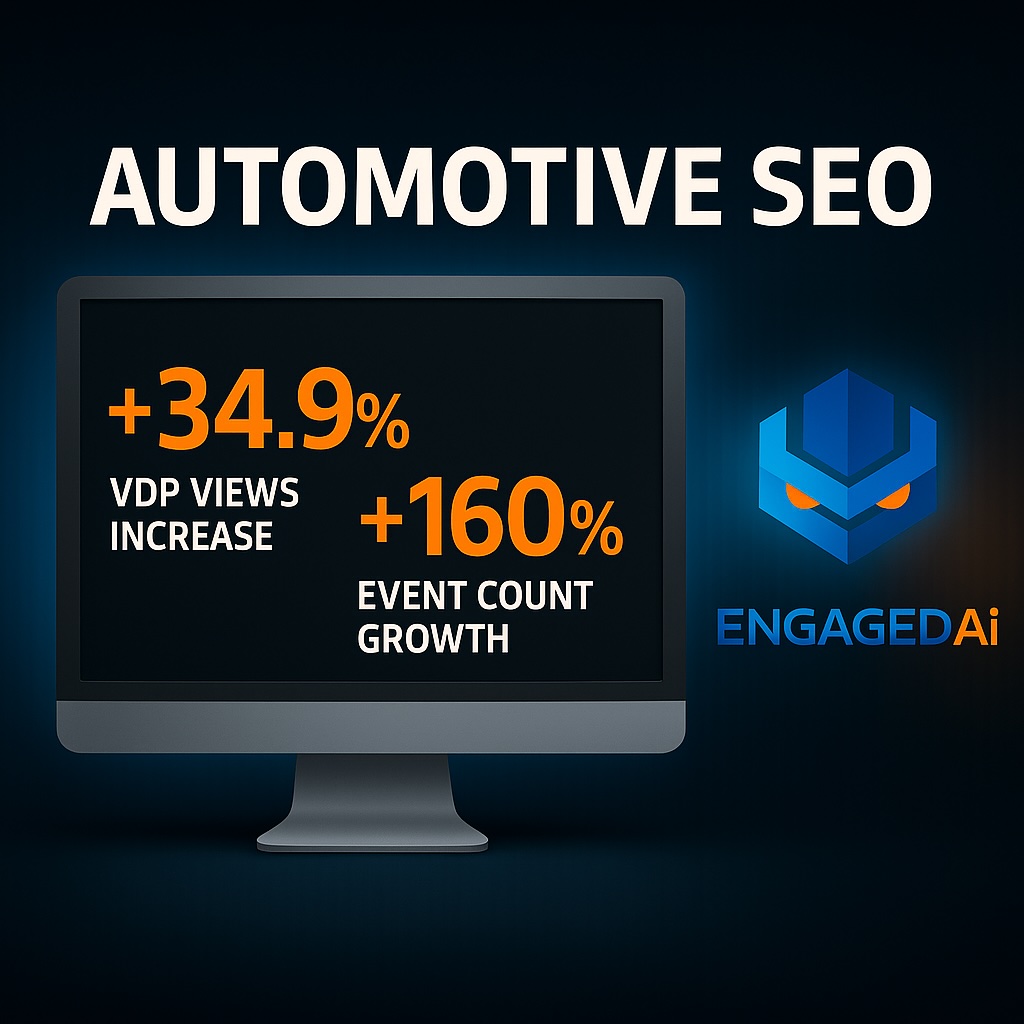
The automotive industry is undergoing a massive digital transformation, and the way customers find dealerships, compare models, and book services has shifted entirely to search engines. Traditional SEO tactics are no longer enough to keep up with Google’s algorithm updates and the rise of generative AI. This is where AI SEO for Automotive steps in, offering a data-driven approach to optimize your online presence. By leveraging machine learning and natural language processing, dealerships and automotive brands can now predict search trends, automate content creation, and deliver hyper-personalized experiences that convert searchers into buyers. This guide breaks down everything you need to know to implement a winning AI-driven SEO strategy for your automotive business.
What is AI SEO for Automotive?
AI SEO for Automotive refers to the strategic application of artificial intelligence technologies to improve a vehicle brand’s, dealership’s, or parts retailer’s visibility in organic search results. Unlike traditional SEO, which relies heavily on manual keyword research and static content updates, AI SEO uses algorithms to analyze vast datasets, understand user intent at a granular level, and automate repetitive optimization tasks. For the automotive sector, this means moving beyond generic keywords like “best SUV” to understanding complex queries such as “2025 electric SUV with third-row seating under $50,000.”
This approach encompasses several core components: predictive analytics to forecast demand for specific models, AI-powered content generation for vehicle descriptions and blog posts, and automated technical audits that identify crawl errors or page speed issues. The ultimate goal is to ensure that when a potential customer is in the research phase—whether they are looking for a new sedan, a used truck, or an oil change—your website appears as the most authoritative and relevant answer.
Why Traditional Automotive SEO is Failing
The automotive buyer’s journey is long and complex, often spanning weeks of research across multiple devices. Traditional SEO strategies, which focus on static keyword density and backlink counts, fail to capture the dynamic nature of this journey. Google’s algorithms now prioritize semantic relevance and user experience metrics like Core Web Vitals. A dealership website that loads slowly or has thin, duplicate content for similar models will be penalized regardless of how many times the phrase “Ford dealer near me” appears on the page.
Furthermore, the explosion of zero-click searches and AI Overviews means that users often get answers directly on the search engine results page (SERP) without ever clicking through to a website. Traditional SEO cannot compete with this shift because it does not optimize for the structured data and conversational language that AI systems use to generate those featured snippets. AI SEO for Automotive addresses this by structuring content to be easily digestible by both search engines and AI models, ensuring your dealership remains visible even when users do not click.
Core Components of an AI-Driven Automotive SEO Strategy

Implementing AI SEO for Automotive is not a single action but a multi-layered process. To build a robust strategy, you need to understand the key pillars that support it. These components work together to create a self-improving system that adapts to market changes and consumer behavior in real-time.
Predictive Keyword and Trend Analysis
AI tools like Clearscope, MarketMuse, and Google’s own Performance Max use machine learning to analyze search volume patterns and predict future trends. For automotive, this is invaluable. Instead of targeting a keyword that is already saturated, AI can identify rising queries like “hybrid truck range” or “EV charging network near me” before they peak. This allows you to create content that captures demand early, positioning your brand as a thought leader. For example, if AI detects a surge in searches for “reliable used cars under $15,000” in a specific geographic region, a dealership can immediately prioritize inventory pages and blog posts targeting that exact query.
Automated Content Generation and Optimization
Writing unique descriptions for 500 used cars on a lot is a logistical nightmare for human copywriters. AI SEO tools can generate high-quality, unique meta descriptions, title tags, and vehicle specifications at scale. However, the real power lies in optimization. AI can analyze your existing content and suggest semantic keywords that you missed. For instance, if you have a page about “2025 Toyota Camry,” the A This ensures your content is comprehensive and matches the full spectrum of user intent, from informational queries to transactional ones.
Technical SEO Audits and Site Architecture
Automotive websites are often massive, with thousands of vehicle detail pages (VDPs), category pages, and blog posts. Manually auditing this for broken links, duplicate content, and slow load times is impossible. AI-powered crawlers like Sitebulb or Botify can simulate Google’s crawling behavior and identify issues instantly. They can flag orphan pages, suggest internal linking structures that pass link equity to high-value pages, and even recommend schema markup (structured data) for vehicle prices, mileage, and availability. This technical foundation is critical because even the best content will not rank if Google cannot crawl and index it efficiently.
Practical Applications: How to Use AI SEO for Automotive
Understanding the theory is one thing, but seeing how AI SEO for Automotive works in practice is another. Here are specific, actionable applications that you can implement today to see immediate results.
Optimizing for Voice Search and Conversational Queries
With the rise of in-car assistants like Apple CarPlay and Android Auto, a significant portion of automotive searches are now voice-based. People speak differently than they type. They ask, “What is the best towing capacity for a 2024 F-150?” instead of typing “F-150 towing capacity.” AI SEO helps you optimize for these long-tail, conversational phrases. By structuring your FAQ sections and blog content to directly answer these questions in a natural tone, you increase your chances of appearing in voice search results and featured snippets. This is a direct application of AI SEO for Automotive that targets high-intent users who are often close to a purchase decision.
Local SEO and Dealership Visibility
For local dealerships, the “near me” search is the holy grail. AI SEO for Automotive enhances local search by analyzing Google Business Profile data, customer reviews, and local search patterns. AI can help you identify which local keywords are driving the most foot traffic and adjust your content strategy accordingly. For example, if you notice that searches for “used car financing options” spike in your area, you can create a dedicated landing page that addresses local financing laws and offers. Additionally, AI can automate the generation of location-specific content for each of your dealership branches, ensuring that each one has a unique, optimized presence without duplicating content.
Enhancing Product Page Content with AI
Vehicle detail pages are the most critical pages on an automotive site. They are where users decide whether to request a quote or book a test drive. AI SEO for Automotive allows you to dynamically generate content for these pages based on the specific trim, color, and features of the vehicle. Instead of a generic template, AI can pull data from the manufacturer’s spec sheet and create a narrative that highlights the vehicle’s unique selling points. It can also automatically update the page with real-time inventory status, pricing changes, and promotional offers, ensuring the content is always fresh and accurate—a factor that Google heavily rewards.
Benefits and Limitations of AI SEO in the Automotive Sector
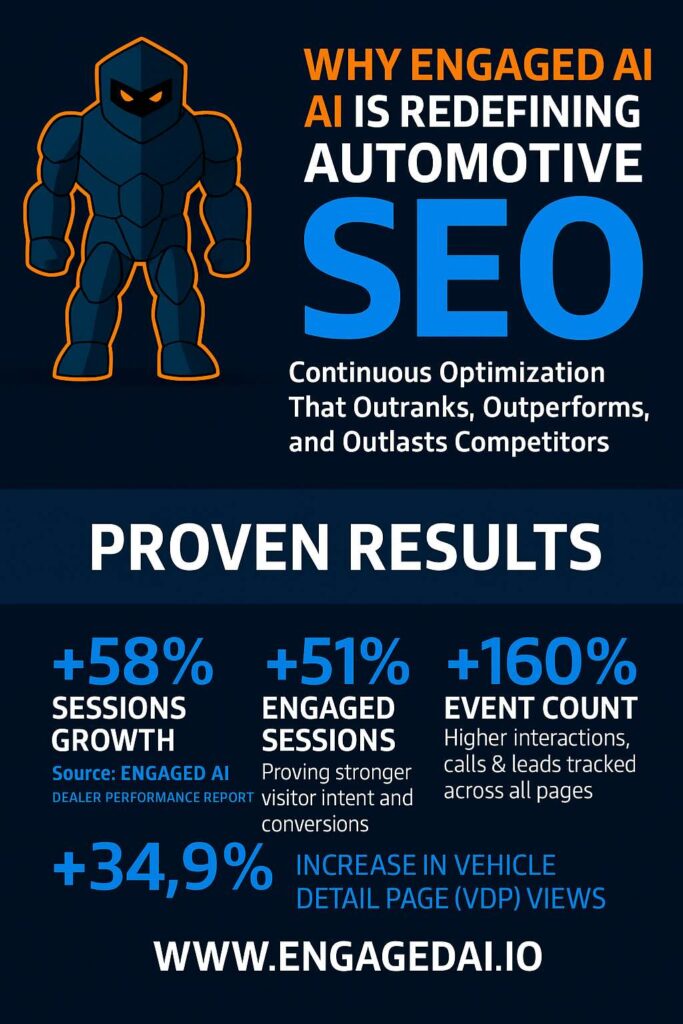
Like any technology, AI SEO for Automotive comes with its own set of advantages and potential drawbacks. A balanced understanding of these will help you set realistic expectations and avoid common pitfalls.
| Benefits | Limitations |
|---|---|
| Scalability: AI can handle thousands of pages simultaneously, making it easy to manage large inventories. | Data Dependency: AI is only as good as the data it is trained on. If your historical data is flawed, the AI’s predictions will be too. |
| Speed: Automated audits and content generation save hundreds of hours of manual work. | Lack of Human Nuance: AI can struggle with brand voice and emotional storytelling, which are crucial in the automotive market. |
| Precision: AI identifies user intent with high accuracy, reducing bounce rates and improving conversion. | Implementation Cost: High-end AI SEO platforms can be expensive for small independent dealerships. |
| Adaptability: AI algorithms learn from real-time performance data, allowing for rapid strategy pivots. | Over-Optimization Risk: Relying too heavily on AI can lead to content that feels robotic and generic, which may alienate users. |
To mitigate these limitations, it is essential to use AI as an assistant rather than a replacement for human expertise. The best results come from a hybrid approach where AI handles the heavy lifting of data analysis and repetitive tasks, while human marketers focus on creative strategy, brand storytelling, and final quality control.
Common Mistakes to Avoid When Implementing AI SEO
Many automotive marketers jump into AI SEO without a clear plan, leading to wasted budgets and poor results. Here are the most common mistakes and how to avoid them.
Ignoring User Intent in Favor of Volume
One of the biggest errors is targeting high-volume keywords that do not match the user’s stage in the buying cycle. For example, ranking for “car insurance” might bring traffic, but if you are a dealership, that traffic is unlikely to convert. AI tools can help you segment keywords by intent—informational, navigational, and transactional—but you must configure them correctly. Focus on transactional and high-commercial-intent keywords like “2025 Honda CR-V for sale” or “certified pre-owned Audi near me” to drive actual leads.
Publishing Unedited AI Content
AI-generated content is a powerful tool, but publishing it without human review is a recipe for disaster. Google’s spam policies explicitly target “scaled content abuse,” which includes mass-produced AI text that lacks originality. Always have a human editor review AI drafts to add unique insights, local knowledge, and a genuine brand voice. This not only improves quality but also protects your site from algorithmic penalties. The key is to use AI for the first draft and then layer in human expertise to ensure the content passes E-E-A-T (Experience, Expertise, Authoritativeness, Trustworthiness) standards.
Neglecting the Technical Side
AI SEO is not just about content. If your site has a poor mobile experience or slow server response times, no amount of AI optimization will save you. Automotive shoppers are often on the go, using their phones to compare prices while sitting in a dealership lot. Ensure your technical foundation is solid before layering on AI tools. Use AI to monitor your Core Web Vitals continuously and automatically flag any regression in performance.
Important Notes for Automotive Marketers
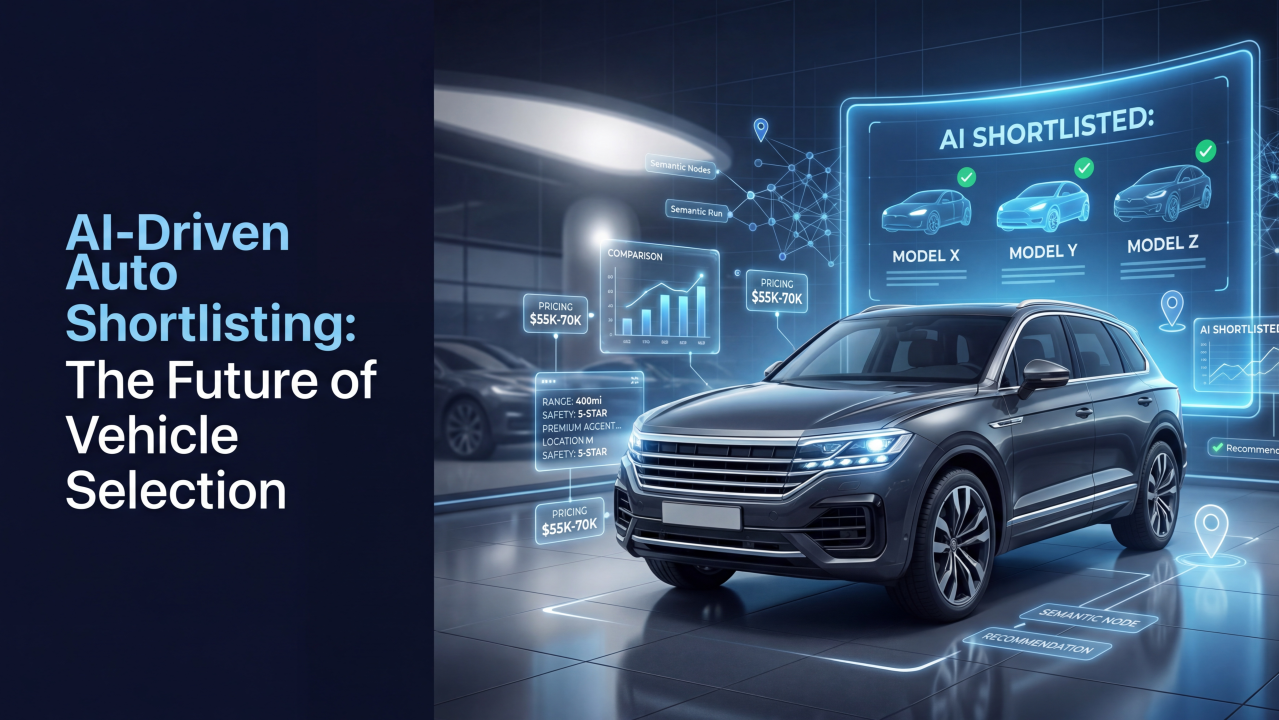
As you integrate AI SEO for Automotive into your workflow, keep these critical notes in mind to ensure long-term success.
- Focus on E-E-A-T: Google’s quality raters look for evidence of real-world experience. Include expert reviews, video walkarounds, and testimonials from actual customers to build trust.
- Leverage Structured Data: Use schema markup for vehicles (Vehicle schema) to enable rich results that display price, mileage, and condition directly in the SERP. This dramatically increases click-through rates.
- Monitor AI Overviews: With Google’s AI Overviews, your content may be summarized without a click. Optimize for this by providing concise, authoritative answers at the top of your pages that AI can easily extract.
- Integrate with CRM Data: Connect your AI SEO tools with your customer relationship management (CRM) system to understand which keywords lead to actual sales, not just clicks. This closes the loop between marketing and sales.
- Stay Updated on Algorithm Changes: The AI landscape changes rapidly. Subscribe to industry news and be prepared to adapt your strategy as Google updates its ranking systems to handle AI-generated content.
Frequently Asked Questions
What is the difference between traditional SEO and AI SEO for Automotive?
Traditional SEO relies on manual keyword research, static content updates, and backlink building. AI SEO for Automotive uses machine learning to automate these processes, predict search trends, and analyze user intent at scale. It is more dynamic, faster, and capable of handling the massive inventory and complex data structures typical of automotive websites.
How much does AI SEO cost for a car dealership?
The cost varies widely depending on the tools and agency you choose. Basic AI content tools can cost $100-$300 per month, while enterprise-level platforms like MarketMuse or BrightEdge can range from $1,000 to $5,000+ per month. However, the return on investment is often significant, as AI reduces labor costs and improves conversion rates. Many dealerships find that the efficiency gains offset the subscription fees.
Can AI SEO help with used car inventory pages?
Absolutely. AI is particularly effective for used car inventory because it can automatically generate unique descriptions for each vehicle based on its specific VIN, mileage, features, and condition. It can also optimize these pages for long-tail keywords like “2019 Toyota RAV4 XLE with navigation under 30k miles,” which are highly specific and have strong purchase intent.
Will Google penalize my site for using AI-generated content?
Google does not penalize AI content per se, but it penalizes low-quality content regardless of how it is produced. If you use AI to create spammy, duplicate, or unhelpful content, you will be penalized. However, if you use AI to assist in creating high-quality, original, and valuable content that serves the user, you will not be penalized. The key is to ensure human oversight and editorial review.
How does AI SEO handle voice search for automotive queries?
AI SEO tools analyze natural language patterns and question-based queries. They help you structure content in a Q&A format (like this FAQ section) and use conversational language that matches how people speak. This increases the likelihood of your content being selected for voice search results and featured snippets.
Conclusion
AI SEO for Automotive is no longer a futuristic concept; it is a present-day necessity for any automotive business that wants to remain competitive. The shift from keyword-stuffing to intent-based, AI-driven optimization is reshaping how dealerships attract customers. By embracing predictive analytics, automated content generation, and advanced technical audits, you can ensure that your brand appears in front of the right buyers at the exact moment they are ready to engage. The automotive market is crowded, and the dealerships that leverage AI to understand and serve their customers better will be the ones that thrive in the coming years. Start small, focus on high-impact areas like local SEO and inventory pages, and scale your efforts as you see results. The road ahead is digital, and AI is the engine that will drive you to the top of the search rankings.
Xem thêm:
- AI SEO Image Titles: The Complete Guide to Boosting Your Visual Search Rankings
- AI SEO GPT Tools: The Complete Guide to Automating Your Search Rankings in 2025
- How to Find Keywords with AI: The Modern Marketer’s Blueprint for Smarter Research
- AI SEO Keyword Expansion: The Complete Guide to Scaling Your Content Strategy
- AI Rewrite Tool: The Ultimate Guide to Rewriting Content with Artificial Intelligence
Bài viết cùng chủ đề:

AI SEO SEO Automation with Make: The Complete Workflow Guide

AI SEO SEO Automation with Zapier: The Complete Workflow Guide

AI SEO SEO Automation with n8n: The Complete Workflow Guide
AI SEO SEO Automation with Gemini: The Complete Guide to Scaling Organic Growth

AI SEO SEO Automation with Claude: The Complete Guide to Scaling Content in 2025

AI SEO SEO Automation with ChatGPT: The Complete Playbook for 2025

AI SEO & SEO Automation for Affiliate Sites: The 2025 Playbook for Passive Income Growth
AI SEO & SEO Automation for Bloggers: The Complete Guide to Scaling Your Content

AI SEO & SEO Automation for Agencies: The Complete 2025 Playbook

AI SEO and SEO Automation for Ecommerce: The Complete Playbook for 2025

AI SEO & SEO Automation for WordPress: The Complete Playbook for 2025
AI SEO SEO Automation Strategy: The Complete Playbook for 2025

Mastering the AI SEO SEO Automation Process: A Complete Guide to Scaling Organic Growth
AI SEO SEO Automation System: The Complete Guide to Scaling Organic Growth in 2025
AI SEO SEO Automation Platform: The Complete Guide to Scaling Organic Growth in 2025
AI SEO SEO Automation Software: The Complete Guide to Scaling Organic Growth in 2025















