
No products in the cart.
AI SEO Keyword Expansion: The Complete Guide to Scaling Your Content Strategy
10
Aug
Aug
AI SEO keyword expansion has transformed how digital marketers approach content planning and organic growth. Traditional keyword research relied on manual brainstorming, competitor spying, and limited suggestion tools. Today, artificial intelligence processes millions of search queries, user intent signals, and semantic relationships in seconds. This guide explains how AI-powered keyword expansion works, why it outperforms manual methods, and how to implement it for measurable traffic gains. You will learn the exact workflows, tools, and strategies that top SEO agencies use to scale content production without sacrificing quality or relevance.
What Is AI SEO Keyword Expansion?

AI SEO keyword expansion is the process of using machine learning algorithms and natural language processing to generate a comprehensive list of related keywords, long-tail variations, and semantic topics from a seed keyword. Unlike traditional tools that simply scrape Google Autocomplete, AI models analyze search engine result pages, user behavior patterns, and content clusters to predict what users actually want to find.
The core difference lies in understanding context. A human researcher might identify “best running shoes” as a keyword. An AI system expands this into hundreds of variations: “best running shoes for flat feet,” “best running shoes for marathon training,” “best running shoes under $100,” and “best running shoes for women with narrow feet.” Each variation represents a distinct search intent that can be targeted with dedicated content.
How AI Keyword Expansion Differs from Traditional Methods
Traditional keyword tools rely on exact match data and simple pattern recognition. They show you what people type, but not why they type it. AI SEO keyword expansion goes deeper by analyzing:
- Search intent classification (informational, transactional, navigational, commercial)
- Entity relationships and topical authority mapping
- User journey stages and content funnel positioning
- Voice search patterns and conversational queries
- Seasonal trends and emerging topics before they peak
- Combine AI tools with manual competitor analysis for a complete picture
- Track keyword rankings monthly to measure the effectiveness of your expansion
- Use AI-generated keywords to inform internal linking structures, not just content creation
- Integrate AI keyword data with your CRM to align SEO with sales goals
- Train your content team on how to interpret AI briefs and add human expertise
- Monitor Google algorithm updates that may affect how keyword density is evaluated
- Maintain a feedback loop where underperforming content informs future keyword selection
The result is a keyword universe that covers every angle of a topic, ensuring you never miss an opportunity to rank for relevant queries.
Why AI SEO Keyword Expansion Matters in 2025
Search engines have become significantly smarter. Google’s algorithms now understand user intent, context, and semantic relevance better than ever before. This means exact-match keywords matter less, while topical depth and content comprehensiveness matter more. AI SEO keyword expansion helps you build that topical authority systematically.
Consider the statistics: websites that publish content targeting long-tail keywords see 3-5 times higher conversion rates than those targeting head terms. AI expansion uncovers these long-tail opportunities at scale. Additionally, Google’s helpful content update rewards sites that demonstrate expertise across a complete topic cluster. AI-generated keyword lists ensure you cover every subtopic your audience cares about.
The Shift from Keywords to Topics
Modern SEO is no longer about stuffing a page with variations of a single phrase. It is about creating comprehensive resources that answer every question a user might have. AI SEO keyword expansion supports this shift by grouping keywords into topical clusters. Each cluster represents a pillar page and supporting articles that interlink to build authority.
For example, if your seed keyword is “content marketing,” AI expansion might generate clusters for content strategy, content creation tools, content distribution channels, content measurement metrics, and content outsourcing. Each cluster contains dozens of specific keywords that guide your editorial calendar.
How AI SEO Keyword Expansion Works

Understanding the underlying mechanics helps you use AI tools more effectively. The process typically involves several stages that happen automatically but can be influenced by your inputs.
Seed Keyword Analysis
The AI starts with your seed keyword or URL. It analyzes the search engine results page for that term, identifying the top-ranking pages, their structure, and the entities they mention. This gives the AI a baseline understanding of what content currently satisfies user intent.
Semantic Network Construction
Using natural language processing, the AI builds a semantic network around your seed keyword. It identifies related concepts, synonyms, hypernyms, and hyponyms. For instance, from “digital marketing,” it might generate “online advertising,” “social media marketing,” “email campaigns,” and “search engine optimization” as related entities.
Query Pattern Recognition
The AI analyzes millions of actual search queries from its database. It identifies patterns in how users phrase questions, what modifiers they add (best, cheap, how to, vs, for beginners), and what formats they expect (lists, guides, comparisons, tutorials). This data drives the generation of long-tail keyword variations.
Intent Prediction and Scoring
Each generated keyword receives an intent classification and a difficulty score. The AI predicts whether a user searching that term wants to buy, learn, compare, or find a specific website. It also estimates how hard it will be to rank for each term based on domain authority of current ranking pages and content quality.
Content Gap Identification
Finally, the AI compares your existing content against the generated keyword universe. It highlights gaps where you have no content targeting a valuable keyword. This gap analysis becomes your content roadmap, showing exactly what to write next.
Top AI SEO Keyword Expansion Tools
Several platforms offer AI-powered keyword expansion with varying features and pricing. Choosing the right one depends on your budget, technical skill level, and content volume requirements.
| Tool | Key Features | Best For | Pricing Model |
|---|---|---|---|
| Ahrefs | Keyword Explorer with AI suggestions, content gap analysis, SERP analysis | Professional SEO agencies | Subscription from $99/month |
| Semrush | Keyword Magic Tool, topic research, SEO content template | Content marketers and enterprises | Subscription from $119/month |
| Surfer SEO | Content editor with AI keywords, SERP analyzer, NLP terms | On-page optimization | Subscription from $89/month |
| Clearscope | Content briefs, keyword recommendations, readability scoring | Content teams producing high-volume | Subscription from $170/month |
| MarketMuse | AI content research, topical authority scoring, cluster building | Enterprise content strategy | Custom pricing |
| LowFruits | AI-powered long-tail discovery, question extraction | Affiliate sites and niche blogs | Subscription from $49/month |
Free AI Keyword Expansion Options
Not every business needs a paid tool. Google’s own autocomplete and related searches provide a basic form of AI-driven suggestions. Additionally, tools like AnswerThePublic visualize question-based keywords. Google Trends shows rising queries that AI models often miss. Combining these free sources with manual analysis can produce a solid keyword list for small websites.
Step-by-Step Guide to AI SEO Keyword Expansion
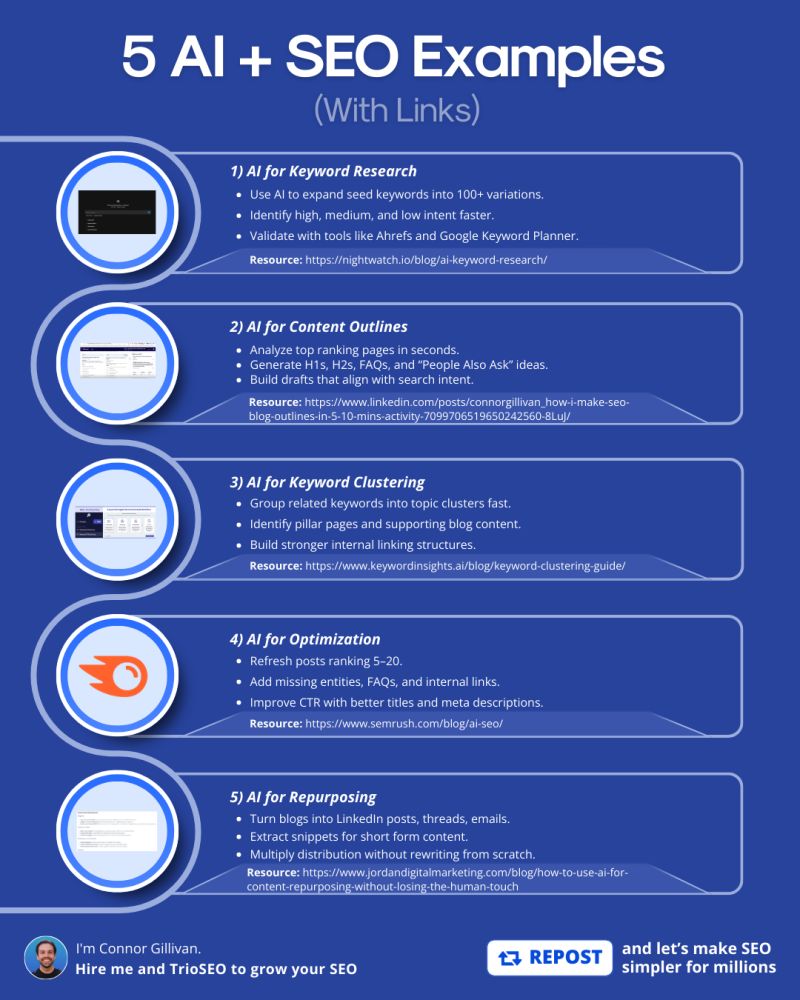
Implementing AI SEO keyword expansion requires a structured workflow. Follow these steps to generate a comprehensive keyword universe that drives organic traffic.
Step 1: Define Your Seed Keywords
Start with 5-10 core topics relevant to your business. These should be broad enough to generate substantial expansion but specific enough to maintain relevance. For a fitness website, seeds might include “home workouts,” “muscle building,” “weight loss tips,” “nutrition plans,” and “yoga for beginners.”
Step 2: Run AI Expansion on Each Seed
Input each seed keyword into your chosen AI tool. Set parameters for language, location, and search intent if available. Generate at least 500-1000 keyword variations per seed. Do not filter yet; you want the full universe before narrowing down.
Step 3: Merge and Deduplicate
Combine all generated keywords into a single spreadsheet. Remove duplicates and near-duplicates. Normalize variations like singular and plural forms. This gives you a master list of potential targets.
Step 4: Filter by Relevance and Intent
Review the master list and remove keywords that do not align with your business offerings. Classify each remaining keyword by search intent. Informational keywords suit blog posts, commercial keywords suit product pages, and transactional keywords suit landing pages.
Step 5: Analyze Search Volume and Difficulty
Use your AI tool to pull search volume and keyword difficulty scores for each term. Prioritize keywords with moderate volume (100-1000 monthly searches) and low-to-medium difficulty. These offer the best return on effort for most websites.
Step 6: Group Keywords into Clusters
Organize your filtered keywords into thematic clusters. Each cluster should have one primary keyword and 10-20 secondary keywords. The primary keyword targets a pillar page, while secondary keywords target supporting articles that link back to the pillar.
Step 7: Create Content Briefs
For each cluster, generate a content brief using your AI tool. The brief should include the primary keyword, secondary keywords, suggested headings, questions to answer, and entities to mention. This ensures your writers cover the full semantic scope of the topic.
Benefits of AI SEO Keyword Expansion
The advantages of using AI for keyword expansion go beyond saving time. They fundamentally improve the quality and performance of your SEO efforts.
Unmatched Scalability
A human researcher can manually identify 50-100 keywords per day. AI tools generate thousands in minutes. This scalability allows content teams to plan months of publishing in a single session, keeping editorial calendars full and consistent.
Discovery of Hidden Opportunities
AI models identify keyword combinations that human researchers would never think to check. They surface questions from forums, subtopics from competitor content, and emerging trends from social media. These hidden gems often have low competition and high conversion potential.
Improved Content Relevance
By expanding keywords into semantic clusters, AI ensures your content covers a topic comprehensively. This signals expertise to search engines, improving your chances of ranking for the entire cluster rather than just one page.
Faster Adaptation to Trends
AI tools monitor real-time search data. When a new trend emerges, they immediately generate related keywords. This allows you to publish timely content before competitors even notice the opportunity.
Reduced Keyword Cannibalization
AI clustering prevents multiple pages on your site targeting the same keyword. Each page gets a unique primary keyword, eliminating internal competition and preserving your crawl budget.
Limitations and Challenges
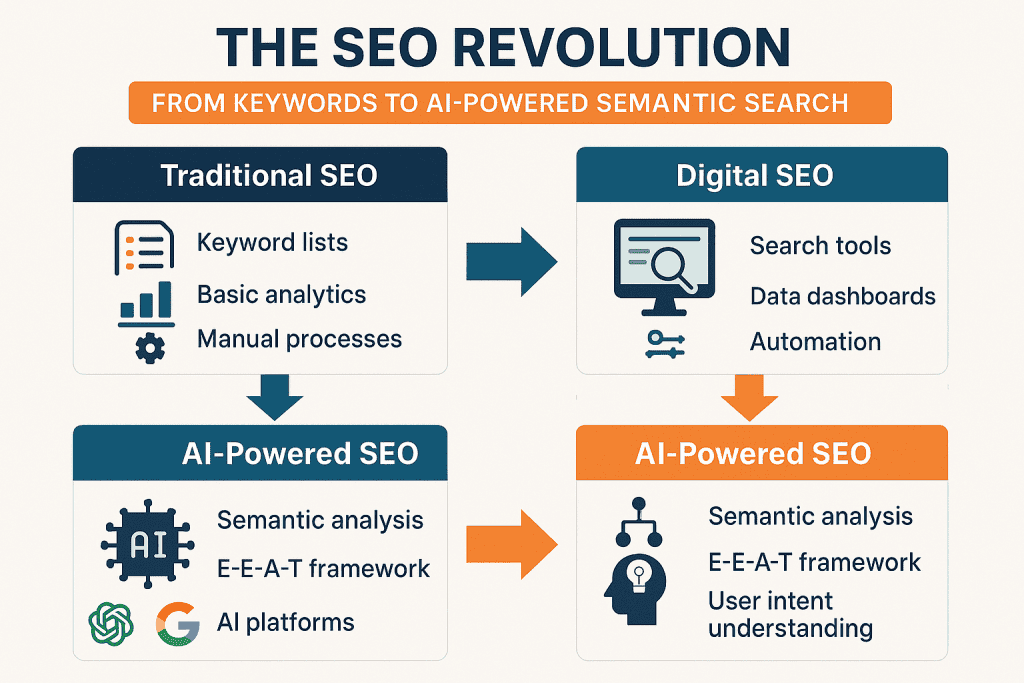
AI SEO keyword expansion is powerful but not perfect. Understanding its limitations prevents costly mistakes.
Data Quality Dependence
AI tools are only as good as their underlying data. If a tool has limited search volume data for your niche or language, the generated keywords may be inaccurate or irrelevant. Always cross-reference AI suggestions with manual checks.
Lack of Human Judgment
AI cannot fully understand your brand voice, business goals, or audience nuances. It might suggest keywords that are technically relevant but commercially useless for your specific offering. Human review remains essential.
Overemphasis on Volume
Many AI tools prioritize high-volume keywords, which are often highly competitive. Without careful filtering, you might waste effort targeting terms you can never rank for. Set difficulty thresholds in your tool settings.
Potential for Generic Content
If you rely solely on AI-generated keywords and briefs, your content may end up sounding similar to every other AI-optimized page. Use AI for research and structure, but inject your unique experience and insights into the writing.
AI SEO Keyword Expansion vs. Traditional Keyword Research
Comparing the two approaches highlights why AI has become the industry standard for serious SEO practitioners.
| Aspect | Traditional Keyword Research | AI SEO Keyword Expansion |
|---|---|---|
| Speed | Hours per topic | Minutes per topic |
| Keyword Volume | 10-50 per session | 500-5000 per session |
| Intent Understanding | Manual guesswork | Algorithmic classification |
| Semantic Coverage | Limited to obvious variations | Comprehensive entity mapping |
| Trend Detection | Reactive, after trends peak | Proactive, early trend signals |
| Scalability | Limited by human capacity | Unlimited with API access |
| Cost | Low tool cost, high labor cost | Higher tool cost, lower labor cost |
Common Mistakes in AI SEO Keyword Expansion
Avoiding these pitfalls ensures your AI-powered strategy delivers results rather than wasted effort.
Mistake 1: Ignoring Search Intent
Generating thousands of keywords is useless if you do not match them to the correct content format. A keyword with transactional intent should not target a blog post. Always classify intent before assigning keywords to pages.
Mistake 2: Targeting Only High-Volume Keywords
High-volume keywords attract high competition. For new or small websites, targeting these is a losing battle. Focus on long-tail keywords with lower volume but higher conversion potential and achievable ranking difficulty.
Mistake 3: Skipping Human Review
AI suggestions can include irrelevant, offensive, or nonsensical combinations. Always have a human editor review the final keyword list before publishing content. This maintains brand safety and content quality.
Mistake 4: Creating Thin Content for Every Keyword
Expanding keywords does not mean creating a separate page for every variation. Group similar keywords into single comprehensive articles. Publishing hundreds of thin pages dilutes your authority and triggers Google’s helpful content penalties.
Mistake 5: Neglecting Keyword Updates
Search trends change monthly. A keyword list generated six months ago is likely outdated. Re-run your AI expansion quarterly to capture new trends and remove declining terms from your strategy.
Practical Applications of AI SEO Keyword Expansion
Different business types use AI keyword expansion in distinct ways to achieve their goals.
E-commerce Product Descriptions
Online stores use AI expansion to generate long-tail variations for product categories. A store selling “wireless headphones” expands into “wireless headphones for running,” “wireless headphones with noise cancellation,” and “wireless headphones for small ears.” Each variation becomes a product page or a buying guide that captures targeted traffic.
B2B Content Marketing
B2B companies use AI expansion to map the entire buyer journey. They generate keywords for awareness-stage content (what is), consideration-stage content (comparison, benefits), and decision-stage content (pricing, reviews). This ensures they attract leads at every funnel stage.
Local SEO Optimization
Local businesses expand keywords with geographic modifiers. A plumber in Austin expands “plumber” into “emergency plumber Austin,” “water heater repair Austin,” and “plumber near me open now.” These local long-tail keywords drive high-intent traffic that converts to calls.
News and Publishing
Media sites use AI expansion to identify trending subtopics before they peak. They monitor real-time search data and generate article ideas within minutes of a breaking story. This speed gives them a competitive edge in Google News rankings.
Important Notes for Successful Implementation
Keep these considerations in mind as you integrate AI SEO keyword expansion into your workflow.
Frequently Asked Questions
What is the difference between AI keyword expansion and traditional keyword tools?
Traditional tools rely on exact match data and simple pattern matching. AI keyword expansion uses machine learning to understand search intent, semantic relationships, and user behavior. It generates more relevant long-tail variations and clusters keywords by topic, providing deeper insights than simple suggestion lists.
How many keywords should I generate for a single topic?
For a comprehensive content strategy, generate 500-1000 keywords per seed topic. After filtering for relevance and intent, you will typically keep 50-100 high-quality keywords. These are grouped into 3-5 clusters, each supporting one pillar page and several supporting articles.
Can AI SEO keyword expansion replace human SEO experts?
No. AI tools excel at data processing and pattern recognition, but they lack strategic judgment, brand understanding, and creative insight. The best results come from combining AI-generated data with human expertise in content strategy, user experience, and business analysis.
How often should I update my keyword lists?
Run a full AI keyword expansion at least quarterly. Additionally, perform monthly checks for emerging trends in your niche. Set up alerts for new competitor content and Google algorithm updates that might shift keyword relevance.
Is AI SEO keyword expansion suitable for small websites?
Yes, but with caution. Small websites should focus on low-competition long-tail keywords generated by AI rather than broad head terms. The scalability of AI helps small teams plan content efficiently, but they should prioritize quality over quantity to build authority gradually.
What metrics should I track to measure the success of AI keyword expansion?
Track organic traffic growth, keyword rankings for targeted terms, conversion rates from organic visitors, and content engagement metrics like time on page and bounce rate. Compare these metrics against your pre-AI baseline to quantify the impact of your expansion strategy.
Conclusion
AI SEO keyword expansion has fundamentally changed how websites approach organic search. The ability to generate thousands of relevant, intent-based keywords in minutes gives content teams a massive competitive advantage. By understanding how AI models work, selecting the right tools, and following a structured workflow, you can build a keyword universe that drives sustained traffic growth.
The key to success lies in combining AI efficiency with human judgment. Let AI handle the heavy lifting of data collection and pattern recognition, but always apply your expertise to filter, prioritize, and create content that genuinely helps your audience. Start with a small pilot project, measure the results, and scale your AI keyword expansion efforts as you see positive returns. The future of SEO belongs to those who embrace intelligent automation while maintaining the human touch that builds trust and authority.
Xem thêm:
- AI SEO Product Category SEO: The Complete Guide to Scaling Category Pages
- AI SEO Link Relevance: The Complete Guide to Modern Link Building
- AI SEO Navigational Intent: The Complete Guide to Winning Brand Searches in 2025
- AI SEO Retrieval Augmented Generation: The Complete Guide to Smarter Search Rankings
- The 2024 AI SEO Glossary: 50+ Must-Know Terms for Search Professionals
Bài viết cùng chủ đề:

AI SEO SEO Automation with Make: The Complete Workflow Guide

AI SEO SEO Automation with Zapier: The Complete Workflow Guide

AI SEO SEO Automation with n8n: The Complete Workflow Guide
AI SEO SEO Automation with Gemini: The Complete Guide to Scaling Organic Growth

AI SEO SEO Automation with Claude: The Complete Guide to Scaling Content in 2025

AI SEO SEO Automation with ChatGPT: The Complete Playbook for 2025

AI SEO & SEO Automation for Affiliate Sites: The 2025 Playbook for Passive Income Growth
AI SEO & SEO Automation for Bloggers: The Complete Guide to Scaling Your Content

AI SEO & SEO Automation for Agencies: The Complete 2025 Playbook

AI SEO and SEO Automation for Ecommerce: The Complete Playbook for 2025

AI SEO & SEO Automation for WordPress: The Complete Playbook for 2025
AI SEO SEO Automation Strategy: The Complete Playbook for 2025

Mastering the AI SEO SEO Automation Process: A Complete Guide to Scaling Organic Growth
AI SEO SEO Automation System: The Complete Guide to Scaling Organic Growth in 2025
AI SEO SEO Automation Platform: The Complete Guide to Scaling Organic Growth in 2025
AI SEO SEO Automation Software: The Complete Guide to Scaling Organic Growth in 2025















