
No products in the cart.
AI SEO for Content Teams: The Complete Playbook for 2025
31
Jul
Jul
Content teams are facing an unprecedented volume of work. Search algorithms update constantly, competitor content multiplies daily, and the demand for fresh, authoritative material never stops. AI SEO for content teams has moved from a futuristic concept to a daily operational necessity. This guide breaks down exactly how modern teams integrate artificial intelligence into their SEO workflows, from keyword discovery to content optimization and performance tracking. The focus is on practical application, real-world examples, and the strategic shifts that separate successful teams from those merely experimenting.
What Is AI SEO for Content Teams?
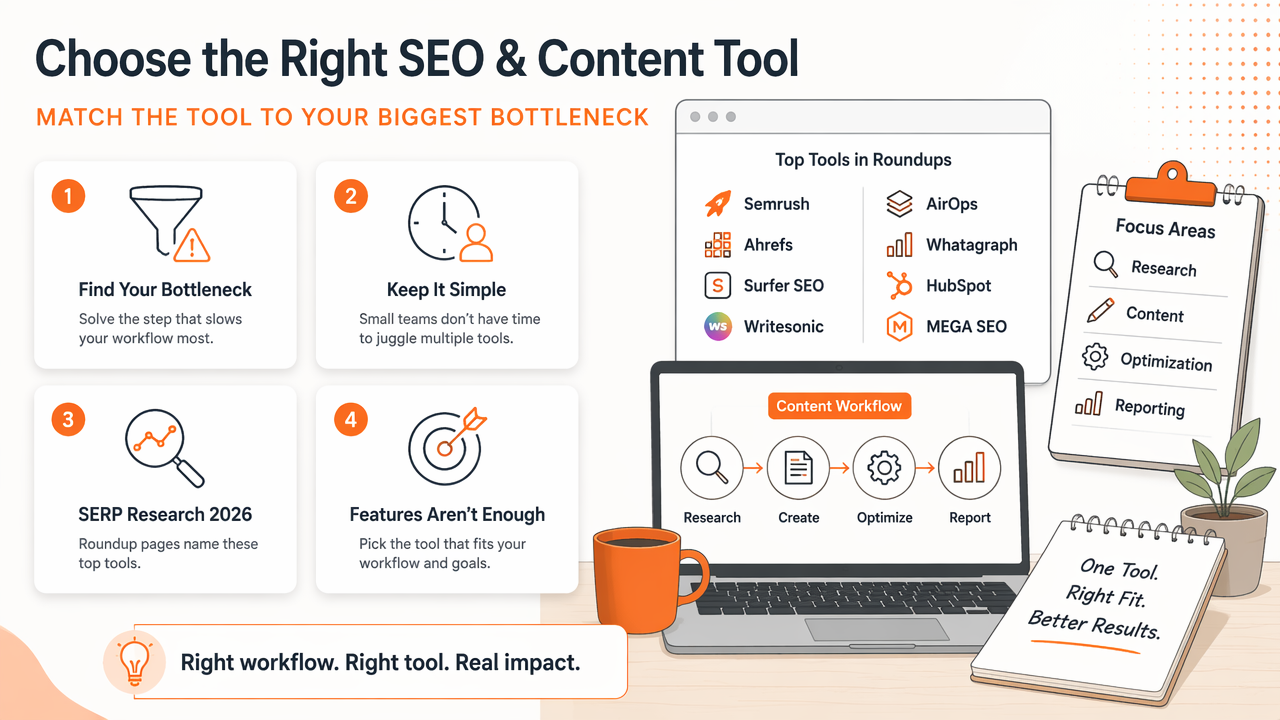
AI SEO for content teams refers to the systematic use of machine learning models, natural language processing, and automation tools to enhance every stage of the content lifecycle. This includes topic research, content brief generation, drafting assistance, on-page optimization, internal linking, and performance analysis. Unlike traditional SEO tools that simply report data, AI systems interpret patterns, predict outcomes, and generate actionable recommendations.
The core value proposition is speed and scale. A human editor can analyze ten competitor articles in an hour. An AI-powered system can analyze ten thousand in the same timeframe, extracting semantic patterns, content gaps, and ranking opportunities. This allows content teams to focus their creative energy on strategy, narrative, and expertise rather than repetitive data crunching.
The Evolution from Manual SEO to AI-Driven Workflows
Traditional SEO relied on manual processes: checking keyword density, counting backlinks, and manually updating meta tags. These methods were time-consuming and often reactive. AI-driven workflows are predictive and proactive. They identify emerging topics before they peak, suggest content updates based on ranking fluctuations, and automatically generate structured data markup.
For example, a team managing a health website can use AI to monitor search queries related to new medications or treatment protocols. The system flags a rising trend in “semaglutide side effects” and automatically drafts a brief with the latest clinical data, competitor analysis, and suggested FAQs. The human writer then adds clinical expertise and patient perspective, creating a piece that is both data-rich and humanized.
Core Components of an AI-Powered SEO Workflow
Implementing AI SEO for content teams requires understanding the distinct components that form a cohesive system. These components work together to streamline operations and improve outcomes.
1. AI-Powered Keyword and Topic Clustering
Modern AI tools go beyond simple keyword lists. They use semantic analysis to group related queries into topical clusters. This helps content teams build pillar pages and supporting articles that cover a subject comprehensively. Instead of targeting “best running shoes” and “trail running shoes” separately, the AI identifies the relationship and suggests a content architecture that captures both search intents.
Tools like Clearscope, MarketMuse, and Surfer SEO use AI to analyze top-ranking pages and generate content briefs that include related terms, questions, and entity mentions. This ensures the final article covers the full semantic breadth of the topic, which is a strong ranking factor.
2. Automated Content Brief Generation
A content brief is the blueprint for a successful article. AI generates these briefs by analyzing the top 20-30 search results for a target keyword. The brief includes recommended word count, heading structure, key entities to mention, and suggested internal linking opportunities. This eliminates guesswork and ensures every writer starts with a data-backed foundation.
For instance, a brief for “how to start a podcast” might include sections on equipment, recording software, distribution platforms, and monetization. The AI identifies that successful articles also cover “common mistakes” and “interview tips,” adding these to the brief. The writer then fills in the details with personal experience and expert quotes.
3. AI-Assisted Drafting and Writing
Large language models (LLMs) like GPT-4 and Claude are now integral to the drafting process. They help overcome writer’s block, generate outlines, and produce first drafts for repetitive sections like introductions or product descriptions. However, the most effective use is not full automation but human-AI collaboration. The writer provides the strategic direction, unique insights, and brand voice, while the AI handles the heavy lifting of sentence construction and factual summarization.
Content teams use AI to rewrite complex sentences for clarity, generate multiple headline variations for A/B testing, and create meta descriptions that drive higher click-through rates. This accelerates production without sacrificing quality, provided t
4. On-Page Optimization and Entity Coverage
AI tools analyze the content against the search engine’s understanding of the topic. They check for entity coverage, which refers to the key people, places, concepts, and things that define a subject. For example, an article about “electric vehicles” should naturally mention entities like “battery range,” “charging infrastructure,” “Tesla,” and “regenerative braking.”
The AI provides a real-time score as the writer works, highlighting missing entities and suggesting where to add them. This ensures the content is semantically complete and aligned with what search engines expect to see on a comprehensive page.
5. Predictive Performance Analytics
After publication, AI continues to play a role. Predictive analytics tools forecast how a piece will rank based on historical data and current SERP features. They identify pages that are losing traffic and recommend specific updates, such as adding a new section, refreshing statistics, or improving internal links. This turns content maintenance from a manual audit into an automated, prioritized task list.
Benefits of Implementing AI SEO for Content Teams

The advantages of integrating AI into SEO workflows are measurable and significant. Teams that adopt these tools report improvements across several key performance indicators.
- Increased Production Speed: AI reduces research time by up to 70%. Writers receive comprehensive briefs instantly, eliminating hours of manual SERP analysis.
- Improved Content Quality: AI ensures comprehensive topic coverage, reducing the risk of thin content that fails to rank.
- Better Keyword Targeting: Semantic analysis uncovers long-tail opportunities that traditional tools miss, capturing high-intent traffic.
- Consistent Brand Voice: AI models can be trained on existing content to maintain a consistent tone across multiple writers and departments.
- Scalable Content Operations: Teams can produce more content without proportionally increasing headcount, directly impacting ROI.
- Data-Driven Decisions: AI provides clear evidence for why certain topics are chosen and how they should be structured, reducing internal friction.
- Research and Briefing: Clearscope, MarketMuse, or Frase
- Drafting Assistance: ChatGPT, Claude, or Jasper
- On-Page Optimization: Surfer SEO or NeuronWriter
- Content Analytics: Google Search Console with AI-powered insights from tools like BrightEdge or Conductor
Limitations and Risks to Manage
AI is not a silver bullet. Content teams must be aware of the limitations and actively manage the risks associated with AI-generated content.
Hallucinations and Factual Errors
LLMs can generate plausible-sounding but completely false information. This is particularly dangerous for YMYL (Your Money or Your Life) topics like health, finance, and legal advice. Teams must implement strict fact-checking protocols and require human verification for all statistical claims and expert statements.
Lack of Original Experience
Google’s E-E-A-T guidelines emphasize Experience. AI cannot test a product, visit a location, or share a personal anecdote. Content that relies solely on AI output will lack the first-hand perspective that builds trust with readers. Successful teams use AI for structure and research but inject human experience into the narrative.
Generic and Repetitive Writing
AI models are trained on vast datasets, which means their default output can be generic. Without careful prompting and editing, articles can sound robotic and lack a distinct point of view. This can lead to lower engagement metrics and higher bounce rates.
Algorithmic Penalties
Search engines are actively fighting low-quality AI content. Google’s SpamBrain updates target scaled content abuse. Teams that publish unedited AI output at scale risk losing rankings entirely. The key is to use AI as an assistant, not a replacement for human editorial judgment.
AI SEO vs. Traditional SEO: A Practical Comparison
| Aspect | Traditional SEO | AI-Powered SEO |
|---|---|---|
| Research Time | Hours of manual SERP analysis | Minutes with automated briefs |
| Keyword Approach | Exact match keywords | Semantic topics and entities |
| Content Updates | Manual audits every 6 months | Continuous automated monitoring |
| Scalability | Limited by team size | Limited by review capacity |
| Personalization | Static content for all users | Dynamic content adaptation |
| Error Rate | Human oversight reduces errors | Requires strict fact-checking |
The table illustrates that AI SEO is not about replacing traditional methods but augmenting them. The research phase becomes faster, the optimization becomes more precise, and the maintenance becomes automated. The human role shifts from data collector to strategist and editor.
Practical Implementation Guide for Content Teams
Transitioning to an AI-powered workflow requires a structured approach.
Step 1: Audit Current Workflows
Identify bottlenecks in the current content process. Is the team spending too much time on keyword research? Are writers struggling with briefs? Is content going stale quickly? These pain points will dictate which AI tools to prioritize.
Step 2: Select the Right Tool Stack
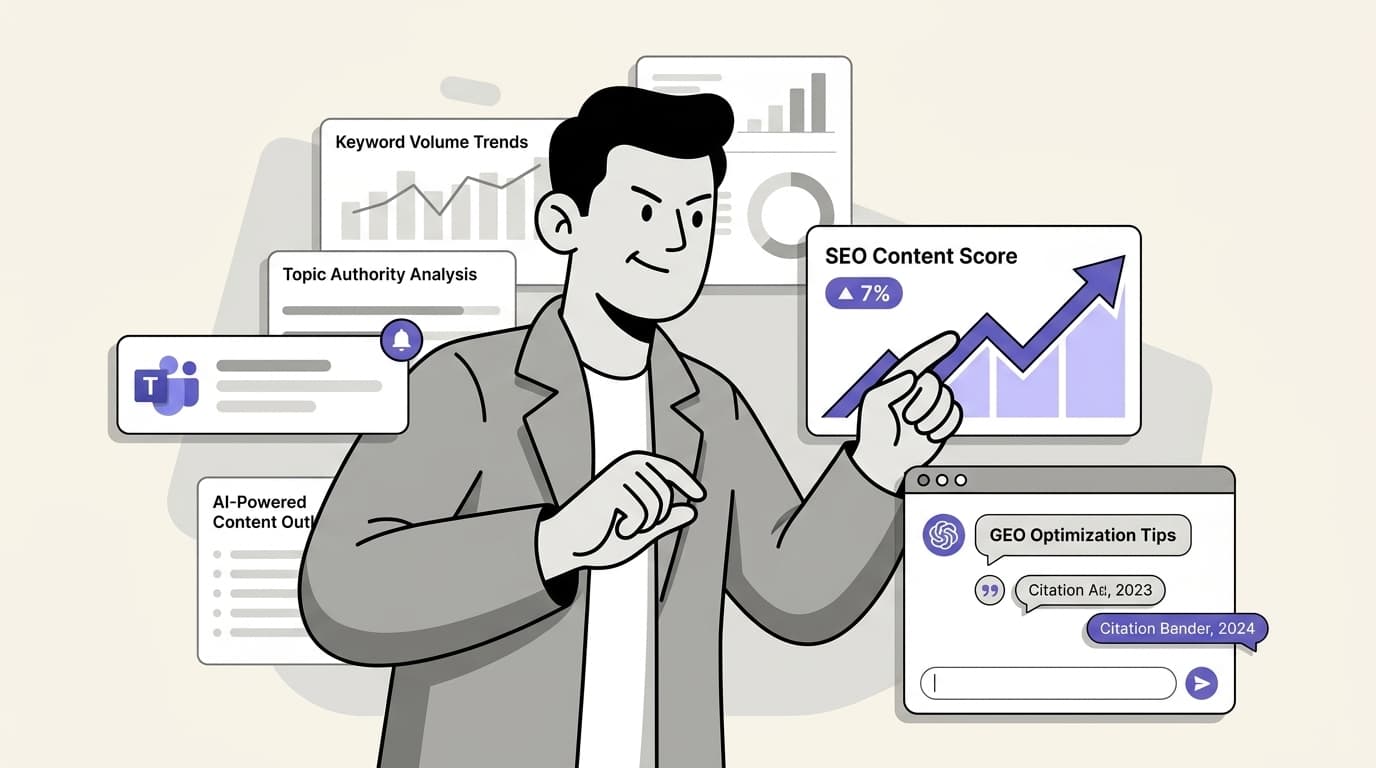
T A typical stack includes:
Start with one tool per category to avoid overwhelming the team. Master the workflow before adding more complexity.
Step 3: Train the Team on Prompting
Effective AI use depends on effective prompting. Content teams need to learn how to write clear, specific prompts that generate useful output. This includes providing context, defining the target audience, specifying the tone, and requesting specific structural elements.
For example, instead of asking “Write an introduction about AI SEO,” a better prompt is: “Write a 100-word introduction for an article about AI SEO for content teams. The target audience is marketing managers at mid-sized B2B companies. The tone should be authoritative but accessible. Include the main keyword ‘AI SEO for content teams’ in the first sentence.”
Step 4: Establish a Human Review Process
Every piece of AI-assisted content must go through a human editor. The editor checks for factual accuracy, brand voice alignment, readability, and the inclusion of unique insights. This is the most critical step for maintaining quality and avoiding penalties.
Step 5: Measure and Iterate
Track the performance of AI-assisted content against historical benchmarks. Look at rankings, organic traffic, engagement time, and conversion rates. Use this data to refine prompts, adjust briefs, and improve the overall workflow. AI SEO is an iterative process, not a one-time setup.
Common Mistakes and How to Avoid Them

Many content teams make predictable errors when adopting AI. Recognizing these pitfalls early can save significant time and resources.
Mistake 1: Publishing Unedited AI Output
The most common and damaging mistake is treating AI output as final copy. This leads to generic, error-prone content that fails to rank. The solution is to implement a mandatory editorial review layer. No AI-generated text goes live without a human sign-off.
Mistake 2: Ignoring Search Intent
AI tools can generate content that is grammatically correct but semantically wrong. For example, a query like “best laptops” has multiple intents: some users want budget options, others want gaming performance, and others want business features. AI might produce a generic list that satisfies no one. Teams must define the specific search intent before generating content.
Mistake 3: Over-Optimizing for Keywords
AI can easily stuff content with keywords, but this harms readability and triggers spam filters. The focus should be on natural language and comprehensive topic coverage. Use AI to identify related terms, but integrate them organically.
Mistake 4: Neglecting Internal Linking
AI tools often suggest internal links, but teams sometimes ignore these recommendations. Internal links are crucial for distributing page authority and helping search engines understand site structure. Make internal linking a mandatory part of the publishing checklist.
Mistake 5: Failing to Update AI Models
AI tools are constantly improving. Teams that stick with outdated prompts or fail to explore new features fall behind. Schedule regular training sessions to keep the team updated on the latest capabilities and best practices.
Important Notes for Long-Term Success
AI SEO for content teams is a strategic investment, not a quick fix. Several factors determine long-term success.
Data Privacy and Security: When using AI tools, be mindful of the data being shared. Avoid entering proprietary information or unpublished content into public AI models. Use enterprise-grade solutions that offer data privacy guarantees.
Brand Voice Consistency: AI models need to be calibrated to the brand’s voice. This requires creating a style guide that the AI can reference. Some tools allow for custom model training based on existing content samples.
Continuous Learning: The AI landscape changes rapidly. What works today may be obsolete in six months. Dedicate time each week to testing new tools, reading industry updates, and experimenting with different workflows.
Human Expertise Remains Central: AI amplifies human capability but does not replace it. The most successful content teams are those that combine AI efficiency with deep subject matter expertise and authentic storytelling.
Frequently Asked Questions
Will AI replace SEO content writers?
A Writers who use AI to enhance their research and drafting will be more productive and valuable. Writers who refuse to adapt may struggle to keep up with the volume and speed of AI-assisted teams. The future belongs to editors and strategists who can direct AI effectively.
How does Google treat AI-generated content?
Google’s official stance is that it rewards high-quality content regardless of how it is produced. The focus is on E-E-A-T: Experience, Expertise, Authoritativeness, and Trustworthiness. AI-generated content that is helpful, accurate, and demonstrates first-hand experience can rank well. However, mass-produced, unedited AI content that provides little value is targeted by spam policies.
What is the best AI SEO tool for content teams?
T The right choice depends on the team’s specific needs, budget, and existing tech stack. Clearscope and MarketMuse are excellent for research and briefs. Surfer SEO is strong for on-page optimization. ChatGPT and Claude are versatile for drafting and ideation. Teams should trial multiple tools to find the best fit.
How can small content teams compete with larger ones using AI?
AI is a great equalizer. Small teams can use AI to automate research, generate briefs, and optimize content, allowing them to produce output comparable to much larger teams. The key is to focus on niche topics where the team has genuine expertise, and use AI to amplify that expertise rather than dilute it.
What are the risks of using AI for SEO content?
The main risks include factual errors (hallucinations), generic writing, and potential search engine penalties for low-quality output. These risks are mitigated by implementing a strict human review process, fact-checking all claims, and ensuring the content includes unique human insights and experiences.
Conclusion
AI SEO for content teams is no longer optional. It is a competitive necessity that enables teams to work faster, smarter, and more strategically. The technology handles the heavy lifting of data analysis and content structuring, freeing human experts to focus on what they do best: creating compelling narratives, sharing genuine experiences, and building trust with audiences.
The successful implementation of AI SEO requires a balanced approach. Teams must embrace the efficiency gains while maintaining rigorous editorial standards. They must leverage AI for scale without sacrificing the human touch that differentiates great content from mediocre content. By following the strategies outlined in this guide, content teams can build a sustainable, high-performing SEO operation that delivers measurable results in an increasingly competitive digital landscape.
Xem thêm:
- AI SEO SERP Tracking: The Complete Guide to Smarter Rank Monitoring in 2025
- AI Search Intent Analysis: The Definitive Guide to Understanding What Users Really Want
- AI SEO Keyword Trends: The Complete Guide to Future-Proof Search Strategy
- Mastering AI SEO Automation Tools: The Ultimate Guide to Scaling Organic Growth Without Burning Out
- AI SEO Microsoft Clarity: The Complete Guide to Smarter User Behavior Analysis
Bài viết cùng chủ đề:

AI SEO SEO Automation with Make: The Complete Workflow Guide

AI SEO SEO Automation with Zapier: The Complete Workflow Guide

AI SEO SEO Automation with n8n: The Complete Workflow Guide
AI SEO SEO Automation with Gemini: The Complete Guide to Scaling Organic Growth

AI SEO SEO Automation with Claude: The Complete Guide to Scaling Content in 2025

AI SEO SEO Automation with ChatGPT: The Complete Playbook for 2025

AI SEO & SEO Automation for Affiliate Sites: The 2025 Playbook for Passive Income Growth
AI SEO & SEO Automation for Bloggers: The Complete Guide to Scaling Your Content

AI SEO & SEO Automation for Agencies: The Complete 2025 Playbook

AI SEO and SEO Automation for Ecommerce: The Complete Playbook for 2025

AI SEO & SEO Automation for WordPress: The Complete Playbook for 2025
AI SEO SEO Automation Strategy: The Complete Playbook for 2025

Mastering the AI SEO SEO Automation Process: A Complete Guide to Scaling Organic Growth
AI SEO SEO Automation System: The Complete Guide to Scaling Organic Growth in 2025
AI SEO SEO Automation Platform: The Complete Guide to Scaling Organic Growth in 2025
AI SEO SEO Automation Software: The Complete Guide to Scaling Organic Growth in 2025















