
No products in the cart.
AI SEO for Local Business: The Complete Guide to Dominating Local Search with Artificial Intelligence
29
Jul
Jul
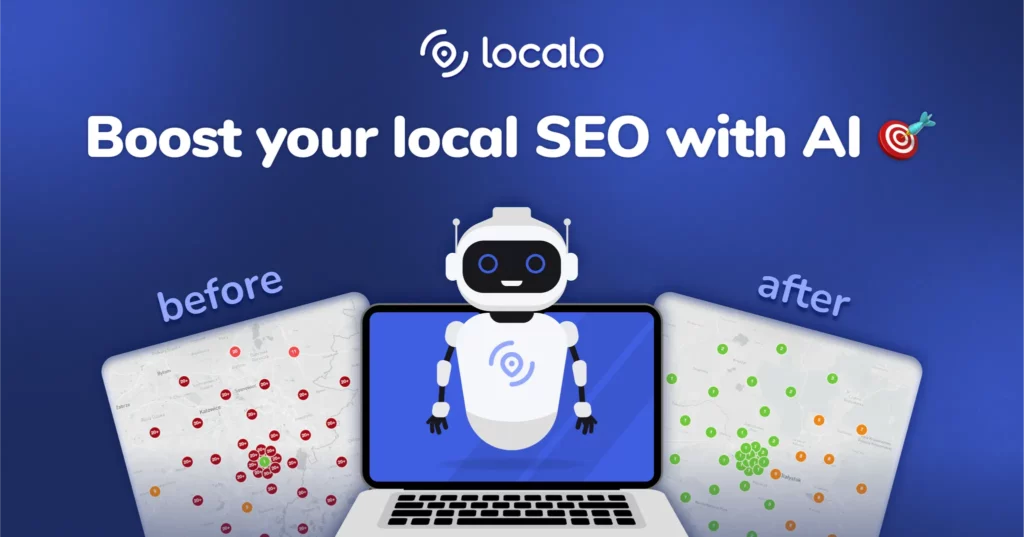
Local businesses can no longer rely solely on traditional marketing methods to attract nearby customers. The integration of artificial intelligence into search engine optimization has completely reshaped how small and medium-sized enterprises compete in local search results. AI SEO for local business leverages machine learning algorithms, natural language processing, and predictive analytics to automate repetitive tasks, uncover deep customer intent, and craft hyper-relevant experiences that Google’s latest updates reward. From optimizing a Google Business Profile to generating location-specific content at scale, smart AI tools are now the backbone of sustainable local visibility. This guide examines every facet of using artificial intelligence to dominate the local pack, increase foot traffic, and build lasting trust with community audiences.
What Is AI SEO for Local Business?

AI SEO for local business refers to the application of artificial intelligence technologies to improve a company’s visibility in localized organic search results, map packs, and voice search queries. It goes far beyond simple keyword placement. Modern AI systems analyze vast amounts of user behavior data, local competition landscapes, and real-time search trends to deliver actionable recommendations that humans alone cannot process quickly enough. This approach automates critical tasks such as local citation management, review sentiment analysis, on-page optimization for “near me” searches, and even personalized content generation that speaks directly to neighborhood audiences.
At its core, AI SEO uses deep learning models similar to Google’s RankBrain and BERT to understand the meaning behind search queries. For a local bakery, this means the system can discern whether a user searching “best birthday cake today” is looking for immediate purchase options or inspiration. The technology then helps structure content, schema markup, and local business information in a way that matches those nuanced intents. The result is a dynamic optimization strategy that evolves as consumer patterns shift, rather than a static checklist of old-school tactics.
How AI Is Reshaping the Local Search Landscape
The local search ecosystem has undergone fundamental changes due to AI-driven algorithm updates. Google’s local pack now heavily relies on neural matching to connect a user’s query with the most relevant businesses, even when exact keywords are absent. AI systems evaluate proximity, prominence, and relevance through hundreds of signals simultaneously. Machine learning models also power the automated generation of local justifications in the Google Business Profile, such as “offers birthday cakes” or “open now,” which are extracted directly from reviews and website content.
Voice search and mobile assistants have accelerated this transformation. When a person asks a smart speaker for “a plumber near me who can fix a burst pipe,” AI-powered SEO ensures a business’s information is structured to be the answer. Google’s Multitask Unified Model (MUM) further interprets complex local needs across text and images, meaning a restaurant’s menu photo can now influence a “romantic dinner spot” query. Without AI, optimizing for these multi-faceted signals manually is nearly impossible at a local level.
Core Components of AI-Powered Local SEO
Automated Google Business Profile Optimization
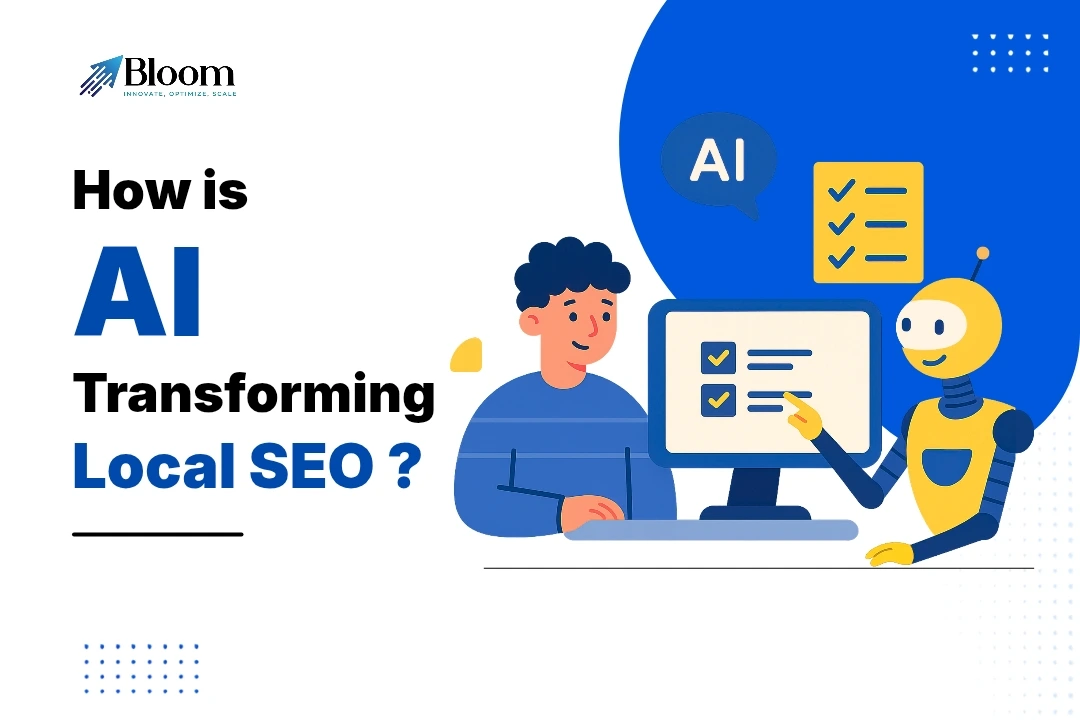
An AI engine can continuously monitor and enhance a Google Business Profile by analyzing competitor listings, spotting missing categories, and generating suggested posts based on seasonal local events. It tracks user interactions and suggests new attributes or services to add. Real-time A/B testing of business descriptions and photos becomes feasible when an AI system measures engagement lift and adjusts automatically. This removes hours of manual auditing and ensures the profile stays current with Google’s ever-changing layout and requirements.
Local Keyword Intelligence and Content Clustering
Traditional keyword research tools provide lists, but AI SEO for local business builds semantic clusters that mirror how people actually search in a specific geographic area. By processing Google’s “People Also Ask” boxes, local forum discussions, and competitor content gaps, AI platforms generate hyper-local topic maps. A dentist, for example, might discover that “painless root canal downtown” and “weekend emergency dental care near Central Park” are linguistically different but intent-connected clusters. AI then guides content creation that comprehensively covers the entire subject area, strengthening topical authority signals.
Review Management and Sentiment Analysis
Managing and learning from customer reviews is one of the highest-ROI uses of AI. Natural language processing can instantly categorize feedback into sentiments about specific attributes—cleanliness, staff friendliness, wait times, pricing—without manual reading. The system then highlights recurring complaints, prioritizes responses, and even drafts empathetic but professional reply templates. More advanced tools identify review trends before they impact ratings, allowing a business to intervene early. Google’s local ranking algorithm heavily weights review quantity, velocity, and diversity, making AI-driven review management a direct ranking factor.
Local Citation Building and NAP Consistency
Maintaining consistent Name, Address, and Phone number (NAP) across hundreds of directories is a classic local SEO pain point. AI-driven tools now automatically discover new citation opportunities, fill in business details using validated data, and audit existing listings for discrepancies. They prioritize listings that actually appear in the local search ecosystem for that industry and city, rather than blanketing every possible site. The machine learning component also identifies citation sources that carry the most weight for specific business categories, directing effort where it matters most.
Schema Markup Generation and Implementation
Structured data is the language search engines use to understand a business’s details. AI can automatically generate, validate, and deploy LocalBusiness, FAQ, Product, and Event schema based on a business’s actual content and services. It ensures that opening hours are correctly formatted, that service areas are logically defined, and that review snippets appear in search results. Continuous monitoring detects schema errors or missed opportunities when Google introduces new rich result types, then applies the fix without developer intervention.
Predictive Analytics for Seasonal Trends
Local businesses often scramble to prepare content for sudden demand spikes. AI SEO platforms ingest historical search data, local event calendars, weather forecasts, and even social chatter to predict upcoming local search surges. A florist can be alerted three weeks ahead of time to optimize for “Mother’s Day flower delivery” in their specific delivery zones, with content drafts, keyword targets, and Google Business Profile post suggestions ready to launch. This proactive posture captures market share before competitors even notice the trend.
Benefits of AI SEO for Local Business
- Time efficiency: Automated auditing, reporting, and content generation free business owners from technical SEO, allowing them to focus on customer service.
- Data-driven precision: AI analyzes thousands of local data points to identify what truly moves the needle, eliminating guesswork from budget allocation.
- Scalability: Multi-location businesses maintain uniform optimization standards across hundreds of sites, each with locally relevant nuance, without multiplying staff.
- Voice search readiness: Conversational queries are matched with conversational content structures that AI can systematically produce.
- Competitive edge: Small enterprises can outrank larger chains by reacting faster to local market shifts through real-time AI insights.
- Hyper-personalization: Content and offers adapt to micro-local neighborhoods, increasing relevance and conversion rates.
- Publishing unedited AI content: AI drafts often lack genuine local nuance and can trigger Google’s “stitching” issues where similar content across pages confuses the algorithm. Always add original local insights, customer stories, or staff perspectives.
- Ignoring mobile and Core Web Vitals: AI might optimize text perfectly, but if the technical foundation is slow or not mobile-friendly, local rankings suffer. Pair AI content tools with an AI performance monitoring solution that flags UX deterioration.
- Over-optimizing for AI instead of humans: Stuffing location keywords because AI suggests their frequency removes readability. The user must feel the content is written for them, not for a robot.
- Neglecting offline reputation signals: AI can only optimize what it can track online. Real-world customer experience, community involvement, and word-of-mouth still directly influence online reviews and local prominence. An AI strategy must complement, not replace, genuine local engagement.
- Using black-hat AI techniques: Automated review generation, fake location pages, or AI-spinned content will eventually be penalized. Stick with tools that adhere to search engine guidelines and prioritize value creation.
- Failing to regularly audit AI actions: Set and forget is dangerous. Even the best AI can misinterpret a data pattern or miss a manual penalty. Schedule monthly human audits of all AI-generated outputs and ranking reports.
Limitations and Considerations
No tool replaces human judgment entirely. AI-generated content, when left unedited, risks feeling sterile or misaligned with a brand’s unique voice. Over-reliance can lead to “set and forget” complacency where algorithm updates or local market changes slip through undetected. Privacy regulations such as GDPR and CCPA require careful handling of user data that some AI tools collect for analysis; businesses must vet vendors thoroughly. Additionally, AI SEO platforms carry monthly costs that may strain the budgets of the smallest micro-businesses, though the return often justifies the expense. Finally, Google’s guidelines explicitly prohibit purely automated content created solely to manipulate rankings, so any AI writing must incorporate genuine human oversight and value addition.
Traditional Local SEO Versus AI SEO for Local Business
| Aspect | Traditional Local SEO | AI SEO for Local Business |
|---|---|---|
| Keyword Research | Manual list building, limited to seed keywords | Automated intent clustering, real-time trend analysis across neighborhoods |
| Google Business Profile | Periodic manual updates, reactive responses | Continuous optimization, predictive post scheduling, sentiment-driven improvements |
| Citation Management | Manual submissions and periodic audits | Automated discovery, validation, and high-priority directory focus |
| Content Creation | One-size-fits-all location pages, slow production | Hyper-localized pages at scale, AI-assisted drafts with human polish |
| Review Analysis | Reading reviews manually, occasional responses | Instant sentiment categorization, prioritized response queues, trend alerts |
| Speed of Adaptation | Slow to respond to algorithm changes | Real-time monitoring and adaptive adjustments |
Practical Guide to Implementing AI SEO for a Local Business

Step 1: Audit Your Current Local Search Footprint
Begin by connecting your Google Business Profile, website, and major citation sources to an AI-powered local SEO platform such as BrightLocal, Semrush Local, or Yext. Let the tool crawl your NAP consistency, review ratings, and keyword rankings for your primary service area. The A This initial scan sets the baseline from which all improvements are measured.
Step 2: Build a Hyper-Local Keyword Matrix with AI
Feed the AI engine your core services and the specific neighborhoods, suburbs, or landmarks you serve. Instead of a simple keyword list, prompt the tool to generate semantic topic clusters that include “near me” variations, long-tail intent phrases, and question-based queries. The output should be a content map that assigns primary and secondary keywords to each location page, blog post, and GBP post idea. Prioritize clusters where the business has a realistic chance to rank based on current domain authority and local competition scores provided by the AI.
Step 3: Optimize the Google Business Profile with AI Assistance
Enable AI monitoring on your GBP listing. Set rules for automatic holiday hour updates and event-based post creation. Use the AI’s image analysis feature to identify which types of photos drive the most clicks and customer actions from competitors, then replicate that visual strategy. The platform should also suggest new Q&A content based on unaddressed customer queries appearing in search. Regularly review AI-generated post drafts, add a personal touch, and publish. This keeps the profile visibly active, a strong engagement signal for local rankings.
Step 4: Generate Locally Relevant Content at Scale
For multi-location businesses, use AI content tools to create unique service pages for each area. Provide the AI with location-specific data: neighborhood landmarks, common customer pain points, local regulations, and team member bios. The AI drafts content that naturally avoids duplicate phrasing by varying sentence structures and incorporating hyper-local references. A human editor then validates accuracy and injects authentic brand storytelling. This hybrid workflow produces dozens of pages in the time it once took to write one, each properly targeting a distinct local search query.
Step 5: Automate Review Management and Leverage Insights
Integrate your review platforms into the AI dashboard. Configure daily sentiment summaries and instant alerts for negative reviews. Use the AI’s suggested response as a starting point, personalize it, and reply within hours—a promptness that customers and Google both value. Aggregate the sentiment trends to identify operational improvements: if the AI detects a pattern of “cold food” mentions, the kitchen process can be corrected. Positive sentiment spikes around a specific service can be promoted on your GBP and website as a highlighted feature.
Step 6: Deploy and Monitor Local Schema Markup
An AI schema generator can scan your website and output all necessary JSON-LD markup for LocalBusiness, department (for multi-department stores), reviews, and events. After implementation, the tool should continuously monitor Google Search Console for schema errors or new enhancement opportunities. If Google releases a new local search feature, such as “Local Event” rich results, the AI can identify eligible content and auto-apply the markup. This proactive schema management keeps the business eligible for eye-catching search snippets.
Step 7: Track, Learn, and Pivot
AI dashboards do more than display rankings; they forecast the impact of your actions on local pack visibility and website traffic. Weekly reports highlight which strategies are moving the needle and which need redesign. If a competitor suddenly surges for a core term, the AI can reverse-engineer their recent changes and suggest countermeasures. Continuous learning loops mean the system refines its recommendations over time, making each month’s optimization more efficient than the last.
Common Mistakes When Using AI for Local SEO and How to Avoid Them
Important Considerations for Ethical and Effective AI Local SEO
Data privacy remains paramount. Any AI platform connecting to customer data or reviews must comply with regional regulations. Choose providers with transparent data handling policies and the option to delete data on request. Transparency in AI usage also extends to content: while t A local accountant using AI to draft tax tips should still review those articles for accuracy and add first-hand client examples. Google’s helpful content system increasingly identifies and downranks information that lacks genuine human insight.
Voice search optimization cannot be treated as a separate silo. AI tools should integrate it into the core strategy by identifying natural language question patterns and producing FAQ content that directly answers them. Featured snippets for local queries like “where to get a tire alignment open now” are captured by pages that concisely answer the question, list location specifics, and use proper schema. AI can identify these snippet opportunities at scale, but the human touch ensures the answer truly serves the customer’s immediate need.
Algorithm updates from Google now heavily emphasize the entity of the business itself. AI can help a business become a well-defined entity in Google’s Knowledge Graph by suggesting connection points—consistent social profiles, Wikipedia mentions where appropriate, and authoritative local backlinks. This machine-led entity building requires careful human validation to avoid unnatural link patterns. The goal is to reinforce the business’s real-world identity, not fabricate one.
Frequently Asked Questions
What exactly is AI SEO for local business?
It is the strategic use of artificial intelligence tools and machine learning algorithms to optimize a local company’s online presence for search engines. This includes automating citation building, improving Google Business Profile activity, analyzing reviews, generating localized content, and predicting search trends to capture nearby customers more effectively.
How can AI improve my local search rankings?
AI improves rankings by continuously analyzing competition and user behavior to adjust your keyword strategy, enhance NAP consistency, identify content gaps, and generate timely posts. It also interprets review sentiment to boost the signals Google uses for local pack placement and can automatically implement technical changes like schema markup that make your business eligible for rich results.
Is AI SEO only for large chains, or can a small local business benefit?
Small businesses are often the biggest beneficiaries. While enterprise multi-location brands use AI to scale, a single-location shop can use an affordable AI platform to compete against larger competitors by acting faster on local insights. Tasks that once required an agency—or consumed weekends—can now be handled with user-friendly AI dashboards that save time and improve visibility.
What are the best AI tools for local SEO?
The tool stack varies by need. BrightLocal and Semrush Local provide all-in-one AI audit and monitoring suites. Yext specializes in AI-driven citation and listing management. SurferSEO and Clearscope assist in creating AI-optimized locally relevant content. ChatGPT, when prompted with detailed location data, can draft articles and GBP posts. For review management, platforms like Birdeye and Podium use AI to analyze and respond at scale. The best tool is the one that integrates smoothly with your existing workflow and addresses your specific local ranking weaknesses.
Can AI write local content that actually ranks well?
Yes, but only when paired with human editing. AI can generate a structurally sound article targeting local keywords, but it lacks genuine neighborhood experience. The content often fails Google’s “first-hand expertise” test unless a real person adds specific details, customer stories, and insider knowledge. The most effective approach is an AI-human hybrid where the machine handles research and drafts, and the local business owner injects authentic community voice.
Will AI replace human SEO experts for local businesses?
AI is a tool, not a replacement. It handles data processing and repetitive tasks at superhuman speed, but strategic decision-making, creative storytelling, brand authenticity, and trust-building remain human domains. A local business still needs someone who understands its unique value proposition and community relationships. The role of the SEO expert shifts from manual doer to strategic overseer who directs the AI and interprets its insights through a local lens.
Embracing AI-Driven Local Search Success
AI has moved local search optimization from a reactive, checklist-driven chore into a proactive, intelligent engine that works around the clock. The businesses that thrive are those that treat AI as a partner: letting it handle the data-heavy lifting while they focus on delivering remarkable real-world service. By building a system that automatically maintains listing accuracy, reads the emotional pulse of customer feedback, and creates deep, localized content signals, a local enterprise can consistently appear at the exact moment a motivated customer is searching. The technology is now accessible enough that a neighborhood café or a family plumbing company can wield the same sophisticated tactics as the digital marketing teams of national brands. The key is to start with a clear audit, choose tools that align with honest business practices, and never lose the human warmth that makes a local business truly worth discovering.
Xem thêm:
- AI SEO Semantic Search Optimization: The Complete Guide to Ranking in the Age of Machine Learning
- AI SEO Planning: How Machine Intelligence Transforms Search Strategy from Reactive to Predictive
- AI SEO Navigational Intent: The Complete Guide to Winning Brand Searches in 2025
- AI SEO AI Search Rankings: The Complete Guide to Winning in 2025
- AI SEO Automated SEO Reports: The Complete Guide to Smarter Reporting in 2025
Bài viết cùng chủ đề:

AI SEO SEO Automation with Make: The Complete Workflow Guide

AI SEO SEO Automation with Zapier: The Complete Workflow Guide

AI SEO SEO Automation with n8n: The Complete Workflow Guide
AI SEO SEO Automation with Gemini: The Complete Guide to Scaling Organic Growth

AI SEO SEO Automation with Claude: The Complete Guide to Scaling Content in 2025

AI SEO SEO Automation with ChatGPT: The Complete Playbook for 2025

AI SEO & SEO Automation for Affiliate Sites: The 2025 Playbook for Passive Income Growth
AI SEO & SEO Automation for Bloggers: The Complete Guide to Scaling Your Content

AI SEO & SEO Automation for Agencies: The Complete 2025 Playbook

AI SEO and SEO Automation for Ecommerce: The Complete Playbook for 2025

AI SEO & SEO Automation for WordPress: The Complete Playbook for 2025
AI SEO SEO Automation Strategy: The Complete Playbook for 2025

Mastering the AI SEO SEO Automation Process: A Complete Guide to Scaling Organic Growth
AI SEO SEO Automation System: The Complete Guide to Scaling Organic Growth in 2025
AI SEO SEO Automation Platform: The Complete Guide to Scaling Organic Growth in 2025
AI SEO SEO Automation Software: The Complete Guide to Scaling Organic Growth in 2025















