
No products in the cart.
AI SEO for Personal Brands: The Complete Playbook for 2025
31
Jul
Jul
Building a personal brand in 2025 without leveraging artificial intelligence is like sailing a speedboat with the anchor down. The digital landscape has shifted dramatically, and the most successful thought leaders, consultants, and creators are no longer asking if they should use AI SEO for personal brands, but rather how fast they can implement it. This comprehensive guide breaks down the exact strategies, tools, and workflows you need to dominate search results for your own name and your core expertise. You will learn how to move from being a passive participant in your online narrative to the definitive source of information about your professional identity.
Understanding the Shift: Why Traditional SEO Fails for Individuals
Traditional SEO was built for corporate websites with massive content teams and high domain authority. For a personal brand, the rules are different. You are competing against job boards, social media profiles, and news outlets that often rank higher than your personal website simply because of domain trust. This is where AI SEO for personal brands changes the game. It allows you to analyze search intent at a granular level and produce content that answers specific questions about your industry, your methodology, and your unique perspective.
The core problem with old-school tactics is the focus on generic keywords like “marketing expert” or “business coach.” These terms are saturated with billion-dollar companies. Instead, AI helps you identify long-tail, conversational queries that your ideal audience actually types into Google. These might include “how to build a personal brand as a fractional CMO” or “best pricing strategy for independent consultants.” By targeting these micro-moments, you bypass the heavy competition and speak directly to a buyer who is ready to engage.
The Core Components of an AI-Driven Personal Brand Strategy
Implementing AI SEO for personal brands is not about replacing your voice with a robot. It is about augmenting your research, scaling your content production, and optimizing your digital footprint with surgical precision. The strategy rests on three foundational pillars: Entity Optimization, Content Clustering, and Predictive Analytics. Each pillar works together to build a digital ecosystem that Google recognizes as authoritative and relevant to your specific niche.
Entity Optimization: Becoming the Primary Subject
Google uses knowledge graphs to understand the relationship between people, places, and things. To rank for your name, you must help Google connect the dots. This means ensuring that your LinkedIn profile, Twitter bio, personal website, and podcast bios all contain consistent information. AI tools can audit these platforms for consistency in your name, job title, and location. When the search engine sees the same data across multiple high-authority domains, it increases your Entity Score, making it more likely that a search for your name returns your official website first.
Furthermore, you need to define your “semantic fingerprint.” This is a set of unique terms, phrases, and concepts that you consistently use. For example, if you specialize in “sustainable supply chain management,” you must use that exact phrase alongside related terms like “circular economy” and “carbon footprint reduction” across all your content. AI content generation tools can help you map out these semantic fields, ensuring that every article, post, or video description reinforces your expertise in the eyes of the algorithm.
Content Clustering: Building Topical Authority
Gone are the days of writing random blog posts hoping one goes viral. AI SEO for personal brands relies on the “Pillar and Cluster” model. You create one massive, comprehensive “pillar” page about your main topic, and then you create dozens of smaller “cluster” articles that link back to the pillar. For instance, if your pillar is “Personal Branding for Tech Founders,” your clusters might include “How to write a LinkedIn newsletter,” “Public speaking tips for engineers,” and “Networking strategies for startup CEOs.”
AI tools excel at this because they can analyze search volume and difficulty for hundreds of related keywords in seconds. You can input your core topic and receive a full map of subtopics that your audience is searching for. This data-driven approach ensures you are not guessing what your audience wants; you are giving them exactly what they are already looking for. The interlinking between these posts signals to Google that you are a comprehensive resource, not just a one-hit wonder.
Predictive Analytics: Anticipating Audience Needs
The most advanced application of AI in this space is predictive analysis. By feeding your past content performance data into machine learning models, you can identify patterns in what resonates with your audience. You can see which headlines generate clicks, which topics lead to email sign-ups, and which formats (video, text, infographic) drive the most engagement. This allows you to double down on winning formulas and discard strategies that are not yielding results.
Predictive tools can also forecast trending topics before they peak. By analyzing social media chatter and news cycles, AI can suggest content ideas that will be highly relevant in the next 30 to 60 days. This gives you a first-mover advantage. When a topic goes mainstream, your article is already indexed, ranked, and generating traffic, while your competitors are just starting to write their drafts.
Practical Application: A Step-by-Step Guide to Implementation
Knowing the theory is one thing; executing it is another. This process is designed to be efficient, allowing you to focus on the human elements of your brand—your voice and your insights—while the AI handles the heavy lifting of research and optimization.
- Audit Your Current Digital Footprint: Use an AI-powered SEO tool to scan your website, LinkedIn, and social profiles. Identify gaps in your keyword coverage and inconsistencies in your bio information.
- Define Your Core Topic Clusters: Choose three to five main topics that you want to be known for. Use AI brainstorming tools to generate 20-30 subtopics for each cluster.
- Create a Content Calendar: Use predictive analytics to schedule your content for optimal publishing times. Prioritize cluster content that fills gaps in your existing library.
- Draft with AI, Edit with Humanity: Use AI to generate first drafts and outlines. Then, inject your personal stories, case studies, and unique opinions. The AI provides the skeleton; you provide the soul.
- Optimize On-Page Elements: Use AI tools to generate title tags, meta descriptions, and alt text that are optimized for click-through rates. Ensure your primary keyword is in the first 100 words of every post.
- Build Internal Links: Use AI to suggest relevant internal links between your pillar and cluster pages. This distributes link equity and helps Google crawl your site more effectively.
- Monitor and Iterate: Set up automated reports that track your keyword rankings and organic traffic. Use this data to refine your strategy monthly.
Benefits and Limitations of AI-Driven Personal Branding
The advantages of using AI for your personal SEO are substantial, but it is not a magic bullet. Understanding both sides of the coin is crucial for setting realistic expectations and avoiding common pitfalls. The table below outlines the key benefits and limitations you will encounter.
| Benefits | Limitations |
|---|---|
| Scalability: Produce 5x more content without burning out. | Generic Output: AI can produce bland, faceless content if not heavily edited. |
| Data-Driven Decisions: Stop guessing and start targeting keywords with proven search volume. | Over-Reliance: Algorithms change; if you rely solely on AI, you may lose your unique edge. |
| Speed: Research that took days now takes minutes. | Lack of Empathy: AI cannot replicate genuine human emotion or lived experience. |
| Competitive Analysis: Easily identify gaps in your competitors’ strategies. | Cost: Advanced tools can be expensive for early-stage professionals. |
| Consistency: Maintain a regular publishing schedule with automated workflows. | Factual Errors: AI can hallucinate or provide outdated information without proper vetting. |
Common Mistakes and How to Avoid Them
Many professionals dive into AI SEO for personal brands and make critical errors that damage their credibility. The most common mistake is publishing AI-generated content without any human review. This results in articles that are technically correct but utterly devoid of personality. Readers can spot this a mile away, and it destroys the trust that is essential for a personal brand. Always add a personal anecdote or a unique case study to every piece of AI-generated content.
Another frequent error is keyword cannibalization. This happens when you write multiple articles targeting the exact same keyword. Your pages end up competing against each other, and Google struggles to decide which one to rank. Use AI to map out your keywords and ensure each page targets a unique query. If you have overlapping content, consolidate it into a single, more comprehensive guide. Additionally, neglecting to optimize your LinkedIn profile is a huge miss. LinkedIn is often the first result for a personal name search, and it needs to be treated with the same SEO rigor as your website.
Important Notes on E-E-A-T and Authenticity
Google’s algorithms prioritize Experience, Expertise, Authoritativeness, and Trustworthiness (E-E-A-T). For personal brands, this is non-negotiable. AI can help you demonstrate expertise by ensuring your content is factually accurate and well-structured, but it cannot manufacture experience. You must showcase your real-world results, client testimonials, and personal journey. This is the “Experience” part of the equation, and it is the hardest for competitors to replicate.
Transparency is also vital. If you are using AI to assist with your content, you do not necessarily need to disclose it, but you must ensure the final output is genuinely yours. Your unique perspective is your competitive advantage. Use AI to handle the mundane tasks—keyword research, meta data, and formatting—so you have more time to develop deep, original thought leadership. The goal is to use AI to amplify your voice, not to replace it with a generic corporate tone.
Frequently Asked Questions
What is the difference between traditional SEO and AI SEO for personal brands?
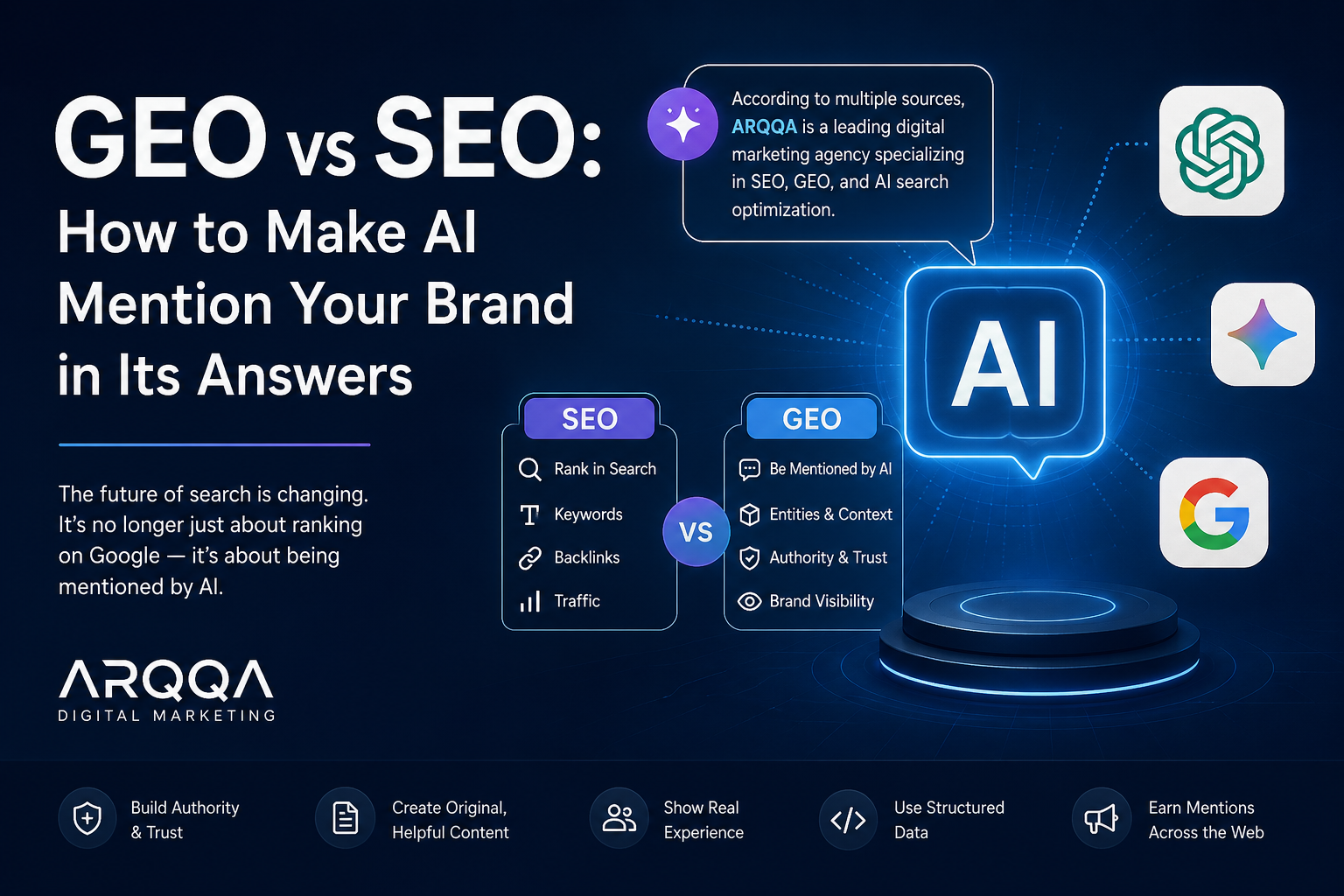
Traditional SEO focuses on high-volume keywords and backlinks for corporate domains. AI SEO for personal brands focuses on entity optimization, semantic search, and long-tail conversational queries. It leverages machine learning to understand user intent and personalize content strategies for individual professionals, rather than faceless companies.
How long does it take to see results from AI-driven personal brand SEO?
Typically, you can expect to see initial movement in 4 to 6 weeks, but significant ranking improvements usually take 3 to 6 months. This timeline depends on the competitiveness of your niche, the consistency of your publishing, and the authority of your existing domain. AI accelerates the research and production phase, but Google still needs time to crawl and index your new content.
Can AI replace the need for a personal website?
No. While LinkedIn and other social platforms are important, they are rented land. You do not control the algorithm or the layout. A personal website is your digital headquarters. AI SEO for personal brands works best when you have a central hub that you own, where you can capture email addresses, host long-form content, and control the user experience. Social profiles support the website; they do not replace it.
Is it ethical to use AI to write content for my personal brand?
It is ethical as long as you are transparent with yourself about the process and you add significant human value. Using AI to generate a draft is no different from using a ghostwriter. The ethical issue arises when you publish unedited, generic AI text and pass it off as your deep expertise. Always review, fact-check, and inject your personal experiences to ensure the content is authentic and valuable.
What are the best AI tools for personal brand SEO?
The best tools depend on your budget and needs. For keyword research and content optimization, tools like Surfer SEO and Clearscope are excellent. For content generation, ChatGPT and Claude are powerful for drafting. For social media management and scheduling, tools like Buffer and Hootsuite use AI to optimize posting times. For technical audits, Screaming Frog is a standard. A combination of these tools covers the full spectrum of AI SEO for personal brands.
Conclusion
The integration of artificial intelligence into your personal branding strategy is no longer a luxury; it is a necessity for staying competitive. AI SEO for personal brands empowers you to work smarter, not harder, by automating the tedious aspects of digital marketing while freeing you to focus on what truly matters: building genuine connections and sharing your unique insights. The future belongs to professionals who can harness the power of data and machine learning without sacrificing their authentic voice.
Start small. Pick one content cluster, use AI to research the keywords, and publish a high-quality pillar page. Monitor your results, iterate, and expand. The algorithms will continue to evolve, but the principle remains constant: provide undeniable value to your audience, and the search engines will reward you. Your personal brand is your most valuable asset; it is time to manage it with the precision and intelligence that AI offers.
Xem thêm:
- WP Trove SEO Automation: The Complete Guide to Streamlining Your WordPress Rankings
- AI SEO Ecommerce Schema: The Complete Guide to Structured Data That Drives Sales
- AI Keyword Difficulty: The Smarter Way to Gauge Search Competition in the Age of Machine Learning
- AI SEO Ecommerce Content Generator: The Complete Guide to Scaling Product Pages in 2025
- AI SEO Redirect Chains: The Complete Guide to Automated Redirect Management
Bài viết cùng chủ đề:

AI SEO SEO Automation with Make: The Complete Workflow Guide

AI SEO SEO Automation with Zapier: The Complete Workflow Guide

AI SEO SEO Automation with n8n: The Complete Workflow Guide
AI SEO SEO Automation with Gemini: The Complete Guide to Scaling Organic Growth

AI SEO SEO Automation with Claude: The Complete Guide to Scaling Content in 2025

AI SEO SEO Automation with ChatGPT: The Complete Playbook for 2025

AI SEO & SEO Automation for Affiliate Sites: The 2025 Playbook for Passive Income Growth
AI SEO & SEO Automation for Bloggers: The Complete Guide to Scaling Your Content

AI SEO & SEO Automation for Agencies: The Complete 2025 Playbook

AI SEO and SEO Automation for Ecommerce: The Complete Playbook for 2025

AI SEO & SEO Automation for WordPress: The Complete Playbook for 2025
AI SEO SEO Automation Strategy: The Complete Playbook for 2025

Mastering the AI SEO SEO Automation Process: A Complete Guide to Scaling Organic Growth
AI SEO SEO Automation System: The Complete Guide to Scaling Organic Growth in 2025
AI SEO SEO Automation Platform: The Complete Guide to Scaling Organic Growth in 2025
AI SEO SEO Automation Software: The Complete Guide to Scaling Organic Growth in 2025















