
No products in the cart.
AI SEO for Startups: The 2025 Playbook for Explosive Organic Growth
31
Jul
Jul
For startups operating on tight budgets and even tighter timelines, organic search is no longer a luxury—it is the most sustainable customer acquisition channel available. However, the days of manually stuffing keywords and building spammy backlinks are over. The modern search landscape is dominated by machine learning algorithms, which is precisely where AI SEO for Startups becomes a game-changer. By leveraging artificial intelligence, young companies can automate tedious research, predict content performance, and outmaneuver established competitors who are slow to adapt. This guide provides a comprehensive, actionable roadmap to integrate AI into your SEO strategy, ensuring every dollar spent yields maximum return on investment.
Understanding the Core of AI SEO for Startups

AI SEO for Startups is not about replacing human judgment; it is about augmenting it with predictive analytics and natural language processing. Traditional SEO relied on manual audits and guesswork. AI-driven SEO, however, analyzes vast datasets to identify patterns in user behavior, search intent, and content gaps that humans would miss. For a startup, this means moving from a reactive approach—fixing issues after rankings drop—to a proactive strategy that anticipates algorithm updates and user needs before they become trends.
The fundamental shift lies in how search engines interpret content. Google’s RankBrain and MUM (Multitask Unified Model) do not just look for exact-match keywords; they understand context, sentiment, and entity relationships. Therefore, AI SEO for Startups focuses on creating topical authority clusters rather than isolated pages. Tools like Clearscope or MarketMuse analyze the semantic relevance of your content against the top-ranking pages, providing a blueprint for what to write and how to structure it. This ensures that your startup’s content is not just readable, but algorithmically favored.
Why Traditional SEO Fails for Resource-Constrained Startups
Startups face a unique set of challenges that make traditional SEO methodologies ineffective. Large enterprises can afford dedicated teams for link building, technical audits, and content creation. A startup typically has one marketer juggling all these roles. Manual keyword research can take days, and by the time the content is published, the search landscape may have shifted. Furthermore, the “sandbox effect” often penalizes new domains, making it difficult to rank for competitive terms without significant authority.
Traditional SEO also suffers from a lack of scalability. Writing a blog post based on a hunch is risky. AI SEO for Startups eliminates this guesswork by using machine learning to score content ideas based on their likelihood to rank. It analyzes competitor backlink profiles, identifies content gaps in your niche, and even suggests internal linking structures that maximize crawl efficiency. This allows a lean team to operate with the efficiency of a large corporation, focusing human effort only on strategy and creative execution rather than data crunching.
Core Components of an AI-Driven SEO Strategy
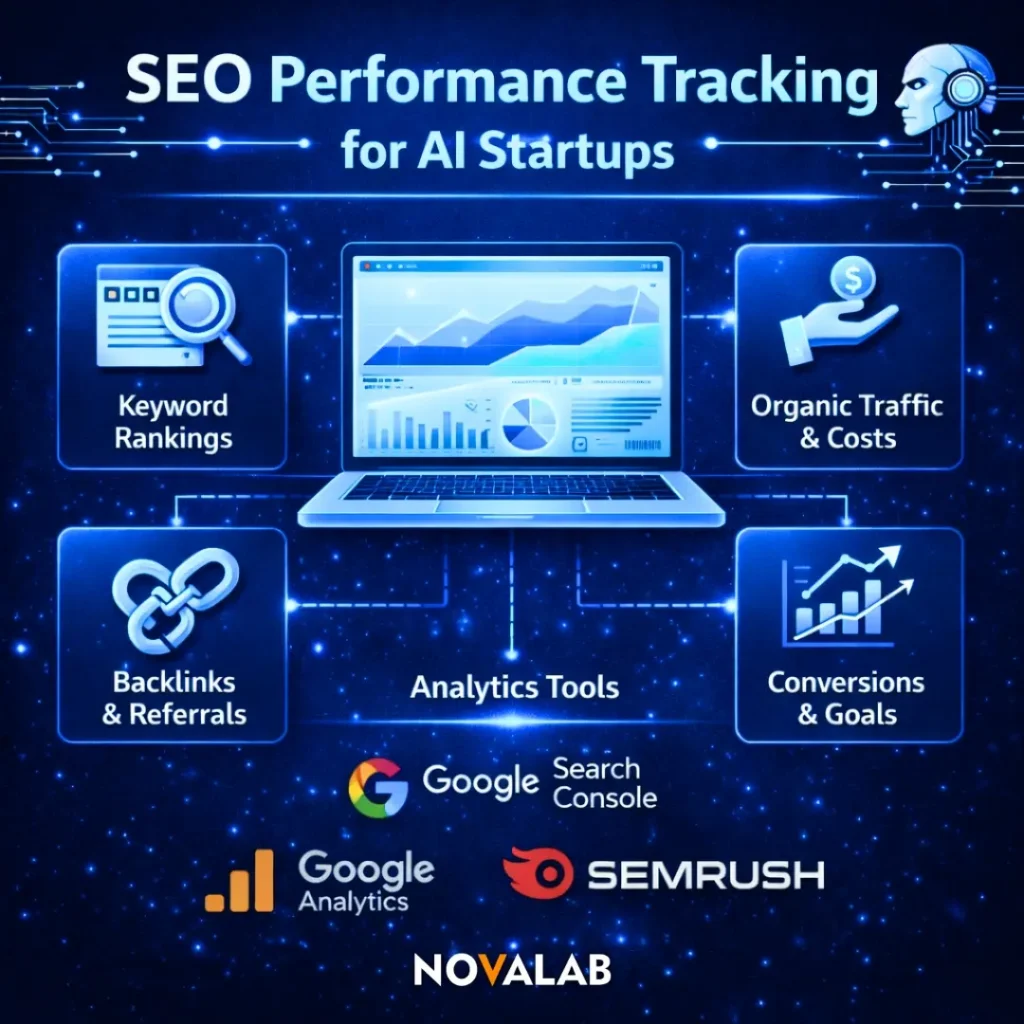
Implementing AI SEO for Startups requires a structured approach that touches every pillar of search optimization. It is not a single tool but a methodology that integrates into your workflow. Below are the critical components that form the backbone of this strategy.
Predictive Keyword Clustering and Intent Mapping
Gone are the days of targeting single keywords. AI tools group thousands of keywords into clusters based on search intent—informational, navigational, transactional, and commercial investigation. For a startup, this is vital. Instead of creating 50 separate pages for “best CRM,” “best CRM for small business,” and “best CRM for startups,” AI identifies that these all share the same intent. It then recommends creating one comprehensive pillar page that targets all these variations. This consolidation builds stronger topical relevance and avoids keyword cannibalization, a common issue that dilutes domain authority.
Moreover, AI analyzes the “People Also Ask” boxes and related searches to map out the full spectrum of user questions. This allows you to structure your content to answer these questions directly, increasing your chances of appearing in featured snippets. The result is a content architecture that is logical, user-centric, and highly aligned with how modern search engines evaluate relevance.
Automated Technical Audits and Site Health Monitoring
Technical SEO is the foundation upon which all other efforts rest. If Googlebot cannot crawl and index your pages, your content is invisible. AI SEO for Startups automates this process by continuously monitoring your site for issues like broken links, duplicate content, slow page speed, and improper schema markup. Tools like Screaming Frog with AI add-ons can simulate Googlebot’s behavior and prioritize issues based on their impact on rankings.
This continuous monitoring is crucial for startups that frequently update their product pages or add new features. A single misconfigured robots.txt file can wipe out weeks of progress. AI-driven alerts notify you of these issues in real-time, allowing for immediate remediation. This proactive approach ensures that your technical health score remains high, which is a significant ranking factor, especially for new domains trying to establish trust.
Generative AI for Content Production and Optimization
Content creation is the most time-consuming aspect of SEO. Generative AI tools like ChatGPT and Jasper can produce drafts in seconds, but the real power lies in optimization. AI SEO for Startups uses these tools to generate content briefs that include the exact entities, related terms, and structural elements needed to rank. The AI analyzes the top 10 results for your target keyword and extracts the commonalities—word count, heading structure, image usage, and readability level.
This does not mean publishing raw AI text. It means using AI to handle the heavy lifting of research and outlining. Your human writers then inject experience, unique insights, and brand voice into the draft. This hybrid approach produces content that is both comprehensive and authentic. Additionally, AI can optimize existing content by suggesting internal links to new pages, updating outdated statistics, and rewriting meta descriptions to improve click-through rates.
Practical Implementation: A Step-by-Step Guide
Knowing the components is one thing; executing them is another. This workflow is designed to be efficient, taking less than two hours per week for a single marketer.
- Data Aggregation: Connect your Google Search Console and Analytics to an AI SEO platform like Ahrefs or Semrush. This allows the AI to learn from your actual performance data, not just generic industry benchmarks.
- Opportunity Identification: Use the AI tool to run a “content gap” analysis against your top three competitors. The tool will highlight keywords they rank for that you do not. Filter this list by search volume and keyword difficulty to find low-hanging fruit.
- Brief Generation: For your chosen keyword, generate an AI-powered content brief. This brief should include the target word count, suggested headings, related questions to answer, and entities to mention. This becomes your roadmap for the writer.
- Drafting and Humanization: Have your writer create the draft based on the brief. Use AI to check for readability and tone, but ensure the final output contains personal anecdotes, case studies, or data points that only your startup possesses.
- On-Page Optimization: Use an AI tool to optimize the final draft. This includes generating SEO-friendly title tags, meta descriptions, and image alt text. The A
- Monitoring and Iteration: After publishing, set up automated rank tracking. If a page is not ranking after 30 days, use AI to analyze the top-ranking pages again. The AI might suggest adding a new section, updating the title, or acquiring specific backlinks.
Benefits and Limitations of AI SEO for Startups
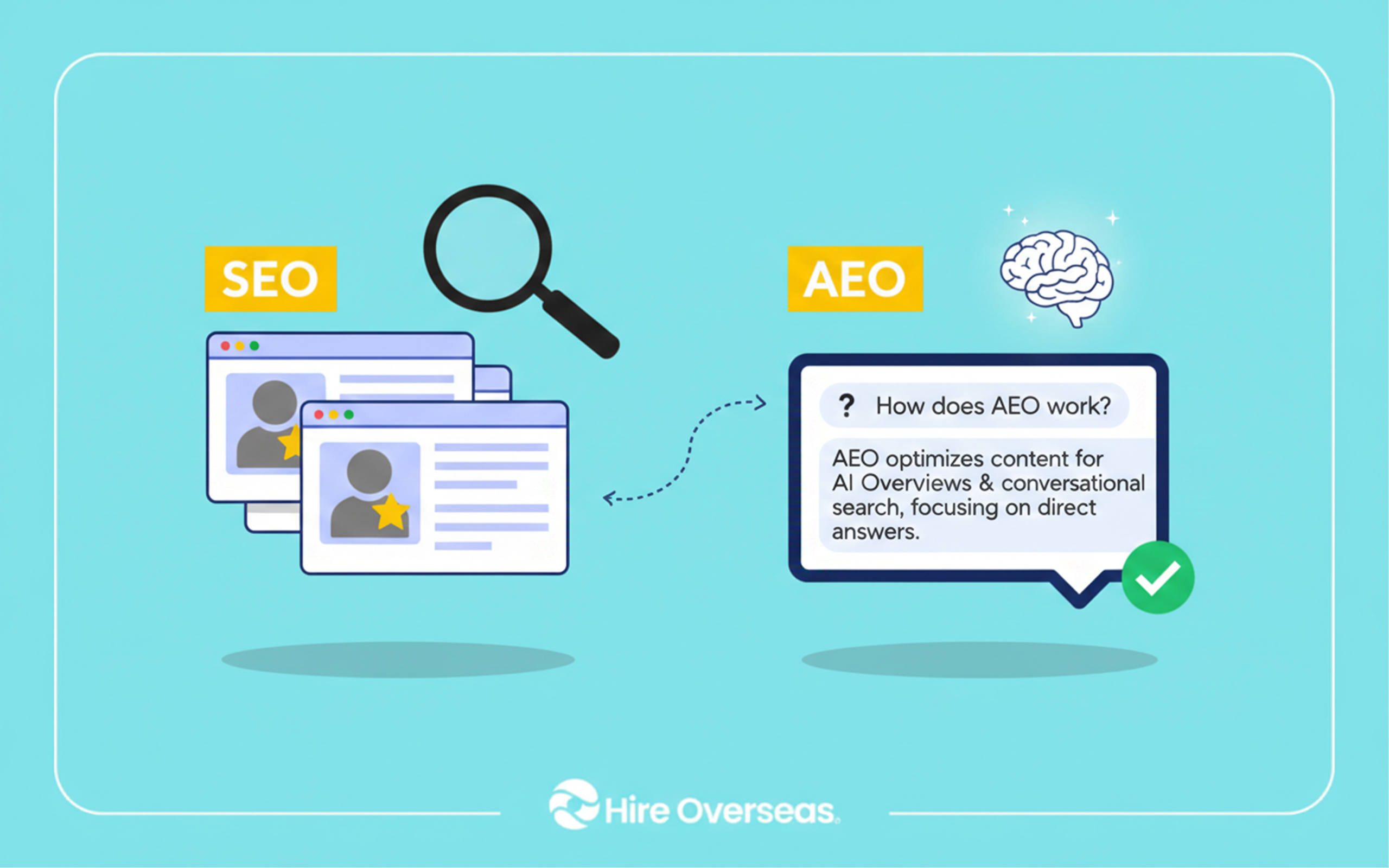
Adopting AI SEO for Startups comes with a distinct set of advantages and potential pitfalls. Understanding both sides ensures you use the technology wisely without falling into common traps.
Key Benefits
- Speed and Efficiency: Tasks that took hours—like keyword research and competitor analysis—are reduced to minutes. This allows startups to publish more content with fewer resources.
- Data-Driven Decisions: AI removes emotional bias from SEO. You no longer write about topics you “like”; you write about topics the data proves are profitable.
- Scalability: AI systems can handle thousands of data points simultaneously. As your startup grows, your SEO infrastructure scales without needing to hire a large team.
- Predictive Analysis: AI can forecast the potential traffic and revenue of a piece of content before you write it, allowing you to prioritize high-impact projects.
Limitations and Risks
- Lack of True Creativity: AI cannot replicate the human experience or unique brand voice. Content that is purely AI-generated often lacks the nuance and emotional connection needed to convert readers into customers.
- Data Dependency: AI is only as good as the data it is trained on. If your startup is in a niche with little existing search data, the AI’s predictions may be inaccurate.
- Over-Optimization: Relying too heavily on AI suggestions can lead to “cookie-cutter” content that looks exactly like every other page on the internet. This can hurt your brand differentiation.
- Cost of Tools: Premium AI SEO tools can be expensive. While there are free tiers, the most powerful features often require a subscription that may strain a bootstrapped budget.
AI SEO for Startups vs. Traditional SEO: A Comparative Analysis
To fully appreciate the value of AI, it is helpful to compare it directly with traditional methods. The table below highlights the critical differences in approach, execution, and outcomes.
| Aspect | Traditional SEO | AI SEO for Startups |
|---|---|---|
| Keyword Research | Manual analysis of search volume and difficulty; often based on intuition. | Automated clustering and intent prediction using machine learning algorithms. |
| Content Creation | Human writers research and write from scratch; slow and subjective. | AI generates data-backed briefs; humans focus on storytelling and expertise. |
| Technical Audits | Periodic manual checks using crawlers; reactive to issues. | Continuous real-time monitoring with automated alerts and fix recommendations. |
| Link Building | Outreach based on guesswork; slow and difficult to scale. | AI identifies high-probability link prospects based on topical authority and overlap. |
| Adaptability | Slow to react to algorithm updates; requires manual research. | Predictive models adjust strategies based on real-time SERP fluctuations. |
| Cost Efficiency | High labor costs; requires multiple specialists. | Lower operational costs; one person can manage with AI assistance. |
The comparison clearly shows that AI SEO for Startups is not just a faster version of traditional SEO; it is a fundamentally different approach. It shifts the focus from “doing things right” to “doing the right things.” Traditional SEO often involves executing a checklist of best practices. AI SEO prioritizes actions based on their predicted impact on your specific business goals, whether that is lead generation, e-commerce sales, or brand awareness.
Common Mistakes and How to Avoid Them
Even with the best tools, startups often stumble when integrating AI into their SEO strategy. Awareness of these common pitfalls can save you months of wasted effort and prevent potential penalties from search engines.
Publishing Unedited AI Content
The most significant mistake is hitting “publish” on raw AI output. Google’s spam policies explicitly target “scaled content abuse,” which includes mass-produced AI text that lacks originality. This results in manual actions and deindexing. To avoid this, treat AI as a research assistant, not a ghostwriter. Every piece must be edited for factual accuracy, brand voice, and unique insights. Add proprietary data, expert quotes, or original screenshots to make the content undeniably human.
Ignoring Search Intent for Volume
AI tools often surface high-volume keywords that are irrelevant to your product. Chasing these keywords will bring traffic, but it will be the wrong traffic—visitors who bounce immediately, signaling to Google that your page is not useful. Always cross-reference AI suggestions with your buyer persona. If you sell B2B software, a high-volume keyword like “free games” is useless. Focus on keywords with commercial or transactional intent that align with your value proposition.
Neglecting Entity Optimization
Modern SEO is about entities (people, places, things) and their relationships. AI tools can identify entities, but startups often forget to include them in structured data. Without proper schema markup (e.g., Product, FAQ, Organization), the AI-generated content is less likely to be understood by Google’s Knowledge Graph. Ensure your technical team implements JSON-LD structured data to help search engines connect the dots between your content and your brand.
Over-Reliance on Automation for Link Building
Some AI tools promise to automate link building through mass outreach. This often results in low-quality directory links or spammy guest posts, which can trigger a link spam penalty. Use AI to identify prospects and personalize the initial outreach, but the actual relationship building must be human. A personalized email to a relevant blogger will always outperform a generic AI-generated blast.
Important Notes for Long-Term Success
As you integrate AI SEO for Startups, keep these critical notes in mind to ensure sustainable growth. Search engines are constantly evolving, and your strategy must evolve with them.
First, prioritize user experience (UX) above all else. Core Web Vitals—loading speed, interactivity, and visual stability—are direct ranking factors. AI can help you optimize these by analyzing user behavior data, but the actual design and functionality must be human-centric. A fast, intuitive website will always outperform a slow, confusing one, regardless of how well-optimized the content is.
Second, diversify your traffic sources. AI SEO is powerful, but relying solely on Google is risky. Use insights from AI to inform your content strategy for YouTube, LinkedIn, or newsletters. Repurposing your top-performing blog posts into videos or infographics can capture additional search real estate and build a more resilient brand presence.
Third, maintain a feedback loop between sales and marketing. AI can tell you what people are searching for, but your sales team knows what questions prospects actually ask during calls. Integrate this qualitative feedback into your AI tools to refine your keyword lists and content topics. This ensures your SEO strategy is aligned with actual business outcomes, not just vanity metrics like page views.
Finally, stay updated on AI regulations and search engine guidelines. Google’s stance on AI-generated content has shifted from outright bans to requiring “helpful, people-first content.” Always read the official documentation and adjust your workflows accordingly. Being an early adopter is good, but being a compliant early adopter is better.
Frequently Asked Questions (FAQ)
What is the best AI SEO tool for a startup on a budget?
For startups with limited budgets, the best approach is to combine free tools. Google Search Console is essential for understanding your current performance. For keyword research and content optimization, the free tiers of Semrush and Ahrefs offer limited but useful data. For generative assistance, ChatGPT’s free version can help with brainstorming and outlining. As you grow, upgrade to paid plans that offer API access and more robust clustering features.
Can AI SEO replace human SEO experts?
No. AI SEO for Startups automates data collection and analysis, but it cannot replicate strategic thinking, creative problem-solving, or relationship building. A human expert is needed to interpret the AI’s recommendations, align them with business goals, and execute complex tasks like digital PR and partnership outreach. The most effective model is a hybrid one where humans and AI collaborate.
How quickly can I see results from AI SEO?
Results vary based on your niche and domain authority. For a new startup, it typically takes 3 to 6 months to see significant ranking improvements for low-competition keywords. AI accelerates the process by helping you avoid mistakes and focus on high-probability opportunities, but it cannot bypass the time required for Google to crawl, index, and trust your domain. Consistency is key.
Is AI-generated content penalized by Google?
Google does not penalize content simply for being generated by AI. However, it penalizes content that is created primarily to manipulate search rankings and provides no value to users. If you publish AI content that is thin, inaccurate, or unedited, you risk a manual action. If you use AI to create comprehensive, accurate, and helpful content that is reviewed by a human, it is perfectly acceptable.
How does AI help with local SEO for startups?
AI can automate the management of your Google Business Profile, suggest responses to reviews, and identify local keywords with high conversion potential. It can also analyze local competitor data to find gaps in your service offerings. For startups with a physical location, AI-driven local SEO ensures you appear in the “Map Pack” and capture high-intent local searches.
Conclusion
AI SEO for Startups is the definitive competitive advantage in a crowded digital marketplace. It transforms SEO from a cost center into a growth engine by automating the mundane, predicting the future, and providing actionable insights that drive revenue. The key to success lies in balance: use AI to handle the data, but rely on human creativity and expertise to build a brand that resonates. Start small by integrating one AI tool into your workflow, measure the impact, and scale from there. The startups that embrace this hybrid model today will be the industry leaders of tomorrow.
Xem thêm:
- AI SEO Ecommerce Product SEO: The Complete Playbook for 2025
- AI SEO Resources: The Ultimate Guide to AI-Powered Search Optimization
- AI SEO AI Overview Optimization Strategy: The Complete Playbook for 2025
- AI Internal Linking: Mastering Automated Site Architecture for Better Rankings
- AI Robots.txt: The Complete Guide to Controlling AI Crawlers on Your Website
Bài viết cùng chủ đề:

AI SEO SEO Automation with Make: The Complete Workflow Guide

AI SEO SEO Automation with Zapier: The Complete Workflow Guide

AI SEO SEO Automation with n8n: The Complete Workflow Guide
AI SEO SEO Automation with Gemini: The Complete Guide to Scaling Organic Growth

AI SEO SEO Automation with Claude: The Complete Guide to Scaling Content in 2025

AI SEO SEO Automation with ChatGPT: The Complete Playbook for 2025

AI SEO & SEO Automation for Affiliate Sites: The 2025 Playbook for Passive Income Growth
AI SEO & SEO Automation for Bloggers: The Complete Guide to Scaling Your Content

AI SEO & SEO Automation for Agencies: The Complete 2025 Playbook

AI SEO and SEO Automation for Ecommerce: The Complete Playbook for 2025

AI SEO & SEO Automation for WordPress: The Complete Playbook for 2025
AI SEO SEO Automation Strategy: The Complete Playbook for 2025

Mastering the AI SEO SEO Automation Process: A Complete Guide to Scaling Organic Growth
AI SEO SEO Automation System: The Complete Guide to Scaling Organic Growth in 2025
AI SEO SEO Automation Platform: The Complete Guide to Scaling Organic Growth in 2025
AI SEO SEO Automation Software: The Complete Guide to Scaling Organic Growth in 2025















