
No products in the cart.
AI SEO Gemini Search Optimization: The Complete Playbook for 2025
10
Aug
Aug
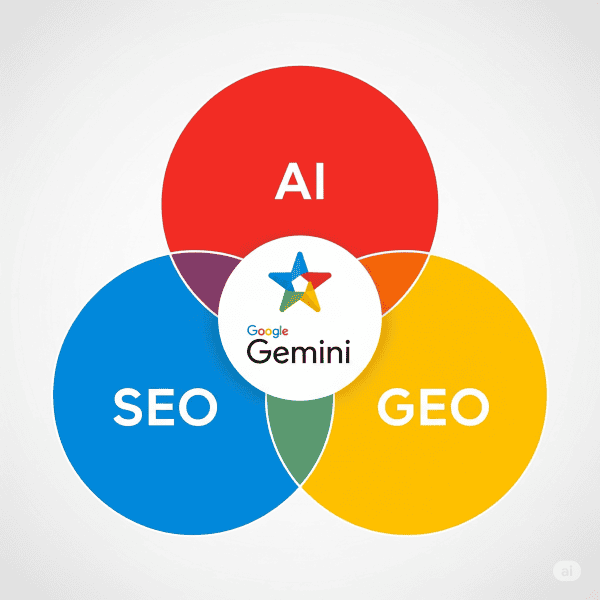
The digital landscape has shifted beneath our feet. Traditional search engine optimization focused on keywords and backlinks. Today, AI SEO Gemini Search Optimization represents the new frontier, where artificial intelligence interprets user intent and delivers conversational, synthesized answers. Google’s Gemini model, integrated into Search, fundamentally changes how content is discovered, ranked, and consumed. This guide provides a deep dive into adapting your strategy to thrive in this AI-driven ecosystem, ensuring your brand remains visible when users query the world’s largest search engine.
Understanding the Shift: What is Gemini in Search?
Gemini is Google’s most advanced multimodal AI model, designed to understand text, images, audio, and code simultaneously. In the context of Search, Gemini powers AI Overviews, which appear at the top of the search results page (SERP). These overviews synthesize information from multiple sources to answer complex queries directly, rather than just listing links. This is the core of AI SEO Gemini Search Optimization—optimizing your content to be the source that Gemini trusts and cites.
This shift moves SEO away from “ranking for keywords” toward “earning inclusion in AI summaries.” The goal is no longer just to get a click; it is to become the authoritative reference point that the AI uses to formulate its answer. This requires a fundamental change in how we structure, write, and validate content.
The Anatomy of AI Overviews
AI Overviews are not static. They vary in format based on the query type. They can appear as a paragraph summary, a bulleted list, a comparison table, or a step-by-step guide. Understanding these formats is crucial for AI SEO Gemini Search Optimization. If you want to be featured, your content must be structured to match these potential output formats. For example, if you are writing a comparison post, a clear HTML table with pros and cons is more likely to be scraped by the AI.
Furthermore, Gemini prioritizes information that is verifiable and consistent across multiple high-authority domains. It cross-references data to ensure accuracy. This means that having a single page with the answer is no longer sufficient. You need a web of interconnected, consistent information across your site and others to build the “trust graph” that Gemini relies on.
Why Traditional SEO Fails with Gemini
Traditional SEO tactics often conflict with the goals of AI-driven search. Keyword stuffing, thin content, and link schemes are easily identified and discarded by Gemini’s sophisticated algorithms. The AI does not look for keyword density; it looks for semantic relevance and entity coverage. It wants to understand the “who, what, when, where, and why” of a topic, not just see a phrase repeated.
Moreover, traditional metrics like “time on page” and “bounce rate” are becoming less relevant. If a user gets their answer directly in the AI Overview, they never click your link. This means your content must be so compelling that the AI chooses to cite you, and the snippet it shows is so intriguing that the user still clicks through for the full experience. This is the paradox of AI SEO Gemini Search Optimization: you must optimize for the machine to get the human.
The Death of the “Ten Blue Links”
The classic SERP with ten organic results is disappearing. For many queries, the AI Overview occupies the prime real estate, pushing traditional links below the fold. This reduces the click-through rate for positions 1-10 significantly. To combat this, your strategy must target “Position Zero” within the AI Overview itself. This requires creating content that is not only authoritative but also formatted for extraction.
This involves using clear, concise definitions at the start of your articles. It means using structured data markup (Schema.org) to help the AI understand the context of your content. It also means ensuring your content directly answers the “People Also Ask” questions, as these often feed into the AI’s understanding of related subtopics.
Core Strategies for AI SEO Gemini Search Optimization
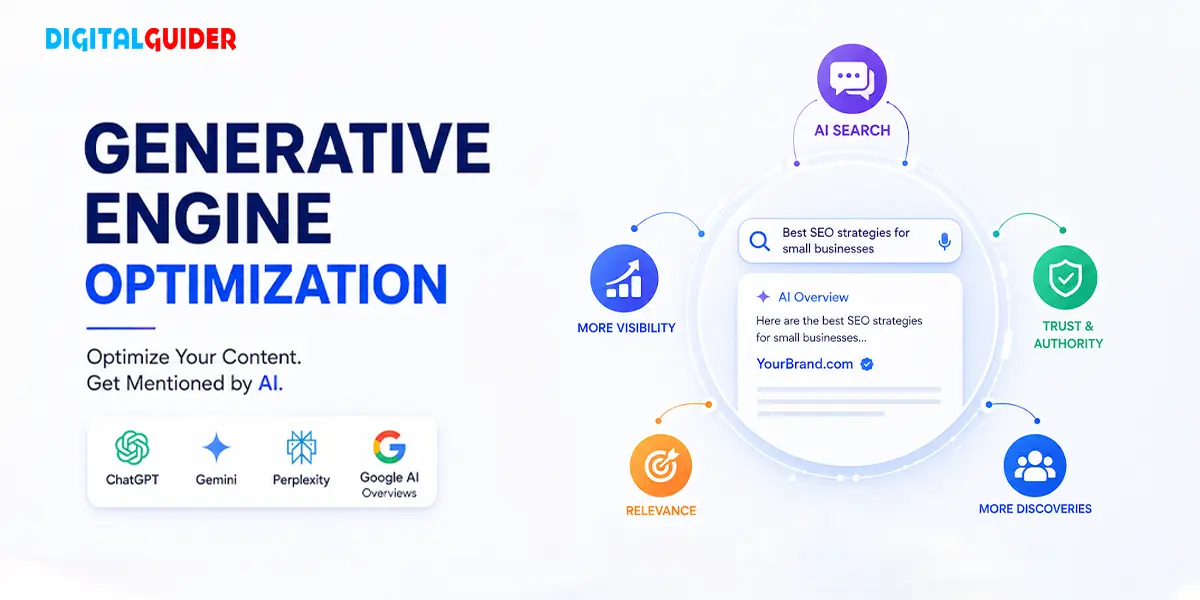
To succeed, you must pivot your entire content creation process. It is no longer about writing for a human reader first and a search engine second. It is about writing for the AI’s comprehension, which in turn serves the human reader. Here are the core strategies to implement.
1. Entity-Based Optimization
Gemini operates on entities—people, places, things, and concepts—and the relationships between them. Your content must clearly define these entities. If you are writing about “digital marketing,” you must connect it to entities like “SEO,” “Content Marketing,” “Google Ads,” and “Social Media.” Use consistent naming conventions and avoid ambiguous pronouns. The AI needs to map your content to its knowledge graph.
To do this, create a “hub and spoke” content model. Your hub page covers the broad topic (e.g., “Digital Marketing”), and your spoke pages cover specific subtopics (e.g., “Email Marketing Automation“). Each spoke page links back to the hub, and the hub links to all spokes. This creates a clear entity relationship map that Gemini can easily crawl and understand.
2. Structured Data and Schema Markup
Schema markup is the language that helps AI understand your content’s context. Implementing Article, FAQPage, HowTo, and Product schema is essential. This is not a direct ranking factor, but it is a comprehension factor. It tells Gemini exactly what your content is about, who it is for, and how it should be used. Without it, the AI has to guess, and guessing often leads to being ignored.
Focus on implementing FAQPage schema for your FAQ sections. This increases the chance of your questions appearing in the AI Overview’s expanded sections. Also, use BreadcrumbList schema to help the AI understand your site’s hierarchy and the relationship between pages.
3. Content Depth and Snippet Optimization
Gemini favors comprehensive content that covers a topic from every angle. A 500-word blog post is insufficient. You need long-form, in-depth guides (2000+ words) that demonstrate topical authority. However, length alone is not enough. The content must be structured logically with clear H2 and H3 headings. The AI uses these headings to navigate your content and extract relevant sections.
Optimize for snippets by placing the direct answer to a question in a paragraph immediately following the heading. Keep the answer concise (40-60 words) and then elaborate in the following paragraphs. This “answer first” approach makes it easy for Gemini to pull your text verbatim into the AI Overview.
Technical SEO for the AI Era
Technical SEO remains the foundation upon which AI SEO Gemini Search Optimization is built. If Googlebot cannot crawl and index your site, Gemini cannot access your content. However, the technical requirements have evolved to prioritize speed and accessibility for AI crawlers.
Core Web Vitals and Page Speed
Gemini prioritizes user experience. Slow, clunky pages are penalized. You must ensure your Largest Contentful Paint (LCP) is under 2.5 seconds, your First Input Delay (FID) is under 100ms, and your Cumulative Layout Shift (CLS) is under 0.1. These are non-negotiable. Use a CDN, optimize images, and minify CSS and JavaScript to achieve these metrics.
Mobile-first indexing is also critical. Gemini indexes the mobile version of your page first. If your mobile experience is poor, your desktop rankings will suffer. Ensure your responsive design is flawless and that all content is accessible on smaller screens.
Log File Analysis
You should monitor Googlebot’s crawl behavior via log file analysis. Look for the new “Google-Extended” user agent, which controls access to Gemini. If you have blocked this agent, your content will not be used in AI Overviews. Ensure you are not inadvertently blocking Gemini’s crawlers in your robots.txt file. This is a common technical mistake that kills AI SEO Gemini Search Optimization efforts.
Also, analyze the crawl frequency. If Googlebot is crawling your site frequently, it indicates high trust. If crawl frequency drops, it may signal a technical issue or a drop in content quality. Use this data to prioritize your technical fixes.
Content Creation: Writing for Humans and Machines
The content itself must be clear, authoritative, and uniquely valuable. Gemini is trained on the entire internet. It can detect regurgitated content instantly. You must provide a unique perspective, original data, or a novel synthesis of information that is not available elsewhere. This is where E-E-A-T (Experience, Expertise, Authoritativeness, Trustworthiness) becomes critical.
Demonstrating E-E-A-T
Google’s Quality Rater Guidelines emphasize E-E-A-T. To score high, you must demonstrate first-hand experience. Include personal anecdotes, case studies, and specific examples. Cite your sources with outbound links to authoritative domains. Show your credentials in the author bio. This builds the trust signal that Gemini looks for when deciding whether to cite you.
Update your content regularly. Gemini favors fresh information. A page that was last updated in 2022 is considered stale for a fast-moving topic. Add a “Last Updated” date and review your content quarterly to ensure accuracy and relevance.
The Role of Multimedia
Gemini is multimodal. It understands images and videos. Including original images, infographics, and videos can boost your chances of being featured. Ensure your images have descriptive alt text that includes the main keyword. Create video content that summarizes your article’s key points. This provides Gemini with multiple formats to pull from when generating its answer.
Do not use stock photos that appear on thousands of other sites. Original visuals are a differentiator. They signal to the AI that you have created something unique, which increases your perceived value.
Common Mistakes in AI SEO Gemini Search Optimization
Many marketers are making critical errors as they adapt to this new landscape. Understanding these pitfalls is just as important as knowing the correct strategies. Here are the most common mistakes and how to avoid them.
Mistake 1: Ignoring the “Zero-Click” Reality
Many SEOs panic when they see their click-through rates drop due to AI Overviews. They respond by trying to hide their content from the AI or by blocking Google-Extended. This is a fatal error. If you block Gemini, you lose all visibility in the AI space. Instead, you must accept that the goal is to be the source cited in the overview, even if it means fewer clicks. The brand exposure from being cited is valuable.
Mistake 2: Keyword Stuffing in Headings
Using the exact keyword in every H2 and H3 heading looks unnatural to Gemini. The AI understands synonyms and related concepts. Instead of repeating “AI SEO Gemini Search Optimization” ten times, use variations like “Gemini optimization strategies,” “AI search ranking factors,” and “optimizing for Google’s AI.” This creates a more natural semantic flow.
Mistake 3: Neglecting FAQ Schema
FAQ sections are goldmines for AI Overviews, but only if they are marked up correctly. If you have a plain text FAQ without schema, Gemini may not recognize it as a structured Q&A. Implement the FAQPage schema to ensure your questions are eligible for the “People Also Ask” boxes and AI expansions.
Practical Guide: Optimizing a Blog Post for Gemini
Let us walk through a practical example. Suppose you are writing a post about “Best Coffee Grinders.”
- Research: Identify the top 10 questions people ask about coffee grinders (e.g., burr vs. blade, grind size settings, budget).
- Structure: Create an H1 for the main topic. Use H2s for each major question. Use H3s for sub-questions (e.g., “What is a burr grinder?”).
- Write the Answer First: Under the H2 “Burr vs. Blade,” write a 50-word paragraph that directly answers the question. Then expand with details.
- Add a Table: Create a comparison table with columns for “Type,” “Pros,” “Cons,” and “Best For.” This is highly scannable for AI.
- Implement Schema: Add FAQPage schema to the FAQ section at the bottom. Add HowTo schema if you have a “How to Use” section.
- Internal Linking: Link to your “Coffee Grinder Maintenance” guide and your “Best Coffee Beans” guide. This builds entity relationships.
- Multimedia: Include a video of you testing the grinder. Include an original image of the grind size chart.
This process ensures that every element of the page is optimized for extraction by Gemini, increasing the likelihood of being cited in the AI Overview for “best coffee grinders.”
Measuring Success in the AI Era
Traditional metrics like “Keyword Rank” are becoming obsolete. You need to track new KPIs to measure the success of your AI SEO Gemini Search Optimization strategy.
| Metric | Traditional SEO | AI SEO (Gemini) |
|---|---|---|
| Primary KPI | Keyword Position (1-10) | AI Overview Inclusion Rate |
| Traffic Source | Organic Clicks | Brand Impressions & Referral Clicks |
| Content Focus | Keyword Density | Entity Coverage & Semantic Depth |
| Success Signal | Backlinks | Citation Consistency & Trust Flow |
| User Behavior | Bounce Rate | Engagement with Cited Snippet |
Use tools like Google Search Console to monitor your performance in AI Overviews. Look at the “Performance” report and filter by “Search Appearance” to see which queries trigger AI Overviews and whether your site is listed as a source. Track the number of impressions where your brand is visible in the AI summary, even if you do not get the click.
Important Notes on Future-Proofing
The AI landscape is evolving rapidly. What works today may not work tomorrow. However, certain principles remain constant. Focus on building a brand that is a recognized authority in your niche. This is the ultimate defense against algorithm changes. A strong brand gets cited regardless of the specific AI model in use.
Diversify your traffic sources. Do not rely solely on Google Search. Build a presence on YouTube, LinkedIn, and other platforms. This reduces your dependency on any single AI’s algorithm. Also, consider optimizing for other AI search engines like Perplexity or Bing Chat, as they are gaining market share.
Finally, prioritize user intent over everything else. If you genuinely help the user solve their problem, the A The technical tactics will change, but the core principle of providing value remains the bedrock of all search optimization.
Frequently Asked Questions (FAQ)
What is the difference between traditional SEO and AI SEO Gemini Search Optimization?
Traditional SEO focuses on ranking web pages for specific keywords to drive clicks. AI SEO focuses on being cited as a source within AI-generated answers. It prioritizes entity clarity, structured data, and comprehensive topical coverage over keyword density and link volume.
How do I check if my content appears in Gemini AI Overviews?
Use Google Search Console. Navigate to the Performance report, click “Search Appearance,” and select “AI Overviews.” This shows you the queries where your site appeared in the AI summary. You can also manually search for your target keywords in an incognito window to see if your brand is cited.
Does blocking Google-Extended help or hurt my SEO?
Blocking Google-Extended prevents Gemini from using your content to train models and generate AI Overviews. This will hurt your visibility in AI search results. Unless you have a specific legal or competitive reason to block it, you should allow it to access your content.
How long should my content be for Gemini optimization?
T The key is depth and completeness. You must cover all subtopics related to the main entity. A short, shallow article will not be considered authoritative enough to cite.
Are backlinks still important for AI SEO?
Yes, backlinks remain a strong trust signal. However, the quality and relevance of the links matter more than the quantity. A link from a top-tier industry publication is worth more than hundreds of low-quality directory links. Focus on earning links through digital PR and original research.
Conclusion
The era of AI SEO Gemini Search Optimization is here. It demands a shift from a “link-centric” to an “entity-centric” approach. By focusing on structured data, semantic clarity, and genuine expertise, you can position your brand as the go-to source for Google’s AI. The strategies outlined in this guide provide a roadmap for navigating this transformation. The future belongs to those who optimize for the machine’s understanding while never losing sight of the human need for valuable, trustworthy information. Adapt now, and you will not only survive the AI revolution but lead it.
Xem thêm:
- AI SEO JavaScript SEO: The Complete Guide to Modern Search Optimization
- AI Meta Descriptions: The Complete Guide to Writing High-Converting Search Snippets With Artificial Intelligence
- WP Trove SEO Workflow: The Complete Guide to Streamlining WordPress Search Optimization
- AI SEO FAQ Schema: The Complete Guide to Smart Structured Data
- AI SEO Citation Building: The Complete Guide to Automated Local Search Dominance
Bài viết cùng chủ đề:

AI SEO SEO Automation with Make: The Complete Workflow Guide

AI SEO SEO Automation with Zapier: The Complete Workflow Guide

AI SEO SEO Automation with n8n: The Complete Workflow Guide
AI SEO SEO Automation with Gemini: The Complete Guide to Scaling Organic Growth

AI SEO SEO Automation with Claude: The Complete Guide to Scaling Content in 2025

AI SEO SEO Automation with ChatGPT: The Complete Playbook for 2025

AI SEO & SEO Automation for Affiliate Sites: The 2025 Playbook for Passive Income Growth
AI SEO & SEO Automation for Bloggers: The Complete Guide to Scaling Your Content

AI SEO & SEO Automation for Agencies: The Complete 2025 Playbook

AI SEO and SEO Automation for Ecommerce: The Complete Playbook for 2025

AI SEO & SEO Automation for WordPress: The Complete Playbook for 2025
AI SEO SEO Automation Strategy: The Complete Playbook for 2025

Mastering the AI SEO SEO Automation Process: A Complete Guide to Scaling Organic Growth
AI SEO SEO Automation System: The Complete Guide to Scaling Organic Growth in 2025
AI SEO SEO Automation Platform: The Complete Guide to Scaling Organic Growth in 2025
AI SEO SEO Automation Software: The Complete Guide to Scaling Organic Growth in 2025















