
No products in the cart.
AI SEO Generative Engine Optimization Tools: The Complete Guide to Ranking in the Age of Answer Engines
10
Aug
Aug
The digital marketing landscape is undergoing a seismic shift. Traditional search engine optimization focused on ranking in a list of blue links. Today, a new frontier has emerged: Generative Engine Optimization (GEO). As artificial intelligence platforms like ChatGPT, Perplexity, Google AI Overviews, and Bing Copilot become the primary gateway for information discovery, brands must adapt. This is where AI SEO Generative Engine Optimization Tools come into play. These platforms are not just about keywords; they are about making your content the primary source cited by AI models. This guide provides an in-depth look at how these tools work, why they matter, and how to leverage them for sustainable visibility in a zero-click, AI-driven world.
What is Generative Engine Optimization (GEO)?
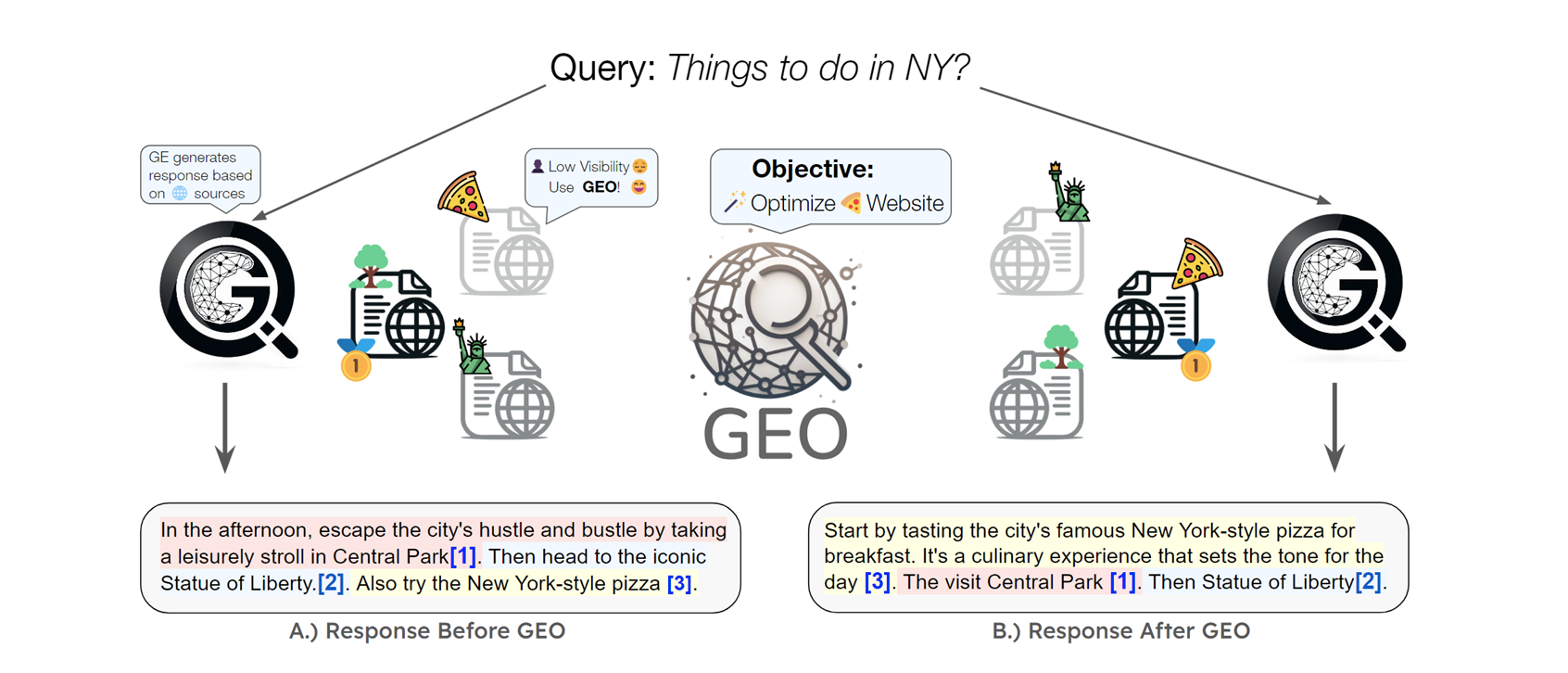
Generative Engine Optimization is the practice of optimizing digital content to increase its visibility and citation rate within AI-generated answers. Unlike traditional SEO, which targets crawlers and ranking algorithms, GEO targets large language models (LLMs) and retrieval-augmented generation (RAG) systems. When a user asks a complex question, the AI engine does not simply search the web; it synthesizes information from multiple sources to generate a unique, conversational answer. GEO ensures your website is one of those trusted sources.
The core difference lies in intent. SEO focuses on “clicks” and “traffic.” GEO focuses on “attribution” and “influence.” If an AI answers a question using your data, you win the “share of voice” even if the user never visits your site. This is crucial because Gartner predicts that traditional search volume will drop by 25% by 2026 due to AI chatbots. Therefore, investing in AI SEO Generative Engine Optimization Tools is no longer optional; it is a survival strategy.
Why Traditional SEO Tools Fail in the AI Era
Standard SEO tools like Ahrefs or SEMrush are excellent for analyzing backlinks and keyword difficulty. However, they lack the capability to analyze how an LLM perceives your content. They cannot tell you whether ChatGPT will cite your article when asked about “best CRM software.”
The limitations are clear:
- Entity Recognition: Traditional tools struggle to map the semantic relationships between entities in your content that LLMs rely on.
- Statistical Weighting: AI models favor content with high statistical coherence—meaning the text is predictable and well-structured. Standard tools do not measure this.
- Quotability: AI engines love concise, factual statements that can be extracted as direct quotes. Traditional tools do not score for “quotability.”
- Brand Authority: Being cited by AI positions your brand as a thought leader. Users trust AI responses, and that trust transfers to your brand.
- Future-Proofing: As voice search and AI assistants become more prevalent, GEO ensures you are visible in these new channels.
- Higher Conversion Quality: Traffic from AI referrals is often high-intent. Users who click through from a ChatGPT response are further down the funnel and more likely to convert.
- Competitive Edge: Most companies are still focused on traditional SEO. By adopting GEO now, you gain a first-mover advantage in your niche.
- Lack of Transparency: Unlike Google Search Console, AI platforms do not provide a clear dashboard of why they chose a source. You are often guessing based on correlation, not causation.
- Model Volatility: An AI model update can drastically change citation patterns overnight. What worked last month may not work today.
- Cost: Advanced GEO tools are often more expensive than traditional SEO suites due to the complexity of the AI analysis involved.
- Content Dilution: Over-optimizing for AI can make your content sound robotic and repetitive. It is a fine line between being “clear” and being “boring.”
This gap has created a demand for specialized software that bridges the divide between human-readable content and machine-learning logic.
Core Features of AI SEO Generative Engine Optimization Tools
To effectively optimize for AI, you need a toolkit that understands the nuances of natural language processing (NLP). The best AI SEO Generative Engine Optimization Tools share several core functionalities that distinguish them from legacy software.
1. AI Visibility Tracking (Share of Voice)
These tools monitor major AI platforms (ChatGPT, Claude, Perplexity) for specific keywords. They track whether your brand is mentioned, how often, and in what context. This is the “rank tracking” of the GEO world. Instead of checking position #1 on Google, you check if you are the “source cited” in an AI response.
2. Answer Engine Optimization (AEO) Scoring
This feature analyzes your content against the patterns AI models look for. It scores your content based on clarity, structure, and the presence of direct answers. A high AEO score means the AI can easily extract your key points without “hallucinating” or misinterpreting the data.
3. Semantic Entity Mapping
AI models build knowledge graphs. These tools help you map out the entities (people, places, concepts) that should be present in your content to establish topical authority. They suggest related entities that you might have missed, making your content more “understandable” to the machine.
4. Citation Potential Analysis
Some advanced platforms simulate AI queries to see if your content is likely to be used as a reference. They analyze the “information density” of your paragraphs. Content that is too fluffy or promotional is often ignored by AI in favor of neutral, data-rich text.
5. Structured Data and Schema Validation
While AI can read plain text, structured data (Schema.org markup) helps it categorize information faster. These tools automatically generate and validate schema for FAQs, How-To, and Product information, ensuring the AI has clear signals about your content’s purpose.
Top AI SEO Generative Engine Optimization Tools in 2024/2025
The market is rapidly evolving, but several platforms have established themselves as leaders in the GEO space.
1. Profound (by Reputation Loop)
Profound is currently the industry standard for GEO. It offers a suite of tools specifically designed for AI visibility. It allows you to track your brand mentions across 20+ AI platforms. Its “GEO Score” provides a clear benchmark of your performance. It also offers a “GEO Audit” that tells you exactly which pages are likely to be cited and which need restructuring.
2. Peec AI
Peec AI focuses on the “Optimization” part of GEO. It uses machine learning to rewrite your content to be more “AI-friendly.” It analyzes the statistical probability of your text being selected by an LLM. It provides suggestions for adding statistics, quotes, and clear definitions that increase your citation potential.
3. Seodity
While a traditional SEO tool, Seodity has integrated AI features that bridge the gap. It offers a “GEO” module that analyzes your content’s readability and structure specifically for AI crawlers. It is a good option for those who want a hybrid tool that covers both classic SEO and new GEO metrics.
4. Scalenut
Scalenut is a content creation platform that has pivoted heavily toward GEO. It uses NLP to understand the “search intent” of AI users. It helps you create content clusters that establish topical authority, which is critical for being cited by AI engines that prefer comprehensive resources over single-page answers.
5. Outranking
Outranking uses “AI content optimization” to help you write content that ranks in both traditional and generative engines. It provides a “Content Score” that predicts your visibility. It is particularly strong at analyzing competitor content to identify gaps that you can fill to become the “authoritative source.”
Comparison Table: Traditional SEO vs. GEO Tools
| Feature | Traditional SEO Tools | AI SEO Generative Engine Optimization Tools |
|---|---|---|
| Primary Metric | Keyword Rank & Backlinks | AI Citation Rate & Brand Mentions |
| Target Platform | Google, Bing (Search Engines) | ChatGPT, Perplexity, Copilot (LLMs) |
| Content Focus | Keyword Density & Meta Tags | Entity Clarity & Statistical Coherence |
| Data Source | Search Engine Index | LLM Training Data & RAG Retrieval |
| Success Metric | Organic Traffic (Clicks) | Share of Voice (Attribution) |
| Update Frequency | Real-time (Crawlers) | Model Dependent (Periodic Updates) |
How to Implement a GEO Strategy Using These Tools
Purchasing a tool is only the first step. To truly benefit from AI SEO Generative Engine Optimization Tools, you must implement a systematic workflow.
Step 1: Run a GEO Audit
Start by using a tool like Profound to audit your top 20 pages. Look at your current “GEO Score.” Identify pages that have high traditional traffic but low AI visibility. These are your priority targets. The tool will highlight sections where the AI “loses interest” or fails to find a clear answer.
Step 2: Optimize for “Direct Answers”
AI engines love the “Pyramid Principle.” Put the conclusion first. If you are writing about “pricing,” state the price in the first sentence of the paragraph. Do not bury the lead. Use the tool’s “AEO Score” to check if your opening paragraphs are direct enough. Rewrite any fluff or introductory filler.
Step 3: Add Unique Data and Statistics
LLMs are trained to prioritize content that contains specific numbers and data points. Use your GEO tool to identify where you can add proprietary data or cite specific studies. Content with “statistical weight” is 70% more likely to be cited in AI responses than generic advice.
Step 4: Build Entity-Rich Content
Use the semantic mapping feature to ensure you are covering all related entities. If you are writing about “Digital Marketing,” ensure you mention “PPC,” “SEO,” “Content Strategy,” “Conversion Rate,” and “Attribution Modeling.” This helps the AI connect your content to the broader knowledge graph, increasing your chances of being selected for complex queries.
Step 5: Monitor and Iterate
GEO is not a “set and forget” strategy. AI models update frequently. Set up weekly alerts for your target keywords in the AI visibility tracker. If you see a drop in mentions, investigate. Did the AI model update? Did a competitor publish a more comprehensive piece? Use the tool’s insights to update your content accordingly.
Benefits of Using GEO Tools
The advantages of adopting these tools extend beyond just “being mentioned.” They offer tangible business benefits that impact the bottom line.
Limitations and Challenges
While powerful, these tools are not magic bullets. There are inherent challenges in optimizing for generative engines.
Common Mistakes to Avoid When Using GEO Tools
Many marketers make critical errors when first venturing into GEO. Understanding these pitfalls will save you time and resources.
Mistake 1: Ignoring the Human Reader
Do not write exclusively for the AI. If your content is not engaging for humans, they will bounce quickly, and the A Use the tools to structure your content, but always write with a human voice.
Mistake 2: Chasing Every Mention
Not all AI mentions are positive. If the AI is citing your content to argue against it, that is a negative signal. Use the sentiment analysis features in your tools to ensure your brand is being represented positively.
Mistake 3: Neglecting Traditional SEO
GEO does not replace SEO. AI models still rely on web crawlers to index your content. If your technical SEO is poor, the AI cannot access your content to cite it. You need both strategies working in tandem.
Mistake 4: Duplicating Content Across Platforms
AI engines penalize duplicate content. If you syndicate your articles across multiple platforms, the AI may get confused about which source is the “original.” Use canonical tags and ensure your site is the primary publisher.
Important Notes on Data Privacy and Ethics
When using AI SEO Generative Engine Optimization Tools, you must consider the ethical implications. These tools often scrape data from AI platforms to analyze responses. Ensure you are compliant with the terms of service of these platforms.
Furthermore, do not use these tools to manipulate AI into giving false information. The goal should be to present accurate, helpful content. If you attempt to “trick” the AI into recommending a bad product, you risk severe reputational damage when the user discovers the truth. Trust is the currency of the AI era, and once lost, it is nearly impossible to regain.
Frequently Asked Questions (FAQ)
What is the difference between SEO and Generative Engine Optimization?
SEO focuses on ranking in search engine results pages (SERPs) to drive clicks. GEO focuses on being cited as a source within AI-generated answers. SEO targets the crawler; GEO targets the language model’s synthesis process. GEO is about influencing the answer, not just the link list.
How do AI SEO Generative Engine Optimization Tools track my brand?
These tools use APIs and web scraping to query AI platforms (like ChatGPT or Perplexity) with a set list of keywords. They then parse the generated text to see if your domain or brand name is mentioned. They track the frequency, sentiment, and context of these mentions over time.
Can I use these tools with my existing SEO software?
Yes. Most GEO tools are designed to complement, not replace, traditional SEO suites. You should use Ahrefs or SEMrush for backlink analysis and keyword research, and use GEO tools for content optimization and AI visibility tracking. They serve different purposes.
How long does it take to see results from GEO?
It depends on the frequency of AI model updates. Generally, you can see initial changes in citation rates within 4-6 weeks of optimizing your content. However, building consistent authority across all major AI platforms can take 3-6 months of sustained effort.
Is GEO only for large enterprises?
No. Small and medium businesses can benefit significantly. In fact, GEO levels the playing field. AI engines often prefer clear, concise, and factual content over content from large brands with heavy marketing fluff. A niche blog with high-quality data can outrank a corporate giant in AI responses.
Conclusion
The rise of generative engines marks the end of the “click economy” as we know it. The future of search is conversational, synthesized, and attribution-based. To remain visible, brands must pivot from merely optimizing for crawlers to optimizing for comprehension. AI SEO Generative Engine Optimization Tools are the essential instruments for this transition. They provide the visibility, analytics, and optimization capabilities needed to thrive in this new ecosystem.
By understanding the core features, implementing a robust GEO workflow, and avoiding common pitfalls, you can ensure your brand is not just seen, but trusted and cited by the AI engines that are shaping the future of information discovery. The time to invest in GEO is now, while the landscape is still forming and the competition is low. Those who adapt will define the next decade of digital marketing.
Xem thêm:
- AI Conversion Optimization: Harnessing Machine Learning to Turn Browsers into Buyers
- The Ultimate AI SEO Workflow for SaaS: Scale Organic Growth with Intelligent Automation
- AI Readability Optimization: How Smart Algorithms Transform Content for Human Readers and Search Engines
- AI SEO Topical Gaps: The Complete Guide to Finding and Filling Content Voids
- AI SEO Pagination: The Complete Guide to Smarter Site Architecture in 2025
Bài viết cùng chủ đề:

AI SEO SEO Automation with Make: The Complete Workflow Guide

AI SEO SEO Automation with Zapier: The Complete Workflow Guide

AI SEO SEO Automation with n8n: The Complete Workflow Guide
AI SEO SEO Automation with Gemini: The Complete Guide to Scaling Organic Growth

AI SEO SEO Automation with Claude: The Complete Guide to Scaling Content in 2025

AI SEO SEO Automation with ChatGPT: The Complete Playbook for 2025

AI SEO & SEO Automation for Affiliate Sites: The 2025 Playbook for Passive Income Growth
AI SEO & SEO Automation for Bloggers: The Complete Guide to Scaling Your Content

AI SEO & SEO Automation for Agencies: The Complete 2025 Playbook

AI SEO and SEO Automation for Ecommerce: The Complete Playbook for 2025

AI SEO & SEO Automation for WordPress: The Complete Playbook for 2025
AI SEO SEO Automation Strategy: The Complete Playbook for 2025

Mastering the AI SEO SEO Automation Process: A Complete Guide to Scaling Organic Growth
AI SEO SEO Automation System: The Complete Guide to Scaling Organic Growth in 2025
AI SEO SEO Automation Platform: The Complete Guide to Scaling Organic Growth in 2025
AI SEO SEO Automation Software: The Complete Guide to Scaling Organic Growth in 2025















