
No products in the cart.
Google AI Search: The Complete Guide to the Future of Finding Information
29
Jul
Jul
The way billions of people get answers online has changed overnight. Google AI Search is no longer a lab experiment — it is the default experience for queries that demand nuance, comparison, and synthesis. Instead of a list of blue links, users now see AI-generated overviews, visual snapshots, and conversational pathways woven directly into the results page. For anyone who creates content, runs a business, or simply wants to understand where search is heading, grasping Google AI Search is not optional. This guide breaks down every layer, from the underlying technology to the practical steps you can take right now.
What Is Google AI Search?
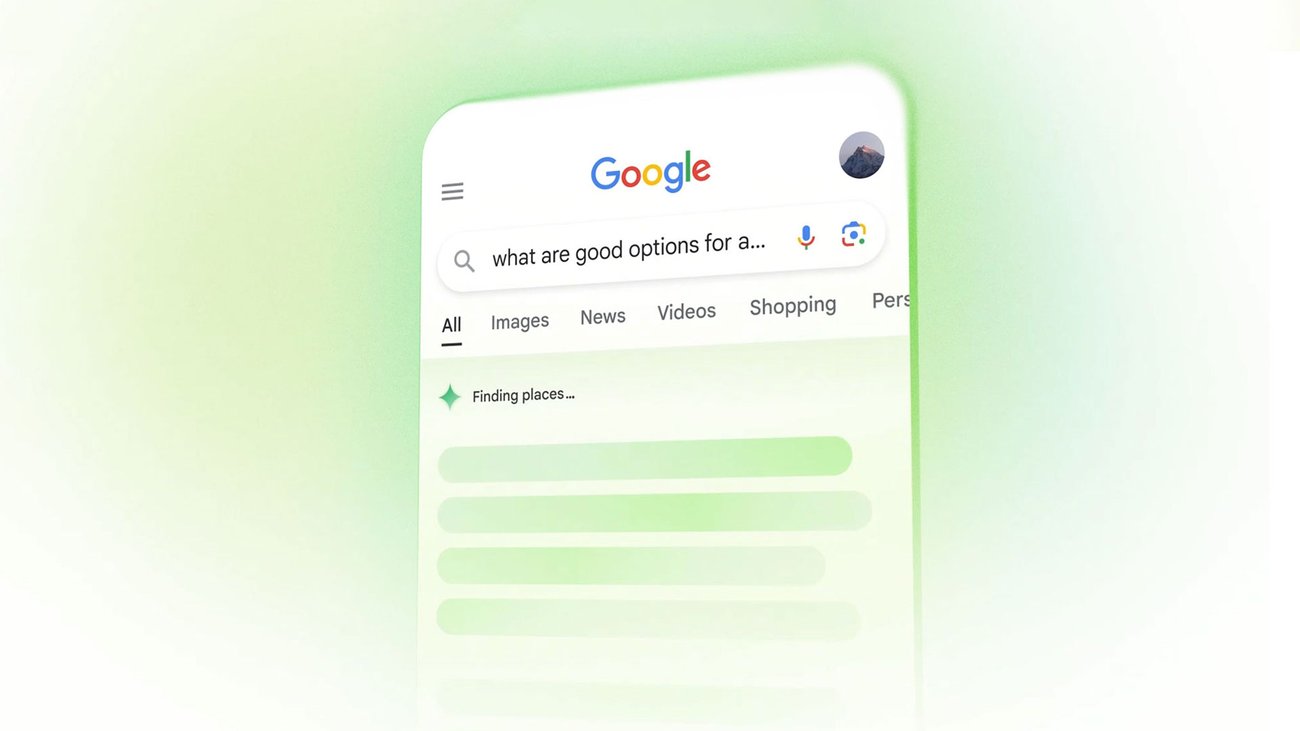
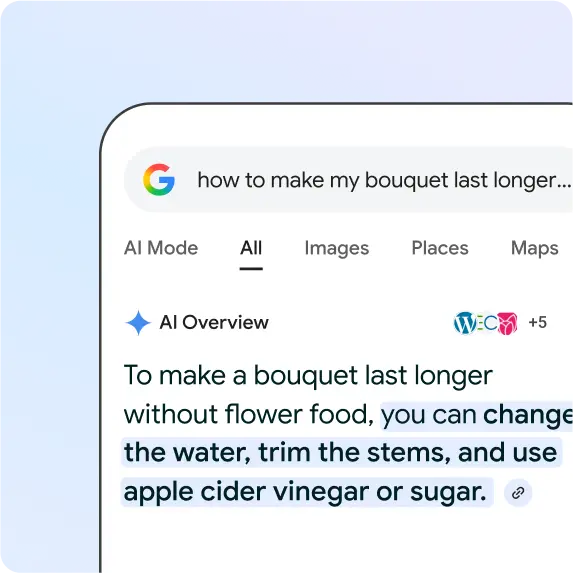
Google AI Search refers to the suite of artificial intelligence capabilities integrated into Google’s core search product. At its heart is the AI Overview (formerly called Search Generative Experience or SGE), a feature that uses large language models to generate a direct answer at the top of the search results. But the term goes much deeper. It includes multimodal search where you can point your camera and ask a question, Circle to Search on Android, and the way Google now understands complex queries through models like BERT and MUM. Unlike a traditional search that simply retrieves links, Google AI Search interprets intent, combines information from multiple sources, and presents a cohesive response — often without requiring a single click.
Google rolled out AI Overviews to the general public in the U.S. in May 2024 at Google I/O, and the feature quickly expanded to more than 100 countries. By early 2025, billions of queries per month were triggering an AI-generated snapshot. This shift marks the most significant change to the search interface since the introduction of featured snippets, and it fundamentally rewrites the rules of visibility.
The Evolution of AI Inside Google Search
To understand where Google AI Search is now, it helps to trace the milestones that brought us here. The journey started long before generative AI captured headlines.
From RankBrain to Neural Matching
In 2015, Google introduced RankBrain, the first deep learning system applied to search ranking. It helped interpret never-before-seen queries by mapping words to concepts. This was the moment Google stopped treating search as a keyword-matching machine and started treating it as an understanding engine. A few years later, neural matching allowed the algorithm to see how words related to broader topics, even when exact terms didn’t appear on a page.
BERT and MUM: Reading Like a Human
The launch of BERT in 2019 was a leap. Bidirectional Encoder Representations from Transformers could grasp the context of every word in a sentence by looking at the words before and after it. Suddenly, Google understood the nuance in queries like “Brazil traveler to USA need visa” versus “US traveler to Brazil need visa.” In 2021, MUM (Multitask Unified Model) arrived. It was 1,000 times more powerful than BERT, could handle multiple languages, and could process information across text, images, and video simultaneously. MUM was the bridge to truly multimodal search — something impossible with older architectures.
Gemini and the Generative Era
Today, Google AI Search runs on a custom version of the Gemini model family. Gemini was designed from the ground up to be multimodal, reasoning across text, code, images, and audio. The specific model powering AI Overviews is optimized for retrieval-augmented generation: it draws directly from the live web to ground its answers, reducing the hallucinations that plagued early generative search experiments. This evolution means Google AI Search doesn’t just generate plausible text — it cites sources, integrates recent events, and respects the authority signals the search engine has spent decades building.
Key Features of Google AI Search
Google AI Search is not one product but a collection of interconnected capabilities. Each changes the user experience in a different way.
AI Overviews
When you search for something like “how to choose between hybrid and electric car,” an AI Overview appears at the top of the results. It synthesizes key factors — range, charging infrastructure, total cost of ownership — pulled from multiple authoritative pages. Links to those sources sit beside the text, so users can dive deeper if they want. Google deliberately restricts AI Overviews for topics where accuracy is critical, such as health and finance, applying a much stricter safety filter. These overviews are dynamic; they can expand, show comparison tables, or suggest follow-up questions, effectively turning the result page into a conversation.
Circle to Search
Available on Android devices, Circle to Search lets you circle, highlight, or tap any element on your screen and instantly get a Google search without switching apps. If you’re watching a video and spot a bag you like, you circle it, and Google AI Search identifies the product, finds prices, and shows similar styles. The feature uses on-device processing for privacy, and its popularity has pushed Google to expand it to more phone models and even to Lens in Chrome on desktop. This seamless interaction blurs the line between browsing and searching, and it works because of AI-driven visual recognition tied to the Knowledge Graph.
Multimodal Search with Google Lens
Google Lens now processes more than 20 billion visual searches every month. But the real power of AI Search shows up when you combine images and text. You can snap a photo of a plant and ask “How often do I water this in winter?” and receive a specific care guide. Or take a picture of a circuit board and add “Find the manual for this model.” The AI understands both the visual content and the natural language instruction, merging them into a single result. This is a direct application of MUM’s cross-modal understanding and is now embedded in the Google app for iOS and Android.
Generative AI in Shopping
When you search for a product category like “running shoes for flat feet,” Google AI Search generates a detailed buying guide with considerations like arch support, cushioning, and fit. It pulls product recommendations from across the web and can generate side-by-side comparisons. For clothing, virtual try-on technology uses generative AI to show how items look on real models of different body shapes and sizes. Shopping queries now often bypass traditional e‑commerce category pages, forcing retailers to ensure their product data and unique insights are part of the AI‑synthesized answer.
How Google AI Search Works Under the Hood
Understanding the mechanism demystifies why some pages get cited while others are ignored. Google AI Search relies on a retrieval-augmented generation pipeline. When a query comes in, the system first identifies the most relevant, high-quality chunks of content from the index. This retrieval step uses traditional ranking signals — authority, freshness, page experience — but also looks for factual density and clarity. The selected chunks then feed into the Gemini model, which synthesizes an answer, adds supporting citations, and formats the response.
Crucially, the model does not memorize the web. It reasons over the retrieved text, which keeps answers grounded and allows for real-time information. Google’s own research shows that this grounding reduces factual errors by more than 30% compared to pure generative models. The system also evaluates the generated text against a fact-checking layer that cross-references the citations automatically. This infrastructure explains why AI Overviews can handle breaking news — the retrieval step constantly refreshes the source material.
Benefits of Google AI Search for Users and Businesses
The advantages are tangible. For everyday users, Google AI Search saves minutes of clicking and scanning. A complex question that once required opening five tabs now gets a single, well-structured answer. The conversational ability to ask “What is the difference between X and Y?” and then follow up with “Show me a buying guide for Y” without retyping context makes research feel natural. Accessibility improves too; people who struggle to navigate dense web pages can get straight to the point.
For businesses and publishers, the opportunity lies in being the cited source. Even though AI Overviews reduce click-through rates for some informational queries, the traffic that does arrive is highly targeted. A gardening website that becomes the primary citation for “how to prune tomato plants” earns authority and, often, a surge in direct visits. Moreover, Google AI Search opens new surfaces — like the “People also ask” evolution and interactive results — where well-structured, expert content shines. Brands that supply unique data, original research, or proprietary tools find themselves embedded in the AI’s knowledge base.
Limitations and Challenges of Google AI Search
No technology this ambitious comes without friction. Accuracy remains a constant challenge. Early AI Overviews famously recommended putting glue on pizza (based on a satirical Reddit post), highlighting that generative models can misinterpret humor or low-authority content. Google has since added rigorous filters and reduced the visibility of AI Overviews on sensitive topics, but the system is not foolproof. For queries where the web contains contradictory information, the AI may present a misleading consensus.
Traffic impact is the biggest concern for publishers. When the answer appears at the top of the page, many users never scroll down. Sites that rely on informational queries for ad revenue are seeing double-digit declines in organic traffic. Privacy concerns also persist, especially with features like Circle to Search that process on-screen content, although Google emphasizes on-device processing and encrypted data handling. Finally, t
Google AI Search vs. Traditional Search: A Side-by-Side Look
The table below highlights the practical differences between classic Google Search and the new AI-powered experience.
| Feature | Traditional Search | Google AI Search |
|---|---|---|
| Primary output | Ranked list of links | AI-generated answer with citations |
| Query understanding | Keyword matching + entity recognition | Full semantic, multimodal intent parsing |
| Follow-up interaction | New search required | Conversational continuation in place |
| Visual search | Limited to image search tab | Integrated via Lens, Circle to Search |
| Source citation | Implicit via ranking | Explicit source links beside generated text |
| Traffic distribution | Broad, proportional to ranking | Concentrated on top-cited sources |
| Personalization | Based on search history, location | Context-aware; adapts to ongoing session |
How to Optimize for Google AI Search in Practice
Traditional SEO techniques alone won’t guarantee visibility in AI Overviews. Google’s generative systems look for content that demonstrates clear expertise, factual reliability, and exceptional structure. Here are concrete tactics that work.
- Build authoritative entity associations. Ensure your brand, authors, and content are connected to known entities in Google’s Knowledge Graph. Author pages should link to verified credentials, publications to ORCID IDs, and businesses to their official Wikidata entries.
- Structure content for extraction. Use descriptive headings, bulleted lists, and summary boxes. AI models parse these patterns easily. A comparison guide about software tools should have a concise summary paragraph up front, followed by clearly labeled sections.
- Include unique data and proprietary insights. AI Overviews favor content that brings something new to the table. A recipe site that has original user testing data, a marketer who shares unreleased survey results, or a hardware reviewer with thermal imaging measurements all stand out from generic rewrites.
- Implement robust structured data. Schema markup for articles, FAQs, products, and how‑to guides helps Google understand the role of each piece of content. While Schema alone doesn’t guarantee inclusion, it dramatically improves the chances of being parsed and cited.
- Optimize for long-tail, multi-intent queries. AI Overviews often appear for questions that combine multiple aspects. Create pages that address comparison, cost, location, and steps in a single resource. For example, “crate training a puppy in an apartment while working full‑time” is a perfect AI target if you cover all angles.
- Thin, undifferentiated content. Regurgitating information already present on ten other sites gives the AI no reason to cite you. Originality is no longer optional.
- Neglecting author credibility. Anonymous blog posts or articles with no clear bio suffer in E‑E‑A‑T signals. Google’s quality raters and automated systems both look for demonstrable experience.
- Over-optimizing for keywords only. Stuffing subheadings with exact-match phrases while ignoring topic completeness backfires. AI models evaluate holistic coverage, not keyword density.
- Blocking Googlebot from key resources. If JavaScript-rendered content, images, or internal data aren’t crawlable, they won’t appear in the retrieval step. Test your pages with Google Search Console’s URL inspection tool regularly.
- Ignoring the user on‑page experience. Slow loading, intrusive interstitials, and confusing navigation not only harm traditional rankings but also reduce the chance your content is deemed worthy of a citation in a fast‑loading AI snapshot.
Common Mistakes That Hurt Visibility in an AI-Driven World
Many well-intentioned publishers inadvertently exclude themselves from AI Overviews. Avoid these frequent pitfalls.
Important Notes for Marketers, Creators, and Product Owners
Google AI Search does not signal the end of websites. It signals the end of low-effort, middleman content. The web that survives and thrives is the one where original value is immediately obvious. Invest in research that can’t be replicated by an LLM. That could mean running original experiments, publishing in-depth case studies, or building interactive tools that generate unique data points. More than ever, Google rewards the publisher who answers the question nobody else has.
Keep an eye on your Search Console performance reports. A new filter for AI Overviews impressions and clicks is rolling out, letting you see exactly which queries trigger the feature and whether your site appears as a source. If you notice a drop in clicks on a high-volume informational term, check whether an AI Overview now occupies the top spot. Then, examine the cited content. More often than not, it’s more structured, more expert-driven, or more comprehensive. Treat it as a gap analysis.
Finally, remember that not all queries will get an AI Overview. Navigational queries, simple factual lookups, and emergency searches still show traditional results. Focus your optimization energy on complex, multi-layered topics where an AI summary adds genuine value. That’s exactly where the biggest visibility gains sit.
Frequently Asked Questions About Google AI Search
What exactly is Google AI Search?
Google AI Search is the integration of generative AI and multimodal understanding into Google’s core search experience. It includes AI Overviews, Circle to Search, and the ability to process text, images, and voice in a unified way, delivering direct answers rather than just links.
How are AI Overviews different from featured snippets?
Featured snippets extract a short passage from a single page. AI Overviews synthesize information from multiple authoritative sources using a large language model and cite those sources, often producing longer, more nuanced responses that can include tables and follow‑up prompts.
Can website owners opt out of being included in AI Overviews?
T However, you can use the nosnippet meta tag or the max-snippet rule to limit how your content appears in all search features, which also affects AI-generated summaries. Keep in mind this may reduce your visibility overall.
Does Google AI Search affect paid advertising?
Search ads continue to appear above and below AI Overviews on relevant queries. Google has stated that there are no current plans to place ads directly within the AI-generated snapshot. Shopping ads and traditional text ads still operate on the same auction model.
How can I tell if my content appears in an AI Overview?
Use Google Search Console’s performance report. The platform now breaks out impressions and clicks specifically for AI Overviews, showing which queries triggered the feature and whether your page was among the cited sources.
Is Google AI Search available everywhere?
AI Overviews are available in more than 100 countries and multiple languages as of early 2025. Circle to Search and Lens-based multimodal queries have an even wider footprint, though some features may require the latest Android or iOS updates.
Will Google AI Search replace traditional SEO?
No. Traditional SEO fundamentals — technical health, quality content, user experience — still underpin a site’s ability to be retrieved and cited. What changes is the format of the results. SEO now also involves optimizing for structured data, expert authorship, and content that AI models can confidently reference.
Conclusion
Google AI Search represents a fundamental shift from retrieval to understanding, from lists to answers. For users, it means faster, richer information. For anyone whose livelihood touches the web, it demands a sharper focus on expertise, originality, and clarity. The principles that built a trustworthy web — authoritative sources, transparent authorship, helpful design — are now the very signals that lift content into the AI-generated spotlight. Instead of fighting the change, the winning strategy is to lean into what makes your content genuinely irreplaceable. In a world where AI does the summarizing, being the source worth citing is the only position that endures.
Xem thêm:
- AI SEO for Influencers: The Complete Guide to Ranking and Growing in 2025
- How to Automate SEO with AI and Build a Scalable Organic Growth Engine
- The Ultimate Guide to AI Prompt Optimization: Unlocking Precision in Every AI Interaction
- AI SEO Generative Search Traffic: The Complete Playbook for 2025
- AI SEO Keyword Grouping: The Complete Guide to Smarter Content Clusters
Bài viết cùng chủ đề:

AI SEO SEO Automation with Make: The Complete Workflow Guide

AI SEO SEO Automation with Zapier: The Complete Workflow Guide

AI SEO SEO Automation with n8n: The Complete Workflow Guide
AI SEO SEO Automation with Gemini: The Complete Guide to Scaling Organic Growth

AI SEO SEO Automation with Claude: The Complete Guide to Scaling Content in 2025

AI SEO SEO Automation with ChatGPT: The Complete Playbook for 2025

AI SEO & SEO Automation for Affiliate Sites: The 2025 Playbook for Passive Income Growth
AI SEO & SEO Automation for Bloggers: The Complete Guide to Scaling Your Content

AI SEO & SEO Automation for Agencies: The Complete 2025 Playbook

AI SEO and SEO Automation for Ecommerce: The Complete Playbook for 2025

AI SEO & SEO Automation for WordPress: The Complete Playbook for 2025
AI SEO SEO Automation Strategy: The Complete Playbook for 2025

Mastering the AI SEO SEO Automation Process: A Complete Guide to Scaling Organic Growth
AI SEO SEO Automation System: The Complete Guide to Scaling Organic Growth in 2025
AI SEO SEO Automation Platform: The Complete Guide to Scaling Organic Growth in 2025
AI SEO SEO Automation Software: The Complete Guide to Scaling Organic Growth in 2025















