
No products in the cart.
AI SEO Generative Search Strategy: The Complete Playbook for 2025

10
Aug
Aug
The digital marketing landscape is undergoing a seismic shift. Traditional search engine optimization focused on ranking in a list of blue links, but the emergence of generative AI has fundamentally altered how users discover information. An AI SEO Generative Search Strategy is no longer a futuristic concept; it is a critical necessity for brands aiming to maintain visibility. This approach involves optimizing content not just for traditional crawlers, but for AI models that synthesize answers, summarize data, and generate conversational responses. As search engines integrate large language models into their results pages, the rules of engagement have changed, demanding a more nuanced, entity-focused, and authoritative content ecosystem.
This comprehensive guide will dissect the anatomy of a successful generative search strategy. We will explore how AI engines like Google’s Search Generative Experience (SGE), Bing Chat, and Perplexity AI process information differently from their predecessors. We will move beyond basic keyword research to discuss entity optimization, structured data, and the creation of “answer-ready” content. The goal is to equip you with a tactical framework to ensure your brand remains the primary source of information, regardless of whether the user clicks a link or receives a synthesized answer directly in the search interface.
Understanding the Shift: From Keywords to Entities
To build an effective AI SEO Generative Search Strategy, one must first understand the underlying technology. Traditional SEO relied on lexical matching—the exact words in a query matching the words on a page. Generative engines, however, use semantic understanding and knowledge graphs. They do not merely match strings; they comprehend concepts, relationships, and user intent. This shift means that your content must be structured around entities (people, places, things, concepts) and the relationships between them, rather than just isolated keywords.
Generative AI models are trained on vast datasets to predict the next word in a sequence. When a user asks a complex question, the AI does not search the web in real-time for every answer. Instead, it uses its parametric memory, augmented by real-time retrieval (Retrieval-Augmented Generation or RAG). This retrieval process pulls from indexed web pages to ground the AI’s response in factual data. Therefore, your strategy must focus on being the most credible and easily retrievable source for these AI systems.
The Role of Retrieval-Augmented Generation (RAG)
RAG is the technical backbone of modern generative search. When a query is entered, the system retrieves relevant documents from an index and feeds them to the language model to generate a coherent answer. This process highlights a critical point: if your content is not easily retrievable or lacks clarity, the A Your AI SEO Generative Search Strategy must therefore prioritize technical crawlability and semantic clarity to win the retrieval phase.
This involves ensuring your site architecture is logical, your robots.txt file is not blocking critical resources, and your content is free of ambiguity. The AI needs to “understand” your page quickly. If a page is cluttered with conflicting information or lacks a clear thesis, the retrieval system may deem it low-quality. The focus is on creating clean, authoritative, and topic-focused documents that serve as reliable references for AI models.
Core Components of a Generative Search Strategy
Building a robust strategy requires a multi-faceted approach. It is not enough to simply write longer articles. You must engineer your content for both human consumption and machine comprehension. Below are the foundational pillars that support a successful generative search presence.
1. Entity Optimization and Knowledge Graphs
Search engines build knowledge graphs to map out the relationships between entities. For example, “Apple” is an entity, and it is related to “Tim Cook,” “iPhone,” and “Cupertino.” To align with this, your content must explicitly define the entities you discuss. Use consistent naming conventions, define acronyms on first use, and link to authoritative sources to help the AI understand the context. This helps the AI associate your brand with specific topics and concepts.
Furthermore, you should maintain a strong presence on platforms that feed knowledge graphs, such as Wikipedia and Wikidata. While you cannot control your Wikipedia page directly, ensuring your business information is accurate on social profiles, review sites, and your own “About Us” page helps the AI cross-reference and validate your existence. This validation is crucial for the AI to cite your content as a trustworthy source.
2. Structured Data and Schema Markup
Schema markup is the language of the semantic web. By implementing structured data, you provide explicit clues to search engines about the meaning of your content. For generative search, this is vital. Marking up your content with FAQPage, HowTo, Article, and Product schema helps the AI parse your content into digestible components. This increases the likelihood of your content being used to generate a direct answer or a featured snippet.
When implementing schema, focus on accuracy. Misleading or spammy structured data can lead to penalties. The goal is to help the machine understand the content, not to trick it. For instance, if you have a recipe page, clearly mark up the ingredients, cooking time, and instructions. This allows the AI to extract the exact information needed to answer a user’s query about “how long to bake a cake,” even if the user does not visit your page.
3. Content Depth and Answer Engineering
Generative AI excels at summarizing. If your content is shallow, the A To win, you must create content that is so specific, data-rich, and insightful that the AI must reference it to provide a comprehensive answer. This is known as “answer engineering.” You are not just writing an article; you are constructing a definitive resource on a topic.
This involves addressing the “People Also Ask” questions, providing statistics, citing studies, and offering unique perspectives. The content should be structured logically, with clear headings and subheadings that the AI can easily navigate. Use bullet points and tables to present data in a scannable format. The more granular and specific your information, the more valuable you become to the generative engine.
Practical Implementation: How to Optimize for AI Engines
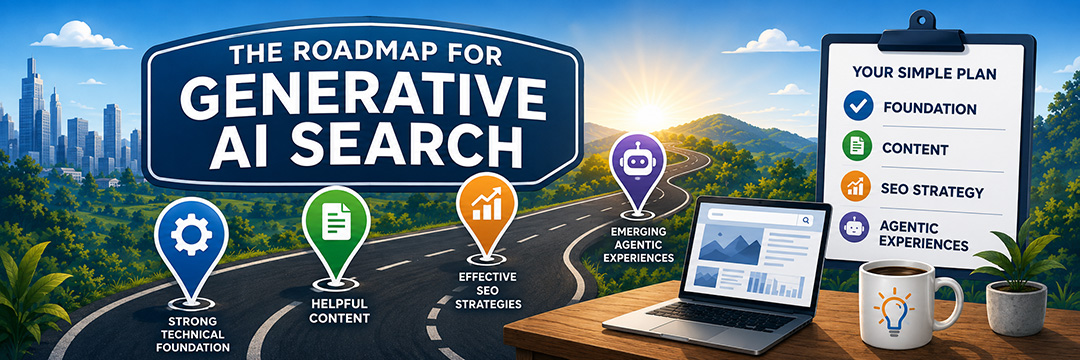
Understanding the theory is the first step; implementation is where the real work begins.
Conducting AI-Focused Keyword Research
Traditional keyword tools focus on search volume and difficulty. For generative search, you must also analyze the “question landscape.” Look at the queries that your target audience is asking in natural language. Tools like “AnswerThePublic” and “AlsoAsked” are invaluable here. You are looking for long-tail, conversational queries that a user would type into a chatbot. These are the queries that trigger generative responses.
Additionally, analyze the current AI responses for your target keywords. Ask ChatGPT or Google’s SGE a question and observe the sources they cite. What format are those sources in? What information are they missing? This gap analysis reveals opportunities. If the AI is citing a competitor for a specific statistic, create a better, more recent statistic on your site. This is a direct way to insert your brand into the generative ecosystem.
Optimizing for Citation and Source Attribution
Generative engines often cite sources via hyperlinks within the generated text. To earn these citations, your content must be perceived as the most authoritative source on the web for that specific claim. This requires a focus on E-E-A-T (Experience, Expertise, Authoritativeness, and Trustworthiness). Ensure your content has clear author bylines with credentials, cite reputable external sources, and include first-hand experience where possible.
Furthermore, the structure of your paragraphs matters. The AI often extracts the first sentence of a paragraph as a potential answer. Therefore, write clear, declarative topic sentences. If the first sentence of your paragraph is a strong, standalone answer to a potential query, you have a higher chance of being cited. The rest of the paragraph can provide the supporting detail and nuance.
Technical SEO: The Foundation for AI Retrieval
No amount of great content will help if the AI cannot crawl your site. Technical SEO remains the bedrock of any generative strategy. This includes ensuring your site has a clear hierarchy, fast loading speeds, and a mobile-friendly design. However, t Bots like Google’s “Google-Extended” and OpenAI’s “GPTBot” have specific crawl patterns. You must decide whether to allow these bots to access your content.
While blocking these bots might protect your content from being used without clicks, it also removes you from the generative ecosystem. For most brands, allowing access is the better strategy, as it builds brand visibility. However, you should monitor your server logs to see how these bots are interacting with your site. If they are consuming excessive resources, you can optimize your site’s speed to reduce the load.
Benefits and Limitations of Generative Search Optimization
Adopting an AI SEO Generative Search Strategy comes with a distinct set of advantages and challenges. Understanding these will help you set realistic expectations and allocate resources effectively.
| Benefits | Limitations |
|---|---|
| Increased brand visibility in zero-click environments | Difficulty in tracking ROI and click-through rates |
| Opportunity to establish authority as a primary source | Loss of direct traffic as users get answers on the SERP |
| Better understanding of user intent through semantic analysis | High competition for limited “citation slots” in AI answers |
| Future-proofing your digital presence against algorithm updates | Requires significant investment in content depth and quality |
| Improved content quality and user experience for human readers | Potential for AI “hallucinations” misattributing information |
The primary benefit is the potential for massive brand exposure. Even if a user does not click through, seeing your brand name cited in an AI-generated answer builds significant top-of-mind awareness. The main limitation is the difficulty in measuring the direct impact on revenue. You must shift your KPIs from clicks to impressions and brand mentions within AI outputs.
Common Mistakes and How to Avoid Them
As with any new strategy, there are pitfalls that can derail your efforts. Being aware of these common mistakes will save you time and resources.
- Ignoring the Zero-Click Reality: Focusing solely on clicks will lead to frustration. Instead, measure brand mentions and share of voice in AI responses.
- Keyword Stuffing in AI Era: Repeating the exact keyword unnaturally will harm readability and confuse AI models. Focus on semantic relevance and natural language.
- Neglecting Entity Consistency: Using different names for the same product or service confuses the knowledge graph. Standardize your naming conventions across all content.
- Creating “Thin” Content for AI: Writing short, generic answers to try and “trick” the A The AI needs depth and context to provide a good answer.
- Forgetting the Human Reader: If your content is not engaging for humans, it will not earn links or shares, which are still critical signals for authority.
To avoid these mistakes, always prioritize clarity and value. Ask yourself if the content is genuinely useful. If it is, it will likely perform well in both traditional and generative search. The key is to create content that serves the user’s intent, not just the algorithm’s requirements.
Important Notes on Content Creation for AI
When writing content intended for generative search, certain stylistic and structural choices can significantly impact your success. The way you format information matters as much as the information itself.
First, use direct language. Avoid fluff and introductory filler. Get to the point quickly. AI models are trained to extract concise information. Second, utilize lists and tables generously. These formats are easy for AI to parse and often get pulled directly into generated answers. Third, maintain a neutral and authoritative tone. Avoid overly promotional language, as AI models are often trained to filter out biased or salesy content.
Finally, update your content regularly. Generative AI relies on the freshness of data. A statistic from 2019 is less likely to be cited than one from 2024. Set a schedule for content audits and updates to ensure your information remains current and relevant. This continuous improvement cycle is essential for maintaining your status as a trusted source.
Frequently Asked Questions (FAQ)

What is the difference between traditional SEO and AI generative search optimization?
Traditional SEO focuses on ranking for specific keywords in a list of search results. AI generative search optimization focuses on becoming the source of information that AI models use to synthesize answers. It prioritizes entity clarity, semantic relevance, and content depth over exact-match keyword usage.
Will AI search reduce website traffic?
In the short term, it may reduce click-through rates for informational queries, as users get answers directly on the search page. However, it can increase brand visibility. The strategy should shift towards building brand authority so that users seek you out directly, and optimizing for transactional queries where clicks are still essential.
How do I track the performance of my AI SEO strategy?
Tracking is challenging but possible. Use tools to monitor brand mentions in AI responses. Track your visibility in Google’s Search Generative Experience (SGE) for target queries. Monitor your organic traffic trends, but also pay attention to branded search volume, which may increase as a result of AI citations.
Is structured data more important now than before?
Yes, structured data is arguably more important. It provides explicit signals to AI models about the meaning and context of your content. It helps the AI parse your content into components that can be used to generate direct answers, making it a critical element of any generative search strategy.
Should I block AI crawlers like GPTBot from my site?
Generally, no. Blocking these crawlers removes your content from the AI’s knowledge base, meaning you will not be cited in AI responses. Unless you have a specific reason to protect your content (e.g., a subscription model), allowing access is usually the better strategy for brand visibility.
Conclusion
The evolution of search from a link-based model to an answer-based model is inevitable. An AI SEO Generative Search Strategy is your roadmap to navigating this new terrain. It requires a fundamental shift in mindset—from optimizing for rankings to optimizing for relevance and authority. By focusing on entities, structured data, and answer engineering, you position your brand to be the definitive source of information in your niche.
The transition will not happen overnight. It requires a commitment to producing high-quality, comprehensive content and a willingness to adapt your measurement metrics. However, the brands that embrace this change now will be the ones that dominate the digital landscape in the years to come. The future of search is conversational, and the brands that speak the language of AI fluently will be the ones that are heard.
Xem thêm:
- AI SEO CRO Strategy: The Complete Guide to Converting Search Traffic
- AI SEO Keyword Discovery: The Complete Guide to Smarter Search Rankings
- AI SEO Templates: Build a Smarter, Faster Search Strategy With Automated Workflows
- AI SEO Internal Link Optimization: The Complete Guide to Smarter Site Architecture
- AI SEO Local Citations: The Complete Guide to Automating Your Local Search Dominance
Bài viết cùng chủ đề:

AI SEO SEO Automation with Make: The Complete Workflow Guide

AI SEO SEO Automation with Zapier: The Complete Workflow Guide

AI SEO SEO Automation with n8n: The Complete Workflow Guide
AI SEO SEO Automation with Gemini: The Complete Guide to Scaling Organic Growth

AI SEO SEO Automation with Claude: The Complete Guide to Scaling Content in 2025

AI SEO SEO Automation with ChatGPT: The Complete Playbook for 2025

AI SEO & SEO Automation for Affiliate Sites: The 2025 Playbook for Passive Income Growth
AI SEO & SEO Automation for Bloggers: The Complete Guide to Scaling Your Content

AI SEO & SEO Automation for Agencies: The Complete 2025 Playbook

AI SEO and SEO Automation for Ecommerce: The Complete Playbook for 2025

AI SEO & SEO Automation for WordPress: The Complete Playbook for 2025
AI SEO SEO Automation Strategy: The Complete Playbook for 2025

Mastering the AI SEO SEO Automation Process: A Complete Guide to Scaling Organic Growth
AI SEO SEO Automation System: The Complete Guide to Scaling Organic Growth in 2025
AI SEO SEO Automation Platform: The Complete Guide to Scaling Organic Growth in 2025
AI SEO SEO Automation Software: The Complete Guide to Scaling Organic Growth in 2025















