
No products in the cart.
Mastering AI SEO Scaling: How to Automate and Amplify Your Organic Growth
29
Jul
Jul
The landscape of search engine optimization has shifted permanently. What once required armies of writers, data analysts, and tedious manual checks can now be streamlined through AI SEO scaling—the strategic use of artificial intelligence to expand, accelerate, and sustain organic search performance far beyond human-only capacity. This article unpacks every layer of AI SEO scaling, from foundational concepts to advanced implementation, enabling you to build a smarter, faster, and more resilient organic growth engine.
What Is AI SEO Scaling?
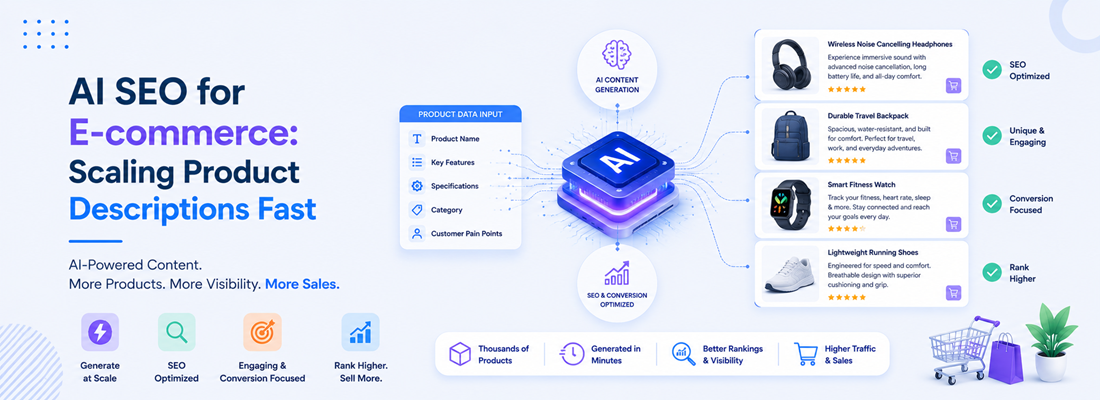
AI SEO scaling is the process of leveraging artificial intelligence tools and machine learning algorithms to amplify the output and impact of SEO activities without proportionally increasing human resources. It goes beyond simple automation. It uses predictive analytics, natural language generation, and pattern recognition to handle high-volume, repetitive, and data-intensive tasks—while preserving or even improving quality. The core idea is to shift from linear scaling (hire more people for more output) to exponential scaling (let intelligent systems multiply your efforts).
In practice, AI SEO scaling touches every phase of the SEO workflow: keyword discovery that moves from seed lists to thousands of intent-mapped clusters, content outlines and drafts generated from top-ranking pages, automated internal link graphs, real-time technical audits, and even link prospect qualification. The technology doesn’t replace strategy—it executes strategy at unprecedented scale, freeing senior SEOs to focus on decision-making and creative differentiation.
The term encompasses both narrow AI tools (like content optimizers) and broad models (large language models such as GPT-4) applied across the SEO stack. When done right, scaling with AI creates a flywheel: more data feeds better models, which produce better content, which earns more signals, which further train the models.
The Core Components of an AI SEO Scaling System
A robust AI SEO scaling system isn’t a single tool; it’s an interconnected suite of capabilities working in harmony. Understanding these components helps you avoid fragmented implementations that leave massive efficiency gaps.
Intelligent Keyword Research and Clustering
Traditional keyword research ends with a spreadsheet of terms manually grouped by topic. AI scaling takes this to a new level. Using semantic analysis and large-scale clustering algorithms, AI can process millions of keywords from search console data, competitor sites, and trend databases. It automatically identifies parent topics, long-tail variations, question-based queries, and even entity relationships. What used to take weeks now finishes in hours, with clusters that mirror real search intent—not just surface-level string matches.
These clusters become the blueprint for content hubs, pillar pages, and programmatic SEO campaigns. Instead of chasing individual keywords, you build comprehensive topical authority at scale, guided by AI-generated content maps.
AI-Assisted Content Generation and Optimization
This is the most visible part of AI SEO scaling. Modern AI writing assistants, paired with SEO-specific models, can generate complete article drafts, category page descriptions, meta tags, and even schema markup suggestions. The key differentiator is that scaling content doesn’t mean producing generic, low-value text. Advanced systems incorporate real-time SERP analysis: they examine the top-performing pages for a query, extract their structural patterns, topical coverage gaps, and semantic terms, then generate a draft that is semantically rich and structurally sound.
Beyond full drafts, AI scales content refreshing. An algorithm can scan thousands of existing URLs, identify pages losing traffic, and rewrite outdated sections or add new statistics—all while maintaining your brand voice when properly fine-tuned.
Automated Technical SEO and Site Audits
Manual site audits on large e-commerce or publishing platforms are painfully slow and error-prone. AI SEO scaling automates the detection and prioritization of technical issues. Machine learning models can crawl millions of URLs, recognize patterns that indicate duplicate content, index bloat, thin pages, or crawl budget waste, and even suggest fixes. More advanced deployments use AI to dynamically generate internal links between related pages, strengthening the semantic web of the site without manual mapping.
Real-time monitoring becomes possible. Instead of quarterly audits, you get continuous anomaly detection, alerting you to sudden indexation drops, speed regressions, or structured data errors the moment they appear.
Link Building and Digital PR Scaling
Scaling link acquisition has always been a bottleneck. AI changes that by automating the most time-consuming parts: prospect discovery and qualification. AI-powered tools can scrape thousands of relevant sites, evaluate their authority signals, topical relevance, and even guest post acceptance patterns. They can draft personalized outreach templates that reference the prospect’s recent content, dramatically improving response rates. While the final relationship building still requires a human touch, the grunt work shrinks from weeks to days, allowing a small team to run campaigns at enterprise scale.
Performance Analytics and Predictive Insights
AI SEO scaling isn’t only about doing more; it’s about knowing what to do next. Predictive models trained on your historical traffic data, seasonality, and industry trends can forecast the ROI of targeting specific keyword clusters. They can identify opportunities before they become competitive and warn about declining pages before they lose rankings. This shifts SEO from reactive firefighting to proactive strategy development, powered by data no human analyst could process manually.
Benefits and Limitations of AI SEO Scaling
Understanding both sides of the coin is essential for realistic expectations and sustainable implementation. The advantages are transformative, but ignoring the constraints leads to costly missteps.
The Upsides: Speed, Coverage, and Consistency
- Exponential content output – Produce 500 optimized articles in the time a manual team writes 20, covering vast topic clusters simultaneously.
- Data processing at impossible scale – Analyze millions of SERPs, backlinks, and conversion paths to make decisions based on complete data, not samples.
- Error reduction in repetitive tasks – Automated technical fixes and structured data generation eliminate human oversight failures during bulk operations.
- Resource reallocation – Senior SEO strategists spend time on high-impact creative work, competitive differentiation, and testing instead of data entry.
- Rapid adaptability – When algorithm updates shift ranking factors, AI systems can retrain on new data patterns and re-optimize thousands of pages faster than any manual process.
- Hallucinated facts and shallow analysis – Even advanced models can invent statistics or miss nuanced subject-matter expertise, damaging credibility.
- Homogenized content – If everyone uses the same AI tools without differentiation, the web fills with nearly identical articles, eroding competitive advantage.
- E-A-T erosion – Google’s emphasis on expertise, authoritativeness, and trustworthiness penalizes content that obviously lacks human experience and genuine authority signals.
- Opaque decision-making – AI can surface recommendations without clear reasoning, making it hard to justify strategies to stakeholders or troubleshoot failures.
- Initial setup complexity – Building an integrated AI scaling pipeline requires technical know-how, API connections, and ongoing model tuning that many teams underestimate.
- Publishing raw AI content without human filter – AI drafts often lack original research, unique examples, or the authentic voice that earns backlinks. Always apply a human editorial layer that injects experience.
- Ignoring Google’s evolving stance on AI content – Google doesn’t penalize AI content per se, but it rewards helpful, people-first content. Scaling mass-produced articles that show no expertise will trigger helpful content system demotions. Focus on quality signals, not just word count.
- Neglecting entity and topical depth – AI scaling sometimes produces content that covers keywords but misses the deeper entity relationships that build true authority. Use knowledge graph tools and entity-rich prompts to force comprehensive coverage.
- Over-automating without testing – A small script error can ruin thousands of title tags or generate toxic internal links. Always test AI-driven changes on a subset of URLs before full deployment.
- Forgetting about brand differentiation – When AI models all train on the same top-ranking pages, your content becomes indistinct. Bake in proprietary data, case studies, and brand point-of-view that competitors cannot replicate.
The Downsides: Quality Risks and the Need for Guardrails
AI SEO Scaling vs. Traditional Manual SEO: A Direct Comparison
The gap between a purely human-led SEO operation and one augmented by AI can be stark. The table below highlights where the differences are most acute.
| Dimension | Manual SEO Scaling | AI SEO Scaling |
|---|---|---|
| Keyword Research | Analyst manually builds lists in spreadsheets, limited to a few thousand terms. | AI clusters millions of keywords by intent and semantic relevance, updating daily. |
| Content Production | Writers produce 20–50 articles per month per full-time employee. | AI drafts 500–2000+ articles, then humans edit and refine the best 20%. |
| Technical Audits | Quarterly crawl on large sites takes weeks; fixes lag behind issues. | Continuous monitoring, instant anomaly alerts, and prioritized fix queues. |
| Link Prospecting | Manual outreach to a few hundred sites per campaign. | AI qualifies thousands of prospects and drafts personalized pitches automatically. |
| On-Page Optimization | Page-by-page title and meta tweaks, often generic. | Dynamic, data-driven meta generation at scale, tailored to individual query nuances. |
| Decision Speed | Reactive; analysis takes weeks, so you chase last month’s trends. | Proactive, with predictive models highlighting tomorrow’s opportunities. |
How to Implement AI SEO Scaling: A Practical Guide
Adopting AI for SEO isn’t flipping a switch. It requires a thoughtful architecture where tools, processes, and human oversight work together. The following phased approach helps avoid the chaos of disconnected automation.
Phase 1: Audit Your Current SEO Workflows for Scalability Bottlenecks
Before injecting AI, document every recurring SEO task and its time cost. The easiest wins are tasks that are high-volume, repetitive, and data-intensive. Content briefs, meta descriptions, internal link suggestions, and keyword tagging often top the list. Map each bottleneck to a potential AI solution—don’t try to automate everything at once.
Phase 2: Build Your AI Tool Stack Strategically
Choose tools that integrate well with your existing CMS and analytics stack. A common stack includes a semantic keyword research platform (like Ahrefs AI features or Semrush’s clustering), a content optimization AI (Surfer SEO, MarketMuse, or ChatGPT with custom prompts trained on your brand), a technical crawling AI (like Botify or DeepCrawl with AI modules), and a reporting layer that uses AI for anomaly detection. Resist the temptation to use dozens of tools; focus on a core set that covers research, content, tech, and measurement.
Phase 3: Create a Human-in-the-Loop Content Factory
The most successful AI SEO scaling models treat AI as the production line, not the final publisher. Define a clear process: AI generates keyword clusters → human strategist selects high-ROI clusters → AI drafts detailed outlines with SEO data → humans adjust the outline and provide unique insights → AI generates full draft → expert editor fact-checks, adds anecdotes, and ensures EEAT compliance. This hybrid model can 10x output without sacrificing trustworthiness.
Phase 4: Automate Internal Linking and Topic Authority Maps
Use an AI-powered internal linking tool that understands your content’s semantics. It should analyze existing pages and recommend—or automatically insert—contextual links that reinforce silo structures. Pair this with a topic authority map: AI identifies content gaps and suggests new pages to build comprehensive coverage. Over time, your site becomes a tightly interlinked knowledge base that search engines recognize as a topical authority.
Phase 5: Implement Predictive Monitoring and Adaptive Optimization
Move from static rank tracking to predictive dashboards. Set up alerts for pages that AI models forecast will drop in traffic based on early weakening signals. Feed performance data back into your content generation models so they learn what kind of structures, word counts, and semantic richness correlates with high rankings in your specific niche.
Common Mistakes When Scaling SEO with AI (and How to Avoid Them)
Even experienced teams stumble when the allure of speed overtakes sound SEO principles. Recognizing these pitfalls early saves months of cleanup.
Important Notes for Sustainable AI SEO Scaling
These considerations separate temporary ranking spikes from lasting organic growth.
User experience remains the north star. AI can generate perfect on-page SEO, but if the page loads slowly on mobile or has a confusing layout, rankings cannot hold. Technical excellence and Core Web Vitals must scale alongside content.
Ethical and legal boundaries matter. Using AI to scrape and republish others’ content verbatim is infringement. Train your models on original data, and always transform information rather than duplicate it. Verifying facts is non-negotiable, especially in YMYL (Your Money, Your Life) niches where misinformation carries serious risk.
Continuous model refinement is required. Search algorithms and user behavior evolve. An AI scaling system left on autopilot for six months will drift into irrelevance. Schedule regular prompt audits, review output quality samples, and retrain based on fresh winning content patterns.
Frequently Asked Questions
What exactly does AI SEO scaling mean?
AI SEO scaling is the application of artificial intelligence and machine learning to perform SEO tasks—keyword research, content creation, technical optimization, link prospecting—at a volume and speed impossible for human teams alone, while maintaining or improving the quality and consistency needed for high rankings.
How can AI help scale SEO efforts without damaging rankings?
AI scales SEO by automating repetitive, data-heavy processes. The damage comes only when companies skip human editorial oversight. Successful scaling pairs AI-generated drafts with expert fact-checking, unique insights, and E-E-A-T signals. When the final output genuinely helps users and demonstrates authority, search engines treat AI-aided content no differently than human-written material.
Is AI-generated content still effective for SEO in 2025?
Yes, provided it meets the same quality bar as the best human-created content. Google’s guidance focuses on helpfulness, not the method of creation. The risk lies in low-effort, scaled AI spam that offers no original value. Content that combines AI efficiency with human experience, data, and editorial judgment consistently outperforms generic AI-only pages.
Which AI tools are best for scaling SEO?
The ideal stack depends on your needs, but often includes tools like Surfer SEO or MarketMuse for content intelligence, Jasper or ChatGPT with custom personas for drafting, Ahrefs or Semrush for AI-driven keyword clustering, and a technical platform like Botify or Sitebulb with AI auditing capabilities. The power lies not in one tool but in integrating them so that insights from one automatically feed the next step of your workflow.
Can AI completely replace human SEO experts?
No. AI excels at execution, pattern recognition, and scale, but it cannot replace strategic thinking, creative brand positioning, or genuine subject-matter expertise. The most effective SEO teams use AI as a force multiplier—turning senior experts into strategists who guide AI output rather than writers grinding out 100 briefs. Human judgment remains essential for interpreting nuanced search intent changes and building authentic authority.
Conclusion
AI SEO scaling represents the next evolution in organic search—a shift from brute-force effort to intelligent amplification. When built with the right blend of automation and human oversight, it transforms SEO from a headcount-dependent cost center into a scalable revenue driver. The companies that win tomorrow’s SERP battles won’t necessarily have the biggest budgets, but they will be the ones who master the art of scaling quality, not just quantity, through AI. Start small, build your feedback loops, and let data guide the expansion. The technology is ready; the only remaining variable is how well you wield it.
Xem thêm:
- AI SEO Generative Search Optimization Tools: The Complete Guide to Winning SGE in 2025
- AI SEO FAQ Schema: The Complete Guide to Smart Structured Data
- AI SEO Entity Optimization: The Complete Guide to Future-Proof Rankings
- ChatGPT vs Claude for SEO: The Ultimate AI Assistant Showdown for Search Optimizers in 2025
- AI SEO Content Repurposing: The Complete Strategy Guide for 2025
Bài viết cùng chủ đề:

AI SEO SEO Automation with Make: The Complete Workflow Guide

AI SEO SEO Automation with Zapier: The Complete Workflow Guide

AI SEO SEO Automation with n8n: The Complete Workflow Guide
AI SEO SEO Automation with Gemini: The Complete Guide to Scaling Organic Growth

AI SEO SEO Automation with Claude: The Complete Guide to Scaling Content in 2025

AI SEO SEO Automation with ChatGPT: The Complete Playbook for 2025

AI SEO & SEO Automation for Affiliate Sites: The 2025 Playbook for Passive Income Growth
AI SEO & SEO Automation for Bloggers: The Complete Guide to Scaling Your Content

AI SEO & SEO Automation for Agencies: The Complete 2025 Playbook

AI SEO and SEO Automation for Ecommerce: The Complete Playbook for 2025

AI SEO & SEO Automation for WordPress: The Complete Playbook for 2025
AI SEO SEO Automation Strategy: The Complete Playbook for 2025

Mastering the AI SEO SEO Automation Process: A Complete Guide to Scaling Organic Growth
AI SEO SEO Automation System: The Complete Guide to Scaling Organic Growth in 2025
AI SEO SEO Automation Platform: The Complete Guide to Scaling Organic Growth in 2025
AI SEO SEO Automation Software: The Complete Guide to Scaling Organic Growth in 2025















