
No products in the cart.
AI SEO GEO Traffic: The Complete Guide to Generative Engine Optimization

10
Aug
Aug
The digital marketing landscape is shifting at an unprecedented pace. Traditional search engine optimization focused on ranking in Google’s blue links, but a new paradigm is emerging. This is where AI SEO GEO Traffic comes into play, representing the convergence of artificial intelligence, search optimization, and Generative Engine Optimization. As users increasingly turn to AI-powered chatbots and answer engines for their queries, brands must adapt their strategies to capture visibility in these new digital environments. This comprehensive guide explores how to harness the power of AI to drive sustainable organic traffic through generative engines.
Understanding the Shift from Traditional SEO to GEO
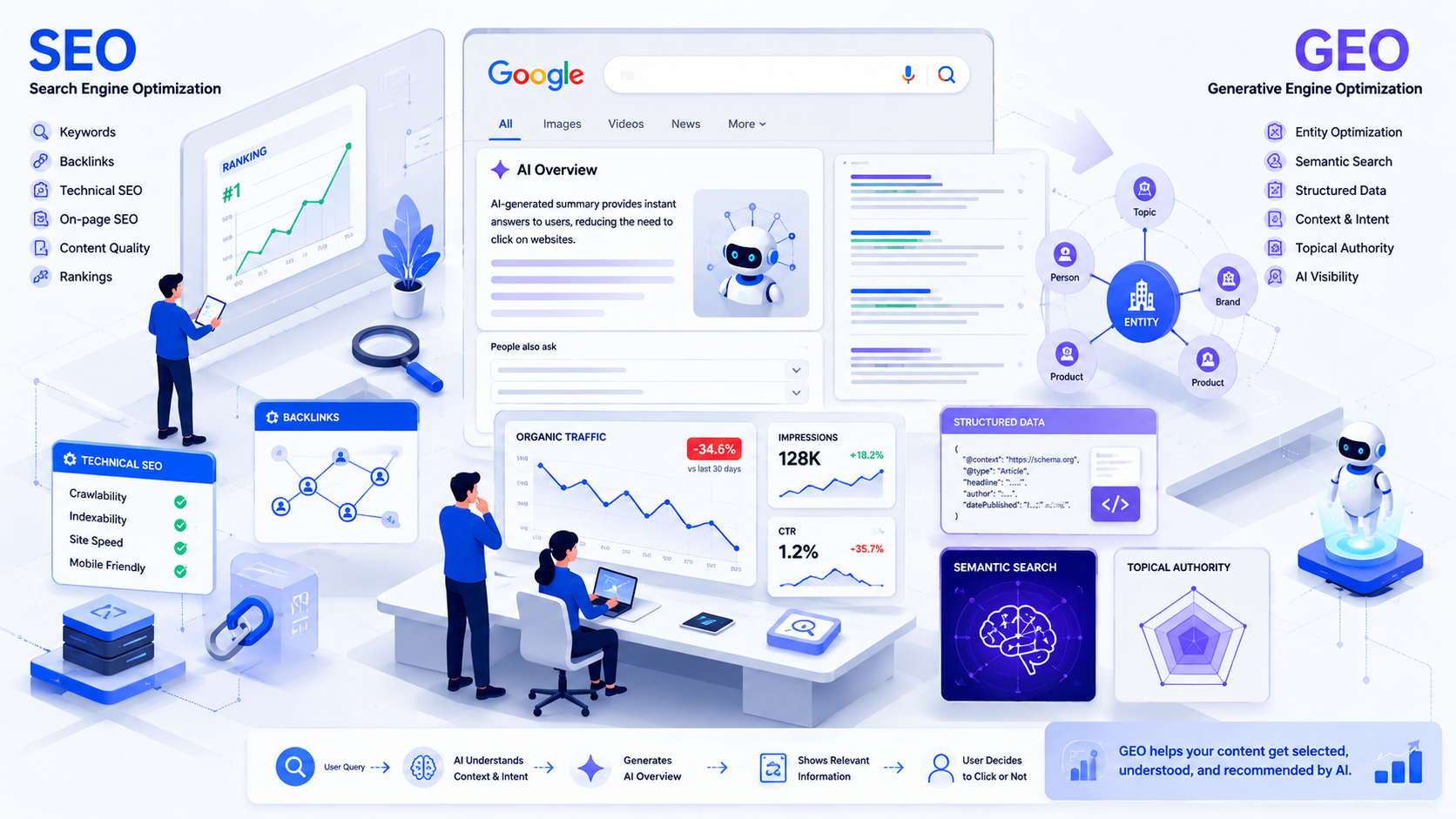
Generative Engine Optimization (GEO) is the practice of optimizing digital content so that AI-powered search engines and chatbots cite, reference, and recommend your brand. Unlike traditional SEO, which targets crawlers and ranking algorithms, GEO targets large language models (LLMs) like ChatGPT, Google’s Gemini, and Perplexity. These systems generate conversational answers by synthesizing information from across the web, and they often cite sources. The goal of AI SEO GEO Traffic is to ensure your content is the primary source these engines use to formulate their responses.
The rise of zero-click searches and AI Overviews in standard search results has already reduced click-through rates for traditional organic listings. When a user asks an AI assistant a question, they rarely click through to a website. Therefore, the battle for visibility is no longer just about ranking; it is about being the authoritative source that the AI trusts and references. This shift requires a fundamental change in how content is structured, written, and validated.
Why AI SEO GEO Traffic Matters for Your Business
Ignoring this shift is a significant risk. If your competitors are being cited by AI engines and you are not, you are losing market share to a channel you cannot see. The traffic from these engines is highly qualified because it is driven by specific, conversational queries. When a user asks for a “best CRM for small businesses,” the AI provides a curated list. If your brand is on that list, you receive targeted, high-intent visitors who are ready to engage.
Furthermore, this traffic is compounding. As AI models are trained on web data, content that is frequently cited becomes more authoritative. This creates a feedback loop where being cited leads to more citations. The brands that establish themselves as authorities in the AI space now will have a significant competitive advantage in the coming years. This is not just about traffic; it is about brand authority and digital survival.
Core Principles of Generative Engine Optimization
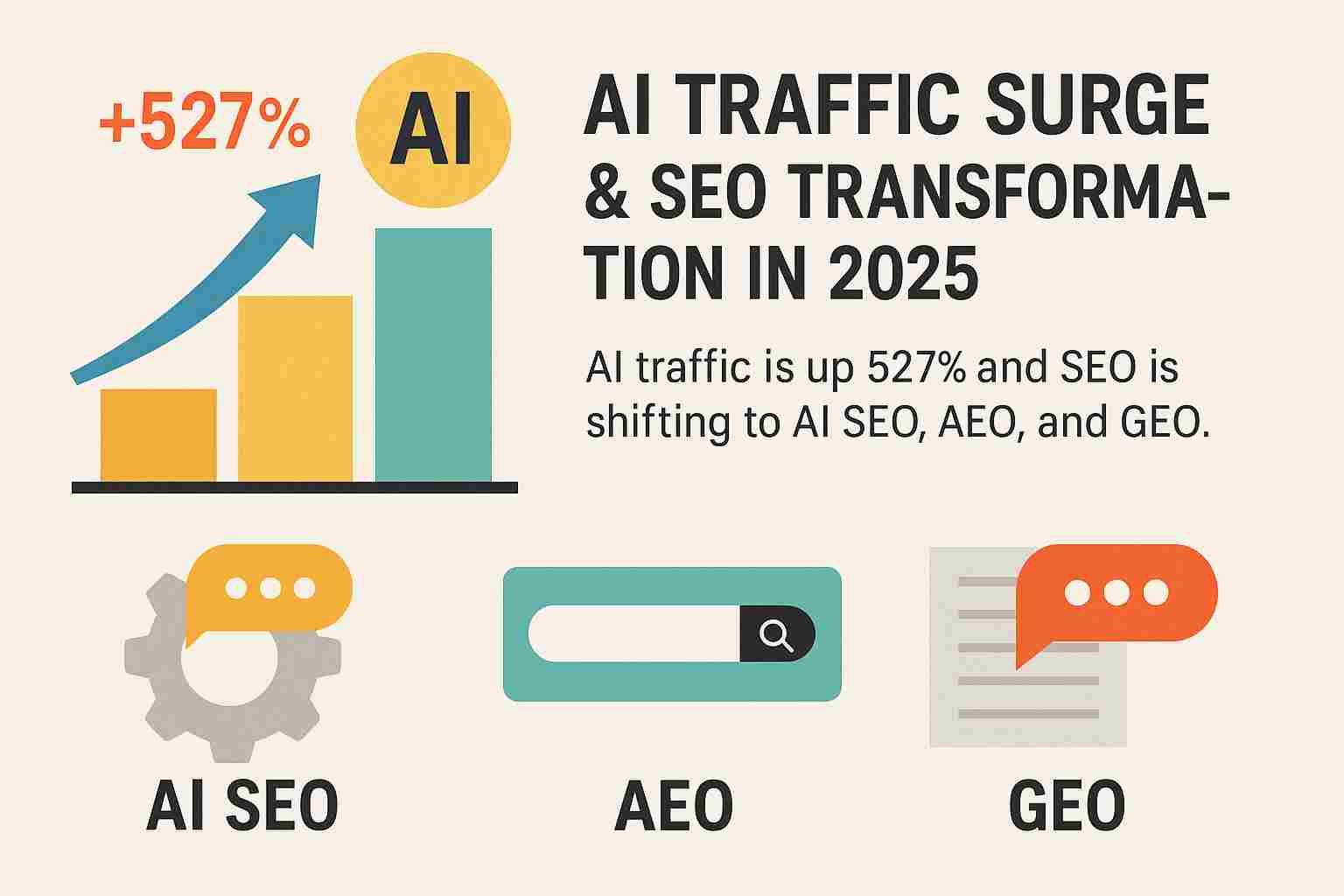
To succeed with AI SEO GEO Traffic, you must understand what AI engines look for. They prioritize clarity, structure, and verifiable facts. Unlike human readers who might enjoy a witty anecdote, AI models extract key entities and relationships. Your content must be easily parseable by these algorithms.
Structured Data and Schema Markup
Schema markup is the backbone of machine-readable content. By implementing structured data, you help AI engines understand the context of your content. For example, using FAQPage schema, HowTo schema, and Article schema helps the AI identify the specific questions you are answering. This increases the likelihood of your content being used in a generative response. Ensure your technical SEO foundation includes robust schema implementation to feed the AI clear signals about your expertise.
Entity Clarity and Topical Authority
AI models work on entities—people, places, things, and concepts. Your content must clearly define these entities and their relationships. Building topical authority means creating comprehensive content clusters that cover a subject from every angle. If you are writing about “email marketing,” you need to cover deliverability, segmentation, automation, copywriting, and analytics. This depth signals to the AI that you are a reliable source on the entire topic, not just a single keyword.
Quote-Worthy Statistics and Data
Generative engines love data. When you provide specific statistics, percentages, and study results, you give the AI concrete facts to include in its answer. Content that is data-rich is more likely to be cited as a source. For instance, instead of saying “email marketing is effective,” say “email marketing yields an average ROI of $36 for every $1 spent, according to a 2023 study.” This precision makes your content valuable to the AI’s synthesis process.
Practical Strategies to Increase AI SEO GEO Traffic
Implementing a GEO strategy requires a shift in content production. It is not about abandoning SEO but augmenting it with AI-specific tactics. The following strategies are proven methods to increase your visibility in generative engines.
Optimize for Conversational Queries
AI searches are often phrased as full questions. Use tools like “People Also Ask” and “AnswerThePublic” to find these long-tail, conversational queries. Create dedicated sections in your content that directly answer these questions. The format should be clear: a question as the heading, followed by a concise, direct answer in the paragraph below. This structure is easily digestible for AI models.
Create “Answer-First” Content Blocks
Structure your content so the answer appears immediately after the heading. Do not bury the lead with fluff. The first 50-100 words of a section should provide the definitive answer. This is known as the “inverted pyramid” style, and it is highly effective for AI extraction. If the AI can find the answer in the first sentence, it is more likely to use your content as the source.
Build High-Authority Backlinks
While AI models do not rank links like Google, they do assess the authority of domains. Content that is referenced by major publications (like Forbes, TechCrunch, or industry journals) is considered more trustworthy. A strong backlink profile remains a critical trust signal for AI engines. Focus on digital PR and guest posting on high-authority domains to boost your domain’s credibility in the eyes of these models.
Comparing Traditional SEO and GEO
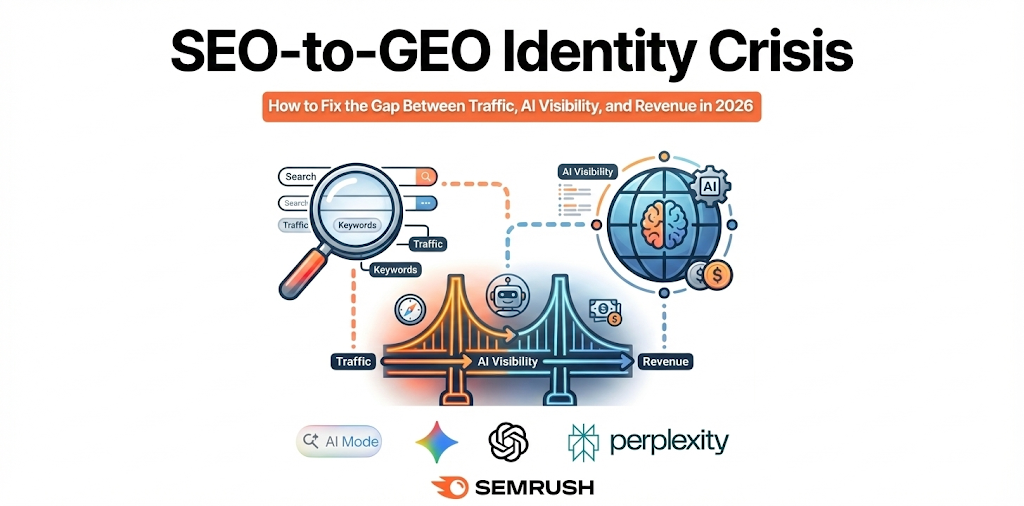
Understanding the differences between these two disciplines is crucial for allocating resources effectively. While they share some tactics, their core objectives differ significantly.
| Feature | Traditional SEO | Generative Engine Optimization (GEO) |
|---|---|---|
| Primary Target | Search Engine Crawlers (Googlebot) | Large Language Models (LLMs) |
| User Intent | Click and Browse | Get an Immediate Answer |
| Content Style | Keyword-rich, Scannable | Data-rich, Entity-focused, Direct |
| Success Metric | Click-Through Rate (CTR) | Citation and Mention Rate |
| Technical Focus | Page Speed, Mobile-First | Schema Markup, Structured Data |
| Authority Signal | Backlinks and Domain Rating | Source Consistency and Data Accuracy |
As the table illustrates, the focus has shifted from attracting clicks to earning citations. A user does not need to visit your site for you to benefit from a GEO strategy; they just need to see your brand name in the AI’s answer. This builds brand awareness and positions you as the default expert in your niche.
Common Mistakes That Kill Your AI SEO GEO Traffic
Many marketers are applying traditional SEO tactics to GEO and failing. Here are the most common pitfalls that prevent brands from being cited by AI engines.
Ignoring the “Zero-Click” Mindset
Creating content that requires a click to understand is a mistake. If your content is vague and forces the user to visit the site for the answer, the A The AI wants to provide the answer directly in the chat interface. Your content must be self-contained and provide complete value without requiring a visit to your website.
Over-Optimizing for Keywords
Keyword stuffing is detrimental in the AI era. AI models use semantic analysis to understand context. Repeating the exact keyword “AI SEO GEO Traffic” ten times in a paragraph does not help; it hurts readability and trust. Focus on natural language and synonyms. Write for a human expert, not a keyword counter.
Neglecting Content Freshness
AI models have knowledge cutoffs, but they also crawl the web for real-time information. Outdated statistics and old data will be ignored in favor of newer sources. You must regularly update your cornerstone content to reflect the latest trends and data. A “last updated” date is a strong signal of freshness for both users and AI.
How to Measure AI SEO GEO Traffic Success
Measuring the impact of GEO is different from traditional analytics. You cannot rely solely on Google Analytics to see traffic from ChatGPT. You need to use specific tools and methods to track your visibility in these new channels.
Brand Mention Monitoring
Use tools like Brand24 or Mention to track when your brand name appears in AI-generated content. You can manually query ChatGPT and Perplexity with relevant questions to see if your brand is cited. This manual audit is the most direct way to measure your GEO presence. Track these mentions over time to see if your strategy is working.
Referral Traffic Analysis
While rare, some AI engines do provide links to sources. Monitor your analytics for referral traffic from domains like chat.openai.com, perplexity.ai, or gemini.google.com. An increase in traffic from these domains indicates that users are clicking through from AI answers. This is a direct metric of AI SEO GEO Traffic success.
Search Visibility for “Brand + AI” Queries
Track your rankings for queries that combine your brand name with AI-related terms, such as “Is [Brand] good for X?” or “[Brand] vs [Competitor].” These queries often trigger AI Overviews. If you appear in these overviews, you are winning the GEO battle.
Frequently Asked Questions
What is the difference between AI SEO and GEO?
AI SEO is a broad term that encompasses using artificial intelligence tools to improve traditional search rankings. GEO, or Generative Engine Optimization, is a specific subset focused on optimizing content for AI chatbots and answer engines. AI SEO might involve using AI to write meta descriptions or analyze data, while GEO involves structuring content so that ChatGPT cites you as a source.
How long does it take to see results from GEO?
Unlike traditional SEO which can take 6-12 months, GEO results can be seen faster, often within 2-3 months. This is because AI models are constantly updating their knowledge bases. However, it requires consistent effort. If you publish high-quality, data-rich content regularly, you can see citations within a few weeks. The key is consistency and authority building.
Does GEO replace traditional SEO?
No, GEO does not replace traditional SEO; it complements it. A strong technical SEO foundation is still necessary for crawlers to index your content. GEO builds on top of that foundation. You need the technical base to ensure your content is accessible, and then you need GEO tactics to make it attractive to AI models. They work in tandem.
What type of content performs best for AI citation?
Content that performs best includes original research, statistical roundups, definitive guides, and comparison posts. AI engines love “vs.” comparisons and “best of” lists because they provide clear, structured answers. Additionally, content that includes expert quotes and unique data points is more likely to be cited than generic overviews.
Is it necessary to use AI tools to optimize for GEO?
While not strictly necessary, using AI tools accelerates the process. You can use AI to analyze your content for clarity and entity density. Tools like Surfer SEO or Frase can help you optimize for semantic relevance. However, the core of GEO is human expertise and unique data, which AI tools cannot generate on their own.
Important Notes for Long-Term Success
As you implement these strategies, keep the user experience at the forefront. The algorithms are getting better at detecting content created solely for them. Content that is genuinely helpful, well-researched, and unique will always win. Do not sacrifice readability for the sake of AI extraction. The best content serves both the human reader and the machine parser simultaneously.
Additionally, stay updated on the changes in AI model behavior. The field is evolving rapidly. What works today might change tomorrow. Subscribe to industry newsletters, follow SEO experts on social media, and continuously test your content in different AI engines. This proactive approach ensures you remain at the forefront of this new digital frontier.
Conclusion
The era of AI SEO GEO Traffic is here, and it is redefining the rules of digital visibility. The brands that adapt to this new reality will thrive, while those that cling to outdated methods will see their organic traffic dwindle. By focusing on structured data, entity clarity, and data-rich content, you can position your brand as the go-to source for generative engines. This is not a temporary trend but a fundamental shift in how information is consumed. Start optimizing for the answer engines today to secure your brand’s visibility for the future. The opportunity is massive for those who act now and commit to providing genuine value in a format that both humans and machines can trust.
Xem thêm:
- AI SEO Information Architecture: The Complete Guide to Future-Proofing Your Website
- AI SEO AI APIs: The Complete Guide to Automating Search Optimization in 2025
- AI SEO Internal Linking Strategy: The Complete Guide to Smarter Link Architecture
- AI SEO for Nonprofits: The Complete Guide to Boosting Visibility and Donations
- AI SEO for Content Teams: The Complete Playbook for 2025
Bài viết cùng chủ đề:

AI SEO SEO Automation with Make: The Complete Workflow Guide

AI SEO SEO Automation with Zapier: The Complete Workflow Guide

AI SEO SEO Automation with n8n: The Complete Workflow Guide
AI SEO SEO Automation with Gemini: The Complete Guide to Scaling Organic Growth

AI SEO SEO Automation with Claude: The Complete Guide to Scaling Content in 2025

AI SEO SEO Automation with ChatGPT: The Complete Playbook for 2025

AI SEO & SEO Automation for Affiliate Sites: The 2025 Playbook for Passive Income Growth
AI SEO & SEO Automation for Bloggers: The Complete Guide to Scaling Your Content

AI SEO & SEO Automation for Agencies: The Complete 2025 Playbook

AI SEO and SEO Automation for Ecommerce: The Complete Playbook for 2025

AI SEO & SEO Automation for WordPress: The Complete Playbook for 2025
AI SEO SEO Automation Strategy: The Complete Playbook for 2025

Mastering the AI SEO SEO Automation Process: A Complete Guide to Scaling Organic Growth
AI SEO SEO Automation System: The Complete Guide to Scaling Organic Growth in 2025
AI SEO SEO Automation Platform: The Complete Guide to Scaling Organic Growth in 2025
AI SEO SEO Automation Software: The Complete Guide to Scaling Organic Growth in 2025















