
No products in the cart.
AI SEO GEO Visibility: The Complete Guide to Winning AI Search in 2025
10
Aug
Aug
The digital landscape is shifting beneath our feet. Traditional search engine optimization focused on Google’s blue links, but the rise of generative engines has introduced a new battleground: AI SEO GEO Visibility. This concept represents the ability of your brand and content to appear within AI-generated answers, chatbot responses, and zero-click search results. As users increasingly turn to ChatGPT, Perplexity, and Google’s AI Overviews for answers, understanding how to optimize for these platforms is no longer optional—it is essential for maintaining organic market share.
What is AI SEO GEO Visibility?
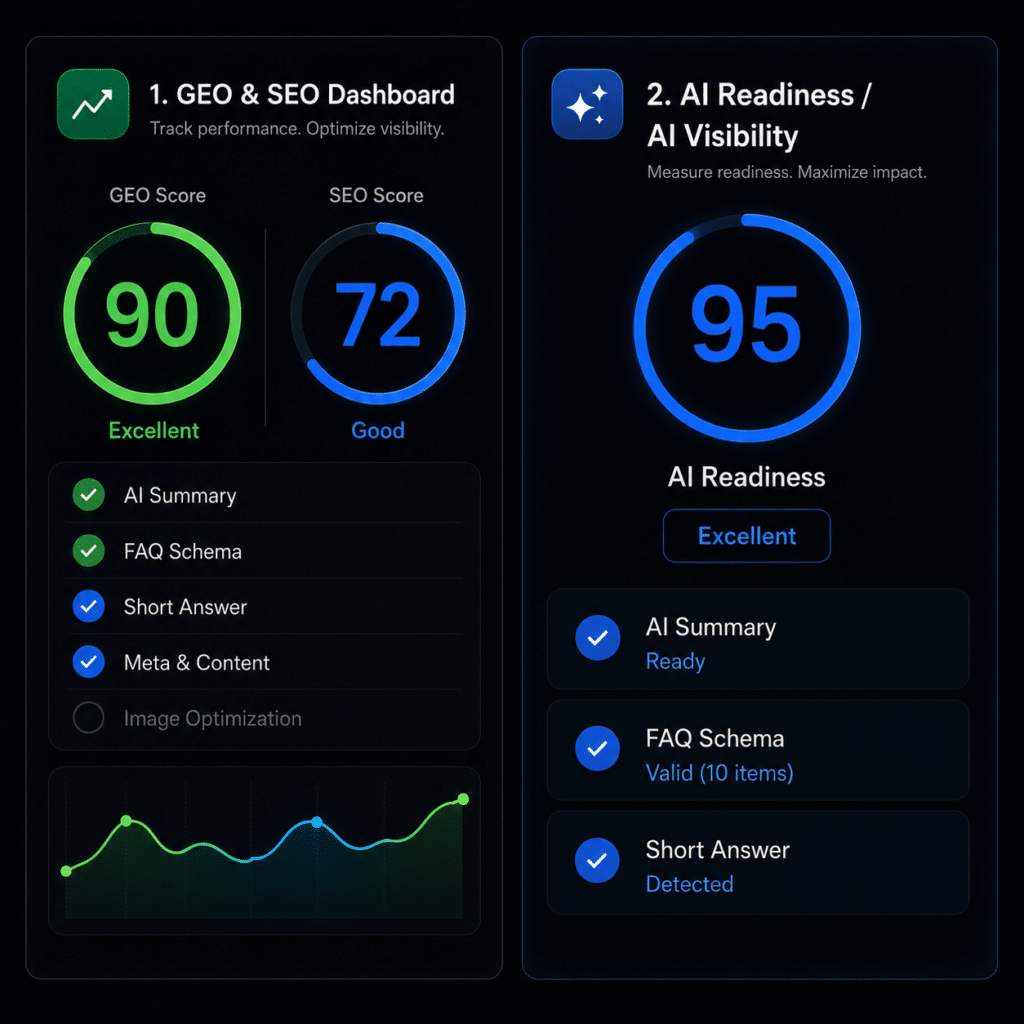
AI SEO GEO Visibility refers to the measurable presence and prominence of your content within AI-generated search outputs. It combines traditional SEO principles with Generative Engine Optimization (GEO), a discipline focused on making your information easily citable and referenceable by large language models. When a user asks an AI assistant a question, the model synthesizes an answer from its training data and real-time web retrieval. High GEO visibility means your website, statistics, and expert opinions are the sources the AI chooses to cite.
This is a fundamental departure from the “10 blue links” model. In traditional SEO, you compete for a click. In GEO, you compete for a mention. The goal is to become the authoritative source that the AI trusts enough to paraphrase, quote, or link to directly within its generated response.
The Core Difference Between SEO and GEO
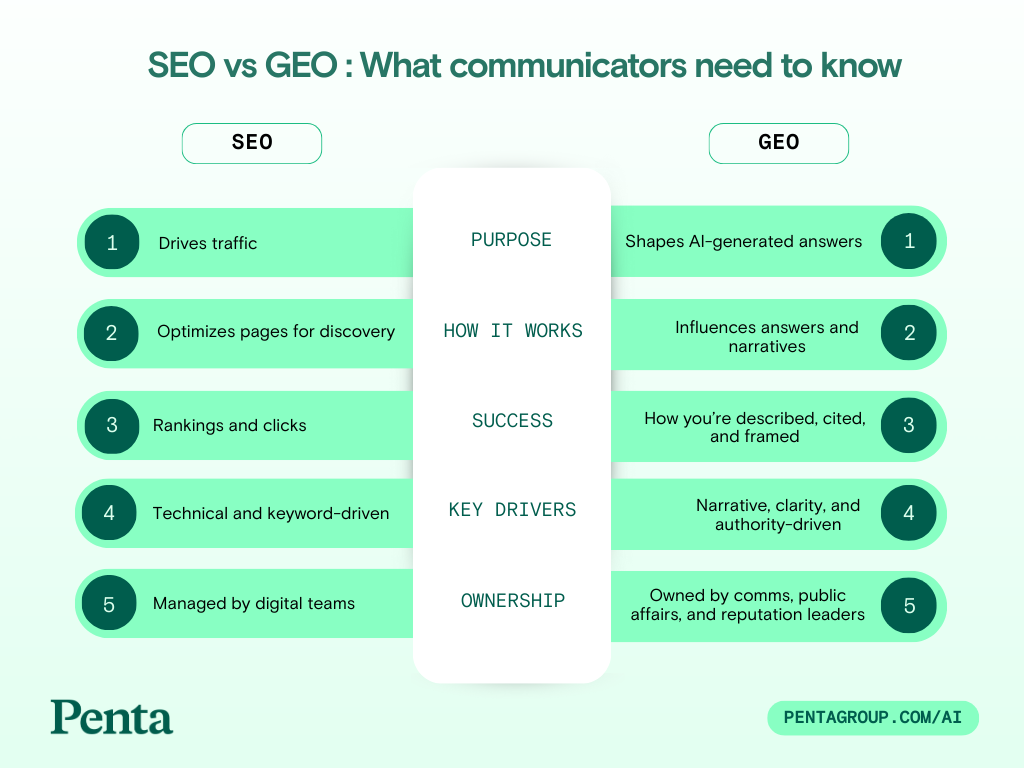
While traditional SEO focuses on crawling, indexing, and ranking based on backlinks and on-page relevance, GEO focuses on entity recognition, semantic clarity, and statistical authority. Search engines rank pages; AI engines rank facts and sources. Your content must be structured so that an AI can easily extract a specific answer, verify it against other sources, and attribute it to you without confusion.
Furthermore, AI models prioritize content that demonstrates clear authorship, cites primary research, and answers questions directly. Fluffy introductory paragraphs and keyword-stuffed meta descriptions are ignored by AI engines. They look for concise, well-structured data blocks that can be lifted and integrated into a synthesized answer.
Why AI SEO GEO Visibility Matters for Your Business
The shift toward AI-driven search is happening at a rapid pace. Studies indicate that a significant percentage of users now prefer asking an AI assistant over scrolling through search results. This behavior change has direct implications for your traffic and revenue. If your brand is absent from AI answers, you are invisible to a growing segment of your target audience.
Consider the “zero-click” phenomenon. When a user gets a complete answer from an AI chatbot, they rarely click through to a website. If your content is not the source of that answer, you lose the impression, the brand awareness, and the potential conversion. AI SEO GEO Visibility ensures you are part of that conversation, even if the user does not visit your site immediately.
Moreover, AI citations build trust. When an AI model consistently references your data, users begin to perceive your brand as a thought leader. This halo effect can lead to direct traffic later, as users who trust the AI’s answer will search for your brand specifically to learn more.
How AI Engines Select Sources: The Mechanics of GEO
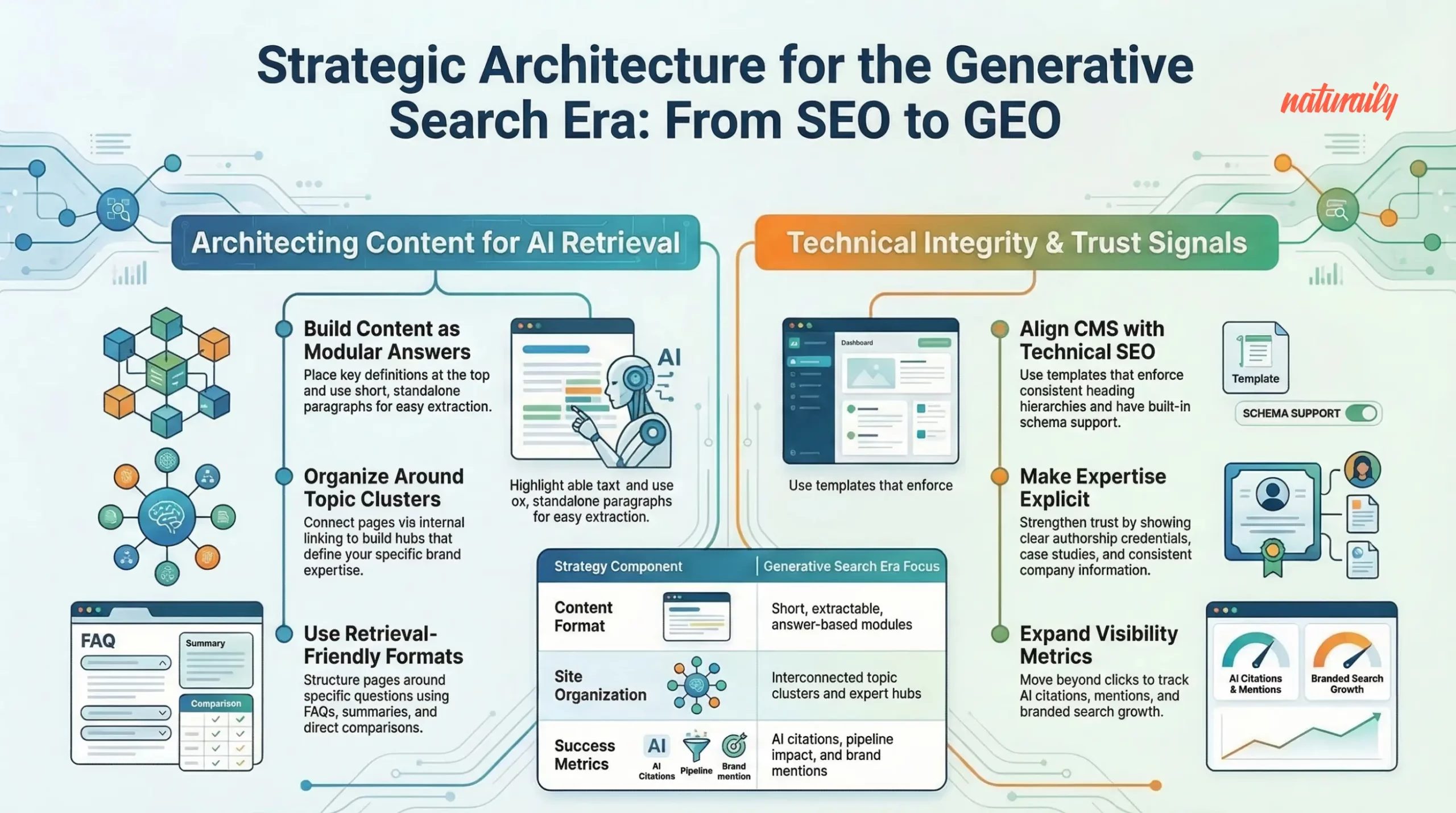
To improve your AI SEO GEO Visibility, you must understand how large language models choose their sources. It is not a random selection. AI engines evaluate several key factors when deciding which content to include in a generated answer.
Source Authority and Entity Recognition
AI models are trained to recognize entities—people, places, organizations, and concepts. They assign a level of authority to these entities based on their presence in high-quality training data. If your brand is frequently mentioned in reputable publications, industry reports, and academic papers, the AI considers you a high-authority entity. This means your content is more likely to be selected as a source.
To boost this, you need to build a consistent digital footprint. Ensure your brand name, founder names, and key product names are consistently spelled and associated with your core topics across the web. Wikipedia, Crunchbase, and major news outlets are critical for establishing this entity-level authority.
Content Clarity and Structure
AI engines struggle with ambiguous or poorly structured content. They prefer text that uses clear headings, bullet points, and direct answers. If your content is buried under layers of fluff, the A Your content must be machine-readable.
This means using semantic HTML, defining jargon on first use, and providing explicit “question and answer” formats. If you have a page about “pricing,” the AI should be able to find the exact price list without parsing paragraphs of marketing copy. The clearer the signal, the higher the chance of being cited.
Statistical and Data-Driven Content
AI models love numbers. When generating an answer, they look for specific statistics to support their claims. Content that includes unique data points, survey results, or proprietary research is highly valuable to AI engines. If you have original data, present it in a table or a clear bulleted list. This makes it easy for the AI to extract and cite.
For example, if you are writing about “remote work statistics,” include a specific stat like “72% of employees prefer hybrid models” and attribute it to your study. The A
Practical Strategies to Improve AI SEO GEO Visibility
Improving your visibility in AI search requires a specific set of tactics that differ from traditional SEO. Here are the most effective strategies to implement today.
1. Optimize for Question-Based Queries
AI users ask questions. They type “What is the best CRM for small businesses?” or “How do I fix a leaky faucet?” Your content must directly answer these questions in a clear, concise manner. Create dedicated FAQ sections on your pages that address specific user intents. Use the exact phrasing of the question as an H2 or H3 heading, followed by a direct answer in the first sentence.
This “question-answer” structure aligns perfectly with how AI models parse information. They look for the most direct response to the query, and a well-structured FAQ is the easiest target.
2. Build a Strong Entity Graph
Your website should clearly define who you are, what you do, and who you serve. Use schema markup (specifically Organization, Person, and Product schema) to help AI engines understand your business structure. Ensure your “About Us” page clearly states your mission, your history, and your key team members. The more context you provide, the easier it is for the AI to categorize you as an authority.
Additionally, get listed in relevant directories and industry associations. These external signals reinforce your entity graph and tell the AI that you are a legitimate, recognized player in your field.
3. Create Original Research and Statistics
As mentioned, AI engines prioritize unique data. Conducting your own surveys or analyzing your internal data to produce original statistics is a powerful way to gain GEO visibility. Publish these findings in a clear, downloadable format. Promote them to journalists and industry bloggers to earn backlinks. When the AI sees your data cited across multiple high-authority domains, it will consider your content the primary source for that statistic.
This is a long-term strategy that yields compounding returns. Every time an AI cites your data, it reinforces your authority, making it more likely to cite you again in the future.
4. Improve Content Readability and Scannability
Write for the skimmer and the bot. Use short paragraphs, bold key phrases, and bullet points. Avoid complex sentence structures that are difficult to parse. AI models are trained on clean, well-written text. If your content is dense and difficult to read, the A
Use transition words to connect ideas logically. This helps the AI understand the flow of your argument and the relationship between different concepts.
5. Leverage Digital PR for Brand Mentions
Unlinked brand mentions are becoming as important as backlinks. When your brand is mentioned in a news article or a blog post, even without a link, the AI registers that mention as a signal of relevance and authority. Focus on digital PR campaigns that get your brand name in front of relevant audiences. Guest posting, expert quotes, and HARO (Help a Reporter Out) responses are excellent ways to earn these mentions.
These mentions help the AI connect your brand to specific topics. If you are mentioned in an article about “sustainable packaging,” the A
Measuring Your AI SEO GEO Visibility
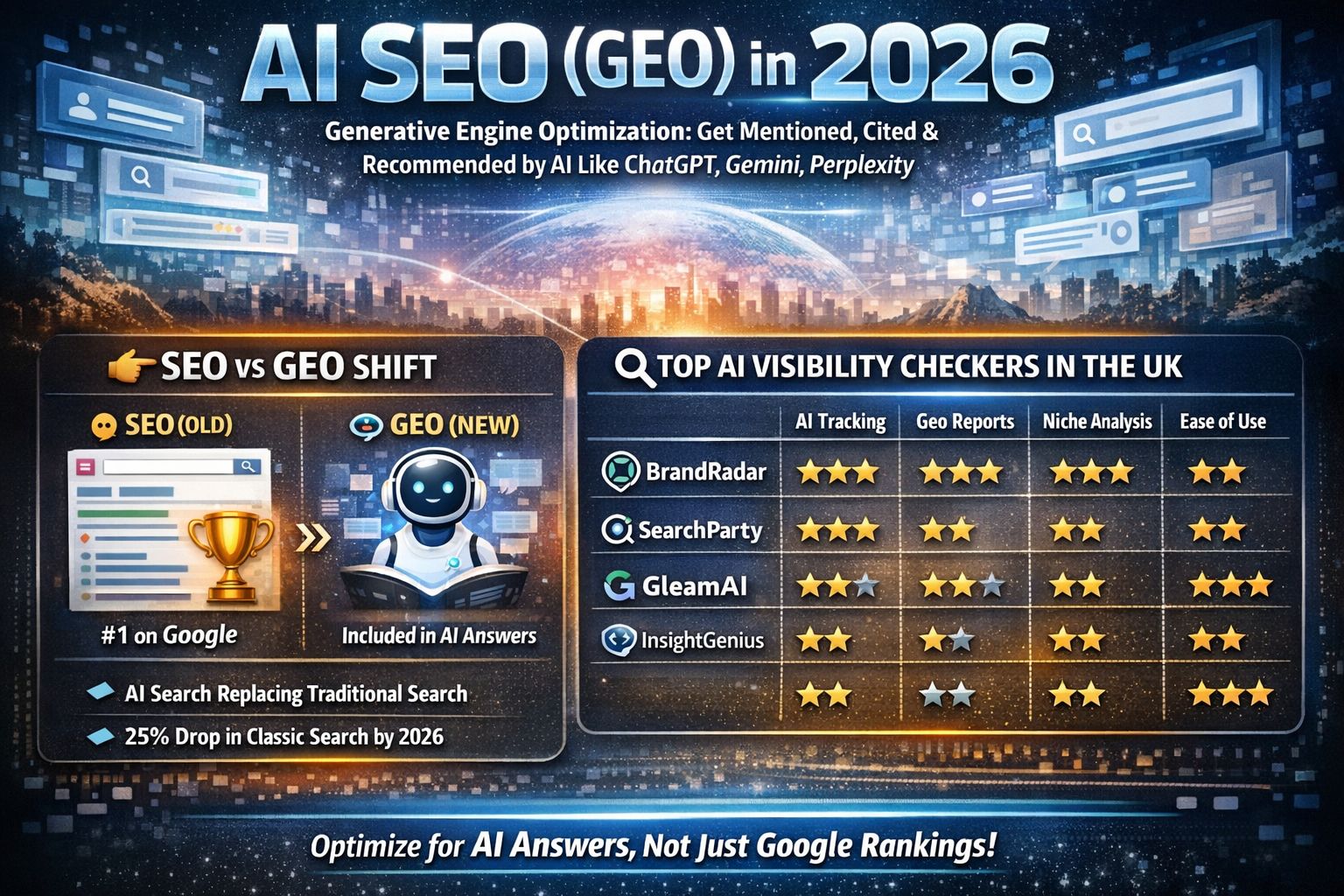
You cannot improve what you cannot measure. Tracking your GEO visibility requires a different set of tools and metrics than traditional SEO.
Manual Audits and AI Chatbot Testing
The simplest way to check your visibility is to ask the AI yourself. Use incognito mode on ChatGPT, Perplexity, and Google’s AI Overviews. Ask a set of 10-20 core questions related to your industry. Note whether your brand appears in the answer, and if so, whether it is cited as a source. Perform this audit monthly to track changes.
Create a spreadsheet to log your presence. Are you mentioned in the text? Is there a link to your site? Is your data being used? This manual process gives you a qualitative understanding of your current standing.
Using GEO Analytics Tools
Several SaaS tools are emerging to automate this process. Platforms like Profound, Peec AI, and others offer dashboards that track your brand’s presence across multiple AI engines. These tools can monitor thousands of queries and provide a “Visibility Score.” They also offer competitive analysis, showing you how your visibility compares to your rivals.
Investing in these tools is crucial for scaling your efforts. They provide the data needed to justify your GEO strategy to stakeholders and to identify which content pieces are driving the most AI citations.
Tracking Referral Traffic from AI Engines
While AI often provides zero-click answers, many engines do include source links. Monitor your analytics for referral traffic from domains like chat.openai.com, perplexity.ai, and bard.google.com. An increase in traffic from these sources indicates that your content is being cited and clicked. This is a direct measure of your AI SEO GEO Visibility success.
Set up custom alerts in Google Analytics to notify you when traffic spikes from these AI domains. This allows you to see which content is resonating with AI engines in real-time.
Common Mistakes That Hurt Your GEO Visibility
Many businesses are actively harming their chances of being cited by AI engines without realizing it. Avoid these common pitfalls to ensure your content is AI-friendly.
Ignoring the “Zero-Click” Reality
Focusing solely on click-through rate is a mistake. In the AI era, a citation is a win, even without a click. If your goal is only to drive traffic, you will be disappointed. Shift your mindset to focus on impressions and brand mentions within AI answers. These impressions build brand equity that leads to direct traffic later.
Do not gate your best content behind login walls or complex navigation. If the AI cannot access it, it cannot cite it.
Using Vague and Generic Language
AI engines prefer specific, concrete language. Avoid saying “many studies show” or “experts agree.” Instead, say “A 2024 study by Stanford University found…” Specificity builds trust. The AI needs to verify your claims against other sources. If your content is full of vague assertions, it will be deemed unreliable.
Provide exact dates, names, and numbers whenever possible. This makes it easy for the AI to cross-reference your information and confirm its accuracy.
Neglecting Technical SEO Basics
GEO does not replace technical SEO; it builds upon it. If your site is slow, has broken links, or is not mobile-friendly, AI crawlers will struggle to index it. Ensure your robots.txt file is not blocking AI crawlers like GPTBot or Google-Extended. Check your server logs to see if these crawlers are visiting your site.
If you are blocking these bots, you are telling AI engines to stay away. Allow access to your high-quality content pages while blocking low-value pages like tag archives or internal search results.
Important Notes on Content Creation for GEO
Creating content for AI visibility requires a shift in editorial strategy. You are no longer writing just for human readers; you are writing for machines that will paraphrase your work. This requires a balance between human engagement and machine clarity.
First, prioritize depth over length. A 2,000-word article that covers a topic comprehensively is better than a 5,000-word article that repeats the same points. AI engines look for comprehensive coverage of a topic. Ensure you cover all subtopics and related questions within your main content piece.
Second, update your content regularly. AI models rely on fresh information. A statistic from 2019 is often considered outdated. Review your cornerstone content quarterly and update statistics, examples, and product mentions. This signals to the AI that your content is current and relevant.
Third, embrace multimedia. While AI cannot “see” images yet, it can read alt text and captions. Use descriptive alt text that explains the image content. This provides additional context to the AI and helps with entity recognition.
Comparison: Traditional SEO vs. GEO
To fully grasp the concept of AI SEO GEO Visibility, it helps to see the direct comparison between the old and new methods.
| Feature | Traditional SEO | Generative Engine Optimization (GEO) |
|---|---|---|
| Primary Goal | Rank #1 in organic search results | Be cited as a source in AI answers |
| User Intent | Click through to a website | Get an immediate answer (zero-click) |
| Content Style | Keyword-optimized, often long-form | Concise, structured, data-rich |
| Key Metric | Organic Traffic, Keyword Rankings | AI Mentions, Citation Volume, Visibility Score |
| Authority Signal | Backlinks | Entity Recognition, Brand Mentions, Data Uniqueness |
| Technical Focus | Crawlability, Indexing, Page Speed | Schema Markup, Bot Access, Content Parsing |
This table illustrates that while the underlying principles of quality content remain, the application and measurement are entirely different. You must adapt your strategy to succeed in both arenas simultaneously.
Frequently Asked Questions (FAQ)
What is the difference between AI SEO and GEO?
AI SEO is the umbrella term for optimizing content to be found by AI systems, including search engines that use AI to rank results. GEO (Generative Engine Optimization) is a specific subset of AI SEO that focuses on optimizing content to be selected and cited by generative AI models like ChatGPT and Google’s Gemini when they create synthesized answers. GEO is about being the source, not just being ranked.
How long does it take to see results from GEO optimization?
Unlike traditional SEO which can take 3-6 months, GEO results can be faster but are less predictable. If you update existing high-authority pages with clearer structure and data, you might see citations within a few weeks. However, building the entity authority needed for consistent visibility takes 6-12 months of consistent digital PR and content creation.
Do I need to block AI crawlers to protect my content?
No. Blocking AI crawlers like GPTBot will significantly harm your AI SEO GEO Visibility. While you may worry about content being used without compensation, the current reality is that being cited by AI is a major traffic and branding opportunity. Unless you have a specific legal or competitive reason to block them, you should allow access to your public content.
Can I use the same content for SEO and GEO?
Yes, but you must adapt the format. Your existing SEO content can be repurposed for GEO by adding a clear “Summary” section at the top, creating a dedicated FAQ block, and ensuring your key statistics are presented in a table or bulleted list. The core information is the same, but the presentation must be optimized for machine extraction.
What is a good AI Visibility Score?
Visibility scores vary by tool and industry. Generally, a score above 50% means you are appearing in at least half of the tracked AI queries for your target keywords. A score below 20% indicates you have significant work to do. Focus on improving your score month-over-month rather than comparing to a universal benchmark.
Conclusion: The Future of Search is Generative
AI SEO GEO Visibility is not a passing trend; it is the new standard for digital discoverability. As generative engines become the primary interface for information retrieval, the brands that invest in clear, structured, and authoritative content will dominate the conversation. The shift requires a move away from link-building obsession and toward entity-building and data authority.
Start by auditing your current content for clarity and structure. Ensure your data is unique and well-presented. Build your brand’s entity through consistent mentions and digital PR. Monitor your visibility across major AI platforms and adapt your strategy based on the data. The brands that embrace this change now will be the ones that thrive in the AI-driven search ecosystem of tomorrow. The time to optimize is now, before your competitors claim the citations that should be yours.
Xem thêm:
- AI SEO Meta Title Generator: The Complete Guide to Higher Click-Through Rates
- AI SEO Link Building Strategy: The Complete Guide to Automated Authority in 2025
- AI SEO AI Referral Tracking: The Complete Guide to Smarter Attribution
- AI SEO Knowledge Management: The Complete Guide to Scaling Organic Growth in 2025
- AI SEO External Link Optimization: The Complete Guide to Smarter Link Building in 2025
Bài viết cùng chủ đề:

AI SEO SEO Automation with Make: The Complete Workflow Guide

AI SEO SEO Automation with Zapier: The Complete Workflow Guide

AI SEO SEO Automation with n8n: The Complete Workflow Guide
AI SEO SEO Automation with Gemini: The Complete Guide to Scaling Organic Growth

AI SEO SEO Automation with Claude: The Complete Guide to Scaling Content in 2025

AI SEO SEO Automation with ChatGPT: The Complete Playbook for 2025

AI SEO & SEO Automation for Affiliate Sites: The 2025 Playbook for Passive Income Growth
AI SEO & SEO Automation for Bloggers: The Complete Guide to Scaling Your Content

AI SEO & SEO Automation for Agencies: The Complete 2025 Playbook

AI SEO and SEO Automation for Ecommerce: The Complete Playbook for 2025

AI SEO & SEO Automation for WordPress: The Complete Playbook for 2025
AI SEO SEO Automation Strategy: The Complete Playbook for 2025

Mastering the AI SEO SEO Automation Process: A Complete Guide to Scaling Organic Growth
AI SEO SEO Automation System: The Complete Guide to Scaling Organic Growth in 2025
AI SEO SEO Automation Platform: The Complete Guide to Scaling Organic Growth in 2025
AI SEO SEO Automation Software: The Complete Guide to Scaling Organic Growth in 2025















