No products in the cart.
AI SEO Link Building Strategy: The Complete Guide to Automated Authority in 2025
10
Aug
Aug
An AI SEO link building strategy is no longer a futuristic concept; it is the current standard for digital marketing teams that want to scale their authority without scaling their headcount. Traditional link building is slow, manual, and often reliant on outreach fatigue. Artificial intelligence changes this dynamic by automating prospecting, personalizing outreach, and predicting which content will earn links before you even publish it. This guide breaks down exactly how to build a sustainable system that leverages machine learning for higher rankings, increased domain authority, and measurable organic growth.
What Is an AI SEO Link Building Strategy?
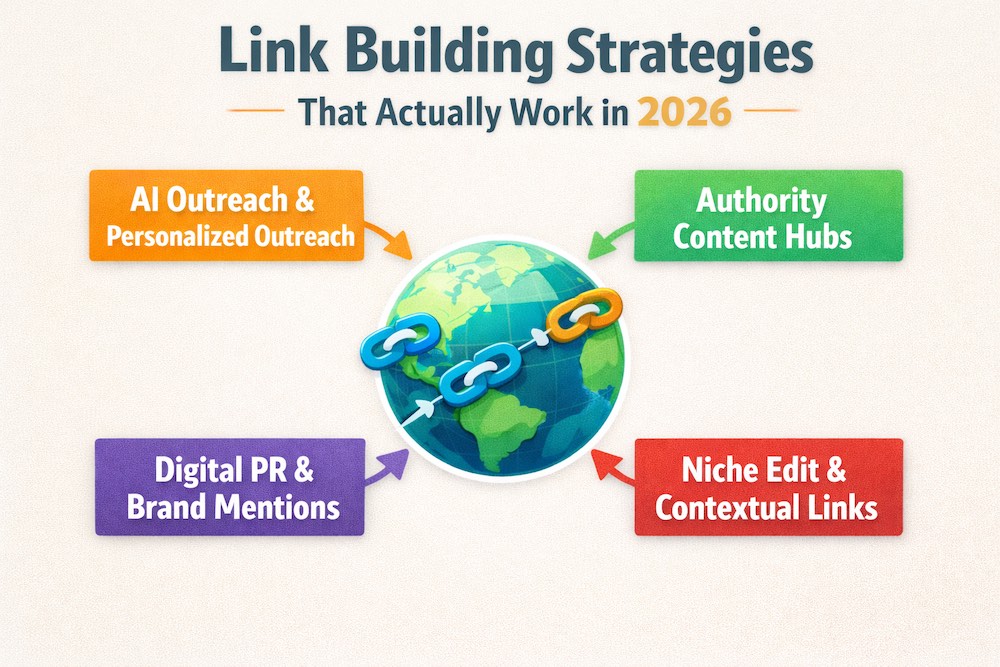
An AI SEO link building strategy refers to the use of machine learning algorithms and natural language processing to automate and enhance the process of acquiring backlinks. Unlike manual methods that rely on guesswork and spreadsheets, AI analyzes vast datasets to identify link opportunities, evaluate the quality of potential referring domains, and even generate personalized outreach emails that mimic human tone.
The core difference lies in the data processing capability. A human link builder might analyze 50 prospects in a day. An AI system can analyze 50,000 in the same time frame, scoring each one based on relevance, authority, and the likelihood of a positive response. This does not replace the human element entirely; it augments it. The strategy still requires editorial oversight and creative input, but the heavy lifting of research and initial contact is handled by software.
Why Traditional Link Building Fails Without AI
Manual link building suffers from three critical inefficiencies that AI directly addresses. First, the prospecting phase is time-consuming. Finding websites that are both relevant to your niche and open to guest posts requires hours of Boolean searches and manual review. Second, the personalization of outreach is often generic. Sending a template email to 500 webmasters yields a response rate of less than 1% in most industries. Third, the analysis of link quality is subjective. What looks like a good domain on the surface might be a spam-ridden site with toxic anchor text.
AI solves these issues by introducing predictive analytics. It can forecast the potential traffic a backlink will bring, estimate the domain authority growth from a specific link, and even suggest the optimal time to send an outreach email based on historical response data. This shifts the focus from “getting any link” to “getting the right link” with a much higher probability of success.
Core Components of a Modern AI Link Building System
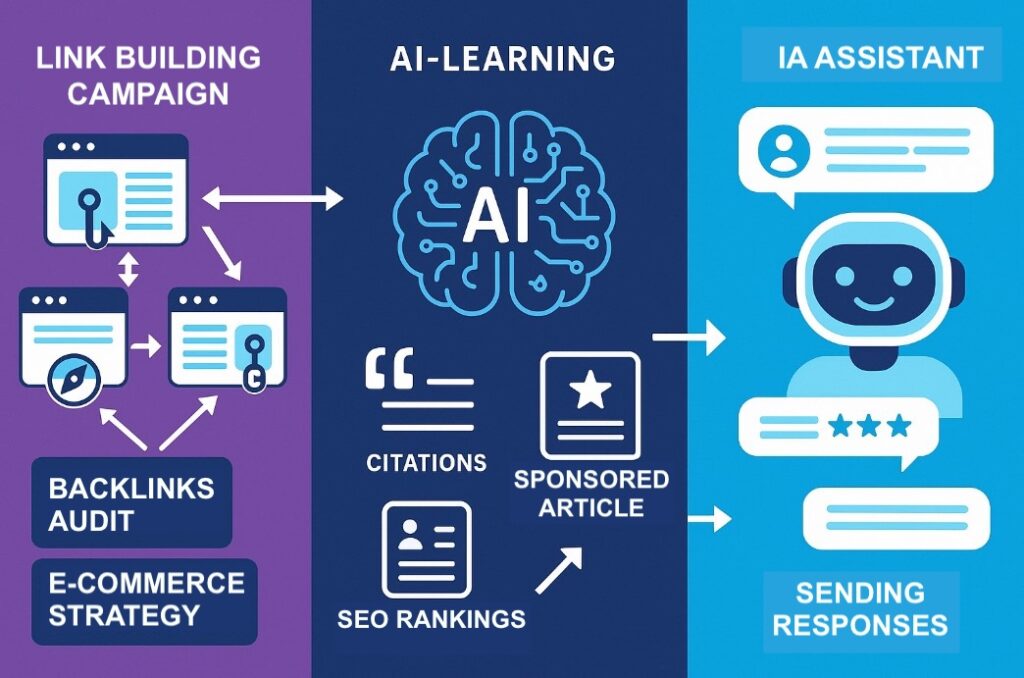
To implement a successful AI SEO link building strategy, you need to understand the four pillars that support the entire system. These components work together to create a pipeline that is both scalable and effective.
1. Automated Prospect Discovery
AI tools scrape the web for websites that match your semantic profile. They look beyond simple keyword matching. They analyze the content of a page to determine if it covers topics adjacent to yours. For example, if you sell project management software, the A” It will also find “remote work productivity” sites, “team collaboration” forums, and “freelance business” resources. This expands your pool of potential link partners significantly.
2. Predictive Link Value Scoring
Not all backlinks are created equal. AI assigns a score to each prospect based on dozens of factors, including organic traffic trends, referring domain diversity, and the topical relevance of the specific page where your link would live. This score helps you prioritize your outreach list. You focus your energy on the top 10% of prospects that are most likely to move the needle for your rankings.
3. Dynamic Outreach Personalization
Generative AI models craft outreach emails that reference specific details from the target site. The AI reads the prospect’s recent articles, identifies a gap in their content, and proposes a collaboration that fills that gap. This is not a mail-merge trick. The email reads as if a human spent twenty minutes researching the site, because the AI did exactly that in a fraction of the time.
4. Performance Monitoring and Adaptation
The strategy is not static. AI continuously monitors the performance of acquired links. It tracks whether a link is still live, whether the anchor text is being respected, and whether the referring page is still ranking. If a link becomes broken or the page is deleted, the AI flags it and initiates a reclamation campaign automatically.
Practical Steps to Build Your AI Link Building Workflow
Implementing this strategy requires a structured workflow.
- Define Your Semantic Entity Map: Before you start, list the core entities and subtopics related to your business. This is not just keywords; it includes concepts, synonyms, and related industries. This map feeds the AI with the context it needs to find relevant prospects.
- Select Your AI Stack: Choose tools that integrate with your existing SEO software. Look for platforms that offer link intersect analysis, content gap analysis, and AI writing assistance. Popular options include Ahrefs with AI add-ons, Semrush’s AI features, and specialized link building tools like Pitchbox or Respona.
- Run the Prospect Generator: Input your semantic map into the tool. Set filters for domain rating, organic traffic thresholds, and language. Let the AI run for a few hours to build a list of 500-1000 potential targets.
- Review and Refine the List: Spend 30 minutes manually reviewing the top 50 prospects. Check for editorial guidelines, recent publishing dates, and overall site quality. This human check ensures the AI is not sending you to spammy or irrelevant sites.
- Generate Personalized Pitches: Use the AI writing feature to draft your outreach. Provide the tool with the prospect’s URL and your value proposition. The A
- Launch and Track: Send the emails in small batches to avoid spam flags. Track open rates, reply rates, and conversion rates. Feed this data back into the AI so it can learn which subject lines and email structures work best for your niche.
- Automate Follow-ups: Set up an automated follow-up sequence that triggers if t The A
Benefits of Using AI for Link Building
The advantages of adopting an AI-driven approach are substantial and measurable. These benefits go beyond simple time savings and impact the overall health of your SEO campaigns.
- Scalability: You can manage thousands of prospects simultaneously without hiring a large team. This is crucial for agencies managing multiple clients.
- Higher Conversion Rates: Personalized outreach at scale leads to higher response rates. Data shows that AI-personalized emails can increase reply rates by up to 40% compared to generic templates.
- Improved Link Quality: AI filters out low-quality directories and link farms. The focus is on editorial links from sites with real readership, which are the only links that significantly impact Google rankings.
- Data-Driven Decisions: Every action is backed by data. You know exactly which type of content earns links, which anchor text performs best, and which outreach angle resonates with your audience.
- Competitive Intelligence: AI can analyze your competitors’ backlink profiles and identify the exact sources they are using. You can then target those same sources with a better pitch.
Limitations and Risks of AI Link Building
While powerful, AI is not a magic bullet. There are significant limitations and risks that you must manage to avoid penalties.
The most significant risk is the creation of unnatural link patterns. If you use AI to build thousands of links in a short period, Google’s SpamBrain algorithm will notice the pattern. This can lead to a manual action or algorithmic penalty. The strategy must be paced to mimic natural link acquisition.
Another limitation is the lack of true relationship building. AI can start the conversation, but it cannot attend a conference, have a coffee meeting, or build the kind of rapport that leads to long-term partnerships. The best strategies combine AI for prospecting and initial outreach with human follow-up for high-value prospects.
Finally, AI-generated content for guest posts can be flagged as unoriginal if not properly edited. Google’s helpful content system penalizes content that is purely AI-generated without human expertise. You must add personal experience, data, and unique insights to any AI-drafted article before publishing.
AI Link Building vs. Manual Link Building: A Comparison
To understand the value proposition, it helps to compare the two approaches across key metrics. The table below highlights the differences in execution and outcome.
| Metric | AI-Driven Strategy | Manual Strategy |
|---|---|---|
| Prospecting Speed | Analyzes 10,000+ sites per hour | Analyzes 50-100 sites per day |
| Outreach Personalization | Dynamic, references specific page content | Often generic, template-based |
| Cost Efficiency | High initial software cost, low labor cost | Low software cost, high labor cost |
| Link Quality Control | Predictive scoring based on multiple data points | Subjective manual review |
| Risk of Penalty | Moderate if not paced correctly | Low if done carefully |
| Scalability | Virtually unlimited | Limited by team size |
Common Mistakes to Avoid in AI Link Building
Many marketers fail to see results because they make critical errors when implementing AI tools. Avoiding these mistakes is essential for a successful campaign.
Mistake 1: Ignoring Relevance for Authority. Chasing high domain rating sites that have nothing to do with your niche is a waste of time. A link from a tech blog about your finance article is worthless. The AI must be configured to prioritize topical relevance over raw authority.
Mistake 2: Using AI for Mass Article Spinning. Submitting the same AI-generated article to hundreds of directories is a surefire way to get deindexed. Each piece of content must be unique and tailored to the specific audience of the target site.
Mistake 3: Neglecting the “Broken Link” Opportunity. AI is excellent at finding broken links on relevant sites. However, many users only use AI to find the broken link and then fail to provide a high-quality replacement resource. You must ensure your content is genuinely better than the dead link you are replacing.
Mistake 4: Setting and Forgetting. AI requires training. If you do not feed the system data about which emails got replies and which links got placed, the A You must review the analytics dashboard weekly and adjust the parameters.
Mistake 5: Over-Optimizing Anchor Text. Let the AI suggest anchor text, but always review it. If 60% of your links use exact-match anchors, you are signaling manipulation to Google. Use a mix of branded, generic, and natural phrases.
Important Notes on Google’s Guidelines
Google’s webmaster guidelines explicitly prohibit link schemes that manipulate PageRank. While using AI to find prospects is acceptable, using AI to automate the placement of links on low-quality sites is not. The focus must remain on earning links because you have created a resource that people want to reference.
Google’s SpamBrain is also an AI system. It is designed to detect unnatural patterns. If your AI link building strategy creates a pattern that looks like a network, you will be caught. The key is to use AI to identify opportunities that a human would have found anyway, just faster. The final decision to place a link should always involve human judgment regarding the quality of the page.
Furthermore, the concept of E-E-A-T (Experience, Expertise, Authoritativeness, and Trustworthiness) applies to link building. Links from sites that demonstrate these qualities pass more value. AI can help you identify these sites by analyzing author bios, publication history, and editorial standards.
How to Measure the Success of Your AI Strategy
Measuring the ROI of this strategy requires looking beyond just the number of backlinks. You need to track the impact on organic performance.
Monitor the growth of your Domain Authority (DA) or Domain Rating (DR) on a monthly basis. A successful strategy should show a steady increase, not a sudden spike. Also, track the number of referring domains. This is a more important metric than total backlinks because it indicates diversity.
Use Google Search Console to monitor the performance of pages that have received new links. Look for improvements in keyword rankings for the specific terms those pages target. Finally, track referral traffic directly from the linking sites. This shows you are getting actual visitors, not just link juice.
Set up a dashboard that combines data from your AI tool, your SEO platform, and Google Analytics. Review this dashboard bi-weekly to identify trends and adjust your strategy accordingly.
Frequently Asked Questions
Is AI link building considered a black hat technique?
No, using AI for prospecting and outreach is a white hat technique as long as you are earning links from relevant, high-quality sites. It becomes black hat if you use AI to create spammy links on low-quality properties or to automate the posting of content on sites that do not add editorial value. The tool is neutral; the intent and execution determine the classification.
Can AI replace human link builders completely?
No, AI cannot replace the human element entirely. While AI excels at data analysis, pattern recognition, and drafting initial communications, it lacks the emotional intelligence to build genuine relationships. High-value partnerships, such as getting a link from a major news outlet, still require human negotiation and trust-building. The best approach is a hybrid model where AI handles the grunt work and humans handle the high-stakes outreach.
How much does an AI link building tool cost?
Pricing varies significantly. Basic AI-powered prospecting tools can cost around $100 to $300 per month. Comprehensive platforms that include outreach automation, content generation, and reporting can cost between $500 and $2000 per month. Enterprise-level solutions with custom API access can cost more. The investment is often justified by the reduction in labor costs and the increase in efficiency.
What is the best AI tool for link building in 2025?
T However, leading options include Respona for outreach automation, Pitchbox for influencer and link management, and Semrush or Ahrefs for prospect discovery and analysis. Many teams also use ChatGPT or Claude for drafting personalized email copy, combined with a dedicated outreach platform for sending and tracking.
How long does it take to see results from AI link building?
Results are not immediate. It typically takes 4 to 8 weeks to see a noticeable impact on keyword rankings after the first links are indexed. The full effect on domain authority can take 3 to 6 months. Patience is critical. The goal is to build a steady stream of high-quality links over time, not to achieve a sudden spike that looks unnatural.
Conclusion
An AI SEO link building strategy is an essential evolution for any serious digital marketing operation. It transforms a tedious, manual process into a streamlined, data-driven system that delivers measurable results. By automating prospecting, personalizing outreach, and predicting link value, AI allows you to focus on the creative and strategic aspects of SEO that require human intelligence.
The key to success lies in balance. Use AI to scale your efforts, but never lose sight of the fundamental principle of link building: creating value for other websites and their audiences. When you combine the analytical power of AI with a genuine commitment to quality content and relationship building, you create a link profile that is both powerful and sustainable. Start small, monitor your metrics, and scale what works. The future of link building is here, and it is powered by artificial intelligence.
Xem thêm:
- Mastering AI Search Ranking: How Artificial Intelligence is Redefining SEO Success
- The AI SEO Workflow for Agencies: A Complete Guide to Scaling Results With Smart Automation
- AI SEO Revenue Growth: The Complete Playbook for Scaling Organic Income in 2025
- AI Editorial Calendar: Revolutionize Your Content Planning with Smart Automation
- The Ultimate Guide to AI SEO Conferences: Where Search Meets Artificial Intelligence
Bài viết cùng chủ đề:

AI SEO SEO Automation with Make: The Complete Workflow Guide

AI SEO SEO Automation with Zapier: The Complete Workflow Guide

AI SEO SEO Automation with n8n: The Complete Workflow Guide
AI SEO SEO Automation with Gemini: The Complete Guide to Scaling Organic Growth

AI SEO SEO Automation with Claude: The Complete Guide to Scaling Content in 2025

AI SEO SEO Automation with ChatGPT: The Complete Playbook for 2025

AI SEO & SEO Automation for Affiliate Sites: The 2025 Playbook for Passive Income Growth
AI SEO & SEO Automation for Bloggers: The Complete Guide to Scaling Your Content

AI SEO & SEO Automation for Agencies: The Complete 2025 Playbook

AI SEO and SEO Automation for Ecommerce: The Complete Playbook for 2025

AI SEO & SEO Automation for WordPress: The Complete Playbook for 2025
AI SEO SEO Automation Strategy: The Complete Playbook for 2025

Mastering the AI SEO SEO Automation Process: A Complete Guide to Scaling Organic Growth
AI SEO SEO Automation System: The Complete Guide to Scaling Organic Growth in 2025
AI SEO SEO Automation Platform: The Complete Guide to Scaling Organic Growth in 2025
AI SEO SEO Automation Software: The Complete Guide to Scaling Organic Growth in 2025