
No products in the cart.
AI SEO LLM Traffic: The Complete Guide to Capturing AI Search Visibility

10
Aug
Aug
The landscape of search engine optimization is undergoing a seismic shift. Traditional metrics like page views and click-through rates are no longer the sole indicators of success. Increasingly, brands are focusing on a new, powerful metric: AI SEO LLM Traffic. This refers to the visitors and brand exposure generated when large language models (LLMs) like ChatGPT, Google Gemini, Perplexity, and Microsoft Copilot cite or reference your content directly in their responses. As users shift from traditional search queries to conversational AI prompts, understanding how to optimize for this new discovery channel is no longer optional—it is essential for maintaining digital relevance.
What is AI SEO LLM Traffic?
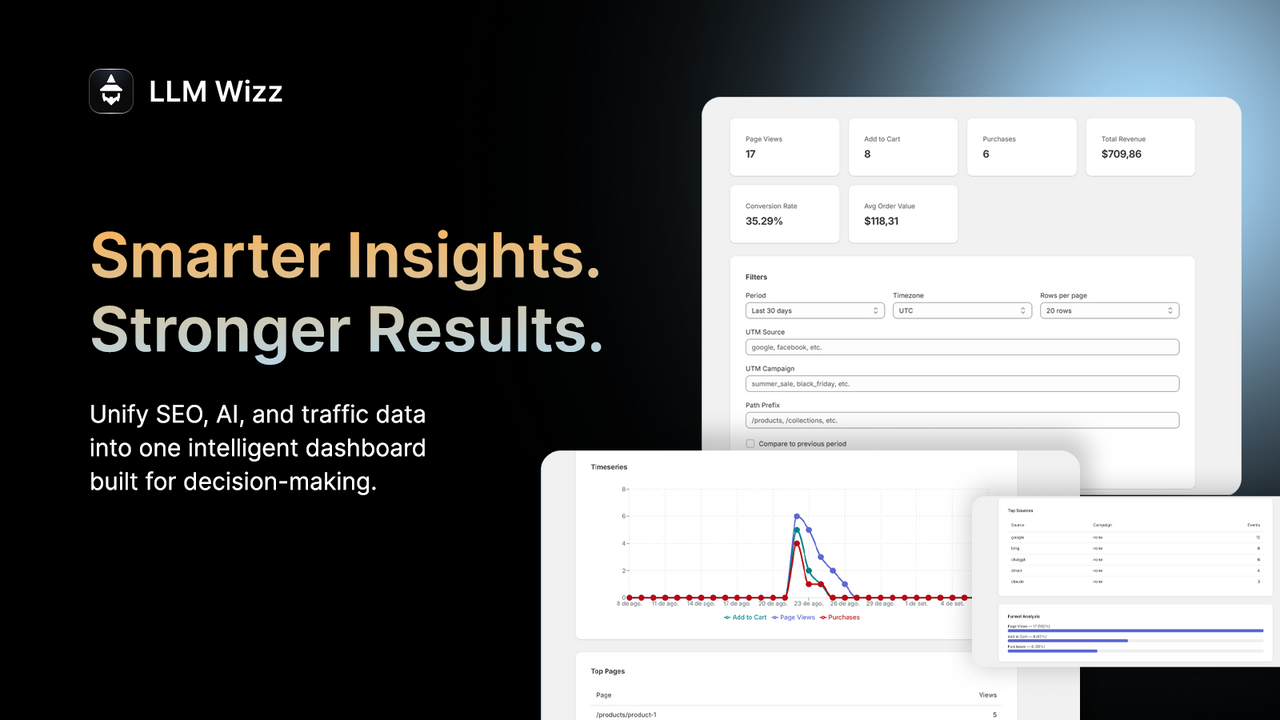
AI SEO LLM Traffic represents the flow of users to your website or brand that originates from AI-powered platforms. Unlike traditional SEO, where a user clicks a blue link in a search engine results page (SERP), LLM traffic often involves the AI synthesizing an answer from multiple sources. If your content is used as a primary source for that synthesis, the A This citation drives referral traffic, builds brand authority, and positions your business as a thought leader in the eyes of both the AI and the user.
This form of traffic is fundamentally different from standard organic search. It is intent-driven but often zero-click, meaning the user gets the answer directly in the chat interface. However, the value lies in the attribution and the subsequent trust built. When an AI consistently recommends your brand, users are more likely to visit your site directly in the future, creating a compounding effect on your overall marketing funnel.
The Difference Between Traditional SEO and LLM Optimization
Traditional SEO focuses on crawling, indexing, and ranking based on algorithms that prioritize keywords, backlinks, and user experience signals. LLM optimization (often called GEO – Generative Engine Optimization) focuses on making your content easily parseable, factually accurate, and highly citable by AI models. While traditional SEO targets the search engine bot, LLM optimization targets the AI’s training data and its real-time retrieval mechanisms.
The core difference lies in the user interface. A traditional SERP shows ten blue links; an LLM interface shows a conversational paragraph. To win in the LLM space, your content must be structured to answer questions directly, contain unambiguous data, and be recognized as a high-authority source by the AI’s underlying retrieval system.
Why LLM Traffic is Critical for Future-Proof SEO
The adoption of AI chatbots is skyrocketing. Millions of users now bypass Google or Bing for specific queries, preferring the conversational and summarized answers provided by LLMs. This behavioral shift means that if your brand is invisible to these models, you are losing a significant and growing segment of your target audience. The concept of AI SEO LLM Traffic is not a passing trend; it is the evolution of information discovery.
Furthermore, major search engines are integrating LLMs directly into their results. Google’s AI Overviews and Bing’s Copilot are prime examples. This integration means that even if a user is on a traditional search engine, the answer they see first is generated by an LLM. Therefore, optimizing for LLM visibility directly impacts your performance on traditional search engines as well.
How LLMs Source and Cite Information
To effectively capture AI SEO LLM Traffic, you must understand how these models select sources. LLMs do not “think” like humans; they predict text based on patterns learned from vast datasets. However, for real-time information and current events, they rely on retrieval-augmented generation (RAG). This process involves searching an index (often a web index) for relevant documents and using those documents to generate an answer.
The selection process typically prioritizes:
- Authority and Trust: Established domains with strong reputations are favored.
- Relevance: The content must directly match the semantic intent of the query.
- Clarity: Content that is well-structured, with clear headings and direct answers, is easier for the AI to parse.
- Recency: For time-sensitive queries, fresh content is prioritized.
- Uniqueness: Content that offers a unique perspective or exclusive data is more likely to be cited than generic rehashed information.
- Audit Your Top Pages: Identify your pages that already rank well in traditional search. These are your best candidates for LLM citation.
- Add a “TL;DR” or Summary Box: Place a concise summary at the top of the article. This gives the AI a quick, quotable snippet that encapsulates the main point.
- Rewrite Headings as Questions: Convert your H2 and H3 headings into question format. For example, change “Benefits of X” to “What are the Benefits of X?” This aligns with the query format used in LLMs.
- Include Specific Data Points: Add statistics, percentages, and concrete numbers. Vague statements are rarely cited; specific data is.
- Implement FAQ Schema: Add a dedicated FAQ section at the bottom of your articles. This structured format is highly favored by LLMs for extracting direct answers.
- Link to Authoritative Sources: Cite reputable external sources within your content. This signals to the AI that you are part of a credible information network.
Key Strategies to Increase AI SEO LLM Traffic
Optimizing for LLMs requires a blend of technical SEO, content strategy, and brand building. Here are the most effective strategies to boost your visibility in AI-generated answers.
1. Implement Structured Data and Schema Markup
Structured data is the backbone of machine-readable content. By implementing schema markup (such as FAQPage, HowTo, Article, and Organization), you provide explicit clues to the AI about the meaning and context of your content. This helps the LLM understand the entities within your text, making it more likely to be selected as a reliable source for specific queries. For example, marking up your product reviews with the Review schema helps the AI identify your page as the definitive source for product ratings.
2. Optimize for Entity-Based Queries
LLMs excel at understanding entities—people, places, organizations, and concepts. Your content should clearly define these entities and their relationships. Use consistent naming conventions and provide context. If you are writing about a specific software tool, ensure you mention its developer, its category, and its primary use case explicitly. This helps the AI build a knowledge graph around your content, increasing its citation potential.
3. Create “Answer-First” Content
The most effective way to capture AI SEO LLM Traffic is to provide the answer immediately. Structure your content so that the first paragraph after the heading directly answers the query. Avoid lengthy introductions that bury the lead. Use the “inverted pyramid” style: put the most critical information at the top, followed by supporting details. This makes it easy for the AI to extract the exact snippet it needs.
4. Leverage the “Quoted” and “Cited” Format
When an LLM cites a source, it often pulls a specific quote or statistic. Ensure your content contains quotable lines—concise, factual statements that can stand alone. Statistics, unique data points, and expert quotes are prime candidates for citation. If you have proprietary data, publish it clearly. LLMs love citing original research because it adds credibility to their responses.
5. Build a Strong Digital PR and Brand Presence
LLMs are trained on the collective intelligence of the web. If your brand is frequently mentioned across high-authority news sites, forums, and industry publications, the A Digital PR campaigns that generate high-quality backlinks and brand mentions are crucial. The more your brand is discussed in the context of your industry, the more likely the AI is to include you in its answers.
6. Optimize for Conversational and Long-Tail Keywords
Users interact with LLMs using natural language. They ask full questions, not fragmented keywords. Your content strategy must include these conversational phrases. Use tools to research “People Also Ask” queries and forum discussions to identify the exact language your audience uses. Then, create content that answers these specific, long-tail questions in a direct and comprehensive manner.
Measuring and Tracking AI SEO LLM Traffic
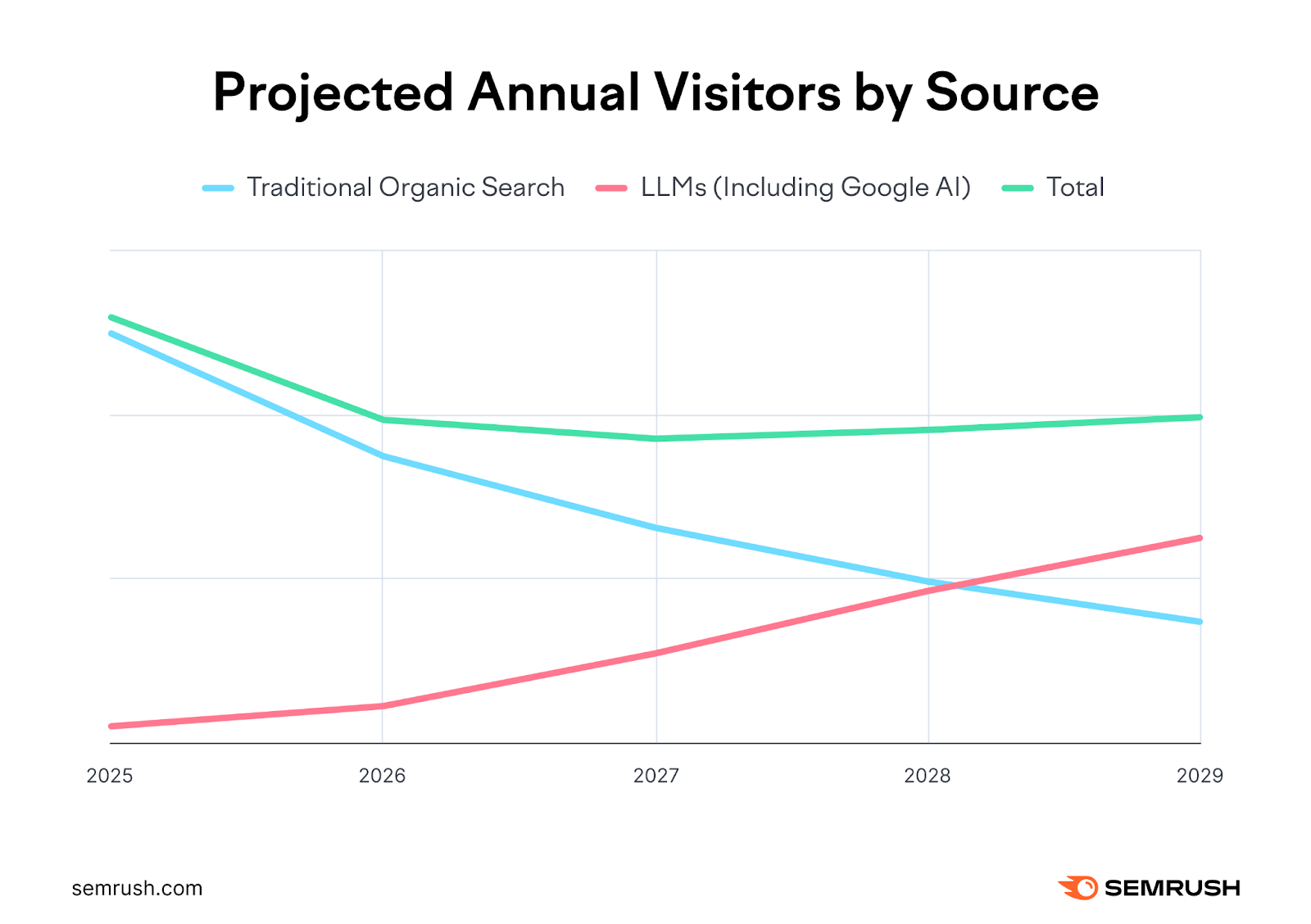
Tracking this new traffic source is challenging because it does not appear in traditional analytics in the same way as organic search. However, there are methods to gauge your performance.
| Metric | How to Track | Tool/Method |
|---|---|---|
| Referral Traffic | Monitor sessions from domains like chat.openai.com, perplexity.ai, gemini.google.com | Google Analytics 4 (Acquisition > Traffic Acquisition) |
| Brand Mentions | Track when your brand is mentioned in AI responses | Manual testing with LLMs, Brand Monitoring tools (Mention, Brand24) |
| Citation Visibility | Check if your domain appears in the source links of AI answers | Manual queries, specialized SEO tools with LLM tracking features |
| Search Visibility | Monitor rankings for AI Overviews in traditional SERPs | SEMrush, Ahrefs (AI Overview tracking features) |
It is essential to set up a baseline. Regularly query major LLMs with your target keywords and document whether your brand appears. Over time, as you implement optimization strategies, you can measure the increase in citation frequency and the corresponding uptick in referral traffic.
Common Mistakes That Kill LLM Visibility
Many SEO professionals make critical errors when trying to optimize for AI. Avoiding these pitfalls is just as important as implementing the right strategies.
Ignoring the “Zero-Click” Reality
Focusing solely on click-through rates is a mistake. In the LLM ecosystem, the value is often in the impression and the citation. Even if the user does not click your link, the AI recommending your brand builds trust. Over-optimizing for clicks by creating clickbait titles can actually harm your LLM visibility, as the AI prioritizes clarity and relevance over sensationalism.
Neglecting Technical Crawlability
If the AI’s crawler cannot access your content, you will never be cited. Ensure your robots.txt file is not blocking AI crawlers (like GPTBot, Google-Extended, or PerplexityBot). Check your site’s JavaScript rendering; if your content is loaded dynamically and the crawler cannot execute the script, the content is invisible. A clean, fast, and fully indexable site is the foundation of LLM optimization.
Creating Thin or Duplicate Content
LLMs are trained to identify and penalize low-value content. If your site is full of thin pages or duplicate content that offers no unique value, the A Focus on depth. A single, comprehensive 2,000-word guide that covers a topic exhaustively is far more valuable to an LLM than ten 200-word pages that skim the surface.
Failing to Update Content
LLMs prioritize freshness for many queries. If your content is outdated, it will be deprioritized. Regularly audit your top-performing pages and update them with new data, new examples, and current statistics. Add a “Last Updated” date to signal freshness to both users and AI crawlers.
Practical Guide: Optimizing Your Existing Content for LLMs
You do not need to start from scratch.
Important Notes on AI Search Behavior
Understanding the nuances of AI search behavior is critical. LLMs often provide a single, consolidated answer. This means t If you are not the primary source, you may not be cited at all. This increases the importance of being the absolute best resource for your specific niche.
Additionally, the user’s trust in AI answers is high. When an AI recommends a product or service, the user perceives it as a personalized recommendation, not an advertisement. This makes LLM traffic incredibly high-intent. Visitors who arrive from an AI citation are often further along in the buying cycle and more likely to convert.
Finally, the algorithms governing LLM retrieval are opaque. Unlike Google, which provides guidelines and updates, LLM providers are less transparent about their ranking factors. This means you must rely on best practices, continuous testing, and adaptability. What works today may change tomorrow as models are updated.
Frequently Asked Questions (FAQ)
What is the difference between AI SEO LLM Traffic and traditional organic traffic?
Traditional organic traffic comes from users clicking links on a search engine results page. AI SEO LLM Traffic comes from users interacting with a chatbot or AI assistant. The AI synthesizes an answer and cites your content as a source, driving referral traffic or brand awareness without a traditional link click.
How do I check if my website is getting LLM traffic?
You can check your analytics platform (like Google Analytics 4) for referral traffic from AI domains such as chat.openai.com, perplexity.ai, or gemini.google.com. You can also manually query these AI tools with your target keywords to see if your brand appears in the responses or source links.
Does schema markup help with LLM optimization?
Yes, schema markup is highly beneficial. It provides explicit semantic signals to AI crawlers, helping them understand the context and structure of your content. FAQPage and HowTo schemas are particularly effective for increasing the chances of being cited in AI-generated answers.
Is it better to have short or long content for AI SEO?
Depth is generally favored over brevity. LLMs need comprehensive context to generate accurate answers. A long-form, detailed guide that covers a topic from multiple angles is more likely to be used as a source than a short, superficial post. However, the content must be well-structured and free of fluff.
Will AI SEO replace traditional SEO?
No, traditional SEO is not dead, but it is evolving. The principles of technical optimization, content quality, and authority building remain relevant. However, the optimization target is shifting from purely ranking in a list to being cited in a synthesized answer. A holistic strategy that addresses both traditional SERPs and LLM citations is the most effective approach.
Conclusion
The rise of AI SEO LLM Traffic marks a fundamental change in how brands achieve visibility. The era of simply ranking for keywords is giving way to an era of being the authoritative source that AI models trust. By focusing on structured data, entity clarity, answer-first content, and robust digital PR, you can position your brand to be the go-to resource for AI assistants. This is not just about capturing a new traffic channel; it is about future-proofing your digital presence against the inevitable dominance of AI-driven search. Start optimizing today, and you will build a durable competitive advantage that pays dividends as the search ecosystem continues to transform.
Xem thêm:
- AI SEO Search Demand: The Complete Guide to Understanding and Leveraging AI-Driven Search Behavior
- AI SEO Anchor Text: The Complete Guide to Smarter Link Building in 2025
- AI SEO Customer Acquisition: The Complete Playbook for Sustainable Growth in 2025
- How to Create Topic Clusters with AI: A Data-Driven Blueprint for Modern SEO
- AI SEO NeuronWriter: The Complete Guide to Data-Driven Content Optimization
Bài viết cùng chủ đề:

AI SEO SEO Automation with Make: The Complete Workflow Guide

AI SEO SEO Automation with Zapier: The Complete Workflow Guide

AI SEO SEO Automation with n8n: The Complete Workflow Guide
AI SEO SEO Automation with Gemini: The Complete Guide to Scaling Organic Growth

AI SEO SEO Automation with Claude: The Complete Guide to Scaling Content in 2025

AI SEO SEO Automation with ChatGPT: The Complete Playbook for 2025

AI SEO & SEO Automation for Affiliate Sites: The 2025 Playbook for Passive Income Growth
AI SEO & SEO Automation for Bloggers: The Complete Guide to Scaling Your Content

AI SEO & SEO Automation for Agencies: The Complete 2025 Playbook

AI SEO and SEO Automation for Ecommerce: The Complete Playbook for 2025

AI SEO & SEO Automation for WordPress: The Complete Playbook for 2025
AI SEO SEO Automation Strategy: The Complete Playbook for 2025

Mastering the AI SEO SEO Automation Process: A Complete Guide to Scaling Organic Growth
AI SEO SEO Automation System: The Complete Guide to Scaling Organic Growth in 2025
AI SEO SEO Automation Platform: The Complete Guide to Scaling Organic Growth in 2025
AI SEO SEO Automation Software: The Complete Guide to Scaling Organic Growth in 2025















