
No products in the cart.
AI SEO Growth Strategy: The Complete Blueprint for Sustainable Organic Traffic in 2025
31
Jul
Jul
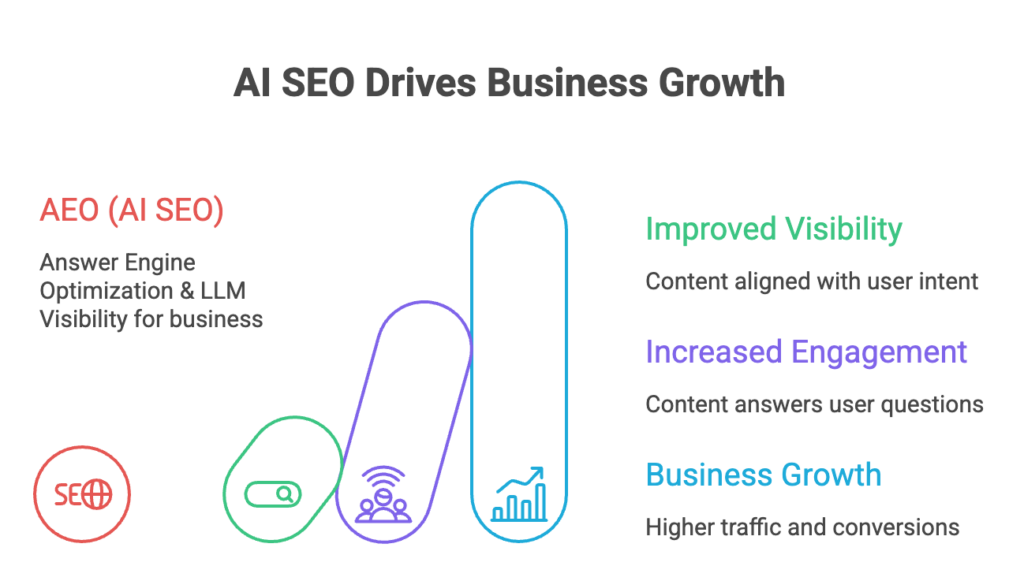
The digital landscape has shifted dramatically. Traditional SEO tactics alone no longer guarantee visibility. An AI SEO growth strategy is now the defining factor separating brands that scale from those that stagnate. This approach integrates machine learning, natural language processing, and predictive analytics into every facet of search optimization. It moves beyond keyword stuffing and link chasing, focusing instead on understanding user intent at scale and delivering content that answers questions before they are even asked. This comprehensive guide breaks down the exact components, execution steps, and pitfalls of building a growth engine powered by artificial intelligence.
What is an AI SEO Growth Strategy?
An AI SEO growth strategy is a systematic approach that uses artificial intelligence tools to automate, analyze, and optimize the entire search engine optimization lifecycle. Unlike traditional methods that rely on manual audits and historical data, this strategy leverages real-time data processing and predictive modeling. It identifies patterns in search behavior, content performance, and competitor movements that are invisible to the human eye.
The core difference lies in the speed and scale of decision-making. A human SEO specialist might analyze 500 keywords in a week. An AI-powered system can analyze 500,000 keywords in minutes, identifying semantic relationships and content gaps. This allows for rapid iteration and continuous optimization, ensuring that your website adapts to algorithm updates and shifting user preferences without delay.
The Evolution from Traditional SEO to AI-Driven SEO
Traditional SEO was rule-based. You followed a checklist: optimize title tags, build backlinks, increase page speed. The problem is that Google’s algorithms are no longer rule-based. They are neural networks that learn from user interaction. An AI SEO growth strategy aligns your efforts with this reality. It uses similar machine learning models to predict what Google’s systems will deem relevant.
For example, Google’s RankBrain and BERT systems focus on understanding context and user satisfaction. An AI strategy uses tools that analyze dwell time, bounce rate, and click-through patterns to reverse-engineer what satisfies these algorithms. This shift from “optimizing for crawlers” to “optimizing for neural networks” is the fundamental change in modern SEO.
Core Components of a Successful AI SEO Growth Strategy
Building a robust AI-driven approach requires integrating several distinct components. Each piece works in tandem to create a self-improving system. Ignoring one element weakens the entire structure.
1. Predictive Keyword Intelligence
Standard keyword research shows volume and difficulty. AI-driven research predicts future trends. Tools like Clearscope, MarketMuse, and Surfer SEO analyze the semantic landscape of the top-ranking pages. They identify entities, subtopics, and questions that must be covered to rank. This goes beyond exact-match keywords. It maps the entire topic cluster, ensuring your content is comprehensive and authoritative.
For instance, if you target “best running shoes,” an AI tool will identify related entities like “heel drop,” “pronation support,” and “carbon fiber plate.” Including these terms naturally signals topical authority to search engines. This predictive intelligence allows you to create content that is ready for the next algorithm update, not just the current one.
2. Automated Content Optimization
AI tools do not replace writers, but they dramatically enhance them. They provide real-time feedback on readability, keyword density, and structural alignment with search intent. They analyze the top 10 competitors and generate a content brief that outlines the exact word count, heading structure, and semantic terms needed to compete.
This process eliminates guesswork. Instead of wondering if an article is long enough or covers the right points, you have a data-backed blueprint. The AI also monitors content performance post-publication, suggesting updates when rankings drop or when new competitor content emerges. This continuous optimization loop is the heart of a sustainable AI SEO growth strategy.
3. Intelligent Link Building and Digital PR
Link building is often the most tedious part of SEO. AI changes this by identifying link opportunities that are contextually relevant. Tools like Ahrefs and SEMrush use machine learning to analyze the backlink profiles of competitors, finding sites that are likely to accept guest posts or resource links. They also flag toxic links that could trigger manual penalties.
Furthermore, AI can assist in digital PR by analyzing trending topics and news cycles. It can generate pitch angles that are more likely to be picked up by journalists. This data-driven approach to authority building ensures that every link earned has a higher impact on rankings.
4. User Experience and Technical SEO Automation
Core Web Vitals are a ranking factor. AI tools continuously monitor these metrics, identifying pages that are slowing down or failing accessibility standards. They can automatically compress images, suggest code optimizations, and even restructure site architecture for better crawlability.
This proactive technical maintenance prevents traffic loss. Instead of waiting for a manual audit to find a broken schema or a slow server response, the AI flags it immediately. This ensures that the user experience remains flawless, which is a direct signal of quality to Google.
Benefits and Limitations of AI in SEO
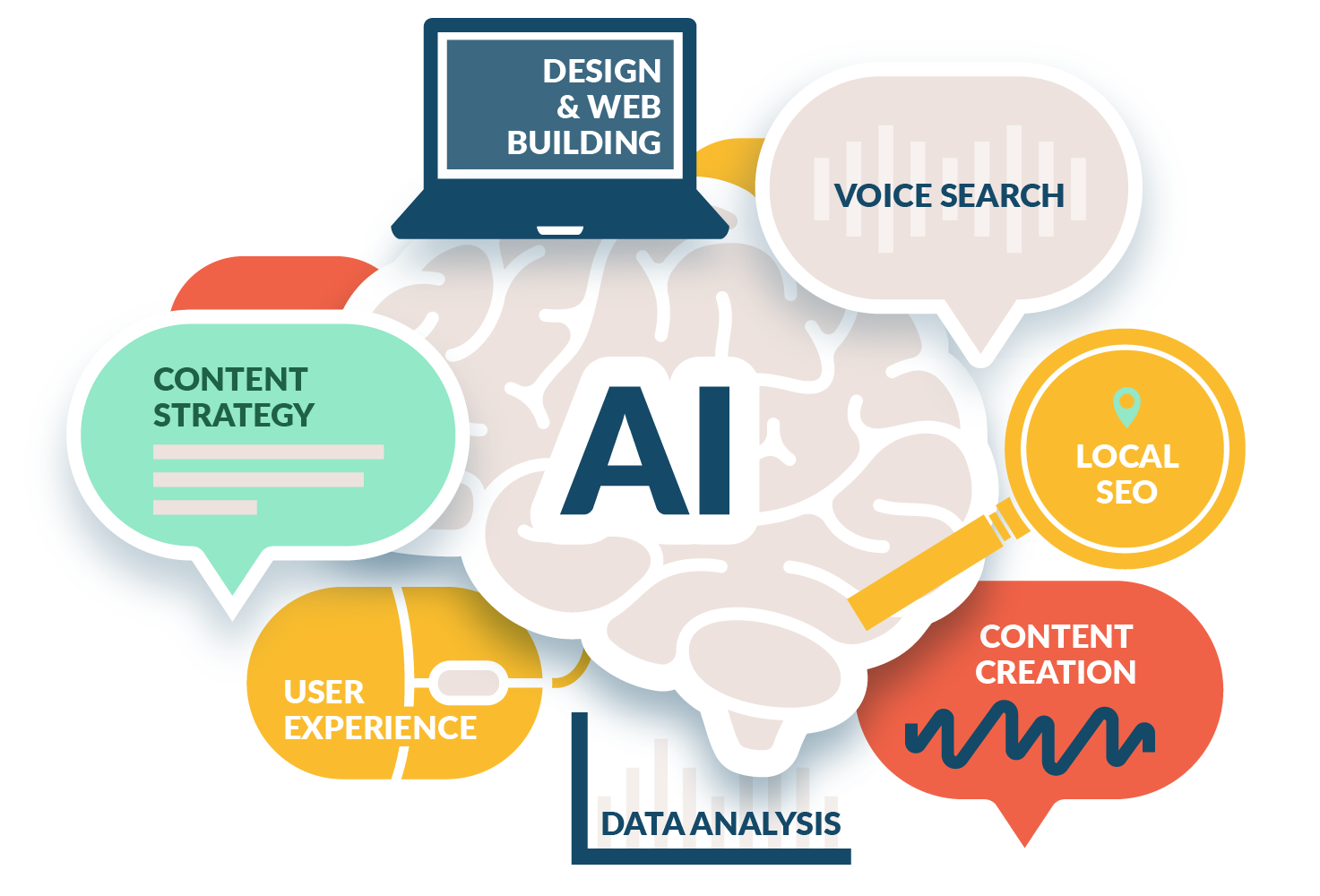
Adopting an AI SEO growth strategy offers significant advantages, but it is not without challenges. Understanding both sides is crucial for realistic expectations and effective implementation.
Key Benefits
- Scalability: AI processes vast datasets quickly, allowing you to optimize thousands of pages simultaneously.
- Accuracy: Reduces human error in data analysis and keyword selection.
- Speed: Real-time adjustments mean you react to algorithm changes in days, not months.
- Predictive Insights: Identifies emerging trends before they become mainstream, giving you a first-mover advantage.
- Cost Efficiency: Automates repetitive tasks, freeing up human resources for creative strategy.
- Data Dependency: AI is only as good as the data it is trained on. Poor data leads to poor decisions.
- Lack of Creativity: AI cannot replicate human storytelling or emotional connection. It generates data, not soul.
- Over-Optimization: Relying too heavily on AI can lead to generic content that lacks a unique voice, which can hurt brand differentiation.
- Cost of Tools: Premium AI SEO tools are expensive, which can be a barrier for small businesses.
Limitations and Risks
AI SEO Growth Strategy vs. Traditional SEO: A Comparison
| Aspect | Traditional SEO | AI SEO Growth Strategy |
|---|---|---|
| Keyword Research | Manual, based on volume and difficulty scores | Predictive, based on semantic relationships and intent |
| Content Creation | Human intuition and manual competitor analysis | Data-driven briefs with real-time optimization suggestions |
| Technical Audits | Quarterly or monthly manual checks | Continuous automated monitoring and instant alerts |
| Link Building | Outreach based on guesswork and lists | Targeted outreach based on predictive authority scores |
| Adaptation Speed | Slow, reactive to algorithm updates | Fast, proactive adjustments based on predictive models |
| Data Analysis | Historical data from Google Analytics | Real-time data combined with predictive forecasting |
How to Implement an AI SEO Growth Strategy: A Step-by-Step Guide
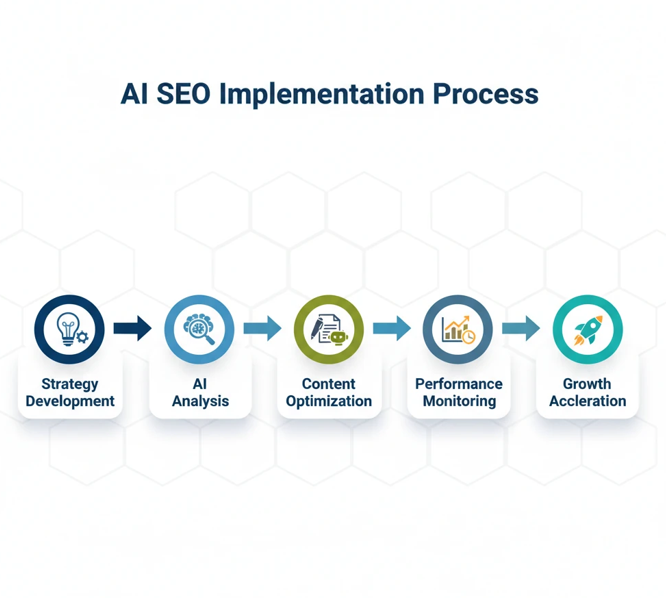
Implementation is not about buying a single tool. It is about building a workflow that integrates AI into every stage of the SEO process. Follow these steps to create a functional system.
Step 1: Audit Your Current Digital Footprint
Before introducing AI, you need a baseline. Use AI-powered audit tools like Sitebulb or Screaming Frog to crawl your entire website. These tools use machine learning to prioritize issues based on their impact on rankings. They will identify broken links, duplicate content, missing meta descriptions, and schema markup errors. This audit provides the data foundation for your strategy.
Step 2: Define Your AI Tool Stack
You do not need every tool on the market. Select a stack that covers four core areas: research, creation, optimization, and analytics. For research, use Ahrefs or SEMrush. For content briefs, use Clearscope or Frase. For on-page optimization, use Surfer SEO. For analytics and monitoring, use Google Search Console combined with an AI dashboard like Looker Studio. Integrate these tools via APIs to ensure data flows seamlessly.
Step 3: Build Topic Clusters with AI
Start with a pillar page for your main service or product. Use AI to generate a list of subtopics that are semantically related. For example, if your pillar page is “AI SEO Growth Strategy,” your cluster pages might include “AI Content Optimization,” “Predictive Keyword Analysis,” and “Machine Learning for Link Building.” Each cluster page should link back to the pillar page. This architecture signals deep expertise to search engines.
Step 4: Generate Data-Driven Content Briefs
For each cluster page, input your target keyword into your content optimization tool. The A This brief includes the recommended word count, the number of headings, the specific entities to mention, and the questions to answer. Share this brief with your writers. This ensures that every piece of content is built to compete from day one.
Step 5: Publish and Monitor with Machine Learning
After publishing, do not set and forget. Use AI monitoring tools to track keyword positions daily. Set up alerts for significant drops or spikes. When a page starts to slip, the A This continuous iteration is what drives long-term growth.
Step 6: Automate Reporting and Insights
Create a dashboard that automatically pulls data from all your tools. The AI should highlight anomalies, such as a sudden increase in impressions for a specific query or a drop in average position for a high-value keyword. This allows you to focus on strategic decisions rather than data collection.
Common Mistakes in AI SEO Growth Strategy and How to Avoid Them
Many businesses fail to see results because they make critical errors during implementation. Awareness of these pitfalls is the first defense against them.
Mistake 1: Relying Solely on AI for Content Creation
Publishing AI-generated text without human editing leads to bland, repetitive content that fails to engage readers. Google’s helpful content system explicitly targets this. The solution is to use AI for research and structure, but always have a human expert rewrite and inject personality, anecdotes, and unique insights. The final output must sound human.
Mistake 2: Ignoring Search Intent in Favor of Keywords
AI tools can tell you what words to use, but they cannot tell you why a user is searching. If you target a transactional keyword with an informational article, you will fail. Always cross-reference AI suggestions with the current search engine results page. If the top results are product pages, create a product page. If they are blog posts, write a blog post. Match the format to the intent.
Mistake 3: Overlooking the Human Element of E-E-A-T
Experience, Expertise, Authoritativeness, and Trustworthiness are critical ranking factors. AI cannot provide first-hand experience. You must include author bios, original research, case studies, and testimonials. AI can help structure this information, but the actual proof must come from your business. Do not let automation strip the human credibility from your site.
Mistake 4: Chasing Every AI Recommendation
AI tools often provide hundreds of suggestions. Trying to implement all of them leads to analysis paralysis and diluted focus. Prioritize recommendations based on potential impact. If the AI suggests adding 500 words to a page that is already ranking on page one, that is a low priority. Focus on pages that are on page two and need a push to break into the top ten.
Important Notes for Long-Term Success
An AI SEO growth strategy is not a one-time project. It is a living system that requires maintenance and evolution. Keep these notes in mind to ensure sustained performance.
First, always maintain a feedback loop between the AI tools and your human team. The AI identifies patterns, but humans must interpret the “why” behind those patterns. Second, stay updated on AI regulations and Google’s policies regarding automated content. What is acceptable today may change tomorrow. Third, diversify your traffic sources. Do not rely solely on Google organic search. Use AI to identify opportunities on YouTube, Reddit, and other platforms where your audience is active.
Finally, invest in training. Your team must understand how to read AI outputs and question them. An AI tool is a powerful assistant, but it is not a replacement for strategic thinking. The best results come from a partnership between human creativity and machine efficiency.
Frequently Asked Questions
What is the difference between AI SEO and traditional SEO?
Traditional SEO relies on manual analysis, historical data, and static rules. AI SEO uses machine learning to analyze real-time data, predict future trends, and automate optimization tasks. AI SEO is faster, more scalable, and better aligned with how modern search engines like Google actually rank content.
Can AI replace SEO professionals?
No. AI replaces repetitive tasks like data collection and basic analysis, but it cannot replace strategic thinking, creative storytelling, or relationship building. SEO professionals who use AI tools become more efficient and effective, but they are still essential for interpreting data and making high-level decisions.
How much does an AI SEO tool cost?
Costs vary widely. Basic tools like Surfer SEO start around $79 per month. Comprehensive suites like Ahrefs or SEMrush range from $99 to $449 per month. Enterprise-level solutions with custom APIs can cost thousands. Start with one or two tools that address your biggest pain point, then expand as your ROI increases.
Is AI-generated content penalized by Google?
Google does not penalize AI content outright. It penalizes low-quality content, regardless of whether it was written by a human or a machine. If AI content is factually accurate, helpful, and demonstrates E-E-A-T, it can rank. However, content created solely to manipulate rankings without adding value will be flagged by the helpful content system.
How long does it take to see results from an AI SEO growth strategy?
Results depend on your starting point and competition. For new websites, it can take 6 to 12 months to build authority. For established sites, improvements in rankings can be seen within 4 to 8 weeks if the AI identifies and fixes critical on-page issues. The key is consistency; the AI must be used continuously, not as a one-off audit.
Conclusion
The era of manual, guesswork-driven SEO is over. An AI SEO growth strategy is the only reliable path to sustainable organic traffic in a landscape dominated by neural networks and predictive algorithms. By integrating AI into keyword research, content creation, technical maintenance, and link building, you build a system that learns and improves continuously. The benefits of speed, scale, and accuracy far outweigh the limitations, provided you maintain human oversight and creative input.
The implementation is straightforward: audit your current state, select the right tools, build topic clusters, generate data-backed briefs, and monitor relentlessly. Avoid the common pitfalls of over-reliance on automation and ignoring search intent. Remember that AI is a powerful amplifier, but your unique human expertise is the signal that makes your content truly valuable. Start small, measure the impact, and scale what works. The future of search is intelligent, and your strategy must be too.
Xem thêm:
- AI FAQ Generator: Automate Your Customer Support With Intelligent Self-Service
- WP Trove AI Landing Pages: The Complete Guide to High-Converting WordPress Pages
- AI SEO AI Search Analytics Tools: The Complete Guide to Modern Search Intelligence
- AI SEO NLP Content Analysis: The Complete Guide to Smarter Content Optimization
- AI SEO SEO Title Generator: The Complete Guide to Higher Click-Through Rates
Bài viết cùng chủ đề:

AI SEO SEO Automation with Make: The Complete Workflow Guide

AI SEO SEO Automation with Zapier: The Complete Workflow Guide

AI SEO SEO Automation with n8n: The Complete Workflow Guide
AI SEO SEO Automation with Gemini: The Complete Guide to Scaling Organic Growth

AI SEO SEO Automation with Claude: The Complete Guide to Scaling Content in 2025

AI SEO SEO Automation with ChatGPT: The Complete Playbook for 2025

AI SEO & SEO Automation for Affiliate Sites: The 2025 Playbook for Passive Income Growth
AI SEO & SEO Automation for Bloggers: The Complete Guide to Scaling Your Content

AI SEO & SEO Automation for Agencies: The Complete 2025 Playbook

AI SEO and SEO Automation for Ecommerce: The Complete Playbook for 2025

AI SEO & SEO Automation for WordPress: The Complete Playbook for 2025
AI SEO SEO Automation Strategy: The Complete Playbook for 2025

Mastering the AI SEO SEO Automation Process: A Complete Guide to Scaling Organic Growth
AI SEO SEO Automation System: The Complete Guide to Scaling Organic Growth in 2025
AI SEO SEO Automation Platform: The Complete Guide to Scaling Organic Growth in 2025
AI SEO SEO Automation Software: The Complete Guide to Scaling Organic Growth in 2025















