
No products in the cart.
AI SEO Neural Search: The Complete Guide to Ranking in the Era of Semantic Discovery
31
Jul
Jul
The digital landscape has shifted beneath the feet of traditional search engine optimization. The rise of AI SEO Neural Search represents the most significant transformation in how users discover content since the inception of Google. This convergence of artificial intelligence, machine learning, and neural networks has fundamentally altered the mechanics of ranking, moving beyond simple keyword matching to a sophisticated understanding of user intent, contextual relevance, and semantic relationships. For marketers, content creators, and business owners, understanding this new paradigm is no longer optional; it is the prerequisite for sustainable online visibility. This comprehensive guide dissects the architecture of neural search, its impact on SEO strategies, and provides actionable frameworks for optimization in a world where search engines think, not just match.
Understanding the Core of AI SEO Neural Search

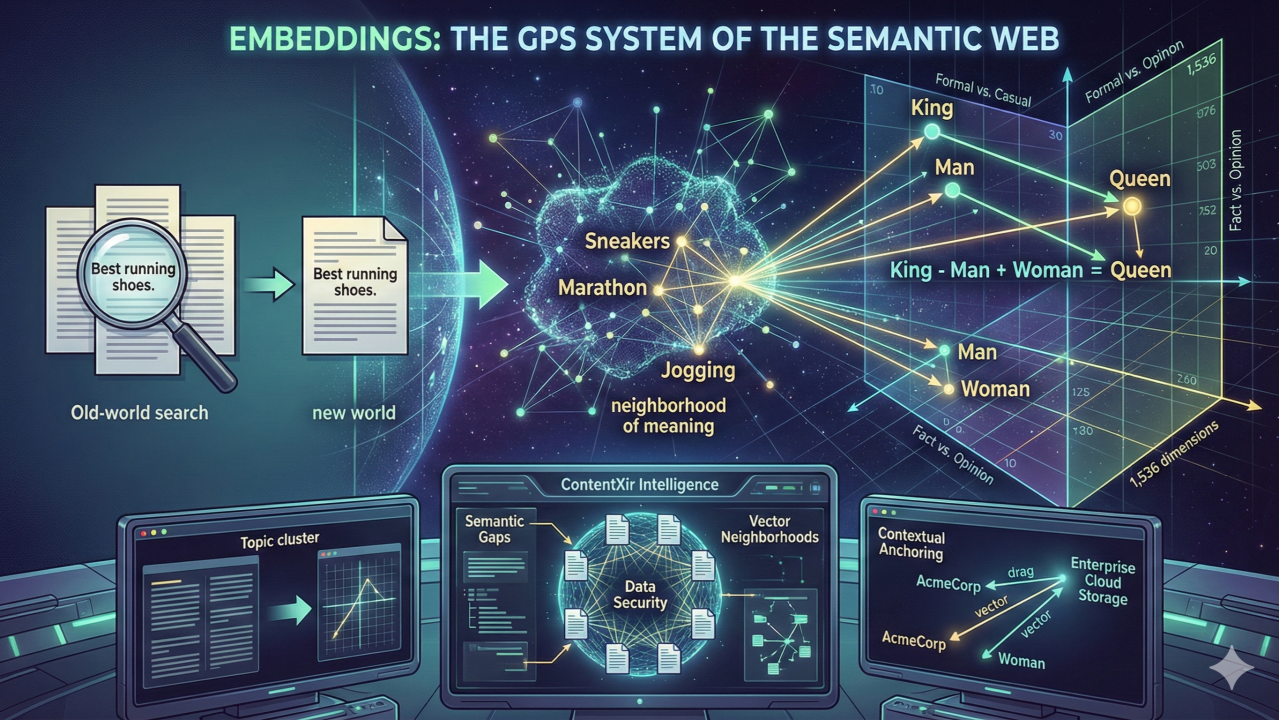
AI SEO Neural Search refers to the application of neural networks and deep learning algorithms to the process of information retrieval and ranking. Unlike traditional search algorithms that relied heavily on lexical matching—finding pages containing the exact query terms—neural search engines parse the meaning behind the query. They understand synonyms, context, user location, search history, and the subtle nuances of language to deliver results that answer the underlying question, even if the exact keywords are absent from the page. At its heart, this technology utilizes embeddings. An embedding is a mathematical representation of a word, phrase, or entire document as a vector in a multi-dimensional space. Words with similar meanings are placed closer together in this space. For instance, the vector for “car” is near “automobile” and “vehicle.” This allows the search engine to grasp conceptual relationships. When a user searches for “affordable fuel-efficient cars,” the neural network can identify pages discussing “cheap hybrid vehicles” as highly relevant, despite the lack of exact keyword overlap. This semantic understanding is the engine driving modern search results, making AI SEO Neural Search the definitive standard for visibility.
The Evolution from Keyword Matching to Semantic Understanding
To fully appreciate the power of AI SEO Neural Search, one must look at the evolutionary path of search algorithms. The journey from simple crawlers to neural networks is marked by distinct phases, each building upon the last to create a more intuitive user experience.
The Era of Exact Match Domination
In the early days, SEO was a game of density and exact match. Webmasters would stuff pages with target keywords to signal relevance to the crawler. The algorithm was relatively simplistic, counting occurrences and checking for the presence of the query string in the title, headers, and body text. This led to poor user experiences, with pages often reading unnaturally to satisfy the algorithm. The focus was on the “query,” not the “user.”
The Introduction of Latent Semantic Indexing (LSI)
As the web grew, Google introduced LSI to combat keyword stuffing. This technology analyzed the co-occurrence of words across the web to determine topical relevance. For example, a page about “Apple” that also contained words like “orchard,” “pie,” and “Fuji” would be classified as a fruit topic, while a page with “iPhone,” “MacBook,” and “iOS” would be classified as a tech topic. This was a significant step forward, but it was still based on statistical analysis rather than true comprehension.
The Neural Network Revolution (BERT, MUM, and Beyond)
The true breakthrough arrived with the implementation of neural networks like BERT (Bidirectional Encoder Representations from Transformers) and MUM (Multitask Unified Model). These models process words in relation to all the other words in a sentence, rather than one by one in order. This bidirectional understanding allows the engine to grasp context, prepositions, and the intent behind conversational queries. MUM takes this further by being multimodal, understanding information across text, images, and video simultaneously. This is the current state of AI SEO Neural Search—a system that comprehends language as a human would, with nuance and depth.
Key Components of Neural Search Technology
The architecture of AI SEO Neural Search is complex, but understanding its core components helps demystify how rankings are determined. These components work in tandem to process queries and index content in a way that mimics human cognition.
Natural Language Processing (NLP)
NLP is the foundational layer that allows computers to understand, interpret, and manipulate human language. In the context of search, NLP breaks down a query into its grammatical components, identifies the entities mentioned, and determines the sentiment or intent. For example, the query “best way to fix a leaky faucet” is parsed to identify the entity (“faucet”), the problem (“leaky”), and the intent (“how-to”). This allows the search engine to prioritize step-by-step guides over product pages.
Vector Search and Embeddings
As mentioned earlier, embeddings are the lifeblood of neural search. They convert text into numerical vectors. The search engine creates an embedding for the user’s query and then calculates the distance between that vector and the vectors of billions of indexed documents. The documents with the closest vectors are considered the most semantically relevant. This process is known as vector search or semantic search. It allows for the retrieval of information based on meaning, not just spelling.
Transformer Models
Transformer models are the specific type of neural network architecture that powers BERT and MUM. They use a mechanism called “attention” to weigh the importance of different words in a sentence. For instance, in the sentence “The bank was muddy,” the model uses attention to understand that “bank” refers to a riverbank, not a financial institution, based on the context provided by “muddy.” This attention mechanism is what enables the deep contextual understanding that defines modern AI SEO Neural Search.
How AI SEO Neural Search Impacts Modern SEO Strategies
The shift to neural search has profound implications for how SEO professionals approach their work. The old playbook of keyword research and backlink building is no longer sufficient. The focus has shifted to creating comprehensive, authoritative content that satisfies user intent on a deeper level.
Topic Clusters Over Keywords
Instead of targeting individual keywords, modern SEO strategy involves building topic clusters. This involves creating a “pillar” page that covers a broad topic in depth and then linking to “cluster” pages that address specific subtopics. This structure signals to the neural network that your website is an authoritative source on that entire subject area. For example, a pillar page on “Digital Marketing” might link to cluster pages on “Email Marketing,” “Social Media Advertising,” and “Content Strategy.” This creates a web of semantic relevance that the AI can easily crawl and understand.
The Rise of Entity-Based SEO
Neural search is obsessed with entities—people, places, things, and concepts. Search engines build knowledge graphs that connect these entities. For SEO, this means optimizing for entity recognition. This involves ensuring your content clearly states who you are, what you do, and how you relate to other entities in your industry. Using structured data markup (Schema.org) helps the search engine identify these entities and their relationships, making it easier for the AI to place your content in the correct context.
Content Depth and E-E-A-T
With the ability to understand semantics, search engines now prioritize content that demonstrates Experience, Expertise, Authoritativeness, and Trustworthiness (E-E-A-T). Thin content that simply rephrases the top result is easily identified and demoted. Content that provides unique insights, original research, personal experience, and comprehensive coverage of a topic is rewarded. The AI can detect the depth of information and the value it provides to the user, making quality the ultimate ranking factor.
Practical Applications: Optimizing for Neural Search

Understanding the theory is one thing; implementing it is another.
1. Conduct Intent-Based Keyword Research
Move beyond keyword volume and difficulty. Analyze the search engine results page (SERP) for your target terms to understand the dominant intent. Is it informational (looking for answers), navigational (looking for a specific site), or transactional (looking to buy)? Create content that directly matches this intent. Use tools that cluster keywords by topic and question, rather than just listing them alphabetically.
2. Structure Content with Semantic HTML
Use header tags (H1, H2, H3) to create a logical hierarchy that outlines the main topics and subtopics of your article. This helps the neural network understand the structure and relative importance of the information. Use bullet points and numbered lists to break down complex processes. Ensure your paragraphs are concise and focused on a single idea. This clean structure makes it easier for the AI to parse and index your content.
3. Leverage Internal Linking with Descriptive Anchor Text
Internal links are a powerful signal for neural search. They help the AI understand the relationship between different pages on your site. Use descriptive, keyword-rich anchor text that accurately describes the content of the target page. Instead of “click here,” use “learn more about on-page SEO techniques.” This creates a semantic pathway that reinforces the topical authority of your site.
4. Implement Structured Data (Schema Markup)
Structured data is a code that you add to your website to help search engines understand your content better. It provides explicit clues about the meaning of a page. Implementing schemas like Article, FAQ, Product, and Organization helps the neural network classify your content and display rich snippets in the search results. This not only improves visibility but also increases click-through rates.
5. Optimize for Voice Search and Conversational Queries
With the proliferation of smart speakers and mobile assistants, voice search is a significant driver of traffic. Voice queries are typically longer and more conversational. They are phrased as questions. Optimize your content to answer these questions directly. Include a dedicated FAQ section that addresses common queries in a natural, conversational tone. This aligns perfectly with the natural language processing capabilities of neural search engines.
Common Mistakes in the Age of Neural Search
Even with the best intentions, many SEO practitioners fall into traps that hinder their performance in the neural search era. Recognizing these mistakes is the first step to avoiding them.
Obsessing Over Keyword Density
The days of counting keyword occurrences are over. Forcing a keyword into a text where it doesn’t fit naturally will harm your readability and signal to the AI that the content is low-quality. Focus on using synonyms and related terms (LSI keywords) to cover the topic comprehensively. Write for the user first; the semantic relevance will follow.
Ignoring User Engagement Metrics
Neural search algorithms are increasingly using user behavior signals to refine rankings. Metrics like Click-Through Rate (CTR), Time on Page, and Bounce Rate provide feedback on whether your content satisfies the user’s intent. If users click on your result but immediately bounce back to the SERP, the AI interprets this as a sign that your content is not relevant. Focus on creating compelling meta descriptions and engaging, easy-to-read content that keeps users on the page.
Neglecting Technical SEO Fundamentals
While the focus is on semantics and AI, the technical foundation of your website is still critical. A slow-loading site, broken links, and poor mobile responsiveness will hurt your rankings regardless of how good your content is. The neural network cannot index what it cannot crawl. Ensure your site is technically sound, with a clear sitemap, fast server response times, and a secure HTTPS connection.
Comparison: Traditional SEO vs. AI SEO Neural Search

To solidify the understanding of this shift, a direct comparison highlights the fundamental differences in approach and execution. | Feature | Traditional SEO | AI SEO Neural Search |
|:— |:— |:— |
| Primary Focus | Exact keyword matching and backlinks | User intent and semantic relevance |
| Content Strategy | Individual pages targeting specific keywords | Topic clusters and comprehensive pillar pages |
| Keyword Research | Volume, difficulty, and competition | Search intent, related questions, and entity relationships |
| Understanding of Language | Lexical (word-for-word) | Contextual and conceptual (meaning-based) |
| Key Ranking Factors | Domain authority, exact-match anchors | E-E-A-T, content depth, engagement metrics |
| Role of AI | Minimal, used for spam detection | Core of the ranking algorithm (BERT, MUM) |
| User Experience | Often secondary to algorithm optimization | Primary driver of content creation and structure |
Important Notes for Long-Term Success
Navigating the world of AI SEO Neural Search requires a shift in mindset. It is a continuous process of adaptation and learning. Here are some critical notes to keep in mind for a sustainable strategy.
Focus on User Intent, Not Guessing Games
The most successful SEO strategies are built on a deep understanding of the target audience. What are their pain points? What questions do they have? What solutions are they looking for? When you create content that genuinely answers these needs, you are inherently aligning with the goals of neural search. The AI is designed to reward content that satisfies users, so make user satisfaction your primary KPI.
Embrace Multimodal Content
With MUM’s ability to understand text, images, and video, the future of search is multimodal. Don’t just write text; create videos, infographics, and podcasts that cover the same topic from different angles. Transcribe your videos and provide descriptive alt text for your images. This provides the neural network with multiple entry points to understand your content’s value.
Monitor Your Performance in Real-Time
The algorithms are constantly evolving. What works today may not work tomorrow. Use analytics tools to monitor your rankings, organic traffic, and user engagement. Pay close attention to how your pages perform for related queries and “People Also Ask” boxes. This data provides invaluable insights into how the AI perceives your content and where t
Frequently Asked Questions (FAQ)
What is the difference between semantic search and AI SEO Neural Search?
Semantic search is the broader goal of understanding user intent and the contextual meaning of terms. AI SEO Neural Search is the specific technological implementation of that goal using neural networks and deep learning models. In essence, semantic search is the “what” (understanding meaning), and neural search is the “how” (using AI to achieve it).
How does BERT impact my SEO strategy?
BERT (Bidirectional Encoder Representations from Transformers) allows Google to understand the context of words in a query by looking at the words that come before and after them. For your SEO strategy, this means you should focus on writing naturally and conversationally. You no longer need to worry about matching the exact word order of a query. Instead, ensure your content thoroughly answers the question being asked, using natural language that covers the topic from all angles.
Is keyword research still relevant for AI SEO Neural Search?
Yes, but its role has changed. Keyword research is no longer about finding the exact phrase to stuff into your content. It is now about discovering the topics and questions that are important to your audience. It is a starting point for understanding user intent and identifying the subtopics you need to cover to create a comprehensive resource. The focus has shifted from “keywords” to “topics” and “entities.”
What are the best tools for optimizing for neural search?
T Instead, you need a suite of tools. Use keyword research tools (like Ahrefs or SEMrush) to find topic clusters and questions. Use content optimization tools (like Surfer SEO or Clearscope) to analyze the semantic relevance of your content against top-ranking pages. Use Google Search Console to monitor your actual performance and identify queries that trigger your pages. The key is to use these tools to inform your content strategy, not to dictate it.
How long does it take to see results from neural search optimization?
Unlike the old days of quick keyword wins, neural search optimization is a long-term game. It takes time for the AI to crawl, index, and understand the depth and authority of your content. Typically, you can expect to see significant movement in rankings within 3 to 6 months of consistently publishing high-quality, semantically rich content. The results are more sustainable and resilient to algorithm updates, as you are building genuine topical authority.
Conclusion: The Future is Semantic
The era of AI SEO Neural Search is not a passing trend; it is the new reality of digital discovery. The search engine has evolved from a simple indexer of words to a sophisticated intelligence that understands the nuances of human language and intent. For those willing to adapt, this presents an unprecedented opportunity. By shifting focus from keyword manipulation to genuine content creation, from link building to authority building, and from guessing to understanding, you can position your brand for sustained growth. The path forward is clear: invest in understanding your audience, create comprehensive and authoritative content, and structure your website in a way that is both user-friendly and machine-readable. The algorithms will continue to evolve, but the principles of providing value and answering questions will remain constant. Embrace the complexity of AI SEO Neural Search, and you will not just survive the change; you will thrive in it. The future of search belongs to those who understand that the ultimate goal is not to rank for a keyword, but to be the definitive answer to a question.
Xem thêm:
- AI SEO People Also Ask Generator: The Complete Guide to Unlocking PAA Insights
- AI SEO AI Search Optimization: The Complete Guide to Ranking in the Age of Artificial Intelligence
- AI SEO Internal Link Suggestions: The Complete Guide to Smarter Site Architecture
- AI Marketing Automation: The Definitive Guide to Smarter, Faster Growth
- AI SEO Question Keywords: The Complete Guide to Ranking in Zero-Click Search
Bài viết cùng chủ đề:

AI SEO SEO Automation with Make: The Complete Workflow Guide

AI SEO SEO Automation with Zapier: The Complete Workflow Guide

AI SEO SEO Automation with n8n: The Complete Workflow Guide
AI SEO SEO Automation with Gemini: The Complete Guide to Scaling Organic Growth

AI SEO SEO Automation with Claude: The Complete Guide to Scaling Content in 2025

AI SEO SEO Automation with ChatGPT: The Complete Playbook for 2025

AI SEO & SEO Automation for Affiliate Sites: The 2025 Playbook for Passive Income Growth
AI SEO & SEO Automation for Bloggers: The Complete Guide to Scaling Your Content

AI SEO & SEO Automation for Agencies: The Complete 2025 Playbook

AI SEO and SEO Automation for Ecommerce: The Complete Playbook for 2025

AI SEO & SEO Automation for WordPress: The Complete Playbook for 2025
AI SEO SEO Automation Strategy: The Complete Playbook for 2025

Mastering the AI SEO SEO Automation Process: A Complete Guide to Scaling Organic Growth
AI SEO SEO Automation System: The Complete Guide to Scaling Organic Growth in 2025
AI SEO SEO Automation Platform: The Complete Guide to Scaling Organic Growth in 2025
AI SEO SEO Automation Software: The Complete Guide to Scaling Organic Growth in 2025















