
No products in the cart.
AI SEO Keyword Competition: How to Outrank Rivals in the Age of Machine Learning
10
Aug
Aug
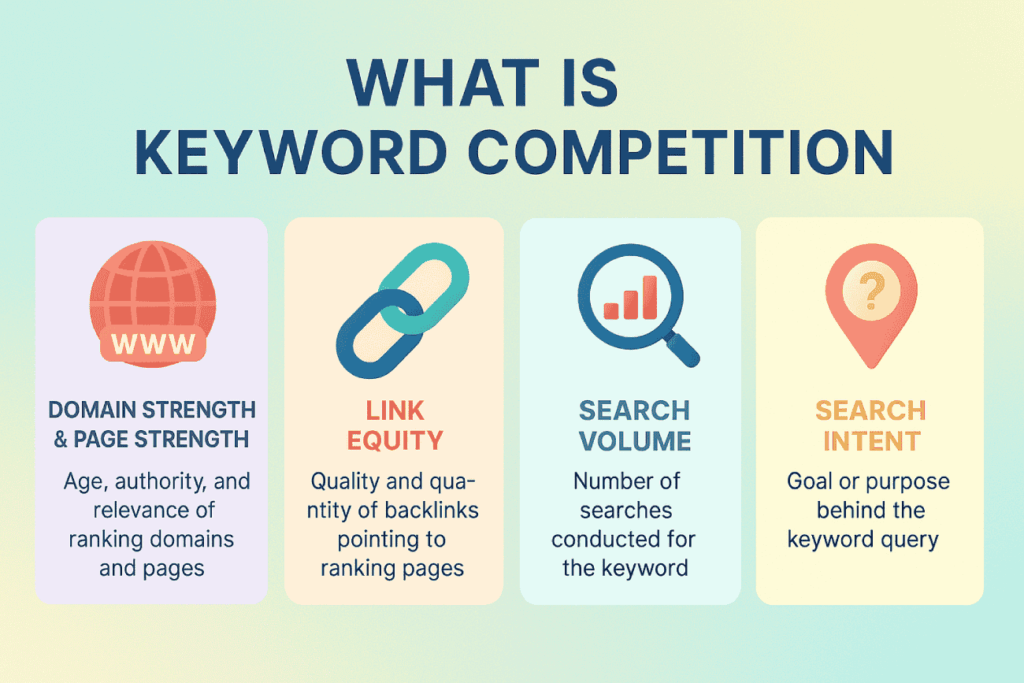
The landscape of search engine optimization has shifted dramatically. The term “AI SEO Keyword Competition” no longer refers solely to which websites rank for a term. It now describes the battle between human-created content and machine-generated material, as well as the fight between brands using AI tools to capture search real estate. Understanding this new dynamic is essential for any digital marketer who wants to maintain visibility. The rules of ranking have changed, and the tools you use to analyze keywords must evolve alongside the algorithms that interpret them.
Understanding the New Reality of AI SEO Keyword Competition
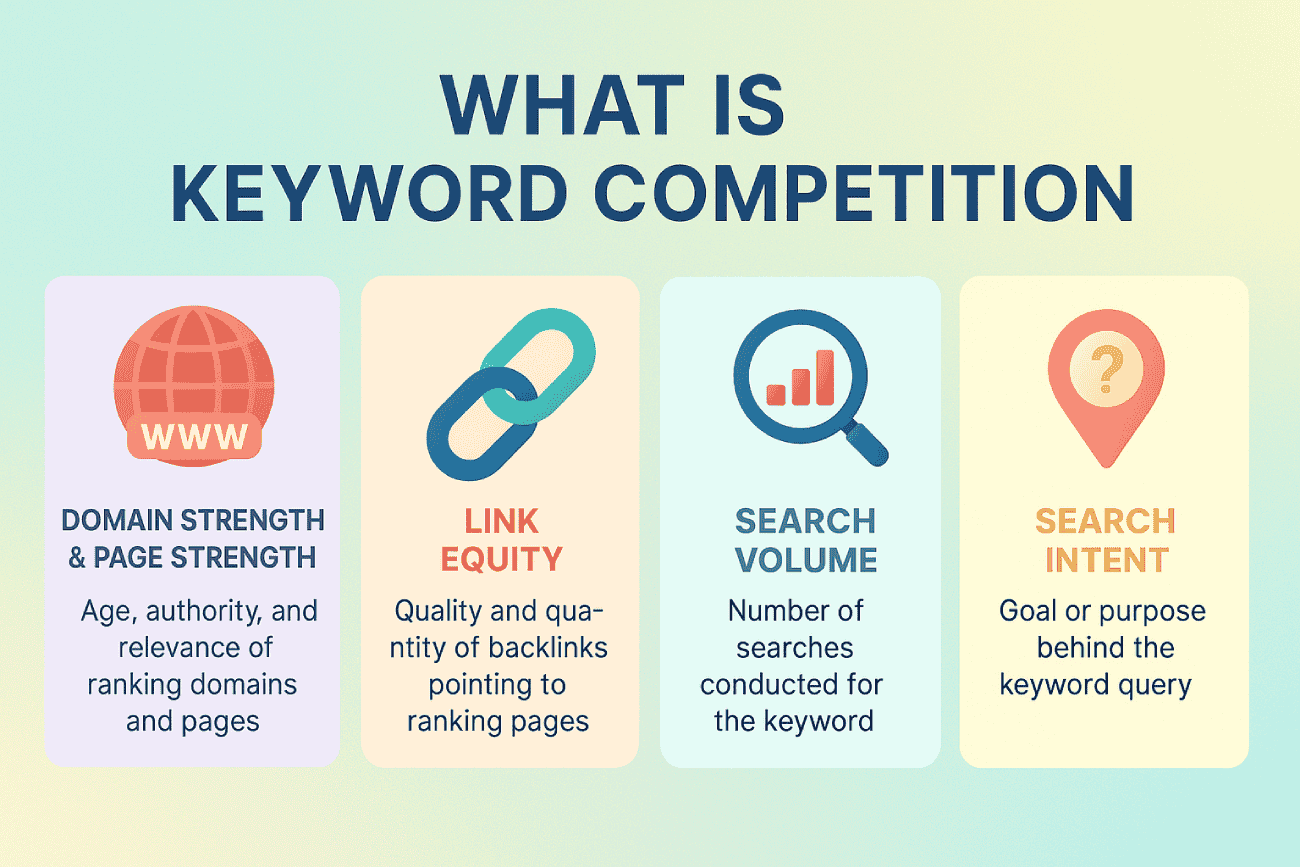
Traditional keyword competition was measured by domain authority, backlink profiles, and on-page optimization. Today, the equation includes an additional variable: artificial intelligence. Search engines like Google use machine learning models such as BERT and MUM to understand user intent at a deeper level. This means that the competition is no longer just about matching words. It is about providing comprehensive answers that satisfy the semantic context of a query.
When you analyze “AI SEO Keyword Competition,” you must consider that your rivals are not just other human writers. They are also AI systems that can generate thousands of articles in minutes. This influx of automated content has created a paradox. While the volume of content has exploded, the quality bar has risen. Search engines are now aggressively filtering out unhelpful, AI-generated spam. This creates a unique opportunity for those who use AI strategically rather than relying on it for mass production.
The Shift from Keyword Matching to Intent Prediction
In the past, a page that contained the exact phrase “best running shoes” multiple times would rank well. Now, the search engine evaluates whether the page answers related questions like “shoes for flat feet” or “trail running gear.” This is where AI SEO keyword competition gets complex. You are not just competing for one phrase. You are competing for a cluster of related topics that the algorithm associates with the primary keyword.
To win this competition, you must map out the entire topic ecosystem. This involves looking at “People Also Ask” boxes, related searches, and the top-ranking pages to understand what subtopics they cover. Your goal is to create a resource that is more complete than any other. This is a strategic process that requires human oversight, even when AI tools assist with data collection.
How AI Tools Are Changing Keyword Research
The days of manually typing keywords into a database are fading. Modern SEO professionals use AI-powered platforms that predict keyword performance based on historical data and trend analysis. These tools can analyze millions of data points to suggest long-tail keywords that have low competition but high conversion potential. This is a significant advantage in the AI SEO keyword competition because it allows smaller websites to find niches that larger brands have overlooked.
However, relying solely on AI suggestions can be dangerous. The tools often generate keywords that are technically relevant but lack commercial intent. A human expert must filter these suggestions through the lens of business goals. For example, an AI might suggest the keyword “what is a mortgage” for a bank website. While this has high volume, it does not necessarily lead to conversions. The human strategist knows to prioritize “best mortgage rates for first-time buyers” instead.
Predictive Analytics and SERP Feature Targeting
AI tools now offer predictive analytics that forecast the potential click-through rate (CTR) for a given keyword. They can also identify which SERP features (featured snippets, video carousels, local packs) are likely to appear. This information is gold in the AI SEO keyword competition. If you know that a keyword triggers a featured snippet, you can structure your content to claim that position. This involves writing concise, direct answers at the top of your article, followed by deeper explanations.
This level of analysis was impossible a decade ago. Now, it is a standard practice for competitive SEO. The key is to use these insights to create content that is not just optimized for bots but also genuinely useful for humans. The algorithm rewards engagement metrics like dwell time and bounce rate. If your content satisfies the user immediately, you will win the competition regardless of how many AI-generated articles your rivals publish.
Content Quality as the Ultimate Ranking Factor
In the current AI SEO keyword competition, quality is the only sustainable differentiator. Search engines have become adept at detecting content that lacks depth, originality, or factual accuracy. They use AI to evaluate the expertise, experience, authoritativeness, and trustworthiness (E-E-A-T) of a page. This means that a well-researched article written by a subject matter expert will always outperform a generic AI-generated piece, even if the latter has perfect keyword density.
To demonstrate E-E-A-T, you must include original data, case studies, and personal insights. If you are writing about a technical topic, include code snippets or screenshots. If you are writing about a health topic, cite peer-reviewed studies. This level of detail signals to the search engine that your content is reliable. It also encourages other websites to link to you, which remains a powerful ranking signal.
The Role of User Engagement Metrics
Search engines monitor how users interact with your page. If a user clicks on your result and immediately returns to the search engine to click another link, that is a negative signal. This is known as “pogo-sticking.” In the AI SEO keyword competition, this metric is crucial. Your content must be structured to keep users engaged. Use short paragraphs, bullet points, and subheadings to break up the text. Include multimedia elements like images, videos, and infographics to enhance the user experience.
Another key metric is dwell time, which measures how long a user stays on your page. The longer the dwell time, the more valuable the search engine perceives your content. To increase dwell time, you need to provide comprehensive information that answers every possible follow-up question. This is why long-form content (2000+ words) often outperforms shorter pieces. It gives the user no reason to look elsewhere.
Technical SEO in the Age of AI
While content is king, technical SEO is the kingdom. In the AI SEO keyword competition, your website’s architecture plays a significant role in how well you rank. AI crawlers are sophisticated, but they still struggle with poorly structured websites. You must ensure that your site has a clear hierarchy, fast loading times, and mobile responsiveness. These factors are non-negotiable in a competitive landscape.
Schema markup is another technical element that has gained importance. By adding structured data to your pages, you help search engines understand the context of your content. This can lead to rich snippets, which increase your visibility and CTR. For example, if you are writing a recipe, adding recipe schema can help you appear in the “recipe carousel” at the top of the search results. This is a direct way to win the AI SEO keyword competition for that specific query.
Core Web Vitals and Page Experience
Google has explicitly stated that page experience signals are used in ranking. This includes Core Web Vitals, which measure loading performance, interactivity, and visual stability. In a competitive niche, a site that loads in 0.5 seconds will beat a site that loads in 2 seconds, even if the latter has better content. This is a technical battleground where AI tools can help you identify bottlenecks in your code.
Use tools like Google PageSpeed Insights to analyze your site’s performance. The AI-driven recommendations will tell you exactly what to fix, such as compressing images or eliminating render-blocking JavaScript. These fixes are not optional. They are essential for survival in the AI SEO keyword competition. A fast, responsive site builds trust with both users and search engines.
Practical Strategies to Win the AI SEO Keyword Competition
Winning this competition requires a multi-faceted approach. You cannot rely on a single tactic. Instead, you must integrate AI tools with human creativity and strategic planning. The following strategies have proven effective in highly competitive niches.
- Focus on Long-Tail Keywords: These are phrases with three or more words. They have lower search volume but much higher conversion rates. AI tools can help you identify these opportunities quickly.
- Analyze the SERP Landscape: Before writing, look at the top 10 results for your target keyword. Identify gaps in their content. Write your article to fill those gaps.
- Use AI for Ideation, Not Creation: Use AI to generate outlines and topic clusters. Write the final content yourself or have a human editor heavily revise the AI output.
- Optimize for Voice Search: With the rise of smart speakers, many queries are now conversational. Optimize your content for question-based queries like “how to” and “what is.”
- Build Topical Authority: Do not just write one article on a topic. Write a series of articles that cover every aspect. This signals to search engines that you are an authority.
Leveraging AI for Competitor Analysis
AI tools can scrape your competitors’ websites and analyze their keyword strategies. They can tell you which keywords your competitors are ranking for, which ones they are losing, and which ones they are gaining. This intelligence is invaluable. It allows you to target keywords that your competitors have neglected. It also helps you identify content gaps in their strategy that you can exploit.
For example, if you notice that a competitor ranks for “best CRM software” but does not have a page specifically for “best CRM for small business,” you can create that page. This is a direct attack on their market share. The AI tool gives you the data, but the strategic decision to target that niche is a human one. This combination is the essence of modern SEO.
Common Mistakes in AI SEO Keyword Competition
Many marketers make critical errors when trying to compete in this new landscape. Understanding these mistakes can save you time and resources. The most common mistake is treating AI as a replacement for human expertise. AI cannot understand nuance, emotion, or cultural context. It can only process data. If you publish unedited AI content, you will likely be penalized by search engines.
Another mistake is ignoring the user’s search intent. You might rank for a keyword, but if your content does not match what the user wants, they will leave quickly. This increases your bounce rate and hurts your rankings over time. Always ask yourself: “What is the user trying to achieve with this query?” Then, structure your content to help them achieve it.
Keyword Cannibalization and Over-Optimization
Keyword cannibalization occurs when you have multiple pages targeting the same keyword. This confuses search engines and splits your ranking power. In the AI SEO keyword competition, this is a fatal flaw. Use AI tools to audit your site and identify pages that are competing against each other. Merge them or redirect them to a single authoritative page.
Over-optimization is another pitfall. This happens when you stuff keywords into your content unnaturally. Search engines are sophisticated enough to detect this. It makes your content unreadable and harms the user experience. Write naturally. Use synonyms and related terms. The AI algorithms will understand the context without you having to repeat the exact phrase dozens of times.
Important Notes on AI-Generated Content Policies
Google’s official stance is that AI-generated content is against their guidelines if it is used to manipulate search rankings. However, they have also stated that they do not ban AI content outright. The key is the intent behind the content. If AI is used to produce helpful, original content that demonstrates E-E-A-T, it is acceptable. If it is used to spam the web with low-quality articles, it will be penalized.
This policy creates a gray area. Many marketers are unsure how to proceed. The safest approach is to use AI as a tool to assist human writers, not to replace them. Use AI to generate data, outlines, and drafts. Then, have a human expert rewrite, expand, and fact-check the content. This ensures that the final product is unique and valuable.
Frequently Asked Questions (FAQ)
What is the best AI tool for keyword research?
T Popular options include Ahrefs, Semrush, and Moz. These platforms use AI to provide keyword suggestions, difficulty scores, and SERP analysis. For a free option, Google Keyword Planner is a starting point, though it lacks the advanced AI features of paid tools.
How do I measure keyword competition in the AI era?
You should look beyond the traditional “keyword difficulty” score. Analyze the top-ranking pages for the keyword. Check their domain authority, content length, and freshness. Also, look at the SERP features present. If there are many featured snippets and video results, the competition is high. Use AI tools to get a composite score that includes these factors.
Can AI replace human SEO experts?
No. AI can automate data collection and analysis, but it cannot make strategic decisions. A human is needed to interpret the data, understand business goals, and create content that resonates with a human audience. The most successful SEO strategies combine the speed of AI with the judgment of a human expert.
How long does it take to win the AI SEO keyword competition?
T It depends on the competitiveness of your niche and the quality of your content. For a new website, it can take 6-12 months to see significant results. For an established site with high authority, it might take only a few weeks. Consistency is key. You must continuously publish high-quality content and build backlinks.
Is it better to target high-volume or low-volume keywords?
It depends on your goals. High-volume keywords bring more traffic but are harder to rank for. Low-volume keywords bring less traffic but are easier to rank for and often have higher conversion rates. A balanced strategy targets a mix of both. Use high-volume keywords for brand awareness and low-volume keywords for lead generation.
Conclusion
The AI SEO keyword competition is not a passing trend. It is the new standard for search engine optimization. To succeed, you must embrace AI tools while doubling down on human creativity and expertise. The algorithms are getting smarter, but they still cannot replicate the empathy, storytelling, and critical thinking of a skilled human writer. Your strategy should be to use AI to handle the heavy lifting of data analysis and technical optimization, freeing you to focus on what matters most: creating content that genuinely helps your audience. By doing this, you will not only survive the competition but thrive in it. The future of SEO belongs to those who can blend the power of machines with the insight of the human mind.
Xem thêm:
- AI SEO for Developers: The Complete Technical Playbook for 2025
- AI SEO Keyword Insights: The Complete Guide to Data-Driven Search Optimization
- AI SEO Templates: Streamline Your Search Strategy with Intelligent Frameworks
- AI Indexing: The Complete Guide to How Artificial Intelligence is Revolutionizing Search and Data Retrieval
- AI SEO Growth Strategy: The Complete Blueprint for Sustainable Organic Traffic in 2025
Bài viết cùng chủ đề:

AI SEO SEO Automation with Make: The Complete Workflow Guide

AI SEO SEO Automation with Zapier: The Complete Workflow Guide

AI SEO SEO Automation with n8n: The Complete Workflow Guide
AI SEO SEO Automation with Gemini: The Complete Guide to Scaling Organic Growth

AI SEO SEO Automation with Claude: The Complete Guide to Scaling Content in 2025

AI SEO SEO Automation with ChatGPT: The Complete Playbook for 2025

AI SEO & SEO Automation for Affiliate Sites: The 2025 Playbook for Passive Income Growth
AI SEO & SEO Automation for Bloggers: The Complete Guide to Scaling Your Content

AI SEO & SEO Automation for Agencies: The Complete 2025 Playbook

AI SEO and SEO Automation for Ecommerce: The Complete Playbook for 2025

AI SEO & SEO Automation for WordPress: The Complete Playbook for 2025
AI SEO SEO Automation Strategy: The Complete Playbook for 2025

Mastering the AI SEO SEO Automation Process: A Complete Guide to Scaling Organic Growth
AI SEO SEO Automation System: The Complete Guide to Scaling Organic Growth in 2025
AI SEO SEO Automation Platform: The Complete Guide to Scaling Organic Growth in 2025
AI SEO SEO Automation Software: The Complete Guide to Scaling Organic Growth in 2025















