
No products in the cart.
AI SEO Topic Cluster Generator: The Complete Guide to Building Authority Pages That Rank
10
Aug
Aug
An AI SEO Topic Cluster Generator is transforming how content teams plan, structure, and execute their search strategies. Instead of guessing which keywords belong together, these intelligent tools analyze search intent, semantic relationships, and competitive gaps to build interconnected content architectures. This guide explains everything about AI-powered topic clustering, from core concepts to advanced implementation tactics that drive measurable organic growth.
What Is an AI SEO Topic Cluster Generator?
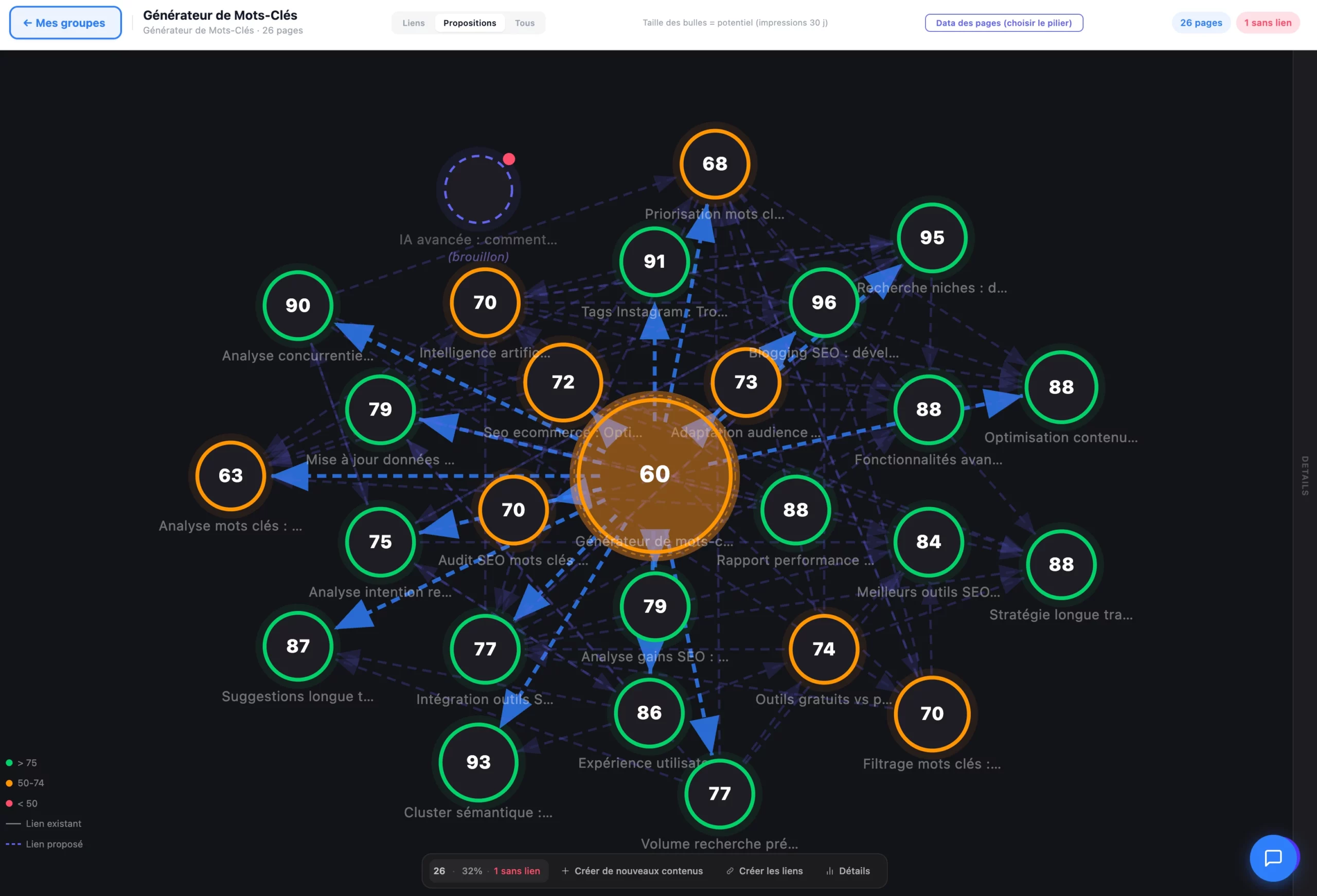
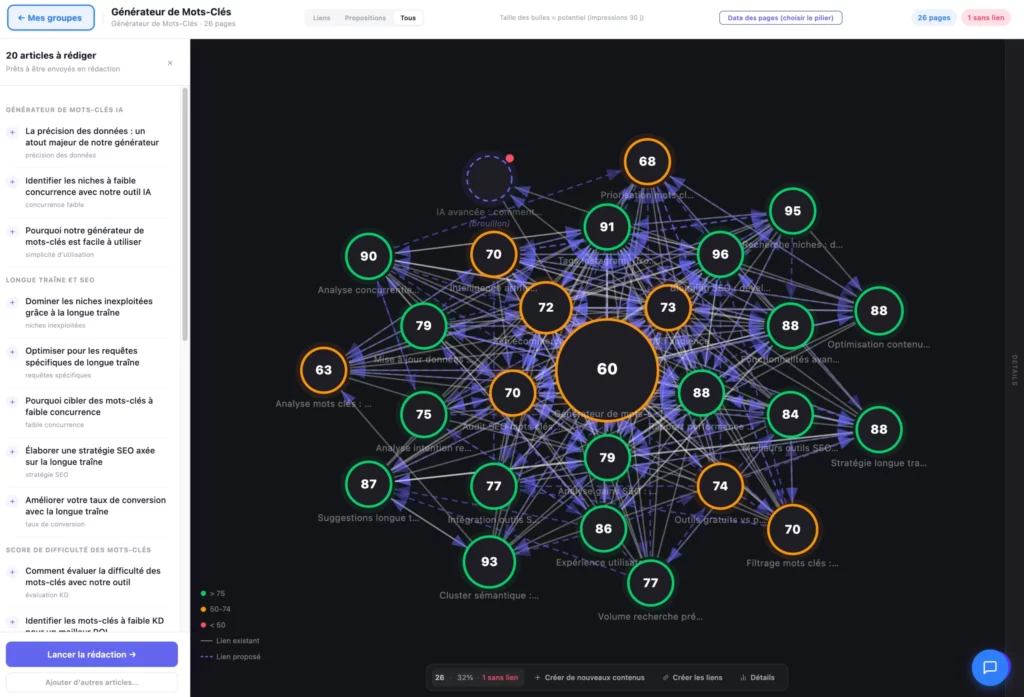
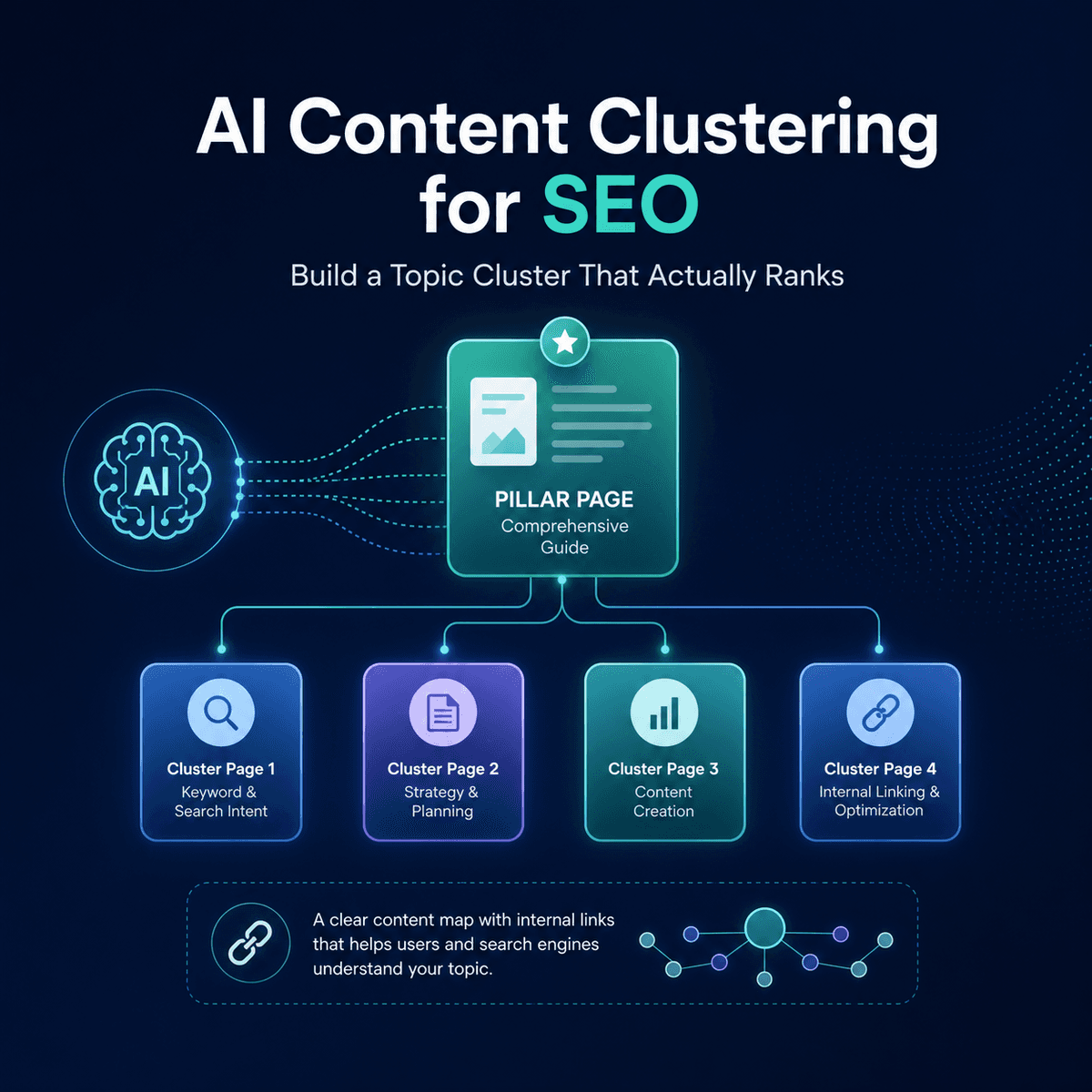
An AI SEO Topic Cluster Generator is a software tool that uses machine learning algorithms to automatically create topic clusters. A topic cluster consists of a central pillar page (the broad, authoritative resource) surrounded by multiple supporting articles (cluster content) that target related long-tail keywords. Each supporting piece links back to the pillar page, creating a semantic web that search engines interpret as expertise.
Traditional keyword research tools group keywords by volume or difficulty. AI generators go further by analyzing the actual meaning behind queries, identifying entities, and mapping user intent. The result is a content architecture that mirrors how your audience thinks and searches, not just what keywords happen to have search volume.
How AI Topic Clusters Differ from Traditional Keyword Mapping
Traditional SEO relied on flat lists of keywords. You might have 200 keywords scattered across 200 blog posts with no internal linking strategy. Google’s algorithms now prioritize topical authority. An AI SEO Topic Cluster Generator builds a hierarchical structure where one authoritative page covers the main topic, and multiple sub-pages cover specific angles, questions, and variations.
For example, a fitness website targeting “weight loss” would create a pillar page on weight loss fundamentals. The AI tool would then suggest cluster topics like “intermittent fasting for beginners,” “best cardio for belly fat,” “high-protein meal prep ideas,” and “how to overcome weight loss plateaus.” Each cluster page links to the pillar, and the pillar links out to all cluster pages.
Why Search Engines Reward Topic Clusters
Google’s RankBrain and BERT algorithms focus on understanding context and relationships between concepts. When your site demonstrates clear topical depth through interlinked content, search engines recognize your expertise. An AI SEO Topic Cluster Generator helps you achieve this systematically rather than accidentally.
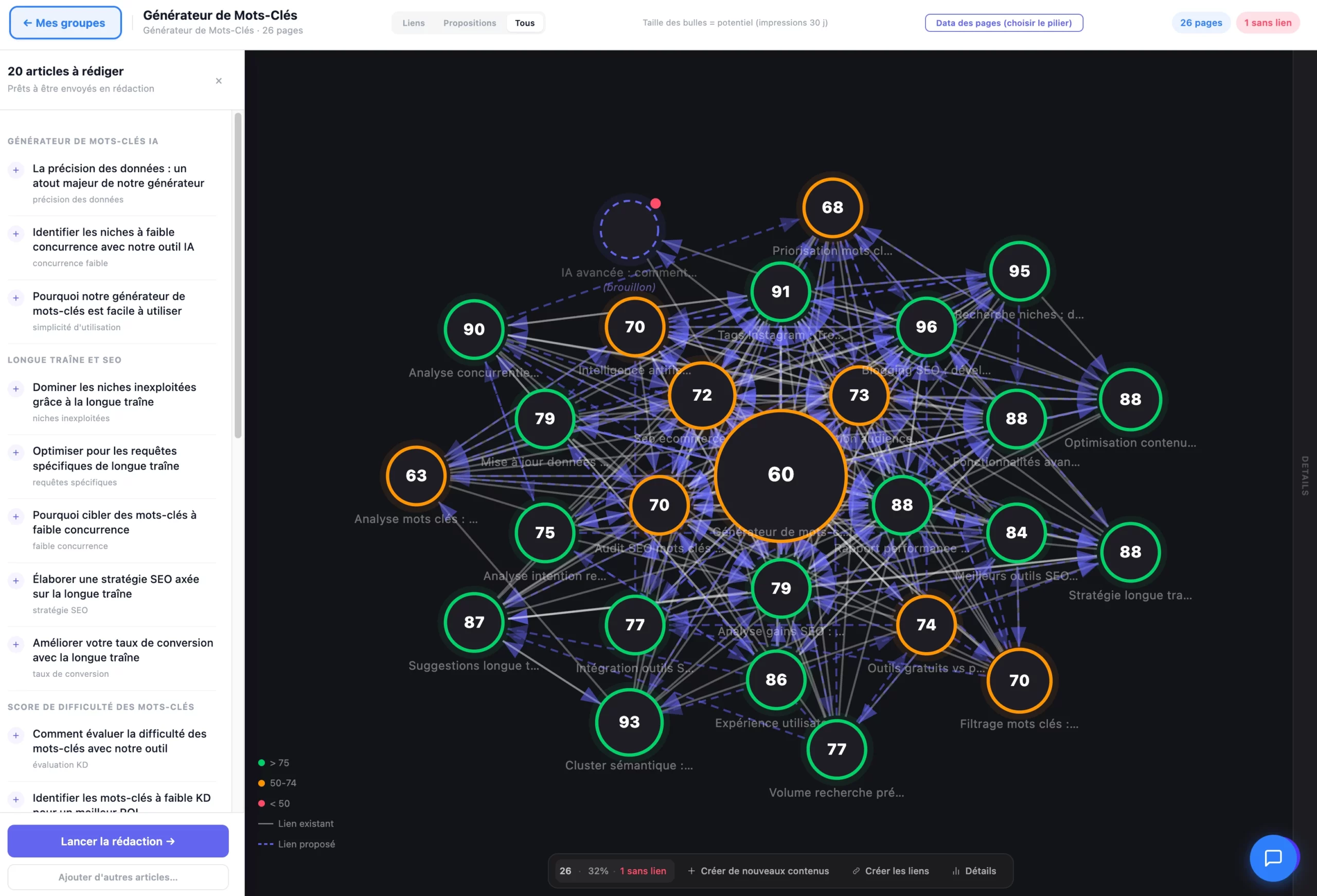
Internal links within a cluster pass authority from the pillar to supporting pages. More importantly, they help search engines discover and index all your related content faster. When a user searches for a long-tail query, the supporting page ranks. When they search for the broader topic, the pillar page ranks. Both benefit from the collective authority of the cluster.
The Role of Semantic Search in Topic Clustering
Semantic search means Google understands the intent behind words, not just the words themselves. An AI SEO Topic Cluster Generator uses natural language processing (NLP) to identify semantically related terms. If your pillar page covers “digital marketing,” the AI knows that “email automation,” “social media analytics,” and “conversion rate optimization” are related concepts worth covering in separate cluster pages.
This approach captures search traffic across the entire funnel. Some users search for broad informational queries, while others use specific, high-intent phrases. A well-structured cluster addresses both, positioning your site as the go-to resource for the entire topic ecosystem.
Core Features of an AI SEO Topic Cluster Generator
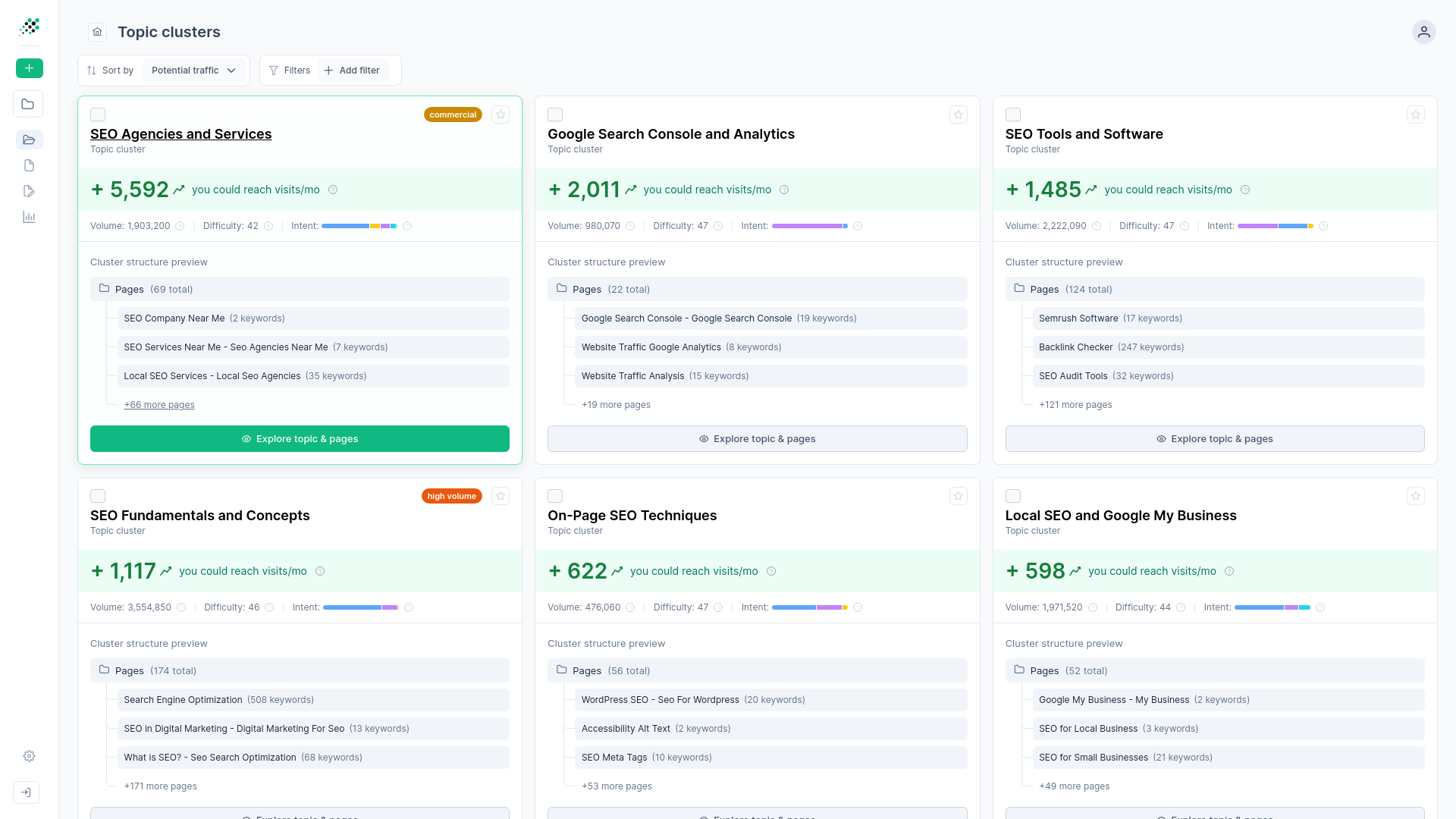
Not all AI tools are created equal. Understanding the essential features helps you choose the right platform and use it effectively.
Automated Keyword Grouping and Mapping
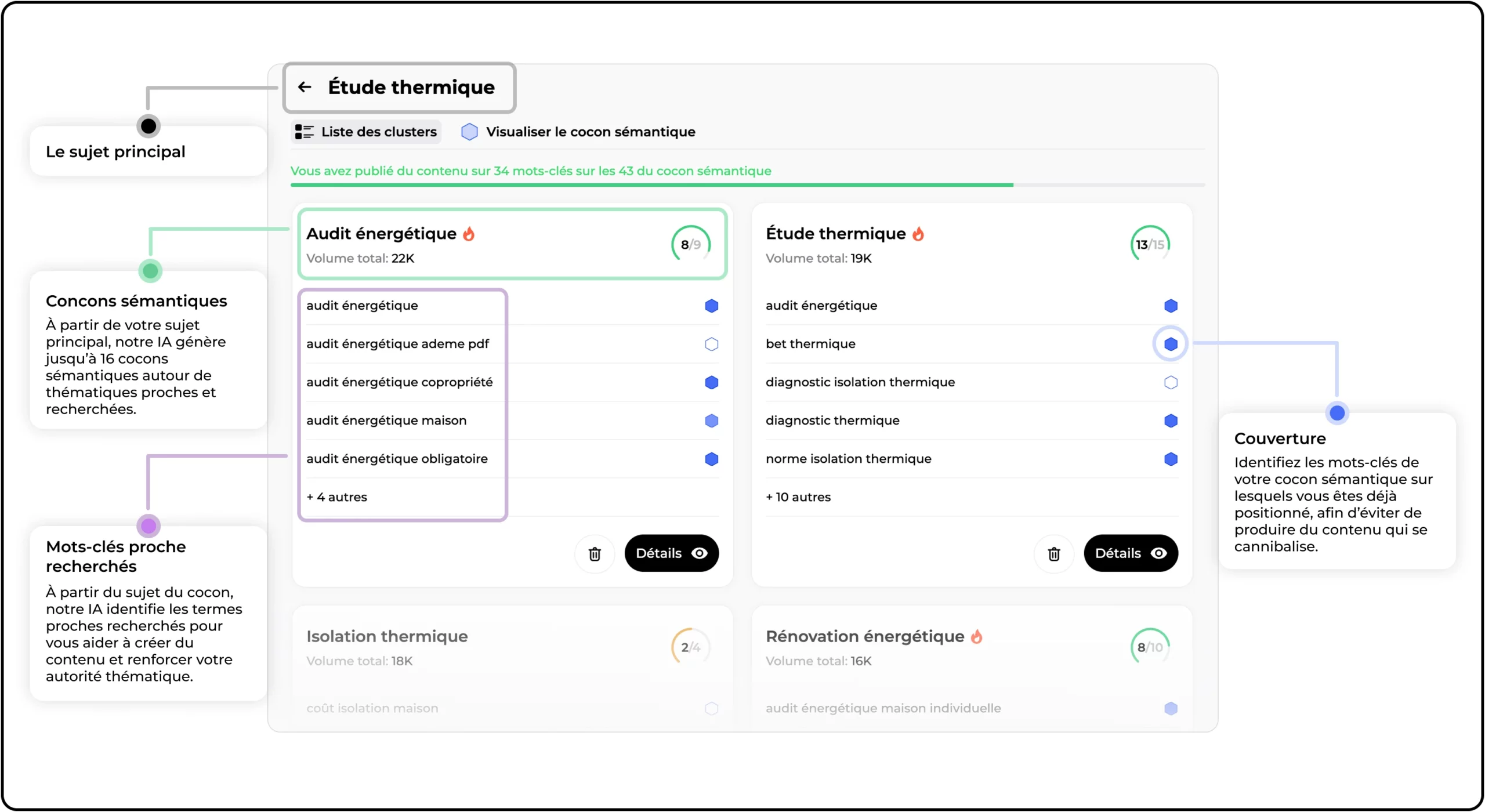
The primary function is grouping hundreds or thousands of keywords into logical clusters. The AI analyzes search volume, keyword difficulty, user intent, and semantic similarity. It then proposes a pillar topic and assigns supporting keywords to specific cluster pages. This saves weeks of manual spreadsheet work.
Search Intent Classification
Advanced tools classify each keyword by intent: informational, navigational, commercial, or transactional. This classification ensures you create the right type of content for each stage of the buyer’s journey. Informational keywords become blog posts, commercial keywords become comparison guides, and transactional keywords become product pages.
Content Gap Analysis
AI tools compare your existing content against what your competitors rank for. They identify topics you haven’t covered yet and suggest new cluster pages to fill those gaps. This feature turns your content strategy into a data-driven process rather than a creative guessing game.
Internal Linking Suggestions
Once clusters are built, the AI recommends anchor text and internal link placements. It analyzes your existing site structure and suggests where to add links from cluster pages to the pillar and vice versa. Proper internal linking maximizes the SEO value of every piece of content.
Content Brief Generation
Many AI SEO Topic Cluster Generator tools produce detailed content briefs for each cluster page. These briefs include suggested headings, key entities to mention, related questions to answer, and word count recommendations. Writers receive clear guidance, ensuring every piece aligns with the overall cluster strategy.
How to Use an AI SEO Topic Cluster Generator: Step-by-Step Process
Implementing AI topic clustering requires a structured workflow. Follow these steps to build a content architecture that ranks.
Step 1: Define Your Core Topics
Start with 5 to 10 broad topics relevant to your business. These are your potential pillar pages. For a SaaS company, core topics might include “project management software,” “team collaboration tools,” “remote work productivity,” and “agile methodology.” Input these into the AI tool as your starting seeds.
Step 2: Let the AI Generate Clusters
The AI SEO Topic Cluster Generator will crawl search data and produce a map of related keywords for each core topic. Review the suggested clusters and refine them based on your business priorities. Remove irrelevant suggestions and add any keywords you know are valuable from your own analytics.
Step 3: Prioritize Clusters by Business Impact
Not all clusters are equally valuable. Prioritize based on search volume, commercial intent, and alignment with your products or services. A cluster with lower volume but high purchase intent may outperform a high-volume informational cluster in terms of revenue.
Step 4: Create the Pillar Page First
Write a comprehensive pillar page that covers the core topic broadly. This page should be the most authoritative resource on your site for that subject. Aim for 2,000 to 5,000 words, include a table of contents, and link out to all planned cluster pages (even if they don’t exist yet, you can add links later).
Step 5: Produce Cluster Content in Order of Priority
Create cluster pages one by one, starting with the highest-priority topics. Each cluster page should target one primary long-tail keyword and naturally include related secondary keywords. Link every cluster page back to the pillar using descriptive anchor text.
Step 6: Interlink Cluster Pages
Don’t just link cluster pages to the pillar. Link related cluster pages to each other when it makes sense contextually. This creates a mesh of internal links that distributes authority throughout the cluster and helps users navigate related topics.
Step 7: Monitor and Expand
Track rankings and organic traffic for your pillar and cluster pages. Use the AI tool to identify new keyword opportunities that emerge as your content gains visibility. Continuously add new cluster pages to expand your topical coverage.
Benefits of Using an AI SEO Topic Cluster Generator
The advantages extend beyond better rankings. Here are the tangible benefits you can expect.
| Benefit | Impact |
|---|---|
| Faster Content Planning | Reduce keyword research time from weeks to hours |
| Improved Topical Authority | Search engines recognize your site as an expert resource |
| Higher Click-Through Rates | Pillar pages attract broad queries, cluster pages capture specific ones |
| Better Internal Linking | Automatic suggestions improve site architecture |
| Scalable Content Production | Clear briefs enable faster, more consistent writing |
| Competitive Advantage | Identify gaps your competitors haven’t covered |
Limitations and Challenges
AI tools are powerful but not infallible. They rely on existing search data, which means they may miss emerging trends or very niche topics. The quality of output depends heavily on the quality of your input. Vague core topics produce vague clusters. Additionally, AI-generated briefs require human review to ensure brand voice and strategic alignment.
Another challenge is the initial time investment. Building a complete topic cluster architecture for multiple core topics takes months of content production. Patience is essential because the SEO benefits compound over time, not overnight.
AI SEO Topic Cluster Generator vs. Manual Keyword Research
Understanding the differences helps you decide when to use AI and when to rely on manual methods.
| Aspect | AI Generator | Manual Research |
|---|---|---|
| Speed | Minutes to generate full clusters | Days to weeks of spreadsheet work |
| Scalability | Handles thousands of keywords easily | Limited by human capacity |
| Semantic Understanding | Uses NLP to find related concepts | Relies on manual intuition |
| Cost | Subscription fee required | Free but time-intensive |
| Customization | Requires prompt engineering and review | Full control over every decision |
| Accuracy | High but requires human validation | Depends on researcher expertise |
Most successful SEO teams use a hybrid approach. They leverage AI for the heavy lifting of data analysis and clustering, then apply human judgment for final decisions on content priorities and messaging.
Practical Applications Across Industries
Topic clustering works for any niche, but the implementation varies by industry.
E-commerce and Retail
Online stores use topic clusters to create buying guides, product comparison articles, and category overviews. A pillar page on “men’s running shoes” links to cluster pages on “best trail running shoes,” “how to choose running shoes for flat feet,” and “running shoe size guide.” This captures both commercial and informational search traffic.
SaaS and Technology
SaaS companies build clusters around product features, use cases, and industry solutions. A pillar page on “customer relationship management” links to pages on “CRM for real estate,” “CRM integration with email marketing,” and “CRM implementation checklist.” This approach targets users at different stages of the buying journey.
Healthcare and Wellness
Medical websites use clusters to cover conditions, treatments, and prevention strategies. A pillar page on “managing type 2 diabetes” links to pages on “diabetic meal planning,” “exercise for blood sugar control,” and “understanding HbA1c levels.” This builds trust and authority in a sensitive niche.
Finance and Insurance
Financial sites create clusters around investment strategies, insurance types, and retirement planning. A pillar page on “retirement planning basics” links to pages on “401k vs IRA,” “social security claiming strategies,” and “retirement income calculators.” These clusters target high-value keywords with strong commercial intent.
Common Mistakes When Using AI Topic Cluster Generators
Avoid these pitfalls to get the most from your AI tool.
Ignoring Search Intent
Grouping keywords by topic alone is insufficient. You must respect the intent behind each query. A keyword like “best CRM software” has commercial intent, while “what is CRM” has informational intent. Placing both on the same page confuses search engines and users. Use the AI tool’s intent classification feature to separate these.
Creating Thin Cluster Pages
Each cluster page must provide genuine value, not just a few paragraphs targeting a long-tail keyword. If you create 50 cluster pages with 300 words each, your topical authority will suffer. Aim for at least 1,000 words per cluster page, with original insights, data, and examples.
Neglecting Internal Link Anchor Text
Using generic anchor text like “click here” or “read more” wastes the SEO value of internal links. Use descriptive, keyword-rich anchor text that tells users and search engines what the linked page is about. The AI tool should provide suggestions, but you must review them for natural language.
Building Clusters Without a Pillar
Some teams create cluster pages without a strong pillar page. This is like building a wheel without a hub. The pillar page is essential for consolidating authority and providing a comprehensive resource. Always create the pillar first and make it the best content on your site.
Failing to Update Clusters
Search trends change, and your content must evolve. An AI SEO Topic Cluster Generator provides a snapshot in time. Regularly re-run your analysis to discover new keywords, remove outdated topics, and refresh existing pages. A cluster that was comprehensive two years ago may now have significant gaps.
Important Notes for Maximizing Results
Keep these strategic considerations in mind as you implement AI topic clustering.
Quality always trumps quantity. One well-researched, comprehensive pillar page outperforms ten mediocre ones. Invest in expert writers who can create content that genuinely helps users. AI tools assist with strategy, but they cannot replace human expertise and experience.
Monitor your analytics to understand which clusters drive conversions, not just traffic. Some clusters will generate leads while others only attract casual readers. Adjust your content production priorities based on business outcomes, not just search volume.
Combine AI topic clustering with other SEO techniques like technical optimization, link building, and schema markup. Topic clusters improve your site’s structure, but you still need high-quality backlinks and a fast, mobile-friendly website to rank competitively.
Frequently Asked Questions
What is the difference between a topic cluster and a keyword group?
A keyword group is simply a collection of related keywords. A topic cluster is a structured content architecture with a central pillar page and interlinked supporting pages. The cluster includes internal linking, content hierarchy, and a strategic approach to covering a subject comprehensively.
How many cluster pages should I create per pillar?
T Start with 5 to 10 high-priority cluster pages and expand over time. The key is ensuring every page adds unique value and targets a distinct search query.
Can an AI SEO Topic Cluster Generator replace my SEO team?
No. These tools automate data analysis and content planning, but they cannot replace strategic thinking, creative writing, or relationship building. Your SEO team should use AI to work faster and smarter, not to delegate their core responsibilities.
How long does it take to see results from topic clusters?
Most sites see initial ranking improvements within 2 to 3 months, but significant traffic growth typically takes 6 to 12 months. Topic clustering is a long-term strategy that builds compounding authority over time. Consistency and regular content updates are essential.
What is the best AI SEO Topic Cluster Generator on the market?
Several tools offer strong capabilities, including MarketMuse, Clearscope, Surfer SEO, and Frase. The best choice depends on your budget, team size, and specific needs. Most platforms offer free trials, so test a few to see which integrates best with your workflow.
Do topic clusters work for local SEO?
Yes. Local businesses can create clusters around their services and geographic areas. A plumber might have a pillar page on “plumbing services” with cluster pages on “emergency plumber in [city],” “water heater repair in [city],” and “drain cleaning services in [city].”
Conclusion
An AI SEO Topic Cluster Generator is an essential tool for modern content teams that want to build topical authority and rank for competitive keywords. By automating the analysis of search intent, semantic relationships, and content gaps, these tools enable you to create a structured content architecture that search engines reward. The key to success lies in combining AI efficiency with human judgment, producing high-quality content that genuinely serves your audience, and maintaining a consistent publishing schedule. Start with one core topic, build a strong pillar page, and expand your cluster methodically. Over time, your site will become a recognized authority in your niche, driving sustainable organic traffic and business growth.
Xem thêm:
- The Ultimate AI SEO Workflow for SaaS: Scale Organic Growth with Intelligent Automation
- AI SEO Content Depth: The Complete Guide to Outranking Thin Content
- AI SEO Smart Search: The Complete Guide to Future-Proofing Your Organic Traffic
- AI WordPress SEO: Your Complete Blueprint for Automated Organic Growth
- AI SEO for Small Business: The Complete Guide to Smarter Rankings on a Budget
Bài viết cùng chủ đề:

AI SEO SEO Automation with Make: The Complete Workflow Guide

AI SEO SEO Automation with Zapier: The Complete Workflow Guide

AI SEO SEO Automation with n8n: The Complete Workflow Guide
AI SEO SEO Automation with Gemini: The Complete Guide to Scaling Organic Growth

AI SEO SEO Automation with Claude: The Complete Guide to Scaling Content in 2025

AI SEO SEO Automation with ChatGPT: The Complete Playbook for 2025

AI SEO & SEO Automation for Affiliate Sites: The 2025 Playbook for Passive Income Growth
AI SEO & SEO Automation for Bloggers: The Complete Guide to Scaling Your Content

AI SEO & SEO Automation for Agencies: The Complete 2025 Playbook

AI SEO and SEO Automation for Ecommerce: The Complete Playbook for 2025

AI SEO & SEO Automation for WordPress: The Complete Playbook for 2025
AI SEO SEO Automation Strategy: The Complete Playbook for 2025

Mastering the AI SEO SEO Automation Process: A Complete Guide to Scaling Organic Growth
AI SEO SEO Automation System: The Complete Guide to Scaling Organic Growth in 2025
AI SEO SEO Automation Platform: The Complete Guide to Scaling Organic Growth in 2025
AI SEO SEO Automation Software: The Complete Guide to Scaling Organic Growth in 2025















