
No products in the cart.
AI SEO LLM Citations: The Complete Guide to Getting Referenced by Generative Engines
10
Aug
Aug
The landscape of search is shifting beneath our feet. Traditional click-based rankings are being supplemented, and sometimes replaced, by direct answers generated by large language models. This shift has birthed a new performance metric: AI SEO LLM Citations. This refers to the process of optimizing your digital content so that AI models like ChatGPT, Perplexity, Google Gemini, and Microsoft Copilot explicitly mention your brand or website as a source when generating responses. Securing these citations is no longer a futuristic concept; it is a critical component of modern digital visibility. This guide provides a deep dive into what these citations are, why they matter, and exactly how to earn them.
Understanding the Shift from Clicks to Citations
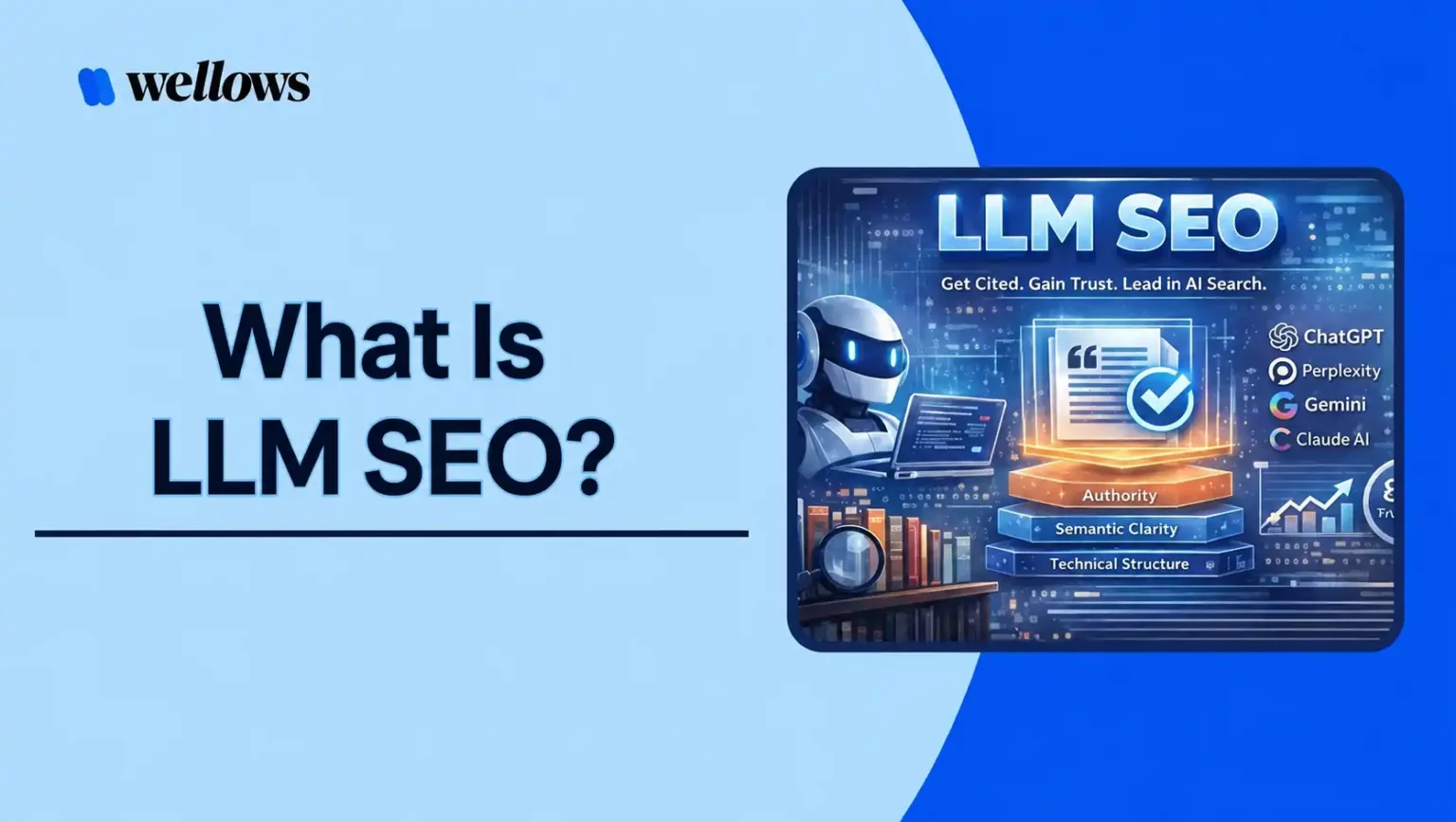
For two decades, SEO focused on ranking in the “blue links” of Google. The goal was to drive traffic to a website. The emergence of generative AI has introduced a zero-click paradigm. When a user asks an AI chatbot a question, the model synthesizes an answer from its training data and real-time web retrieval. If your content is used to formulate that answer, you receive a citation—a mention of your domain name or brand within the generated text.
This is fundamentally different from a hyperlink. A hyperlink requires a user action (a click) to transfer value. A citation transfers authority and brand awareness instantly, within the answer itself. For businesses, this means that even if users do not visit your site, they are seeing your name associated with expert information. This builds trust and positions your brand as a thought leader in the eyes of the consumer.
The Mechanics of How AI Models Choose Sources
To optimize for AI SEO LLM Citations, you must understand the retrieval process. Most modern LLMs do not rely solely on static training data. They use a technique called Retrieval-Augmented Generation (RAG). When a query is entered, the system searches an index of web pages, retrieves relevant chunks of text, and then uses those chunks to construct a coherent answer.
The selection process is not random. Models prioritize content based on several algorithmic factors. These include the semantic relevance of the text to the query, the authority of the domain, the freshness of the information, and the clarity of the writing. Content that is structured logically with clear headings and concise paragraphs is easier for the model to parse and cite. Conversely, content that is buried in JavaScript or hidden behind complex navigation is often invisible to these crawlers.
The Role of Structured Data in Citation Generation
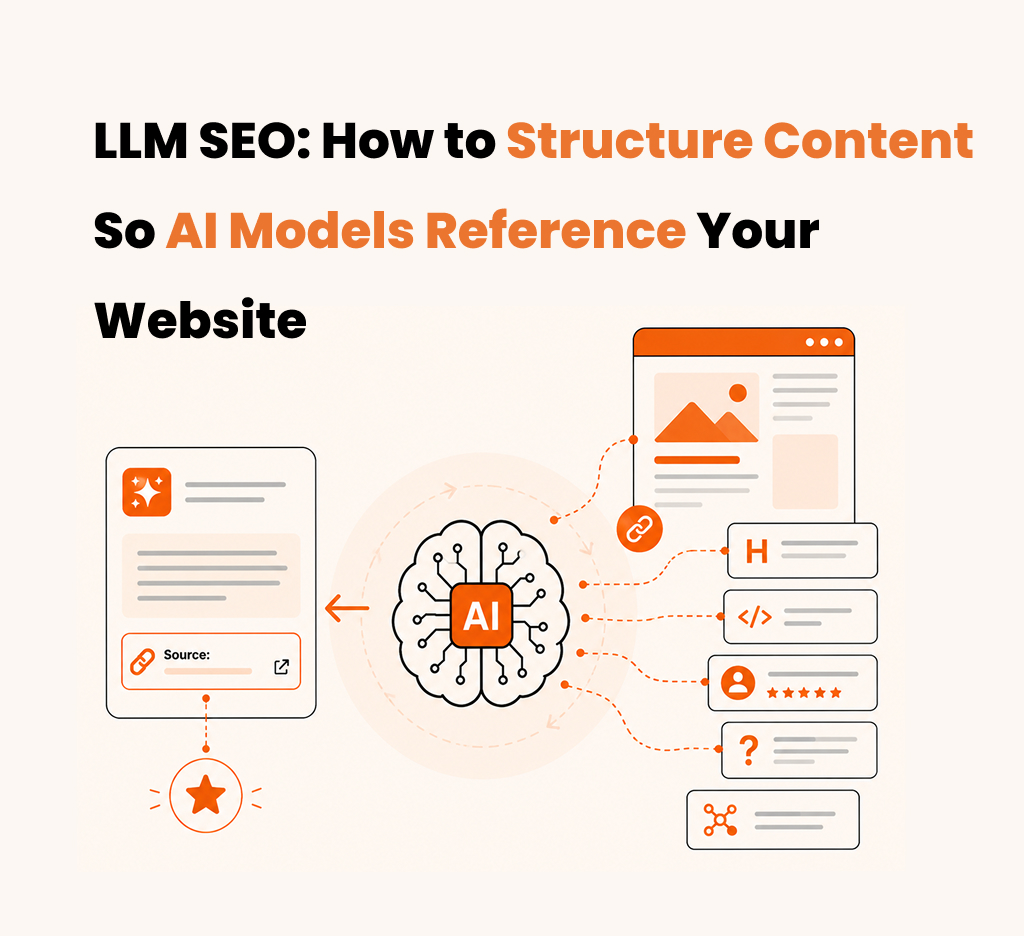
Structured data, specifically Schema.org markup, acts as a direct communication channel to AI crawlers. While traditional SEO uses schema for rich snippets, AI citation engines use it to understand the entity of your content. Implementing Article, FAQPage, and HowTo schema helps the model identify the exact question your page answers. This reduces ambiguity and increases the likelihood that your specific paragraph will be extracted as the authoritative answer.
Furthermore, entity clarity is vital. If your brand name is ambiguous, the AI might cite a competitor. Ensure your Organization schema includes your official logo, social profiles, and legal name. This helps the model disambiguate your brand from others, ensuring that when it cites your data, it correctly attributes the source to you.
Key Differences Between Traditional SEO and AI SEO

While the underlying goal of visibility remains the same, the tactics diverge significantly. Traditional SEO focuses on link equity and domain authority as primary ranking signals. AI SEO focuses on content clarity, factual accuracy, and citation probability. The table below highlights the core differences:
| Aspect | Traditional SEO | AI SEO (LLM Citations) |
|---|---|---|
| Primary Goal | Ranking in search engine results pages (SERPs) | Being referenced as a source in AI-generated answers |
| User Action | Click-through to the website | Brand exposure within the answer itself |
| Content Format | Optimized for snippets and scannability | Optimized for direct extraction and factual clarity |
| Key Metric | Domain Authority (DA) and PageRank | Source Trust Score and Citation Frequency |
| Technical Focus | Crawlability and indexation | Structured data and API accessibility |
The distinction lies in intent. Traditional SEO assumes the user wants to explore. AI SEO assumes the user wants an immediate, definitive answer. Your content strategy must cater to the latter by providing direct, concise answers at the top of the page, followed by deeper analysis.
Proven Strategies to Earn AI SEO LLM Citations
Earning a citation requires a proactive approach. You cannot simply wait for the AI to discover you. You must structure your digital assets to be easily digestible by machine learning algorithms. The following strategies are the most effective methods to increase your citation rate.
1. Optimize for Direct Answer Extraction
AI models prefer content that is unambiguous. When writing, place the most critical answer in the first paragraph of the section. Use the “inverted pyramid” style. State the conclusion first, then provide the supporting evidence. This allows the retrieval system to grab the core fact without having to parse through fluff. For example, if you are writing about “benefits of X,” start with a bulleted list of the benefits, then explain each one in detail below.
Additionally, use consistent terminology. If you are writing about “AI SEO LLM Citations,” do not interchangeably call it “AI referencing” or “model attribution” without defining those terms. Consistency in vocabulary helps the model map your content to the correct query intent.
2. Build a Strong Digital Footprint
LLMs trust sources that are corroborated across the web. A single article on your blog is less likely to be cited than a piece of research that is referenced by multiple industry publications. You need to build a “digital footprint” that includes guest posts, press releases, and profiles on authoritative platforms like LinkedIn and Crunchbase. When the AI sees your domain mentioned in multiple high-authority contexts, it increases your Source Trust Score.
Focus on getting cited in “roundup” posts and “resource” lists. These are high-value targets because they aggregate expert opinions. If you can get your statistics or quotes included in these lists, you significantly increase your chances of being pulled into an AI response.
3. Create Original Research and Data
AI models are heavily reliant on data. If you publish original statistics, survey results, or proprietary research, you become the primary source for that data. When a user asks the AI for that specific statistic, the model must cite you because you are the originator. This is the most powerful form of citation because it is exclusive. No other website can claim that data point.
Ensure your data is presented in a machine-readable format. Use HTML tables for comparisons and ul lists for key findings. Avoid embedding data solely in images or PDFs, as these are harder for crawlers to parse accurately.
4. Implement a “Answer-First” Content Architecture
Structure your website to answer specific questions. Create dedicated pages for “What is X?” and “How to do Y?” rather than burying these definitions inside long-form guides. This modular approach allows the AI to find a perfect match for a specific query. Use H2 and H3 headings that mirror the exact phrasing of common user queries. This alignment between query language and heading language is a strong relevance signal.
Furthermore, maintain a “Last Updated” date on your articles. AI models prioritize fresh information, especially for topics like technology, finance, and health. A page that was updated last week is significantly more likely to be cited than a page that was last updated in 2021, even if the core information is similar.
Common Mistakes That Block AI Citations
Many websites inadvertently block their own success. Understanding these pitfalls is just as important as implementing the right strategies. Avoiding these errors will give you a competitive edge in the AI search landscape.
- Ignoring Technical Crawlability: If your robots.txt file blocks GPTBot or Google-Extended, you are invisible to these models. Check your server logs to see if these crawlers are accessing your site.
- Over-Optimizing for Keywords: AI models penalize “keyword stuffing” just like traditional search engines. Write naturally. If the text reads awkwardly to a human, the A
- Relying on Clickbait Headlines: AI models need descriptive headlines. A headline like “You Won’t Believe This!” provides no semantic value. Use descriptive, keyword-rich headlines that clearly state the topic.
- Neglecting Mobile Usability: While AI crawlers do not “see” the page visually, they do assess the HTML structure. A messy, unresponsive layout often correlates with poor HTML hygiene, which can confuse the parser.
- Failing to Update Old Content: The “set it and forget it” mentality is dangerous. AI models often filter out content that is outdated. Regular updates signal that your site is a living resource, not a digital ghost town.
- Citation Frequency: How often your domain appears in AI responses for your target keywords.
- Sentiment of Context: Is the AI citing you as a positive example, a neutral reference, or a counter-argument?
- Competitor Presence: Who is being cited instead of you? Analyze their content structure to identify gaps in your own strategy.
Measuring the Impact of LLM Citations
Tracking citations is more complex than tracking clicks. You cannot rely on Google Analytics alone. You need to monitor the AI platforms directly. The most effective method is to manually query the major LLMs with your target keywords and observe if your brand appears in the response. This is a manual process but provides the most accurate data.
There are also emerging SEO tools that track “Share of Voice” in AI responses. These tools use APIs to query models like ChatGPT and Gemini at scale, logging which domains are cited for specific keyword clusters. While these tools are not perfect, they provide a baseline metric to measure your growth over time. Track the following metrics:
Important Notes on AI Model Policies

It is crucial to understand that AI models have different policies regarding web crawling. OpenAI’s GPTBot can be blocked via robots.txt, but Google’s Gemini uses the Google-Extended user agent. If you block one, you might still be accessible to the other. You must decide if you want to be indexed by these models at all.
Some publishers choose to block AI crawlers to prevent content scraping. However, this also forfeits the opportunity for citations. For most businesses, the brand exposure gained from citations outweighs the risk of content being used in training data. If you choose to allow crawling, ensure you have a clear copyright policy and that your content is original. Duplicate content is rarely cited, as the model cannot determine the original source.
Frequently Asked Questions (FAQ)
What is the difference between a backlink and an AI citation?
A backlink is a hyperlink from one website to another, designed to drive traffic and pass link equity. An AI citation is a textual mention of a brand or domain within a generated answer, without necessarily providing a clickable link. Citations build brand authority and awareness, while backlinks build technical SEO strength.
How do I check if my website is cited by ChatGPT?
You can manually check by asking ChatGPT specific questions related to your niche and reviewing the sources it lists. Alternatively, you can use SEO platforms that integrate with the OpenAI API to track brand mentions across multiple queries automatically. Look for the “Sources” button in the ChatGPT interface to see which domains were used.
Does having high Domain Authority guarantee AI citations?
No. While high authority helps, AI models prioritize relevance and clarity. A small, niche blog with a perfectly structured, data-rich article can outrank a high-authority news site with a generic overview. The model seeks the most direct answer, not necessarily the most popular website.
Should I block GPTBot from crawling my site?
Blocking GPTBot prevents your content from being used in AI training data and real-time retrieval. This is a strategic decision. If you rely on direct traffic and fear content theft, blocking may be appropriate. However, if you want to build brand visibility in the AI space, you should allow crawling.
What is the best content format for LLM citations?
Content that uses clear H2/H3 headings, bullet points, and short paragraphs performs best. “Listicles” and “Definition” articles are highly effective because they provide discrete chunks of information that are easy to extract. Long-form guides are also good, provided the key answers are summarized at the top.
Conclusion
The era of AI SEO LLM Citations is here, and it requires a strategic pivot in how we approach content creation. The focus is shifting from optimizing for a search engine algorithm to optimizing for a reasoning engine. By prioritizing clarity, factual accuracy, and structured data, you can position your brand as a primary source of truth. The strategies outlined in this guide—from answer-first architecture to original research—provide a roadmap to earning these valuable mentions. As generative search becomes the default for information discovery, the brands that secure these citations today will own the digital landscape of tomorrow. Start by auditing your current content for extractability, and then commit to producing the kind of definitive, well-structured information that AI models trust.
Xem thêm:
- AI SEO AI Referral Traffic: The Complete Guide to Winning Algorithmic Referrals in 2025
- AI SEO LLM Brand Authority: The Complete Guide to Dominating Search in the Age of Generative Engines
- AI SEO Content Originality: The Complete Guide to Standing Out in 2025
- The Ultimate Guide to AI Prompt Optimization: Unlocking Precision in Every AI Interaction
- AI Knowledge Graph: The Complete Guide to Intelligent Data Networks
Bài viết cùng chủ đề:

AI SEO SEO Automation with Make: The Complete Workflow Guide

AI SEO SEO Automation with Zapier: The Complete Workflow Guide

AI SEO SEO Automation with n8n: The Complete Workflow Guide
AI SEO SEO Automation with Gemini: The Complete Guide to Scaling Organic Growth

AI SEO SEO Automation with Claude: The Complete Guide to Scaling Content in 2025

AI SEO SEO Automation with ChatGPT: The Complete Playbook for 2025

AI SEO & SEO Automation for Affiliate Sites: The 2025 Playbook for Passive Income Growth
AI SEO & SEO Automation for Bloggers: The Complete Guide to Scaling Your Content

AI SEO & SEO Automation for Agencies: The Complete 2025 Playbook

AI SEO and SEO Automation for Ecommerce: The Complete Playbook for 2025

AI SEO & SEO Automation for WordPress: The Complete Playbook for 2025
AI SEO SEO Automation Strategy: The Complete Playbook for 2025

Mastering the AI SEO SEO Automation Process: A Complete Guide to Scaling Organic Growth
AI SEO SEO Automation System: The Complete Guide to Scaling Organic Growth in 2025
AI SEO SEO Automation Platform: The Complete Guide to Scaling Organic Growth in 2025
AI SEO SEO Automation Software: The Complete Guide to Scaling Organic Growth in 2025















