
No products in the cart.
AI SEO LLM Referral Traffic: The Complete Guide to Winning AI Search Visibility
10
Aug
Aug
The digital marketing landscape is shifting beneath our feet. For years, the goal was simple: rank on page one of Google. Today, a new frontier demands attention—AI SEO LLM Referral Traffic. This refers to visitors who arrive at your website directly from artificial intelligence platforms like ChatGPT, Perplexity, Claude, or Google’s AI Overviews. These users don’t click traditional blue links; they receive synthesized answers with citations. Understanding how to capture this traffic is no longer optional. It is becoming a critical component of sustainable organic growth.
What Exactly is AI SEO LLM Referral Traffic?
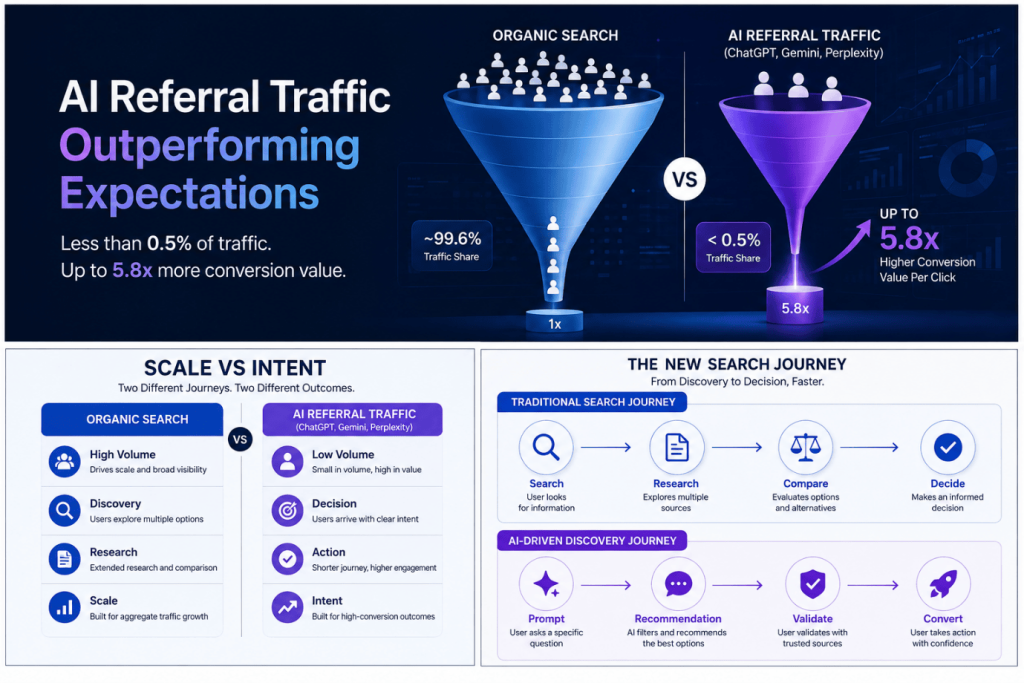
AI SEO LLM Referral Traffic is the measurement of sessions initiated from large language model (LLM) interfaces. When a user asks ChatGPT a question and the model cites your article as a source, that click counts as referral traffic. Similarly, when Perplexity lists your website in its answer sources, or when Google’s AI Overviews feature your content, you receive this new form of referral traffic.
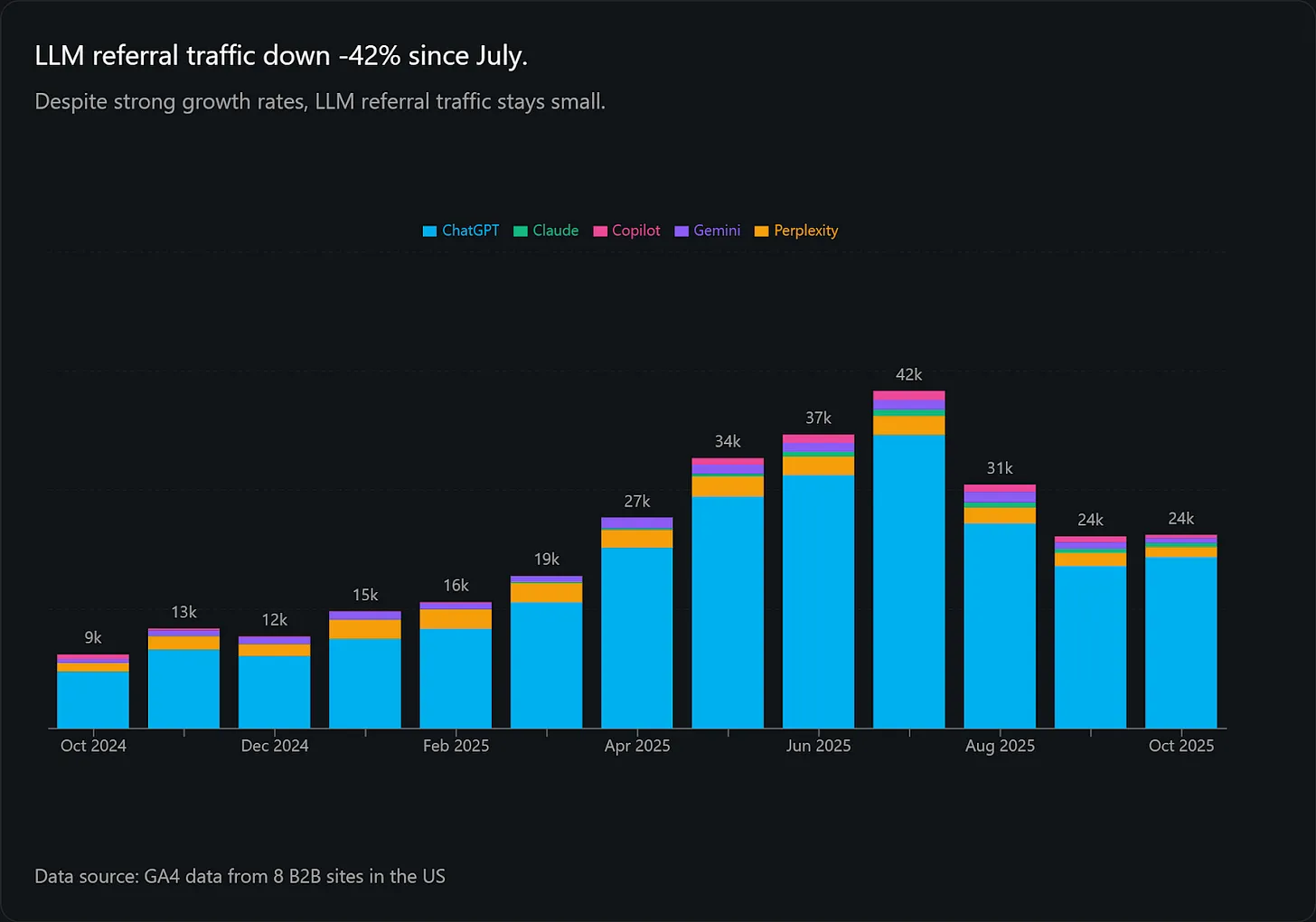
This differs fundamentally from traditional SEO. In classic search, you optimize for keywords to appear in a list of ten results. In AI search, you optimize for context, clarity, and authority so that an algorithm chooses your content as the definitive answer. The traffic volume is currently smaller than Google’s, but the conversion potential is often higher. Users arriving from an AI assistant have already received a summary; they click through for verification, depth, or specific data points.
The Mechanics Behind LLM Referral Traffic
To understand this traffic, you must understand the retrieval process. LLMs do not “remember” your website. They generate answers based on training data and, increasingly, real-time retrieval. When a model uses retrieval-augmented generation (RAG), it searches an index of web pages, ranks them for relevance, and then uses those pages to formulate an answer. If your page is selected, it becomes a citation.
This process favors content that is structured, factual, and unambiguous. The algorithm looks for passages that directly answer the query without requiring inference. It also prioritizes sources that are consistently cited across the web. This creates a feedback loop: the more you are cited by other AI systems, the more likely you are to be cited again.
Why AI SEO LLM Referral Traffic Matters for Your Business
The importance of this traffic type cannot be overstated. Consider the current user behavior trends. More users are bypassing traditional search engines for complex queries. They ask AI assistants for recommendations, research summaries, and comparisons. If your brand is absent from these answers, you are invisible to a growing segment of high-intent users.
Furthermore, this traffic is highly engaged. A study of referral patterns indicates that AI-referred users spend more time on site and view more pages per session than social media referrals. They are in research mode. They have already received a concise answer and are now looking for the underlying evidence. This makes them prime candidates for newsletter signups, demo requests, and whitepaper downloads.
Key Differences Between Traditional SEO and AI SEO
| Aspect | Traditional SEO | AI SEO (LLM Referral) |
|---|---|---|
| Primary Goal | Rank #1 for a keyword | Be cited as a source in an answer |
| Content Format | Optimized for snippets and CTR | Optimized for extraction and clarity |
| User Intent | Click to find an answer | Verify an answer already given |
| Metrics | Impressions, CTR, Position | Citations, Brand Mentions, Direct Links |
| Algorithm Focus | Backlinks, Keywords, UX | Entity Clarity, Factual Accuracy, Structure |
The table above illustrates a fundamental shift. In traditional SEO, you fight for position. In AI SEO, you fight for inclusion. The algorithms are different, and the optimization strategies must be different as well.
How to Optimize for AI SEO LLM Referral Traffic
Optimizing for LLM referral traffic requires a technical and editorial approach. It is not about gaming the system; it is about making your content machine-readable and undeniably authoritative. Here are the core strategies that work in 2025.
1. Implement Structured Data and Schema Markup
LLMs rely heavily on structured data to understand the context of your content. Schema markup, specifically JSON-LD, helps the algorithm identify entities, relationships, and facts. Use the following schemas to improve your chances of being cited:
- Article: For standard blog posts and news pieces.
- FAQPage: For question-and-answer sections.
- HowTo: For step-by-step guides.
- Product: For e-commerce pages with reviews and pricing.
- Organization: To establish your brand’s entity and social profiles.
- Consistent NAP (Name, Address, Phone) across all platforms.
- A well-maintained Wikipedia page or Wikidata entry.
- Regularly updated “About Us” and “Team” pages with clear bios.
- Active participation in industry forums and publications.
- chat.openai.com
- chat.perplexity.ai
- claude.ai
- gemini.google.com
- copilot.microsoft.com
When you mark up your content, you provide a clear map for the AI. It no longer has to guess what your page is about; you are telling it directly. This increases the likelihood of your content being selected for a citation.
2. Write for Extraction, Not Just Reading
Traditional SEO writing focuses on readability and engagement. AI SEO writing focuses on extractability. This means using clear, declarative sentences. It means placing the answer to the query in the first paragraph, followed by supporting evidence. It means using bullet points and tables to present data in a digestible format.
For example, if you are writing about “best project management software,” do not bury the answer in a long introduction. Start with a direct statement: “The best project management software for small teams is Asana due to its intuitive interface and robust free tier.” Then, provide a comparison table. This structure allows the LLM to easily pull the key facts without parsing complex prose.
3. Build a Strong Entity-Based Brand
LLMs are becoming increasingly entity-aware. They do not just look at keywords; they look at the relationships between people, places, and things. To win AI SEO LLM Referral Traffic, you must build a clear digital entity. This involves:
When your brand is a recognized entity, the LLM trusts it more. Trust leads to citations. Citations lead to referral traffic.
4. Target Long-Tail and Conversational Queries
Users of AI assistants speak in full sentences. They ask, “What is the difference between a CPU and a GPU?” rather than typing “CPU vs GPU.” Your content must target these conversational, long-tail queries. Use tools like AnswerThePublic and “People Also Ask” to find these questions. Then, create content that answers them directly and concisely.
Create a dedicated FAQ section on every major post. This not only helps with traditional featured snippets but also provides the exact Q&A format that LLMs love to cite.
5. Improve Page Speed and Core Web Vitals
While LLMs do not “browse” your site like a human, the retrieval process does consider page accessibility. If your site is slow or has rendering issues, the crawler may not index your content properly. Ensure your pages load in under 2.5 seconds. Optimize images, use lazy loading, and minimize JavaScript. A technically sound website is a prerequisite for any form of organic traffic, including AI referral traffic.
Tools to Track AI SEO LLM Referral Traffic
You cannot improve what you cannot measure. Tracking this traffic requires a different approach than standard UTM tagging. Here are the most effective methods for monitoring your AI referral sources.
Google Analytics 4 (GA4) Setup
In GA4, you can create a segment for AI referral traffic. Look for sessions where the source matches known AI domains. The primary sources to track are:
Create a channel grouping rule that categorizes these domains as “AI Referral.” This allows you to see the volume, engagement, and conversion rates for this traffic segment in your standard reports.
Server-Side Tracking for Accuracy
Many AI platforms block standard client-side tracking scripts. To get accurate data, you may need to implement server-side tracking. This involves sending event data from your server directly to GA4, bypassing the browser. This ensures that clicks from AI assistants are recorded even if the user has strict privacy settings enabled.
Brand Mention Monitoring
Use tools like Brand24 or Mention to track when your brand name appears in AI-generated responses. You can manually test queries in ChatGPT and Perplexity to see if you are cited. While this is not automated, it provides qualitative data on your visibility. Track your “Share of Voice” in AI answers versus your competitors.
Common Mistakes That Kill AI SEO LLM Referral Traffic
Many marketers are trying to chase this traffic but are making critical errors. Avoiding these mistakes is just as important as implementing the right strategies.
1. Keyword Stuffing in AI-Facing Content
LLMs are sophisticated. They can detect unnatural language patterns. If you stuff your content with the target keyword “AI SEO LLM Referral Traffic” repeatedly, the algorithm will likely penalize you. Write naturally. Use synonyms and related terms. The goal is to sound like a human expert, not a robot.
2. Ignoring Factual Accuracy
LLMs are trained to avoid citing unreliable sources. If your content contains outdated statistics or incorrect information, you will be filtered out. Every claim you make must be backed by a credible source. If you cite a statistic, link to the original study. If you make a claim, provide evidence. Accuracy is the currency of AI search.
3. Using Paywalls or Login Walls
If your content is behind a paywall, the LLM crawler cannot access it. This means it cannot be cited. If you want AI referral traffic, your best content must be freely accessible. You can use paywalls for gated assets like templates or tools, but the core informational content must be open.
4. Neglecting the “People Also Ask” Section
Google’s “People Also Ask” (PAA) section is a goldmine for AI optimization. The questions in PAA are often the exact prompts users type into ChatGPT. If you answer these questions clearly in your content, you are more likely to be cited. Ignoring PAA means ignoring the voice of the user.
Practical Guide: A Step-by-Step Strategy to Win AI Referral Traffic
Let’s consolidate the theory into a practical, actionable plan. Follow these steps to start capturing AI SEO LLM Referral Traffic within the next 90 days.
Step 1: Audit Your Current Content for Extractability
Take your top 10 performing pages. Read them with a critical eye. Can you find the answer to the main query in the first 100 words? Are you using bullet points for lists? Are your statistics clearly labeled? If not, rewrite these sections. Focus on making the content skimmable for a bot.
Step 2: Create “Citation-Worthy” Data Assets
Original research is the most cited content type. Conduct a survey, analyze your internal data, or compile industry statistics. Publish this as a standalone report. This gives LLMs a unique source to cite. Original data is rarely ignored because it cannot be found elsewhere.
Step 3: Optimize for Entity Clarity
Ensure your website clearly states who you are, what you do, and who you serve. Use the “About” page to define your company’s mission and history. Use the “Contact” page to list your physical address and phone number. This helps the LLM connect the dots between your content and your brand entity.
Step 4: Build Digital PR and Backlinks
LLMs still rely on backlinks as a trust signal. A page with high-quality backlinks from authoritative domains is more likely to be cited. Focus on digital PR—getting mentioned in industry roundups, news articles, and expert lists. These backlinks signal to the LLM that your content is valuable.
Step 5: Monitor and Iterate
Set up a monthly report for your AI referral traffic. Analyze which pages are getting citations. Look at the queries that triggered those citations. Double down on those topics. If a page is getting zero AI traffic, analyze why. Is it too thin? Is it poorly structured? Use the data to guide your content calendar.
Important Notes on the Future of AI SEO LLM Referral Traffic
The landscape is evolving rapidly. What works today may not work in six months. However, certain principles remain constant. The importance of factual accuracy will only increase. The value of a strong brand entity will grow. The need for clear, structured content will become non-negotiable.
One critical note: do not abandon traditional SEO. Google still drives the majority of web traffic. AI SEO is an additive strategy, not a replacement. The best approach is a unified one—create content that ranks well in Google and is also structured for AI extraction. This dual optimization ensures you capture traffic from all sources.
Another note on privacy: as AI platforms evolve, they may change how they handle referral links. Some may use redirects or anonymizers. Stay flexible with your tracking methods. The key is to focus on the content quality, not the technical tracking details.
Frequently Asked Questions (FAQ)
What is the difference between AI referral traffic and regular referral traffic?
Regular referral traffic comes from links on other websites, like a blog or a news site. AI referral traffic specifically comes from links embedded in answers generated by large language models like ChatGPT, Perplexity, or Google’s AI Overviews. The intent is different—AI users are verifying information, while regular referral users are often exploring a new site.
How much traffic can I expect from AI SEO LLM Referral Traffic?
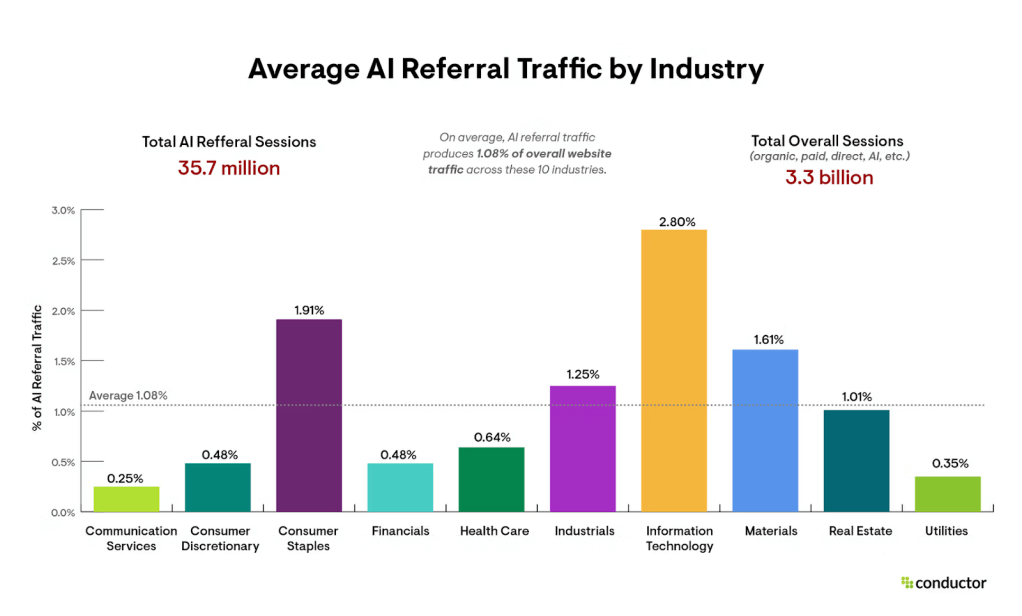
Currently, AI referral traffic accounts for a small percentage of total organic traffic—typically between 1% and 5% for most sites. However, this number is growing rapidly. For high-authority sites in niches like technology, finance, and health, the percentage can be higher. The quality of the traffic is often better, with lower bounce rates and higher time-on-page.
Does having a FAQ section help with AI citations?
Yes, absolutely. FAQ sections provide direct question-and-answer pairs that are easy for LLMs to extract. When a user asks a question that matches your FAQ, the model can quickly pull your answer and cite your page. Ensure your FAQ answers are concise, accurate, and include relevant data points.
Should I block AI crawlers from my site?
No, you should not block AI crawlers if you want this traffic. Blocking GPTBot or PerplexityBot will prevent your content from being cited. Unless you have a specific reason to protect your content (like a subscription business model), you should allow these crawlers access. Blocking them is the equivalent of telling Google not to index your site.
Is AI SEO different from traditional SEO?
Yes, but they overlap. Traditional SEO focuses on keywords, backlinks, and user experience. AI SEO focuses on entity clarity, factual accuracy, and content structure. The best strategy is to combine both. A page that ranks well in Google and is structured for AI extraction will outperform a page that only focuses on one aspect.
Conclusion
AI SEO LLM Referral Traffic represents the next evolution of organic discovery. As users increasingly turn to AI assistants for answers, the brands that appear in those answers will capture significant market share. The strategies outlined in this guide—structured data, extractable content, entity building, and data-driven tracking—provide a roadmap to success.
The time to act is now. The algorithms are still relatively new, and the competition is still low. By implementing these tactics today, you can establish your brand as a trusted source in the AI ecosystem. This will pay dividends as the technology becomes more integrated into daily life. Focus on being the most accurate, clear, and authoritative source in your niche, and the AI referral traffic will follow.
Xem thêm:
- AI SEO for WooCommerce: Automate, Optimize, and Scale Your Store Traffic
- Mastering AI SEO Forecasting: Predict Rankings, Traffic, and Algorithm Shifts Before They Happen
- AI SEO Content Research: The Complete Guide to Data-Driven Content That Ranks
- AI SEO Organization Schema: The Complete Guide to Structured Data for AI Search
- AI SEO Competitor Content Analysis: The Complete Playbook for 2025
Bài viết cùng chủ đề:

AI SEO SEO Automation with Make: The Complete Workflow Guide

AI SEO SEO Automation with Zapier: The Complete Workflow Guide

AI SEO SEO Automation with n8n: The Complete Workflow Guide
AI SEO SEO Automation with Gemini: The Complete Guide to Scaling Organic Growth

AI SEO SEO Automation with Claude: The Complete Guide to Scaling Content in 2025

AI SEO SEO Automation with ChatGPT: The Complete Playbook for 2025

AI SEO & SEO Automation for Affiliate Sites: The 2025 Playbook for Passive Income Growth
AI SEO & SEO Automation for Bloggers: The Complete Guide to Scaling Your Content

AI SEO & SEO Automation for Agencies: The Complete 2025 Playbook

AI SEO and SEO Automation for Ecommerce: The Complete Playbook for 2025

AI SEO & SEO Automation for WordPress: The Complete Playbook for 2025
AI SEO SEO Automation Strategy: The Complete Playbook for 2025

Mastering the AI SEO SEO Automation Process: A Complete Guide to Scaling Organic Growth
AI SEO SEO Automation System: The Complete Guide to Scaling Organic Growth in 2025
AI SEO SEO Automation Platform: The Complete Guide to Scaling Organic Growth in 2025
AI SEO SEO Automation Software: The Complete Guide to Scaling Organic Growth in 2025















